A stressed rabbit may not make a dramatic scene. More often, the message appears in a tense body, a changed routine and the quiet decision to stop exploring.
How can you tell if a rabbit is stressed?
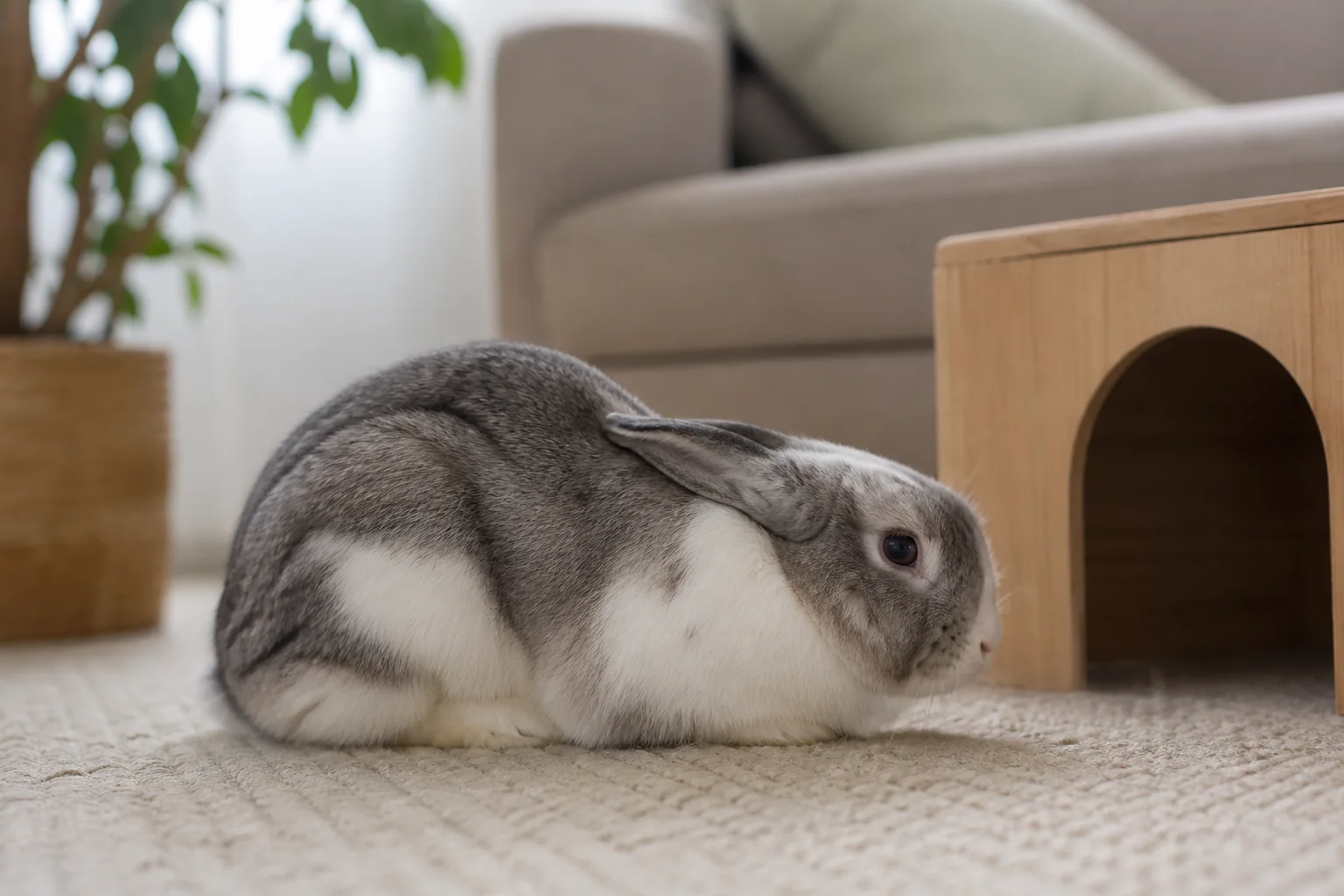
A stressed rabbit may crouch low with tense muscles, flatten the ears, freeze, hide more than usual, move away, thump, become defensive or stop showing normal curiosity. Watch for several signs together and compare them with your rabbit’s usual behaviour. A sudden change accompanied by reduced eating, fewer droppings, unusual breathing, pain posture or weakness needs prompt veterinary advice because illness can look like stress.
Rabbits are prey animals. Staying quiet and avoiding attention can be safer than announcing that something feels wrong, so stress is not always loud. One rabbit may sprint into a hide when the vacuum starts; another may remain perfectly still. A third may continue eating but become reluctant to cross a slippery floor. The useful question is not simply, “Did my rabbit thump?” It is, “What changed in the whole rabbit and what happened just before it?”
Start with a baseline. Notice how your rabbit normally holds their ears, how quickly they approach hay, which places they choose to rest and how they react when you enter the room. Lop ears naturally hang down and some rabbits are cautious by temperament, so comparisons with another rabbit can mislead you. A change from your own rabbit’s normal pattern is the stronger clue.
The clearest signs of stress in rabbits
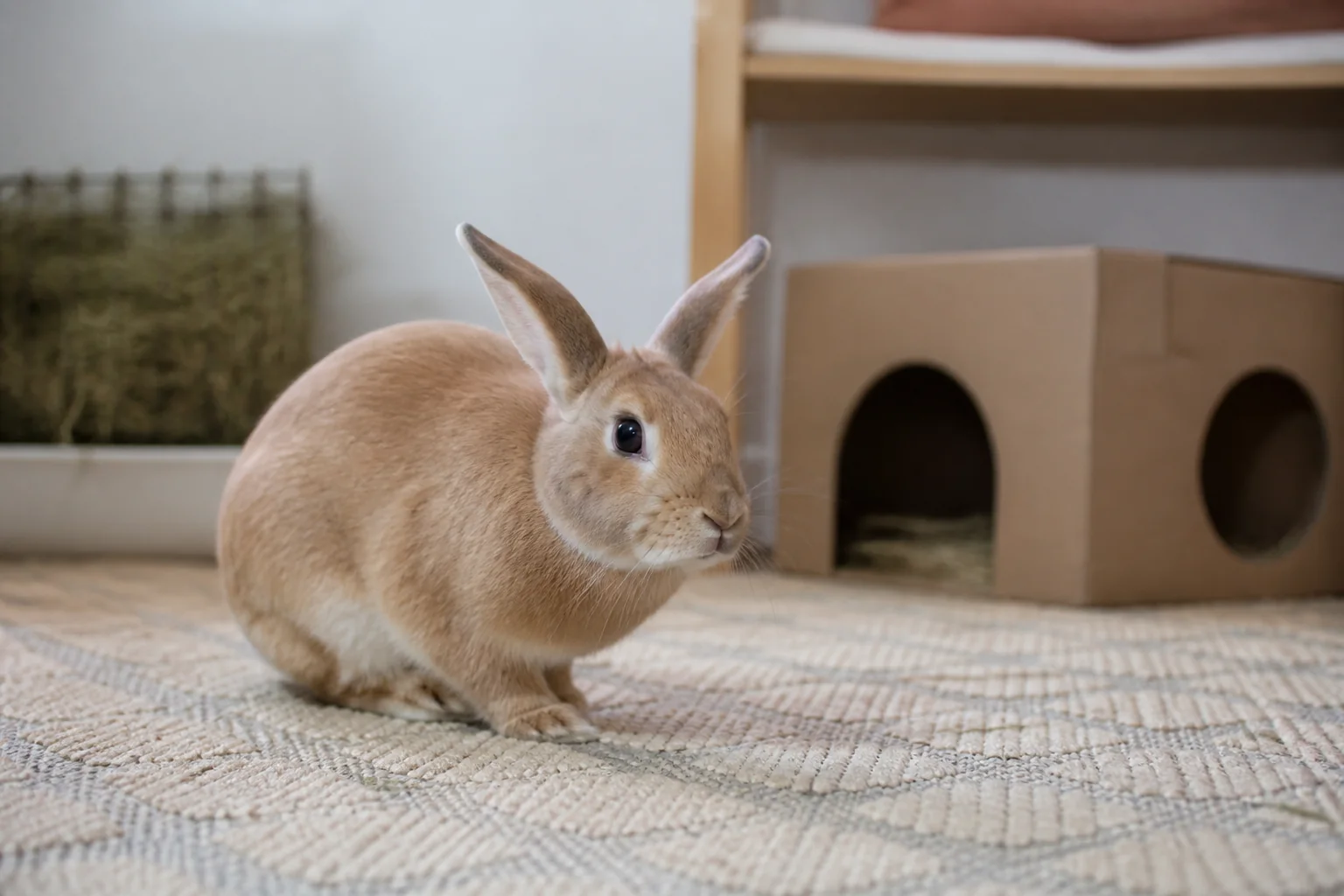
Read the face, posture, movement and situation together. The RSPCA describes a worried rabbit as crouched with tense muscles, the head held low and the ears flattened; PDSA also highlights hiding, running away and thumping. No single position proves stress, but the following cluster deserves attention.
Tense, low posture
The body looks compressed rather than soft, with the head low and weight ready to flee.
Ears held tightly back
Flattened, still ears combined with body tension differ from loose ears during a comfortable rest.
Wide, watchful eyes
The eyes may appear rounder and the rabbit may stare at a possible threat without relaxing.
Freezing
A brief startle is normal. Remaining immobile and disengaged after the trigger passes is more concerning.
Hiding or avoiding
Your rabbit retreats more, refuses to emerge or repeatedly moves away from a person, rabbit or place.
Repeated thumping
Thumps can warn of danger or express frustration. Look for the sound, smell or interaction behind them.
Defensive behaviour
Growling, lunging, boxing or a hard nip may be a frightened rabbit asking for distance.
Routine changes
Less exploration, altered grooming, unusual rest or reduced interest in food can complete the pattern.

A startled moment is not the same as ongoing stress
A door slams, your rabbit freezes and the ears swivel toward the sound. If the room becomes quiet and the rabbit soon returns to hay, grooming or exploration, the response was short-lived and useful. Stress becomes a welfare problem when the trigger is intense, frequent or impossible to escape, or when the rabbit does not return to their normal activities.
Brief startle response
- A clear trigger has just occurred.
- The rabbit can retreat or investigate.
- Normal eating and movement resume.
- The body gradually becomes loose again.
Possible ongoing stress
- Hiding, freezing or vigilance repeats.
- The rabbit avoids a resource or companion.
- Curiosity and normal routines decrease.
- The change continues after the trigger ends.
Keep a simple note of time, place, body language, appetite and what happened beforehand. A short phone video taken without approaching or frightening the rabbit can help your veterinarian or a qualified behaviour professional see the pattern.
What commonly makes a rabbit feel stressed?
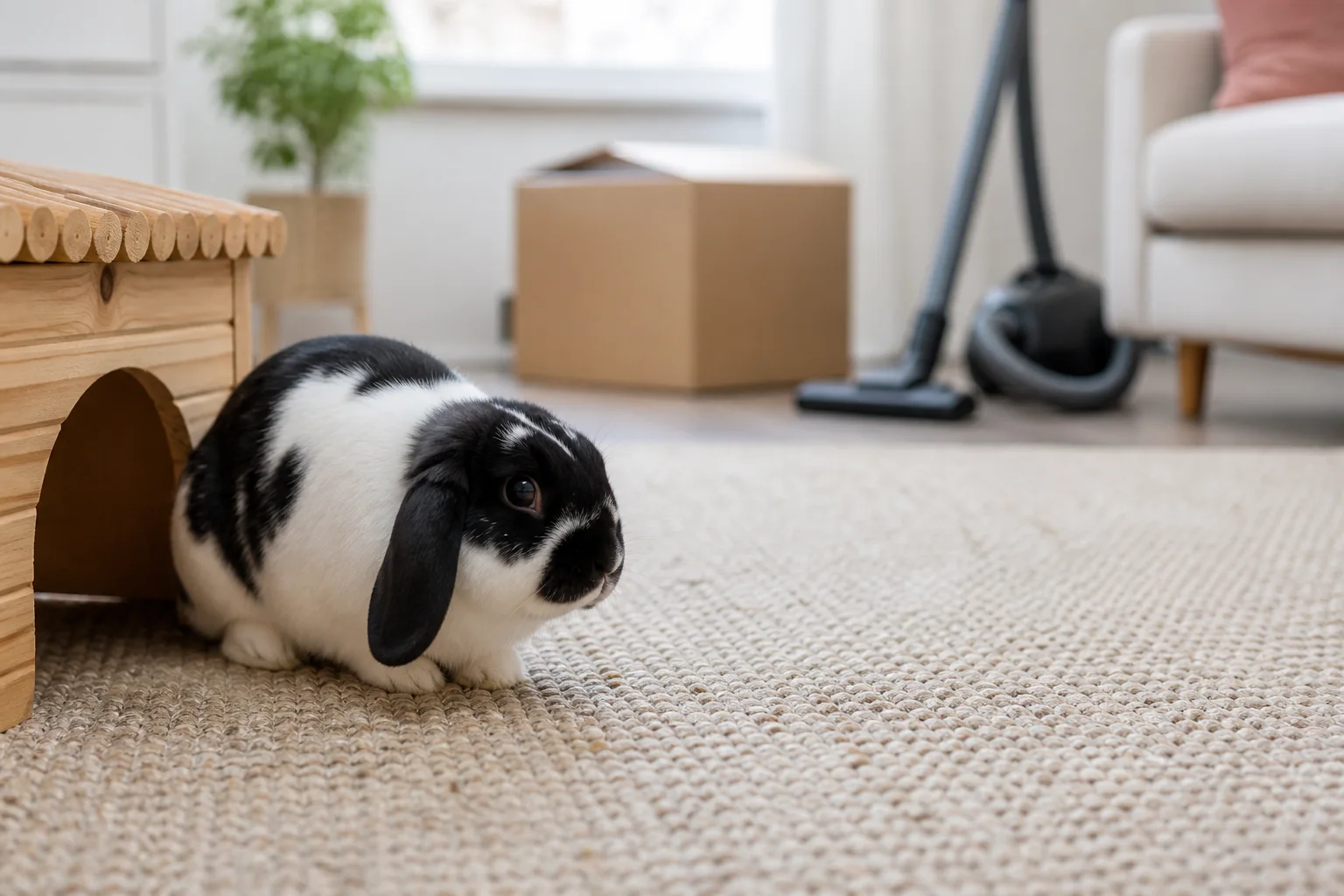
Sometimes the trigger is obvious: drilling, fireworks, a dog at the pen or an unfamiliar visitor reaching in. Other stressors are built into the setup and become easy for people to overlook. A rabbit may feel exposed because the only hide has one entrance, avoid the water bowl because the route crosses laminate, or remain vigilant because there is nowhere to rest away from household traffic.
Environment and routine
- Loud, unpredictable noise or strong smells
- Slippery flooring and exposed open space
- Heat, poor ventilation or too little room
- Moving furniture, travel or a new home
- No secure hide or blocked escape route
Handling, health and company
- Being chased, cornered or frequently lifted
- Pain, illness or reduced mobility
- Isolation without suitable rabbit companionship
- Bullying or relentless chasing in an unstable pair
- A person or animal ignoring requests for distance
Do not assume that all hiding is unhealthy. A hide is an essential coping resource, and a rabbit choosing it after a noise is using the environment well. The concern is a rabbit who cannot relax even in the hide, stays hidden for much longer than usual or misses food and normal activity.
What to do when your rabbit looks stressed
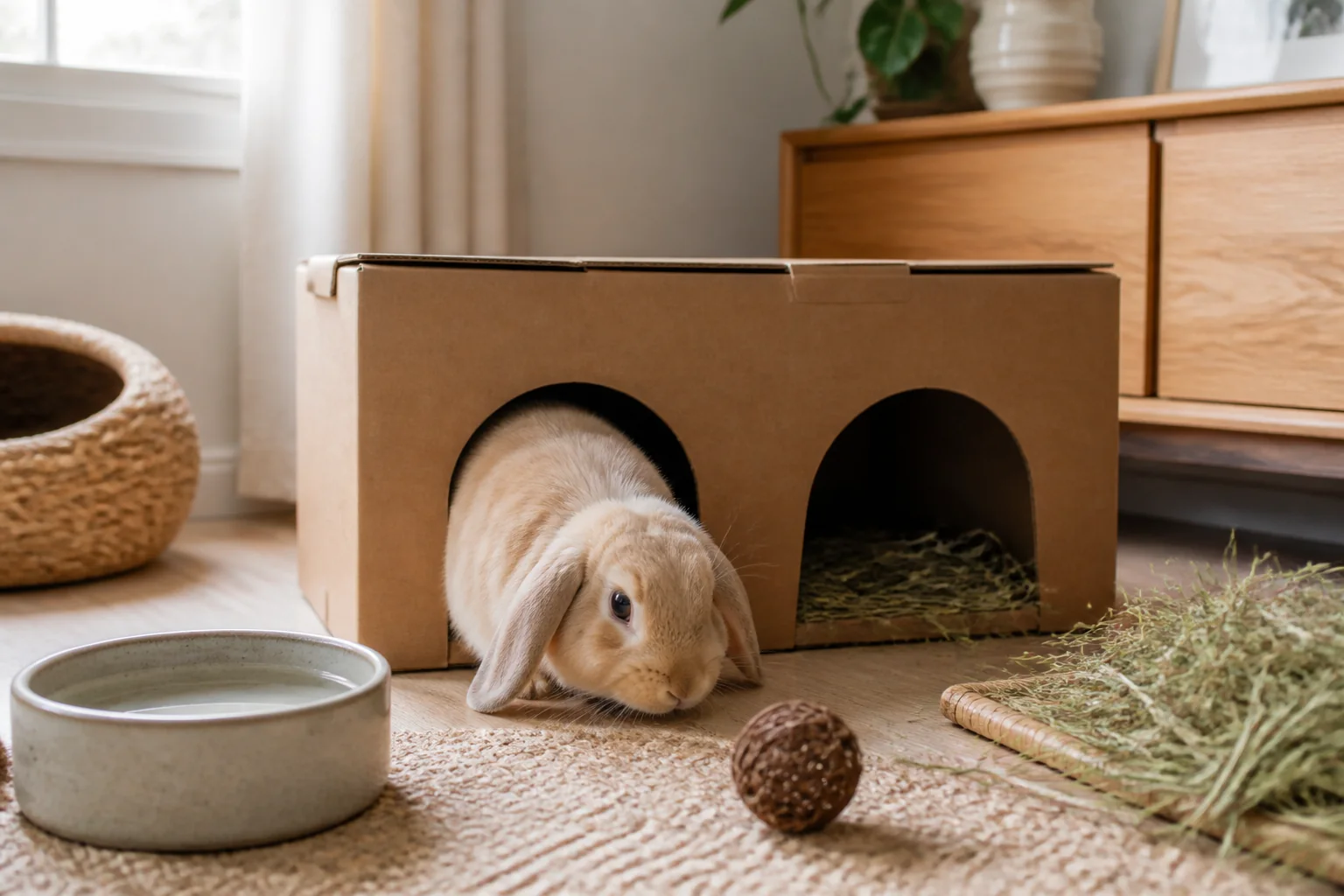
Your first job is to give control back, not to prove that the feared object is harmless. Work quietly and make the smallest useful change.
Pause and create distance
Stop reaching, lifting or following. Turn slightly sideways, lower your voice and let the rabbit decide whether to stay or retreat.
Remove the trigger if you safely can
Switch off the appliance, move the unfamiliar object, close the curtain or guide another animal away without chasing the rabbit.
Keep the escape route open
Offer a stable hide with at least two exits when possible. Never pull a frightened rabbit from their shelter for reassurance.
Restore familiar resources
Place hay, water and a litter tray within an easy route on secure footing. Keep familiar scents and avoid cleaning everything at once.
Watch the recovery
Look for the nose beginning to work, the body loosening and normal eating, grooming or exploration returning. Record anything that does not resolve.
Reduce stress by changing the daily setup
Long-term improvement usually comes from the environment and routine, not from forcing more contact. Give your rabbit predictable quiet periods, enough continuous floor space and several choices for resting. Use stable non-slip rabbit flooring along important routes. Place hides so the rabbit cannot be trapped inside, and duplicate valuable resources for bonded rabbits.
- Keep hay, water and litter consistently accessible, including when guests or furniture change the room.
- Introduce one change at a time and allow voluntary investigation instead of placing the rabbit beside it.
- Provide daily opportunities to forage, chew and dig without filling every open area with objects.
- Protect quiet resting periods from children, visitors and other pets.
- Review social relationships if one rabbit guards food, blocks exits or repeatedly chases the other.
Stillness during handling does not always mean calm
Rabbits are ground-dwelling prey animals and many find lifting frightening. Build trust at floor level and reserve necessary handling for health checks, grooming and treatment using secure support. Never place a rabbit on their back to “relax” or trance them. The Rabbit Welfare Association & Fund explains that this immobility is a fear response, not contentment.
When “stress” may actually be pain or illness
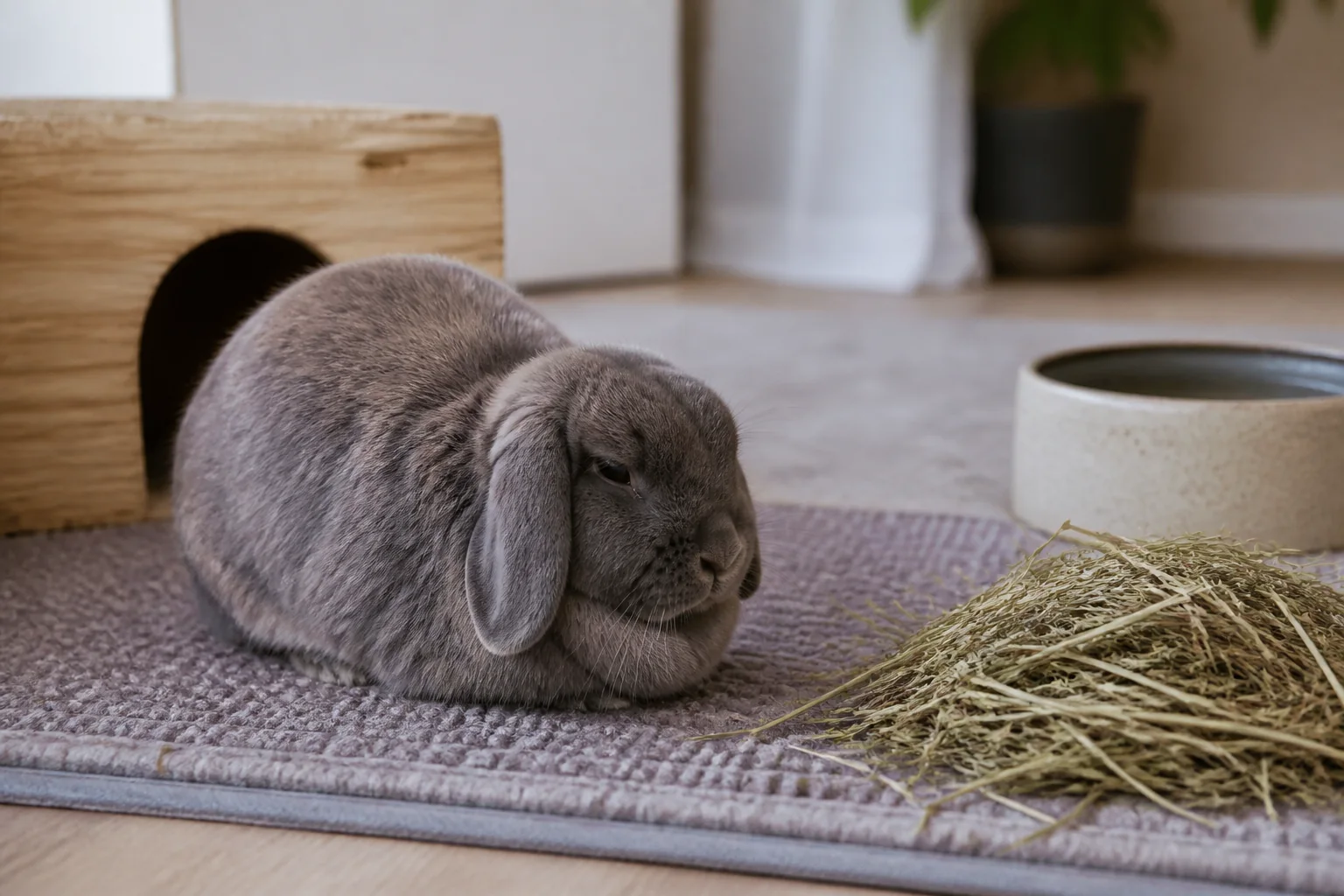
Stress and illness overlap. A rabbit in pain may crouch, hide, resist handling, grind the teeth or stop engaging with the room. Because rabbits often conceal illness, do not spend hours rearranging toys while appetite or droppings are changing. PDSA advises veterinary assessment for an unexplained behaviour change so medical causes can be ruled out.
Contact a rabbit-savvy veterinarian promptly
Seek urgent advice if your rabbit eats less or refuses food, produces fewer or no droppings, appears hunched or weak, has difficulty breathing, mouth breathes, collapses, screams, has severe diarrhoea or cannot move normally. The RWAF treats a rabbit that will not eat, has no droppings and looks depressed as an emergency. When in doubt, call the clinic and describe the change rather than waiting for a more dramatic sign.
If the vet rules out illness but the stress continues, ask for a referral to a qualified rabbit-experienced behaviour professional. Bring your notes, video and details of housing, handling, diet and companion interactions. Behaviour makes more sense when the full environment is visible.
Frequently asked questions about stress in rabbits
Do rabbits thump when they are stressed?
They can. A thump may warn of perceived danger or express frustration, but one thump is not a diagnosis. Check the rabbit’s body tension, ears, eyes, environment and what happened immediately beforehand.
Why is my rabbit suddenly hiding?
A brief retreat after a noise or change can be normal. Sudden persistent hiding may reflect fear, social conflict, pain or illness. Keep the hide available, observe eating and droppings, and contact a vet if the change is unexplained or accompanied by other symptoms.
How long does it take a stressed rabbit to calm down?
There is no fixed time. A mild startle may resolve within minutes once the trigger stops, while moving home or recovering from repeated fear can take days or longer. Look for gradual return of normal eating, rest, grooming and curiosity.
Should I pet my rabbit when they are scared?
Do not assume touch will reassure them. Stop approaching and let the rabbit choose. If your rabbit returns and lowers their head for familiar forehead strokes, gentle contact may be welcome; if they remain tense or move away, give space.
Can a rabbit be stressed but still eat?
Yes. Mild or intermittent stress does not always stop eating. Compare the amount and enthusiasm with normal, and watch droppings, posture and activity. Any meaningful reduction in food intake is more urgent than the presence or absence of one body-language sign.

Elodie
Rabbit guardian and care enthusiast with over 10 years of hands-on experience living with house rabbits. Through Rabbit World, Elodie shares warm, practical guidance focused on comfort, safety and the small everyday signals that help every little bun feel understood.