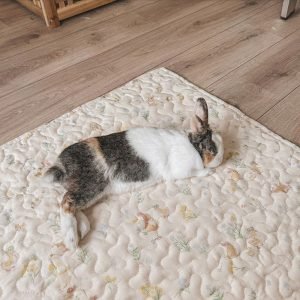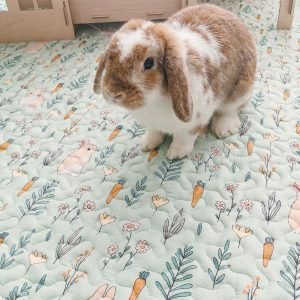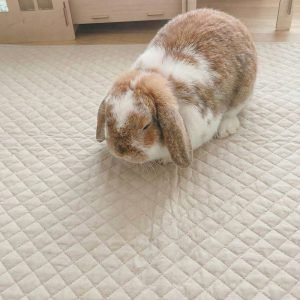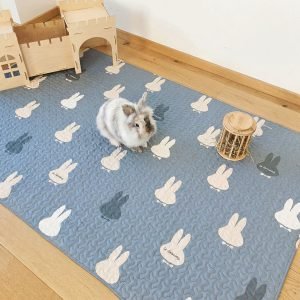
A calm, practical summer plan for keeping your bun comfortable before the room feels like an oven, plus the signs that mean it is time to call a vet.
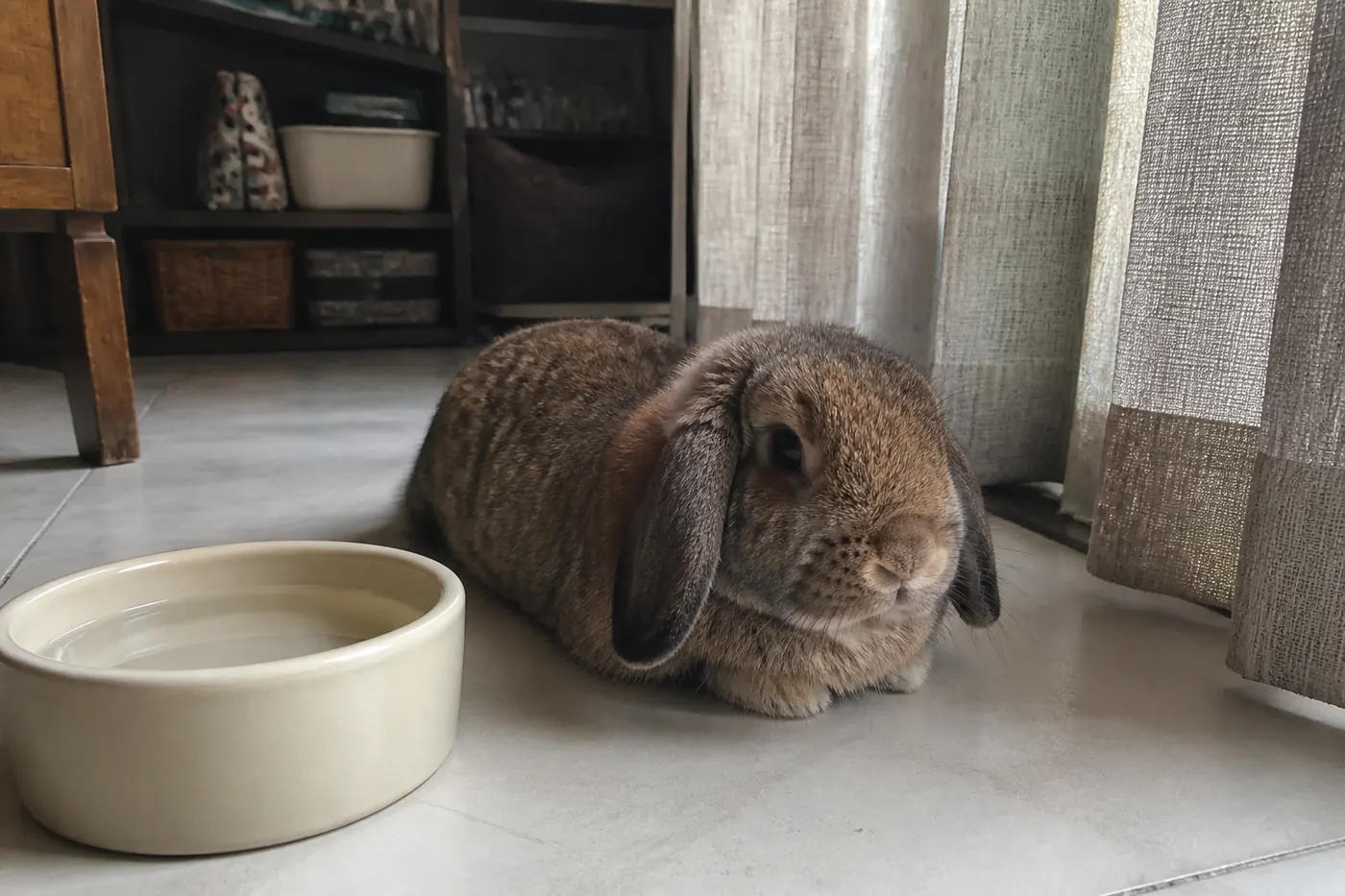
How do you keep a rabbit cool in hot weather?
Short answer: Keep your rabbit’s living area shaded and well ventilated, provide fresh water in several places and offer a choice of cool resting surfaces. Ceramic tiles, rabbit cooling mats and frozen bottles wrapped in a towel can help your bun stay comfortable without forcing direct contact with something icy.
- Shade: block direct sunlight before the room heats up.
- Water: provide fresh water in more than one place.
- Airflow: circulate air without aiming a fan directly at your rabbit.
- Cool surfaces: offer tiles, cooling mats or wrapped frozen bottles.
Emergency warning: Open-mouth breathing, collapse, confusion or unusual unresponsiveness require gentle cooling and an immediate call to a rabbit-savvy veterinarian.
Rabbits cope far better with cool weather than with heat. Their dense coat holds warmth, they do not sweat like we do, and open-mouth breathing is not a normal way for a bunny to cool down. That is why the best summer setup is not one magic product. It is a collection of small choices that gives your little loaf somewhere cooler to move, drink and rest.
The four basics that matter more than any cooling product
You do not need a cupboard full of summer gadgets to make a real difference. Begin with the environment. These four basics should be in place even when you use a cooling mat, tile or ice pack.
Block the heat
Close blinds or curtains before direct sun reaches the room. Outdoor shade must still work later in the day as the sun moves.
Keep water close
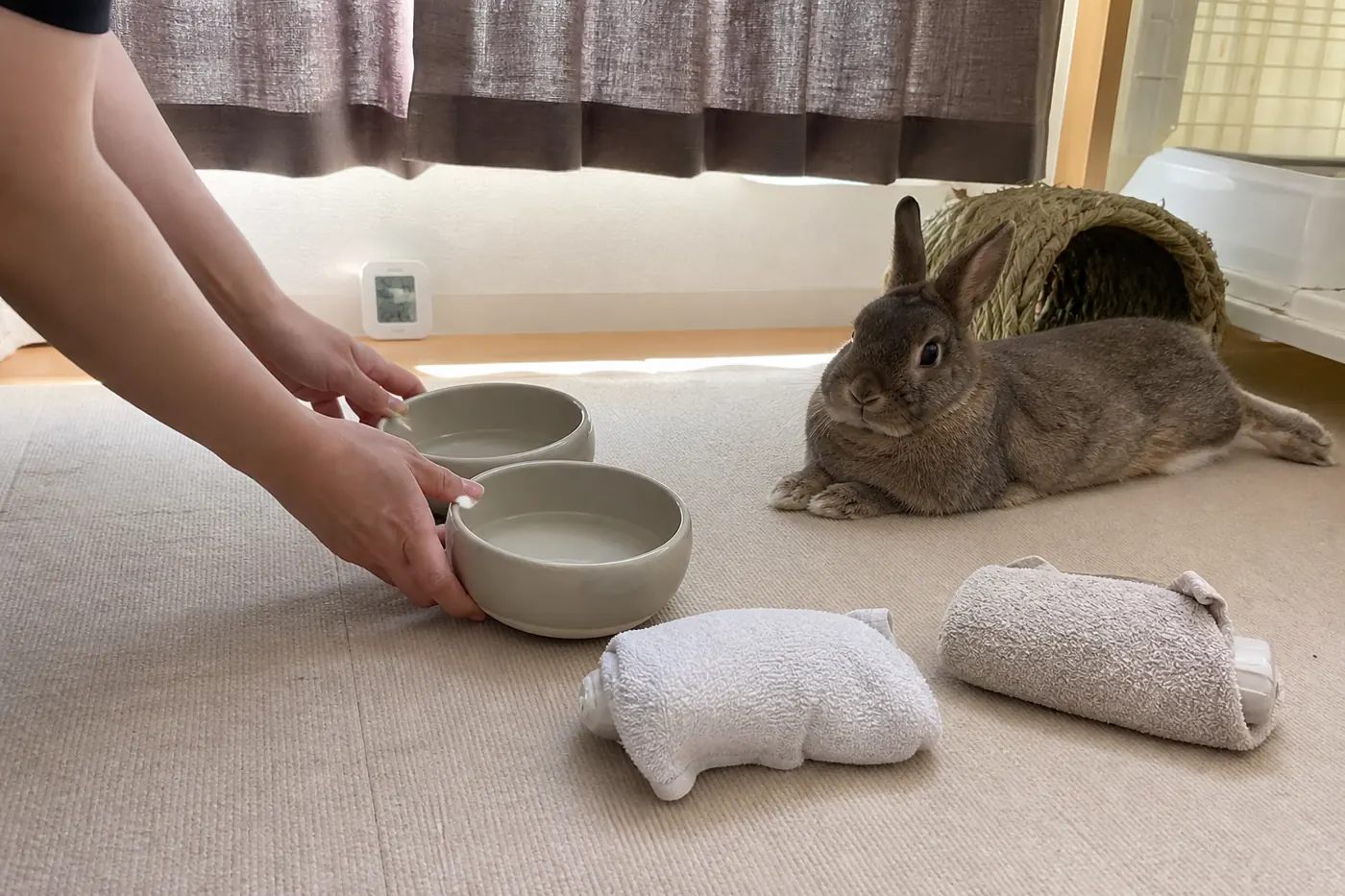
Offer clean water at all times. A heavy bowl is easy to drink from; a second bowl or checked bottle provides backup.
Move the air
Use safe room airflow or air conditioning. Let your rabbit move away, and protect every electrical cable from curious teeth.
Offer choices
Give your bun a cool surface and a familiar dry surface. They should decide where to lie rather than being confined to one option.
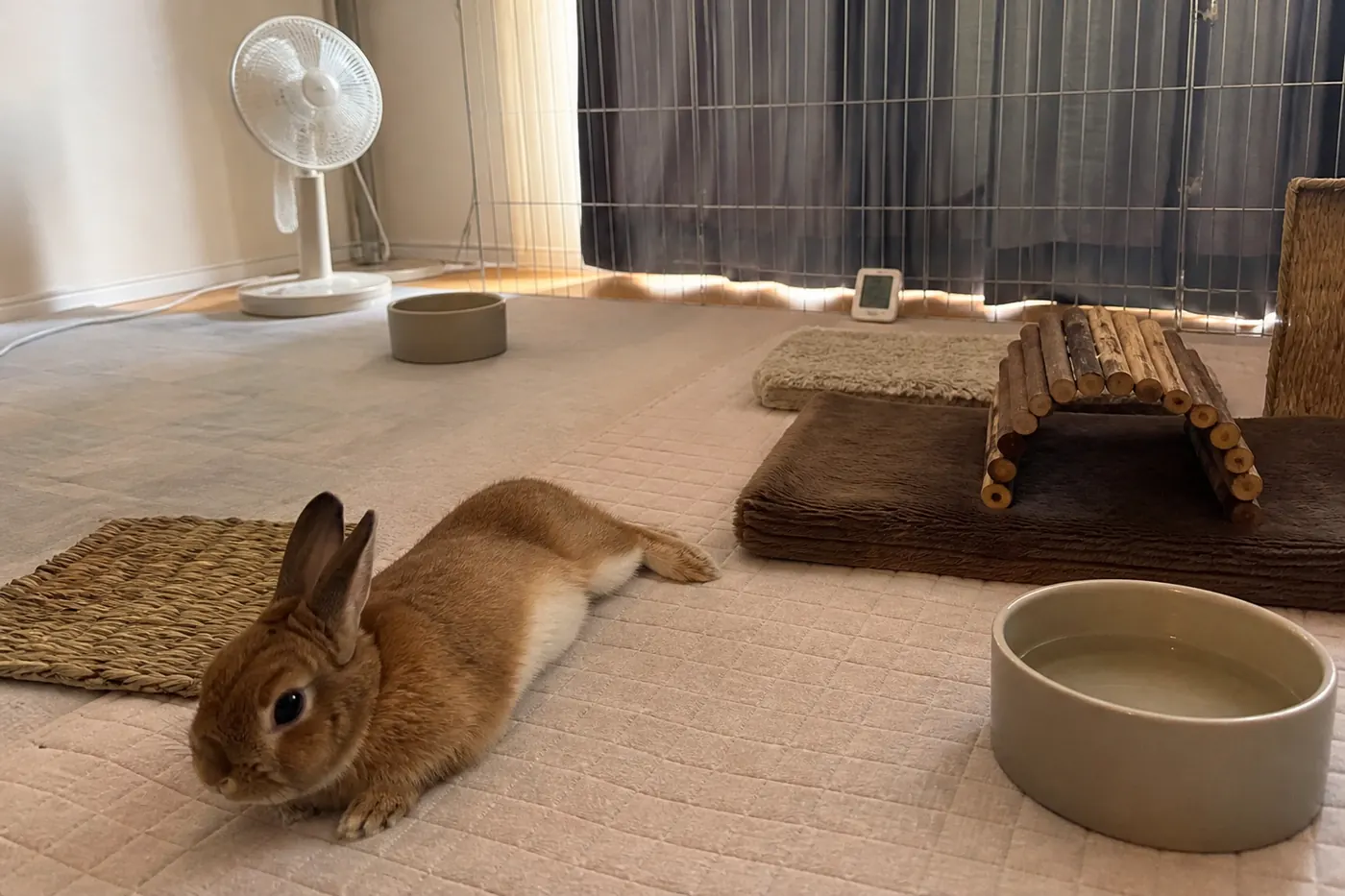
A fan can improve air movement, but a fan alone does not lower the room temperature. Keep it several feet away, avoid a constant blast directly at your bun and make sure the whole setup is stable. During the hottest hours, air conditioning or moving the enclosure to a genuinely cooler room is more effective than simply pushing warm air around.
Simple ways to cool a rabbit at home
These low-cost ideas are useful because they are easy to prepare before a heatwave. Your bun may adore one and ignore another. That is completely normal. Place each option near a familiar resting route, then let that suspicious little nose investigate at its own pace.
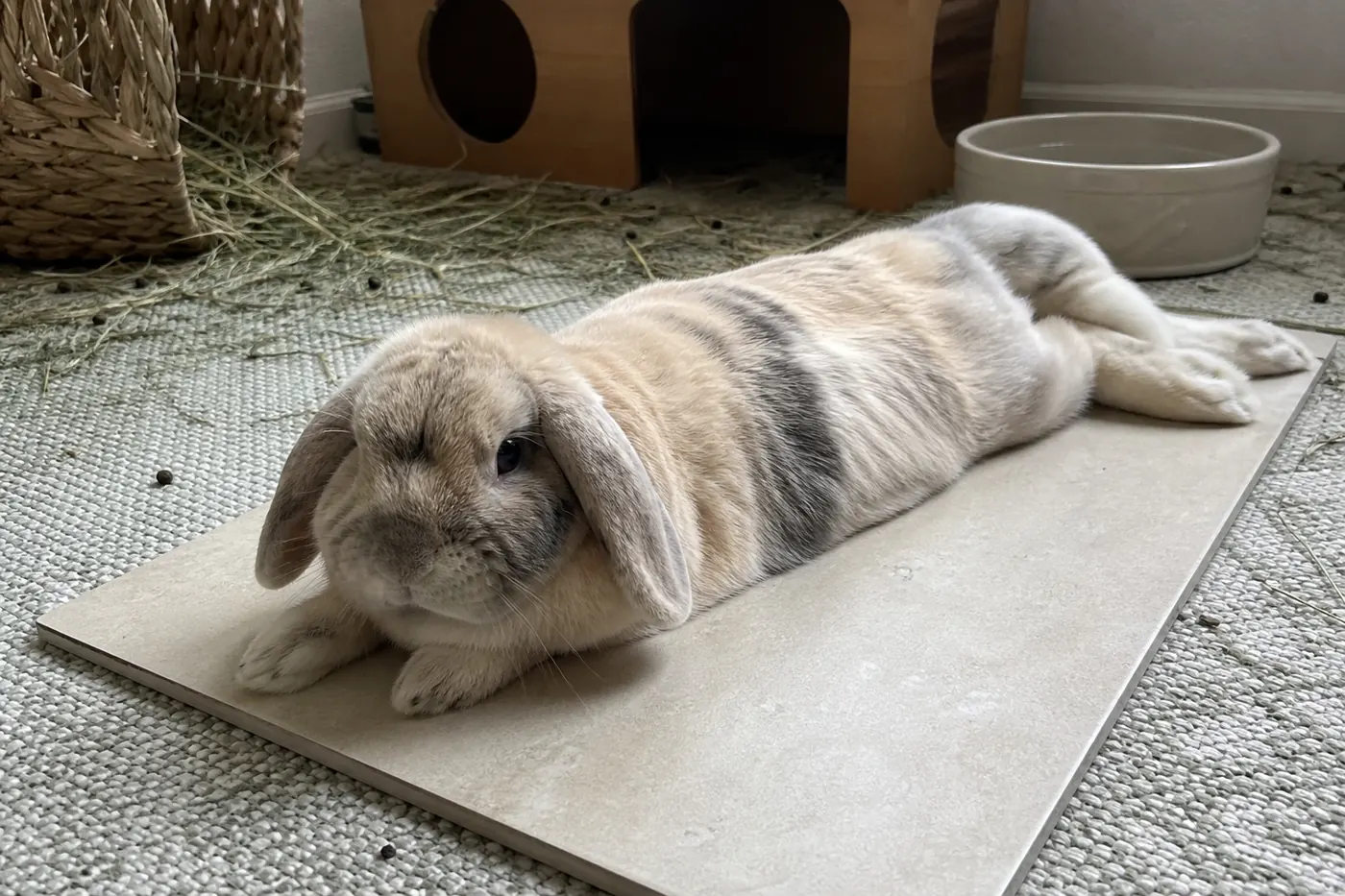
Ceramic, slate or marble tile
A large smooth tile can stay cooler than carpet or padded flooring. Put it in shade on a stable, level surface. You can chill a clean tile in the refrigerator for a short time, but it should feel cool rather than painfully cold.
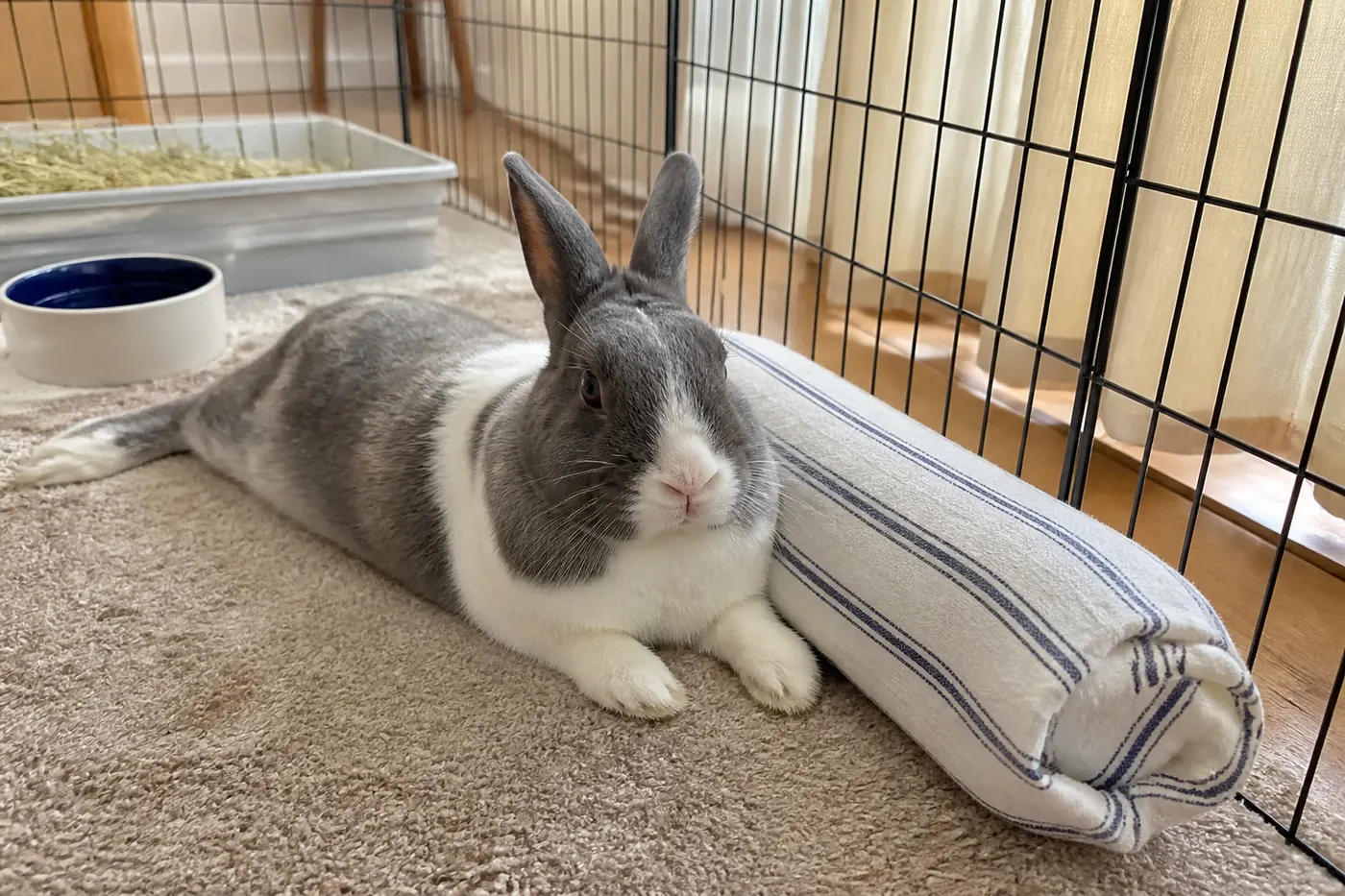
A wrapped frozen water bottle
Freeze a partly filled sturdy bottle, wrap it fully in a thin towel and place it beside a resting spot. Your bun can lean near it or move away. Rotate a second bottle when the first thaws and remove it if the plastic or cover is chewed.
Little summer upgrades that cost almost nothing
Refresh water several times a day, place bowls away from sunlight, move playtime to early morning or evening and hang a damp towel over part of an enclosure to add shade without blocking ventilation. Keep hay available and offer the usual leafy greens rinsed with water if they are already part of your rabbit’s normal diet. Avoid sudden menu changes just because it is hot.
- Check the actual living area. A weather app cannot tell you how warm the sunny corner, shed or enclosed room has become. Put a thermometer at rabbit height.
- Keep the litter area dry and clean. Heat and dampness make the space unpleasant and increase summer flystrike risk.
- Brush out loose undercoat. Regular gentle grooming removes dead fur without shaving the protective coat.
- Prepare a cooler backup room. Decide where your rabbits can safely move before temperatures climb, not after they look unwell.

Which rabbit cooling mat should you choose?
The best cooling surface is the one that suits your rabbit’s resting style, size and chewing habits. Some buns love a firm plate. Others prefer fabric or want to lean beside something cool rather than lie on it. Rabbit World’s cooling range gives you several formats, but every one remains an optional comfort zone alongside water, shade and airflow.
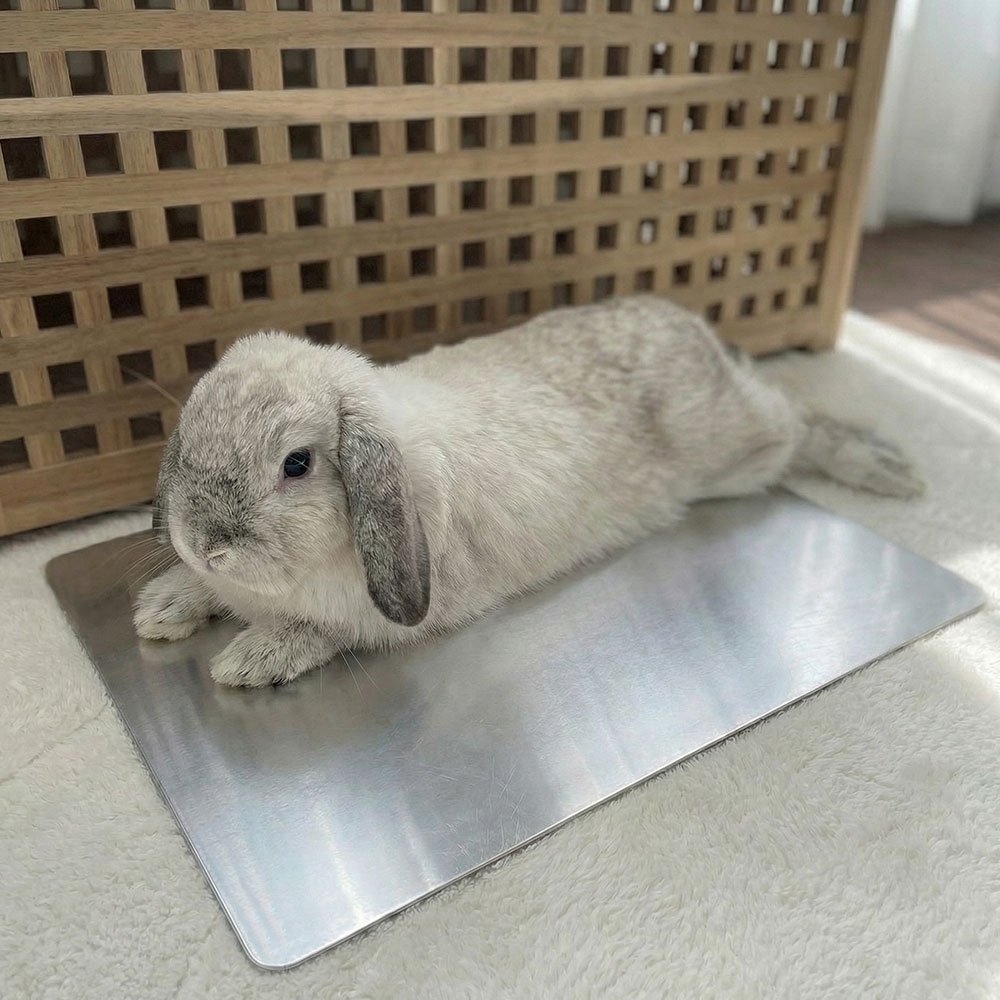
Rabbit Cooling Pad
A gel-free aluminum plate measuring about 15.5 by 12 inches. It is easy to wipe and works well for buns that already seek out hard, cool surfaces.
See the cooling pad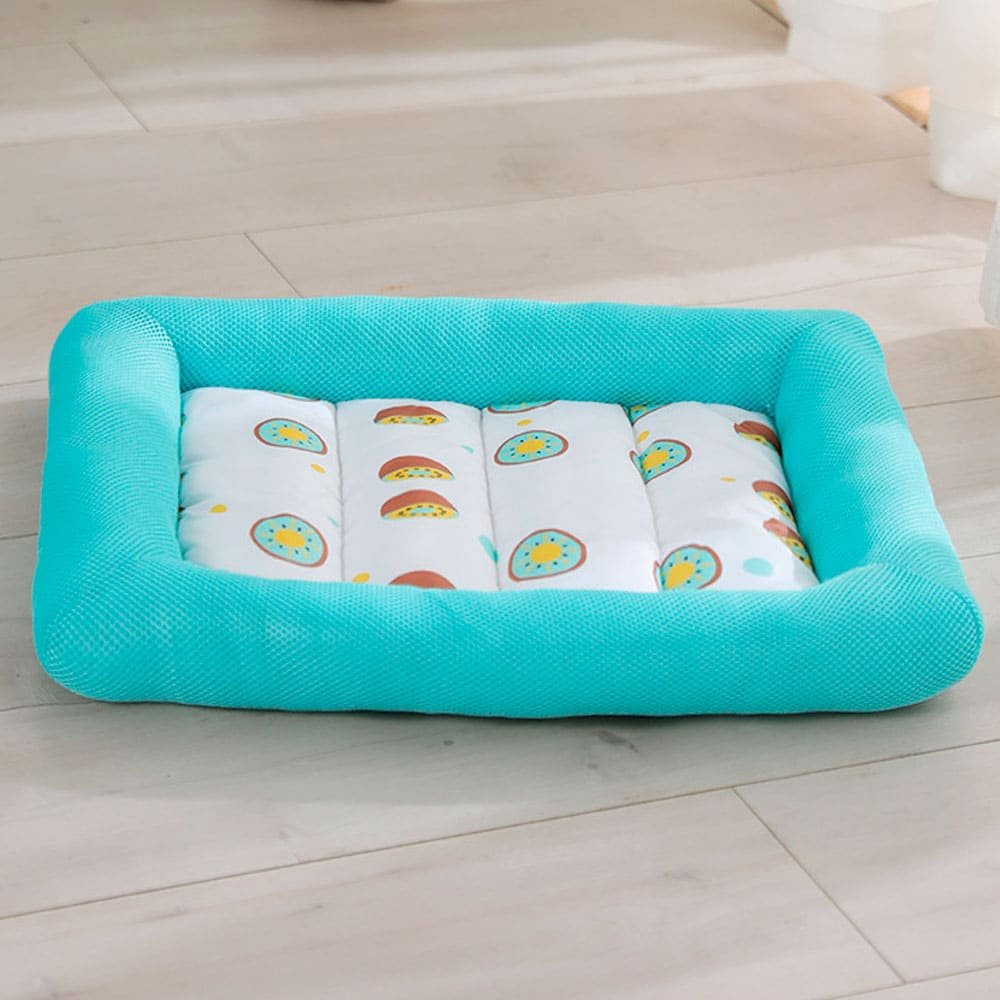
Waterproof Cooling Mat
A gel-free, non-slip fabric option measuring about 21 by 16 inches. Place it flat in a shaded lounge spot and follow its hand-wash care instructions.
See the fabric mat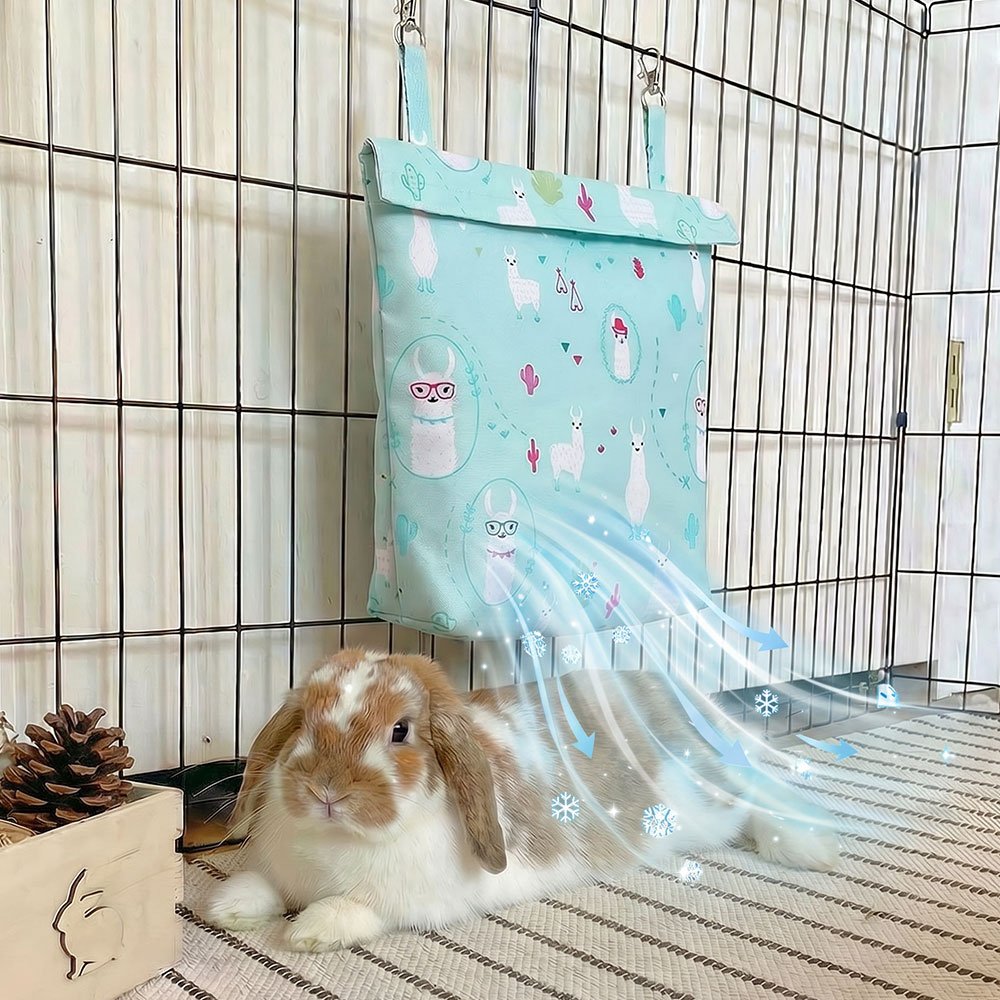
Rabbit Cooling Bag
A waterproof pouch with a reusable cooling insert. It can be secured near a favorite rest area for rabbits that prefer to sit beside a cool source.
See the cooling bagCooling mat safety check
Read the instructions for the exact design. Do not refrigerate or freeze a mat unless the manufacturer says to. Inspect seams, edges and inserts before every use. Remove any product that is punctured, leaking, frayed or being eaten, and contact a vet if you think your rabbit swallowed part of it.
Indoor and outdoor rabbits need different cooling plans
The same cooling idea can work very differently in a living room and in an outdoor run. The goal is always to create a cooler microclimate your rabbit can enter and leave freely, without trading heat for another problem such as trapped air, loose cables or unsafe access.
For indoor buns
Close sun-facing blinds before the room heats up, then ventilate later when the outdoor air is cooler. Avoid conservatories and glass rooms, which can become dangerously hot with surprising speed. Air conditioning is the most dependable way to lower room temperature. If you use a fan, secure it outside the rabbit area, protect the cable and keep a hideout or quiet corner away from the breeze.
For outdoor buns
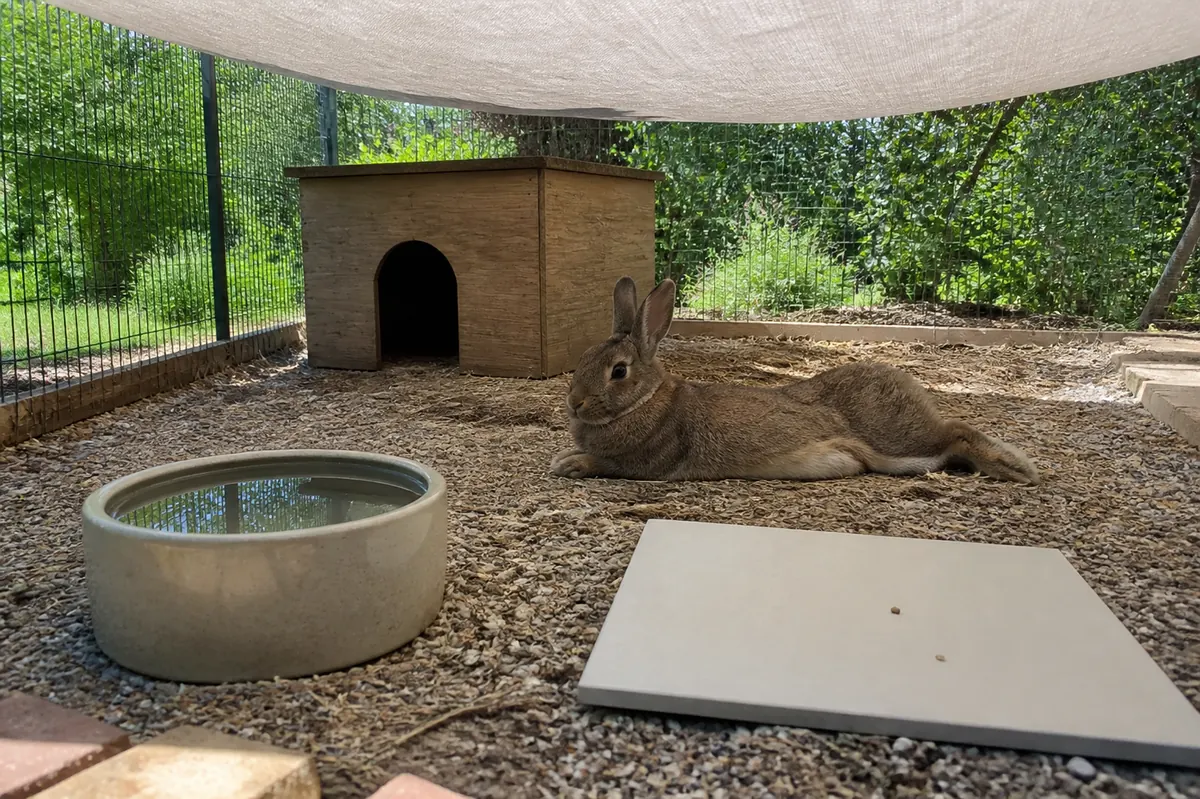
Check shade in the afternoon, not only in the morning. A covered section is useful, but never wrap the whole enclosure so tightly that warm air cannot escape. Wooden houses and sheds can hold heat, and artificial grass or dark paving can become much hotter than the air. Keep the cool surface, water and hideaway in the shaded part of the run, and have a safe indoor backup if conditions keep rising.
Bonded rabbits should normally remain together, but one cool spot may not be enough for two determined floppers. Provide more than one water station and enough cool surface for both rabbits, so neither bun has to guard the prime summer real estate.
Grooming helps, but shaving is not a DIY cooling method
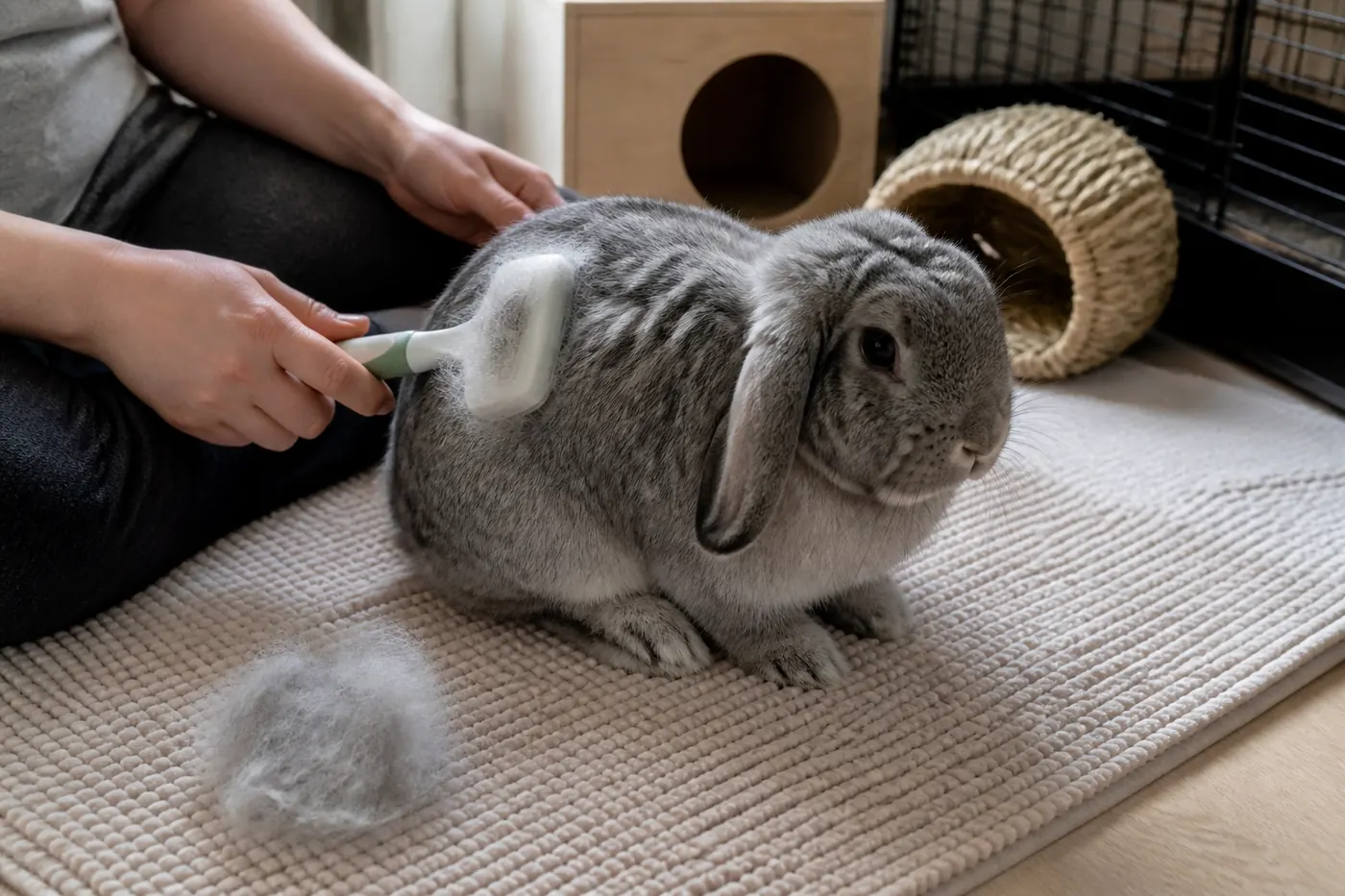
Loose undercoat traps warmth and can mat, especially on long-haired rabbits. A calm brushing routine removes dead fur and gives you a chance to check the skin and bottom at the same time.
Do not shave a rabbit at home. Their skin is delicate and the coat still protects them. If a long-haired or medically vulnerable rabbit needs trimming, ask a rabbit-savvy vet or experienced professional groomer how to do it safely.
Which rabbits need closer summer monitoring?
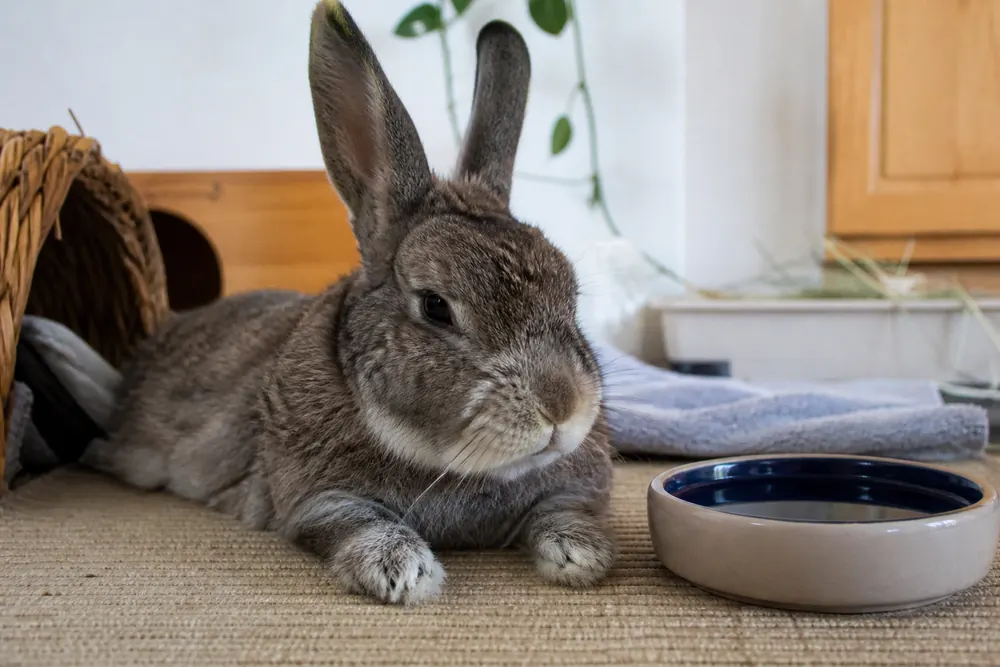
Every bun can overheat, but some have less margin for error. Check these rabbits more often, keep their water and resting choices very close, and prepare the cooler backup room early.
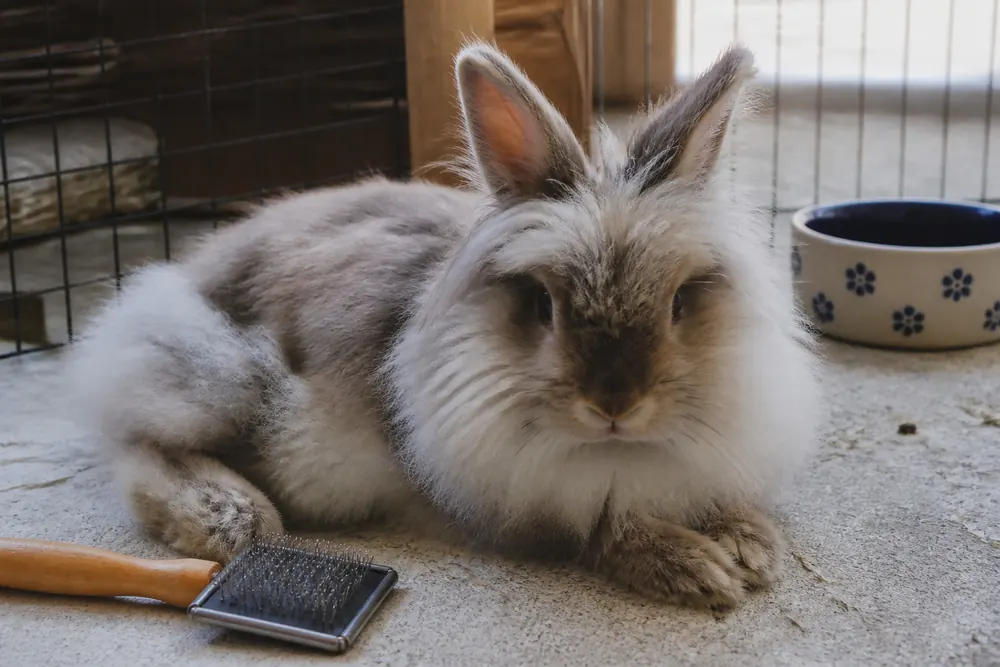
They may regulate temperature less efficiently or have less reserve when heat affects appetite and hydration.
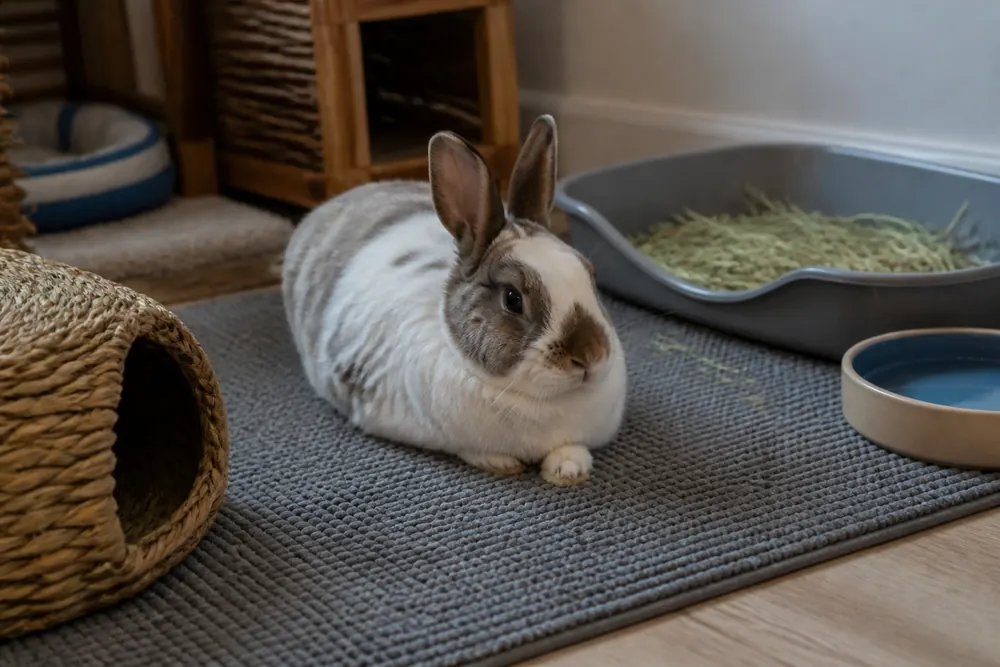
Extra insulation and reduced mobility can make it harder to reach water or change resting spots.
Breathing, heart, mobility and other health problems can increase risk. Follow your vet’s individual advice.
Keep eating, drinking and droppings in view
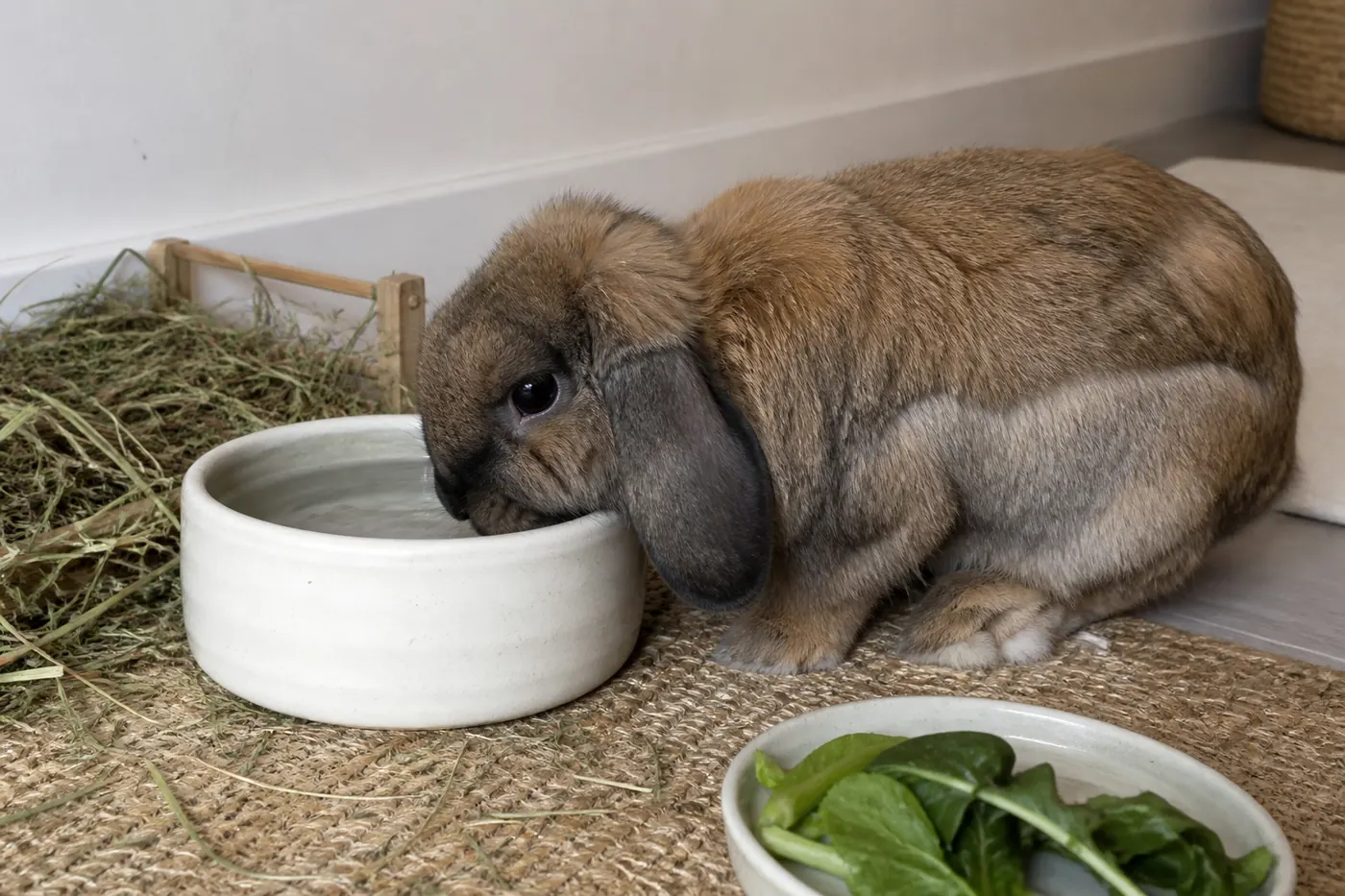
A hot rabbit may become quieter and less interested in food. That matters because a rabbit’s digestive system depends on frequent eating. Keep unlimited hay available, refresh familiar leafy greens with a little rinse for extra moisture and watch whether each bun is actually eating rather than simply sitting near the bowl. Never introduce a large amount of new food or frozen vegetables as a sudden heatwave treat.
Check water bowls for warmth, dirt and evaporation, and make sure bottle spouts still flow. If two rabbits share a home, observe them separately for a moment so the confident bun does not hide the fact that their partner has stopped eating or drinking.
Summer also means a higher flystrike risk
Heat, damp bedding and soiled fur attract flies. Check your rabbit’s bottom and living area at least twice a day during warm weather, particularly if your bun is elderly, overweight, has mobility problems or struggles to groom. Loss of appetite, a dirty bottom, wounds, a bad smell or visible eggs or maggots needs urgent veterinary help.
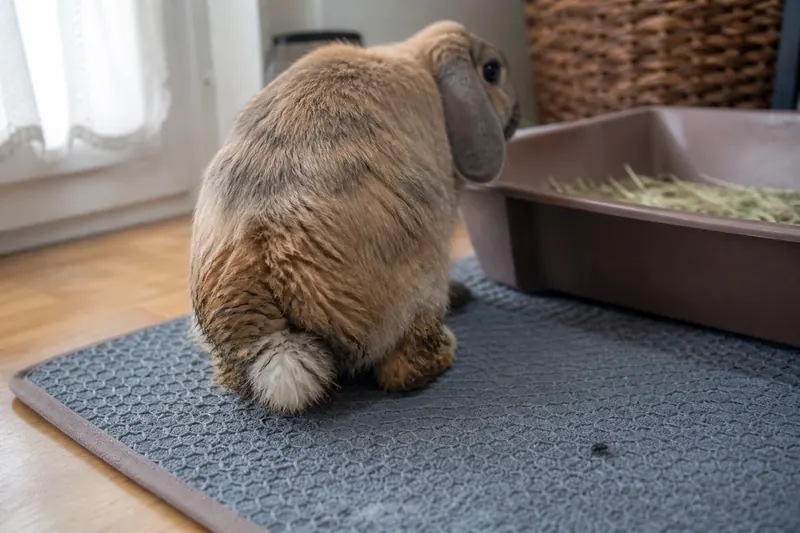
Rabbit overheating and heatstroke warning signs
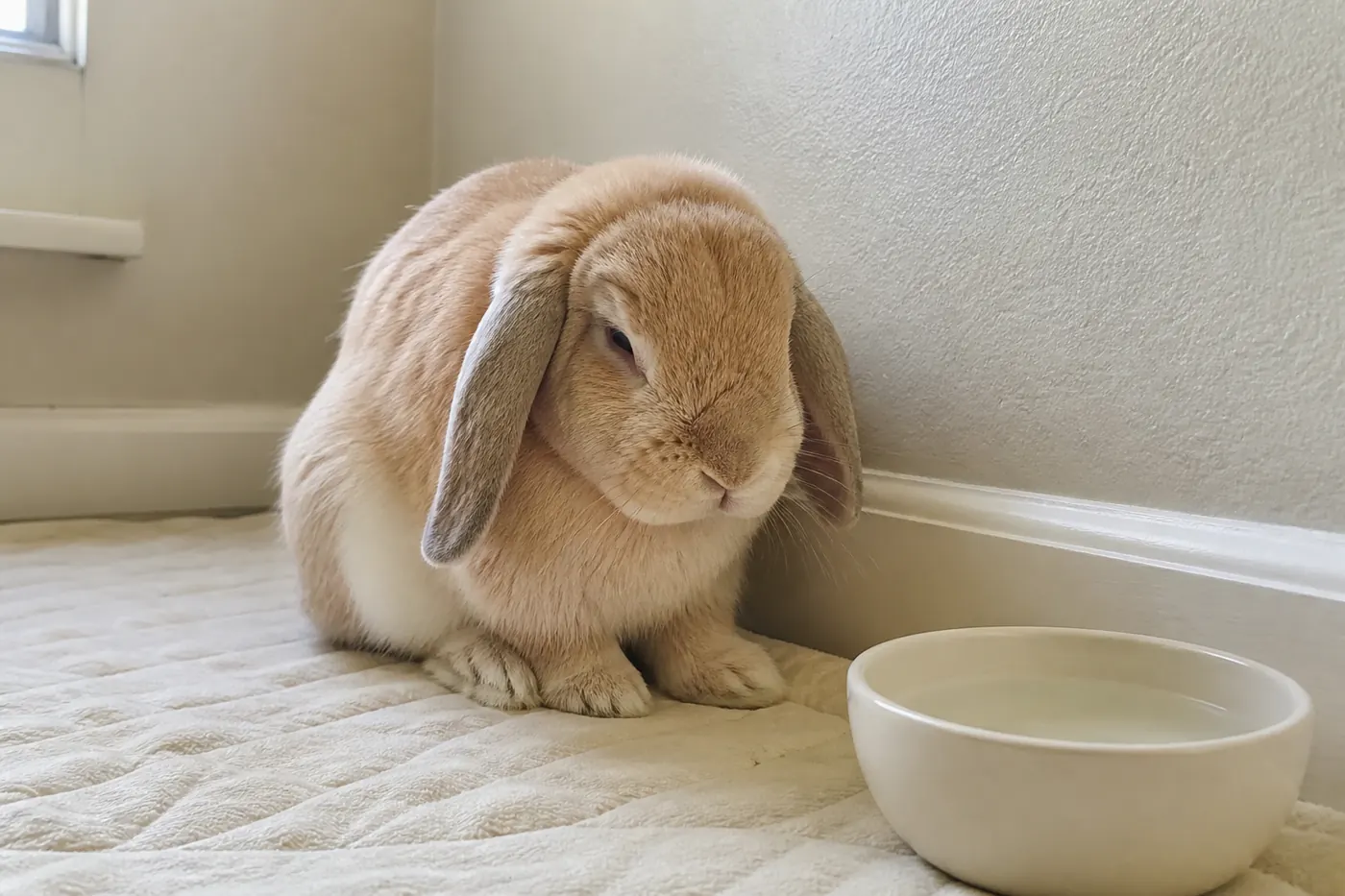
A warm rabbit stretching on a tile is not automatically having heatstroke. What matters is a change from normal behavior combined with breathing, strength or awareness problems. Heatstroke can progress quickly, and rabbits often hide illness until they are seriously unwell.
Suspected heatstroke is an emergency
- Move your rabbit immediately to a cool, shaded, well-ventilated room.
- Call a rabbit-savvy veterinarian now and say that you suspect heatstroke. Begin gentle cooling while arranging transport.
- Dampen the back of the ears with cool water, keeping water away from the nose and mouth. Create a breeze and offer water, but do not force drinking.
- Transport in a ventilated carrier in a cool vehicle. Continue gentle cooling as your vet advises.
This emergency guidance follows current advice from PDSA, Rabbit Welfare Association & Fund and Blue Cross. It does not replace veterinary care.
What not to do when a rabbit is too hot
A sudden cold-water bath can cause shock, and dense wet fur takes a long time to dry.
Frozen bottles and packs need a cover, and your rabbit must be able to move away.
A cool damp towel can be placed beneath a rabbit if advised and tolerated, but covering the body can trap heat.
Cooling products support comfort. They do not treat heatstroke or replace an urgent veterinary call.
A realistic hot-day routine for your bun
Frequently asked questions about keeping rabbits cool
Are cooling mats safe for rabbits?
They can be an optional cool surface when used according to the product instructions and checked regularly. Choose a design that suits your rabbit’s chewing habits, let them move away freely and remove the mat immediately if it is torn, punctured or leaking.
Can I give my rabbit ice water?
Fresh cool water should always be available, but you do not need to make it icy. RWAF advises against adding ice to drinking water. Refresh bowls regularly and keep them out of direct sun.
Should a fan blow directly on a rabbit?
No. Use a fan to circulate air across the room and make sure your rabbit can leave the airflow. Protect the cable and keep the fan stable and out of reach. Remember that moving hot air is not the same as lowering room temperature.
Can I use a frozen water bottle for my rabbit?
Yes. Freeze a sturdy partly filled bottle, wrap it completely in a towel and place it beside a resting area. Never force direct contact, inspect for chewing and rotate a second bottle as the first thaws.
What tile is best for cooling a rabbit?
A large, stable ceramic, slate or marble tile can provide a firm cool surface. Keep it shaded, make sure it cannot rock or expose sharp edges and let your rabbit decide whether to use it.
Is lying stretched out a sign of heatstroke?
Not by itself. Many relaxed rabbits sploot or stretch on cool surfaces. Look at breathing, alertness, appetite, movement and whether the posture is normal for your bun. Rapid or open-mouth breathing, confusion, weakness or collapse need urgent veterinary attention.
When is it too hot for a rabbit?
Risk depends on the individual rabbit, humidity, direct sunlight and airflow, not just one number. Start precautions before the living area reaches the mid-20s Celsius. Older, overweight, long-haired or unwell rabbits, and those with breathing, heart or mobility problems, may struggle sooner.


Elodie
Rabbit guardian and care enthusiast with over 10 years of hands-on experience living with house rabbits. Through Rabbit World, Elodie shares warm, practical guidance focused on comfort, safety and the everyday details that help every little bun feel at home.