
Your bun is talking all day long. The tricky part is that the message rarely lives in one ear, one thump or one dramatic flop. It lives in the whole rabbit.
The golden rule: read the whole bun
One signal can carry several meanings. Ears resting backwards may belong to a sleepy loaf, while tightly pinned ears paired with a raised tail and tense muscles are a very different message. A thump can mean alarm, irritation or simply that your rabbit noticed something you did not.
The RSPCA rabbit body-language guide recommends looking beyond the ears to the eyes, posture and behavior. Rabbit.org makes the same practical point: context changes the meaning. Start with three questions.
Is the body loose or tense?
A relaxed bun seems to melt into the floor. A worried rabbit often looks compressed, rigid or ready to move.
Is your rabbit moving toward something or away from it?
Curiosity leans forward. Fear, avoidance and irritation often create distance.
What changed just before the signal?
A sound, unfamiliar smell, moved chair, new rabbit or approaching hand may explain the reaction.

What rabbit ears are really saying
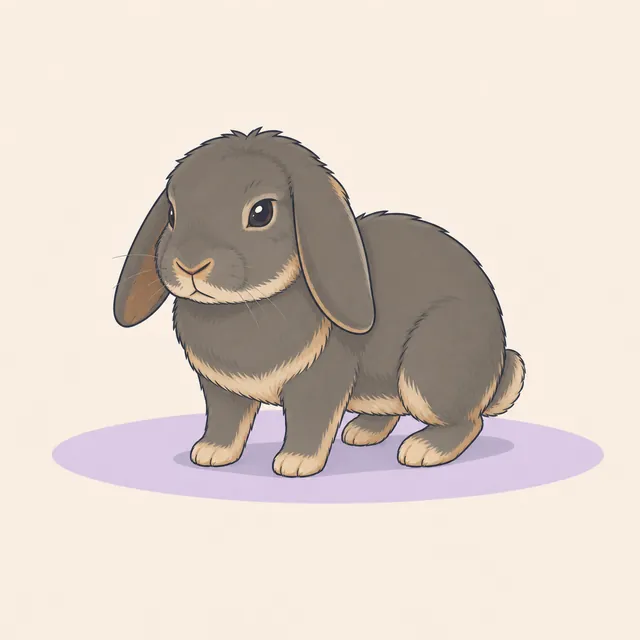
Rabbit ears work like mobile radar, but they are not a mood meter on their own. Upright-eared buns make the changes easy to see. Lop-eared rabbits can be subtler, so watch the base of the ears, head position and the rest of the body.
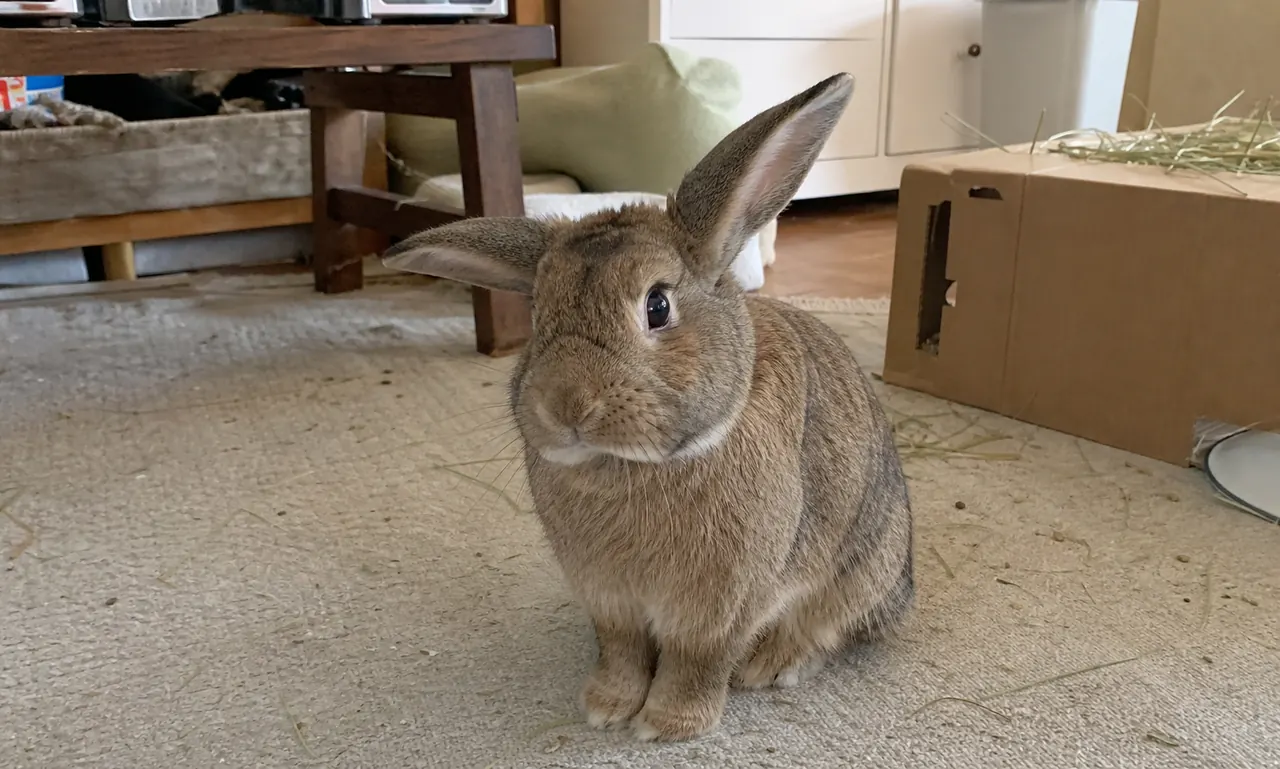
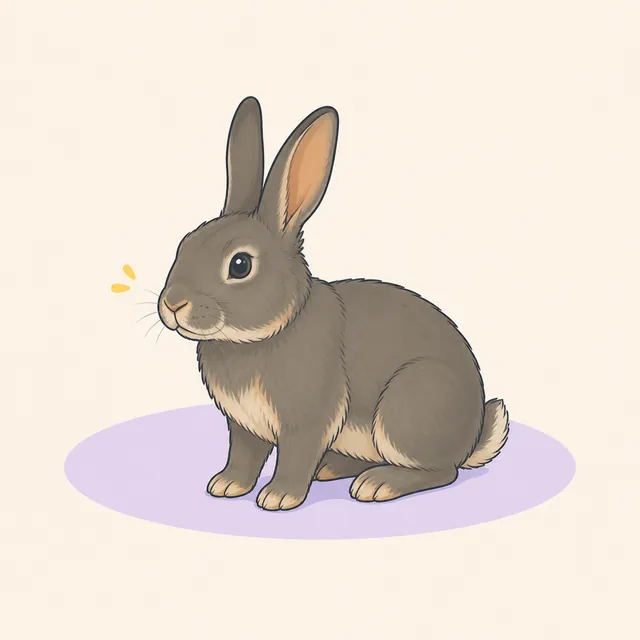
Ears forward
Your rabbit has noticed something. Add a forward lean and busy nose and you probably have a curious little investigator.
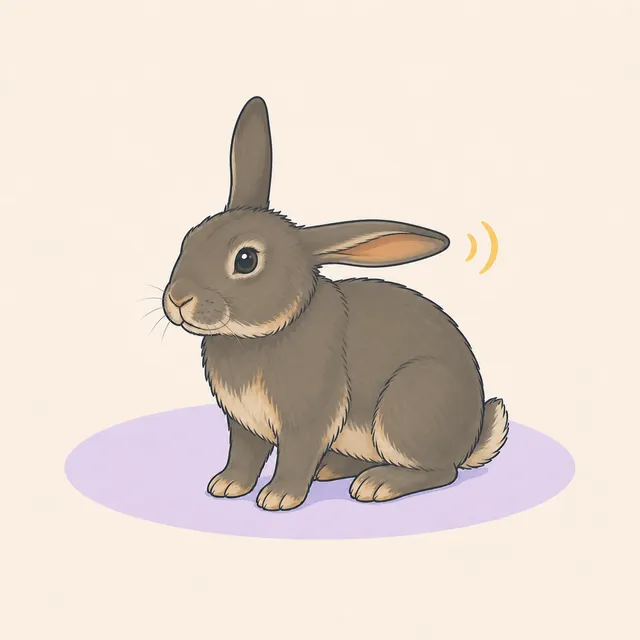
Ears rotating
Independent ear movement helps locate sound. One ear may stay with you while the other follows the room.
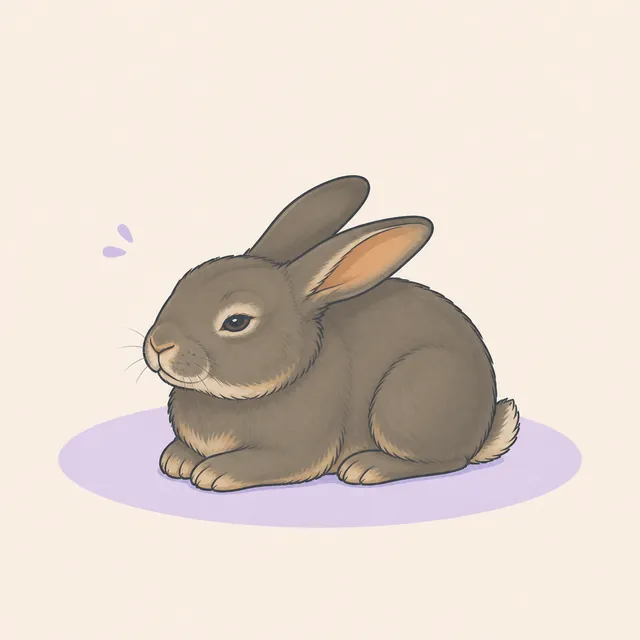
Ears loosely back
With soft eyes and a loose loaf, this can simply mean rest. The ears do not look clamped tightly to the body.
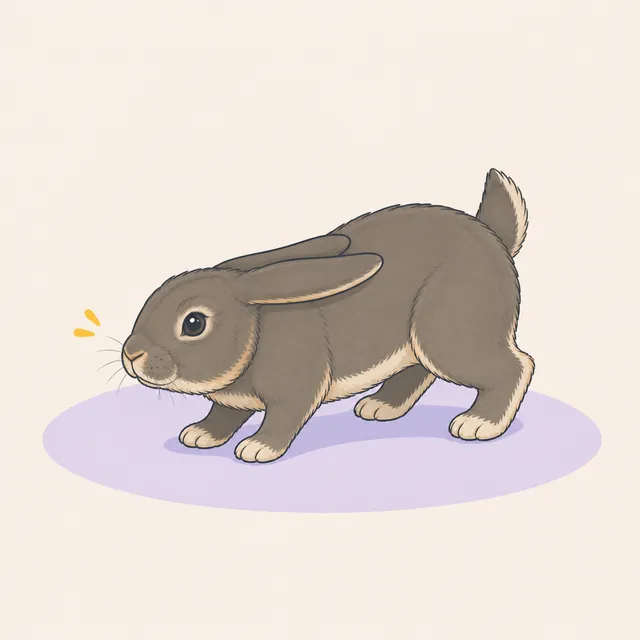
Ears pinned with tension
When paired with a tight body, raised tail, growl or lunge, flattened ears can signal fear or defensive irritation.
Eyes, nose, whiskers and tail complete the message
The face and tail often confirm what the ears only suggest. Look for a combination of small changes, especially when your rabbit is deciding whether to investigate, rest or move away.
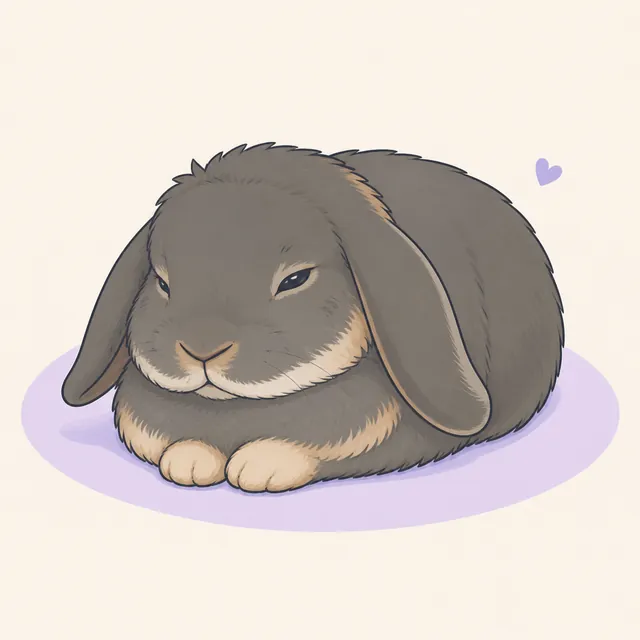
Soft, half-closed eyes
With a loose resting posture, partially closed eyes usually suggest comfort or sleepiness. Eyes that narrow alongside a hunched body can instead be a pain clue.
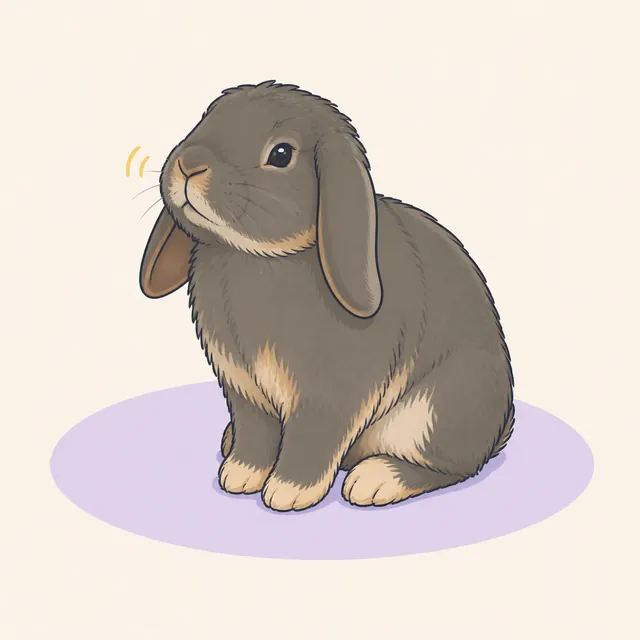
Fast or quiet twitching
A busy nose often accompanies investigation or alertness. Nose movement may slow during deep rest. Read breathing separately and seek help for labored or open-mouth breathing.
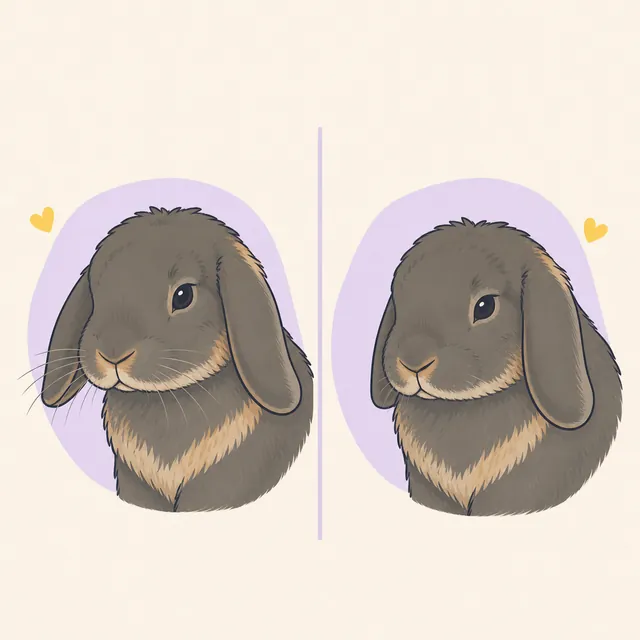
Forward or pulled in
Whiskers tend to angle forward while a curious bun investigates. Whiskers drawn tightly toward the cheeks can join other signs of facial tension.
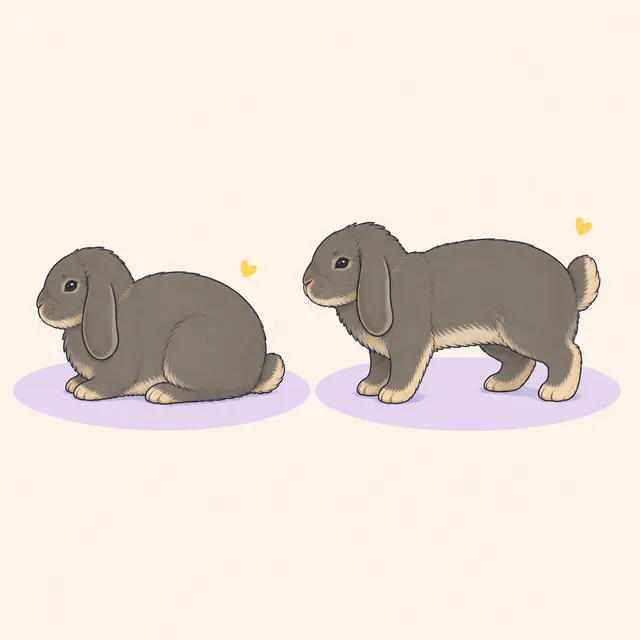
Relaxed or raised
A tail resting naturally belongs to many calm poses. A raised tail paired with a rigid body, pinned ears or a lunge can signal high arousal and a need for space.
Happy and relaxed rabbit body language
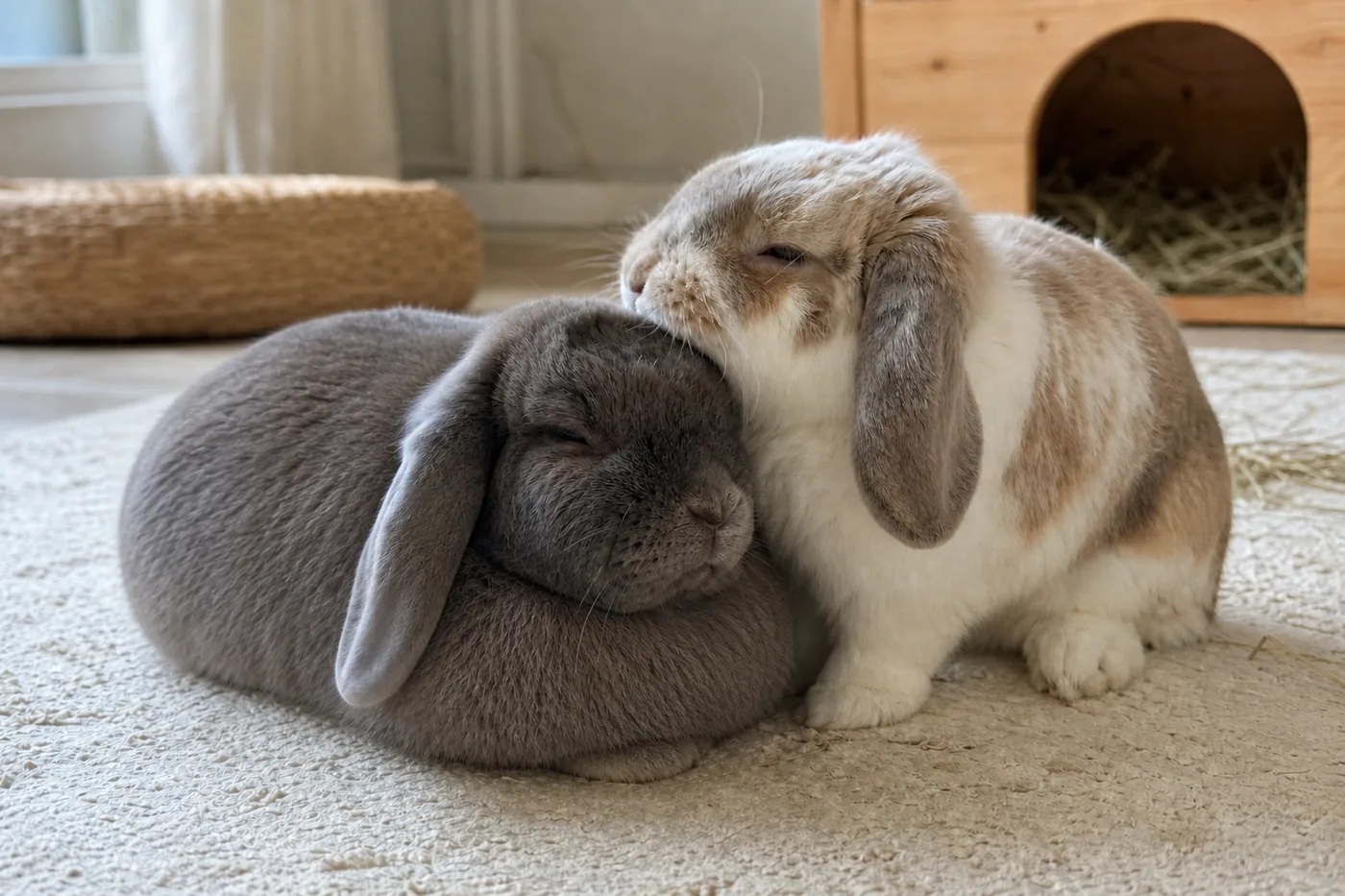
A comfortable rabbit does not always look busy. Some of the strongest signs of trust are wonderfully uneventful: your bun stretches out, closes their eyes and decides there is no urgent need to monitor you.
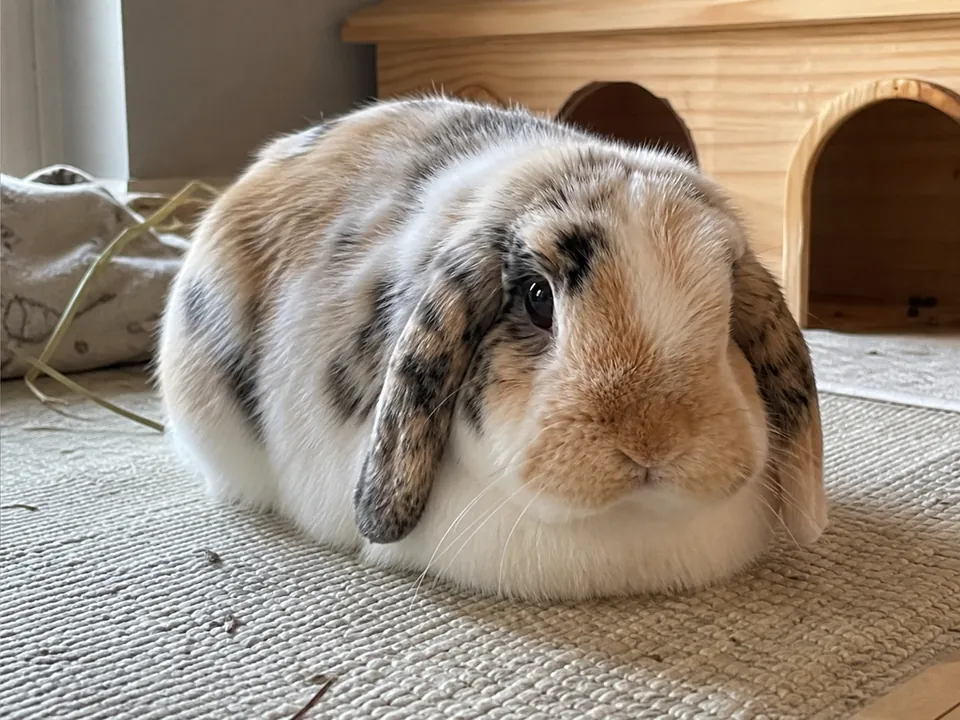
The loaf
Paws tucked under, body rounded and muscles soft. A loaf may be resting while still listening. Compare a soft loaf with a tight, hunched posture.
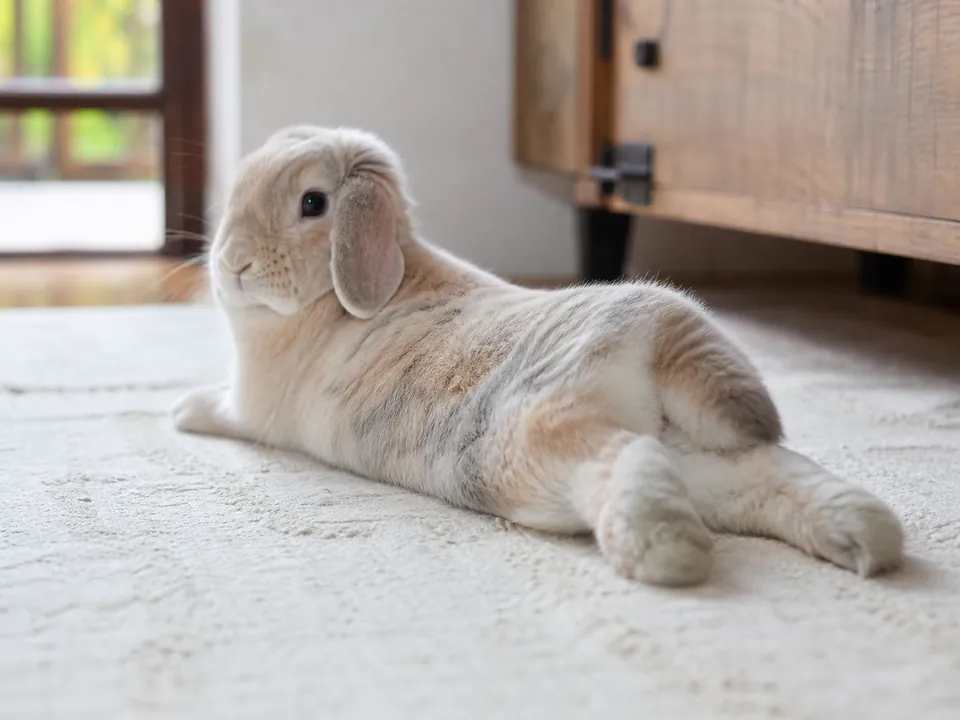
The sploot
Hind legs stretch behind or to one side. This exposed, extended position often appears when a rabbit feels comfortable on the surface.
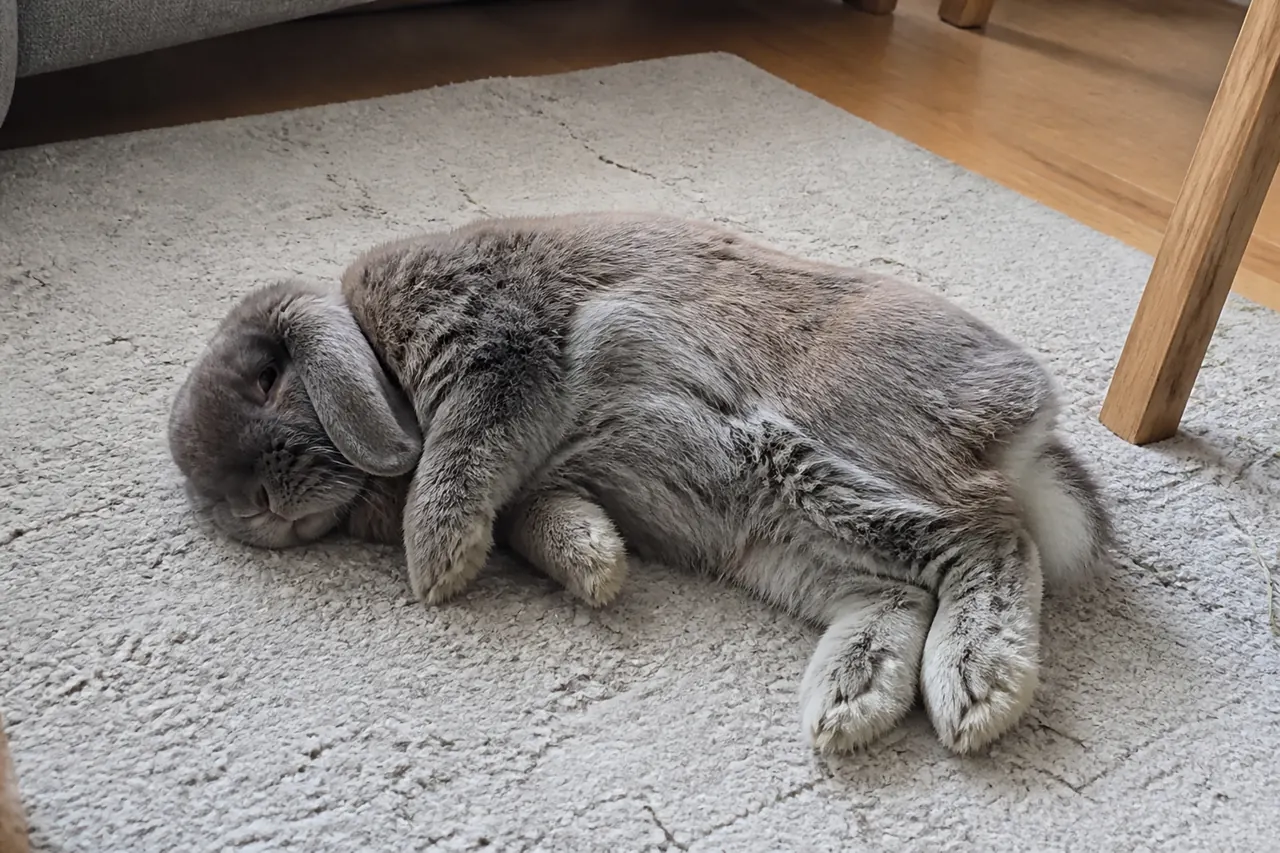
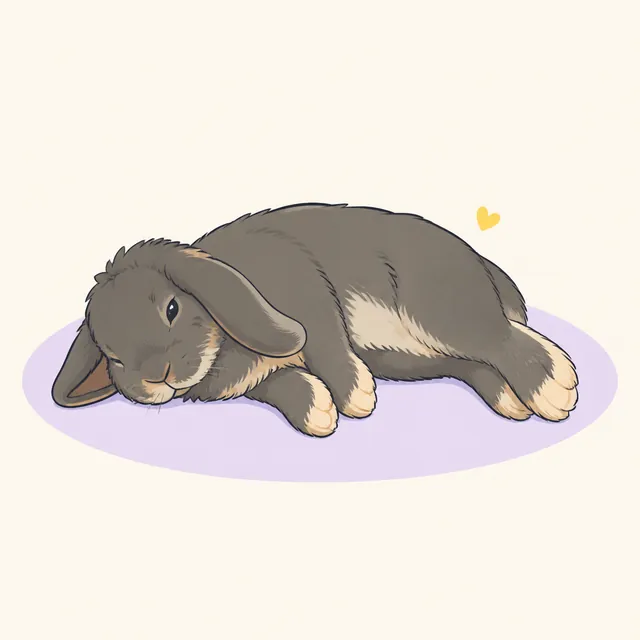
The flop
A bun suddenly rolls onto one side and looks alarmingly dramatic. In a familiar setting, with relaxed breathing and normal behavior, it is usually deep relaxation.
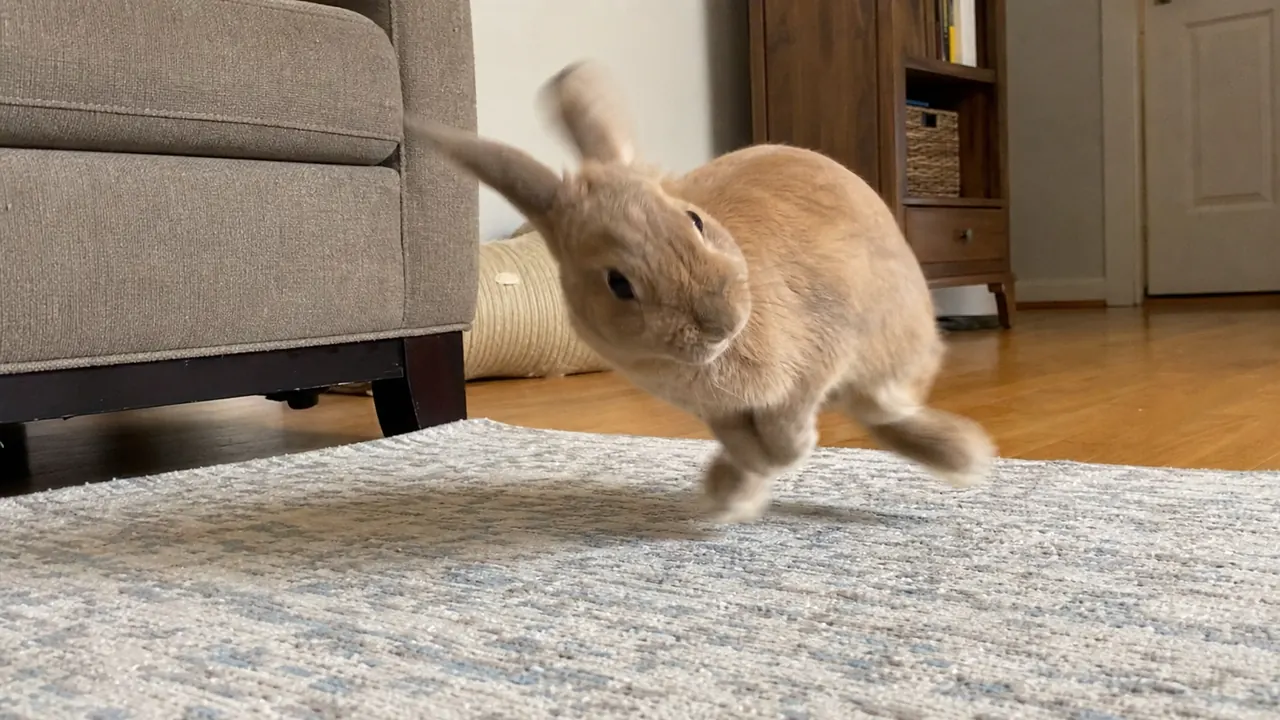
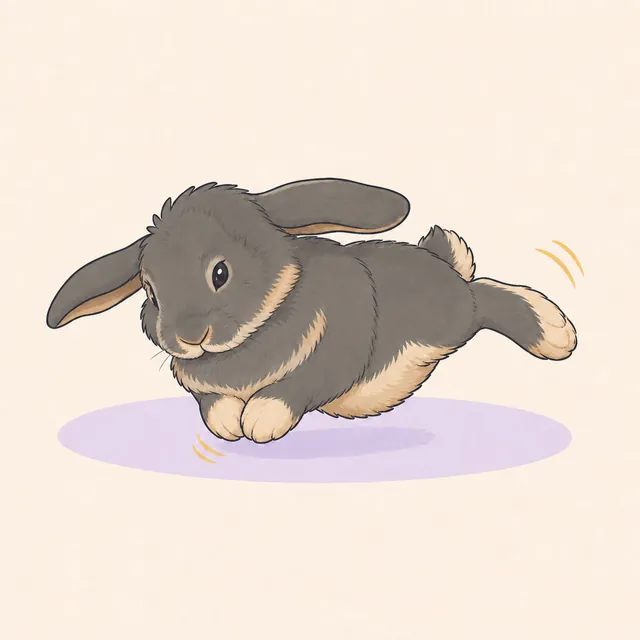
The binky
A joyful jump with a turn, head flick or sideways kick. Young buns may binky often; older rabbits sometimes offer a tiny head shake or miniature hop.
Soft, rapid tooth vibrations during gentle petting are sometimes called tooth purring. They are usually very quiet and arrive with a relaxed face. Loud grinding accompanied by squinting, hunching or reduced appetite belongs in a different category and deserves veterinary advice.
What your rabbit may be saying to you
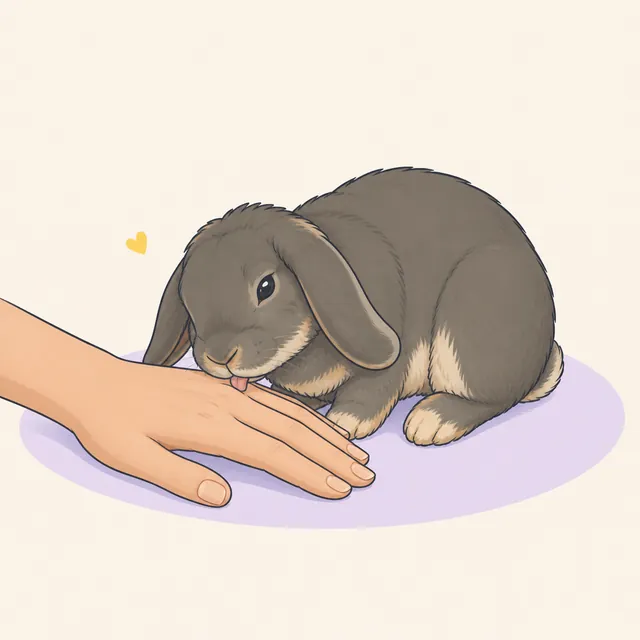
Licking you
Grooming is social. A lick often reflects trust or affection, although salty skin can also be interesting. Let the rest of the interaction confirm it.
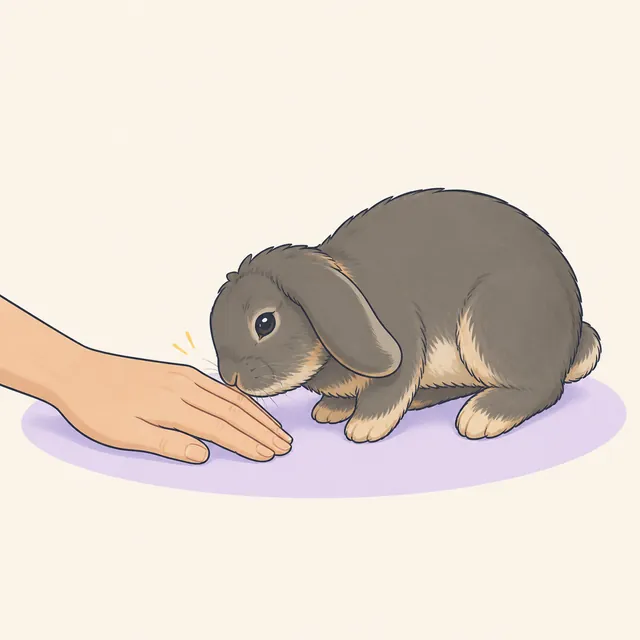
Nudging your hand
A nose nudge can mean hello, move please, investigate this, or continue petting. Pause your hand and see what your bun chooses next.
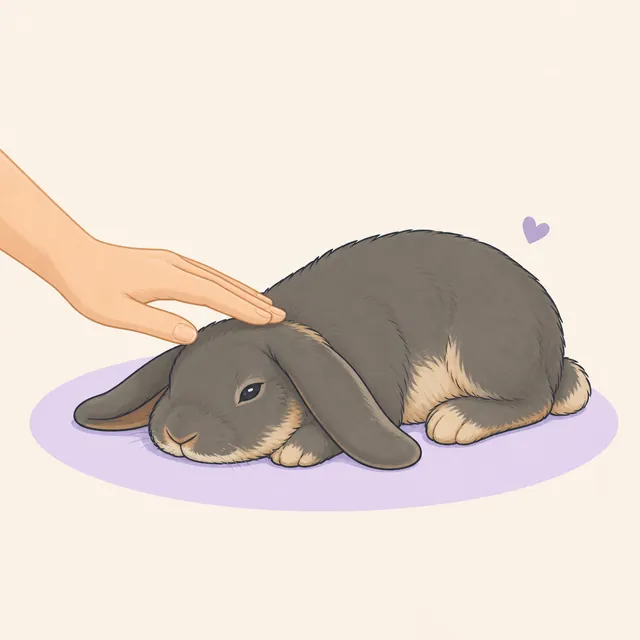
Lowering the head
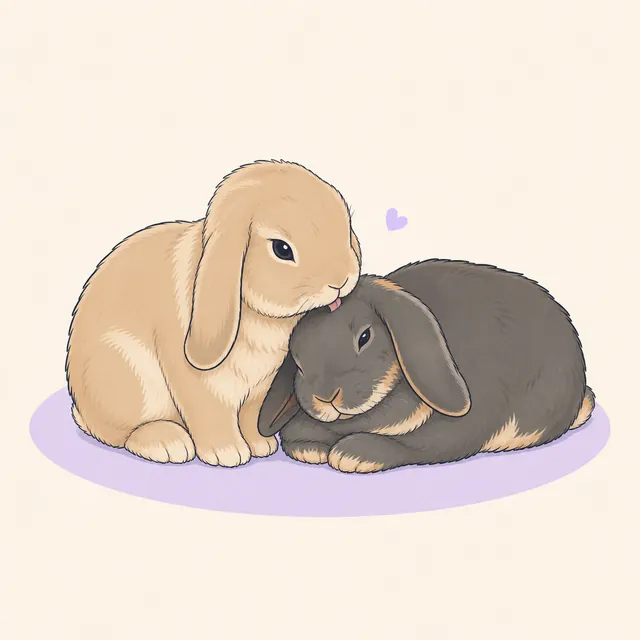
Many rabbits push their forehead under a hand or another rabbit to request grooming. Keep your hand low and stroke the forehead rather than reaching over suddenly.
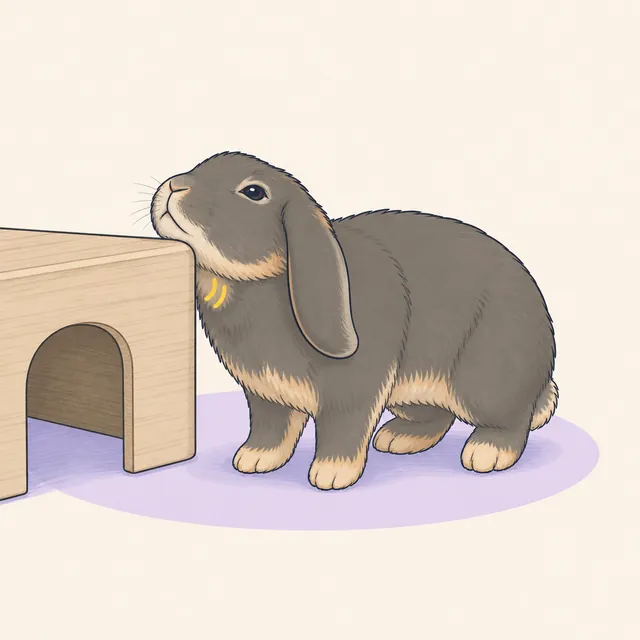
Chinning objects
The scent gland under the chin leaves an invisible personal label. Your bun is not chewing the furniture; they are quietly declaring it part of their world.
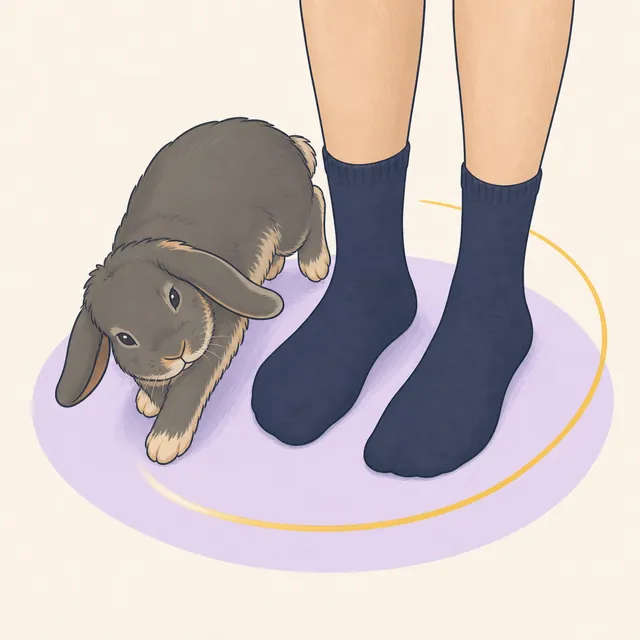
Circling your feet
Circling may reflect excitement, attention-seeking or courtship behavior. Hormones can intensify it in rabbits who are not neutered.
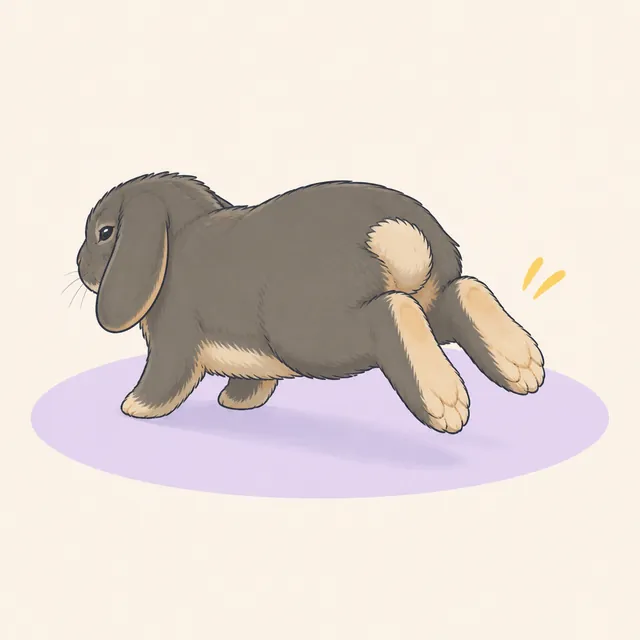
Flicking the back feet
A rabbit hopping away with an exaggerated backward foot flick is often showing displeasure. Give your offended little bun a moment to reset.
How bonded rabbits communicate
Bonded buns often speak in tiny gestures. They lean together, mirror resting positions and groom around the forehead and ears. One rabbit may lower their head very firmly beneath the other, requesting to be groomed. When the request is ignored, you may witness a brief, deeply personal rabbit disagreement.
Mounting, short chasing and head lowering can form part of rabbit social negotiation, even in neutered pairs. But relentless chasing, circling that becomes a tight tornado, biting, locked-on fighting or one rabbit being unable to rest is not a sweet bonding moment. Separate safely and seek experienced bonding guidance.
Worried, frightened or defensive body language
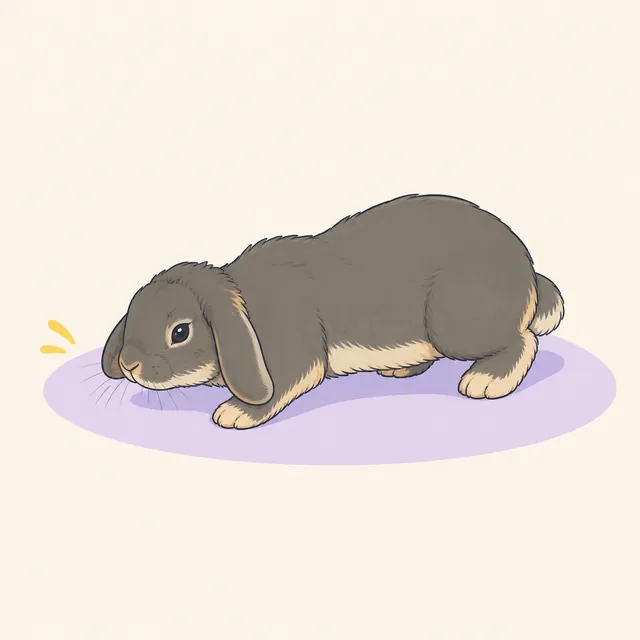
Rabbits are prey animals, so their first strategy is often to avoid attention. A worried bun may freeze, flatten down, hide or keep their weight ready to spring away. Fear does not always look dramatic.
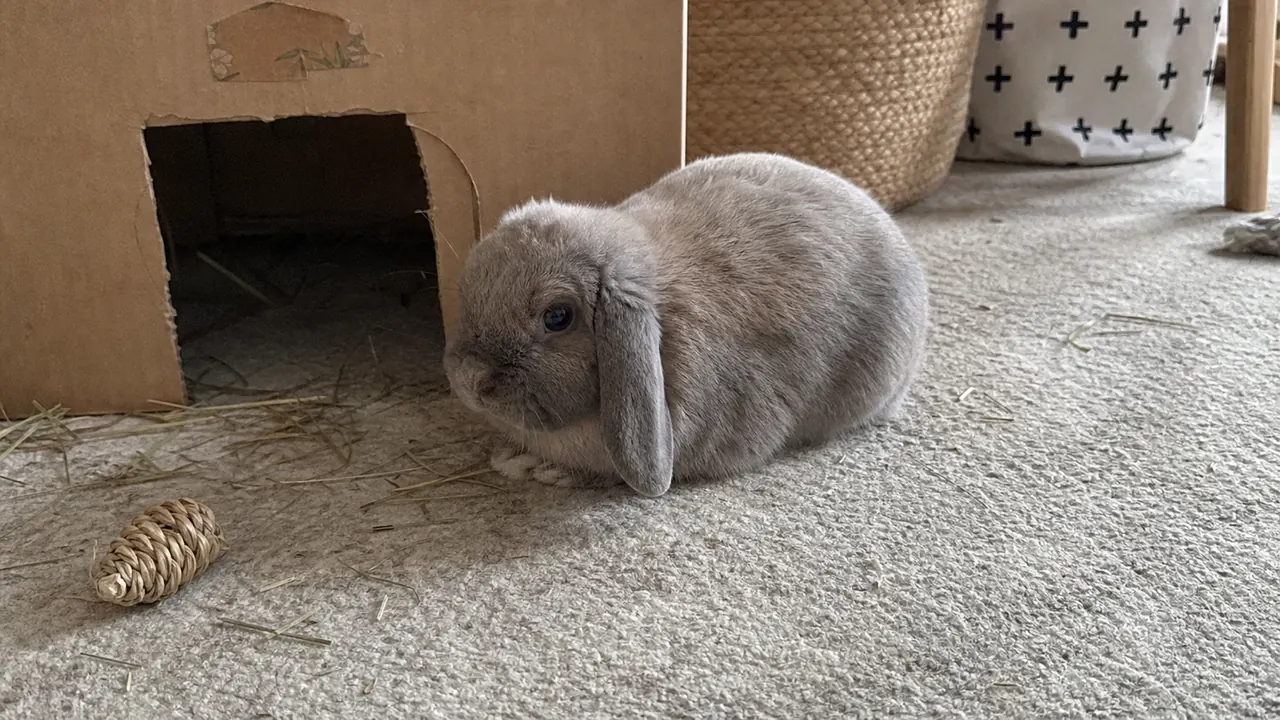
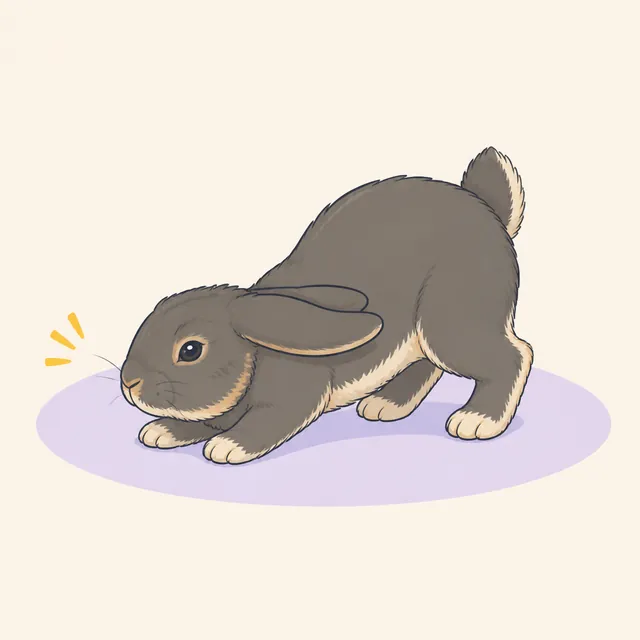
- Freeze or crouch: the body becomes small and still, eyes may widen and the rabbit may stop investigating.
- Hide: moving into a secure retreat is useful coping behavior. Never drag a scared rabbit out for social time.
- Thump: a strong hind-foot stamp can announce alarm, frustration or an unfamiliar change.
- Tail raised with a tense body: paired with pinned ears, growling or lunging, this is a clear request for distance.
- Boxing: standing on the hind legs and striking with the front paws is defensive, not a cute trick to encourage.
Lower yourself to the floor, turn slightly sideways and reduce noise. Keep the path to a hideout open. If fear repeats in one location, look for slippery flooring, loud appliances, looming movement or a setup where your rabbit feels trapped. A secure rabbit hideout with an accessible exit can give a cautious bun control over contact.
When body language may signal pain
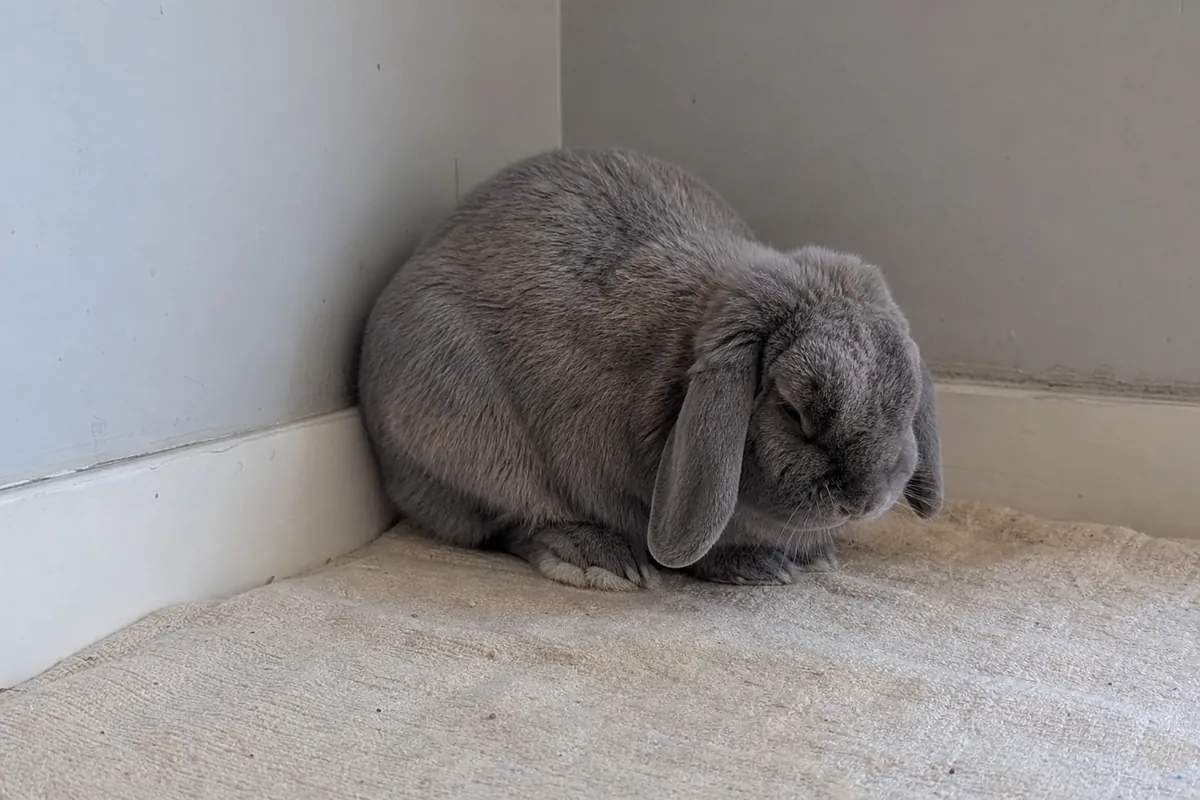
Body language can tell you that something has changed, but it cannot diagnose the cause. A rabbit in discomfort may sit hunched, squint, press the belly down, move less, isolate themselves or grind their teeth. The face can look tighter, with whiskers held closer to the cheeks.
Do not wait for a dramatic sign
If a posture change appears with reduced appetite, fewer or smaller droppings, difficulty moving, unusual breathing, persistent tooth grinding or withdrawal, contact a rabbit-savvy veterinarian promptly. Rabbits can hide illness, and “let’s see tomorrow” may be too long when eating or droppings change.
A flop is not automatically an emergency, and a loaf is not automatically healthy. Compare the posture with breathing, responsiveness, eating, droppings and your rabbit’s normal routine. Knowing your bun’s everyday body language is what makes an unusual change easier to notice.
A simple way to observe your rabbit
- Pause before interpreting.Watch quietly for 30 seconds without touching or calling your rabbit.
- Read from nose to tail.Notice eyes, ears, whiskers, muscle tension, weight distribution and tail together.
- Check the direction.Is your bun approaching, staying comfortably, preparing to flee or asking you to move away?
- Find the trigger.Listen for sounds, notice new smells and remember what happened immediately beforehand.
- Offer a choice.Stop the interaction, keep an exit open and see whether your rabbit returns voluntarily.
- Compare with normal.A sudden change in a familiar rabbit matters more than a single pose seen once.
Common rabbit body-language mistakes
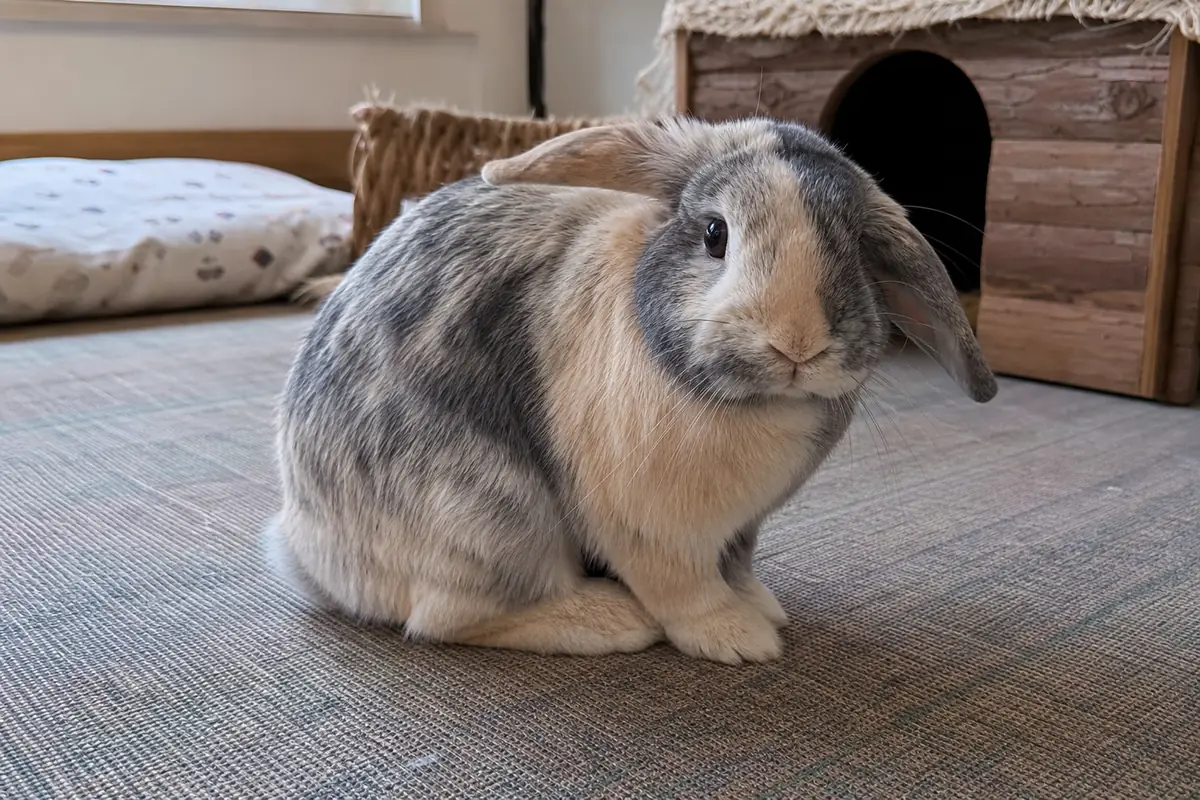
- “Ears back always means angry.” Loose ears during a sleepy loaf are different from tightly pinned ears on a tense, tail-up rabbit.
- “My rabbit froze, so they accepted being held.” Stillness can be a fear response. Calm interaction gives the rabbit choice and support.
- “A thump always means danger.” It may also express irritation or a strong opinion about a changed environment.
- “Every nip is aggression.” A light nip may request attention or movement. A hard bite with defensive posture is different.
- “A rabbit that plays is never unwell.” Look at the full day. Rabbits can have brief active moments while another health sign is developing.
Frequently asked questions about rabbit body language
Why does my rabbit stare at me?
Your rabbit may be watching your routine, listening, resting with eyes open or waiting for something predictable such as food. Check whether the body is loose and comfortable or tense and ready to flee.
Why does my rabbit lick me?
Licking often functions as social grooming and can reflect trust. Some rabbits also investigate salty skin. A relaxed approach, nudging and staying beside you support the affectionate interpretation.
Why does my rabbit thump at night?
Rabbits notice sounds and movement that humans miss. A night-time thump may follow an outdoor noise, vibration, unfamiliar smell or frustration. Check the environment calmly and make sure your rabbit has a secure retreat.
What does it mean when a rabbit’s ears are back?
It depends on tension and context. Loosely resting ears with soft eyes may mean relaxation. Ears held tightly back with a rigid body, raised tail, growl or lunge can mean fear or a warning to keep distance.
Why do rabbits flop onto their side?
A sudden side flop commonly indicates deep relaxation when the rabbit is in a familiar place, breathes normally and resumes normal activity later. If the rabbit appears unresponsive, breathes abnormally or cannot rise, seek urgent veterinary help.
How can I tell if my rabbit is happy?
Look for a pattern of relaxed resting, normal eating and grooming, curiosity, comfortable social contact and voluntary play such as zoomies or binkies. Not every happy rabbit is highly energetic.
What body language can suggest pain in rabbits?
Possible clues include hunching, squinting, reduced movement, withdrawal, a tense face and tooth grinding. These signs are more concerning when appetite or droppings change. Contact a rabbit-savvy veterinarian rather than diagnosing from posture alone.

Elodie
Rabbit guardian and care enthusiast with over 10 years of hands-on experience living with house rabbits. Through Rabbit World, Elodie shares warm, practical guidance focused on comfort, safety and the small everyday signals that help every bun feel understood.