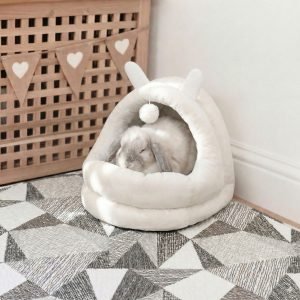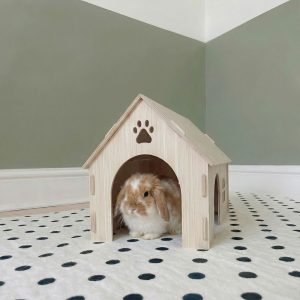
Give your bun a floor that feels safe under those fluffy feet, stays manageable after a hay explosion and does not become an irresistible snack.
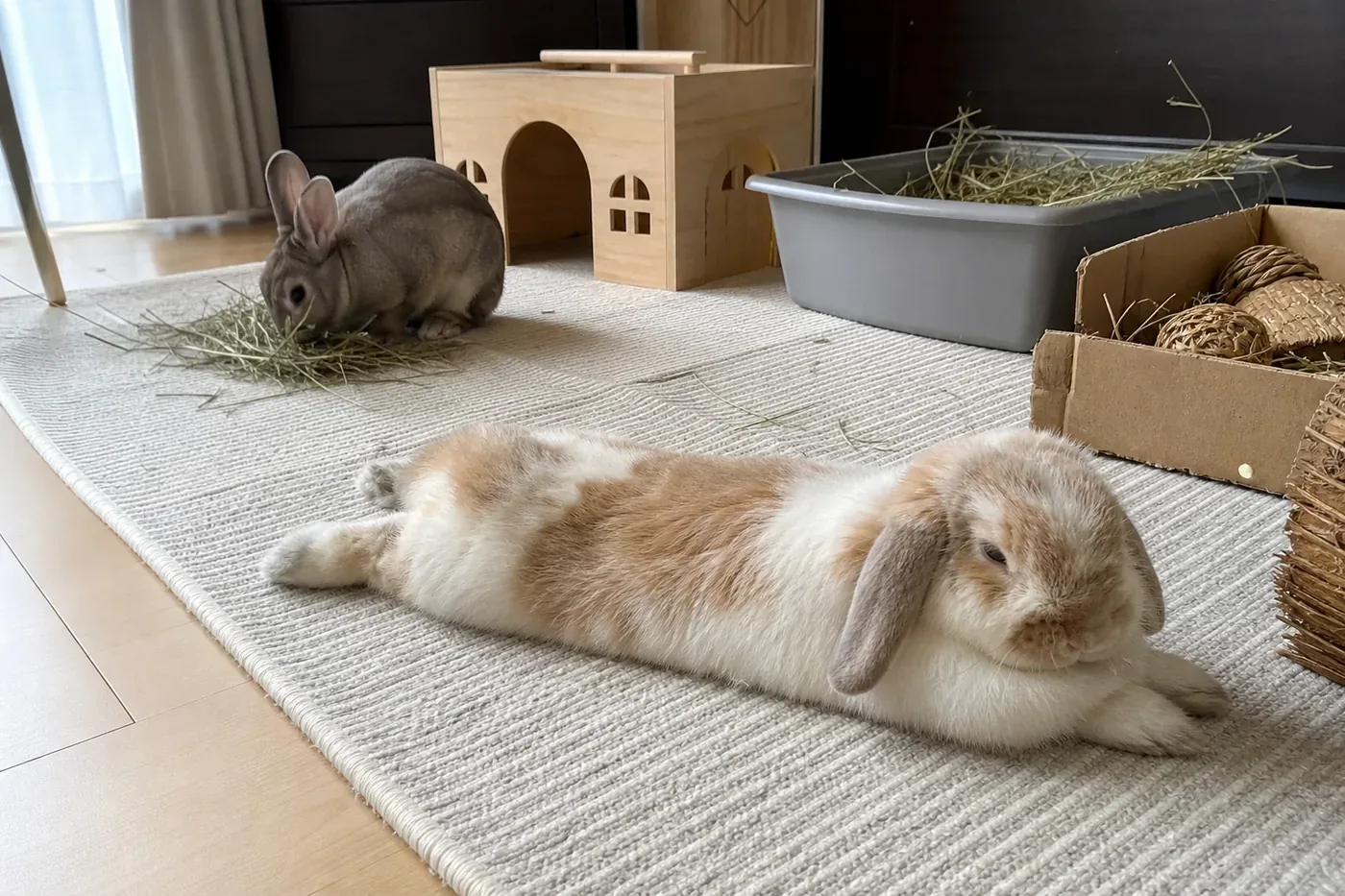
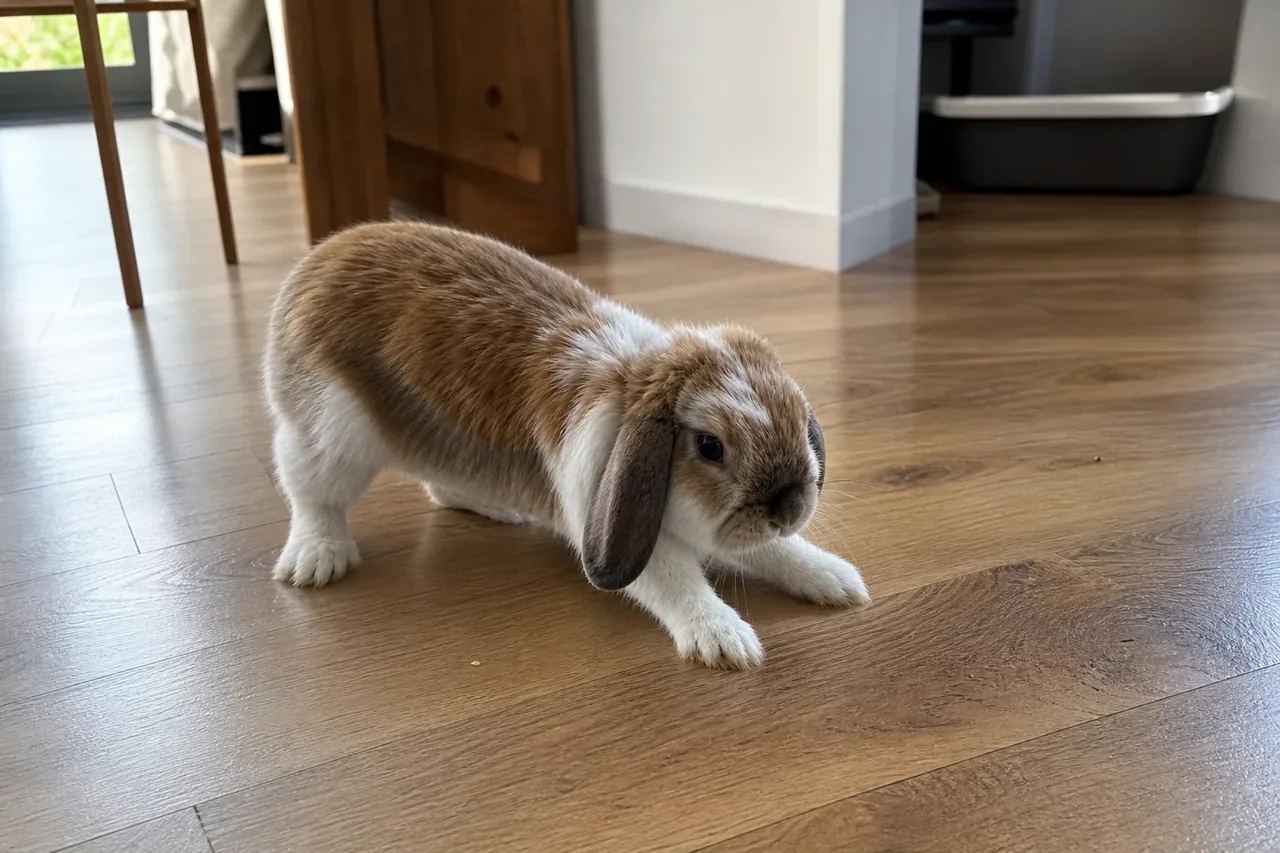
If your bunny freezes at the edge of the hardwood like it has turned into lava, they are not being dramatic. Rabbits need traction to push off, stop and turn. A polished surface can feel especially uncertain for a shy bun, senior or rabbit with stiffness.
The best indoor rabbit flooring must balance grip, paw comfort, easy washing and chewing safety. For most house buns, our favorite everyday solution is a large padded cotton mat with a non-slip backing that can go in the washing machine: a stable runway without the carpet-cleaning mission.
What rabbit-friendly flooring needs to do
Before comparing carpet, foam, vinyl or cotton mats, use four simple tests. If a floor fails one of them, it may still work in a small supervised zone, but it should not automatically cover your bunny’s whole living space.
Provide real traction
Your bun should be able to hop, turn and land without the surface sliding, wrinkling or moving under those quick back feet.
Stay gentle on paws
Choose a surface that is supportive and forgiving, not rough looped carpet or a permanently hard resting area.
Be practical to clean
Hay, fur, litter dust and the occasional pee accident are part of bunny life. The floor must dry fully and stay odor-free.
Match the chewing habit
A calm nibbler and a determined carpet eater need different setups. Exposed foam, rubber and loose fibers deserve extra caution.
The RSPCA recommends solid, non-slip flooring and warns that polished laminate, wood and tile can be slippery and stressful for rabbits. It also advises against metal grid flooring because it may harm the feet. That gives us the basic rule: start with a solid floor, then add safe traction and comfort where your bun actually moves and rests.

Indoor rabbit flooring comparison
From best to avoid. Tap a flooring type for the details.
1Padded, washable non-slip rabbit matBest overall
Verdict: Best overall choice.
Main benefit: Grip, cushioning, large coverage and machine washing.
Keep in mind: Costs more upfront, does not replace litter training and fabric chewers need supervision.
2Low-pile area rugGood with limits
Verdict: Acceptable for a litter-trained non-chewer.
Main benefit: Good traction and easy room coverage.
Keep in mind: Large or stiff rugs can be difficult to wash and remove stains from.
3Natural fiber matActivity zone only
Verdict: Best as a small supervised activity zone.
Main benefit: Textured traction and enrichment.
Keep in mind: It can fray quickly and is difficult to sanitize after urine.
4Foam puzzle tilesProtected base only
Verdict: Better as a protected base layer.
Main benefit: Cushioning and a wipeable surface.
Keep in mind: Foam can be swallowed, and urine may seep through the joins onto the floor below.
5Vinyl or linoleum baseUnder a mat only
Verdict: Useful only underneath a mat.
Main benefit: Water-resistant and easy to wipe.
Keep in mind: Too hard and slippery when used alone; exposed edges may be chewed.
6Wall-to-wall carpetDifficult long-term care
Verdict: Good grip, but difficult long-term care.
Main benefit: Continuous traction across the room.
Keep in mind: It cannot go in the washer and may trap urine, odor, hay and fur.
7Bare wood, tile or laminatePoor main floor
Verdict: Not suitable as the main bunny floor.
Main benefit: Simple cleaning for humans.
Keep in mind: Offers little traction or cushioning and may make some buns afraid to move.
8Metal grid flooringAvoid
Verdict: Avoid.
Main benefit: None for routine house-rabbit flooring.
Keep in mind: Creates uncomfortable pressure on the feet and hocks.
| Flooring type | Our verdict | Main benefit | Main drawbacks for bun and human |
|---|---|---|---|
| 1Padded, washable non-slip rabbit mat | Best overall choice | Grip, cushioning, large coverage and machine washing | Costs more upfront; does not replace litter training; fabric chewers need supervision |
| 2Low-pile area rug | Acceptable for a litter-trained non-chewer | Good traction and easy room coverage | Many are too large or stiff to wash; stains and fibers can be difficult to remove |
| 3Natural fiber mat | Small supervised activity zone | Textured traction and enrichment | Hard to sanitize after urine; frays quickly and needs frequent replacement |
| 4Foam puzzle tiles | Better as a protected base layer | Cushioning and wipeable surface | Tempting to chew, and damaged foam can be swallowed.Hidden pee risk: urine can seep through the joins and damage the floor underneath. Solution: cover the whole area with blue-and-white absorbent pee pads first. |
| 5Vinyl or linoleum base | Useful only underneath a mat | Water-resistant and easy to wipe | Too hard and slippery alone; exposed edges may be chewed |
| 6Wall-to-wall carpet | Good grip, difficult long-term care | Continuous traction across the room | Cannot go in the washer; traps urine, odor, hay and fur; loops or fibers may be chewed |
| 7Bare wood, tile or laminate | Not suitable as the main bunny floor | Simple cleaning | Little traction or cushioning; some buns become hesitant and avoid moving |
| 8Metal grid flooring | Avoid | None for routine house-rabbit flooring | Uncomfortable pressure on feet and hocks; difficult to make suitable for resting |
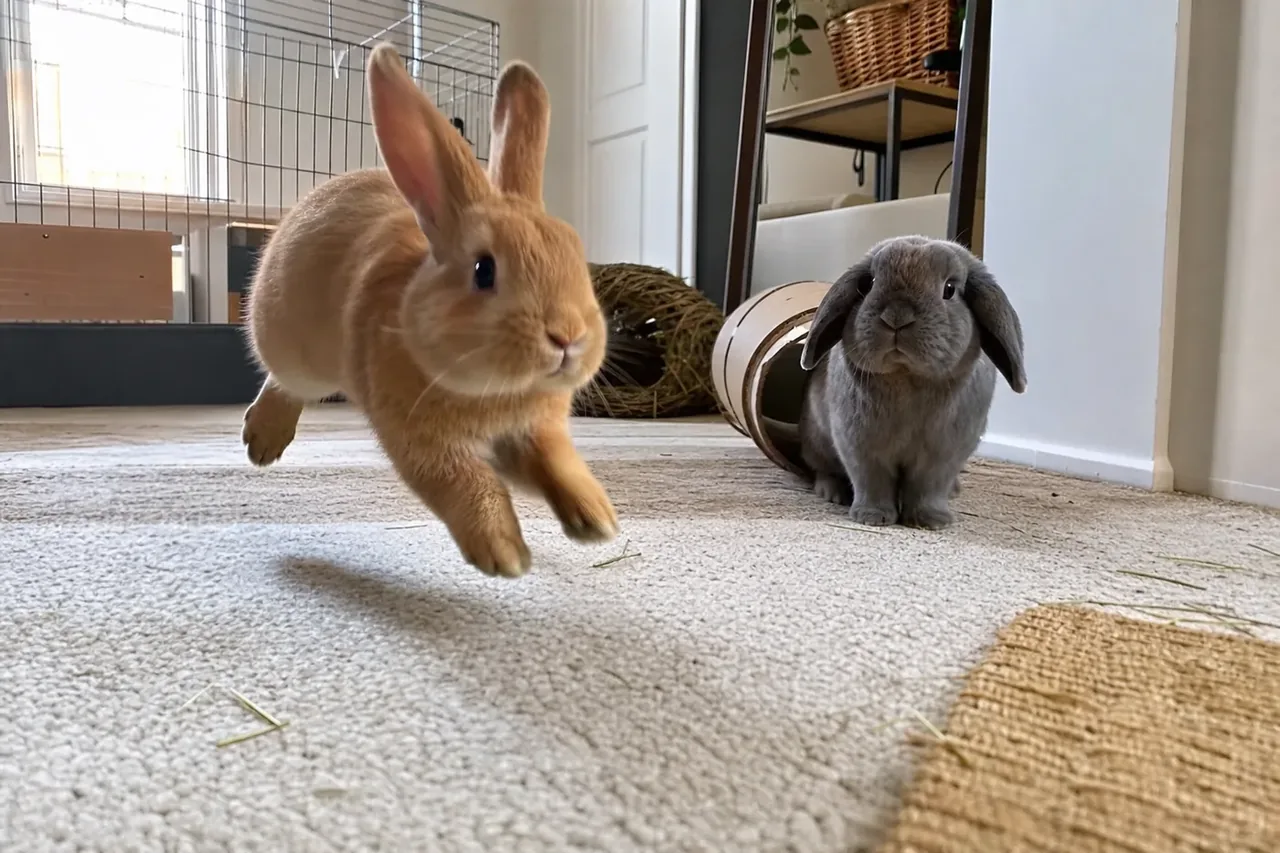
The best all-round choice: a washable non-slip rabbit mat
For a typical indoor setup, a large washable mat is the most useful starting point. It creates a continuous runway for zoomies, gives your bun a comfortable resting area and protects the floor underneath from scratches, hay and everyday mess. Unlike fitted carpet, you can lift it, inspect underneath and put it in the washing machine when bunny life gets a little too real.
Look for a top surface that feels soft but stable, a backing that grips without curling and enough size for at least several full hops. The mat should lie completely flat. A small rug that slides every time your rabbit launches into a binky is not truly non-slip, even if the label says it is.

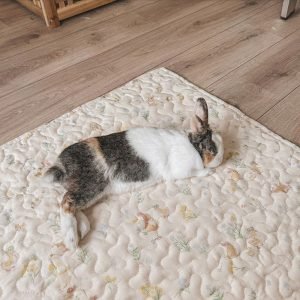
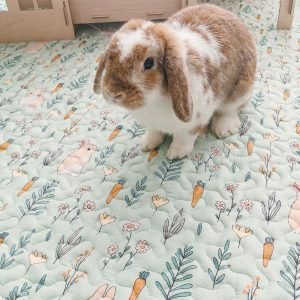
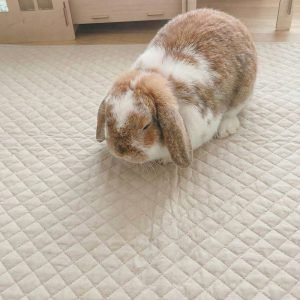
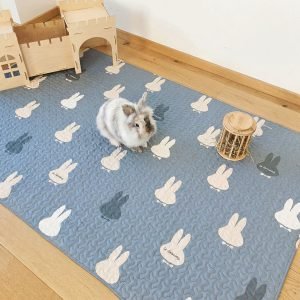
This is why the Rabbit World rabbit mat collection is our first recommendation. The large models shown here combine a soft cotton surface, inner padding, a non-slip underside and machine washing at 86°F or 30°C. The available sizes cover anything from a dedicated rest zone to a broad enclosure or free-roam lane. Measure the usable floor first and choose enough coverage for several full hops, a proper flop and a little burst of zoomies.
- For the bun: a soft padded surface with more reliable footing on wood, laminate or tile.
- For the human: loose hay and fur can be shaken or vacuumed away, then the whole mat can be machine washed.
- For the room: large sizes create one connected play and rest area instead of several sliding little rugs.
- Honest limitation: the mat is not designed to absorb urine, and a determined fabric eater still needs supervision.
Three washable mats for three kinds of bunny space
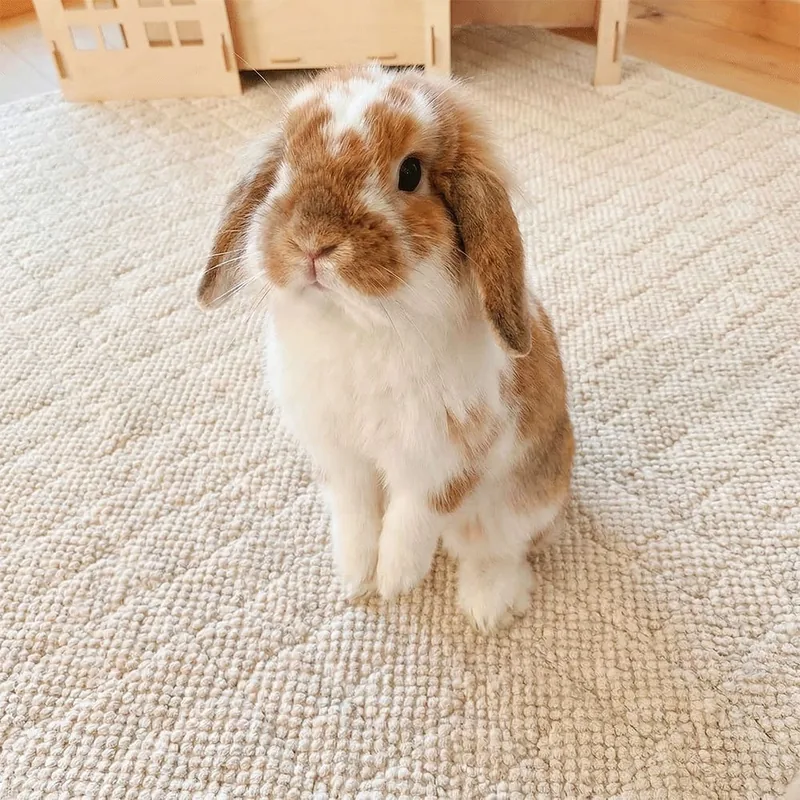
Corduroy rabbit mat
Soft corduroy velour, padded comfort, non-slip backing and machine washing at 86°F or 30°C.
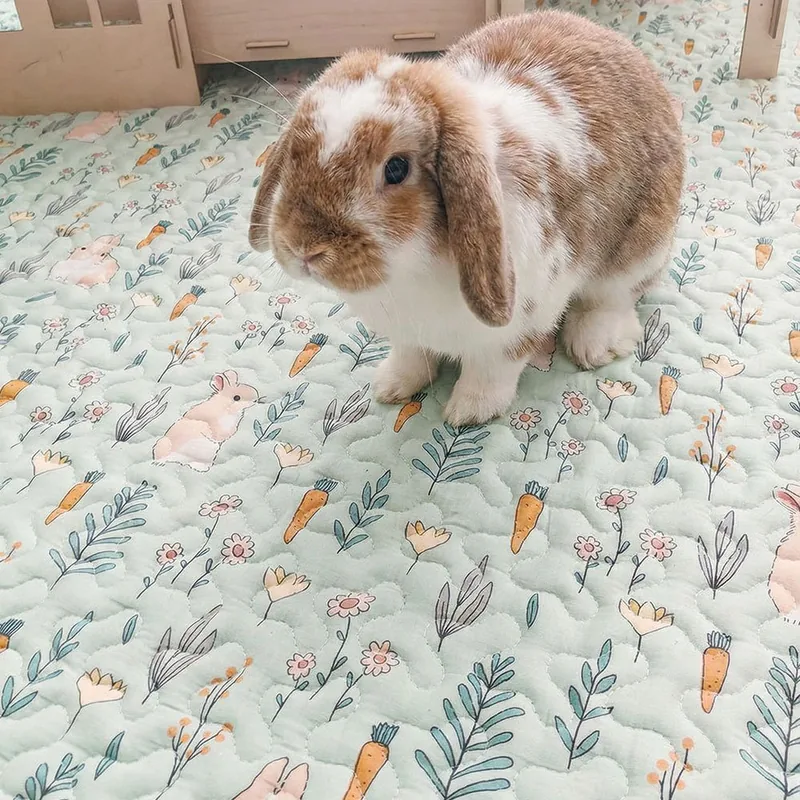
Green rabbit playmat
Soft cotton, three generous sizes and an anti-slip underside for enclosures and play areas.
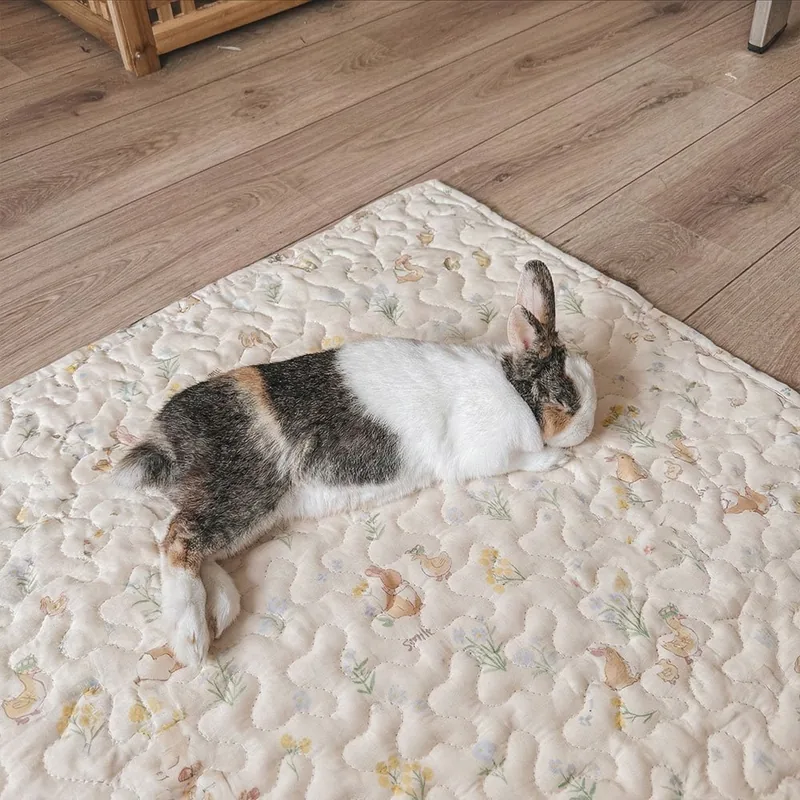
Beige non-slip rabbit mat
A washable cotton mat for hard floors, free-roam lanes and those very serious post-zoomie sploots.
Why blankets and throws rarely work as permanent rabbit flooring
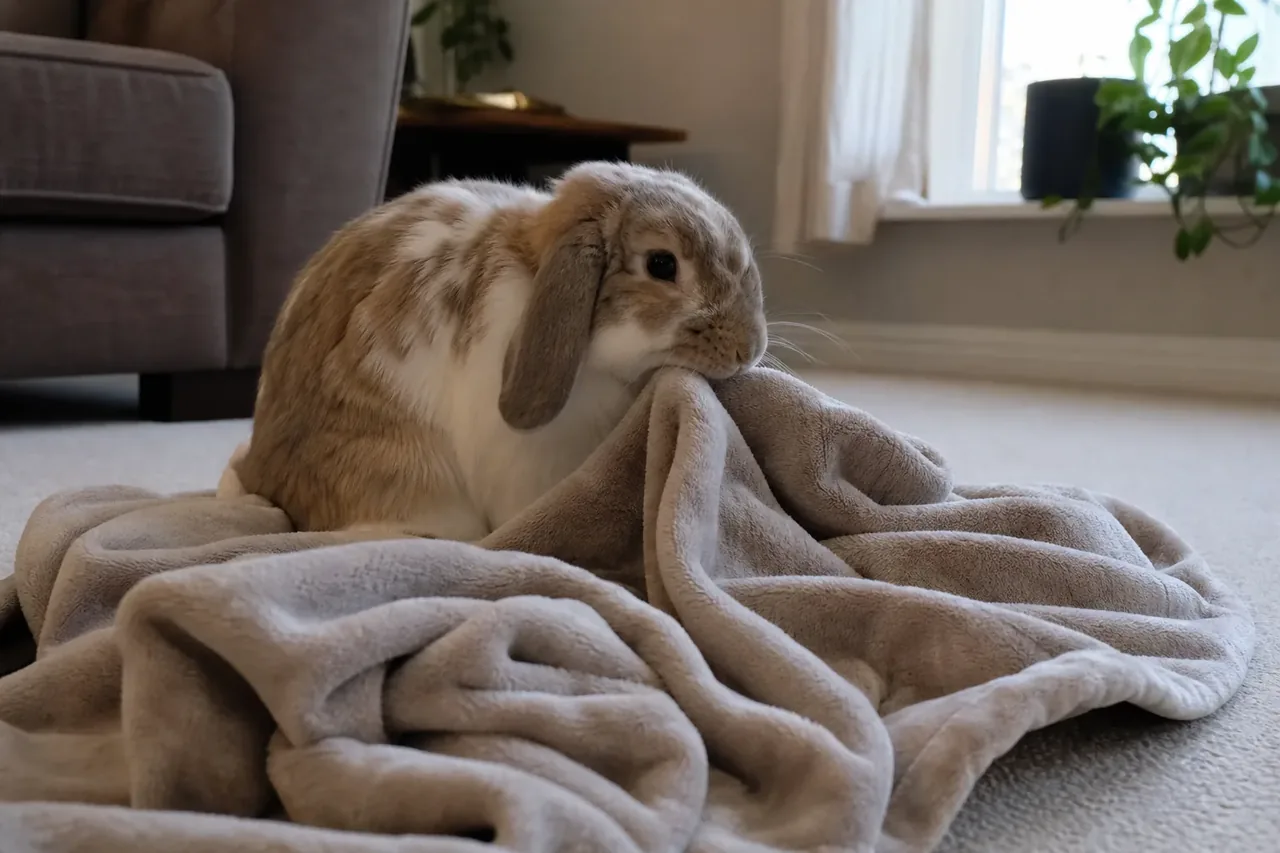
A blanket or throw looks like a quick cozy solution, but loose fabric rarely stays where you placed it. A determined little interior designer can dig, push and gather it into a soft mountain within minutes.
Those raised folds soon become tempting places to nibble. A blanket can work as a supervised snuggle spot, but a flat, grippy mat is usually more stable for everyday hops and binkies.
What if your home has wall-to-wall carpet?
“Wall-to-wall carpet” is the standard US term for carpet fitted across a whole room. It provides useful traction, but urine can reach the padding before the surface looks stained. Hay, fur and litter dust settle deep in the pile, and the entire floor cannot be lifted into the washing machine.
Cover accident-prone areas with overlapping Rabbit World pee pads, then add a large washable rabbit mat. The absorbent pads catch moisture while their waterproof backing helps protect the fitted carpet. The top mat keeps the everyday surface padded, stable and comfortable.
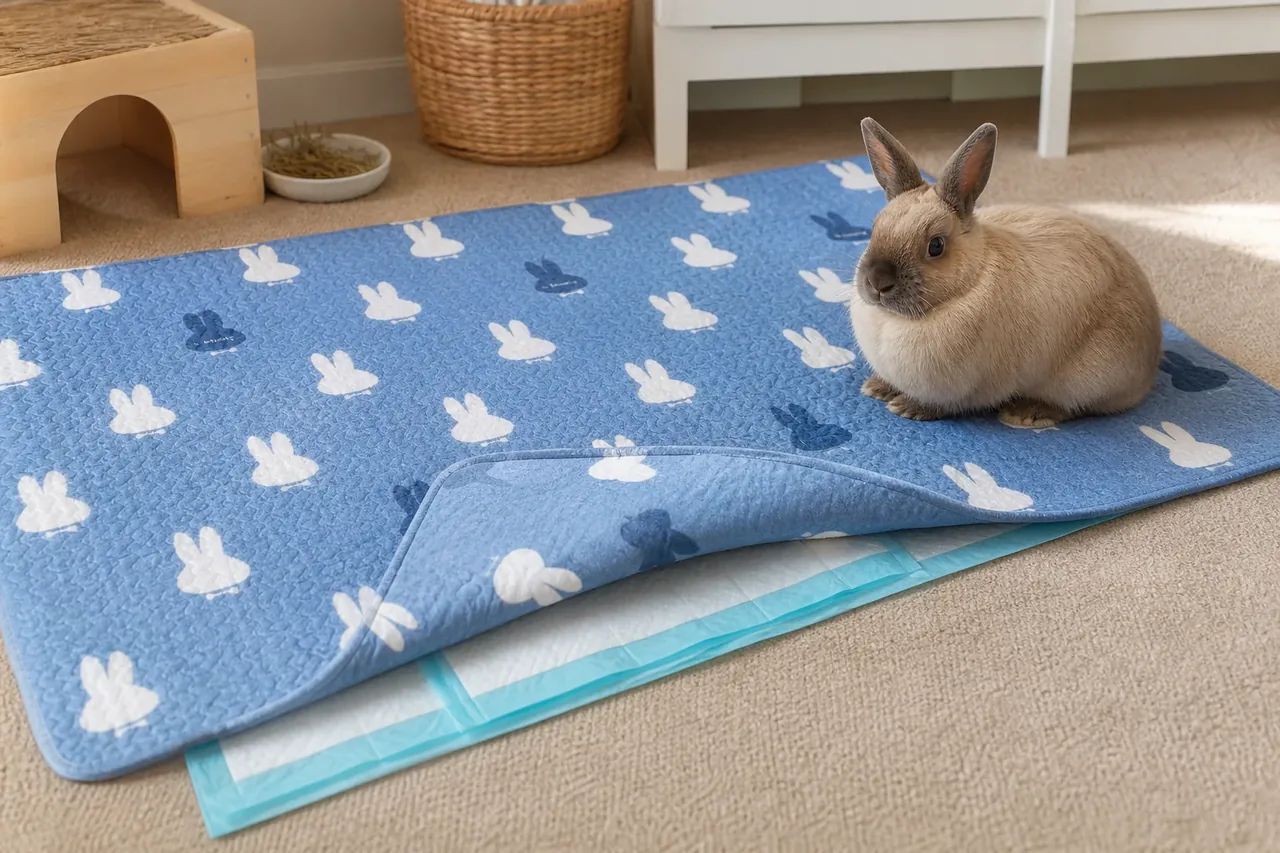
Keep every pad fully hidden from curious teeth, extend coverage beyond usual accident spots and replace wet pads promptly. A pee pad alone is thin and can shift or wrinkle; the large mat above holds the setup together and gives your bun a comfortable everyday surface.
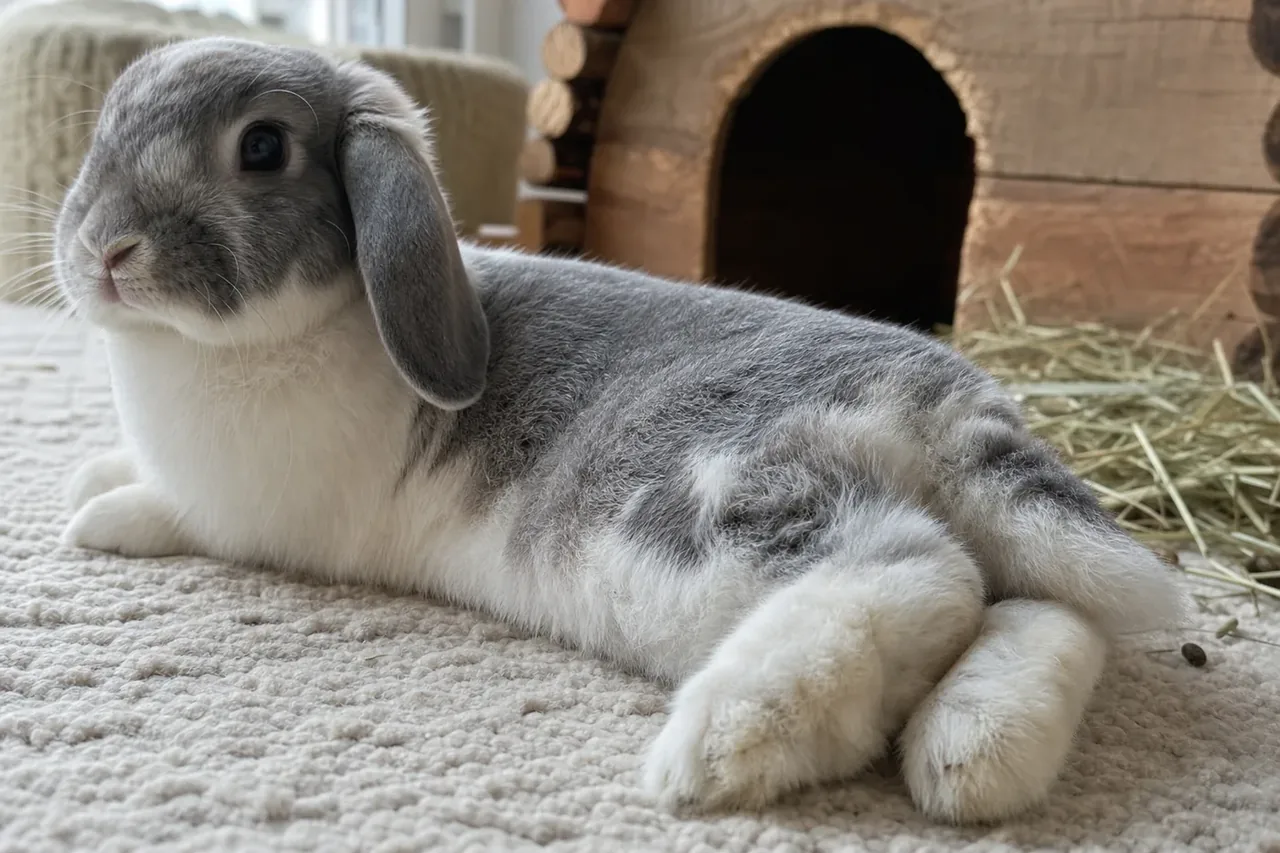
Natural fiber mats for buns who love texture
Sisal, seagrass and other untreated plant fibers add texture to a digging corner or hideout. Many bunnies enjoy scratching and rearranging them. Rabbit.org includes safely sourced, untreated organic-fiber rugs among natural play materials.
Natural does not mean maintenance-free. Avoid dyes, treatments, sharp fasteners and loose strands. Replace frayed or damp pieces. A natural sisal rabbit mat works best as a smaller activity zone, with early supervision for heavy chewers.
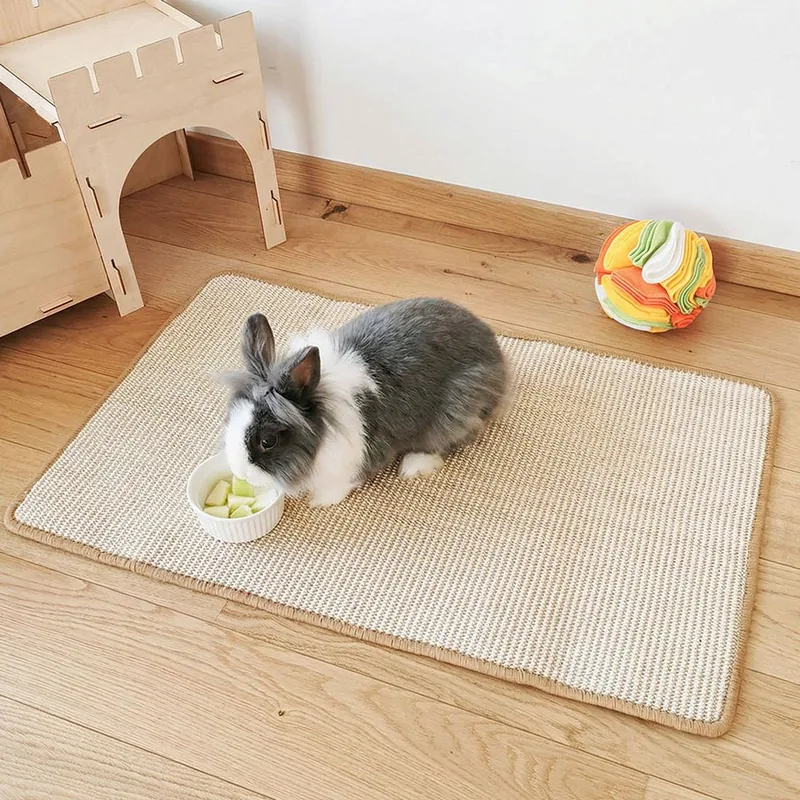
Natural sisal rabbit mat
A textured, non-slip zone for scratching, exploring and changing the feel under your bun’s feet. Available in three sizes and washable in cold water.
Are foam puzzle mats safe for rabbits?
Foam tiles are cushioned, water-resistant and replaceable section by section. They can work beneath a pen, but exposed foam edges are extremely tempting to curious teeth.
Use foam only if your rabbit leaves it alone and keep every edge inaccessible. Place overlapping absorbent pee pads beneath the full puzzle area so urine slipping through a join does not reach wood or laminate. Replace wet pads promptly and remove any tile that becomes torn or chew-marked.
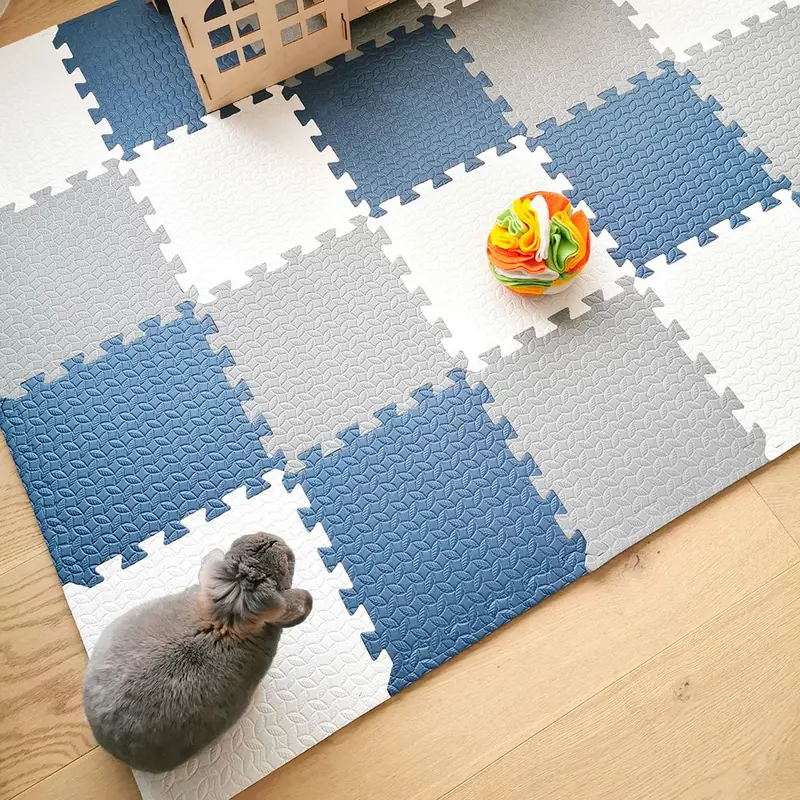
Rabbit World foam puzzle floor mat
Water-resistant cushioned panels that can be arranged to fit the play area. Use 24 or 36 tiles over absorbent pee pads for easier protection beneath the joins.
Can rabbits live on hardwood, tile or laminate?
Bare hard floors are easy to clean but usually poor as a rabbit’s main surface. Smooth wood, tile and laminate can cause hesitation or scrambling and provide little resting comfort.
You do not need to cover every inch. Build connected non-slip paths between the pen, litter box, hay, hideouts and family spaces so your rabbit can explore without crossing a slippery gap. An optional cool tile is fine when your bun can step onto a comfortable grippy surface whenever they choose.
Mix flooring textures instead of choosing only one
A bunny space works best with a few safe textures for different moments. Create connected, flat zones for sprinting, resting, cooling down or scratching.
Soft and non-slip
Use a large padded washable mat as the main runway for zoomies, flops and everyday comfort.
Cushioned foam
Add a protected puzzle zone over absorbent pee pads when you want modular coverage.
Natural sisal
Create a smaller textured spot for scratching, exploring and a different feel under the paws.
Keep every transition flat and stable, introduce materials separately and retain the textures your fluffball uses safely.
Match the floor to your individual bun
Still having little accidents?
Use a washable mat over an absorbent layer near the litter box and hay station. Keep a spare ready and avoid deep carpet that hides accidents.
Senior, Rex or mobility-limited bun
Choose continuous grip with soft resting zones and no slippery gaps. Keep essentials nearby and ask a rabbit-savvy vet about sores, pain or changed movement.
Bonded bunnies
Cover enough floor for both buns to stretch, pass and rest separately, with multiple hideouts and a couple of safe textures.
A practical mat for most indoor setups
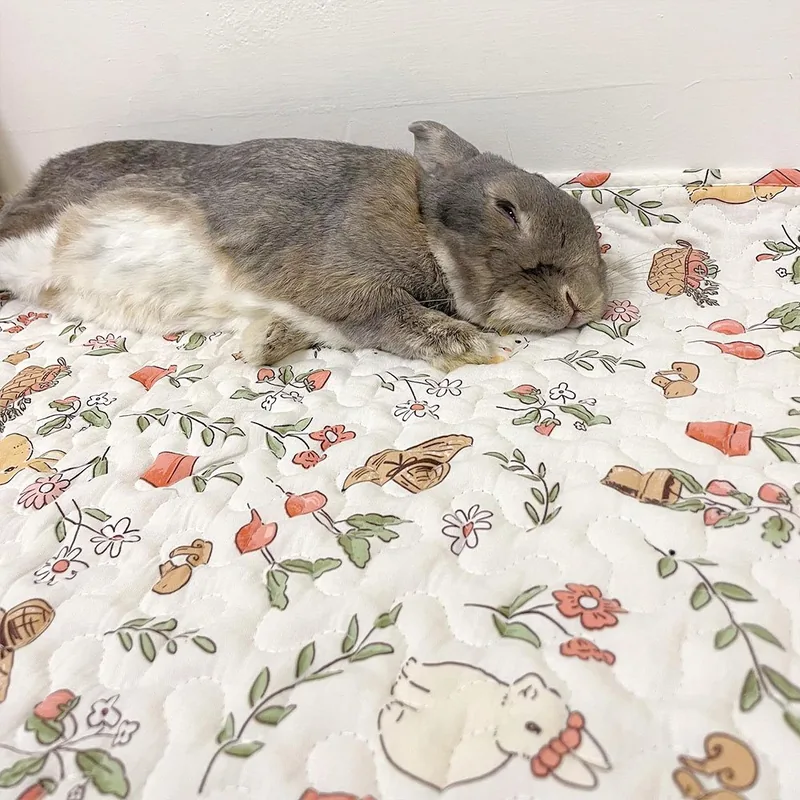
A large padded, non-slip and machine-washable enclosure mat is the easiest all-round base for young buns, seniors and bonded pairs. Add smaller foam or sisal zones when your rabbit enjoys more texture.
How to set up rabbit flooring step by step
- Map your bunny’s routes. Notice where your bun hops, eats, flops and reaches the litter box, then cover those useful paths first.
- Protect the household floor. Add waterproof-backed pee pads beneath accident-prone areas before laying the main surface.
- Add a grippy top. Lay the mat flat with no folds, loose threads or raised corners that invite chewing.
- Introduce one material at a time. Let your rabbit explore while you watch for slipping, nail catching, digging or swallowing.
- Create comfortable choices. Provide a broad exercise route, a soft resting area and an optional cool zone.
- Recheck after real use. Inspect the setup after the first day and keep the routes and textures your bun genuinely prefers.
Cleaning rabbit flooring without making life complicated
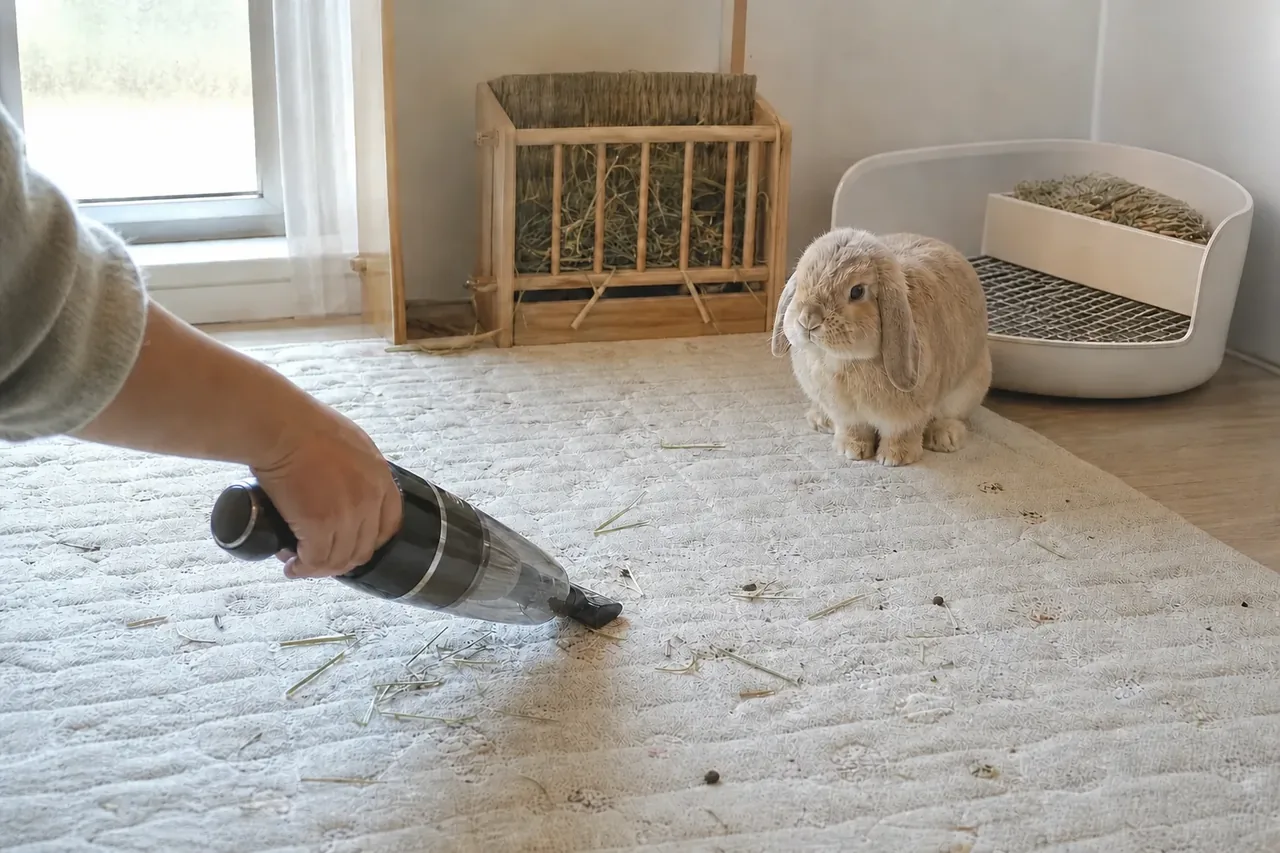
A realistic routine beats a perfect one you cannot maintain. Shake out or vacuum loose hay and fur whenever the floor starts looking like a tiny barn. Clean accidents promptly, wash according to the care label and let every layer dry fully before returning it to your bun.
Less work after an accident
Carpet may require repeated spot cleaning. A removable washable mat is easier to inspect, clean and dry.
A fresher place for fluffy feet
A liftable mat helps prevent lingering odor and hidden dampness beneath your bunny.
Use unscented, rabbit-appropriate products and rinse away residue because strong perfume can overwhelm a bunny’s sensitive nose. Avoid fabric softener unless the manufacturer approves it, and keep a second grippy surface ready while the mat dries.
- Every day: remove wet hay, droppings, loose fibers and anything sharp.
- After an accident: blot, clean and dry the full depth of the affected area.
- Each week: lift the mat and inspect both the backing and the protected floor underneath.
- Replace the floor covering: when it stays damp, smells after cleaning or has damage your bun can swallow.
Rabbit feet: what to check
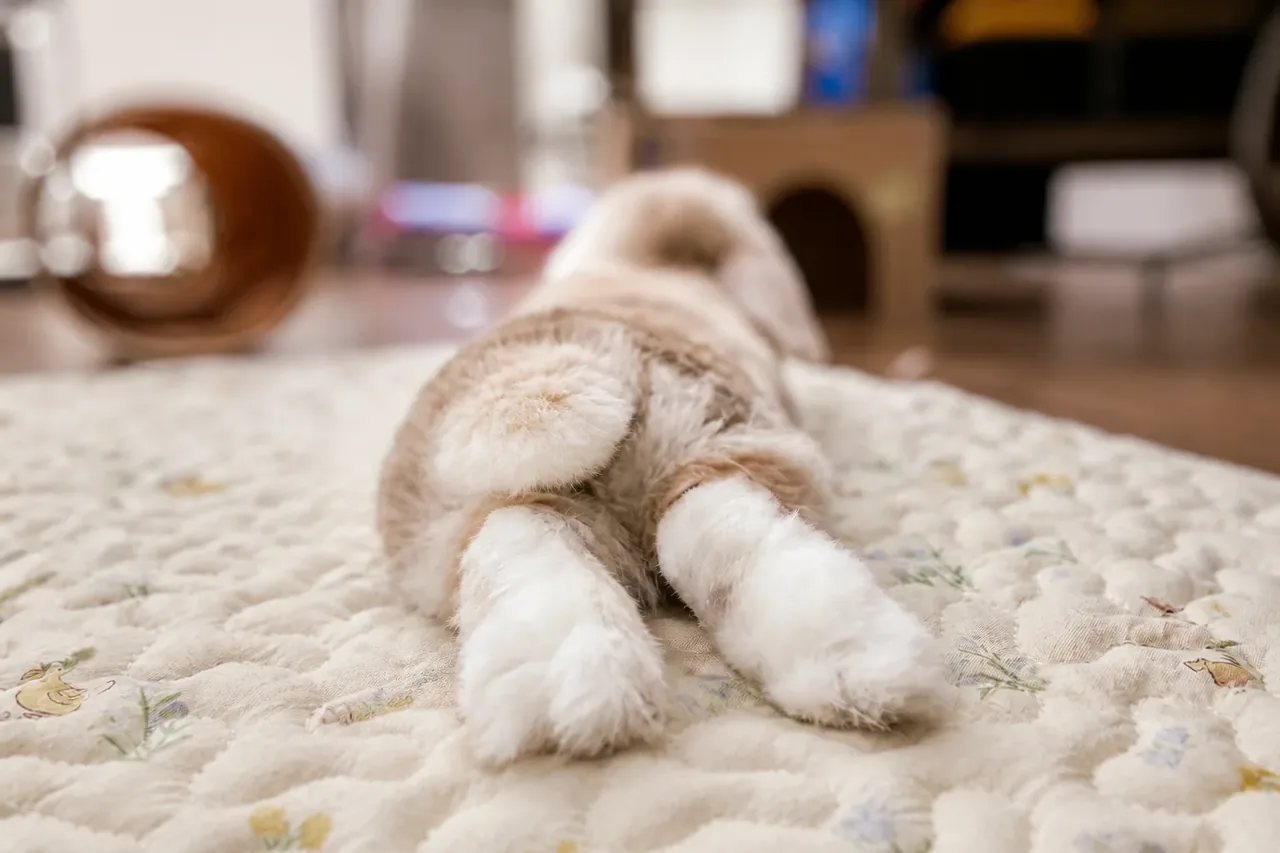
Rabbits do not have thick paw pads like dogs and cats. Their foot fur helps protect the skin where the feet meet the ground. Flooring matters, but paw health also depends on body weight, nail length, moisture, cleanliness, mobility and individual coat type.
During calm grooming, check the hind feet without forcing an unsafe position and learn what looks normal for your bun. Slightly thinner fur is not automatically disease, but redness, heat, swelling, a scab, open skin, reluctance to move or tenderness needs prompt veterinary advice. Better flooring supports comfort; it does not treat an existing wound.

Common rabbit flooring mistakes
- Choosing softness but forgetting stability. A sliding blanket can feel less secure than a thinner flat mat.
- Believing “natural” means edible. Adhesives, backing, dyes and treatments still matter, even when the top is plant fiber.
- Leaving an edge exposed. Corners and seams are often the first places curious teeth investigate.
- Covering only the pen. Slippery routes can still make your rabbit’s useful world very small.
- Waiting for visible dirt. Dampness beneath a mat can go unnoticed and irritate feet long before the top looks messy.
- Buying for the room instead of the rabbit. The best-looking rug is still the wrong one if your bun avoids it, catches nails or eats it.
Are area rugs safe for rabbits?
A flat low-pile rug can provide grip, but the setup matters more than the label. Rough loops may catch nails, and Rabbit.org warns that ingested carpet or synthetic material may block a rabbit’s digestive system.
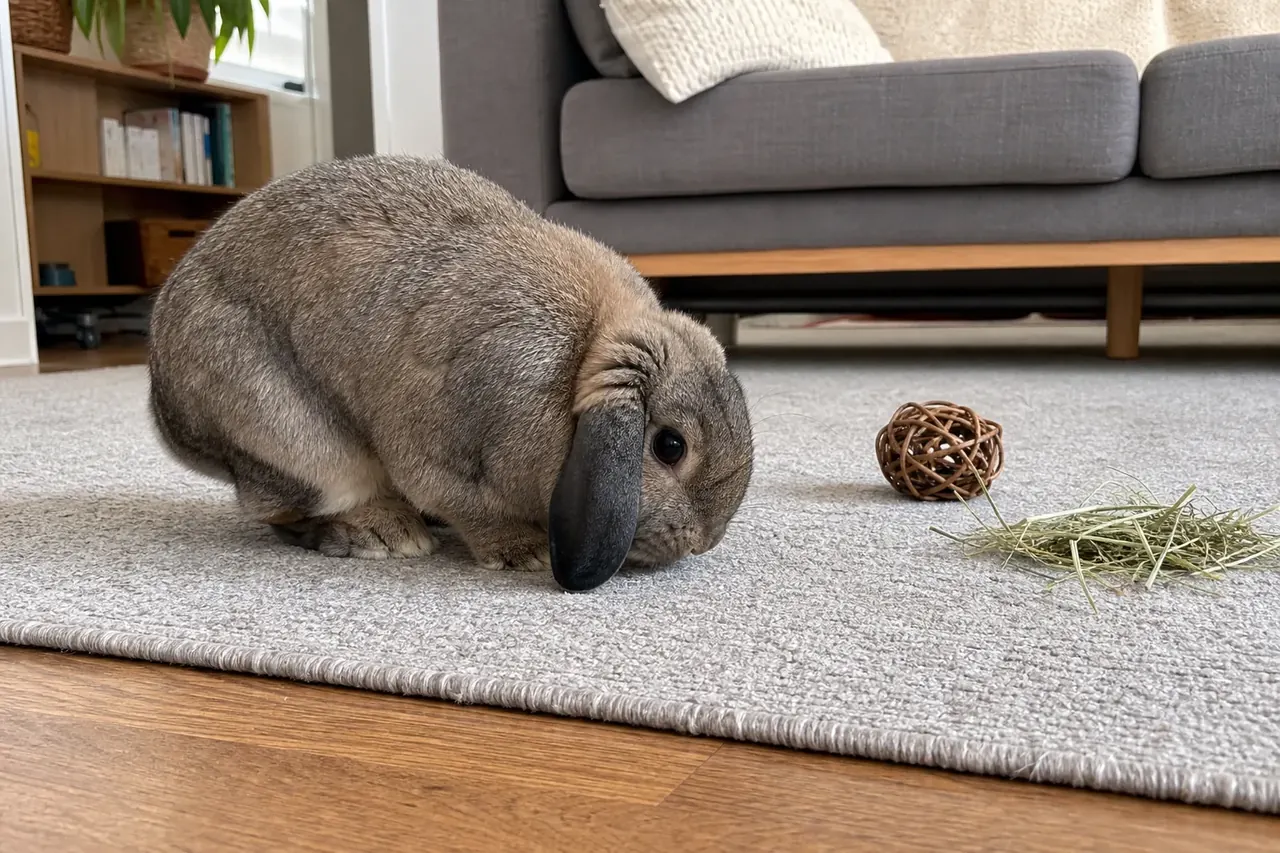
Keep every edge flat
Choose a mat that stays flat. Moving or raised corners are much more tempting to nibble.
Offer better things to chew
Keep unlimited hay available and rotate rabbit chew toys for safe gnawing and shredding.
Supervise and redirect
Supervise early sessions. If teeth reach the rug, calmly redirect your bun toward hay or an approved chew toy.
If your bun eats flooring
Remove the damaged material. If your rabbit may have swallowed carpet, foam, rubber or fabric and then becomes quiet, stops eating or produces fewer droppings, contact a rabbit-savvy veterinarian urgently.
Frequently asked questions about rabbit flooring
What is the safest floor for a rabbit enclosure?
A solid base covered with a stable, non-slip and washable surface is the safest practical choice for many indoor rabbits. The exact material depends on chewing, litter habits and mobility. Avoid metal grid flooring and remove any covering your rabbit starts swallowing.
Is carpet bad for rabbits?
Carpet can provide traction, but rough carpet may irritate feet and swallowed synthetic fibers can be dangerous. A flat low-pile rug may work for a rabbit who ignores it. It is not suitable when the rabbit digs, pulls and eats the fibers.
Can rabbits walk on hardwood floors?
Some rabbits will cross hardwood, but many find polished wood slippery and stressful. Use connected mats or runners so your bun can reach important areas with secure footing. Offer hard flooring only as an optional surface, not the only place to move and rest.
Are foam mats safe for bunnies?
Foam mats can provide cushioning and easy cleaning only when the rabbit does not chew them. Hide all exposed edges, supervise the introduction and remove the tiles at the first sign that pieces are being swallowed.
Can I use towels or blankets as rabbit flooring?
They can provide a temporary soft spot, but they often slide, wrinkle and invite chewing. Use them only when stable and when your rabbit does not ingest fabric. A fitted non-slip mat is usually more practical for a permanent exercise area.
How often should a rabbit mat be washed?
There is no fixed schedule for every bun. Remove wet or dirty material immediately and wash whenever the mat is soiled or smells. A reliably litter-trained rabbit may need less frequent full washes than a rabbit with accidents. Always inspect underneath at least weekly.
Can a soft mat cure sore hocks?
No. Better flooring may reduce pressure and form part of a care plan, but sore hocks can involve weight, nails, moisture, mobility and infection. Red, painful, swollen or broken skin should be assessed by a rabbit-savvy veterinarian.