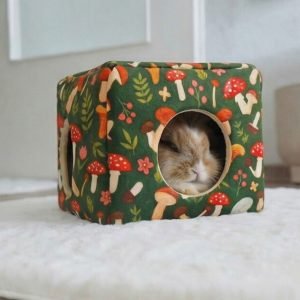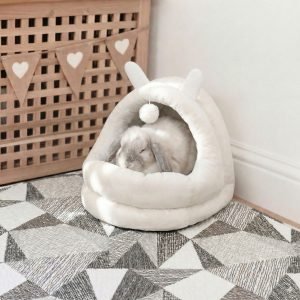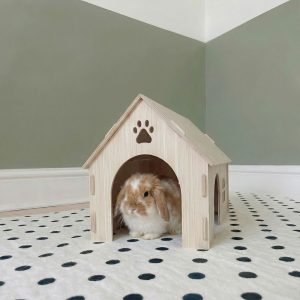
The best rabbit toy is not the cutest object in the basket. It is the one that gives your bun a safe, satisfying way to do what rabbits already want to do.
What are the best toys for rabbits?
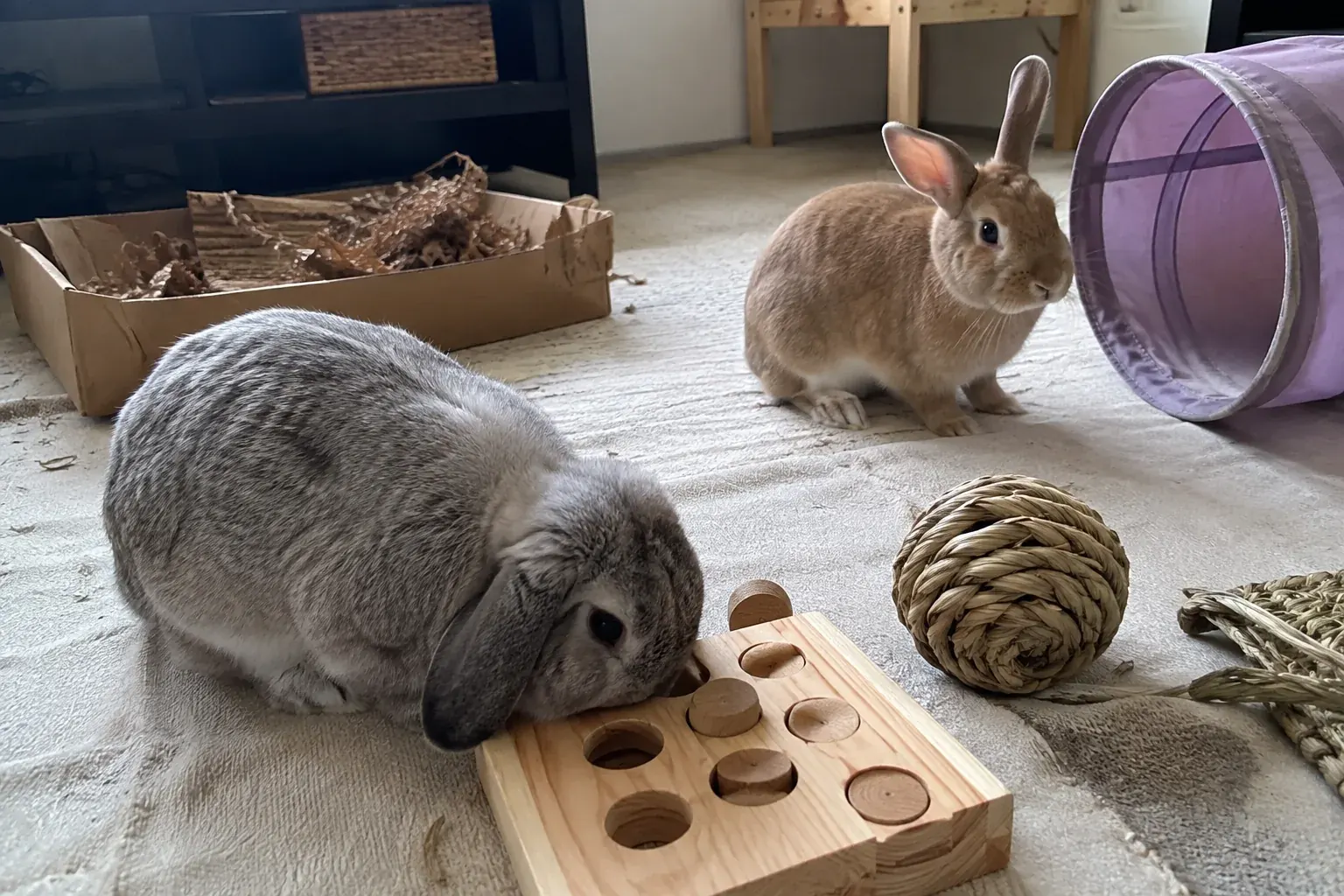
The best rabbit toys support natural digging, chewing, foraging, hiding, nudging and tossing. Start with a roomy digging box, safe plant-based chew items, a simple food-search activity and a tunnel with comfortable openings. Match every toy to your rabbit’s size and habits, supervise the first uses and remove it if pieces, fibres, sharp edges or damaged fastenings appear. Toys add enrichment, but they never replace unlimited suitable hay, exercise space, companionship or veterinary care.
Rabbits do not need a mountain of toys. They need a living space that lets them move freely and a small selection of activities with a clear purpose. One rabbit may spend twenty minutes excavating a cardboard box and ignore every puzzle. Another may dismantle a woven ball before breakfast. A third may prefer running through a tunnel, chinning the entrances and flopping inside.
That individuality is the starting point. Instead of asking which toy is universally “best”, watch what your rabbit already chooses. Does your bun pull at the edge of the mat, strip bark from safe branches, search every fold for food or push bowls across the floor? Those actions reveal the type of enrichment most likely to be used.
Choose rabbit toys by natural behaviour
RSPCA enrichment guidance focuses on opportunities to explore, dig, forage, chew, hide and interact. Toys work best when they expand those opportunities without crowding the exercise area or forcing a rabbit to participate.
Digging
Boxes, trays and robust forage activities give busy front paws an acceptable place to scratch and rearrange.
Chewing
Hay, suitable branches and plant-based toys offer different textures for gnawing, stripping and shredding.
Foraging
Scatter feeding, snuffle mats and simple puzzles turn part of the normal ration into a search.
Exploring
Tunnels, boxes, cups and movable objects invite sniffing, nudging, carrying, hiding and route-making.
| What your rabbit does | Try first | Why it fits | Check before leaving it |
|---|---|---|---|
| Scratches carpet corners | Large digging box | Redirects digging to a deep, movable substrate | Stable sides, plain filling and no swallowed material |
| Chews furniture edges | Hay plus safe branches or woven grass | Offers interesting textures near the problem area | Correct plant material, no treatments and no sharp damage |
| Searches bags and blankets | Forage box or supervised snuffle mat | Rewards sniffing and careful investigation | Food releases easily and fabric is not being eaten |
| Pushes and throws bowls | Stacking cups or sturdy toss toy | Turns nudging and lifting into object play | No small detachable parts or cracked plastic |
| Dashes behind furniture | Wide tunnel or multi-exit hide | Creates a safer covered route for exploration | Enough diameter, accessible exits and sound seams |

Best digging toys for rabbits
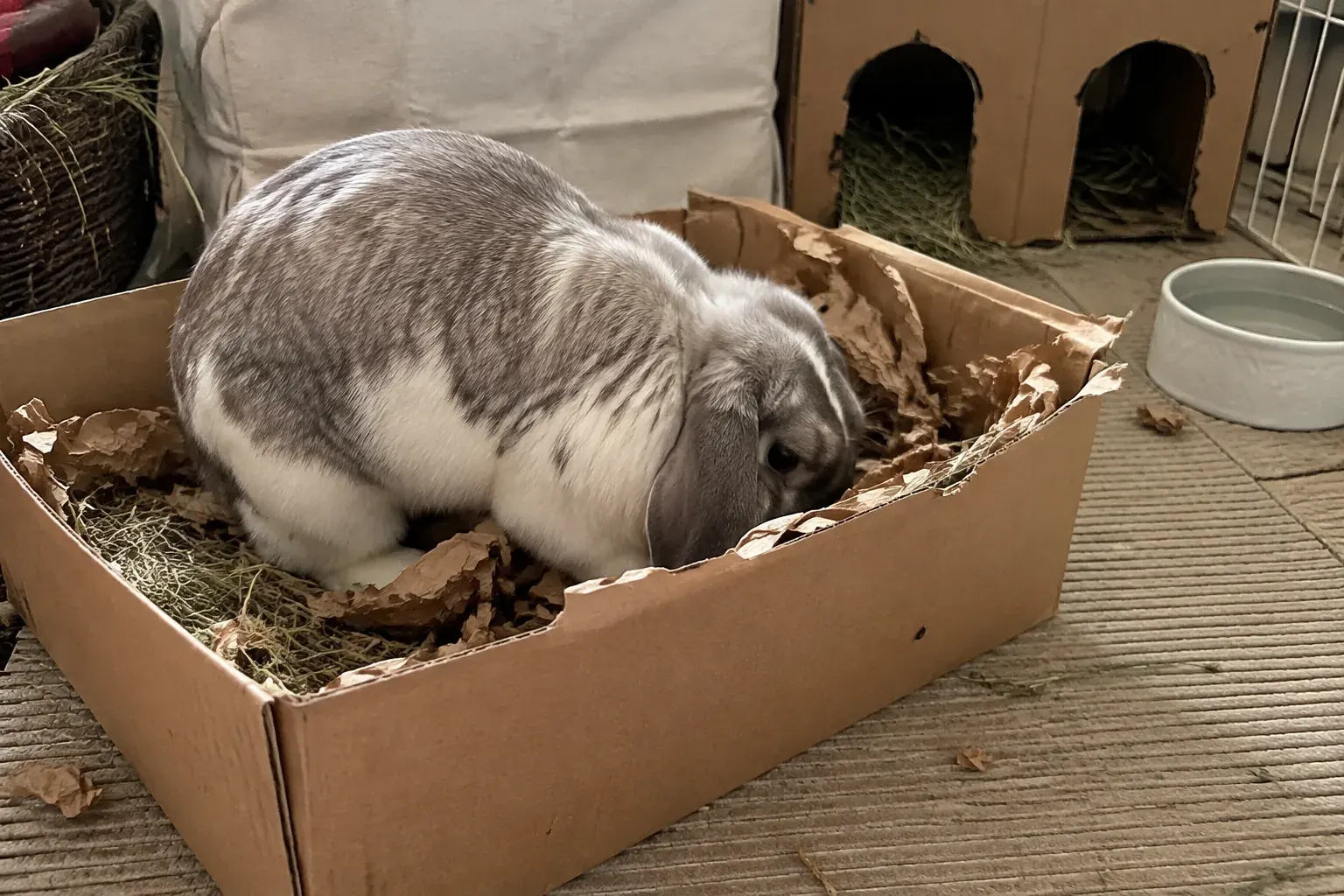
Begin with a proper digging box
Choose a box or tray wide enough for your rabbit to turn around and deep enough to move the filling without immediately emptying it. Plain shredded paper, torn cardboard and hay create useful textures indoors.
Put the box where digging already happens, but keep the route around it open. If your rabbit eats large amounts of paper or filling, change the material and discuss unusual ingestion with your veterinarian.
A digging box is often more successful than a tiny “digging toy” because the rabbit can place the whole front half of the body into the activity. High sides help contain the enthusiastic housekeeping. A second doorway cut into a cardboard box can make the activity feel more sheltered, but every opening must be smooth and large enough for an easy exit.
For a lighter search-and-scratch activity, try a forage tray or snuffle-style toy under supervision. The goal is not to make food difficult or frustrating. Hide only a few pellets or herbs and let the rabbit discover them quickly at first. A determined fabric chewer needs paper, cardboard or another non-fabric option instead.
Best chew toys for rabbits
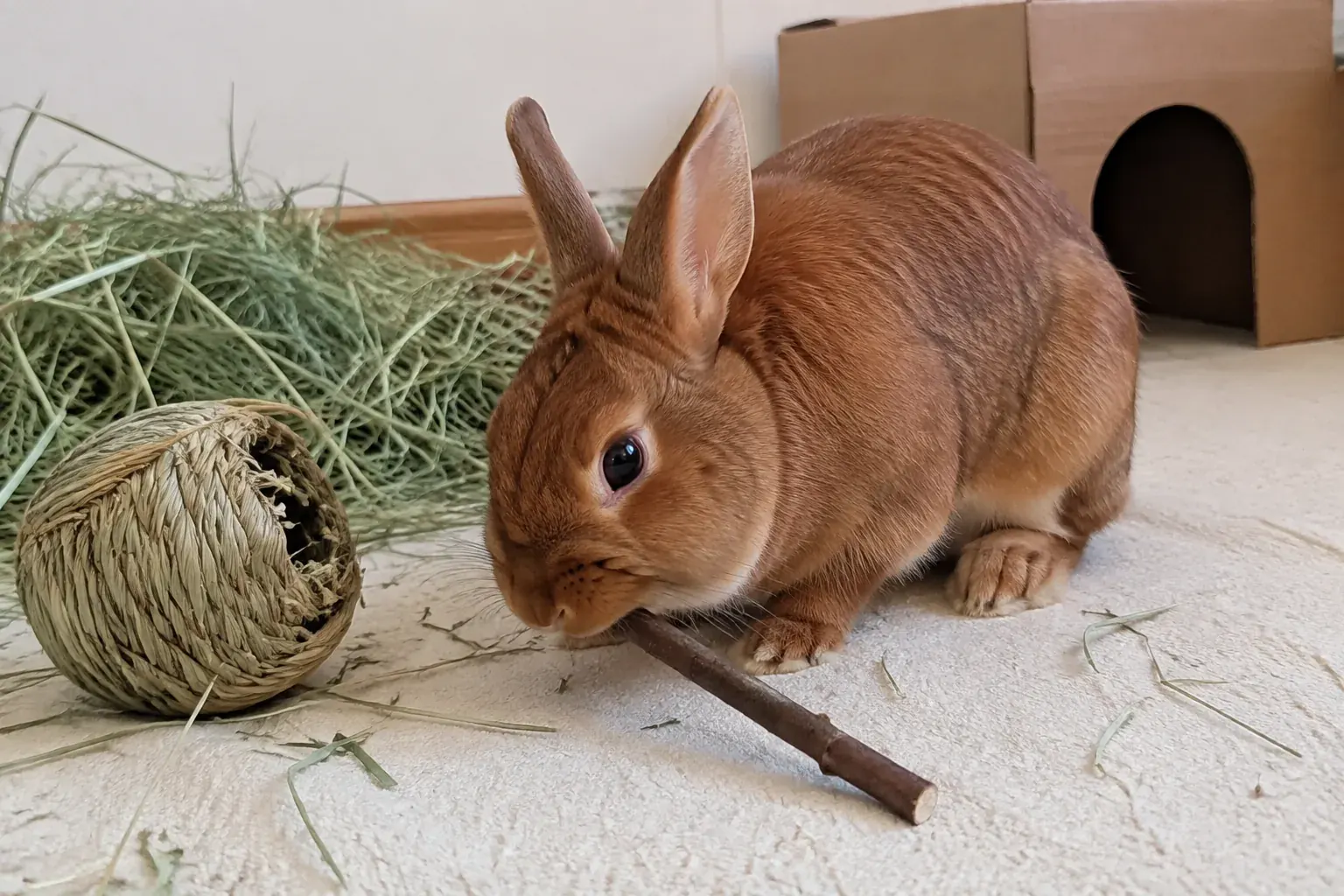
Chewing is normal rabbit behaviour, not disobedience. The foundation remains constant access to suitable hay or grass, which supports the long chewing action and fibre intake rabbits need. A chew toy provides variety and an acceptable target, but it does not replace hay, dental checks or treatment for overgrown or painful teeth.
Offer several textures rather than one hard stick abandoned in the corner. Untreated branches from rabbit-safe trees, woven grass balls, willow shapes, plain cardboard and hay-filled tubes can invite gnawing, peeling, carrying and shredding. Know the exact plant and material; “natural” on a label is not a complete safety guarantee.
Woven grass and willow
Useful for rabbits that like to roll, carry and dismantle. Keep dry and remove wire, glue, sharp strands or heavily damaged pieces.
Untreated branches
Choose a correctly identified rabbit-safe species from a clean source. Avoid painted, varnished, chemically treated or mouldy wood.
Plain cardboard
Excellent for shredding and rebuilding at low cost. Remove tape, staples, glossy coatings and any section soaked with urine or cleaner.
Place an approved chew option directly beside a favourite skirting board or furniture corner, then physically protect the household object. A toy is an outlet, not an invisible fence. Cables, toxic plants, foam and unsafe wood still need to be made inaccessible.
Best foraging toys and food puzzles
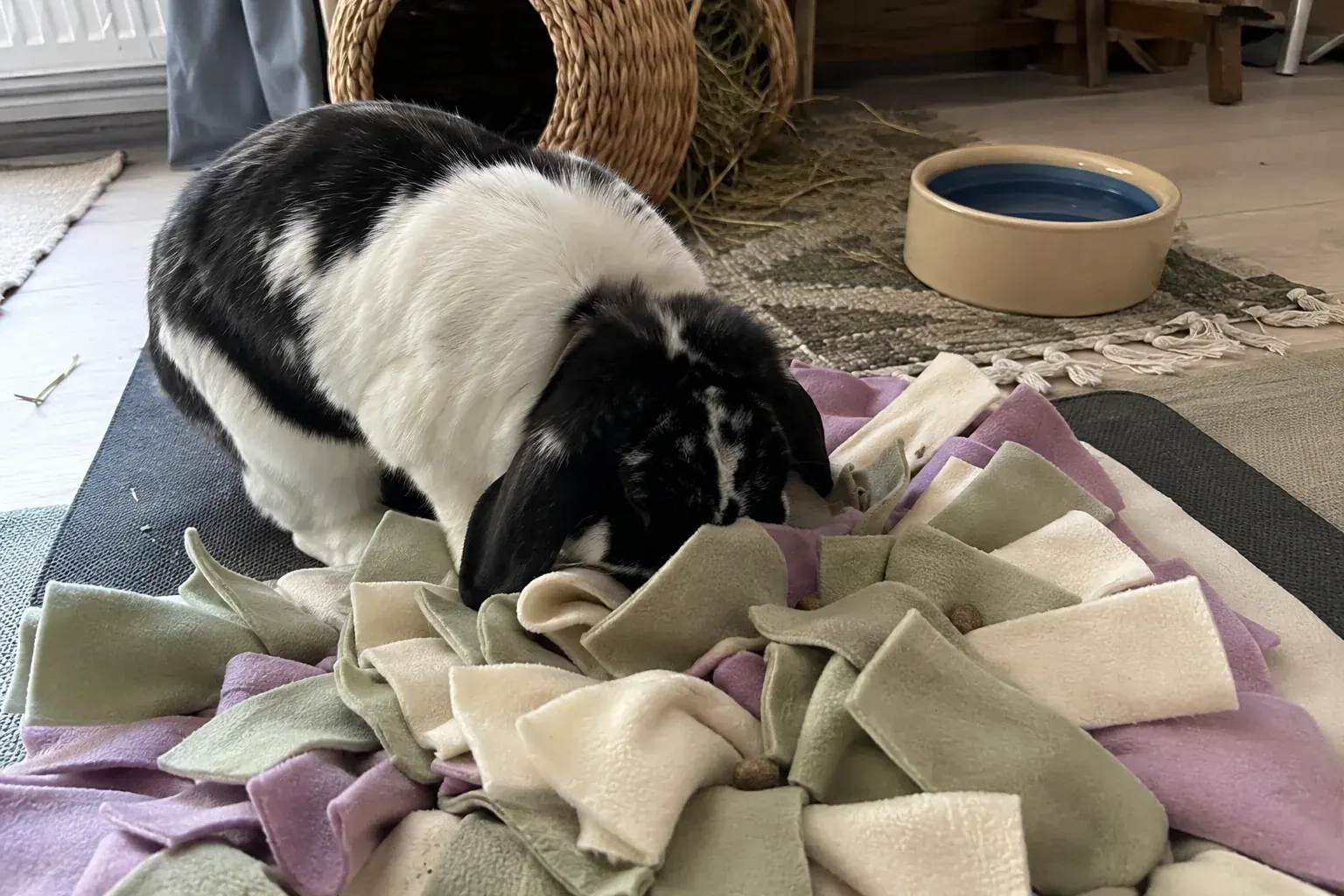
Foraging toys use something your rabbit already values: food. Instead of adding extra treats, take a small portion from the normal daily pellet or green ration and make it searchable. Scatter it through clean hay, place it beneath an upturned cup or hide it loosely in a cardboard tube. Unlimited hay must remain easy to reach at all times.
A good puzzle has an obvious path to success. The rabbit can smell the food, manipulate one simple part and receive the reward without biting through plastic or fabric. Start easy, especially with a shy, senior or mobility-limited rabbit. Increase only one variable at a time.
Find it
Scatter food through hay or leave it partly visible beneath one cup. Reward curiosity and build confidence.
Move it
Use loose stacking cups, a rolling dispenser or a simple lid that moves with a gentle nose push.
Solve it
Introduce a multi-step board only after the rabbit understands each movement separately and stays relaxed.
For bonded rabbits, provide more than one food station and watch for blocking or chasing. The cleverest puzzle is not enriching if one rabbit controls it while the other waits. RSPCA guidance recommends enough items for each rabbit so enrichment does not create competition.
Choose enrichment that suits your rabbit
Compare digging, chewing, searching and puzzle toys, then choose an activity that matches the way your rabbit naturally plays.
Tunnels, stacking cups and toys for active rabbits
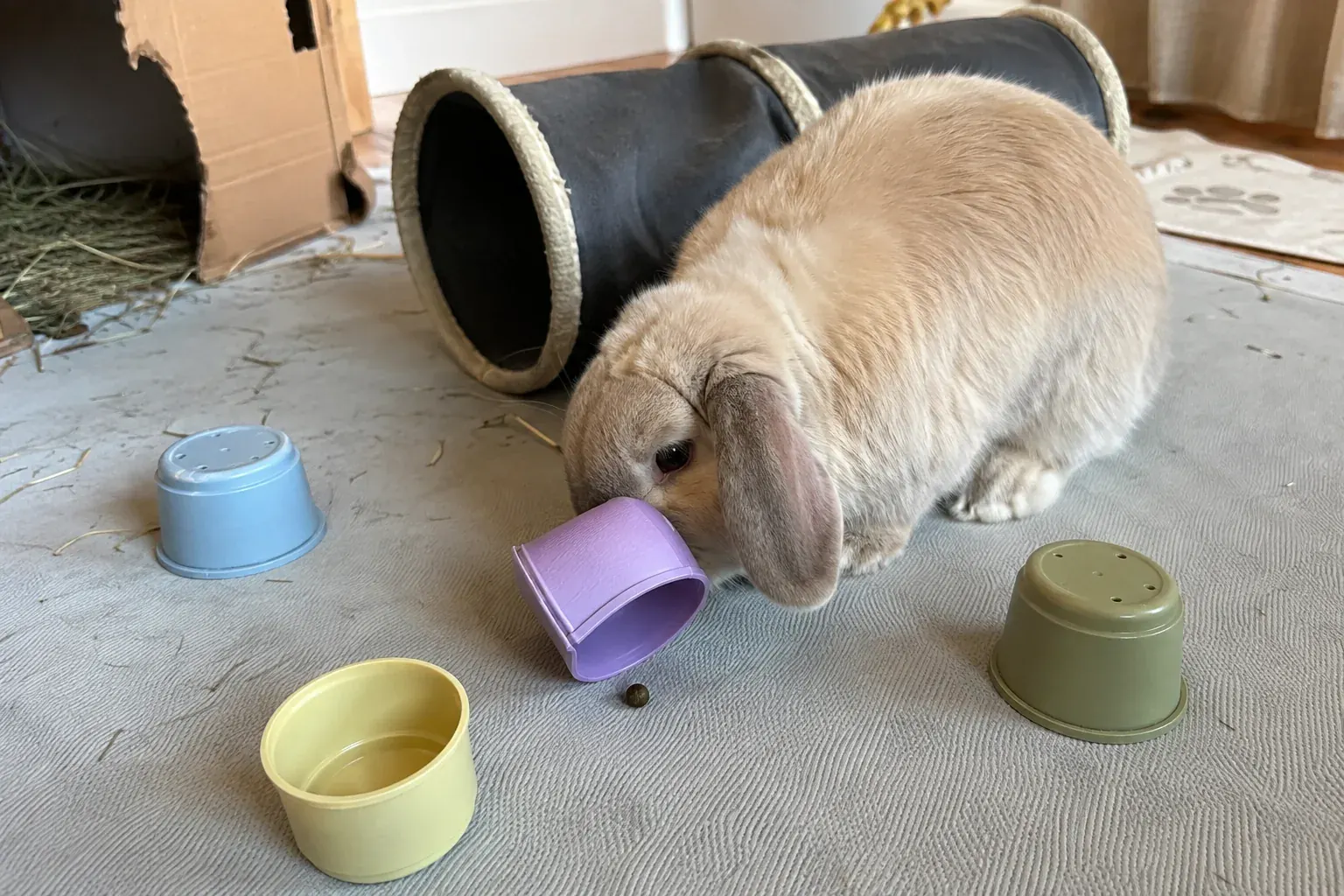
Movement can be the reward
Some rabbits are motivated less by chewing and more by routes, objects and surprises. A wide tunnel supports running, hiding and reappearing. Stacking cups can be lifted, nudged and thrown. A sturdy ball can be rolled across a stable floor.
Keep exits clear and let your rabbit enter voluntarily. Never push a rabbit into a tunnel or place them on top of a toy to demonstrate how it works.
Measure the widest part of your rabbit before choosing a tunnel, then compare it with the published opening. The rabbit should pass through without squeezing, snagging fur or meeting a blocked exit. Check internal supports, clips, seams and zips during cleaning. Fabric tunnels are best introduced while you can see whether your rabbit runs through, rests inside or starts eating the material.
Rabbit World toy picks by play style
The following products represent different activities rather than a single “winner”. Choose the card that matches what your rabbit already enjoys, read the dimensions and materials on the product page, and supervise the first sessions.
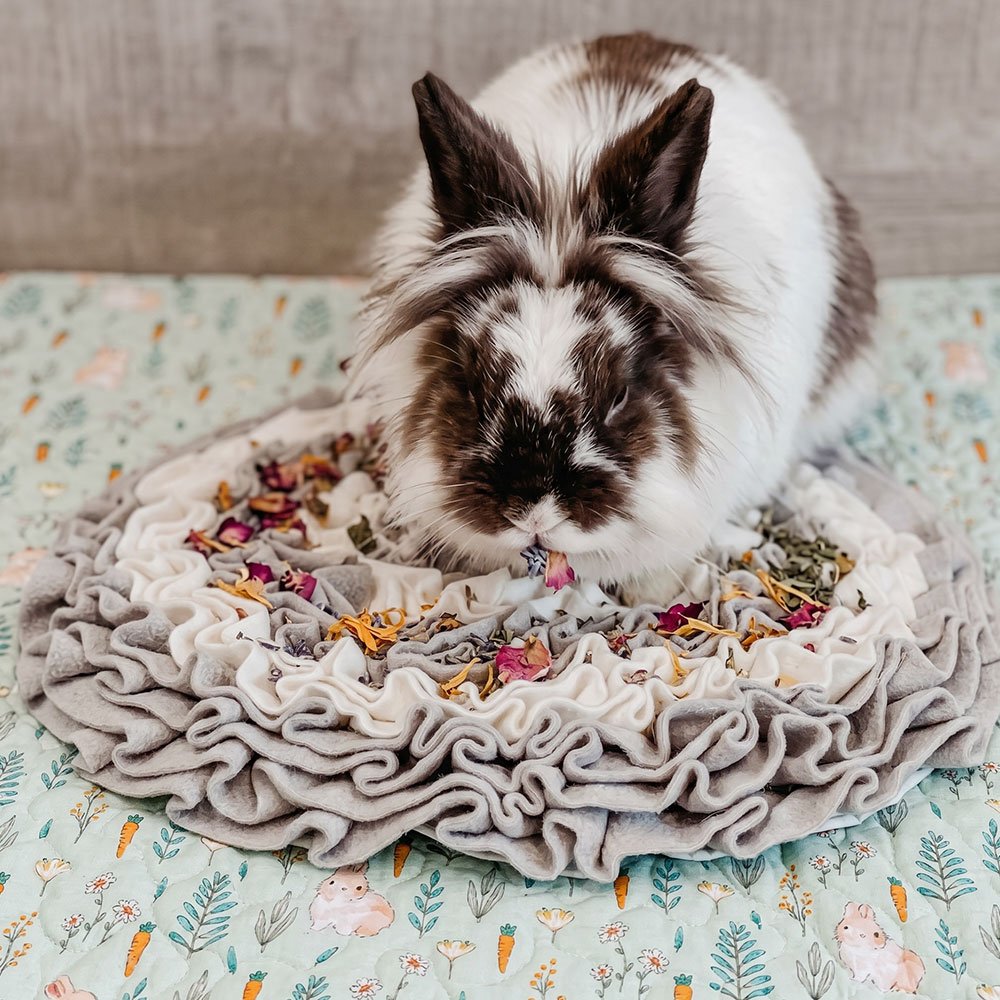
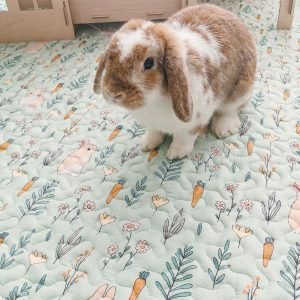
Rabbit Foraging Mat
Several hiding textures for food-motivated rabbits that enjoy careful nose work.
View the toy →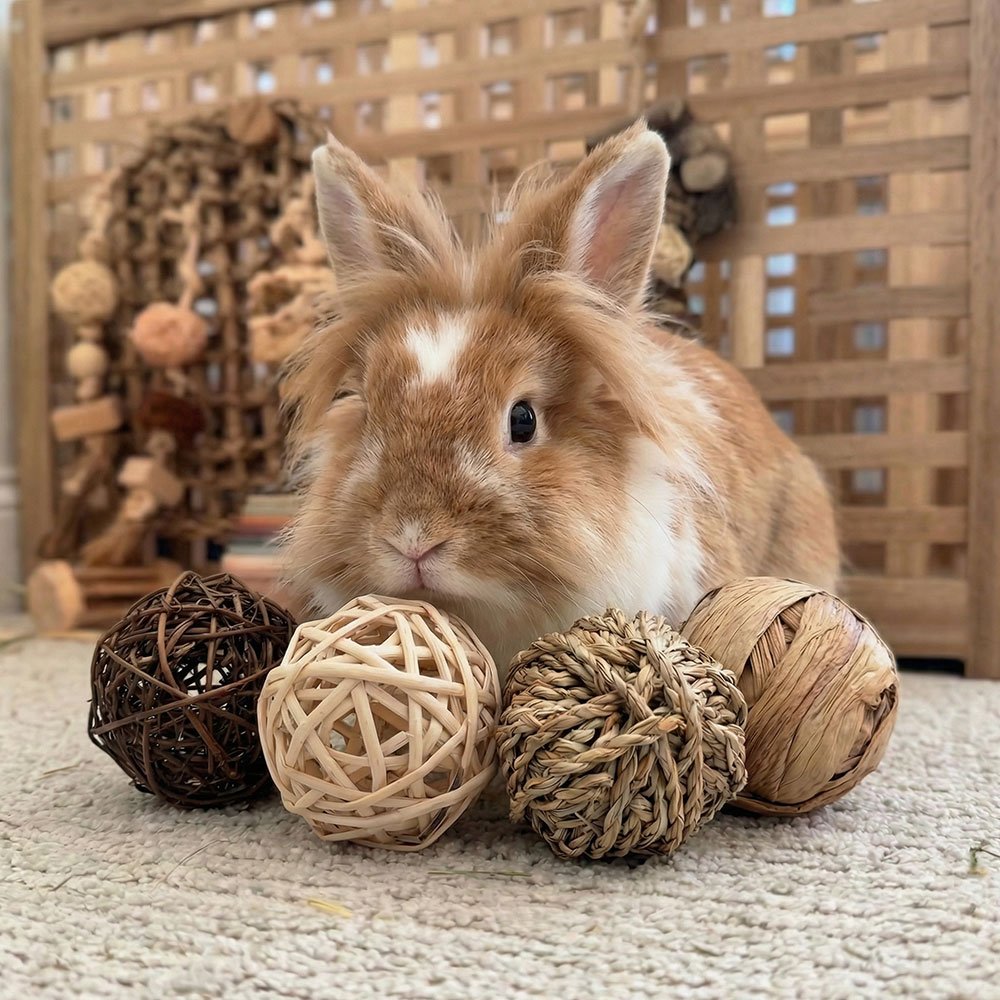
Woven Grass Balls
A plant-based rolling and dismantling activity for buns that enjoy texture.
View the toy →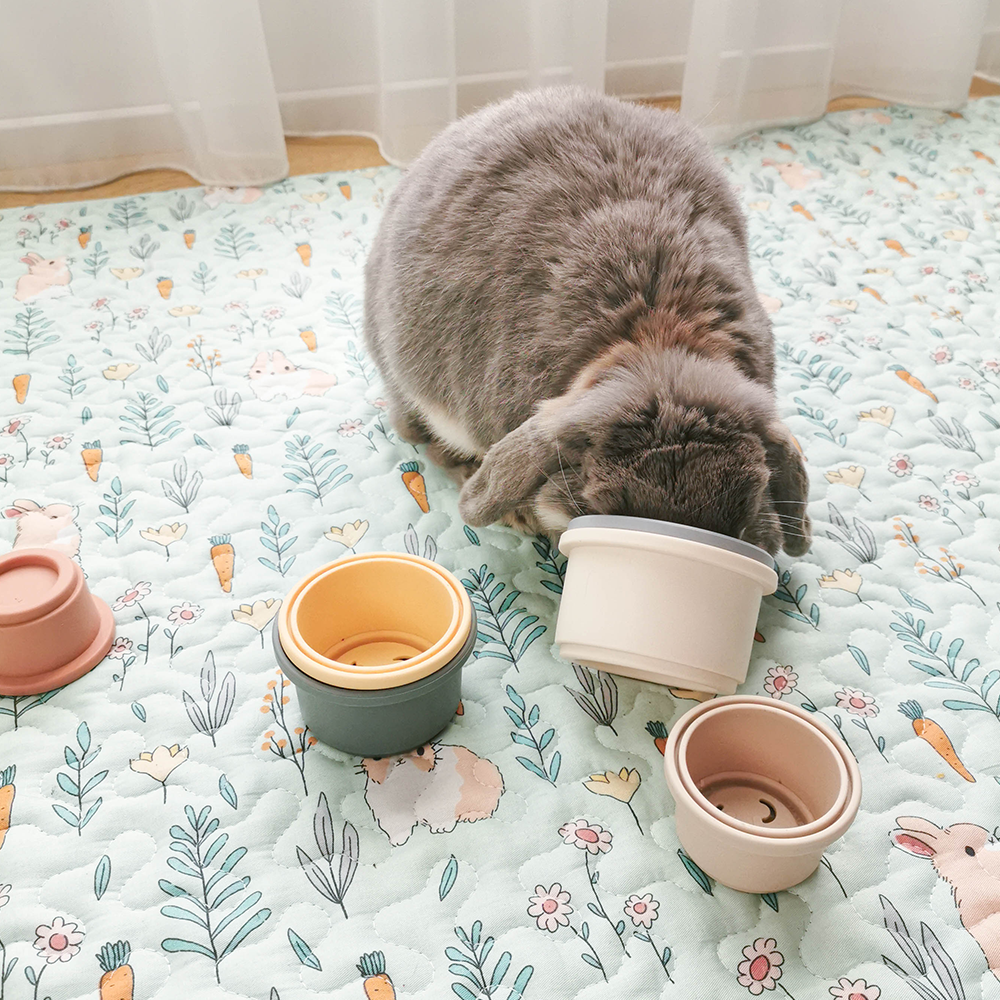
Rabbit Stacking Cups
Lightweight cups to separate, tip, carry and use for beginner food searches.
View the toy →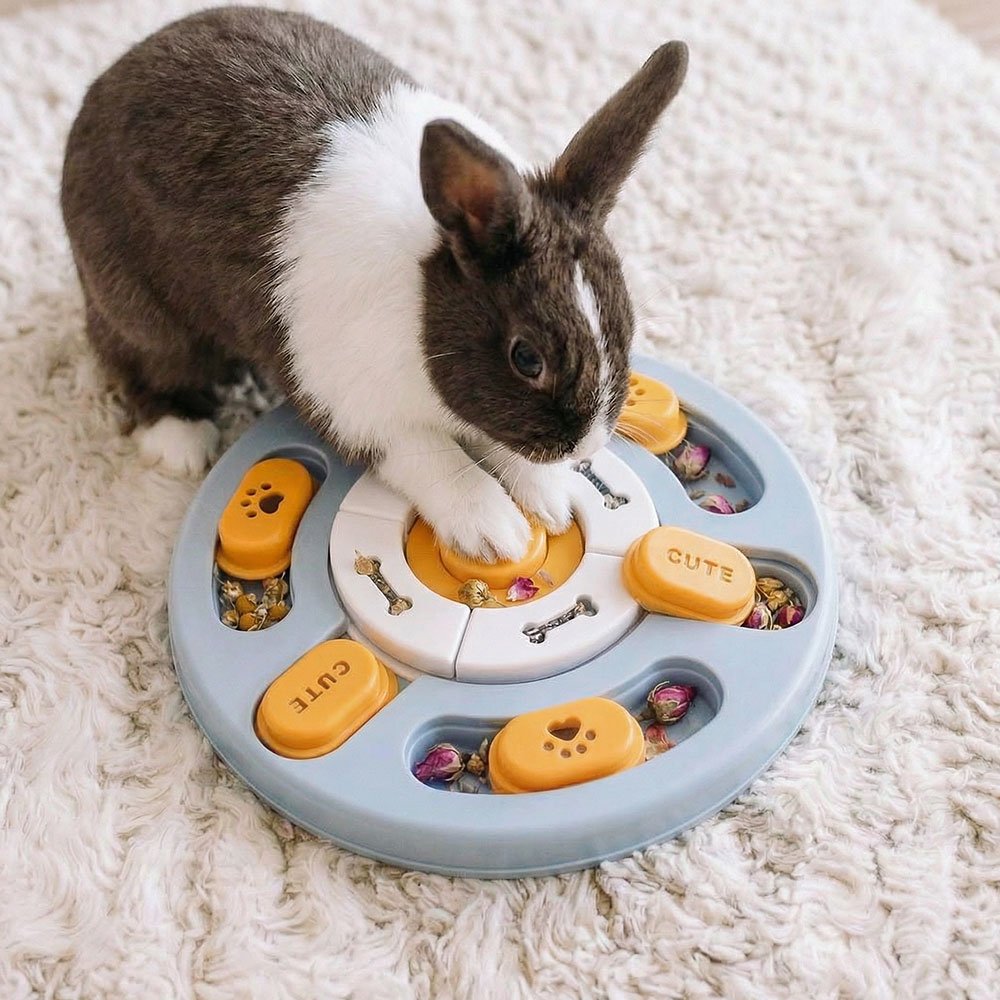
Rabbit Treat Puzzle
A more structured activity for rabbits already confident with moving covers.
View the toy →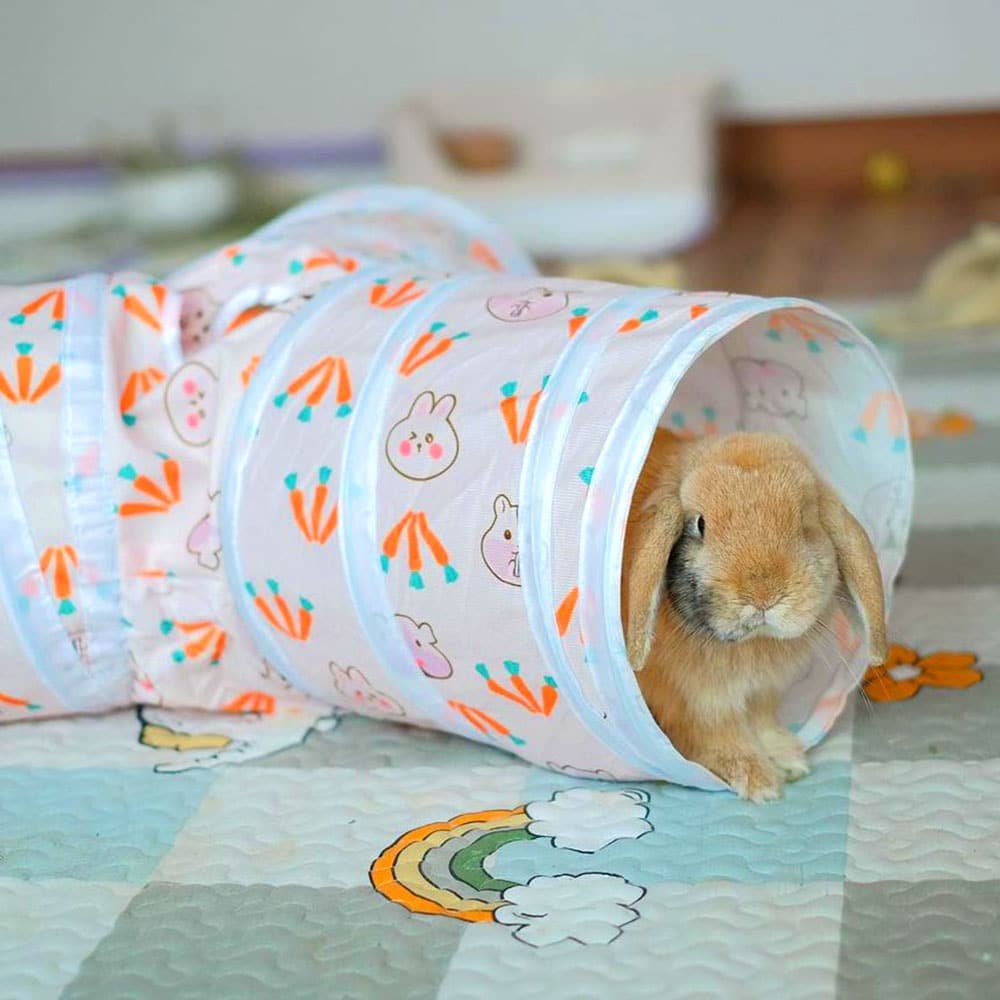
Foldable Rabbit Tunnel
Multiple openings for rabbits that prefer routes, cover and active exploration.
View the tunnel →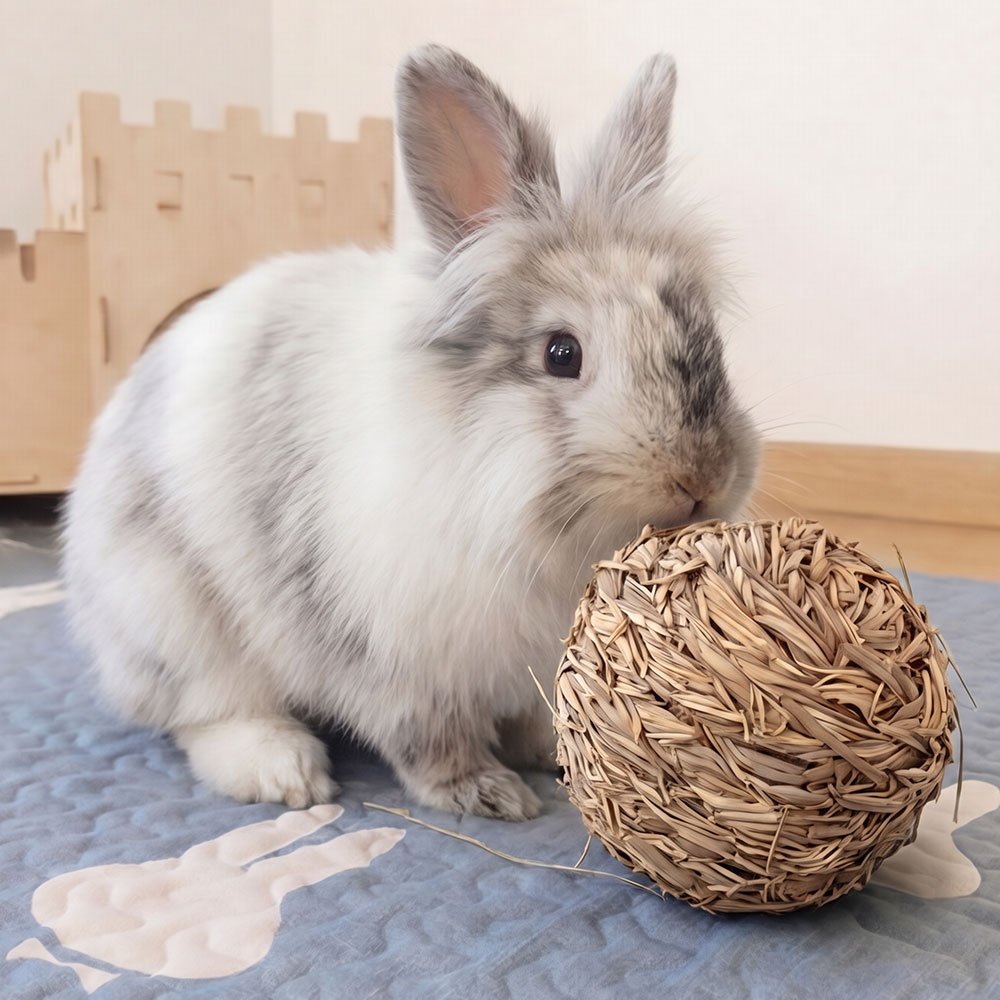
Rabbit Hay Ball
A compact woven option for rolling, carrying and supervised chewing.
View the toy →How to choose a safe rabbit toy
No label can predict how your individual rabbit will use an object. Inspect the toy before purchase, watch the first interactions and repeat the inspection during cleaning.
- Check the size: the whole toy and every removable part should be appropriate for your rabbit, with no easy swallowing hazard.
- Identify every material: avoid unknown woods, mystery fibres, flaking paint, strong fragrance, exposed glue and chemical treatments.
- Test the construction: look for staples, wire, sharp edges, cracked plastic, loose bells, open seams, elastic and long threads.
- Keep a clear exit: tunnels, boxes and digging stations must never trap a rabbit or block the normal route to hay, water and litter.
- Observe how it is used: nudging and shredding may be fine; swallowing foam, rope or fabric means the item should be removed.
- Match physical ability: senior, large or disabled rabbits may need wider openings, low edges, stable puzzles and rewards that require little force.
Remove damaged toys before “one more play”
Replace an item when it develops sharp points, splinters, loose fibres, exposed filling, cracked plastic or detachable pieces. Clean according to the product instructions and dry it completely before reuse. If you think your rabbit swallowed part of a toy, or appetite and droppings change, contact a rabbit-savvy veterinarian promptly.
Rotate toys without changing everything at once
Rotation renews interest, but novelty should not make the environment unpredictable. Keep favourite hides, main routes and essential resources stable. Put only a few clean toys into storage, then return one when interest fades. A simple weekly rhythm is enough.
Permanent foundation
Unlimited hay, secure hides, open exercise space and approved everyday chew options.
Digging session
Refresh the box, change the paper arrangement or hide a few hay strands.
Foraging session
Use part of the normal ration in cups, hay, a puzzle or a snuffle activity.
Object swap
Return one familiar ball or tunnel and store another toy after checking and cleaning it.
If a rabbit ignores something new, leave it nearby without pushing interaction. Add familiar hay around it or try a different category of play. Ignoring one toy does not mean your rabbit is bored or unintelligent; it usually means the activity, texture or difficulty does not match.
Rabbit toys and products to avoid
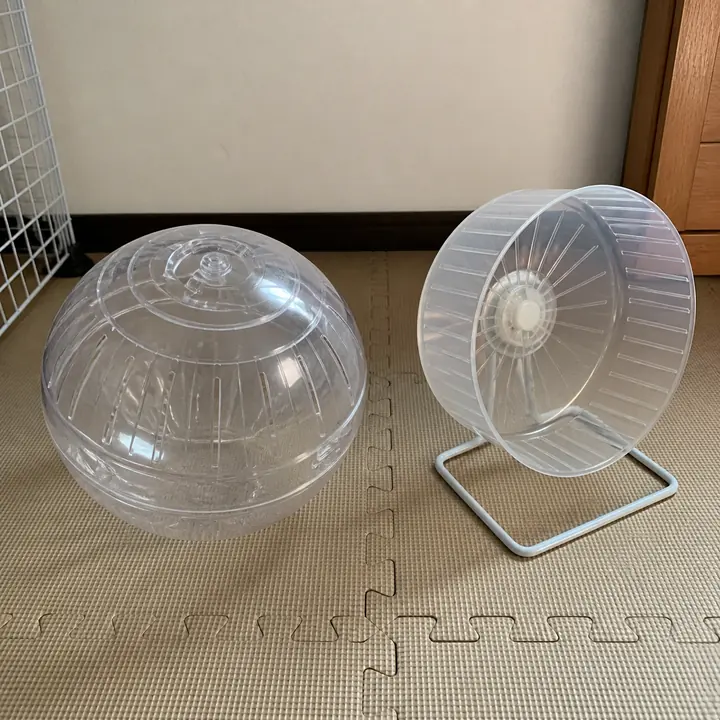
Exercise balls and hamster wheels
They do not suit normal rabbit movement or body shape. Provide a large secure floor area for running, hopping, turning and standing upright instead.
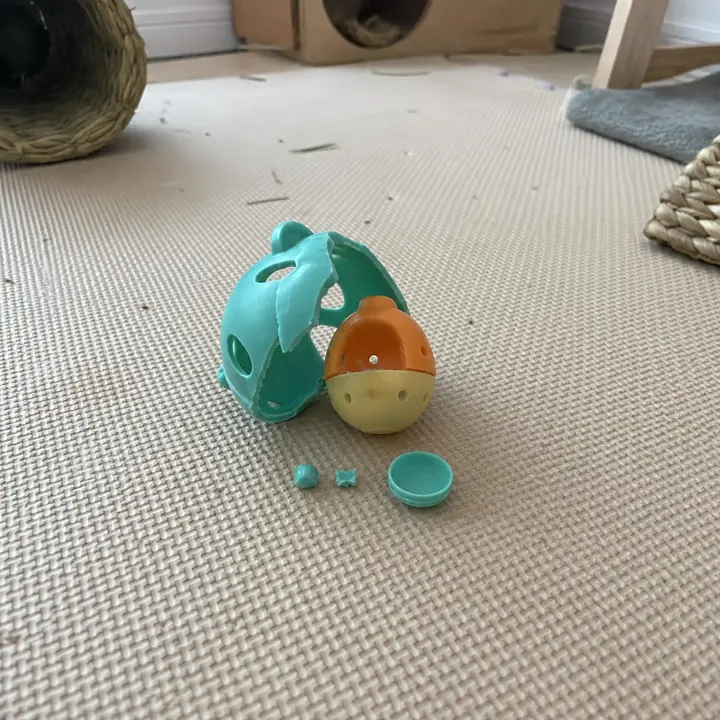
Tiny parts and brittle plastic
Small bells, beads, caps and broken fragments can become swallowing hazards. Choose robust construction and inspect every joint.
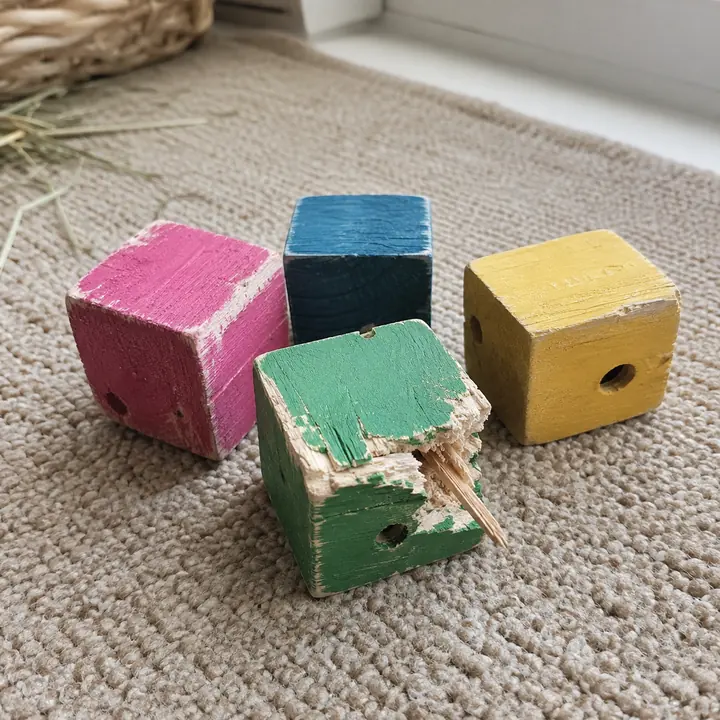
Unknown, painted or treated wood
A wooden toy is not automatically safe. Confirm the species and finish, and remove mouldy, sharp or heavily splintered pieces.
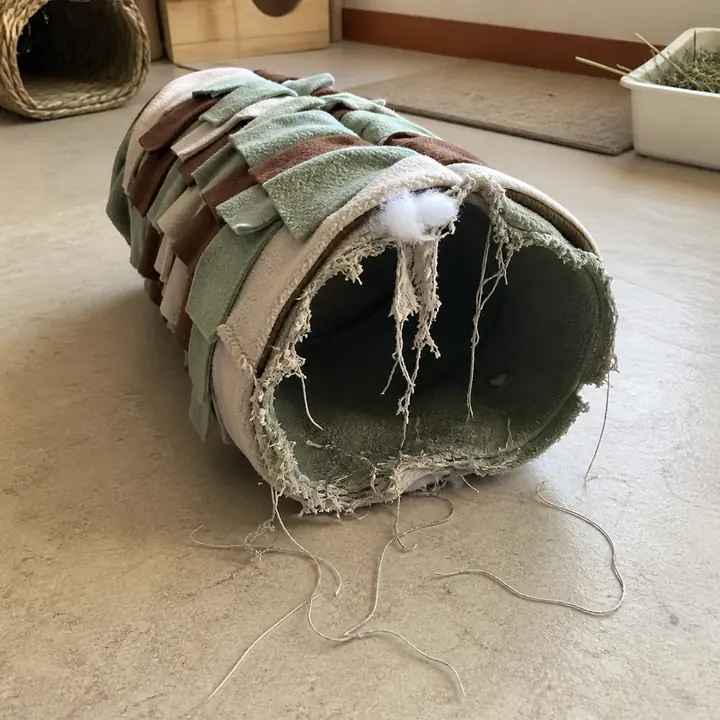
Fabric used without observation
Snuffle mats and soft tunnels suit some rabbits, but a rabbit that pulls and swallows fibres needs a different material and closer supervision.
Frequently asked questions about rabbit toys
What toys do rabbits like the most?
Preferences vary. Many rabbits enjoy digging boxes, cardboard, safe chew materials, tunnels, stacking cups and food-search activities. Watch whether your rabbit prefers scratching, shredding, carrying, nudging, hiding or solving, then offer more of that activity type.
How many toys should a rabbit have?
There is no ideal number. A few purposeful toys in a spacious setup are better than a crowded floor. Keep hay, water, litter, hiding places and running routes accessible, then provide enough enrichment that bonded rabbits do not have to compete.
Can rabbits play with cardboard?
Plain cardboard can be useful for hiding, shredding and hay-filled activities. Remove tape, staples, labels and glossy coatings. Replace wet or dirty cardboard, and remove it if your rabbit consumes large quantities rather than simply tearing it.
Do chew toys keep rabbit teeth short?
Chew toys provide useful behaviour and texture, but they do not replace the long chewing action of an appropriate hay-based diet or veterinary dental care. Reduced eating, drooling, weight loss, selective feeding or a wet chin require veterinary attention.
Are snuffle mats safe for rabbits?
They can provide supervised foraging for rabbits that search without eating the fabric. Check the backing, folds and stitching before every use. Remove the mat if your rabbit bites off or swallows fibres, and use cardboard or hay-based searching instead.
How often should rabbit toys be changed?
Replace damaged items immediately. Otherwise, rotate one or two toys when interest fades while keeping the general environment predictable. Familiar toys can feel new again after cleaning and a short period in storage.

Elodie
Rabbit guardian and care enthusiast with over 10 years of hands-on experience living with house rabbits. Through Rabbit World, Elodie shares warm, practical guidance focused on comfort, safety and the small everyday choices that help every little bun stay curious.