A clear, bunny-friendly guide to hay, greens, vegetables, fruit and the foods that should never reach your bun’s bowl.
What should rabbits eat?
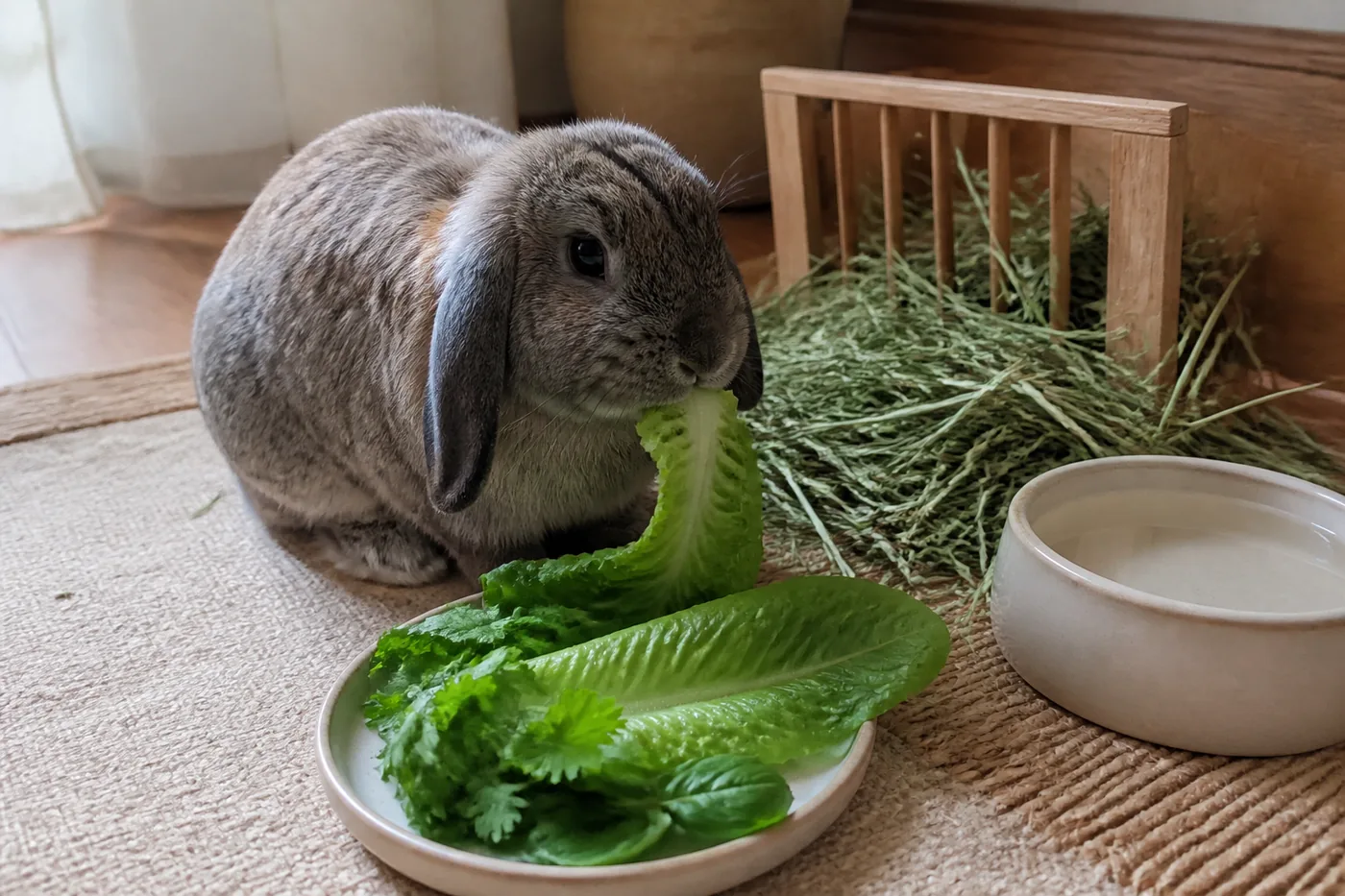
An adult rabbit should have unlimited grass hay and fresh water, a daily variety of leafy greens, and a small measured portion of plain, high-fiber pellets. Fruit and root vegetables are tiny occasional treats. Chocolate, avocado, onion-family plants, rhubarb, raw beans, potato sprouts, dairy, meat and highly processed human snacks do not belong in a rabbit’s diet.
This is a practical picture of the overall adult diet, not a formula that needs weighing at every meal. Life stage and health can change the plan.
Rabbits are enthusiastic little food critics, but a hopeful nose at the kitchen door does not mean every snack is suitable. Their digestive system is built around constant fiber. That is why hay comes first, greens add variety and moisture, and sweet foods stay tiny.
The frequencies below are a practical starting point for healthy adult house rabbits. They are not a prescription for every bun. Introduce foods slowly, watch droppings and appetite, and ask a rabbit-savvy veterinarian for an individual plan if your rabbit is young, pregnant, nursing, elderly, underweight or managing dental, urinary or digestive disease.
The three foundations of a healthy rabbit diet
Fiber first
Hay should do most of the work. It supports normal gut movement and encourages the long chewing sessions rabbit teeth need.
Variety, slowly
Offer a changing mix of rabbit-safe greens, but introduce only one unfamiliar food at a time so reactions are easier to spot.
Small means small
Fruit, carrot and other sweet foods are treats, not a colorful replacement for hay or a bowl that needs filling.
Hay and water: always available
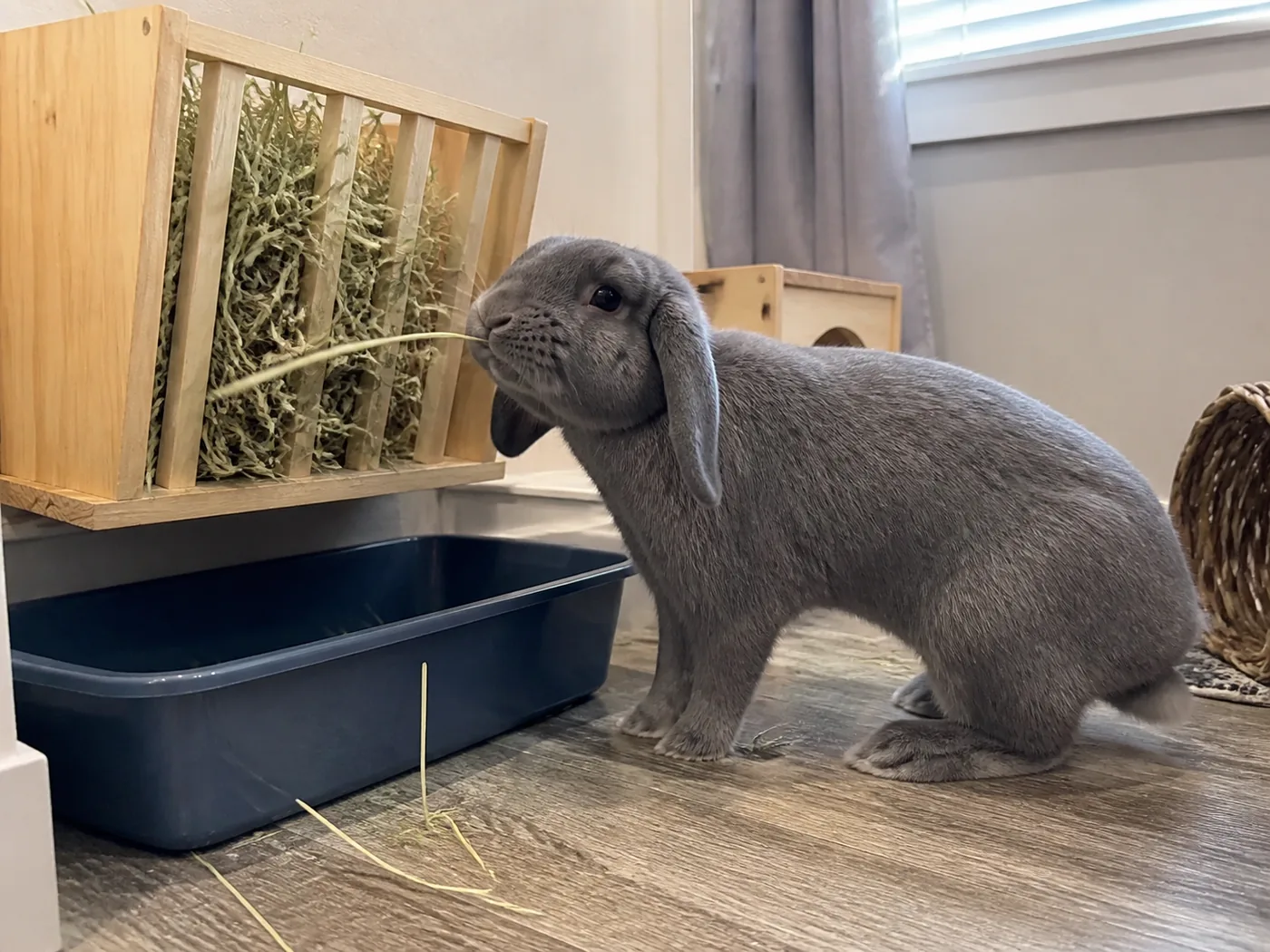
Fresh grass hay should be available day and night in more than one generous handful. A good visual check is a loose pile at least as large as your bun’s body, then top it up before it runs low.
Timothy, orchard, meadow and oat hay are useful adult choices. Mixing two safe hays can tempt a picky bun and add different textures. Alfalfa is richer and is usually reserved for growing rabbits or specific veterinary plans rather than used as the main hay for a healthy adult.
Provide clean water at all times. Many rabbits drink more naturally from a sturdy bowl, although a correctly working bottle can be kept as a second option.
Fresh lawn grass can be wonderful too
Offer hand-picked, pesticide-free grass only after a gradual introduction. Never feed lawn mower clippings: they heat and ferment quickly and may be contaminated by fuel, oil or unsuitable plants.
Rabbit-safe foods and how often to feed them
The labels below tell you how often a food can reasonably appear in a healthy adult rabbit’s rotation. “Daily rotation” means the food may be part of the day’s mixed greens; it does not mean your bun needs every item on the list every day.
Leafy greens for the daily mix
Choose two or three familiar greens, wash them and rotate the combination through the week.
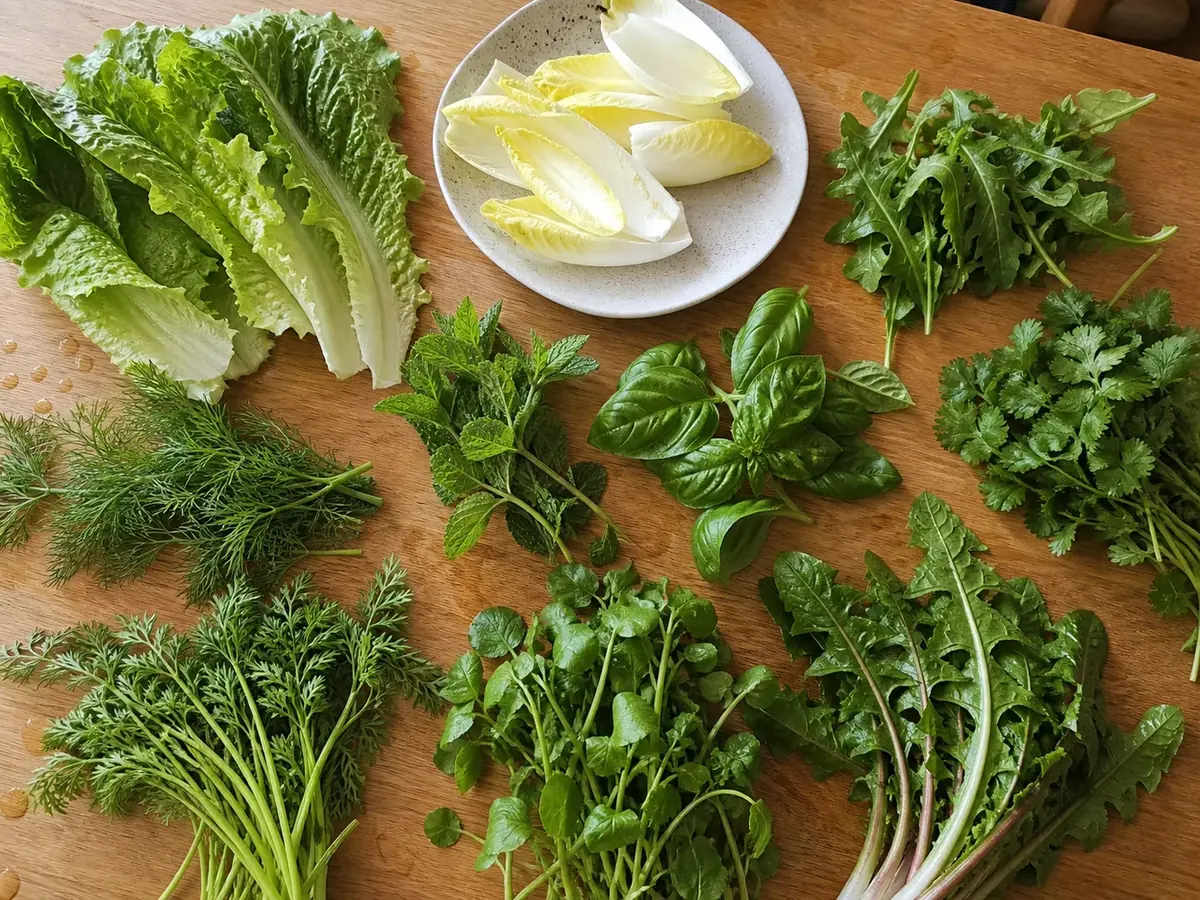 Every day: choose 2 or 3 familiar greens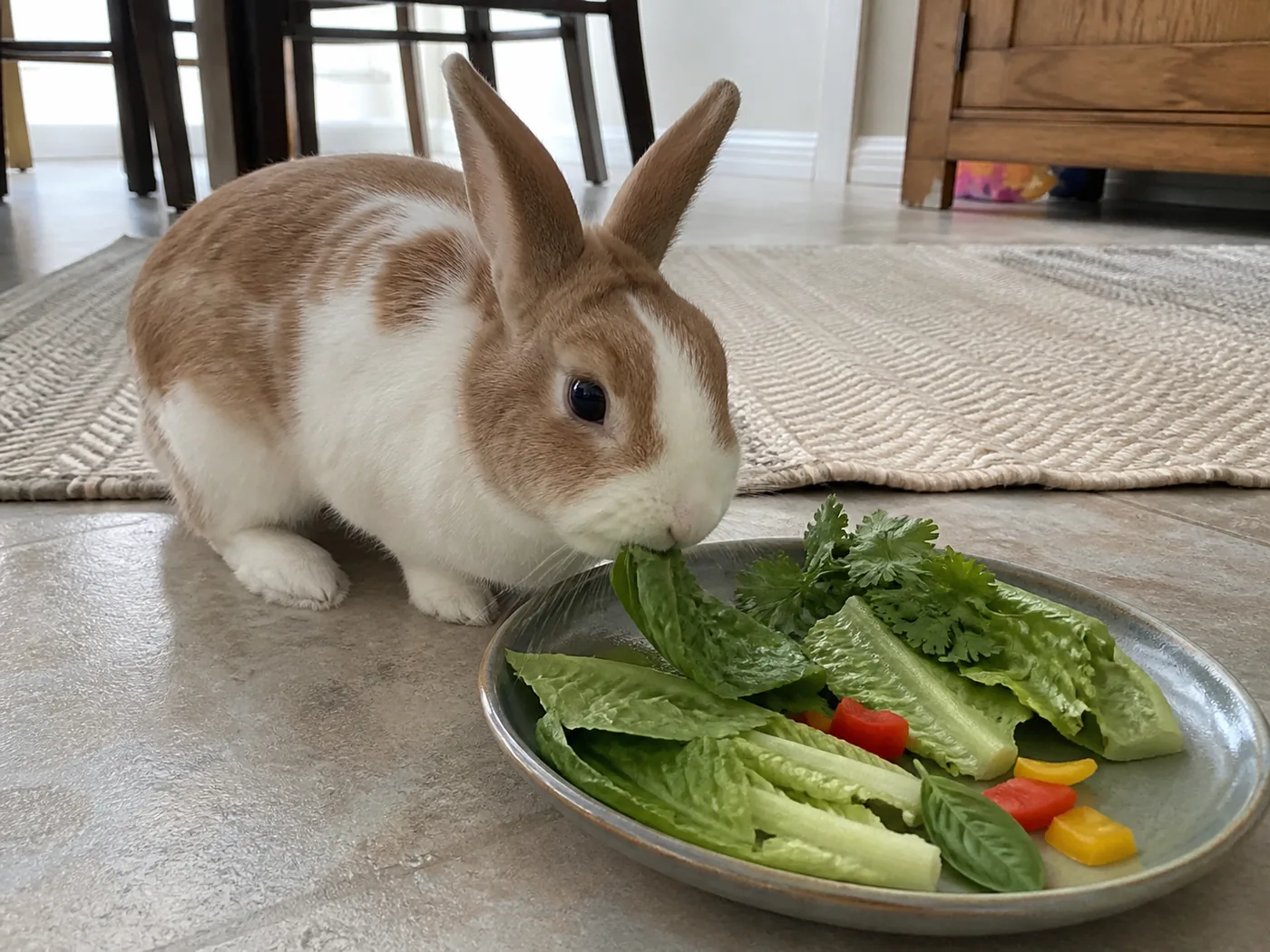
Vegetables to rotate through meals
These add texture and variety, but the leafy part of the meal should still dominate.
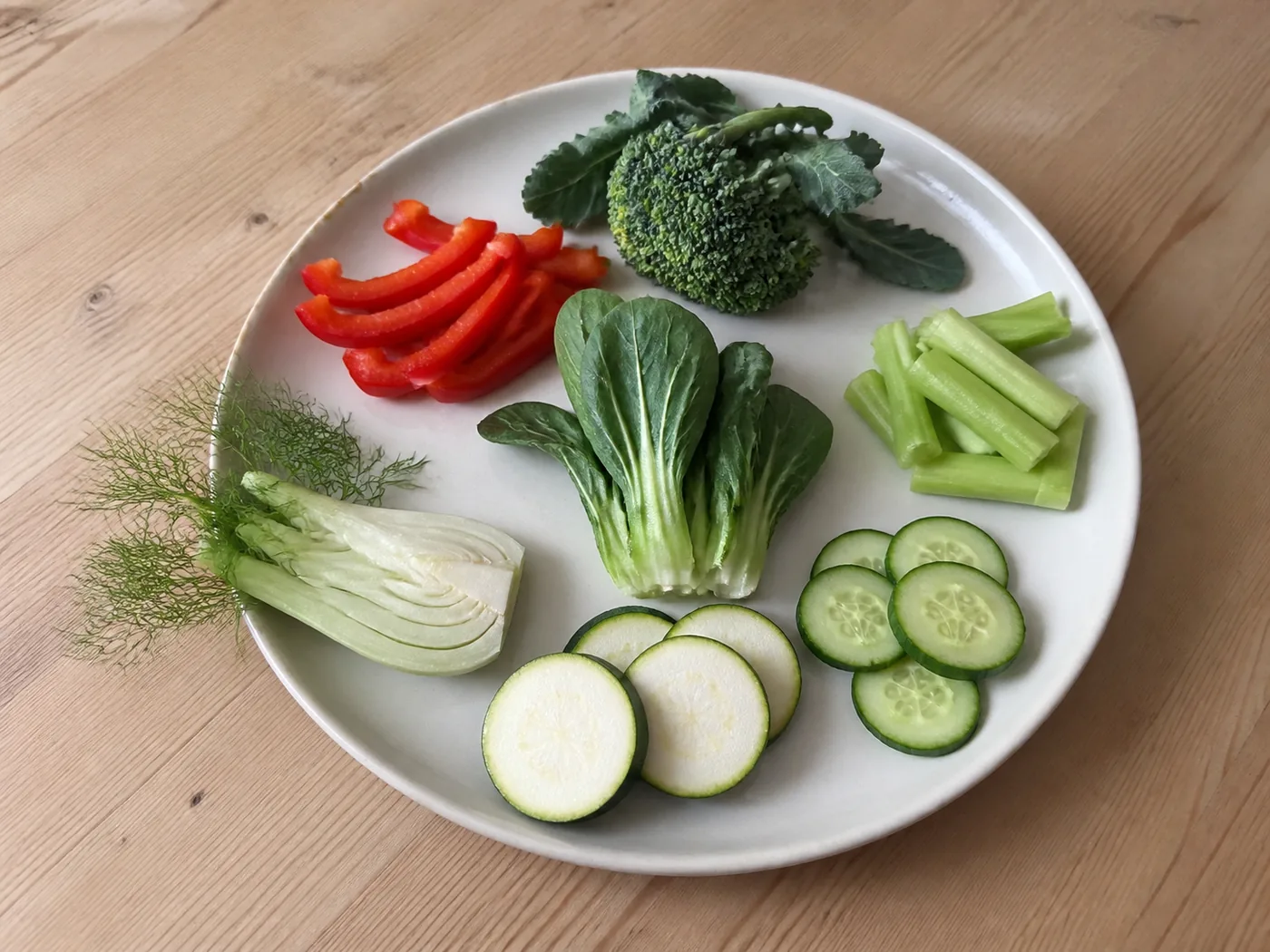 Rotate: small portions 2 to 4 times a week
Rich greens to use as part of a varied rotation
These are not automatically “bad,” but repeating a large quantity every day is unnecessary.
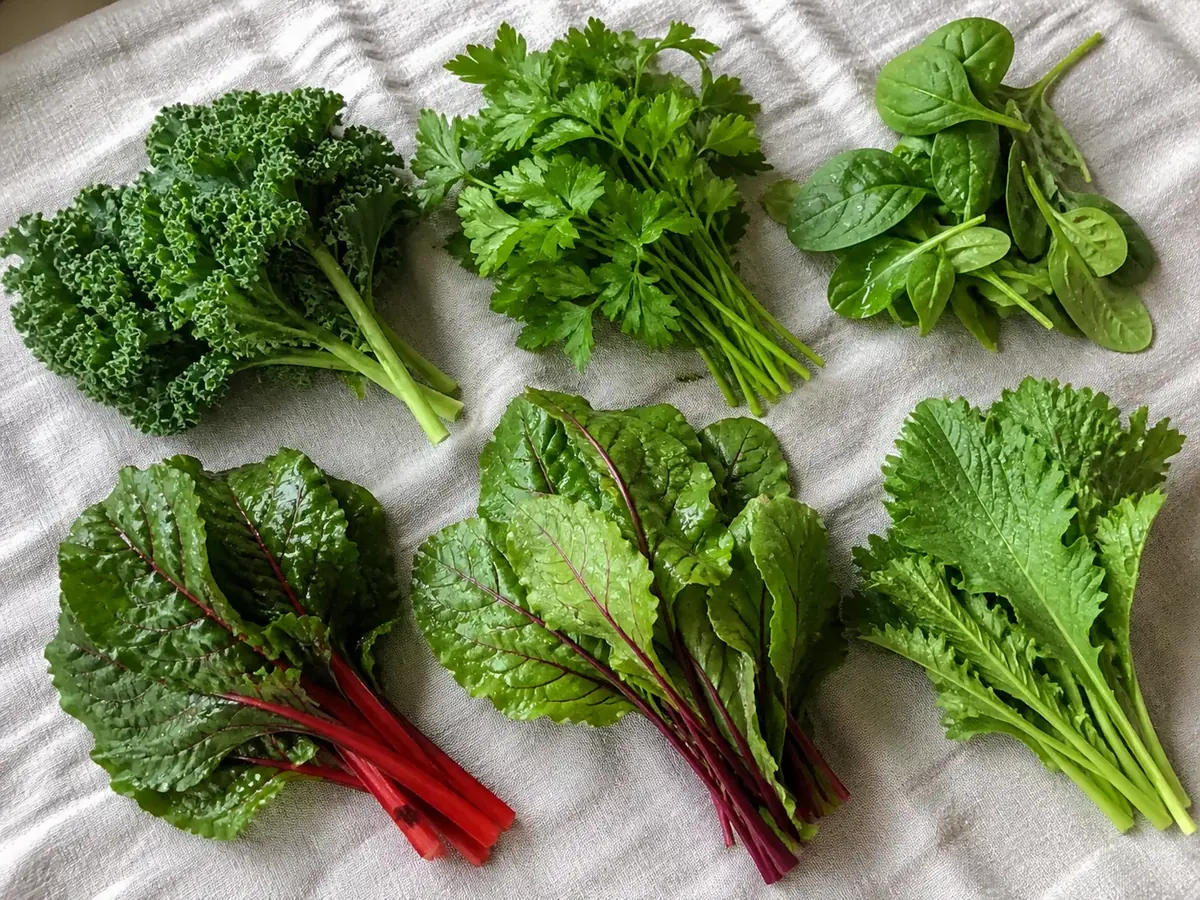 Use in a varied mix: 1 to 3 meals a week
Fruit and root vegetables are treats
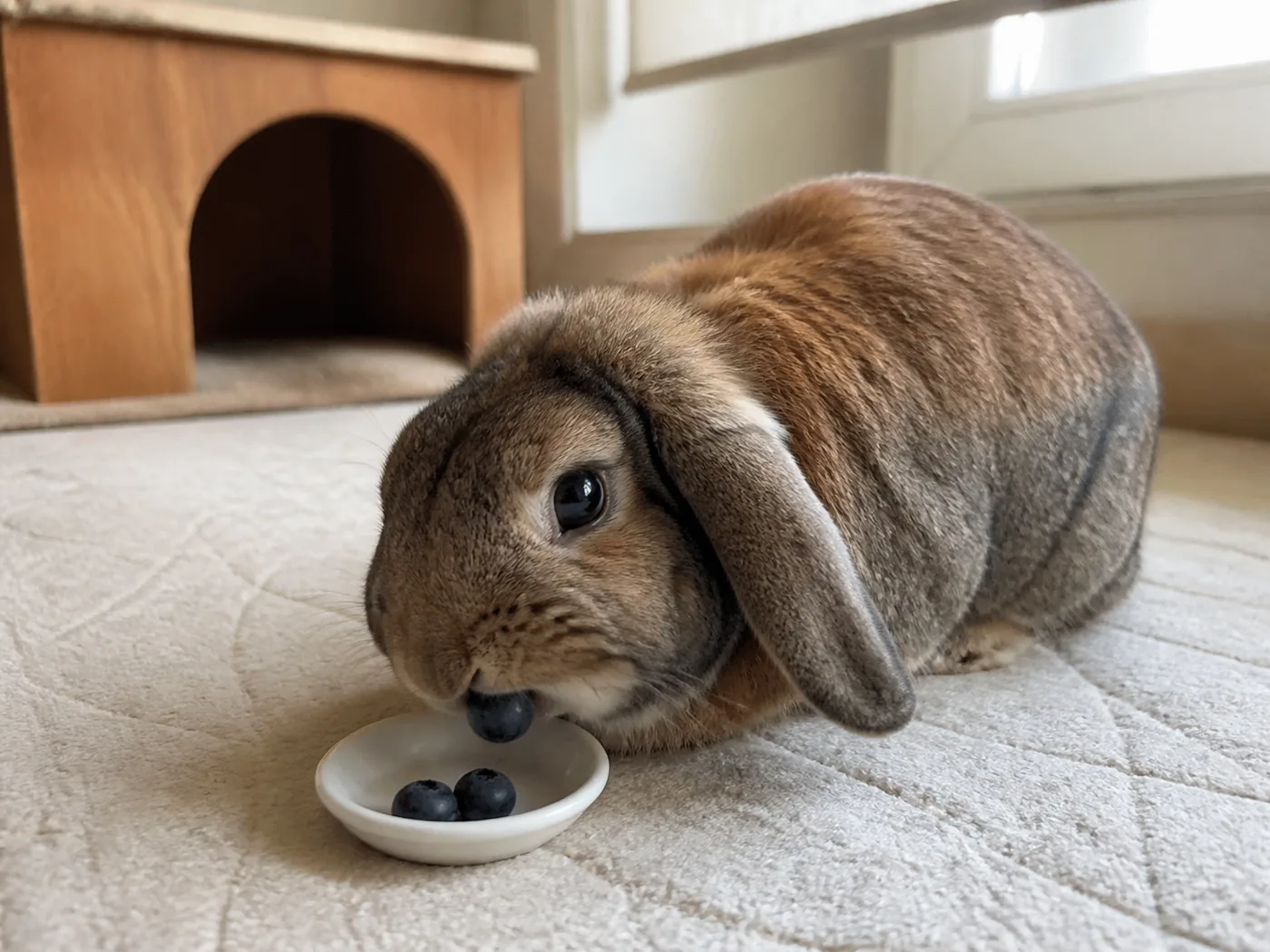
A rabbit may believe banana is a major food group. Their digestive system disagrees. Keep sweet foods to a tiny total portion once or twice a week, not one full portion of every fruit listed.
For an average adult rabbit, a piece about the size of your thumbnail is plenty. Very small rabbits need less. Remove seeds, pits, stems and spoiled areas, and do not use dried fruit as a “healthy” shortcut because the sugar is concentrated.
Sweet foods for special moments
Choose one item, keep it tiny and count training rewards in the weekly total.
How much should a rabbit eat?
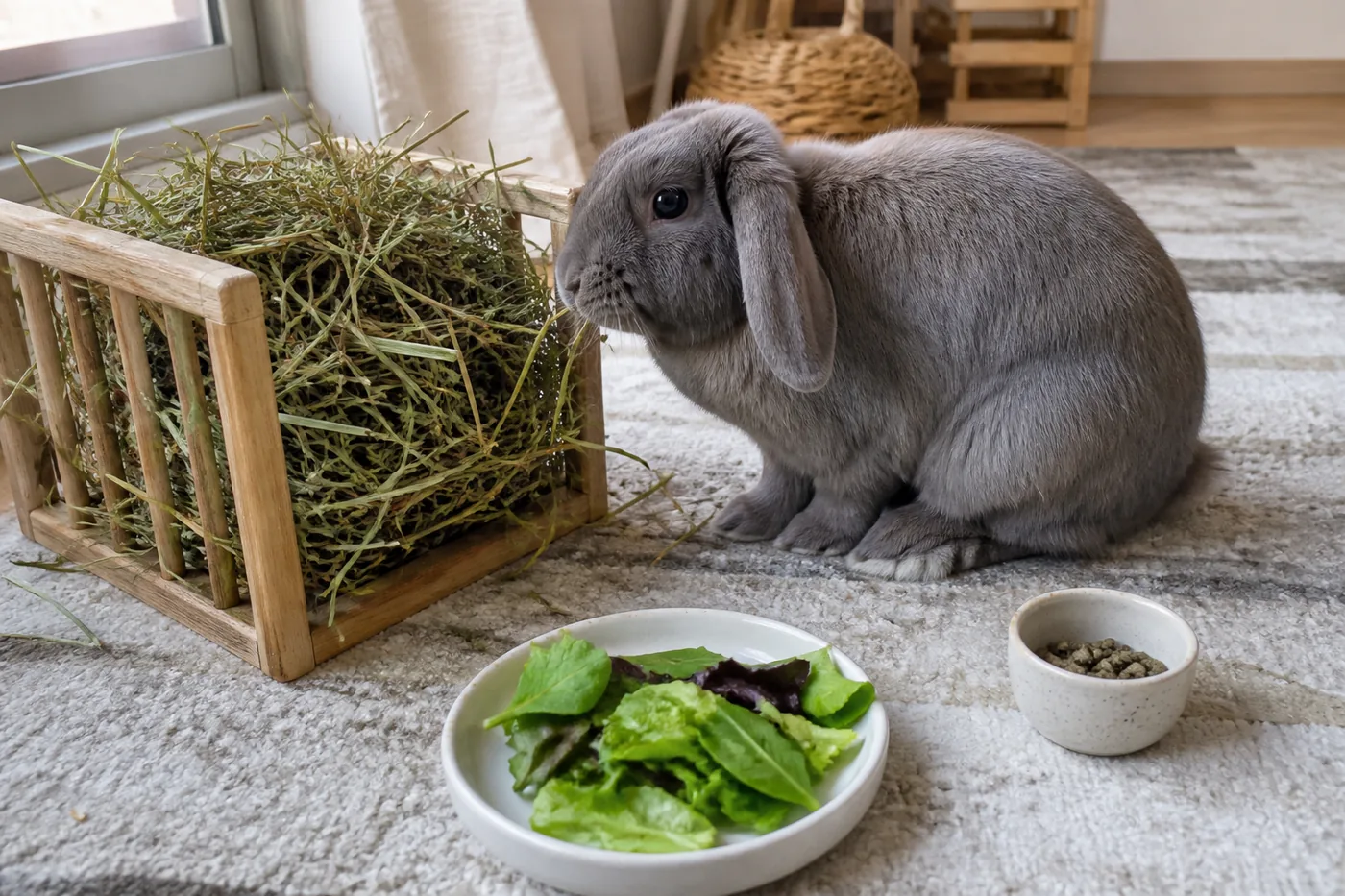
Refill before it runs low. Your rabbit should be able to forage, choose strands and return throughout the day and night.
This is a common starting point for a healthy adult. Introduce greens gradually and adjust for body condition, health and tolerance.
Most welfare guides include a little plain high-fiber pellet. Some healthy adults may follow a pellet-free plan when hay intake is excellent and fresh foods are deliberately varied, ideally with rabbit-savvy veterinary guidance.
Pellets can provide a consistent safety net of vitamins, trace minerals and energy, but they do not replace hay or thoughtful variety. Refilling a bowl whenever it looks empty makes it easy for a bun to choose concentrated food instead of chewing enough hay. Body condition, age, activity and health matter more than copying another rabbit’s scoop.
How to choose hay and pellets at the store
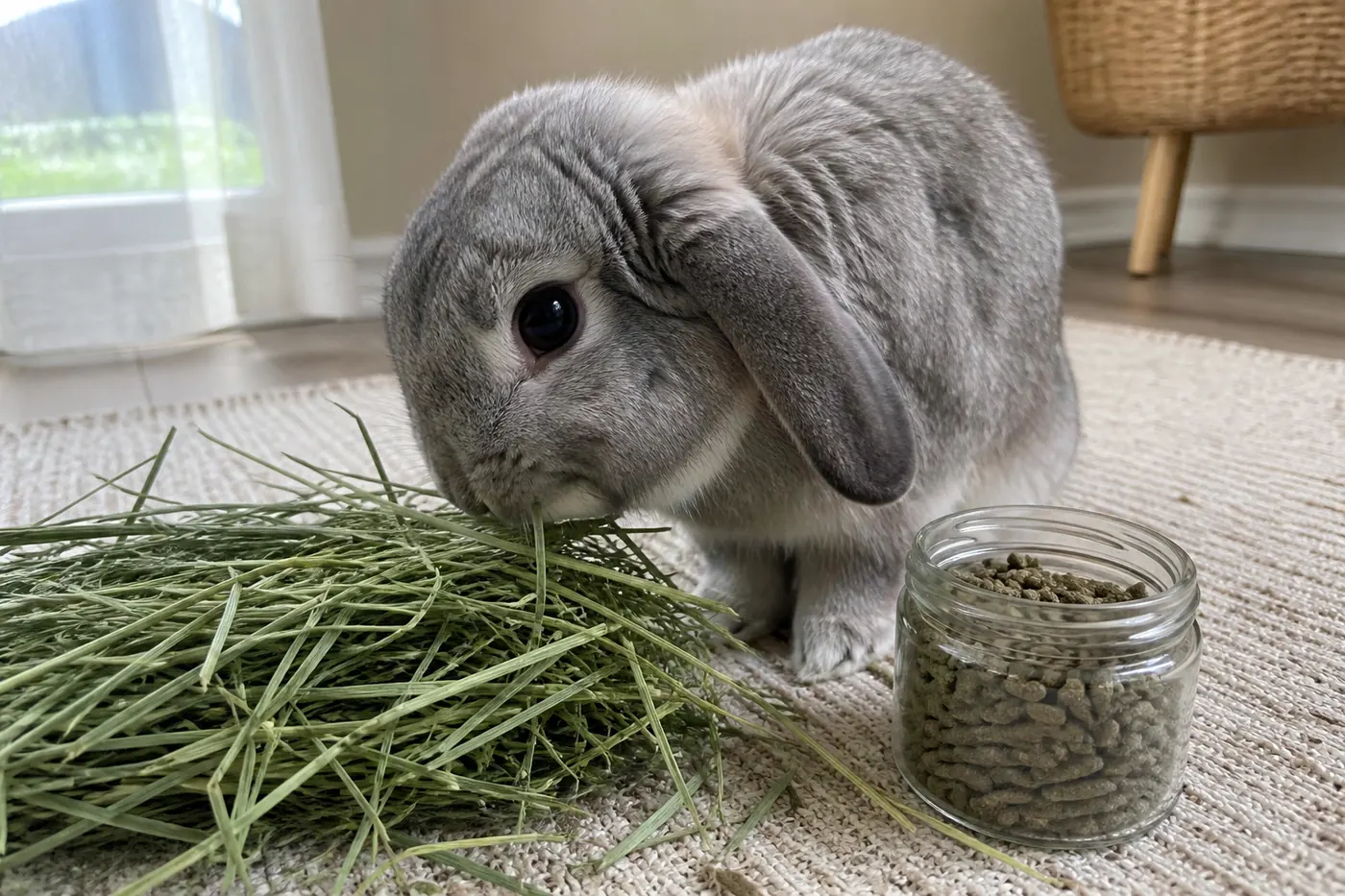
Buy a bag size your household can use while it is still fresh, keep it sealed in a cool dry place and check the use-by date. Pellets are not an unlimited buffet, and they should not become the most exciting part of every meal. Measuring the daily amount once, then using a few pieces for training or bonding, helps prevent accidental overfeeding.
If your rabbit ignores hay, do not simply compensate with more pellets and vegetables. Try a fresher batch, a different grass-hay texture, several hay stations and hay placed close to the litter box. Persistent difficulty chewing, dropping food, wetness around the mouth, weight loss or sudden pickiness deserves a dental check by a rabbit-savvy veterinarian.

A simple seven-day greens rotation
This example is designed to show variety, not to create seven compulsory menus. Keep the ingredients your bun already tolerates and change only one unfamiliar item at a time.
Easy formula: choose a familiar leafy base, add one herb, then rotate a small third ingredient on selected days.
How to build a balanced bowl without overthinking it
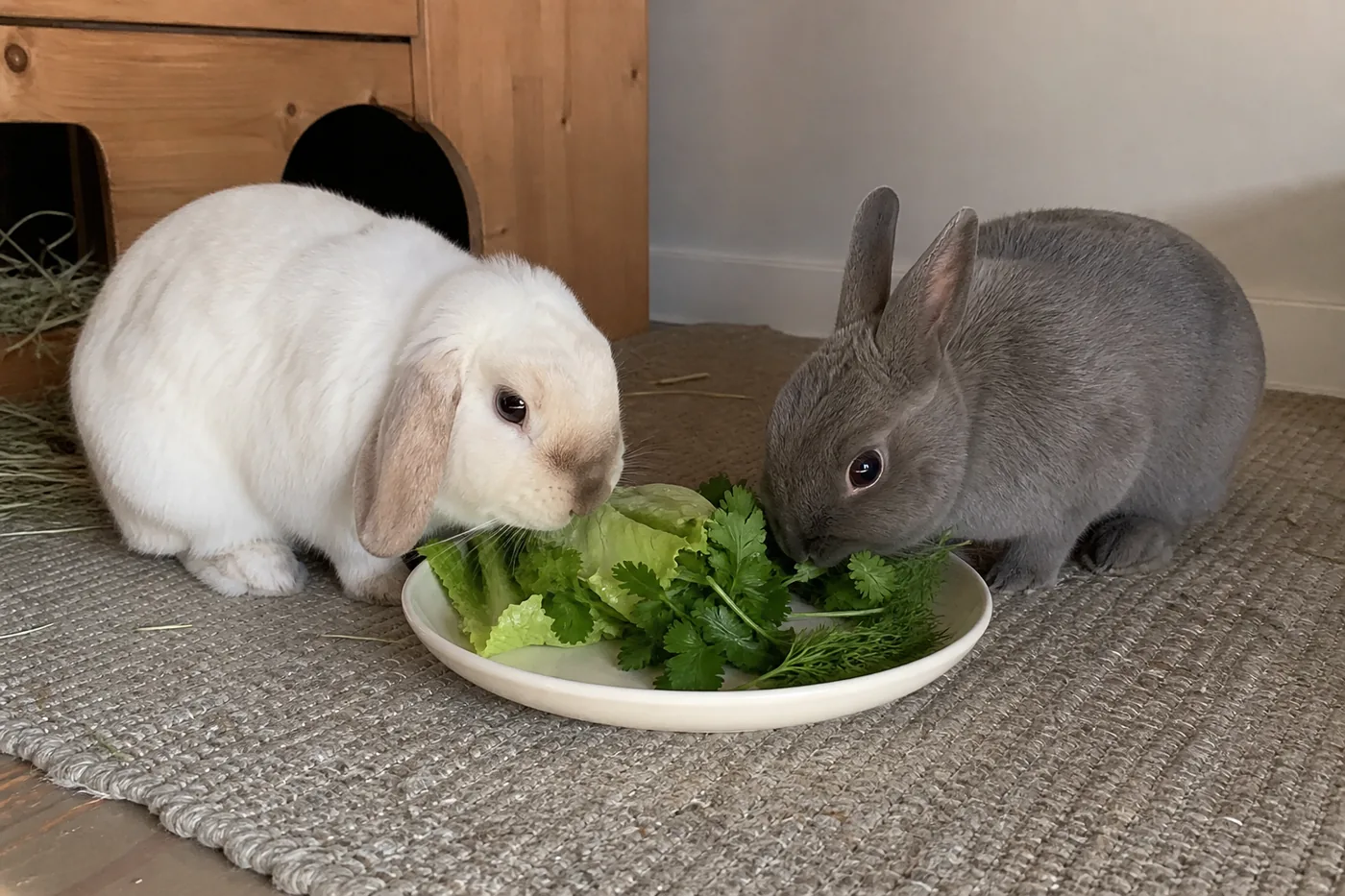
A rabbit bowl does not need to look like a restaurant tasting menu. The aim is a familiar, fiber-first routine with gentle variety. Start with two dependable leafy greens your rabbit digests well, add one herb for interest and use a small piece of a non-leafy vegetable on some days. Hay remains beside the bowl before, during and after the meal.
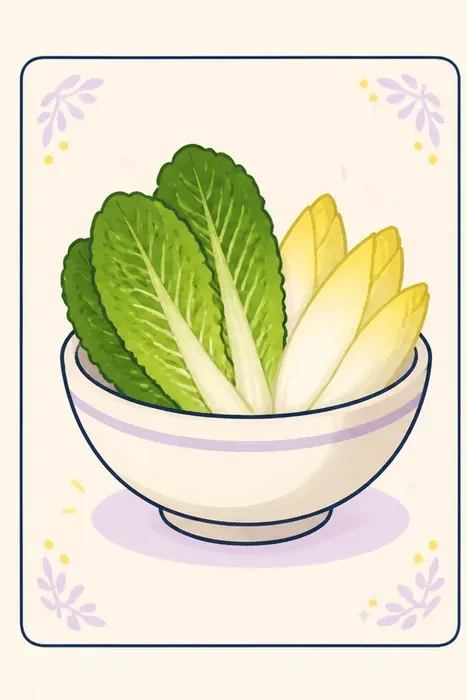
Choose a leafy base
Romaine, endive or escarole can form the largest share of the green plate. Use a quantity suited to your rabbit’s weight rather than an overflowing bowl.
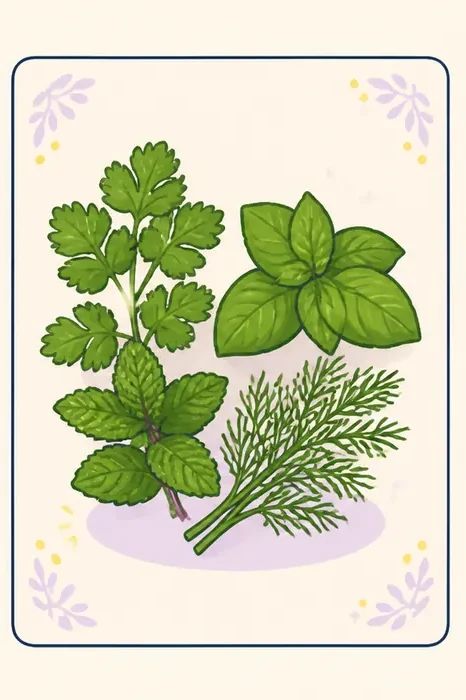
Add aroma and texture
A few sprigs of cilantro, basil, mint or dill make the meal interesting without turning every serving into a fruit-heavy treat.
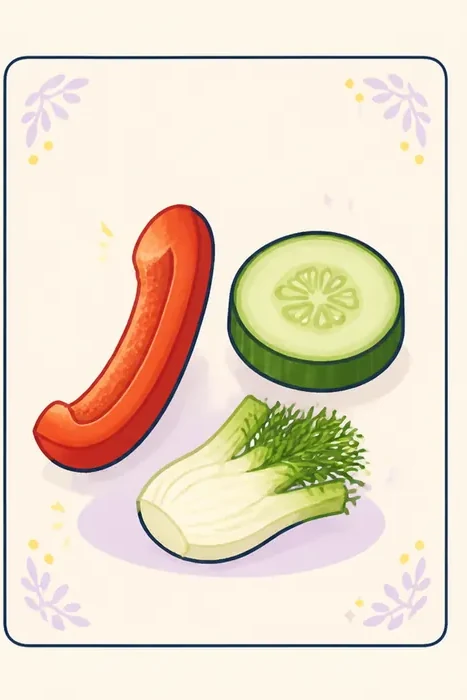
Finish with rotation
On selected days, add a strip of bell pepper, a little fennel or a cucumber slice. Save carrot or berry for a genuinely tiny reward.
For bonded rabbits, spread greens over a wide plate or clean feeding area so one confident bun cannot block the whole meal. Watch long enough to confirm that each rabbit is chewing and swallowing. Shared enthusiasm can hide the fact that a quieter partner is eating less.
Wash, store and serve rabbit food safely
Choose crisp produce without mold, slime or a sour smell. “For the rabbit” is not a reason to use spoiled vegetables.
Rinse leaves and herbs under clean running water. Foraged foods need reliable identification as well as a pesticide-free source.
Store them in the refrigerator and remove badly wilted or damaged pieces. Slight moisture after rinsing is fine at serving time, but greens should not sit fermenting in a warm bowl.
Fresh greens can remain for a while, but discarded leaves should not become a soft, warm pile beneath hay or bedding.
Seeing cecotropes is not the same as seeing diarrhea
Rabbits normally produce soft, nutrient-rich cecotropes and usually eat them directly. An occasional squashed cluster may be noticed, but repeated uneaten cecotropes can be linked to an overly rich diet, excess weight, pain or difficulty reaching the rear. Watery diarrhea, reduced appetite or a rabbit that seems unwell requires urgent veterinary advice.
Foods rabbits should never eat
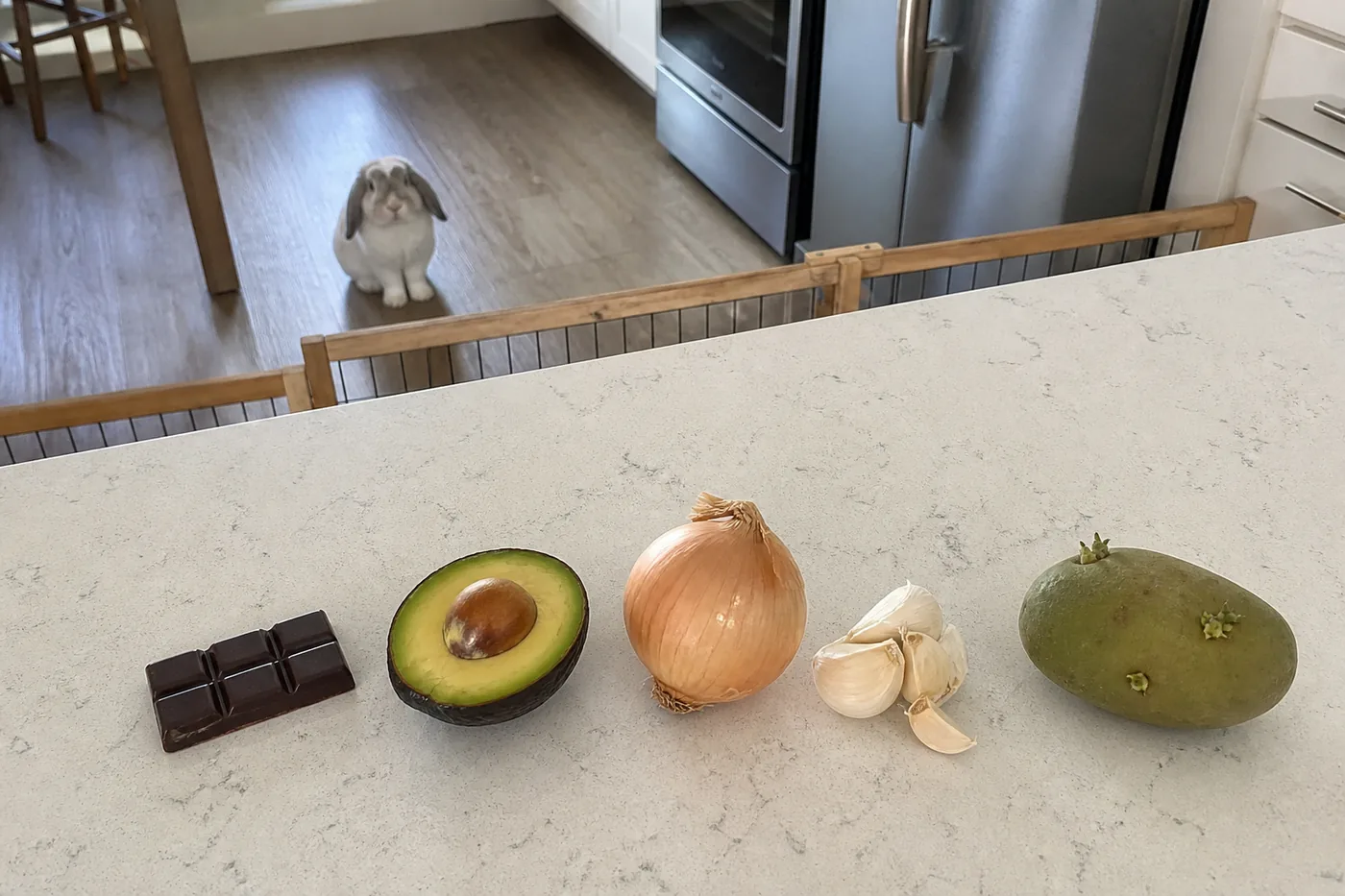
Keep unsafe foods in closed cupboards or on surfaces your rabbit cannot reach. Free-roam buns are talented climbers and committed bag inspectors, so “they have never tried before” is not a safety system.
Not always poisonous, still poor everyday choices
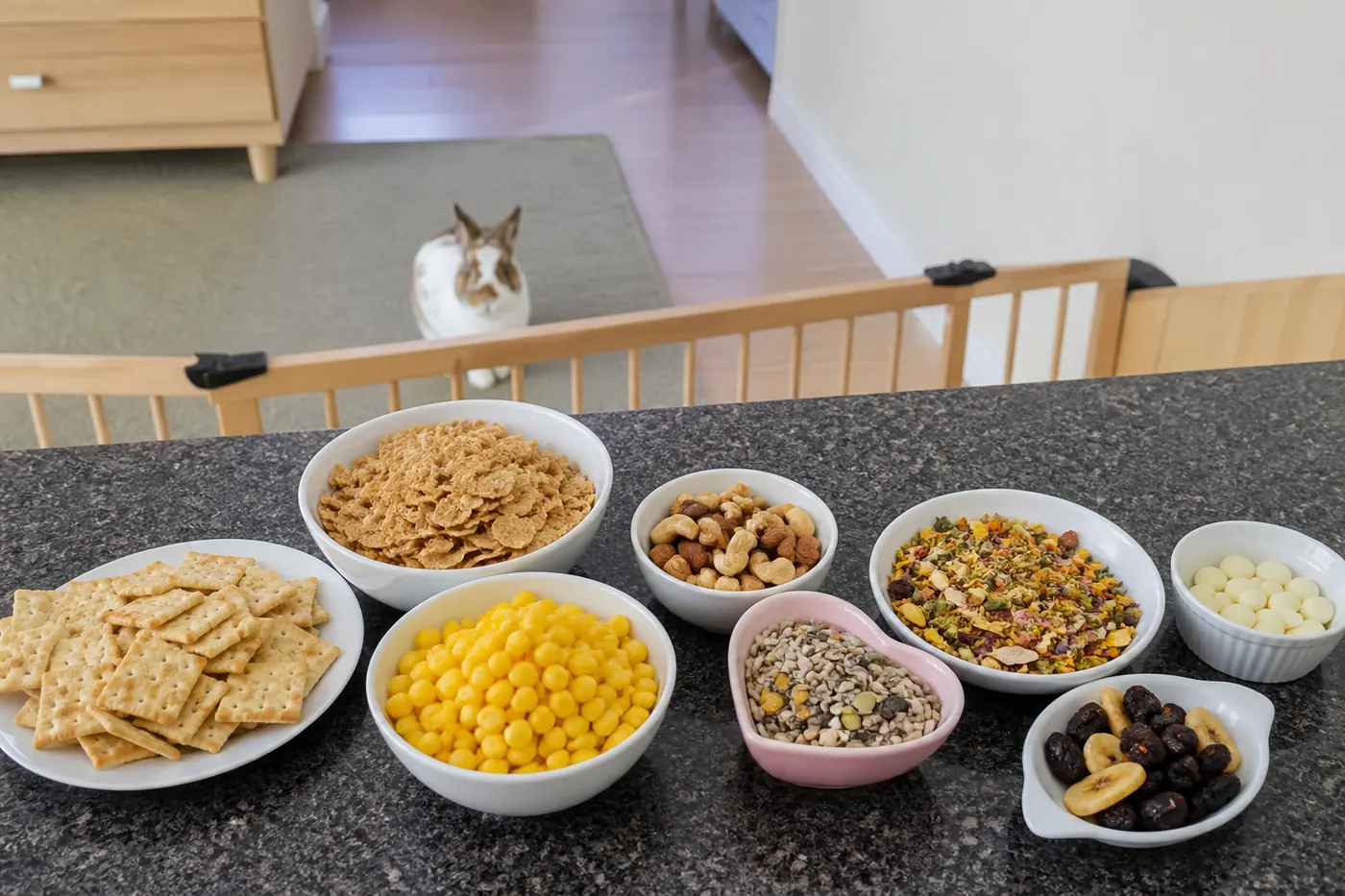
How to introduce a new food safely
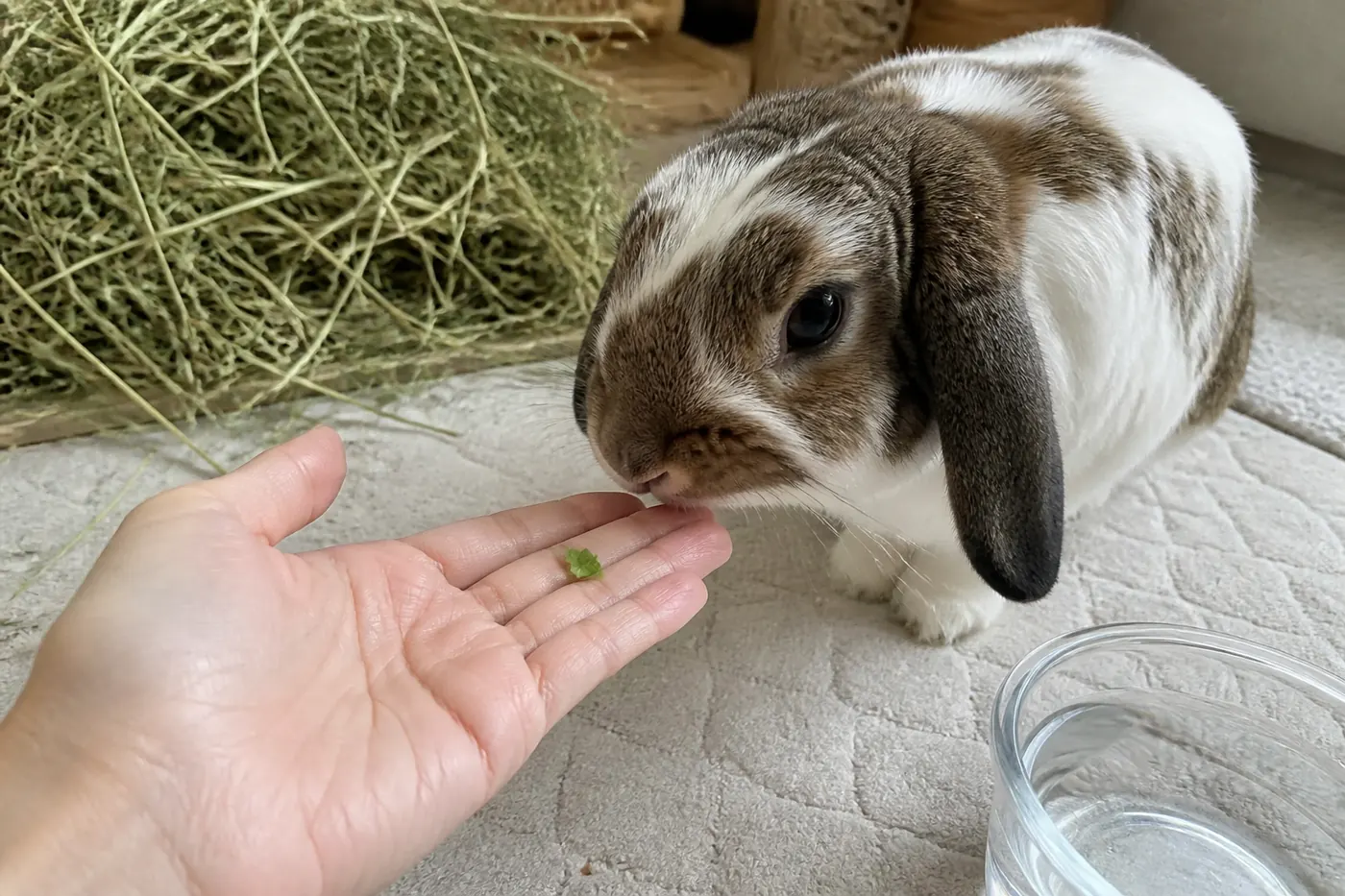
Do not test a new vegetable during reduced appetite, unusual droppings, stress or recovery from illness.
Keep the rest of the diet familiar so you know which food caused a change.
Check appetite, hay intake, energy and the size, number and consistency of droppings.
If everything stays normal, build toward the appropriate portion over several servings.
A phone note with food, amount and reaction is far more useful than trying to remember a month later.
A rabbit that stops eating needs prompt help
If your rabbit refuses food, eats much less, produces fewer or smaller droppings, has a swollen belly, seems painful or becomes unusually quiet, contact a rabbit-savvy veterinarian urgently. Do not wait overnight to see whether a sweet treat fixes it.
What changes for babies, seniors and rabbits with health problems?
A growing rabbit may need alfalfa and a different pellet allowance, while an overweight adult may need less concentrated food. Rabbits with urinary problems may require a deliberately adjusted mix of greens. Dental disease can change how a bun handles long hay, and digestive illness can make even a familiar food plan unsuitable for the moment.
Do not use an internet feeding chart to override an individual veterinary plan. The safe-food lists remain helpful, but quantities and priorities belong to the rabbit in front of you.
Frequently asked questions about rabbit food
Can rabbits eat lettuce every day?
Rabbits can eat suitable lettuces such as romaine, red leaf and green leaf as part of a varied daily mix. Avoid relying on iceberg lettuce as the main green because it is watery and nutritionally limited.
Can rabbits eat carrots every day?
The carrot root is sugary and is better treated as a thin occasional slice once or twice a week. Washed carrot tops can join the leafy rotation more often.
Can rabbits eat banana?
Yes, healthy adult rabbits can have a very thin piece occasionally. Banana is high in sugar, so it should never replace hay, greens or a proper meal.
Can rabbits eat spinach and kale?
Both can appear in a varied rotation, but they do not need to be served in large amounts every day. Use a few leaves alongside other greens and ask your vet for tailored guidance if your rabbit has urinary disease.
Can rabbits eat fresh grass?
Yes, pesticide-free fresh grass can be excellent after a gradual introduction. Never use lawn mower clippings and do not collect grass from polluted or chemically treated areas.
Do rabbits need pellets?
Many adult house rabbits receive a small measured amount of plain, grass-based, high-fiber pellets, which can provide a consistent source of vitamins and trace minerals. Pellets never replace hay. Some healthy adults may follow a pellet-free plan when they eat plenty of hay and receive deliberately varied fresh foods, but this should be considered with a rabbit-savvy veterinarian rather than assumed suitable for every bun.
What should I do if my rabbit ate a toxic food?
Remove access, note the food and likely amount, keep any packaging or plant sample, and contact a rabbit-savvy veterinarian or animal poison service immediately. Do not induce vomiting; rabbits cannot vomit.


Elodie
Rabbit guardian and care enthusiast with over 10 years of hands-on experience living with house rabbits. Through Rabbit World, Elodie shares warm, practical guidance focused on comfort, safety and the everyday details that help every little bun feel at home.