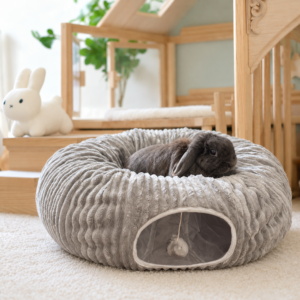
A safe trip starts before the carrier leaves the floor. Pack the things that keep your rabbit steady, eating, hydrated and easy to help if plans change.
What should be in a rabbit travel kit?
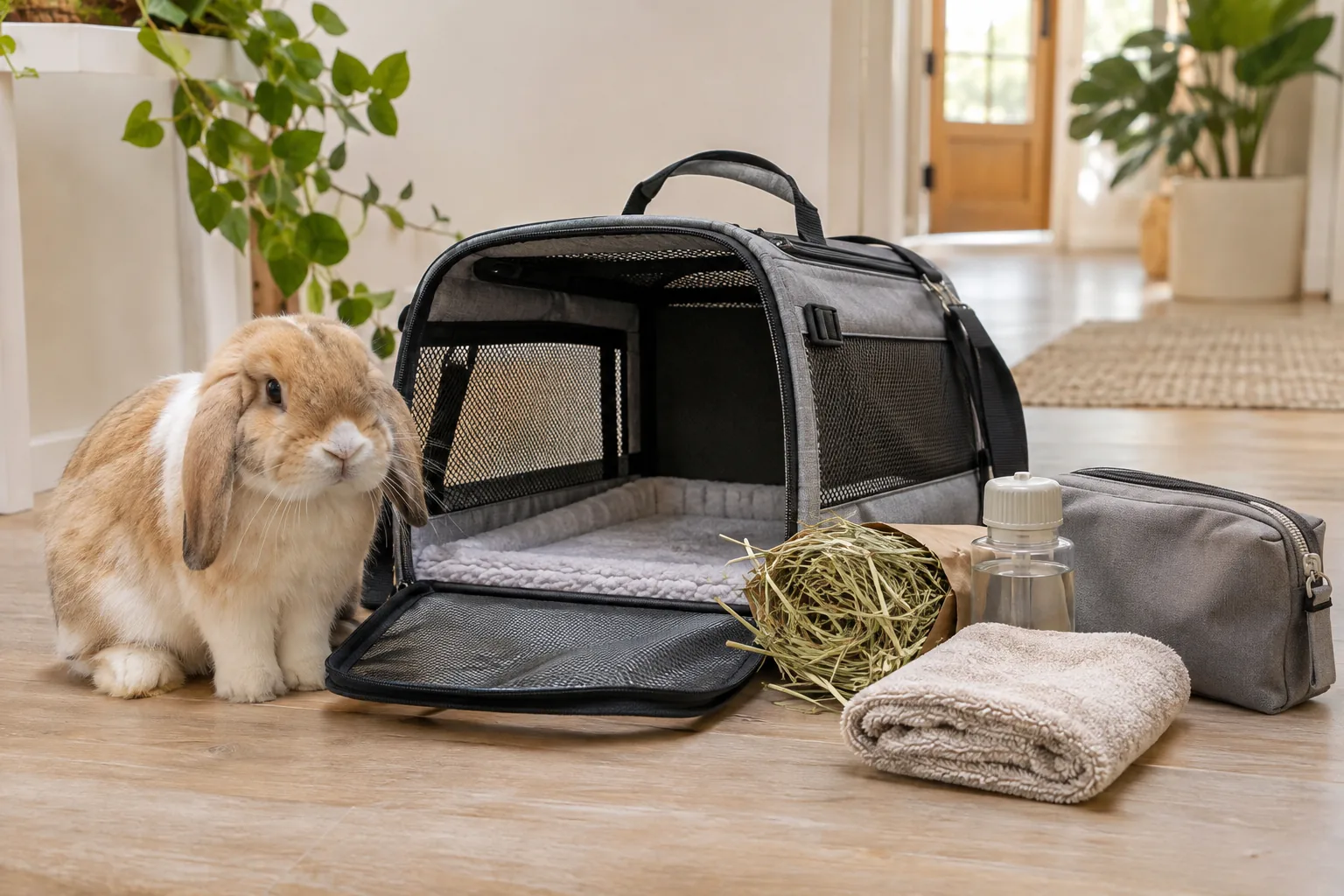
Pack a secure, well-ventilated carrier, a dry non-slip liner, plenty of hay, your rabbit’s usual food, fresh water, a familiar bowl, spare towels or liners, waste bags and your rabbit-savvy vet’s contact details. For a bonded pair, use a carrier that safely fits both rabbits unless your vet gives different advice.
A five-minute vet drive and a long car journey do not need exactly the same bag. Yet the basic job is always the same: keep your rabbit secure, cool enough, able to eat and easy to check. A simple kit also stops you searching for a towel or phone number when your rabbit already needs attention.
Pack familiar items rather than changing everything on travel day. New food, a new water system and a carrier that smells strange can all make an unusual day harder. Let your rabbit explore the carrier at home first, then keep this checklist near it.
The complete rabbit travel checklist
Make the floor safe
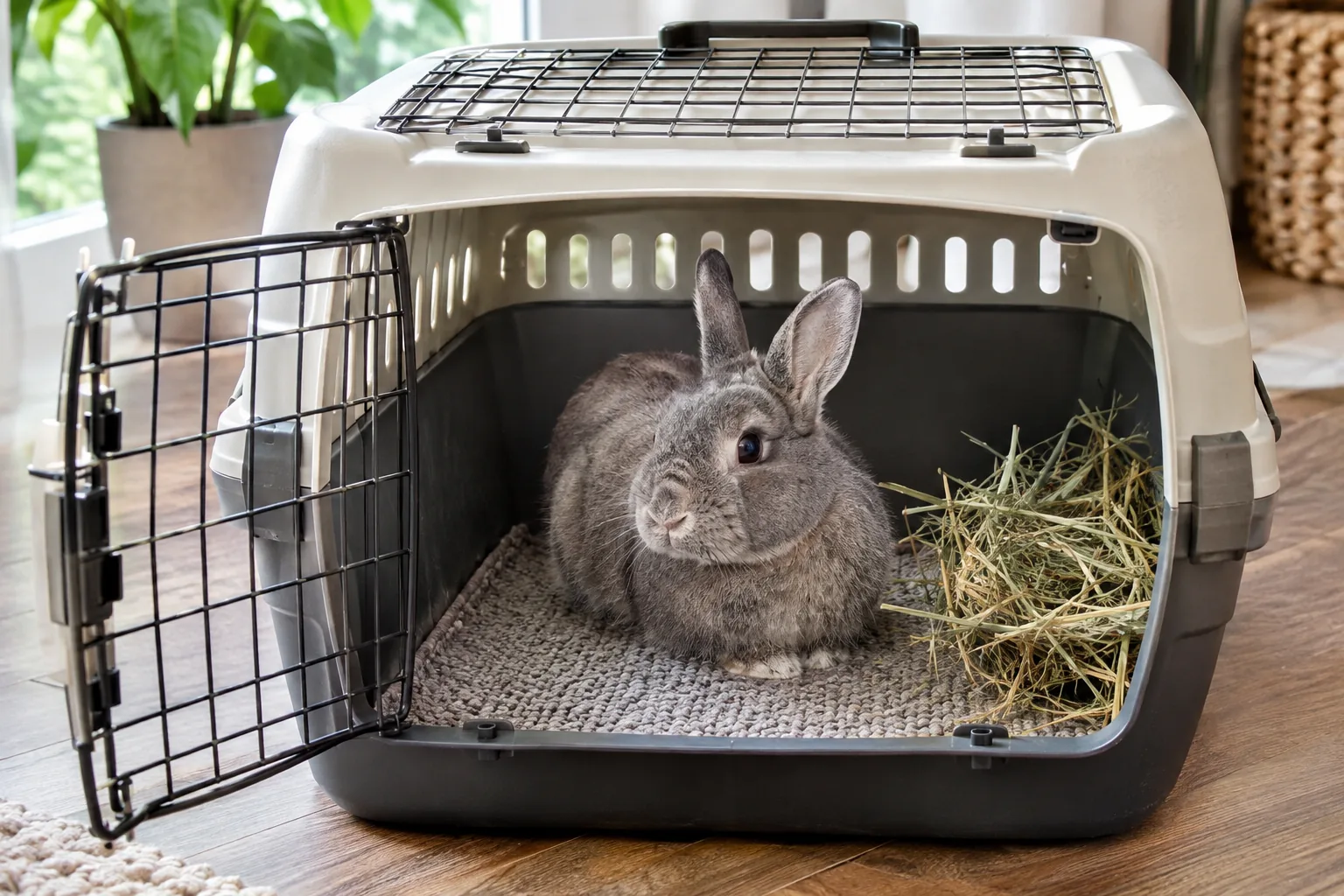
- Dry non-slip liner
- Absorbent towel or pad underneath
- Fresh hay within easy reach
- One familiar-smelling item, if it cannot be swallowed
Keep the routine familiar

- More hay than you expect to need
- Usual pellets in a sealed pot
- Usual safe greens for a longer trip
- Fresh water from home and a familiar bowl
Prepare for a wet liner
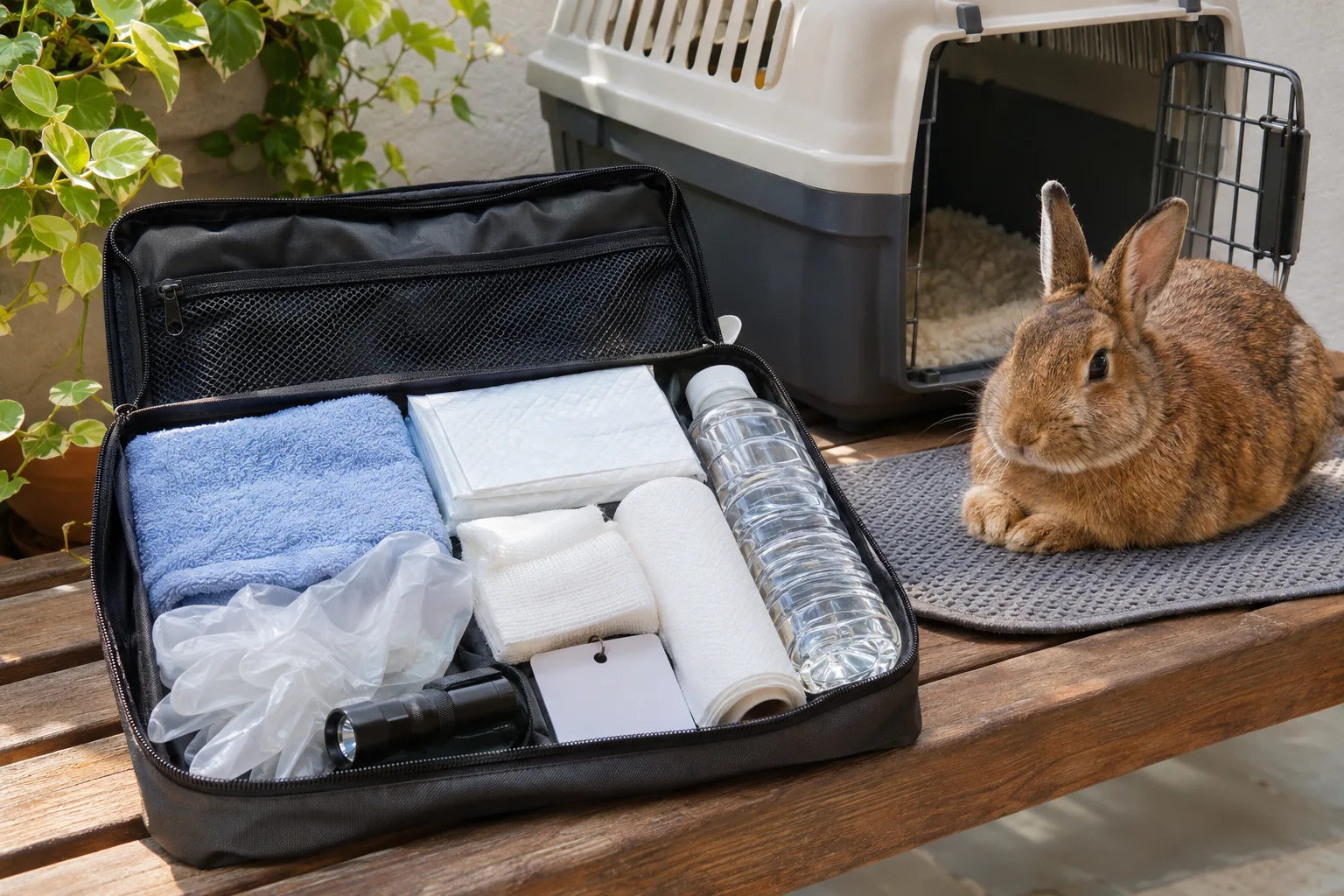
- Two spare towels or liners
- Paper towels
- Waste bags
- Disposable gloves and a small cleaning cloth
Know where to go
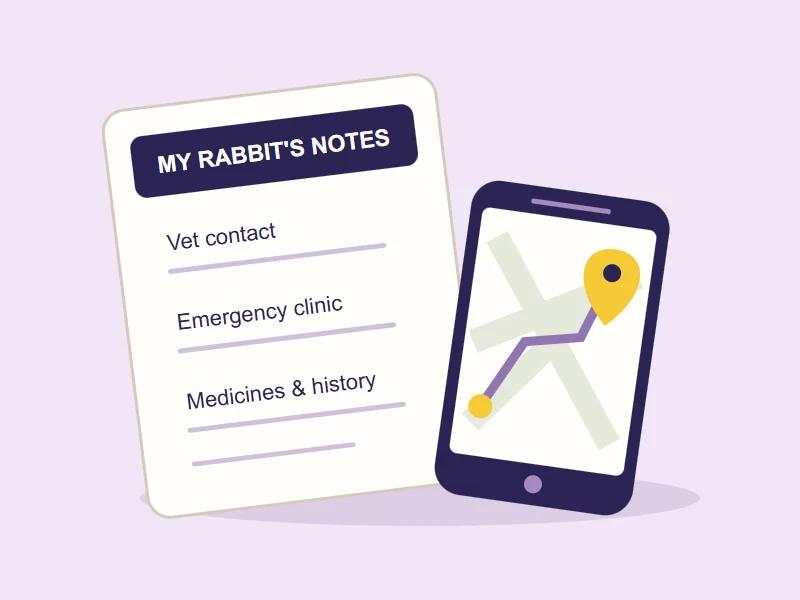
- Rabbit-savvy vet’s number and address
- Emergency clinic details
- Medication list and health notes
- Your route, stops and destination contact
Start with the right carrier
Choose a carrier that is strong, secure and well ventilated. Your rabbit should be able to lie comfortably in different directions and turn around without being squeezed.
- Strong shape: the sides do not collapse onto the rabbit.
- Secure doors: the rabbit cannot push, chew or unzip a way out.
- Two useful openings: a front and top opening make loading and checks easier.
- Flat floor: the base stays supported when you lift the carrier.
Leave the carrier open in your rabbit’s room for several days before the trip. Put hay inside and let your rabbit enter by choice. On travel day, secure the carrier so it cannot slide or tip. The RSPCA advises fastening it with a seat belt or placing it securely in a footwell, with the side facing the direction of travel. Never place a rabbit in a closed car boot or in direct sunlight.

Pack hay, water and familiar food
Hay is not an optional snack. Rabbits need constant access to fresh hay or grass, including around travel. Pack more than you think the journey will use because some will be flattened, wet or dropped. Keep the main supply dry in a breathable bag and place a smaller amount in the carrier.
Bring the same pellets and suitable greens your rabbit normally eats. Travel day is not the moment to test a new treat. A familiar smell and taste also make it easier to notice whether your rabbit is still willing to eat.
Take fresh water and the drinking method your rabbit already knows. For a longer journey, plan safe stops to offer water while the vehicle is stationary. The RWAF warns that a hard bottle spout can injure a rabbit during sudden braking, so do not place one where it points towards the face. A stable familiar bowl offered during a secure stop is often easier to manage. Never open the carrier outdoors or beside an open car door.
Build a small emergency bag
This bag is for safe support while you contact a vet. It is not a home treatment box. Pack items that keep your rabbit dry, stable and easy to move.
- Folded towel to pad the carrier or support the body
- Two spare absorbent liners
- Gloves, paper towels and waste bags
- Plain contact card with vet and emergency clinic details
- Only prescribed medicine your vet has told you to carry
Match the kit to the length of the trip
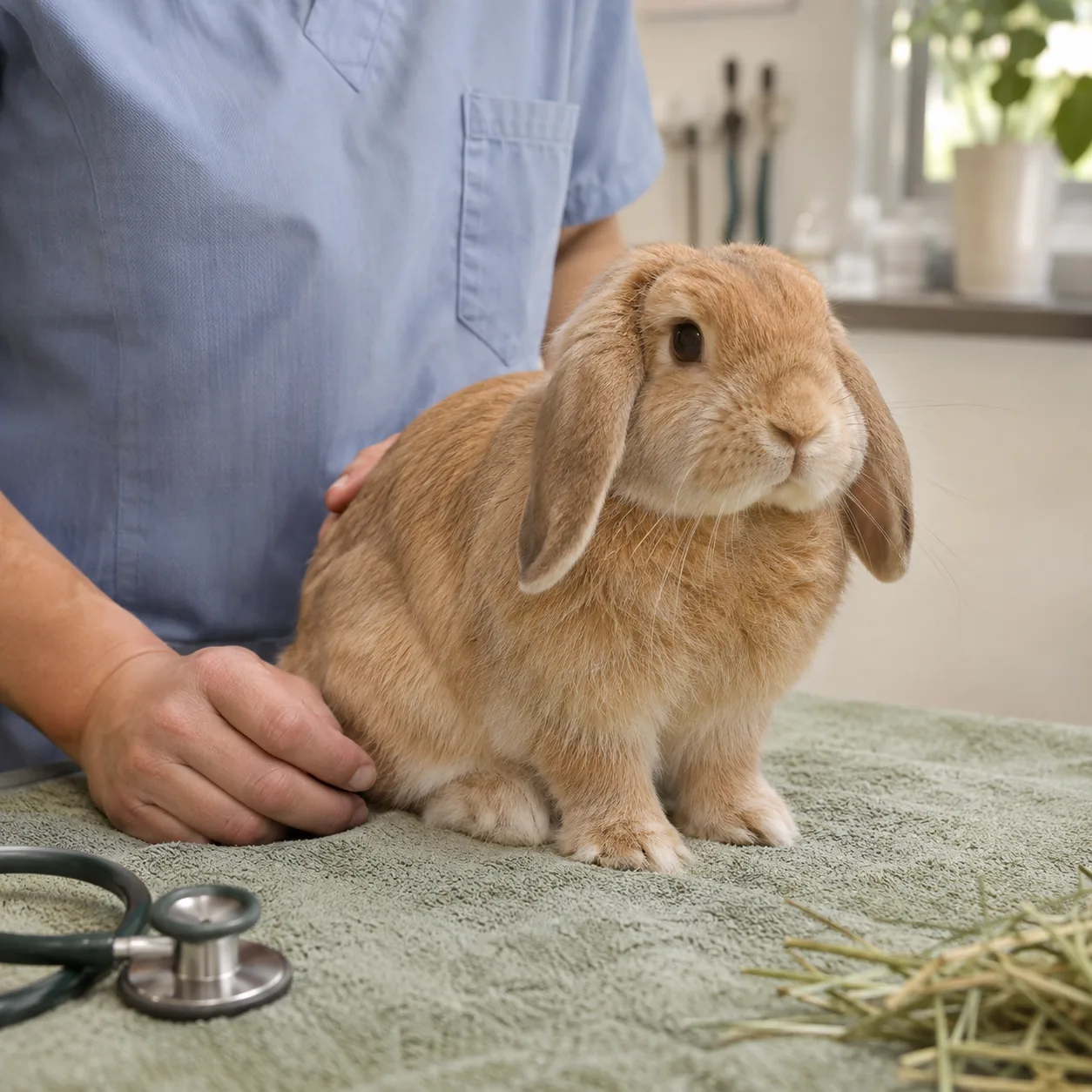
Start with a secure carrier, a dry non-slip liner and hay. Bring water, a spare towel and your vet’s contact details, even if the clinic is nearby.
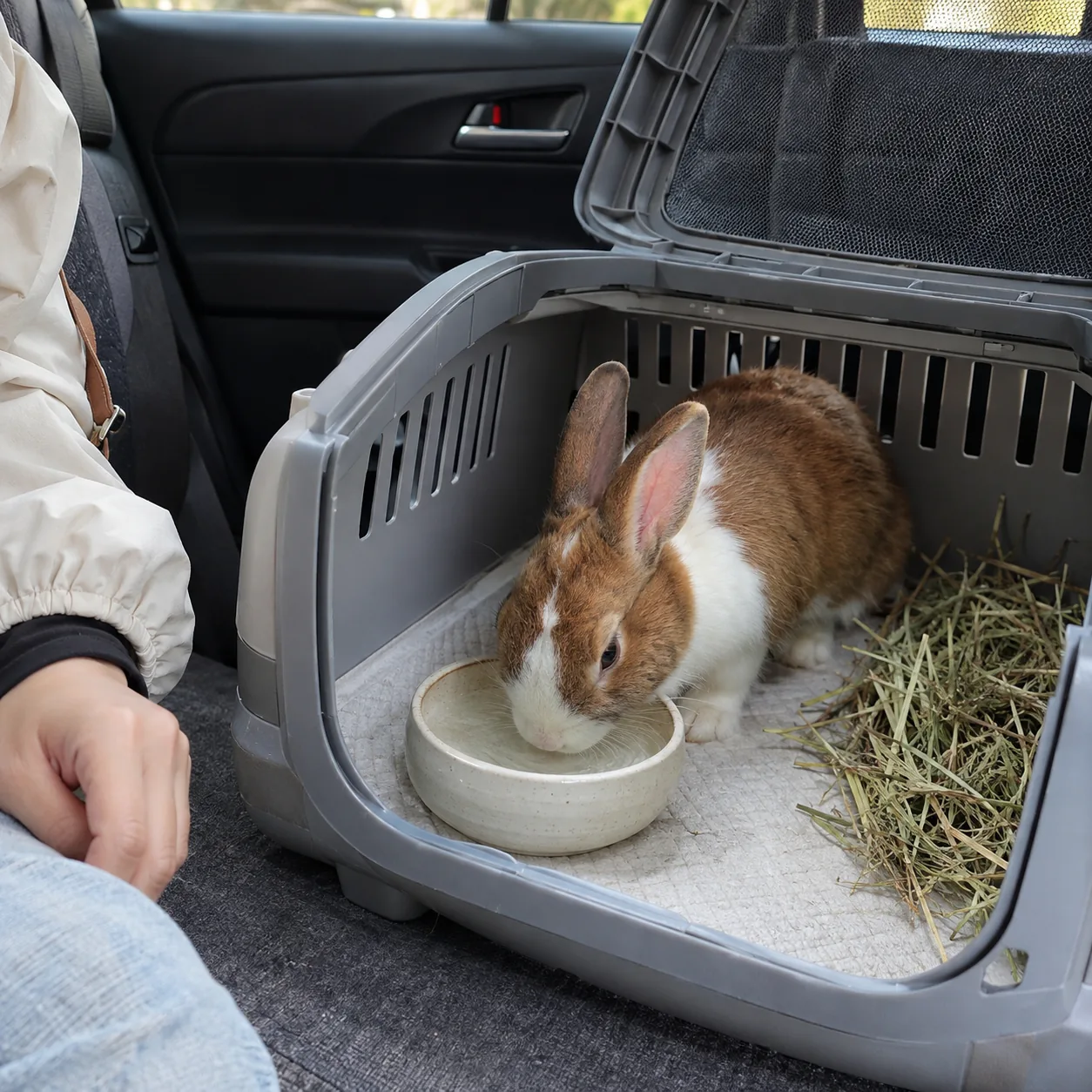
Pack extra hay, familiar food, fresh water and a bowl. Add spare liners and plan quiet stops where you can check your rabbit and offer a drink safely.
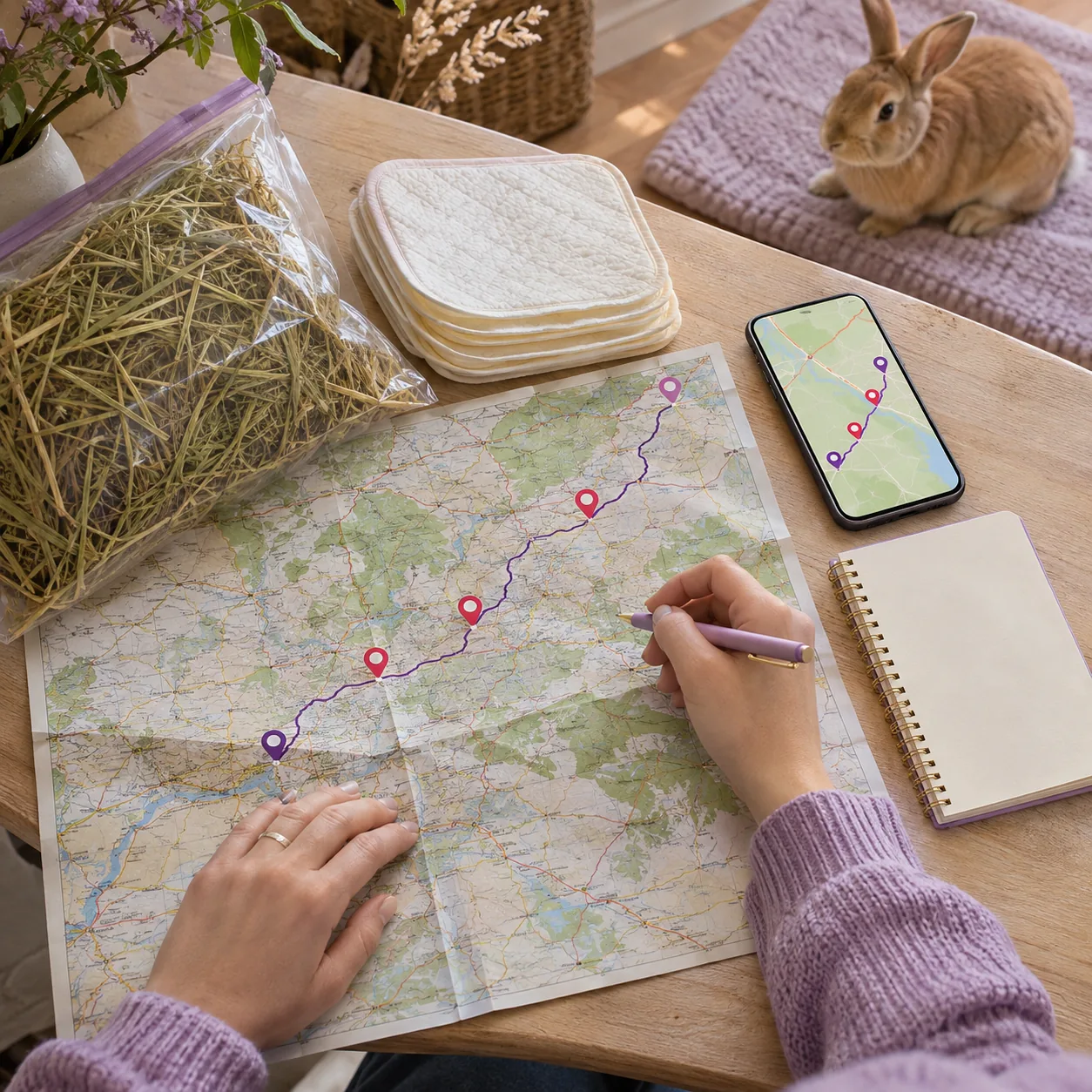
Make a travel plan with your vet. Pack extra supplies for delays, keep health notes close and save the details of emergency clinics along your route.
Do not use distance alone. Heat, traffic, waiting time and your rabbit’s health can turn a short route into a demanding trip. Senior rabbits and rabbits with a medical condition may need a plan made with their vet before travel.
Rabbit World travel picks
Measure your rabbit first and check the internal dimensions on each product page. A carrier should fit the rabbit, not simply look compact.
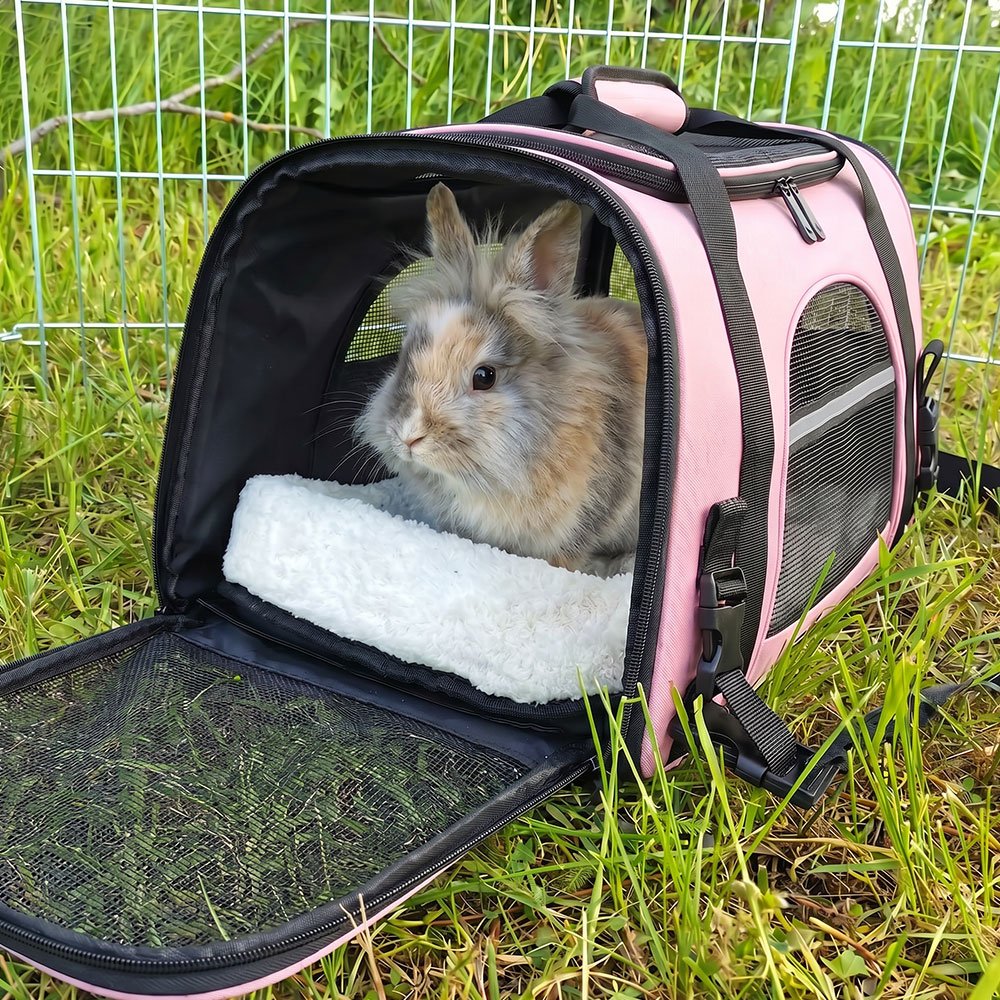
Rabbit Carrier with Cushion
A soft padded floor for the trip to the vet. The cushion lifts out for washing, while mesh panels let air through. Use the top handles or shoulder strap and keep the base level. Check the inside space before choosing this model.
See the cushioned carrier →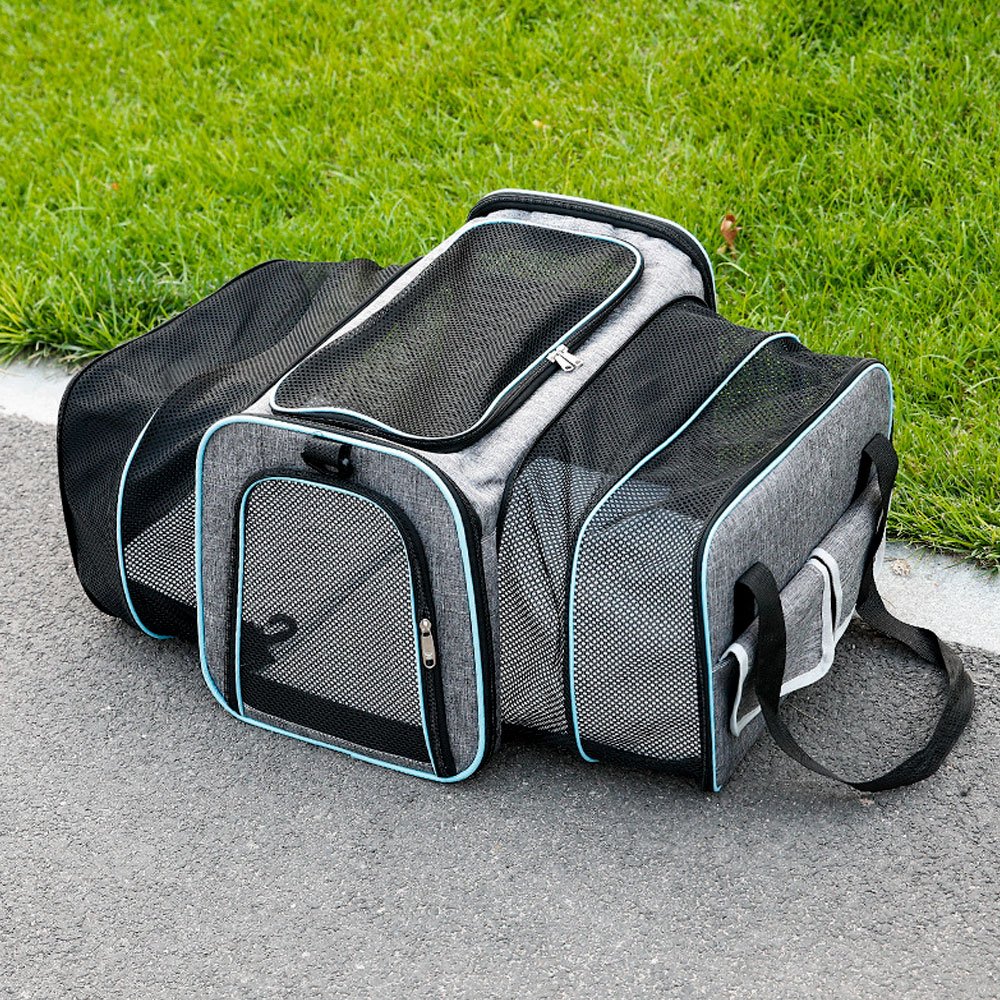
Carrier With Expandable Sides
Top and side access, mesh panels and side pockets for small supplies. Open the extra space only when the carrier is stable and the instructions allow it.
View the expandable carrier →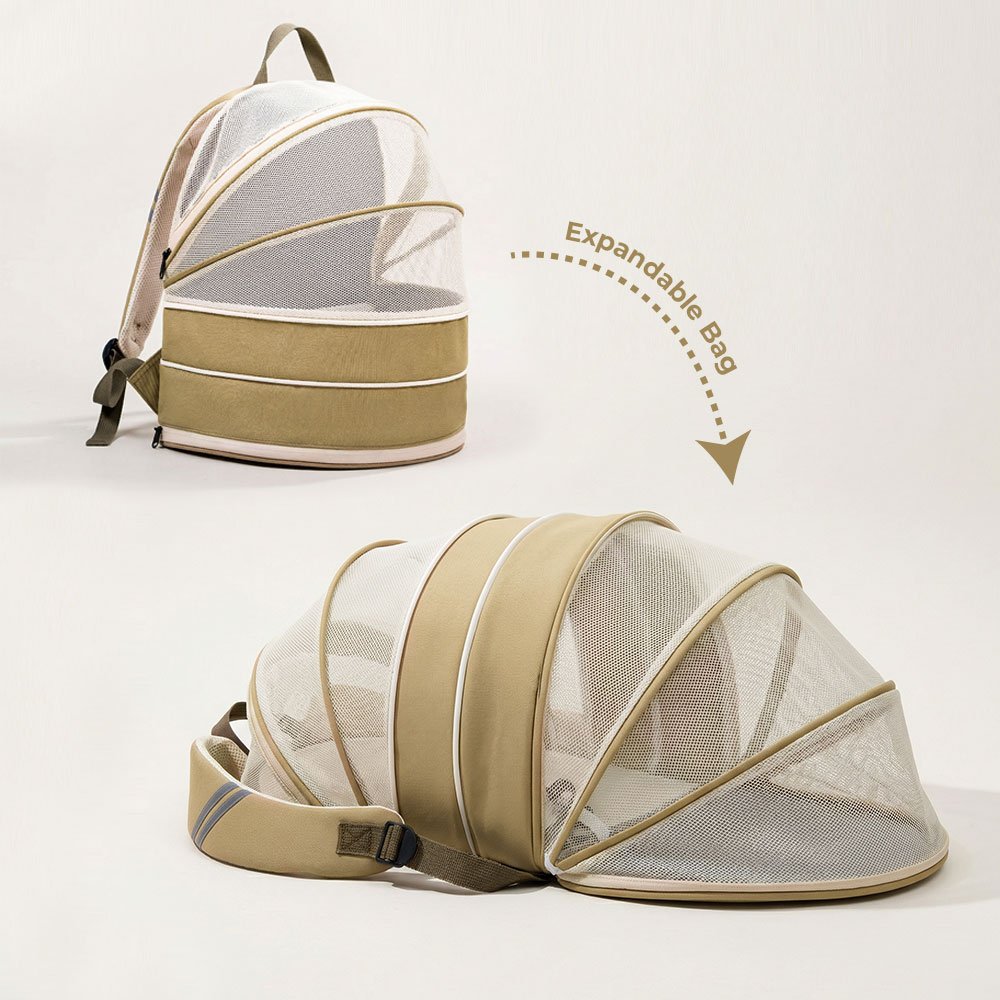
Expandable Rabbit Backpack
Keep your hands free between home and the clinic. This beige mesh backpack folds out into a longer resting space during a safe, stationary break. Close the extension before carrying it, keep it steady and check that your rabbit fits comfortably in the compact space too.
See the expandable backpack →Check your rabbit during the journey
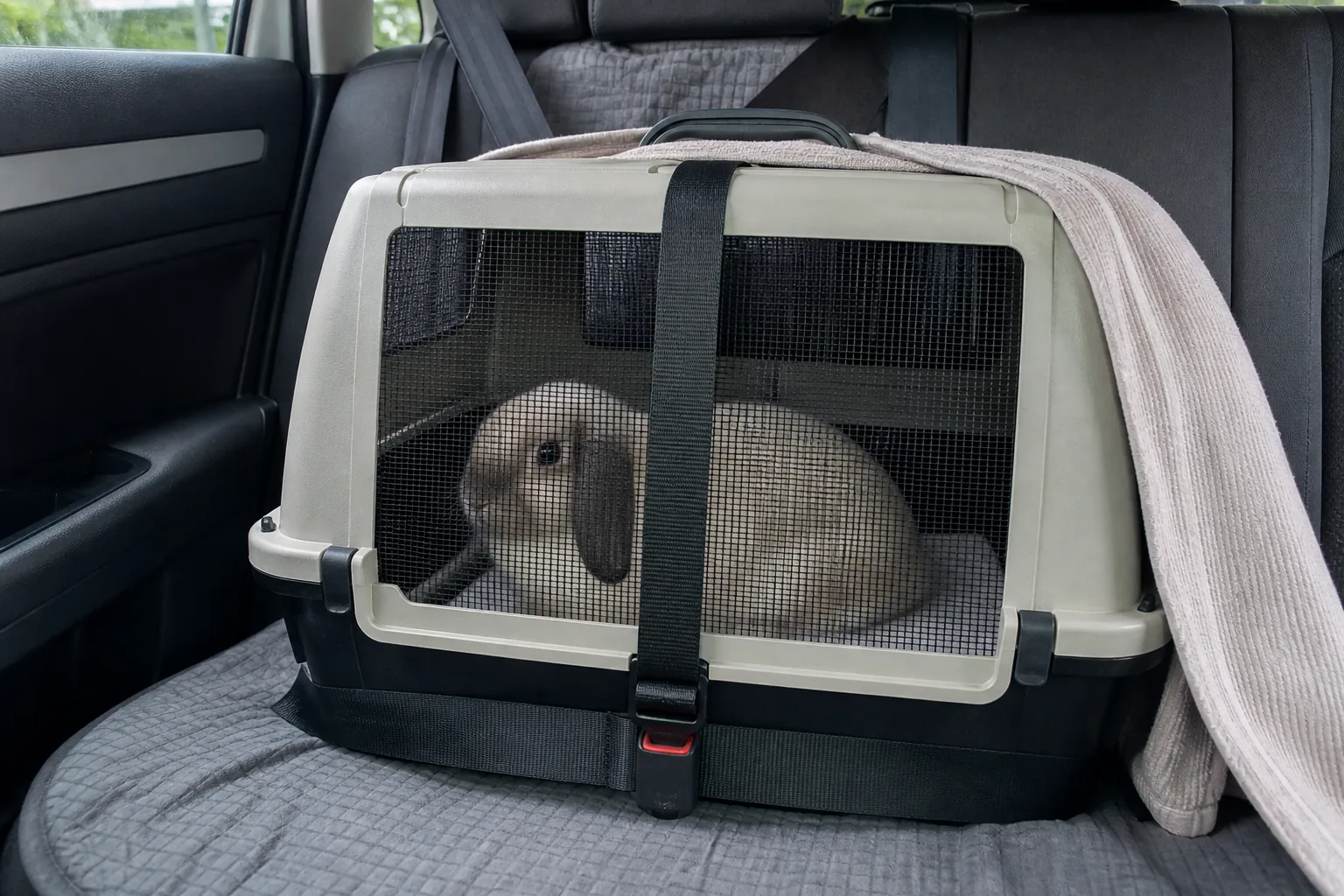
Keep the car cool and well ventilated, but do not aim a strong draught directly into the carrier. Protect the carrier from sun. Partly covering one section with a light cloth can help a rabbit feel hidden, but the ventilation panels must stay open.
Watch without constantly opening the door. Check posture, breathing, temperature and interest in hay. On a safe stop, confirm that the liner is dry and that both rabbits in a bonded pair can sit and lie down. Keep bonded rabbits together when it is safe and the carrier is large enough, because separating them can add stress.
Rabbit travel kit FAQ
Should I put hay inside the carrier?
Yes. Put fresh hay where it stays easy to reach. Replace it if it becomes wet or dirty, and keep a larger dry supply in your travel bag.
Can two bonded rabbits travel together?
Usually they should stay together if the carrier safely fits both rabbits. They must be able to rest without crowding. Ask your vet if one rabbit needs special medical transport.
Should I put a water bottle in the carrier?
A hard spout can be dangerous during sudden movement. Bring water and a familiar stable bowl, then offer it at safe secure stops. Ask your vet for a longer-trip hydration plan.
Can I give my rabbit a calming medicine?
Never give a sedative or other medicine unless a rabbit-experienced vet prescribed it for that rabbit and explained exactly how to use it.
How do I stop the carrier sliding?
Use the carrier and vehicle instructions. The RSPCA suggests securing it with a seat belt or placing it safely in a footwell so it cannot move, while keeping ventilation clear.
Welfare sources: This guide uses current advice from the RSPCA on transporting rabbits, the Rabbit Welfare Association & Fund transport guide and the RWAF emergency guide. Adapt the plan to your rabbit’s health and follow your veterinarian’s advice.


Elodie
Rabbit guardian and care enthusiast with over 10 years of hands-on experience living with house rabbits.
Rabbit World shares practical guidance focused on safe enrichment, thoughtful care and everyday details that help rabbits thrive.