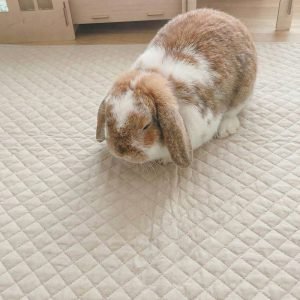
Rabbits are quiet communicators, but not silent ones. A soft honk, warning grunt, gentle tooth purr or sudden scream means something very different. The body around the sound tells you what to do next.
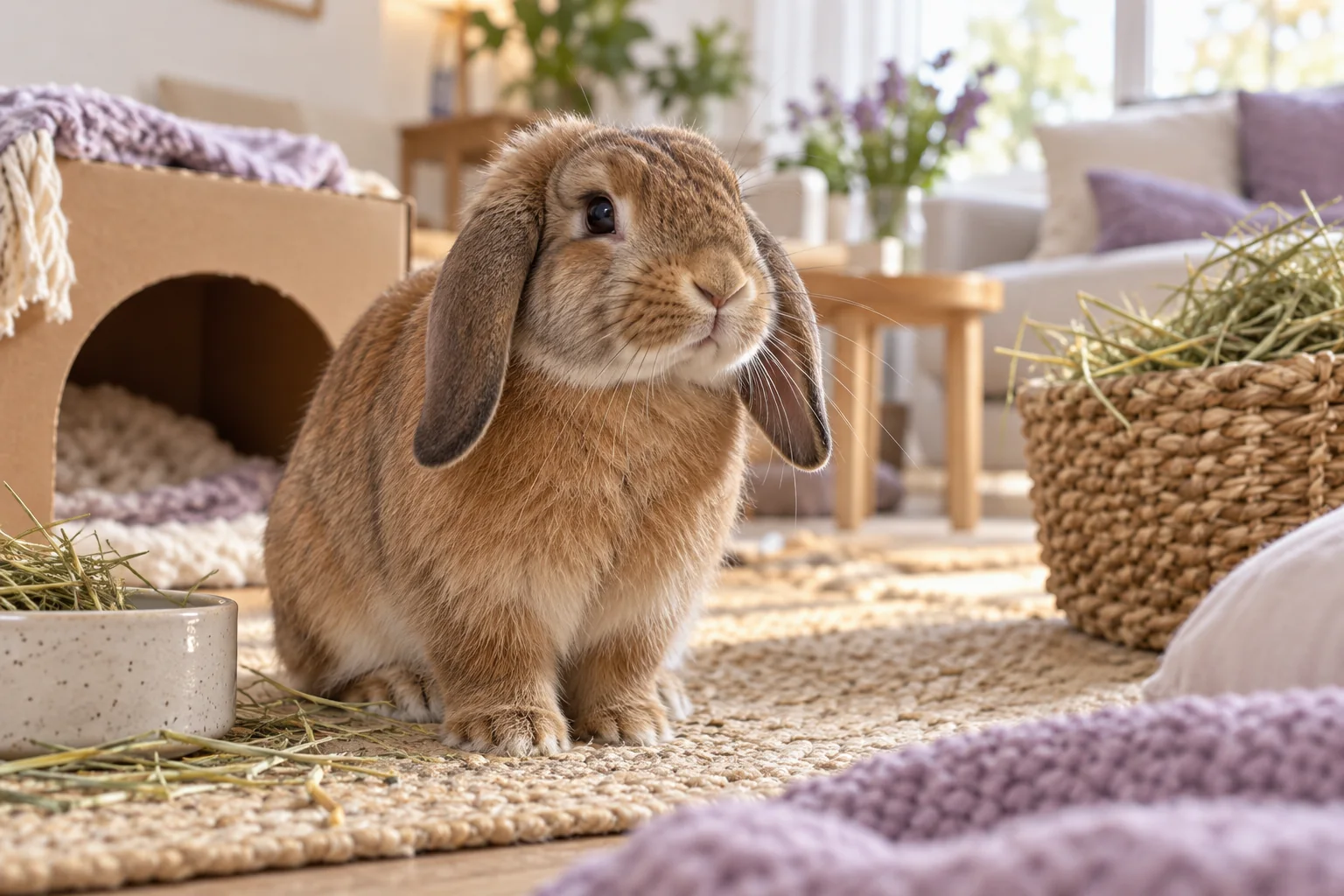
What do rabbit sounds mean?
Honking often accompanies excitement, courtship or eager circling; grunting or growling usually asks for distance; quiet tooth chattering can signal deep relaxation; and a high-pitched scream can mean extreme fear or acute pain. Never interpret the sound alone. Check posture, ears, eyes, appetite, breathing, droppings and what happened immediately before it.
A quick guide to common rabbit noises
Most rabbit communication is visual and scent-based, so even experienced guardians may hear a sound only occasionally. The same low vocalisation can also occur in more than one situation. Use these descriptions as starting points, then compare them with your rabbit’s normal behaviour.
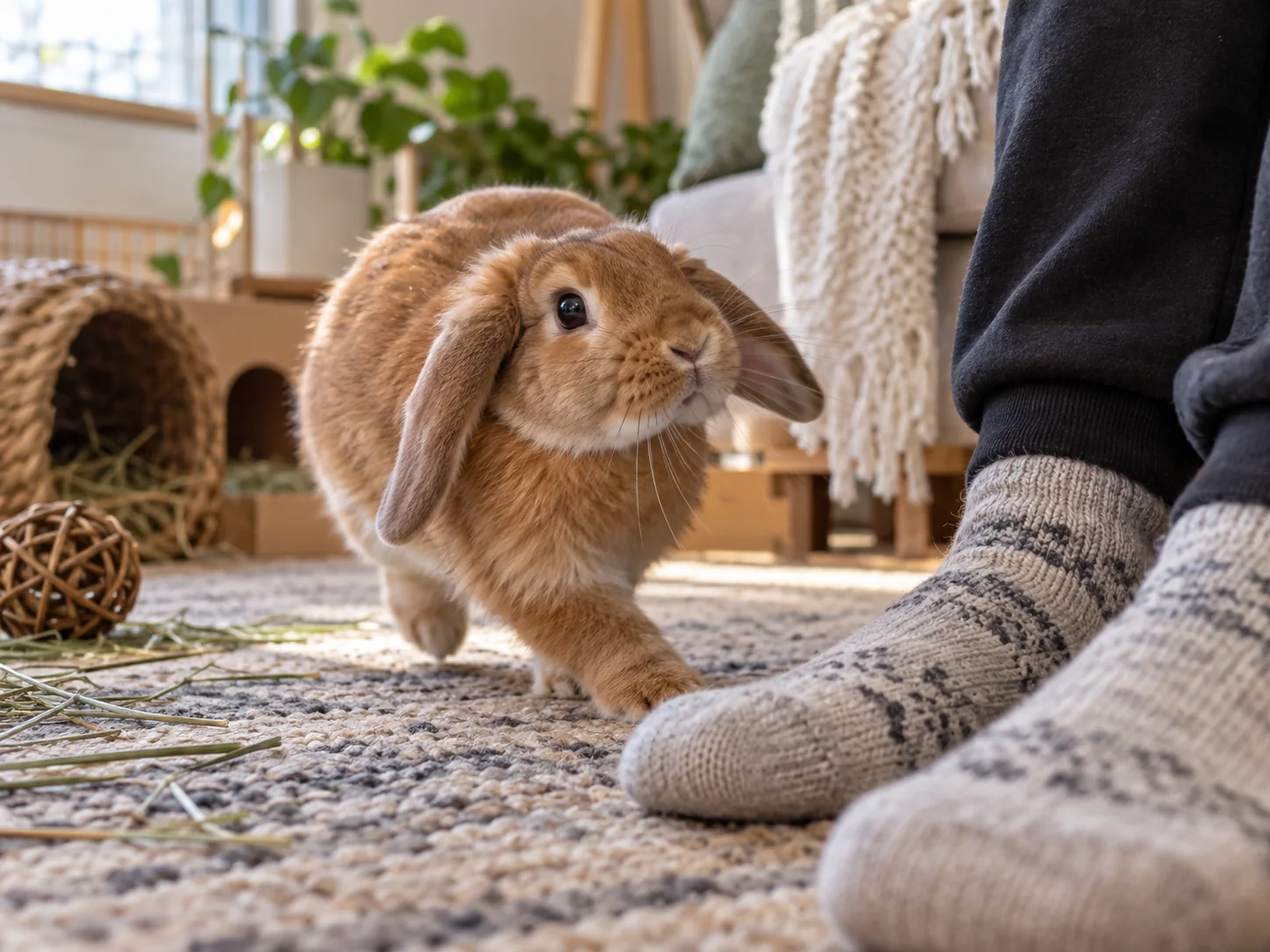
Honking or oinking
Often linked to excitement, food anticipation, circling or courtship. Hormones can play a part, particularly in an unneutered rabbit.
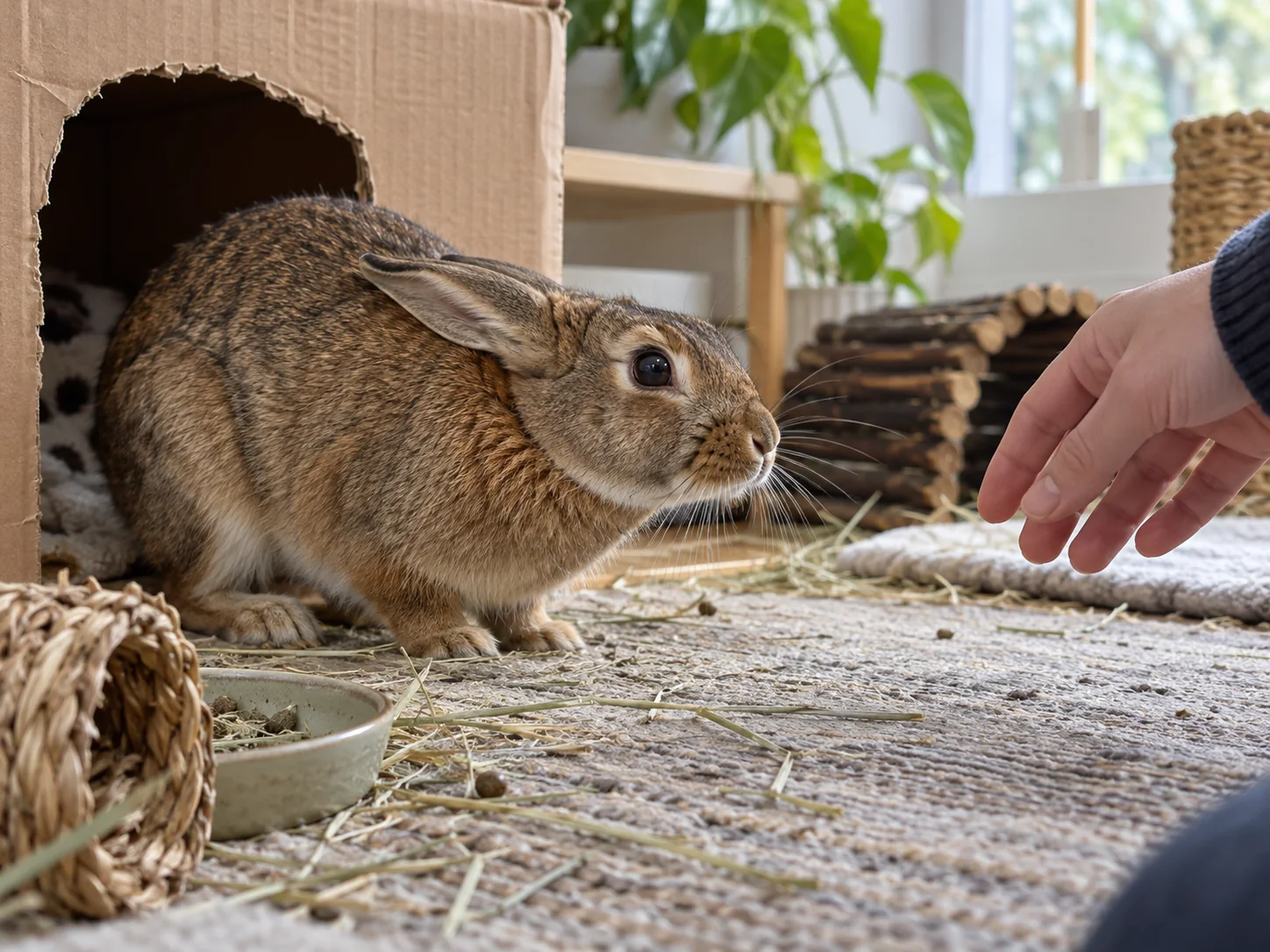
Grunting or growling
Usually says “stop” or “give me space.” Look for tension, ears angled back, a raised tail, boxing or a forward lunge.
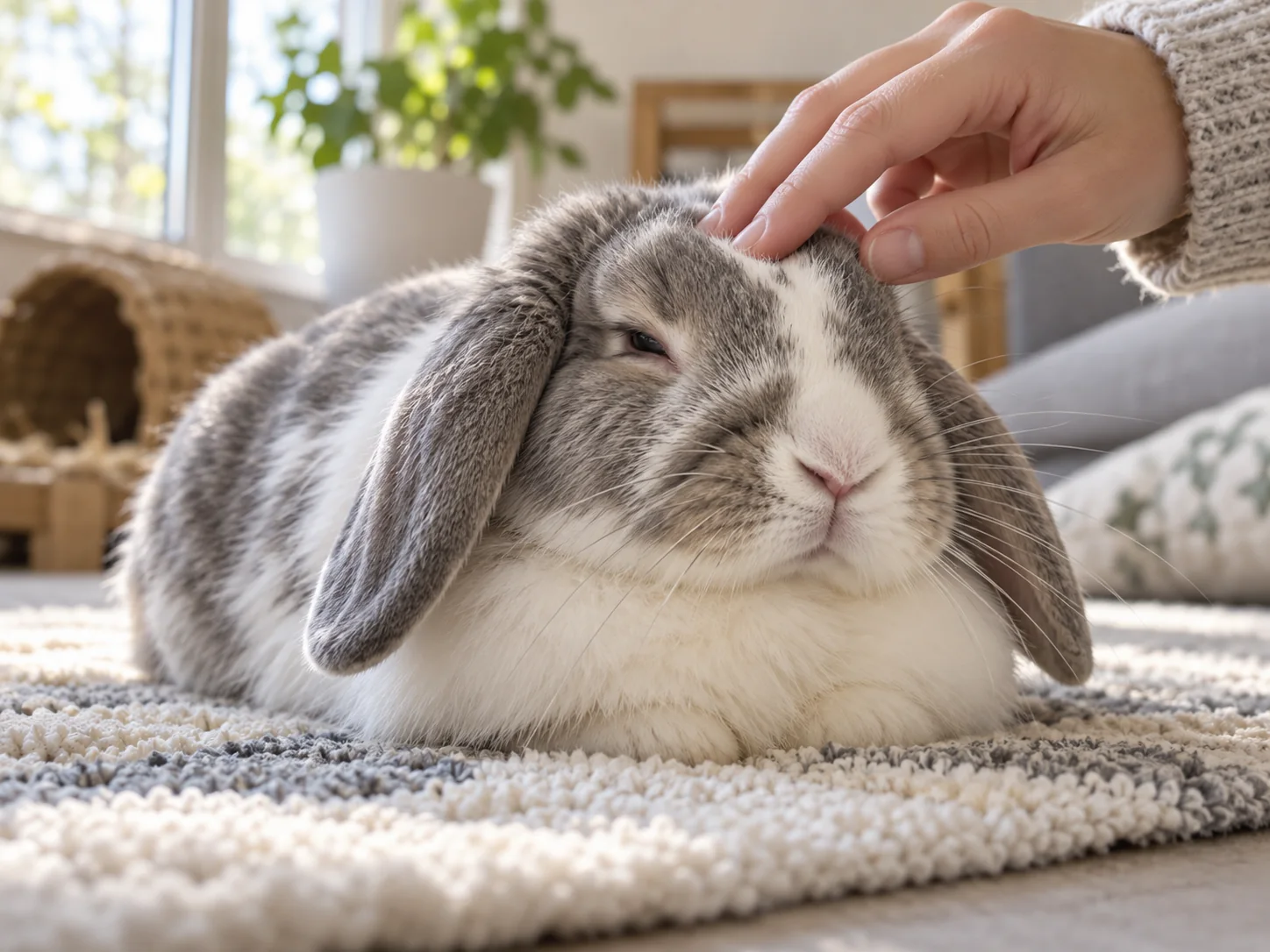
Tooth purring
A faint, regular chattering from a loose, resting rabbit often means contentment, especially during gentle grooming.
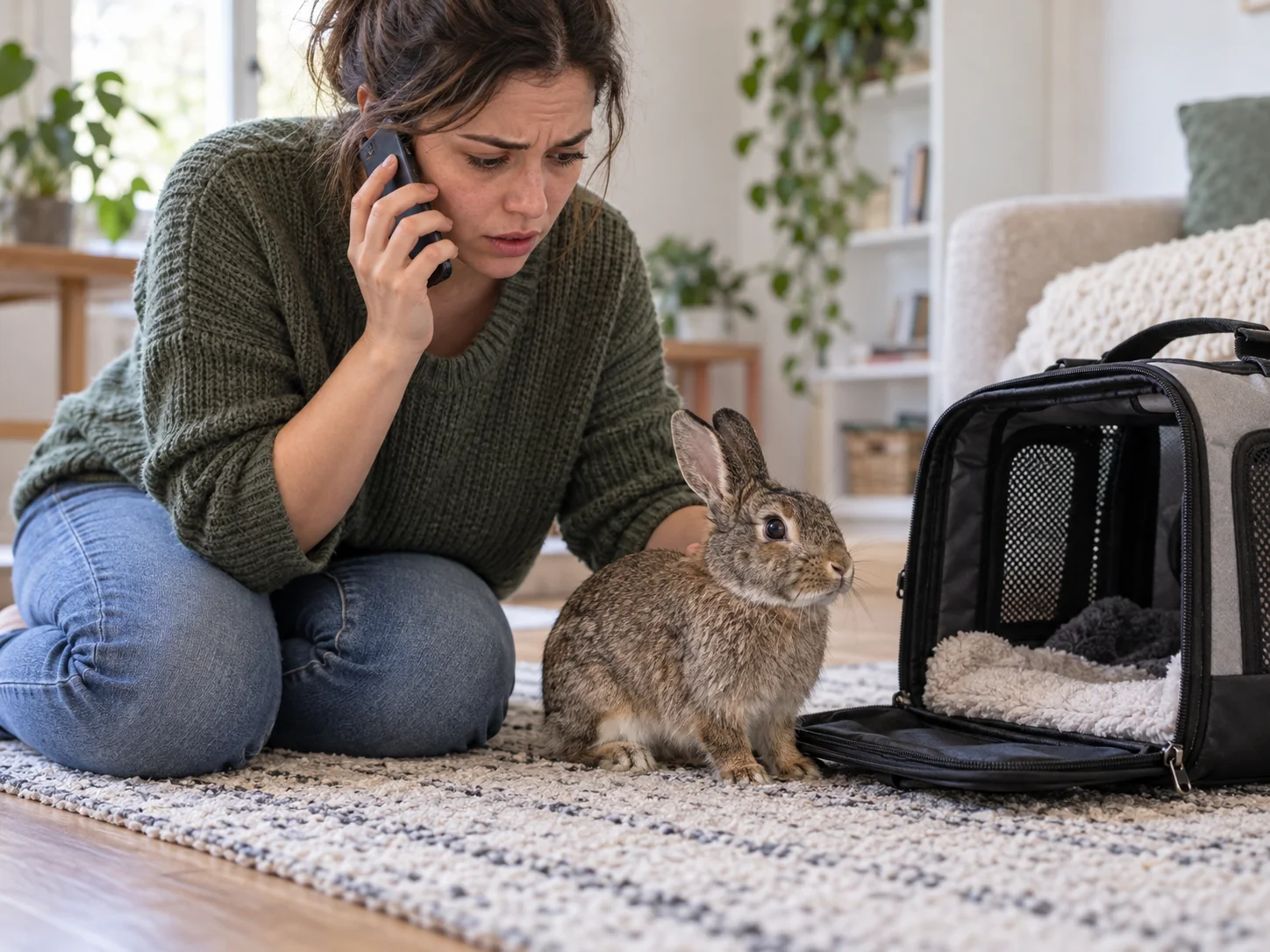
Screaming
Associated with extreme fear or acute pain. Move calmly, prevent further harm and contact a rabbit-experienced veterinarian urgently.
Why does my rabbit honk or oink?
Excitement has a soundtrack
A soft honk may appear while a rabbit circles feet, follows a favourite person, anticipates a meal or investigates another rabbit. The movement is often quick and purposeful rather than frozen or defensive.
In an unneutered rabbit, honking and tight circling may form part of courtship behaviour. Neutering can reduce hormone-driven behaviour, but any decision should be discussed with a rabbit-experienced veterinarian.
Context decides whether the moment is merely enthusiastic or becoming stressful. A rabbit weaving around moving feet can be stepped on, so stop walking and redirect the route safely. If the vocalisation is new, persistent, paired with a hunched posture or seems connected to breathing rather than activity, treat it as a possible health change instead of assuming your rabbit is happy.

Why does my rabbit grunt or growl?
A grunt is commonly a boundary signal. Your rabbit may dislike a hand entering a hide, a litter tray being moved, food being touched or being approached without warning. PDSA notes that rabbits may grunt or growl when they feel seriously threatened. Ears flattened tightly, a tense body, widened eyes, boxing or a lunge mean you should pause and create distance. Read the PDSA rabbit body-language guide.
Do not punish a grunt. It is useful communication that can prevent a bite. Withdraw the hand, restore an escape route and ask what changed. If a previously sociable rabbit suddenly grunts when touched in one area, withdraws, eats less or moves differently, arrange a veterinary check because pain can alter behaviour.
Find the trigger
Write down who approached, what was moved and whether food, territory, handling or another rabbit was involved.
Watch posture
Notice ear tension, tail position, freezing, lunging and the available escape route.
Check recovery
A brief warning followed by normal eating differs from repeated vocalising, hiding, lethargy or altered breathing.
Do rabbits purr?
Rabbits do not purr with the throat like cats. What guardians call a “rabbit purr” is a very soft, rapid movement of the teeth. You may feel a faint vibration through the forehead while stroking a relaxed rabbit. The eyes may be softly closed, muscles loose and body comfortably resting. The RSPCA describes quiet tooth grinding as a common sign of contentment.
The important contrast is loud or persistent grinding. That can accompany pain, especially when the rabbit is hunched, reluctant to move, uninterested in food or producing fewer droppings.
| Clue | Relaxed tooth purring | Possible pain grinding |
|---|---|---|
| Volume | Very soft and delicate | Louder, forceful or repeated |
| Body | Loose posture and soft eyes | Hunched, tense or unusually still |
| Context | Resting or gentle grooming | Appears without pleasant contact |
| Other signs | Normal appetite and droppings | Reduced appetite, droppings or energy |
| Response | Continue normal observation | Contact a rabbit-experienced veterinarian |
What should you do if a rabbit screams?
A rabbit scream is a piercing, uncommon sound associated with extreme fear or acute pain.
Treat it as urgent. Remove any immediate danger without chasing or unnecessary handling. Keep the area quiet and phone a rabbit-experienced veterinarian or emergency clinic straight away. Do not delay care to record the sound.

When a rabbit noise may actually be a breathing problem
Honking is normally linked to an action or social moment. Wheezing, whistling, repeated sneezing, wet nasal sounds or noisy breathing can be medical instead. Look for discharge around the nose or eyes, matted fur on the front paws, faster effort, appetite loss or low energy. The Merck Veterinary Manual overview of rabbit airway disorders describes these signs and possible causes.
Open-mouth breathing, pronounced effort, collapse or blue-grey mucous membranes are emergencies. Minimise stress and seek immediate veterinary help.
How to respond to a new rabbit sound
Stop approaching and keep an open route to a familiar hide.
Check posture, ears, eyes, appetite, droppings and breathing.
Note the trigger, duration and recovery without delaying care.
Urgently call a vet for screaming, breathing difficulty, pain or appetite loss.
Can the same rabbit sound mean different things?
Yes. A sound is one part of a sequence, not a stand-alone translation. A low vocalisation from a rabbit circling with a loose body may belong to excitement or courtship. A similar sound beside a guarded hide, with weight shifted forward and ears pinned back, is more likely to be a warning.
Age, hormones, temperament, past handling and relationships between bonded rabbits can affect how often a rabbit vocalises. Compare the behaviour with that individual rabbit’s usual pattern rather than expecting every rabbit to communicate identically.
If you are unsure, slow down, provide space and watch for a return to normal. A sound that repeats without an obvious social trigger or appears with appetite loss, fewer droppings, lethargy or a hunched posture deserves veterinary advice.
Frequently asked questions about rabbit sounds
Are rabbits supposed to make noises?
Yes, although most rabbits are relatively quiet. They may honk, grunt, growl, squeal or softly chatter their teeth.
Why does my rabbit honk when running around me?
Honking with circling commonly accompanies excitement, attention seeking or courtship.
Why does my rabbit grunt when I touch them?
The rabbit may be warning that the approach is unwanted or protecting a space. New sensitivity may indicate pain.
What does rabbit purring sound like?
It is a faint, rapid tooth chattering that may be easier to feel than hear.
Is rabbit teeth grinding always a sign of pain?
No. Quiet tooth purring can accompany relaxation, while louder grinding with abnormal behaviour can indicate pain.
Is a rabbit scream an emergency?
Yes. Prevent further harm, minimise handling and contact a veterinarian immediately.
Why is my rabbit making noises while breathing?
Wheezing, whistling, wet sounds or noisy effort require veterinary assessment. Laboured breathing is an emergency.

Elodie
Rabbit guardian and care enthusiast with over 10 years of hands-on experience living with house rabbits. Through Rabbit World, Elodie shares practical guidance focused on safe enrichment, thoughtful care and the everyday signals that help rabbits thrive.