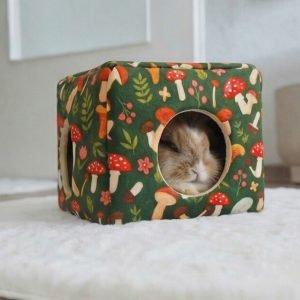
Your rabbit does not need a mountain of toys. A box to explore, hay to search through and one well-chosen toy can turn an empty corner into a little adventure.
How can you enrich a rabbit’s day without spending much?
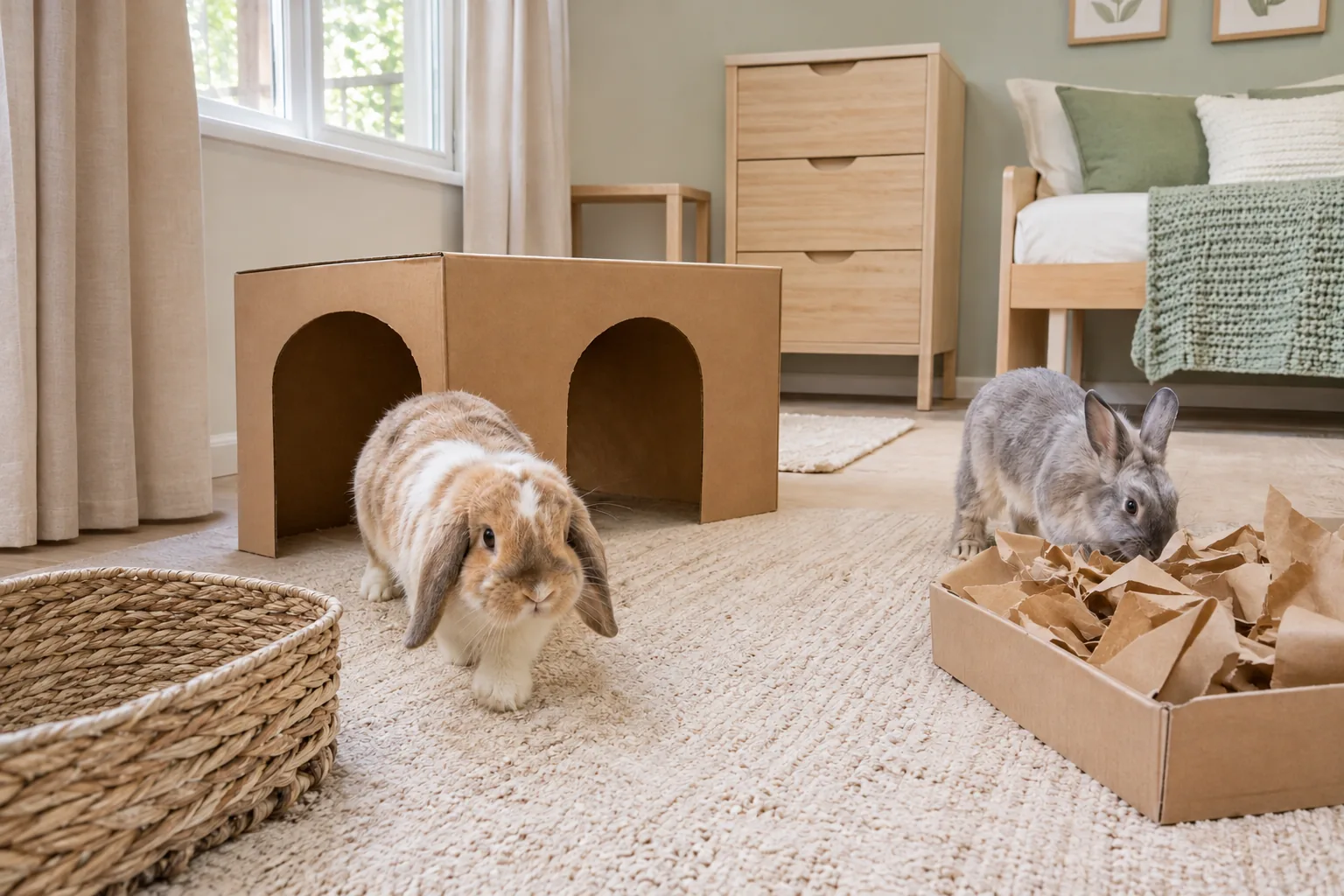
Give your rabbit safe ways to search for food, dig, chew, hide and move. Start with clean cardboard, hay and plain paper. Then buy a toy only if it adds an activity your rabbit enjoys. The three layouts below show how to combine simple things, not just collect more toys.
Think of enrichment as giving your rabbit little jobs they choose to do. They can lift a cup, nose through hay or pull paper from a box. A good activity is easy enough to start and interesting enough to try again.
These are complete play layouts, not complete rabbit homes. Your rabbits still need a spacious safe living area, suitable companionship, unlimited hay, fresh water and veterinary care. Those essentials are not part of the toy budgets below.
Pick the setup that suits your rabbit
Illustrative extra toy costs in USD, based on Rabbit World prices checked in November 2026. Hay, food, flooring and reused materials are assumed to be already available. Delivery and tax are not included. Prices may change.
Setup 1: the cardboard adventure corner
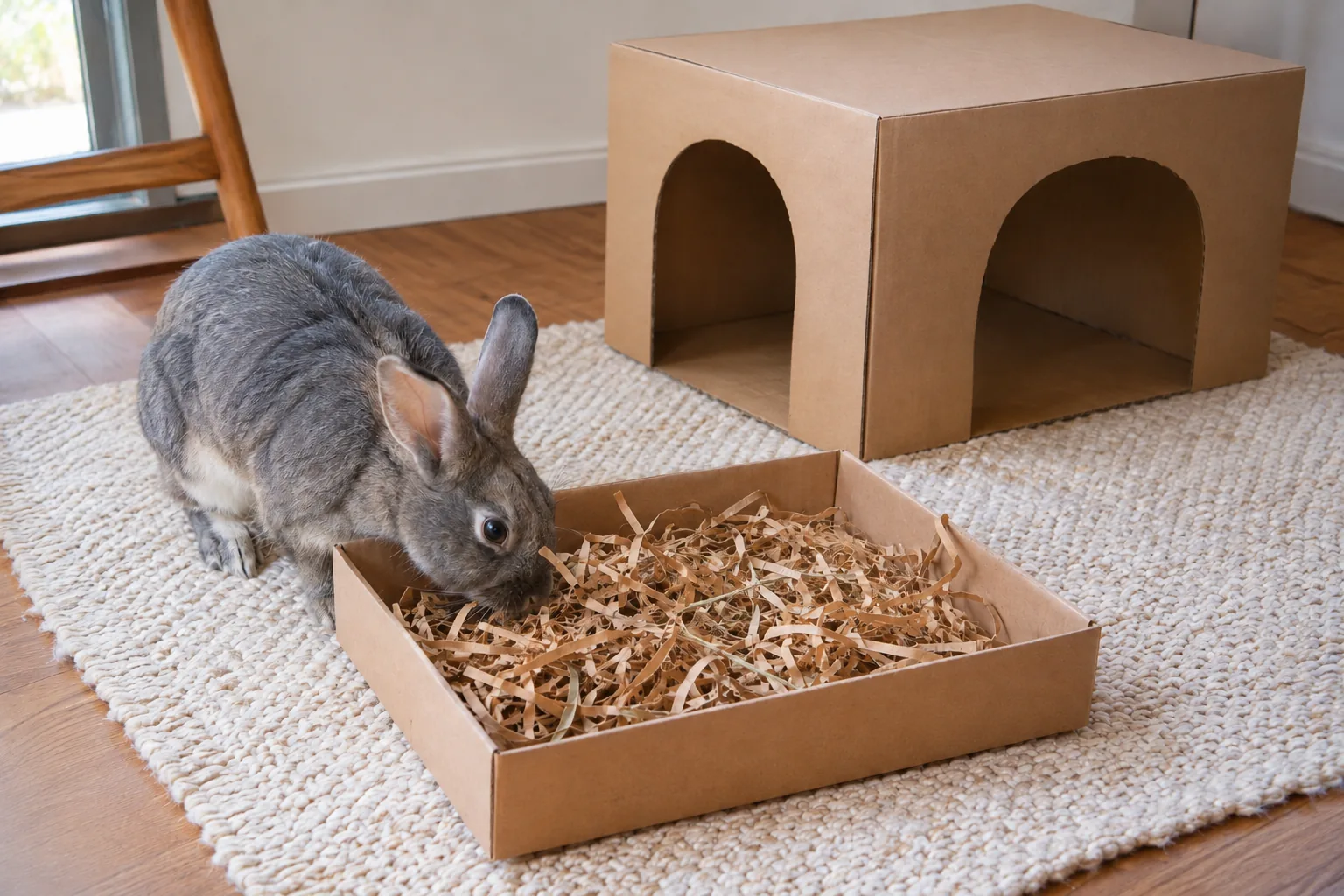
Start here if your rabbit loves a delivery box more than the thing that came inside it. You need one roomy box, a shallow tray, plain paper and some of your usual hay. Use only clean materials with no sharp edges, tape, staples or loose plastic.
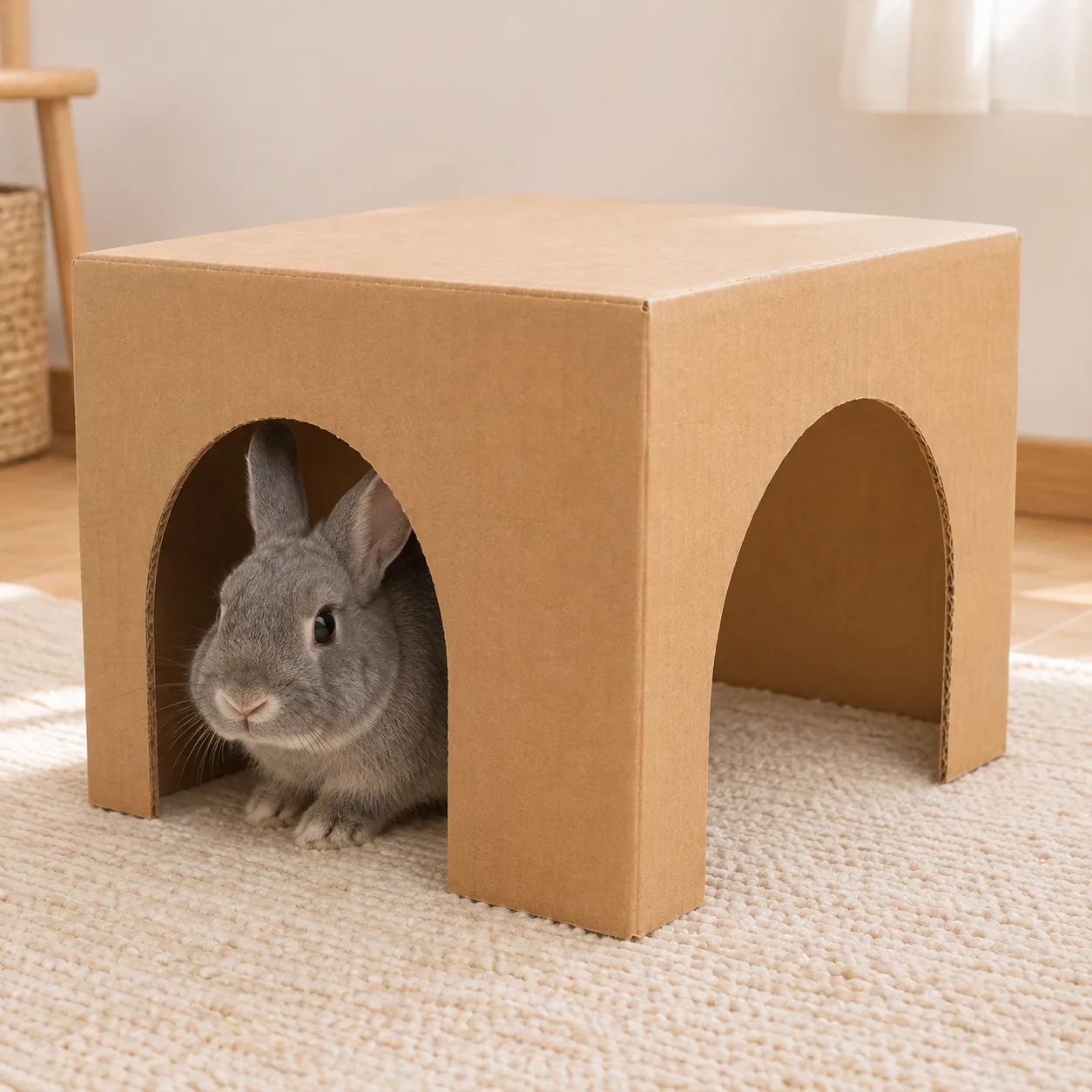 Make a safe retreat
Cut two broad doorways in the box. Check that your rabbit can turn inside and leave easily.
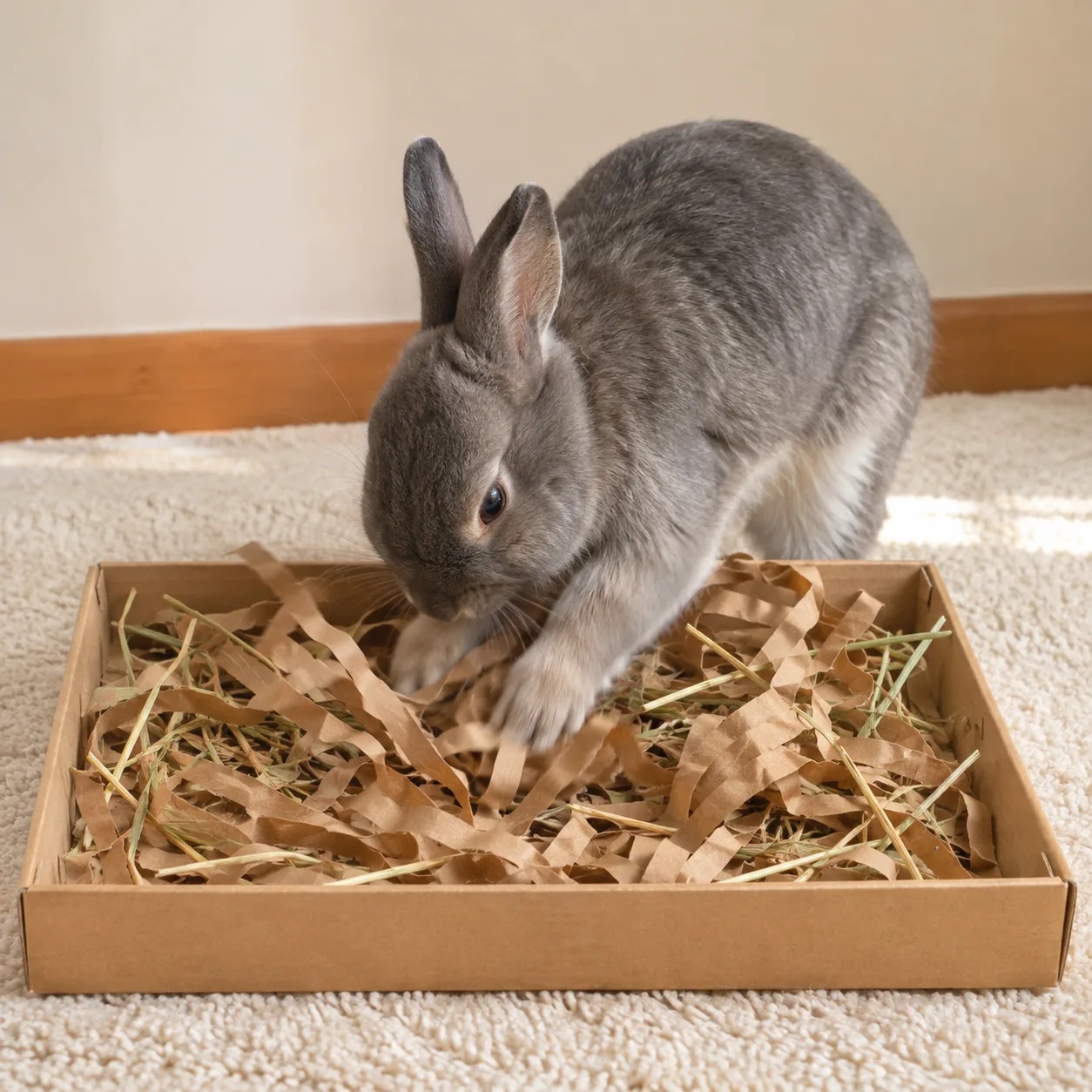 Add the digging tray
Put loose plain paper and a little hay in a shallow box. Keep the filling easy to move.
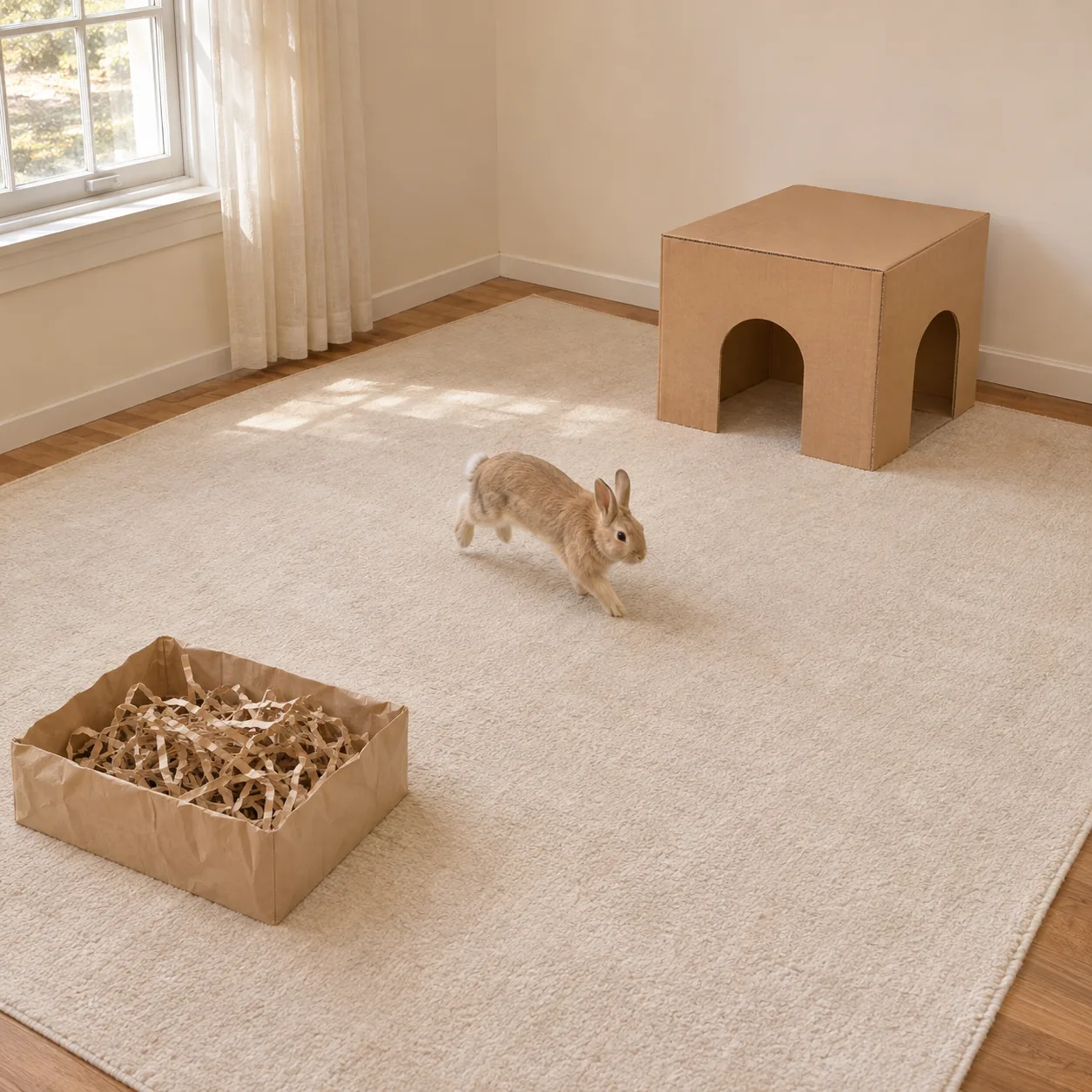 Leave a clear route
Set the two boxes apart. Your rabbit should be able to hop around them, not squeeze between them.
Scatter a few pellets from the normal daily ration through the hay. Leave the first ones easy to see. Your rabbit learns that a gentle sniff or nudge can lead to food, without having to solve a difficult puzzle.
Keep the retreat dry and familiar. Change the digging paper when it is dirty, damp or too flattened. The aim is a useful activity, not a perfect-looking corner. You can replace a tired box without buying a whole new play set.
Before cutting a new box, place it beside your rabbit and check the space. Make each door broad enough for an easy walk through. Ask an adult to do the cutting. Remove every loose flap that could catch a foot, and run your hand around the edges before offering the box.

Setup 2: two ways to play for under $30
Keep the free retreat and digging tray from setup 1. Then choose one of the two toys below. Both choices stay under $30 before delivery and tax. You do not need both to make the layout work.
Option A: Bunny Cups for lifting and finding
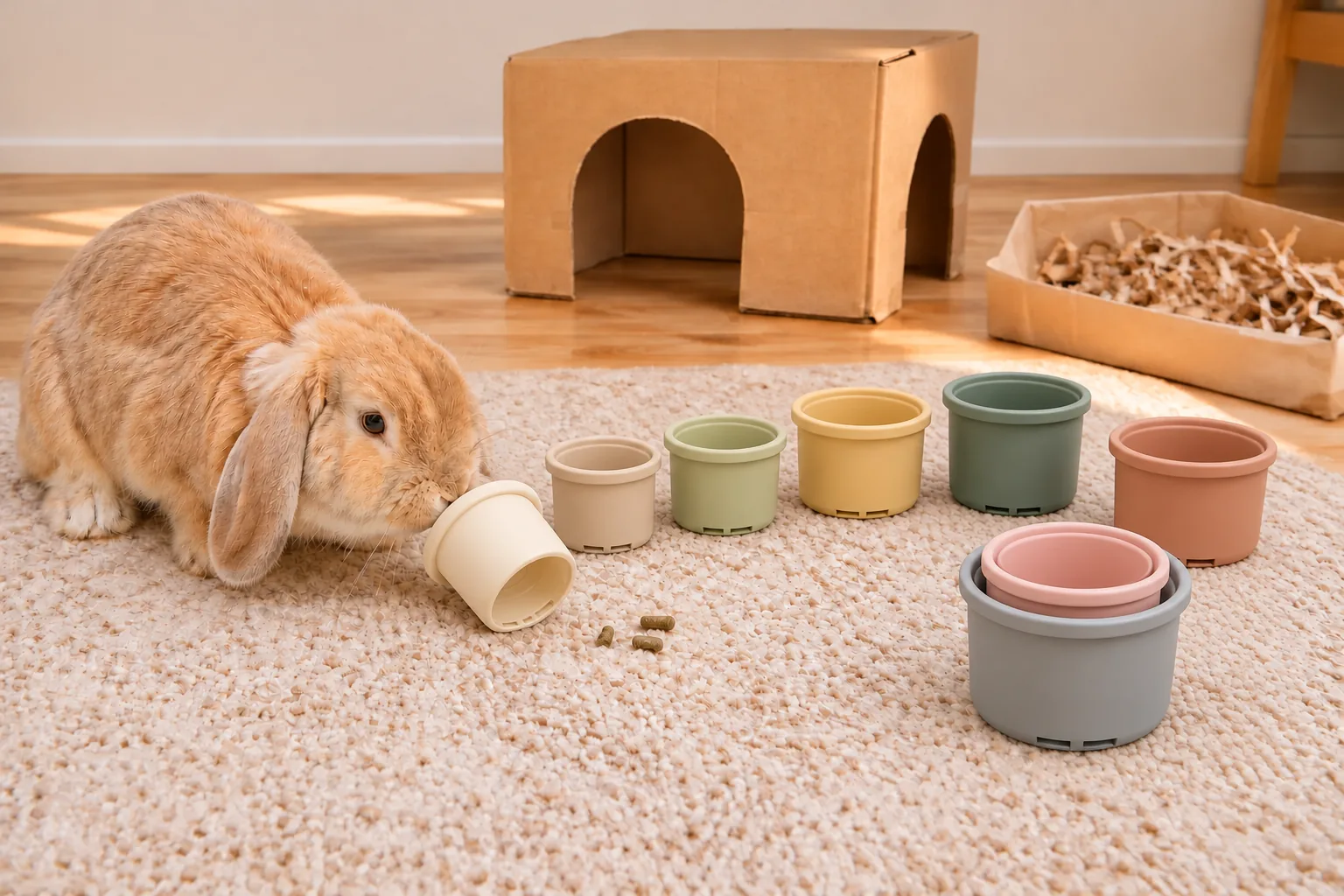
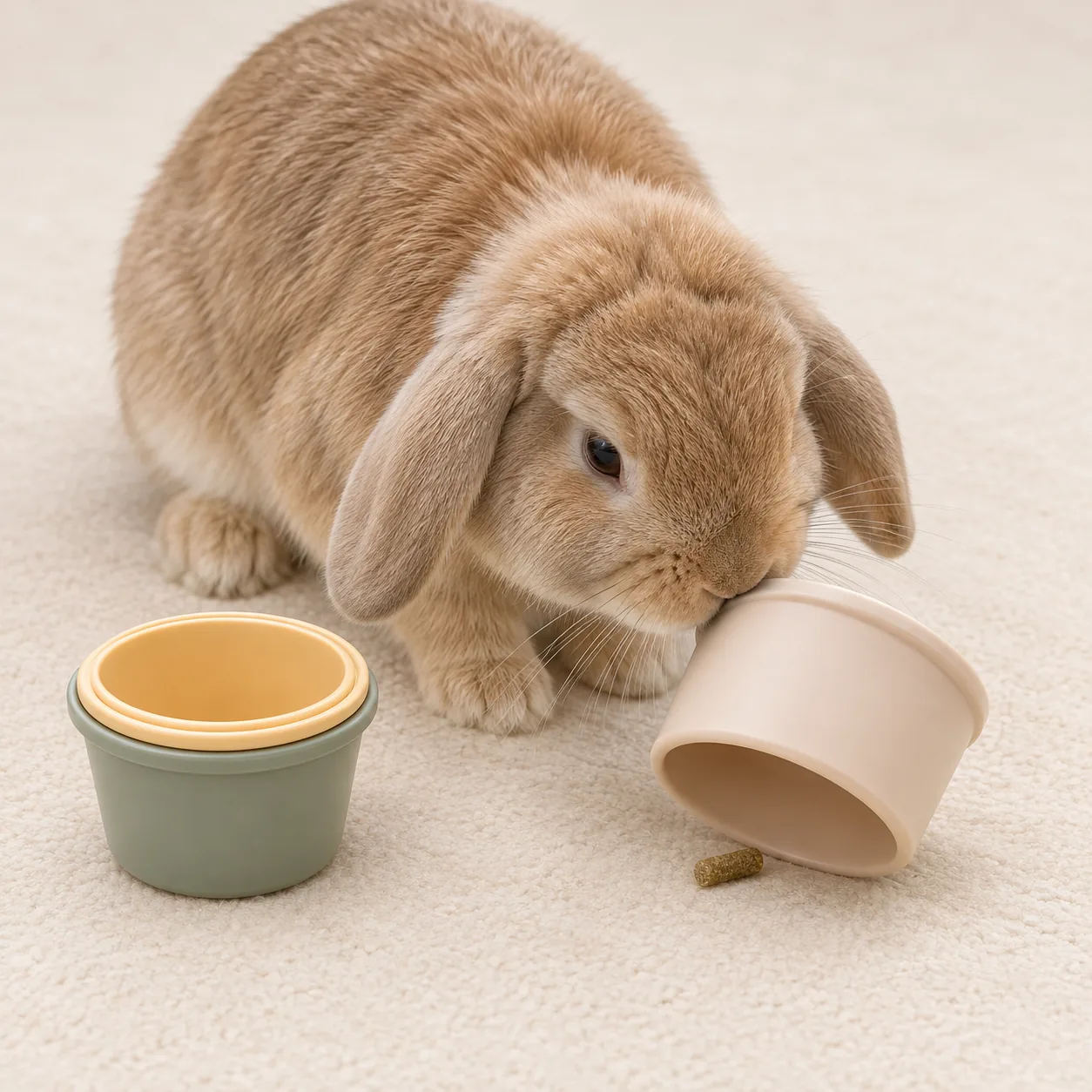
The shop’s eight-piece pastel stacking cup set has smooth round rims and cups of different sizes. Use one or two cups at first. Keep the rest aside so the game stays clear and easy.
Begin with one cup on its side and a few pellets near the edge. When your rabbit understands the game, place one pellet beneath an upturned cup. Let them push or lift it. Do not start with a tightly nested tower that hides every reward.
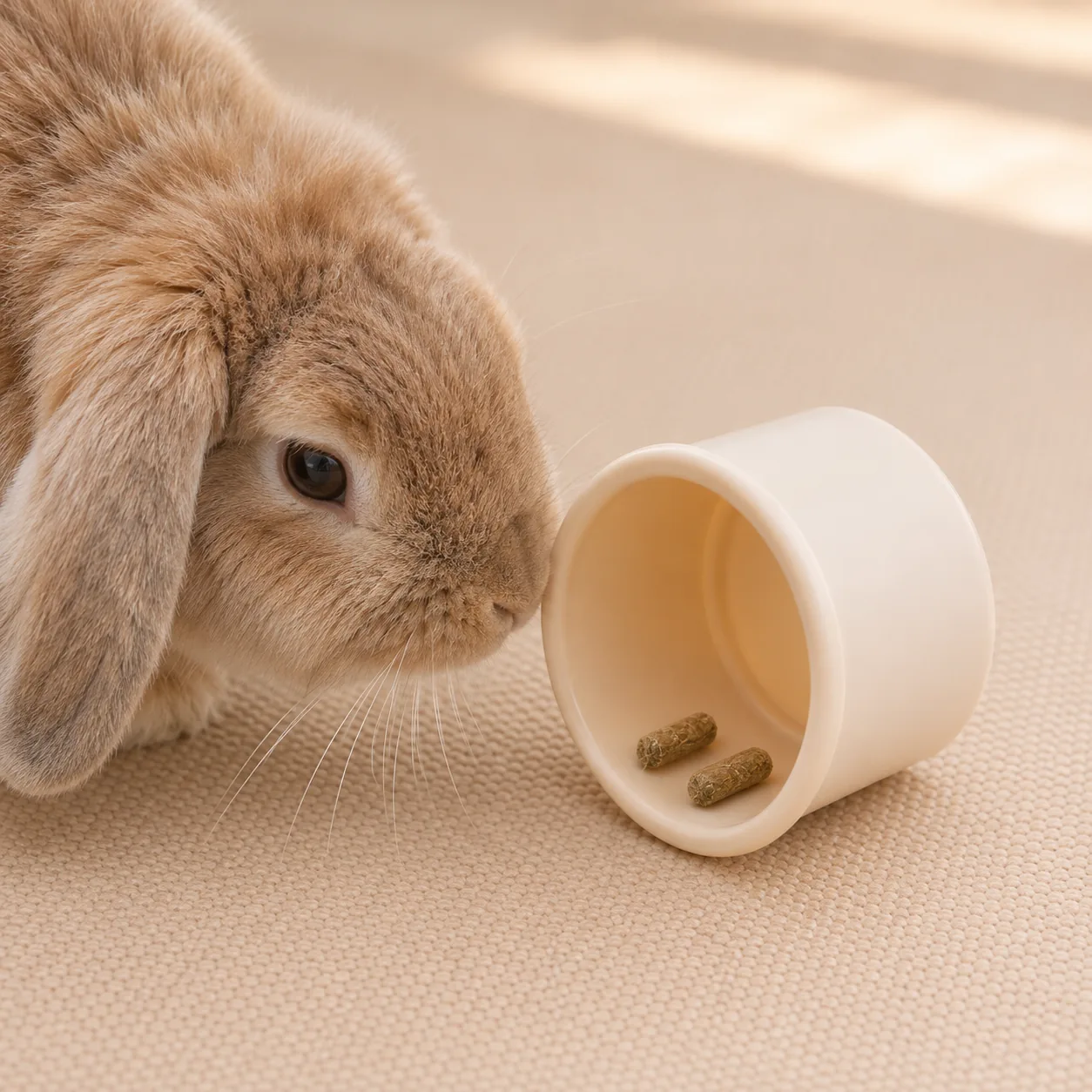 Show the food
Start with one cup on its side. Leave a pellet near the opening so your rabbit can find it easily.
 Move one cup
Next, place a pellet beneath a loose cup. Let your rabbit nudge or lift it. Keep the rest familiar.
 Leave a clear path
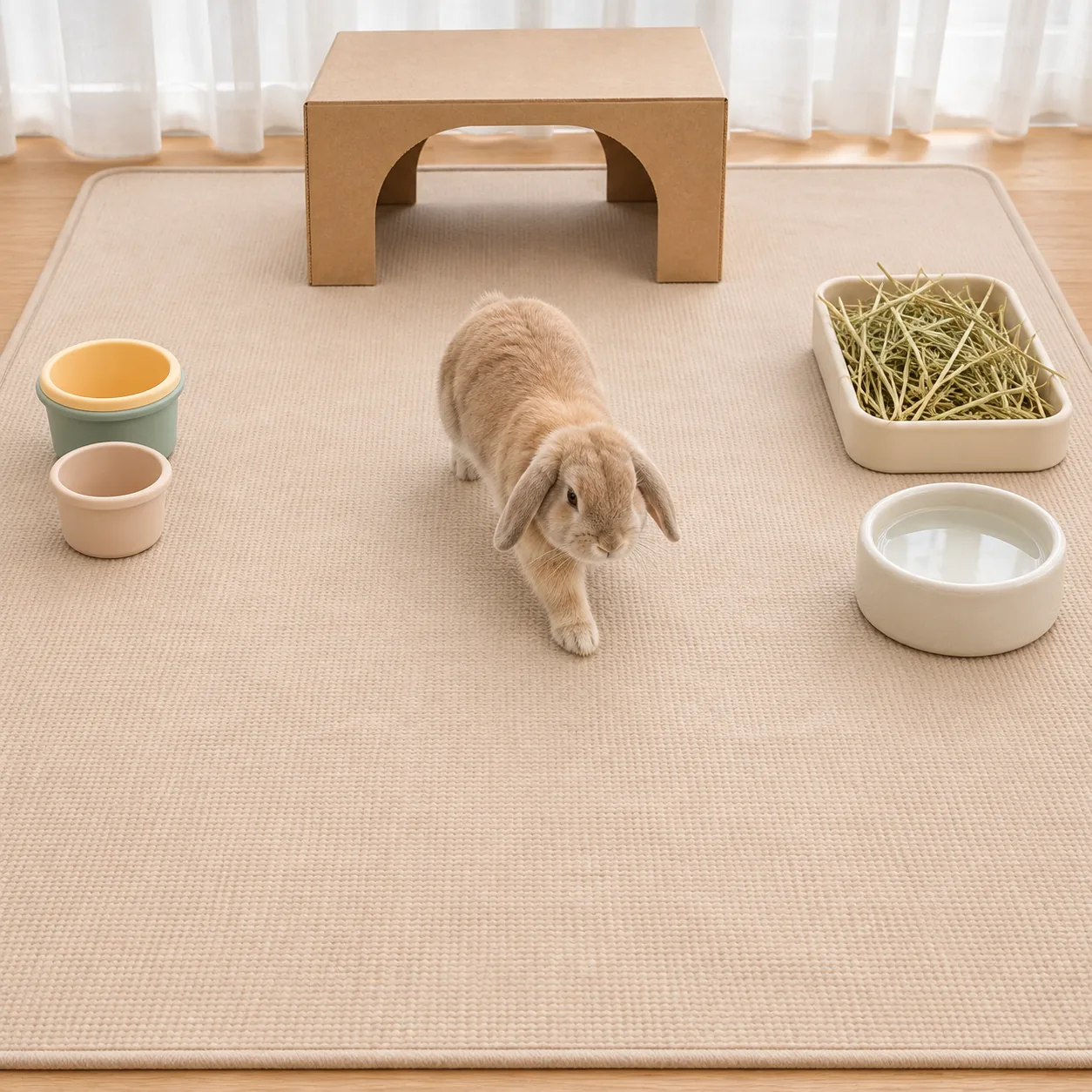
Keep the cups to one side. Leave an open route to the hay, water and hideout doors.
This layout suits rabbits that enjoy pushing objects and using their noses. The cups can be washed and used again. They are not chew food: check for tooth marks, cracks and loose pieces, and remove damaged cups.
For an older rabbit or one that finds movement hard, keep the cups close together on a flat surface. Use an open cup rather than a tall stack. A game can be simple and still be fun. Your rabbit should not need to climb, stretch awkwardly or lose balance to reach food.
For two rabbits, offer more than one easy search point, well apart. If one rabbit guards a cup or chases the other away, spread the activities farther out and add more access points. A shared game should not become a contest for food.
See the eight pastel stacking cups →Option B: four different balls for rolling and chewing
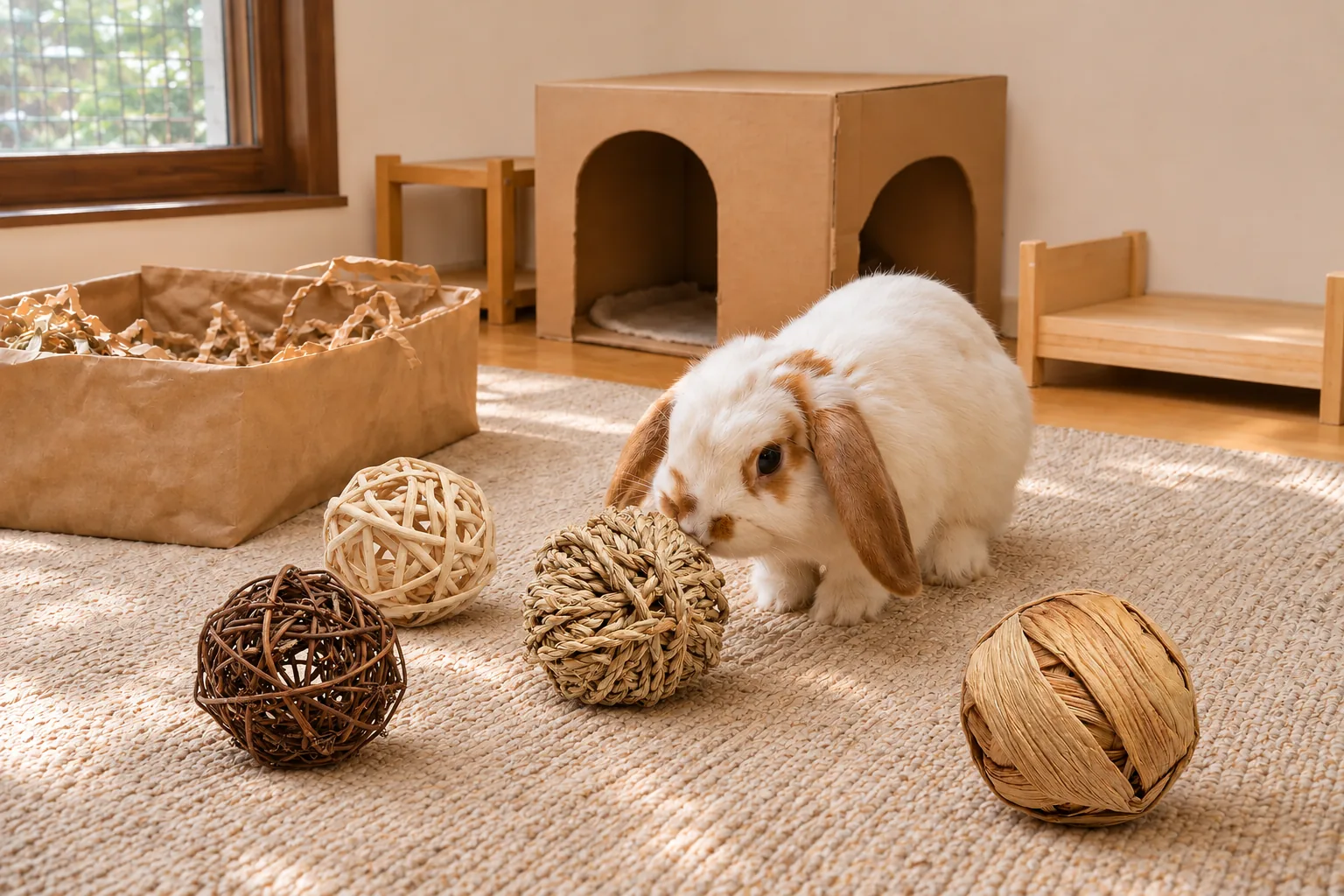
If your rabbit prefers pulling things apart, choose the four-ball chew set instead of the cups. The balls have four different colours and weaves, just like the shop photos. Each is about 7 cm across. Keep the same free retreat and paper tray.
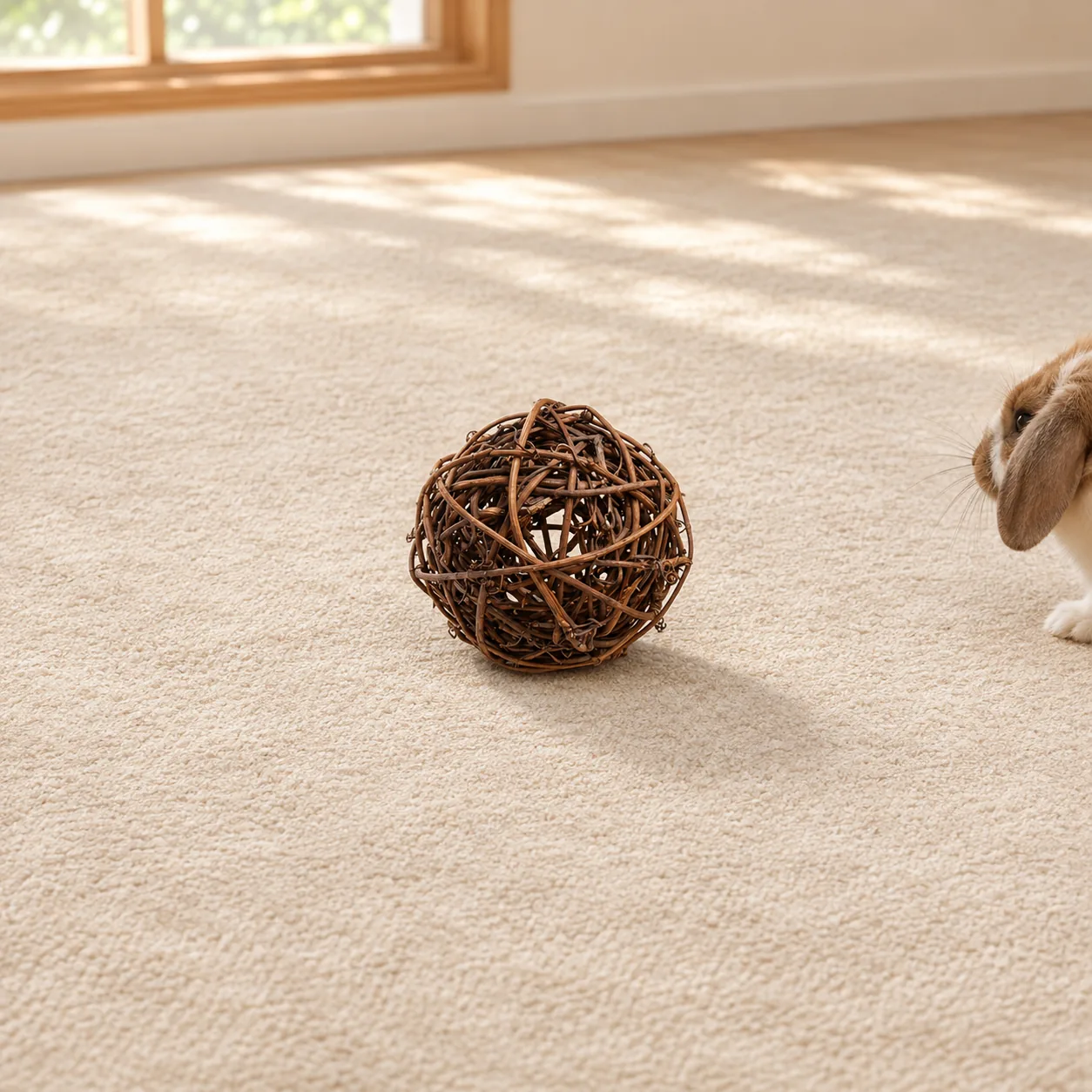
Offer one ball at first. Place it on a flat surface where it can move a little without rolling under furniture. Keep the other balls clean and dry for later. A spare ball is useful; putting every ball out at once is not necessary.
 Choose a flat spot
Keep the ball away from steps, gaps and places your rabbit cannot safely reach.
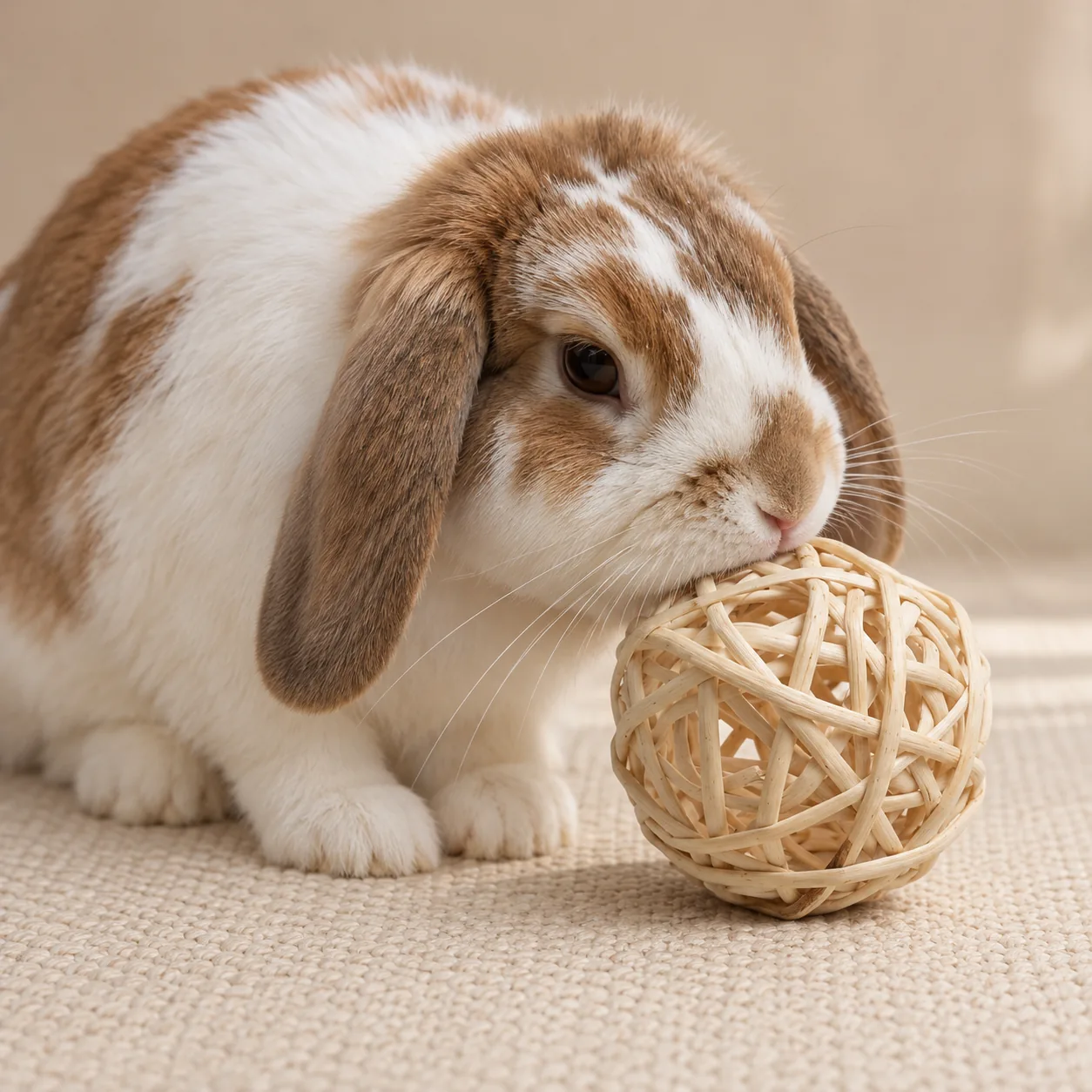 Let the rabbit explore
Sniffing, chinning and gently pushing all count. The rabbit does not have to play on cue.
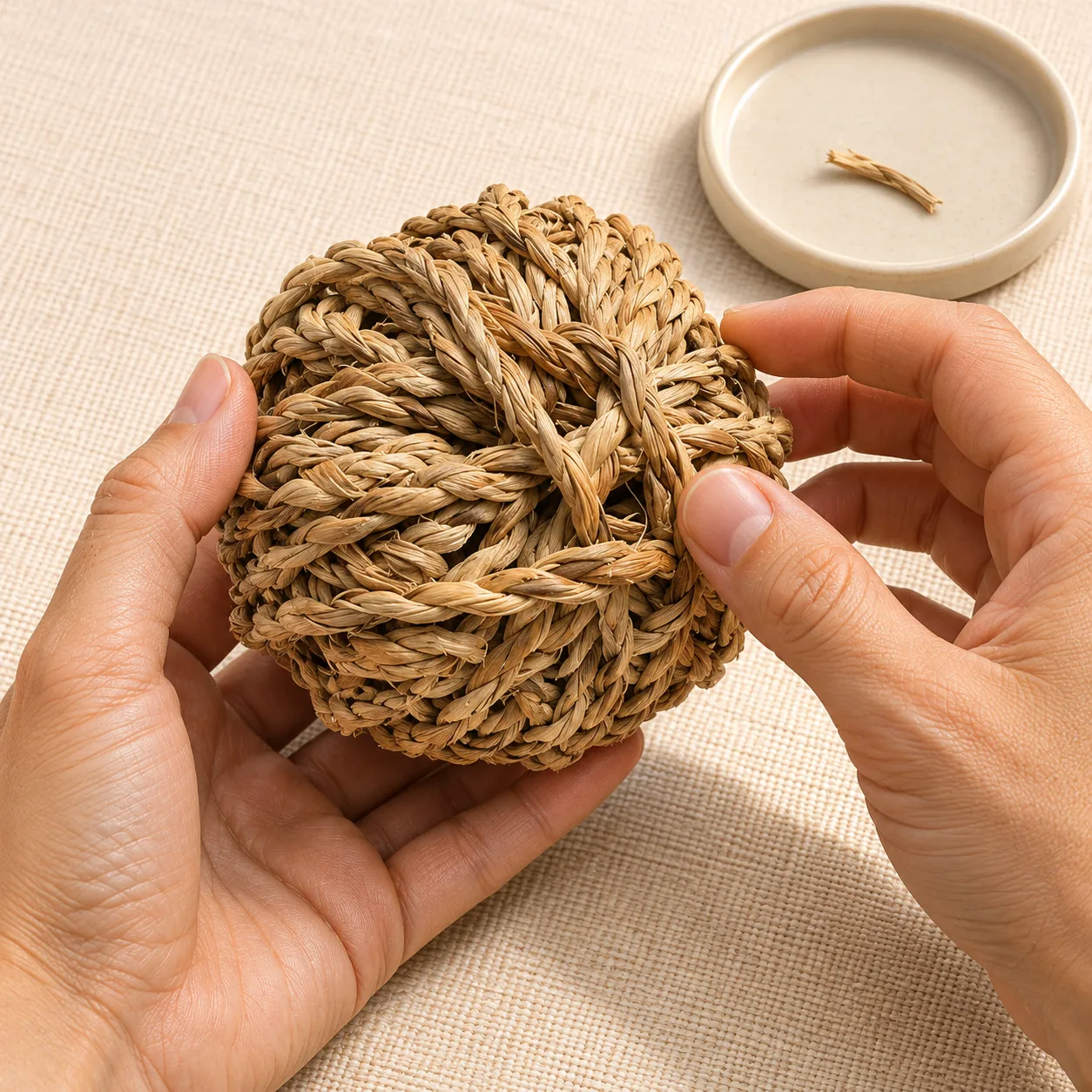 Check after use
Remove wet, dirty or damaged pieces. Natural material still needs regular checks.
Do not judge value by how long the ball stays perfect. Pulling it apart may be the activity your rabbit enjoys. Still, it is a toy, not a substitute for unlimited hay. Watch for unusual swallowing or a sudden change in appetite.
These balls are an alternative to the cups, not an extra purchase you must add. Choose the game your rabbit actually uses. If the free paper tray is the favourite, keep it and save the money for something more useful.
Think about the next purchase too. Cups may be reused after cleaning, while chew balls wear down and need replacing. Neither is automatically better value. Choose the kind of play your rabbit returns to, then check the toy often instead of waiting until it falls apart.
Explore rabbit chew toys →Setup 3: a little puzzle station for under $40
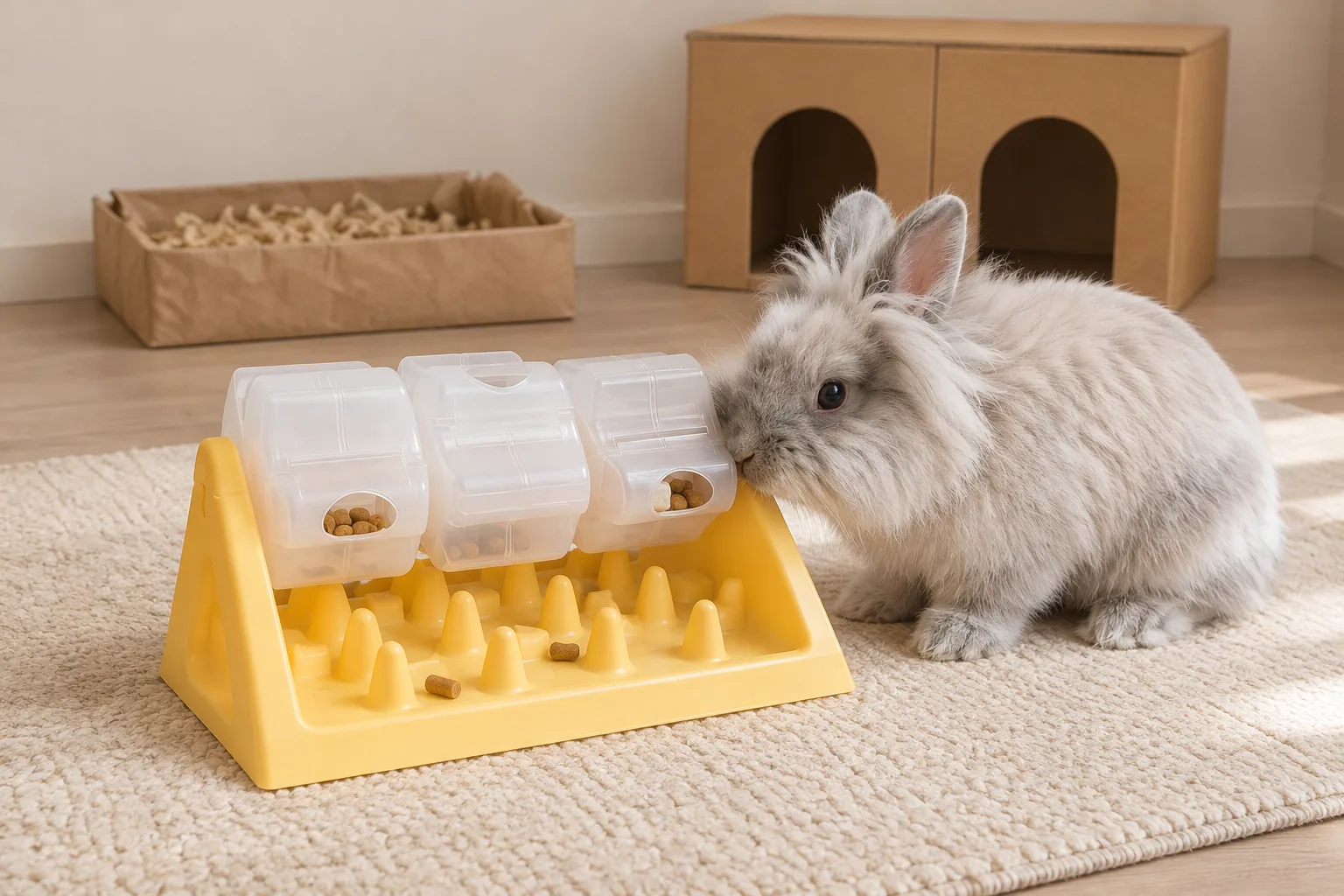
Choose this layout for a rabbit that likes moving things to reach food. Keep the homemade retreat and digging tray. Add one puzzle toy, not the cups and balls as well. The Triple Wheel costs $39.90, so the new toy stays under $40 before delivery and tax.
The three little drums turn to release food into the tray below. Use only a small part of your rabbit’s usual pellet ration. First, place a few pellets in the tray where they are easy to reach. Then show one drum turning gently and let your rabbit explore at their own pace.
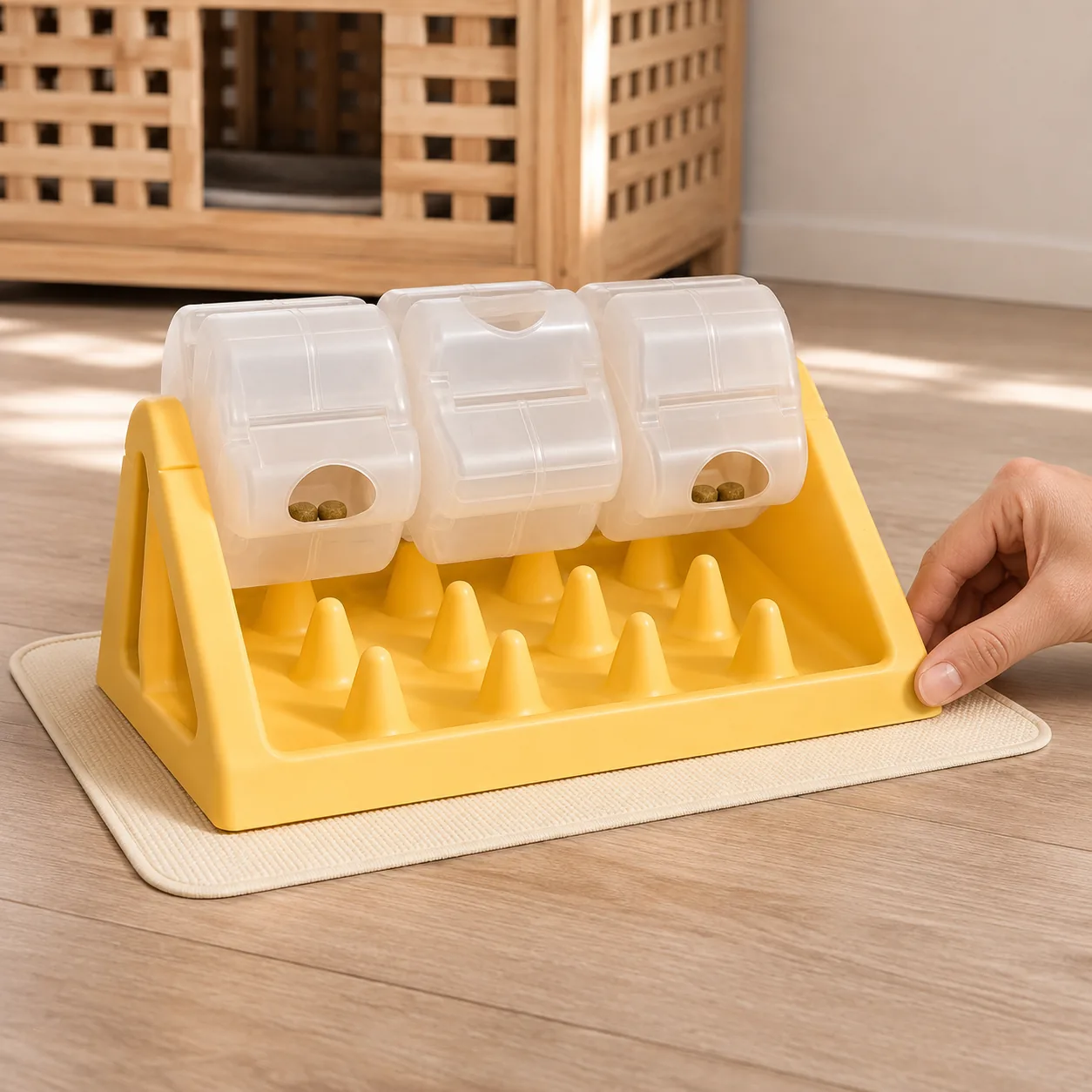 Use a flat surface
Set the toy on a non-slip surface. Check that the base cannot slide or tip.
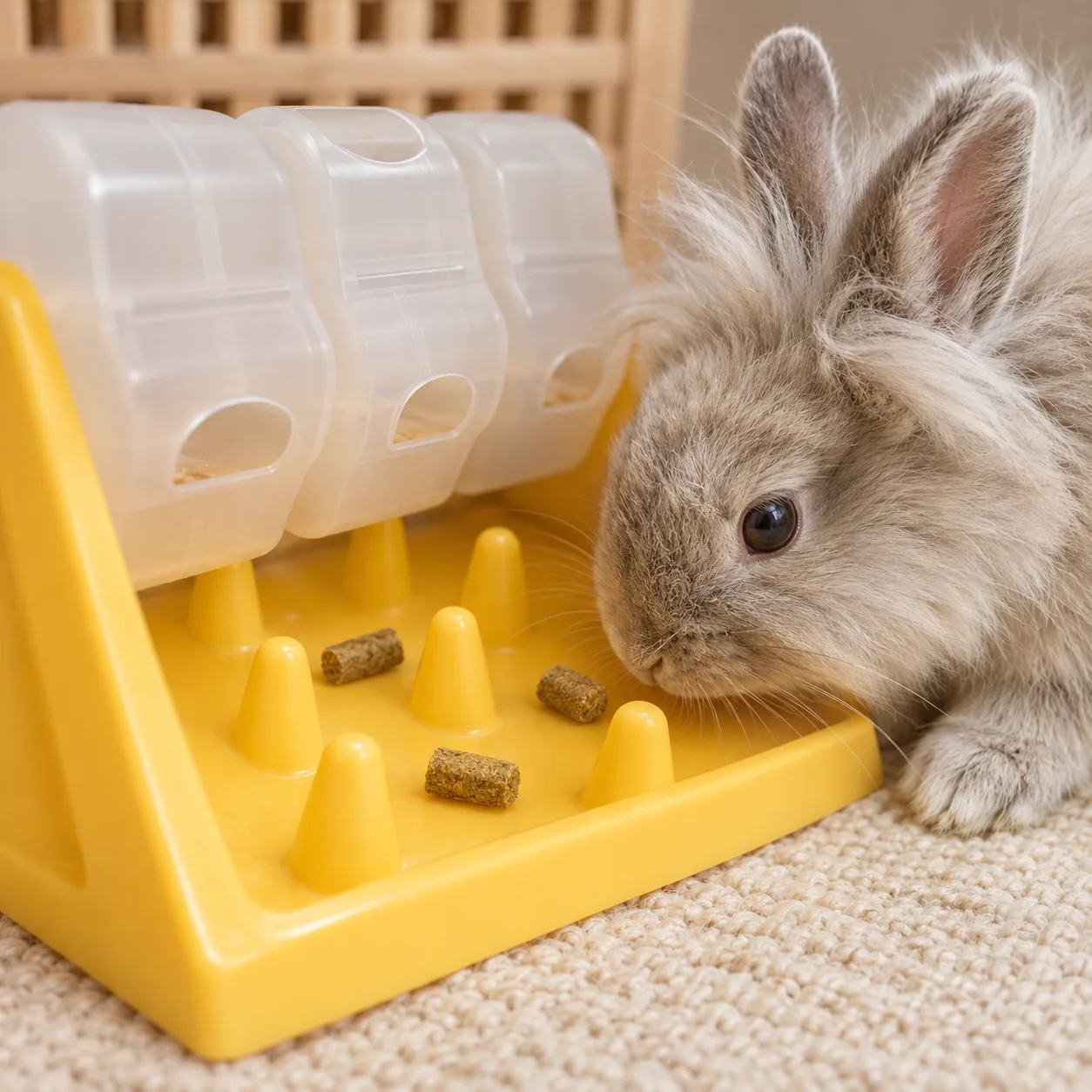 Leave food in the tray
Make the first find easy. Leave a few pellets visible rather than hiding them all inside.
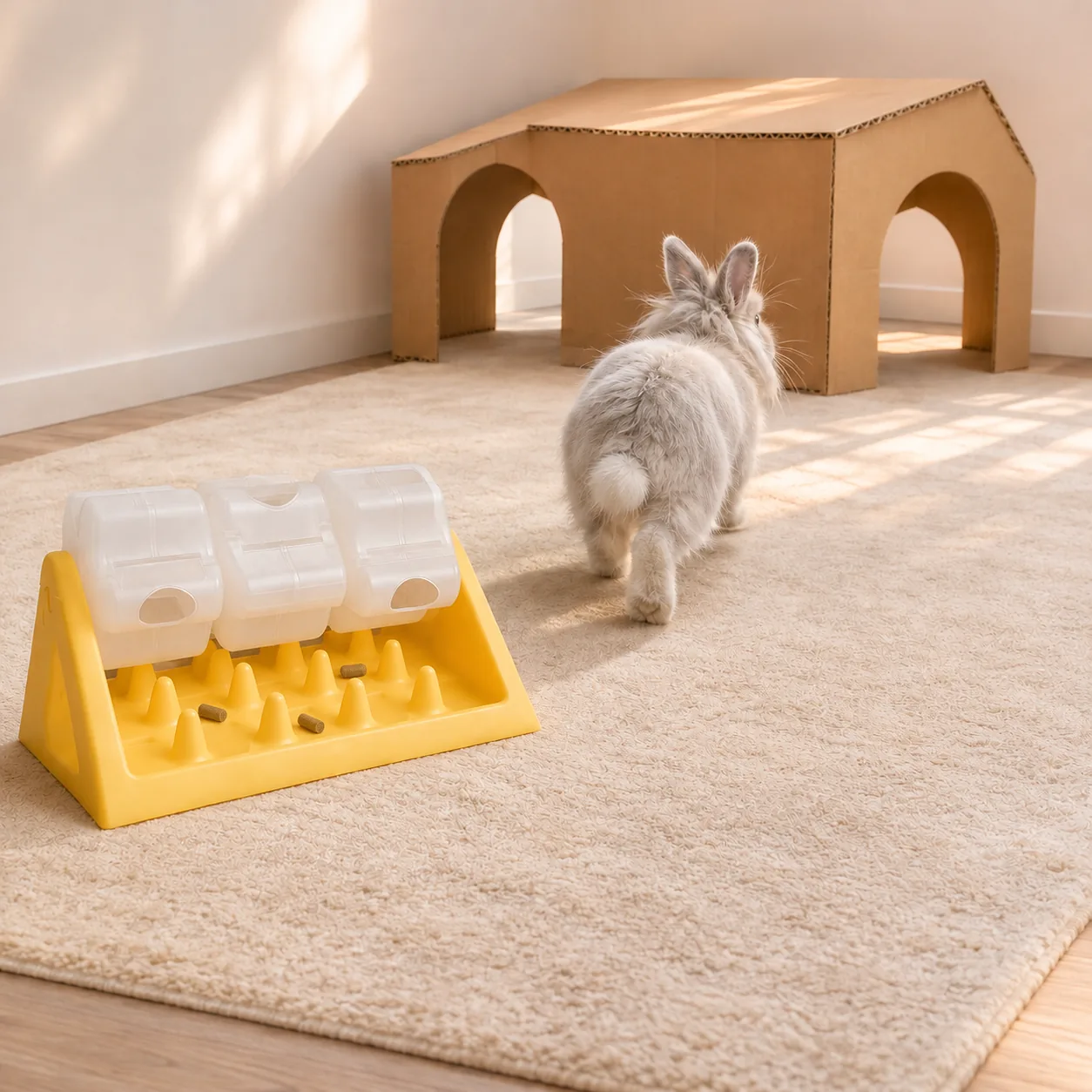 Let your rabbit walk away
Do not chase them back to the toy. Offer an easier game next time, without adding extra food.
Pick one spinning puzzle
The Triple Wheel is the under-$40 option. The smaller Magic Wheel is an alternative at $29.90. These prices are separate, not a combined bundle.
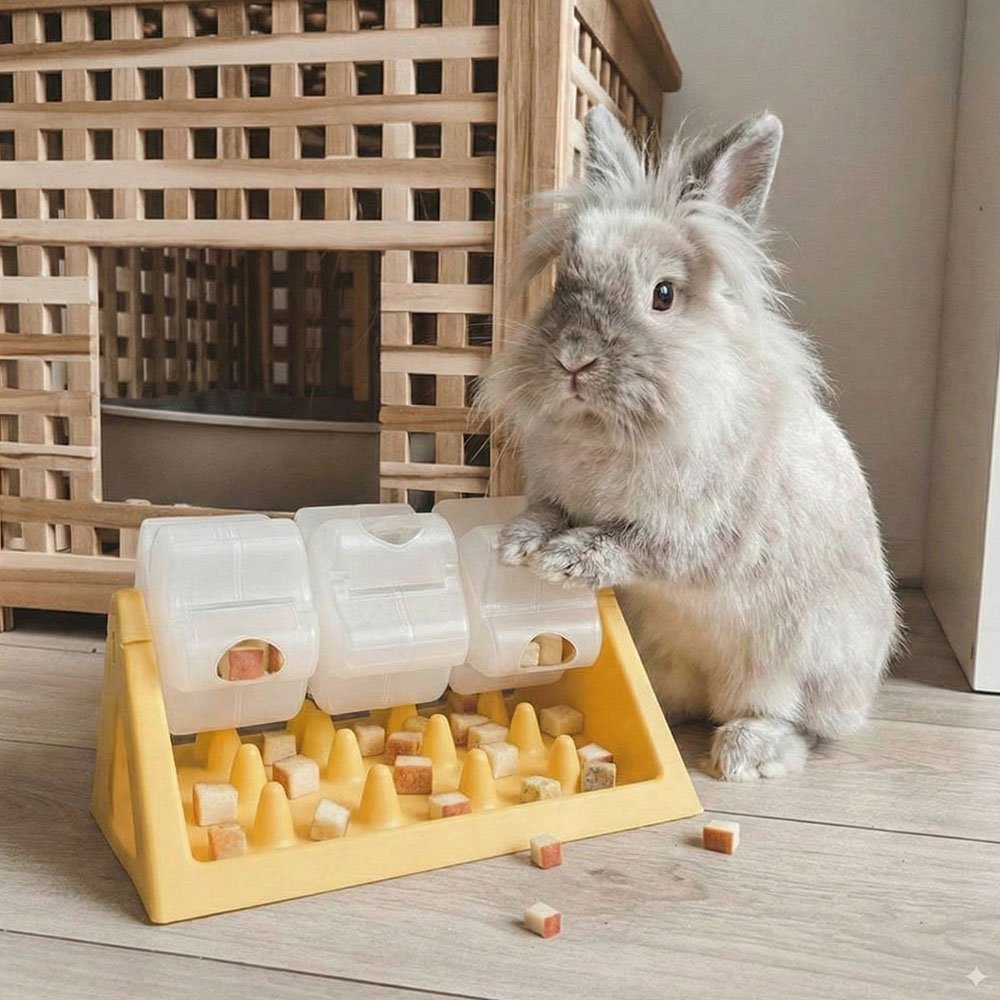
Triple Wheel
Three separate drums above a catching tray. Start with an easy food find, then let your rabbit learn how gentle nudges move the drums.
Discover the Triple Wheel →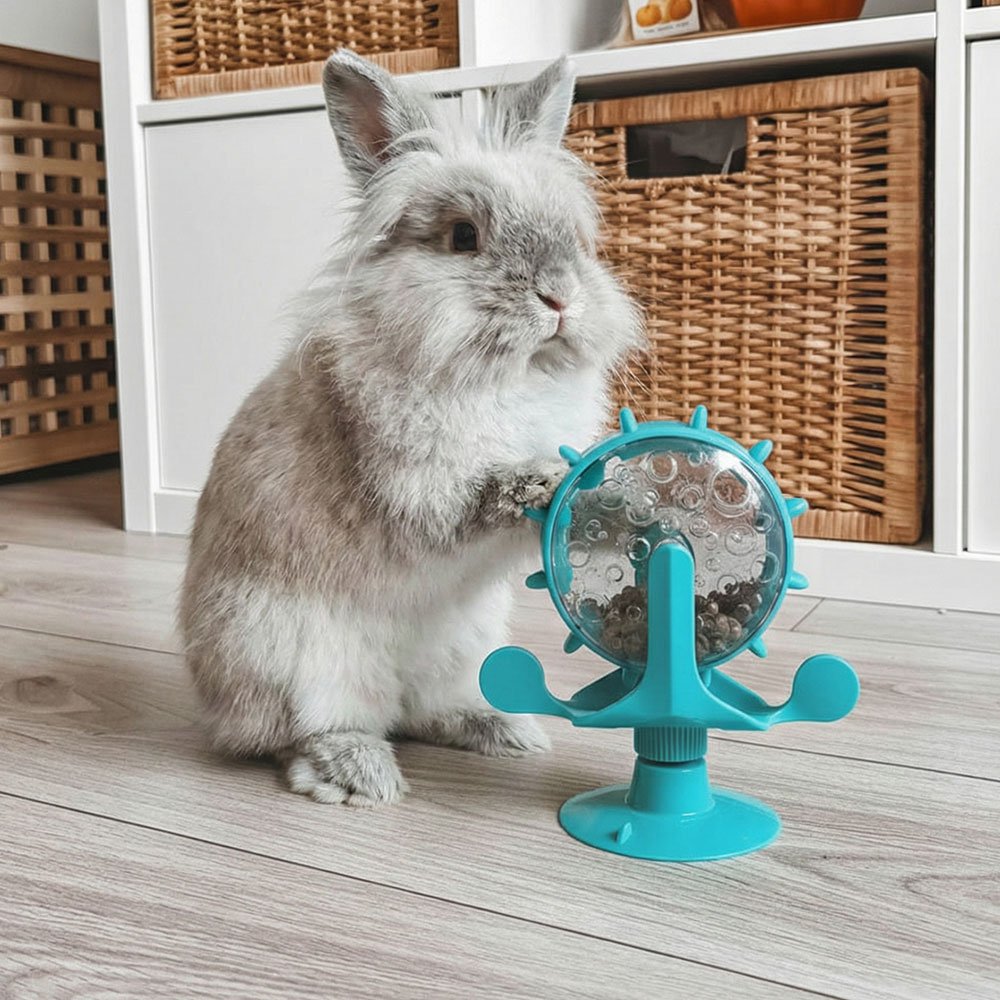
Magic Wheel
A single rotating food puzzle with a suction base. Check the grip on a suitable smooth surface before use. It is a food toy, not an exercise wheel for a rabbit to run inside.
Discover the Magic Wheel →Stay nearby during puzzle play. Remove the toy if your rabbit bites off pieces, traps a claw or gets upset. A puzzle does not need to be difficult to be useful. Calm sniffing and one successful nudge are a good start.
Make the same toys feel interesting again
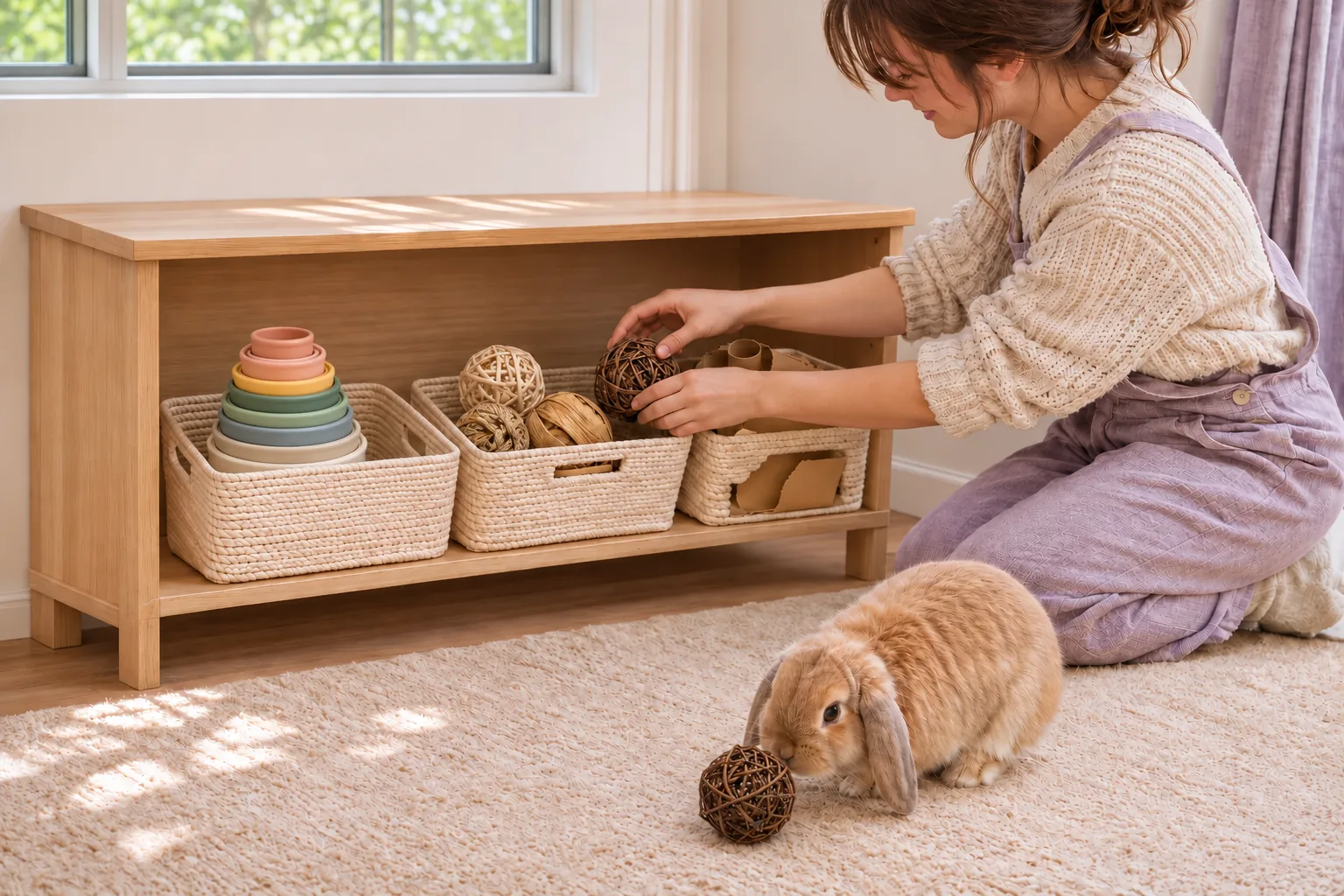
You do not need a new order every time your rabbit loses interest. Put some toys away and offer a small selection. Later, bring an old favourite back. Keep the main living area familiar, including hay, water and resting places.
Change one activity at a time. Move a cup a short distance or refresh the digging paper. Watch what happens before changing more. A rabbit that likes a quiet routine may prefer a tiny change to a completely rebuilt room.
Offer one familiar activity and watch how your rabbit uses it.
Replace a toy with something stored, while keeping the safe retreat in place.
Remove wet paper, broken plastic and loose threads. Store spare toys dry.
Keep a simple note: ignored, explored or used again. Over a week, that tells you more than a toy’s colour or price. Short bursts of play and calm investigation both count. Never wake a resting rabbit just to test a new activity.
Save money without cutting safety
Cheap does not mean safe, and expensive does not mean suitable. Check each object with your rabbit’s habits in mind. A fabric toy may suit a careful sniffer but not a rabbit that swallows threads.
- Keep food normal. Use part of the usual daily ration for searches, not extra piles of treats.
- Inspect cardboard. Remove tape, staples and plastic. Avoid dirty or damp boxes.
- Keep exits clear. Doors and paths must stay easy to use, especially for a pair.
- Watch the first sessions. Remove anything that breaks, traps a foot or is being swallowed.
Budget rabbit enrichment questions
Can I make rabbit enrichment without buying toys?
Yes. Clean cardboard, plain paper and your usual hay can provide hiding, digging and searching games. Check the materials and watch how your rabbit uses them.
Does my rabbit need all three setups?
No. Pick one layout. Setup 1 uses reused materials. Setup 2 adds either cups or balls for under $30. Setup 3 adds one spinning puzzle for under $40. The costs are separate, not added together.
How many toys should I leave out?
There is no magic number. Offer a small useful selection without blocking movement or access to resources. A pair needs enough separate activity points to avoid guarding.
What if my rabbit ignores a new toy?
Give them time and start with an easy task. Do not force play or add more treats each time. Try the activity when your rabbit is naturally awake and exploring.
Is a foraging mat worth buying on a budget?
It can be if your rabbit enjoys searching and does not chew or swallow fabric. Try a simple hay search first. A mat is optional, not more important than safe space and everyday care.

Care sources: Learn more from the RSPCA enrichment guide, Woodgreen’s rabbit care advice and the RWAF guidance on cardboard. These layouts apply those general principles to simple home play areas.

Elodie
Rabbit guardian and care enthusiast with over 10 years of hands-on experience living with house rabbits.
Rabbit World shares simple, practical guidance about safe homes, everyday care and useful rabbit products.