A rabbit snuffle mat turns part of a normal meal into a search-and-find activity. Used thoughtfully, it can encourage natural foraging without replacing hay, space, companionship or attentive care.
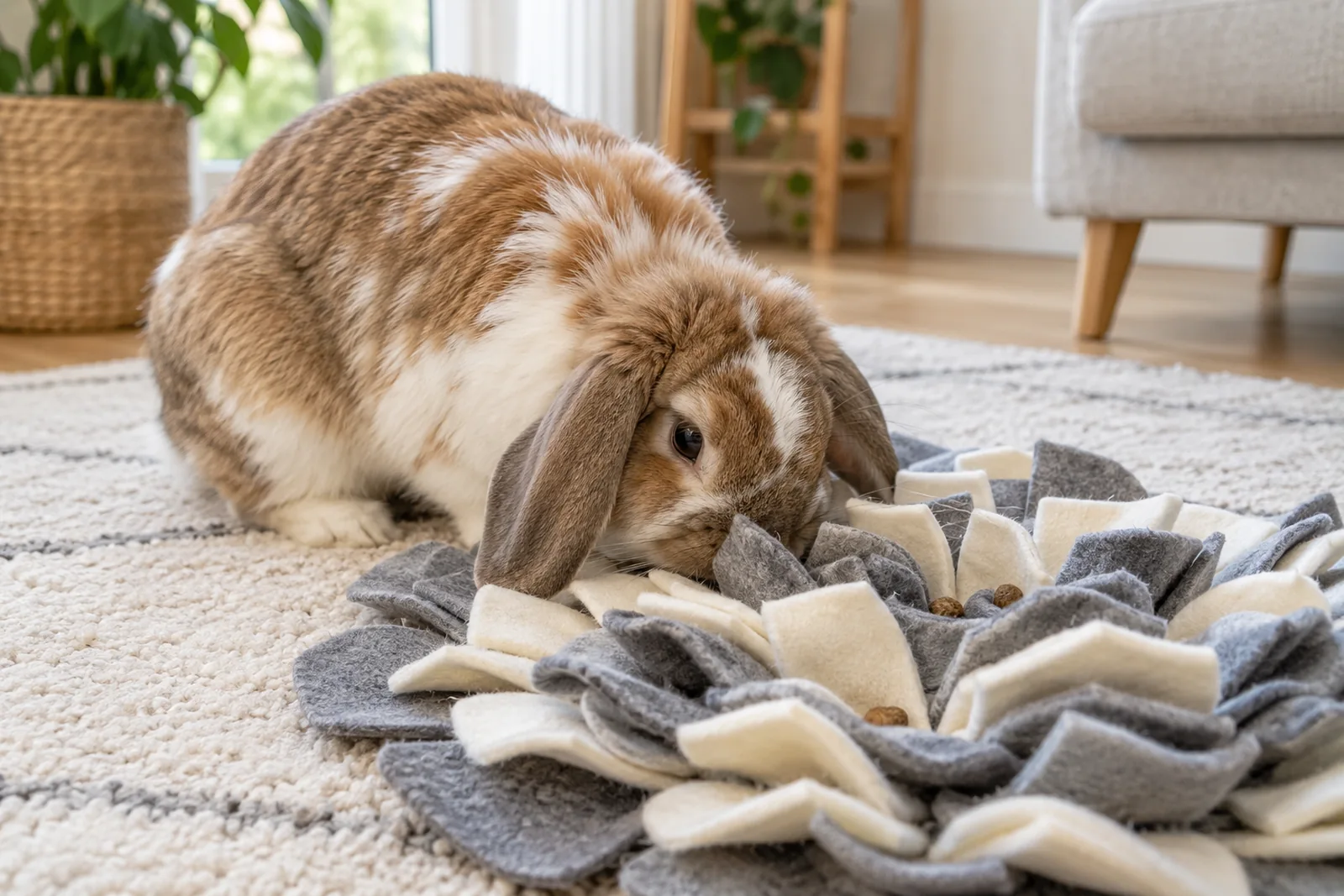
Are snuffle mats good for rabbits?
A well-made snuffle mat can be useful enrichment for a rabbit that searches rather than chews the fabric. Hide a small portion of the rabbit’s usual pellets or suitable dried herbs near the surface, supervise every new session and remove the mat if fibres, backing or stitching are being bitten. It should make food interesting—not difficult to reach—and hay must remain freely available.
What is a rabbit snuffle mat?
A snuffle mat is a flat feeding toy made with layers, pockets or strips of fabric. Small pieces of food are placed between the folds so the rabbit has to sniff, nudge and search instead of eating everything from a bowl. The activity should remain low to the ground and easy to leave at any time.
Foraging is normal rabbit behaviour. The Rabbit Welfare Association & Fund recommends enrichment that supports searching, digging, moving and exploring. A snuffle mat is one tool within that wider environment—not a substitute for space, hay or companionship.
Four practical benefits of a snuffle mat
Encourages searching
The rabbit uses smell, touch and small head movements to locate food hidden across several areas instead of waiting beside one bowl.
Extends a small food portion
Spreading pellets through folds can make a measured ration last longer and create more actions from the same amount of food.
Adds gentle mental activity
Choosing where to investigate and learning how the pockets work gives a curious rabbit a simple problem to solve.
Creates useful variety
Rotating a mat with cardboard, hay searches, stacking cups and other safe activities prevents one object from becoming the whole enrichment plan.
The benefit comes from the behaviour, not the product name. Success means your rabbit approaches voluntarily, finds the food calmly and leaves the fabric intact. A rabbit that prefers scattered pellets is not missing out.
How to choose a snuffle mat for your rabbit
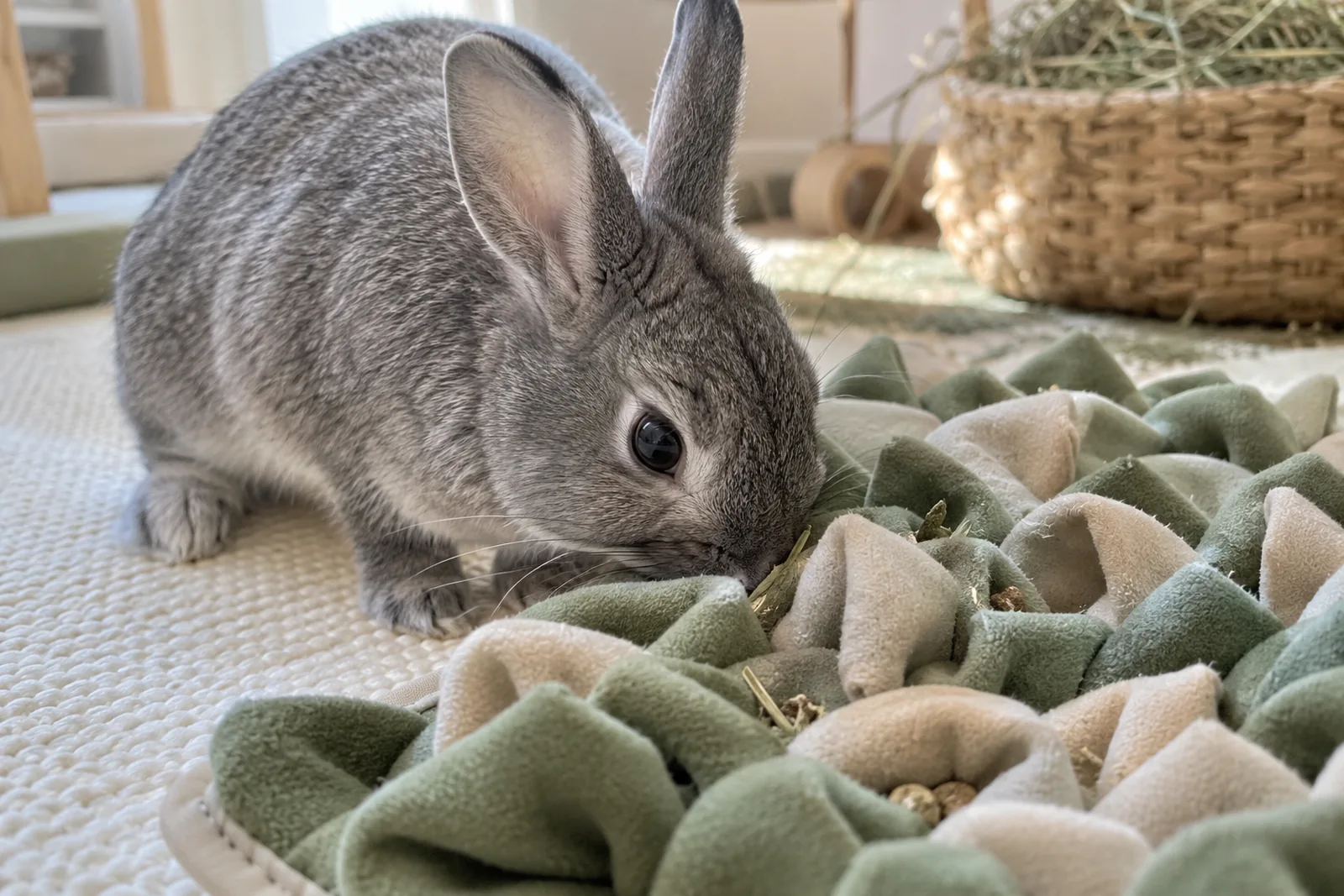
Choose for your rabbit’s size, feeding style and chewing habits. The mat should offer enough search space, stay stable when nudged and have a secure underside, seams and attachments.
Room to search
Prefer a broad, low mat with a non-slip base. It should not bunch up, slide or wrap around the feet during enthusiastic digging.
Secure folds
Look for close stitching, no exposed fasteners and no detachable decorations. Long loose strips and damaged edges increase risk.
Washable and dryable
Check the product label before purchase. Food crumbs and saliva collect deep in the layers, so thorough cleaning and complete drying matter.

What can you put in a rabbit snuffle mat?
Use familiar food from the normal daily allowance. The RSPCA’s dietary-enrichment guidance recommends initial supervision and using food from—not in addition to—the daily ration. Every piece must remain easy to retrieve.
| Food | How to use it | Main check |
|---|---|---|
| Daily pellets | Measure first, then distribute a small portion across several shallow folds. | Do not add a second ration just because the food is used for enrichment. |
| Dried rabbit-safe herbs | Use a few fragrant pieces to help a beginner understand where to search. | Choose plain ingredients already known to your rabbit. |
| Dry forage pieces | Mix a small quantity with pellets for scent and texture variety. | Remove dust, unknown plants and anything damp or spoiled. |
| Fresh greens | Prefer a washable tray or easy-to-clean puzzle when the leaves are wet. | Moisture can remain deep inside fabric and encourage odour or mould. |
Keep unlimited good-quality hay and clean water easy to reach. Avoid sticky fruit, sweet treats, powders and food that smears into the backing. Ask your veterinarian before changing food presentation for a rabbit with dental, digestive or weight concerns.
Introduce the mat in three easy levels
See it
Place several pellets fully visible on top. Let your rabbit approach, sniff and eat without moving fabric or being guided by hand.
Find it
Tuck food just inside wide folds. Use several easy locations so success comes quickly and the rabbit does not need to bite through material.
Search it
Spread the ration through different sections, with a mix of visible and lightly hidden pieces. Increase only one difficulty at a time.
Stop before frustration appears. Repeated pulling, frantic digging or chewing means the food may be too difficult to release. Make the next session easier or return to simple scatter feeding.

Rabbit Foraging Mat Toy
A soft, low search mat with several hiding zones, a non-slip base and a machine-washable design. Start with food on top, then gradually use the deeper folds while you observe how your rabbit interacts with the fabric.
- Multiple hiding difficulty levels
- Approximately 45 cm in diameter
- Best suited to supervised searching
Supervision: the most important safety rule
Fabric is not safe to swallow. Stay close enough to see whether your rabbit searches with the nose and paws or grips the material with the teeth. Some rabbits investigate gently; others immediately dismantle seams.
Remove the mat immediately if your rabbit eats the fabric
Take it away if you see persistent chewing, swallowed fibres, torn backing, exposed fasteners, trapped nails or a damaged seam. Contact a rabbit-savvy veterinarian promptly if you suspect material was swallowed or your rabbit develops reduced appetite, fewer droppings, pain or unusual behaviour.
How to clean a rabbit snuffle mat
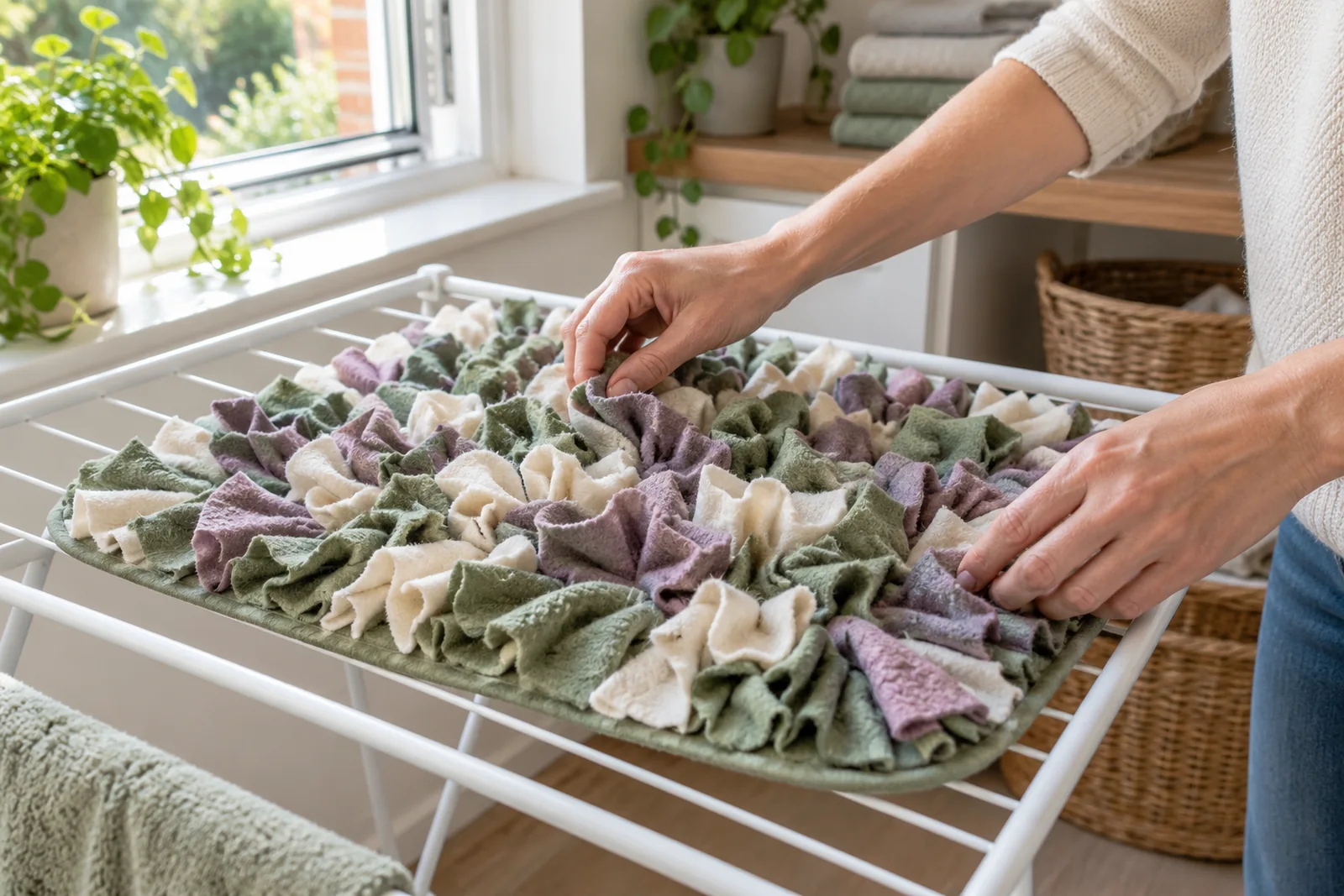
Follow the maker’s care label because materials differ. Remove crumbs after each session and wash whenever the mat becomes damp, soiled or smelly. Let it dry fully before reuse.
Empty it
Shake out every fold outdoors or over a bin. Remove hay, fur and hidden food by hand.
Inspect it
Check seams and backing before washing. Replace a mat that is torn or cannot be cleaned fully.
Wash gently
Use the labelled cycle and a small amount of fragrance-free, pet-safe detergent. Rinse thoroughly.
Dry completely
Reshape the folds and air-dry flat with good airflow. Do not return it while any inner layer is damp.
Avoid fabric softener, perfume and bleach residue. If saliva reaches the inner layers, a surface wipe is insufficient. Discard a mat that still smells, remains damp inside or develops mildew.
Frequently asked questions about rabbit snuffle mats
Can rabbits use a dog snuffle mat?
Only if its size, materials and construction are suitable for your rabbit. Check for long strips, rubber pieces, exposed fasteners, loose stitching and openings that could catch nails. Supervise the first sessions closely.
How often can a rabbit use a snuffle mat?
It can form part of a regular enrichment rotation if the food comes from the normal daily allowance and the mat remains clean and undamaged. Your rabbit still needs free hay, space, companionship and other activities every day.
Can I leave a snuffle mat with my rabbit overnight?
Do not leave a new or chewable fabric toy unattended. Whether it can remain available later depends on the product, its condition and your rabbit’s established behaviour. Removing it after the food is found is the safer routine for many homes.
Why does my rabbit chew the snuffle mat?
The rabbit may be exploring, trying to reach trapped food or simply prefer dismantling fabric to searching it. Make the challenge easier once; if chewing continues, remove the mat and offer a paper, cardboard, hay or rabbit-safe chew activity instead.
Can two bonded rabbits share one snuffle mat?
Some pairs share calmly, but others compete over concentrated food. Begin with two widely separated feeding zones or one mat per rabbit and watch for blocking, chasing, tension or one rabbit eating everything.
How do I stop a snuffle mat from smelling?
Use dry foods, remove leftovers promptly, wash according to the label and dry every layer completely. Persistent odour after washing usually means the material is no longer hygienic enough for food-based enrichment.


Elodie
Rabbit guardian and care enthusiast with over 10 years of hands-on experience living with house rabbits. Through Rabbit World, Elodie shares practical guidance focused on safe enrichment, thoughtful product choices and the everyday habits that help rabbits thrive.