How to Choose a Rabbit Hideout: Size, Entrances and Safe Materials
A good rabbit hideout gives your rabbit a quiet place to rest without making them feel trapped. The right one is roomy, stable, easy to leave and safe to chew or explore.
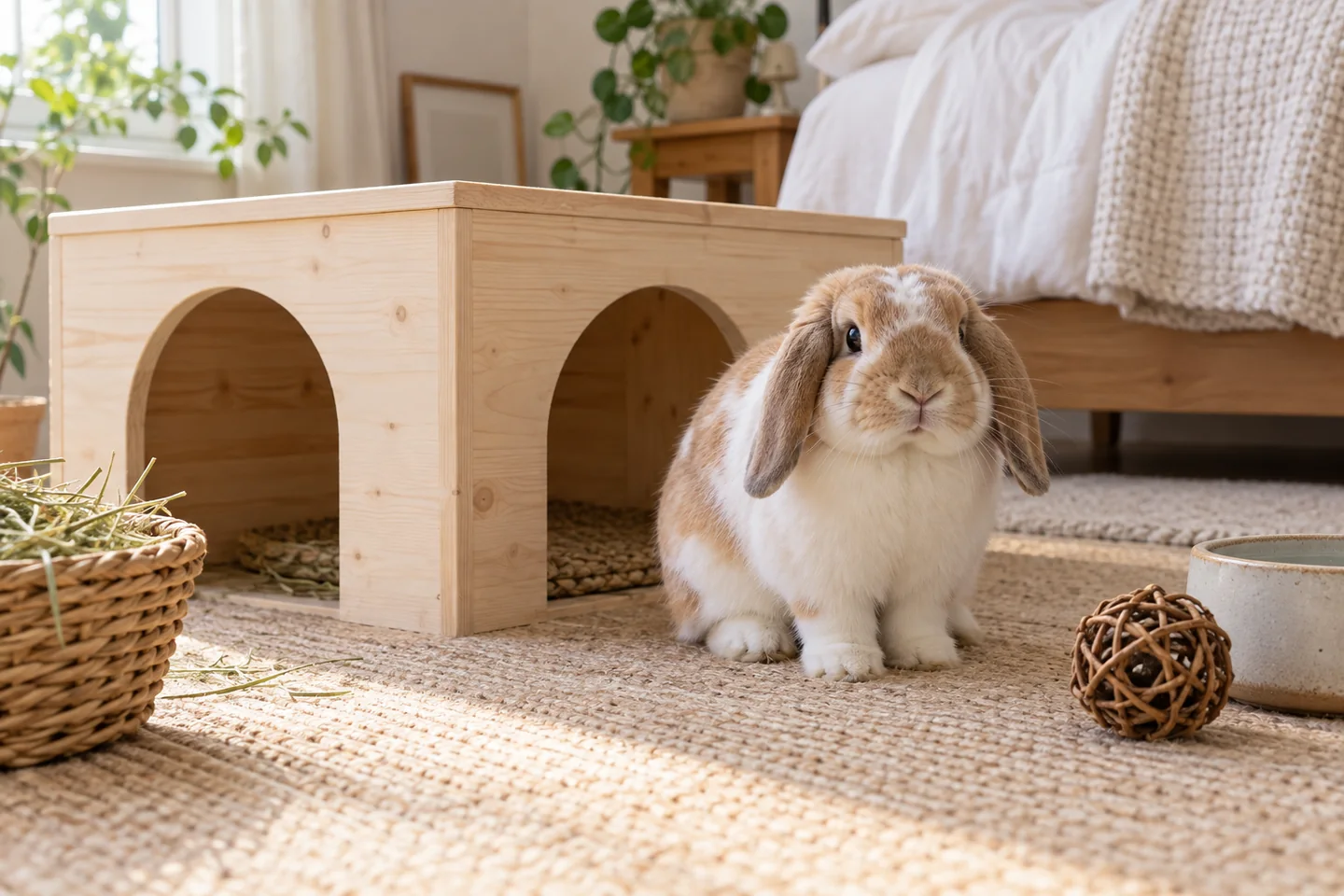
What makes a good rabbit hideout?
A good rabbit hideout is large enough for your rabbit to turn and rest, has at least one wide entrance and is made from a safe, strong material. Two entrances are even better for a pair because one rabbit cannot block the only way out. The hideout should stay still when your rabbit runs inside.
Rabbits are prey animals. They feel safer when they can move under cover. A hideout gives them a choice: they can rest inside, watch from the doorway or leave when they want. This choice matters more than a cute shape or colour.
A hideout is not a cage. It should sit inside a much larger living area. Your rabbit still needs room to run, stretch, eat, play and use the litter tray.
Five things every rabbit hideout needs
Enough room
Your rabbit can turn around, sit and lie down.
A wide door
Ears, hips and feet pass through without rubbing.
A safe exit
Two doors help a pair move without blocking each other.
A stable base
The house does not slide, tip or fold during use.
Easy cleaning
You can reach the inside and keep it dry.
What size rabbit hideout should you choose?
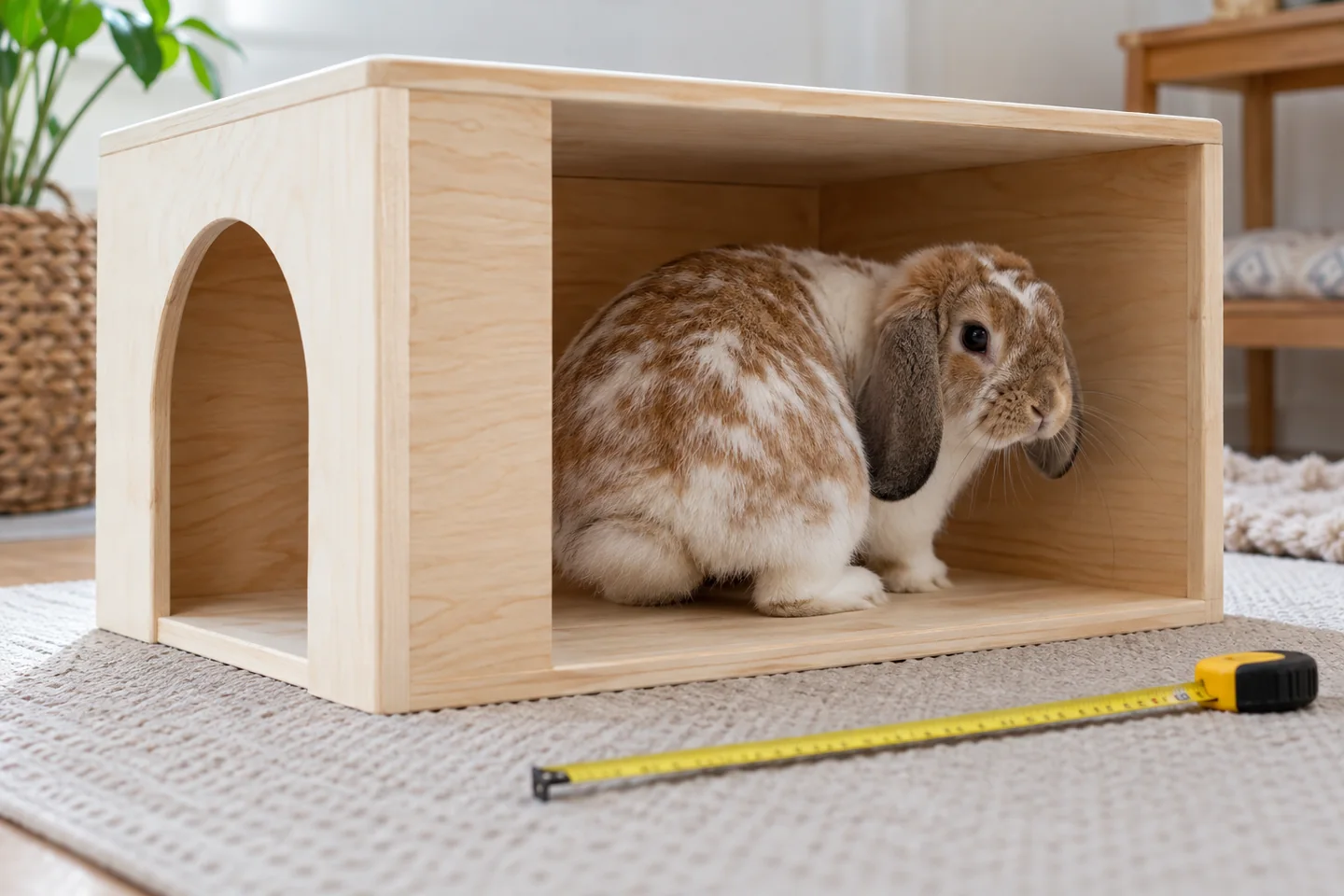
Check the inside space, not only the outside size. Your rabbit needs enough height to sit in a natural position. They also need enough floor space to turn around and rest.
- Turn test: your rabbit can turn without squeezing.
- Sit test: the roof does not press on the ears or back.
- Rest test: the body fits inside when your rabbit lies down.
- Door test: the opening is wider than the rabbit’s hips.
Measure your rabbit when they are sitting and when they are lying down. Add a little extra room for turning. If two bonded rabbits like to rest together, choose a house that fits both at the same time. You can also give them more than one hideout so each rabbit has a choice.

Does a rabbit hideout need two entrances?
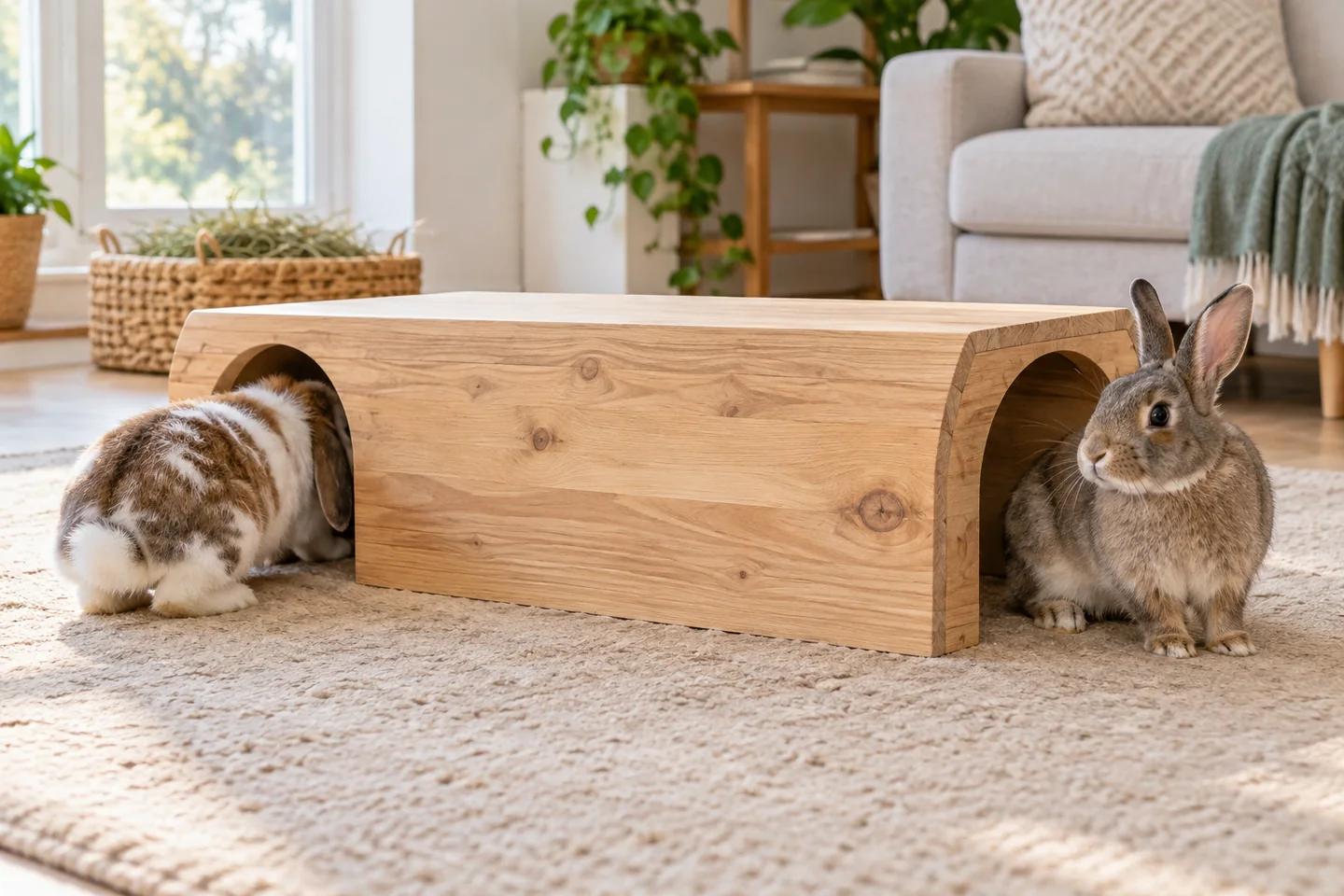
One wide entrance can work for one calm rabbit. However, two entrances are safer for a bonded pair. One rabbit can leave even if the other sits near a door.
Two exits also help a shy rabbit feel less trapped. The openings do not need to face the same way. A front door and a side door can work well.
Which rabbit hideout materials are safe?
No hideout material is completely safe for every rabbit. Untreated rabbit-safe wood is usually the safest choice for a rabbit that chews. It can still become rough or splintered, so you must check it often.
If your rabbit does not usually chew or eat fabric, a well-made fabric house can also work very well. Plain cardboard can be a good simple choice too, as long as it has no tape, staples or plastic parts. Watch how your rabbit uses each material and remove the hideout if pieces are being swallowed.
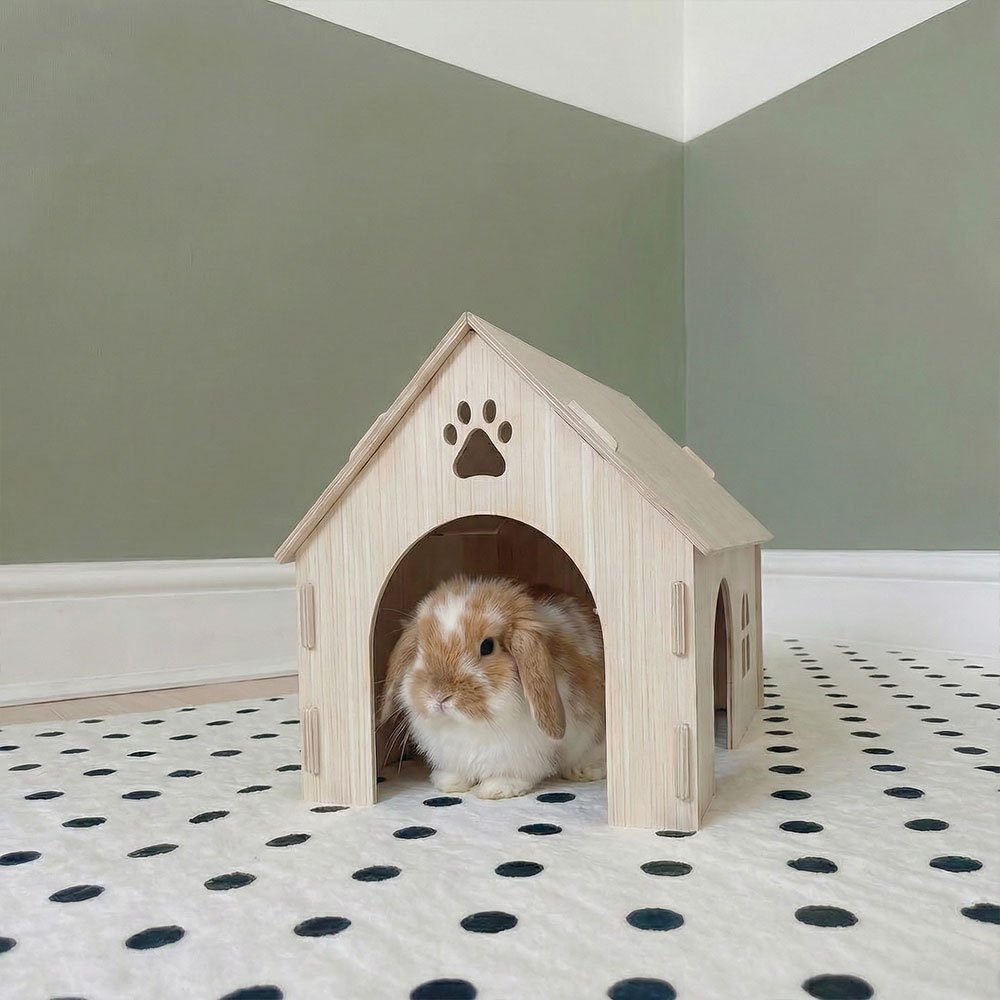
Untreated wood
Untreated rabbit-safe wood is usually the safest option when a rabbit often chews its house.
- Check for splinters
- Sand rough edges
- Do not use strong cleaners
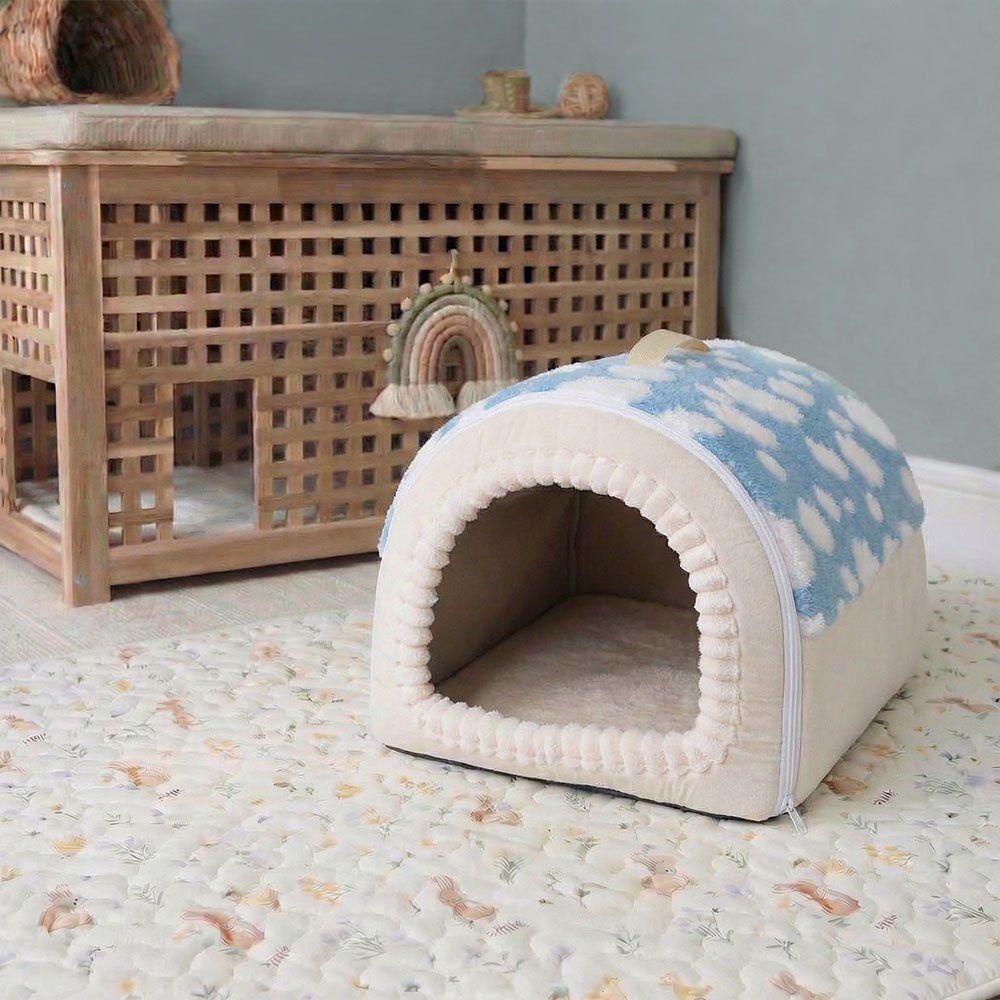
Fabric
A fabric house can suit a rabbit that does not usually chew or swallow cloth. Many are soft and washable.
- Check seams and threads
- Wash as directed
- Remove torn fabric
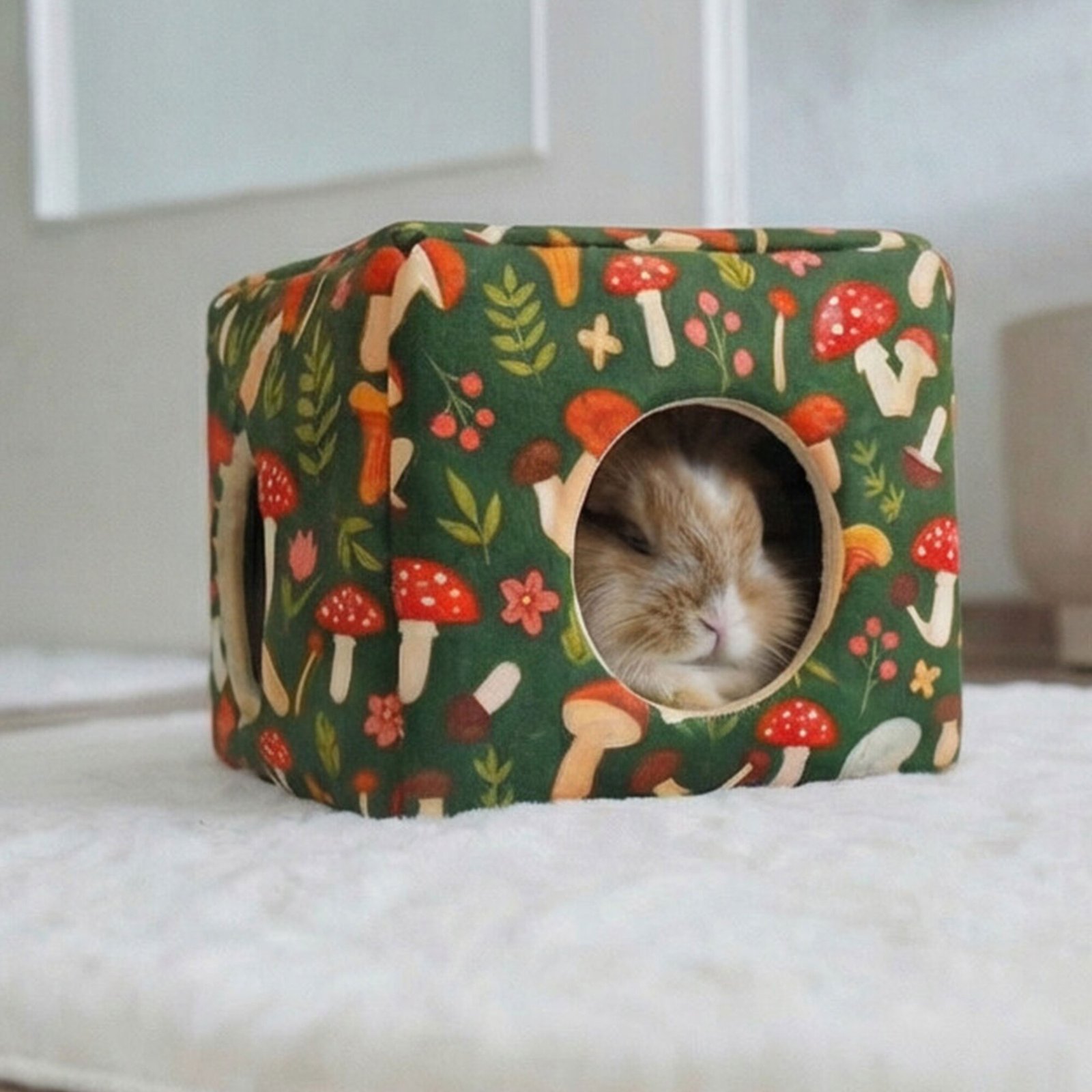
Plain cardboard
Plain cardboard can work well when a rabbit does not eat large pieces. It is light and easy to replace.
- Avoid tape and staples
- Keep the inside dry
- Replace damaged parts
Remove a damaged hideout
Stop using the house if you find sharp wood, loose nails, exposed wire, long threads, large pieces of missing foam or plastic that your rabbit can chew. Repair it safely or replace it.
Three Rabbit World hideouts to compare
Check the latest size on each product page before you order. Match the house to your rabbit, not only to the empty space in the room.
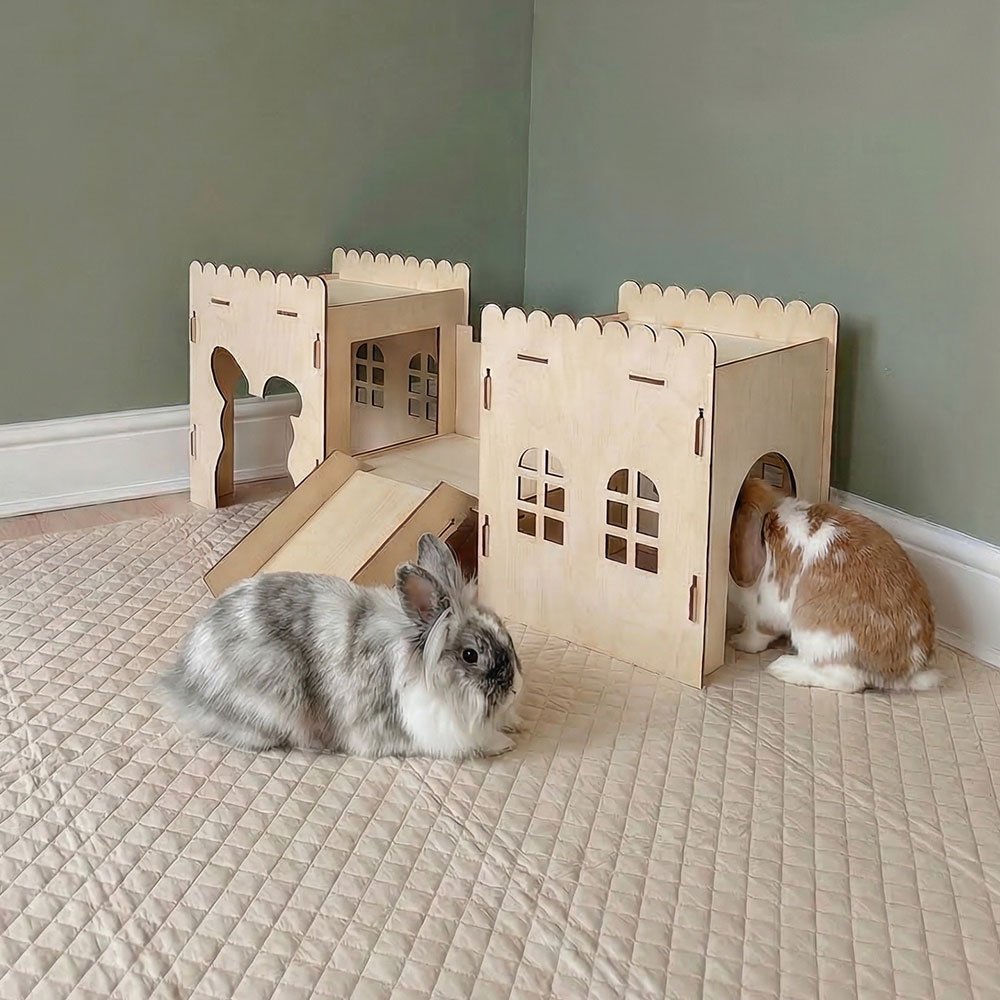
Rabbit Castle Wooden House
A large solid-wood hideout with rooms, several openings and a flat lookout roof. Check the edges each week.
See the wooden castle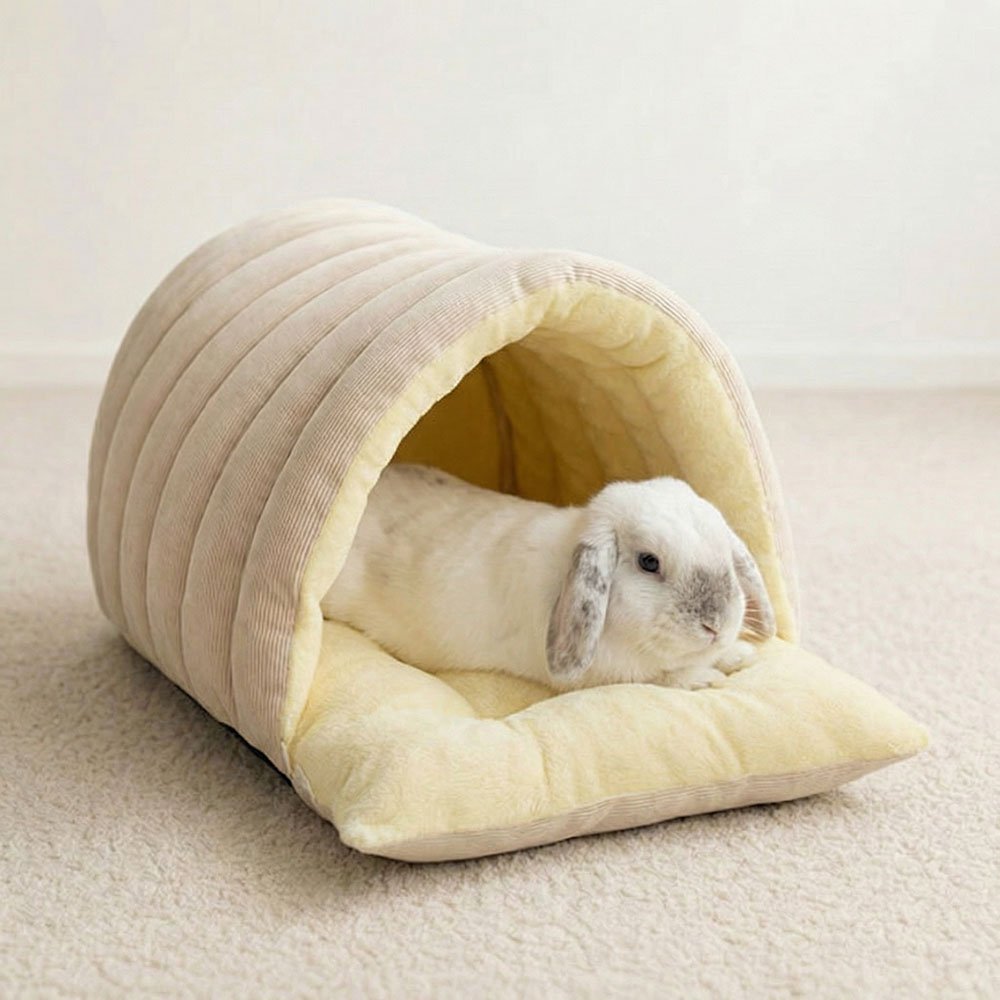
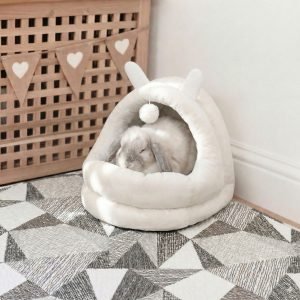
Beige Cozy House
A washable 45 × 30 cm fabric hideout and soft bed for one small or medium rabbit that does not eat fabric.
See the beige hideout
Cloud Large Hideout
A washable 40 × 35 × 35 cm fabric house. It fits one medium rabbit or a close pair of smaller rabbits.
See the Cloud hideoutHow many hideouts does a rabbit need?
One rabbit needs at least one safe retreat. Two rabbits need enough covered space to rest together and the choice to rest apart. This may mean one large house with two exits plus a second hideout in another part of the room.
One rabbit: provide one roomy hideout that is always open.
A bonded pair: offer shared space and another place to rest alone.
A large room: add retreats near useful areas without blocking the running path.
Watch that one rabbit does not guard every doorway. Both rabbits must still be able to reach hay, water, litter and a quiet resting place.
Where should you put a rabbit hideout?
Place it in a quiet part of the living area. A wall behind one side can help the space feel protected. Keep a clear path in front of every entrance.
Keep it dry. Do not place the house where water or urine often collects.
Leave the door clear. Your rabbit should be able to run in or out without hitting an object.
Stop sliding. Put the hideout on a stable, non-slip surface.
Do not force your rabbit inside. Put a little hay near the entrance and let them explore. Some rabbits enter at once. A shy rabbit may need several days. Leave the hideout in the same place so it becomes familiar.
How often should you check and clean it?
Look inside each day when you refresh hay and water. Remove wet bedding, old food and droppings. Follow the product’s care instructions before washing it.
- Feel every wooden edge for rough or sharp areas.
- Check fabric seams for holes and long loose threads.
- Make sure the floor and roof still hold their shape.
- Let the hideout dry fully before putting it back.
If two rabbits share a home, offer more than one safe retreat. This gives each rabbit a place to rest when they want space.
Rabbit hideout questions
Does every rabbit need a hideout?
Yes. Every rabbit should have access to a covered place where they can rest and move away from noise or attention.
Can two rabbits share one hideout?
They can if it is large enough and has safe exits. It is still helpful to offer more than one hideout so both rabbits have a choice.
Is one entrance safe for a rabbit house?
One wide door can work for one rabbit. Two doors are usually better for a pair because one rabbit cannot block the only exit.
Can a rabbit hideout have a flat roof?
Yes, if the roof is strong, stable and low enough for safe use. Check that the house does not tip when your rabbit jumps on it.
Why does my rabbit ignore the new hideout?
The smell and shape are new. Leave it in a quiet place, add a little hay near the door and give your rabbit time. Never push them inside.
This guide follows general indoor-housing advice from the RSPCA and the Rabbit Welfare Association & Fund. Always adapt the setup to your rabbit’s size, health and behaviour.

Elodie
Elodie has lived with house rabbits for more than 10 years. On Rabbit World, she shares simple advice about safe homes, daily care and useful rabbit products.