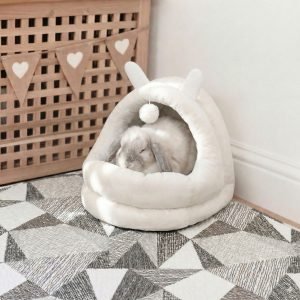
A rabbit playpen should be more than a border around a litter tray. It needs enough usable floor space for running, resting and choosing between resources, panels high enough for your rabbit, and a layout that stays safe when real life gets messy.
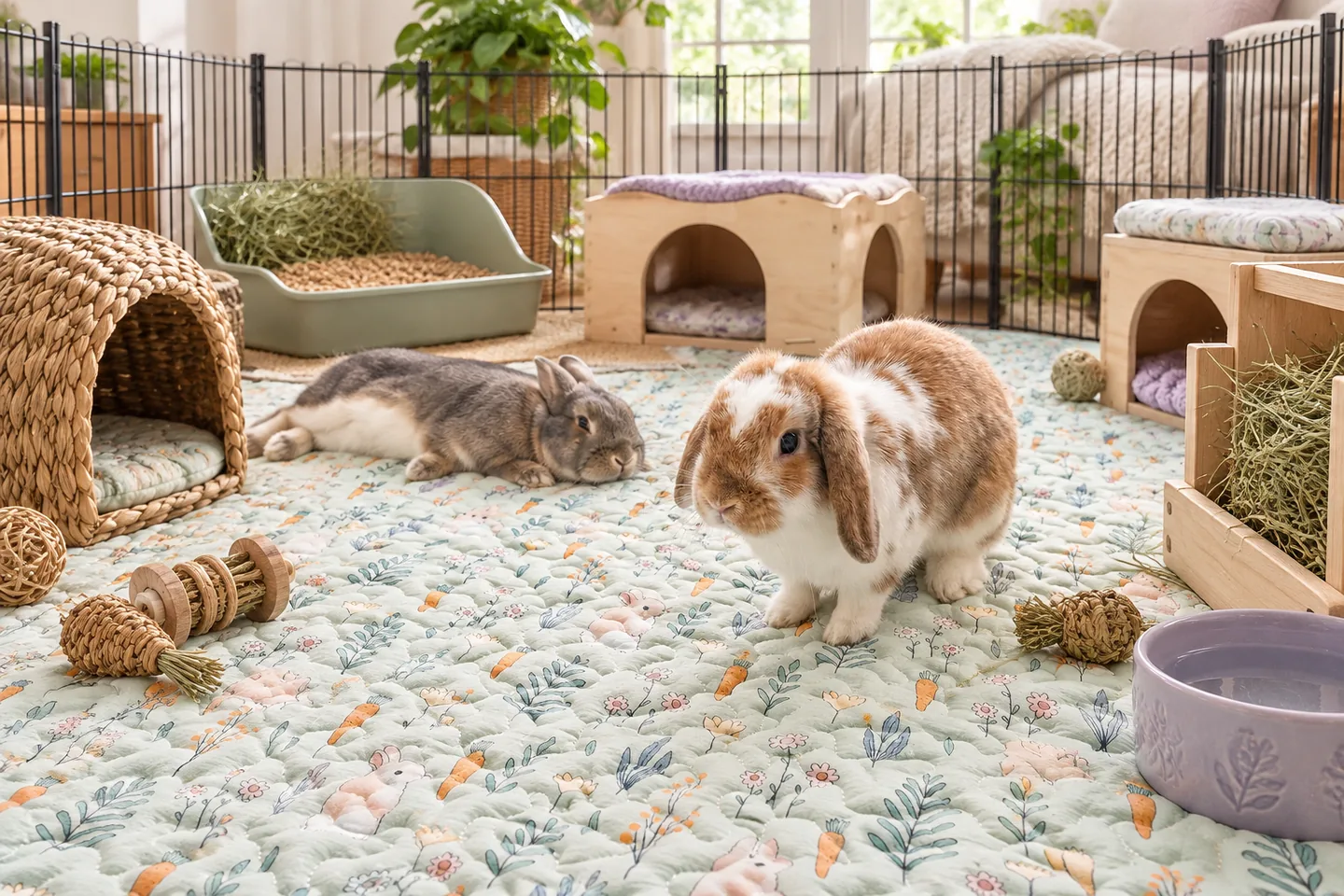
Start with the whole footprint
How much floor space does a rabbit playpen need?
Measure the space your rabbit can actually use at ground level. A platform may be enjoyable enrichment, but it does not replace running room. The same is true of a tunnel leading to another small zone. Welfare guidance from the Rabbit Welfare Association & Fund makes this distinction clearly: upper levels and connected extras are bonuses rather than substitutes for the main footprint.
The widely cited 3 m × 2 m × 1 m benchmark is for a compatible pair of average-sized rabbits and includes their shelter and exercise area. Larger breeds, groups of more than two and rabbits that need wider turning space require more. Bigger is always useful when it gives the rabbits genuine choice rather than simply holding more furniture.
| Question | What to measure | Why it matters |
|---|---|---|
| Main footprint | Continuous accessible length × width at floor level | Rabbits need room to run, hop, turn, stretch and move away from one another. |
| Usable route | The clear path left after adding litter trays, hides and bowls | A large pen can feel small when objects block every route. |
| Resting choice | Space for the pair to rest together or apart | Companions need social contact and the option to create distance. |
| Door clearance | Full swing of gates and room for safe entry | A squeezed entrance encourages escapes and makes cleaning awkward. |
Do not count only the empty pen. Place masking tape on the floor to mark the proposed perimeter, then outline the litter tray, hay station, hides and bowls inside it. What remains is the true movement space.
Measure before buying panels
How to measure a rabbit playpen correctly
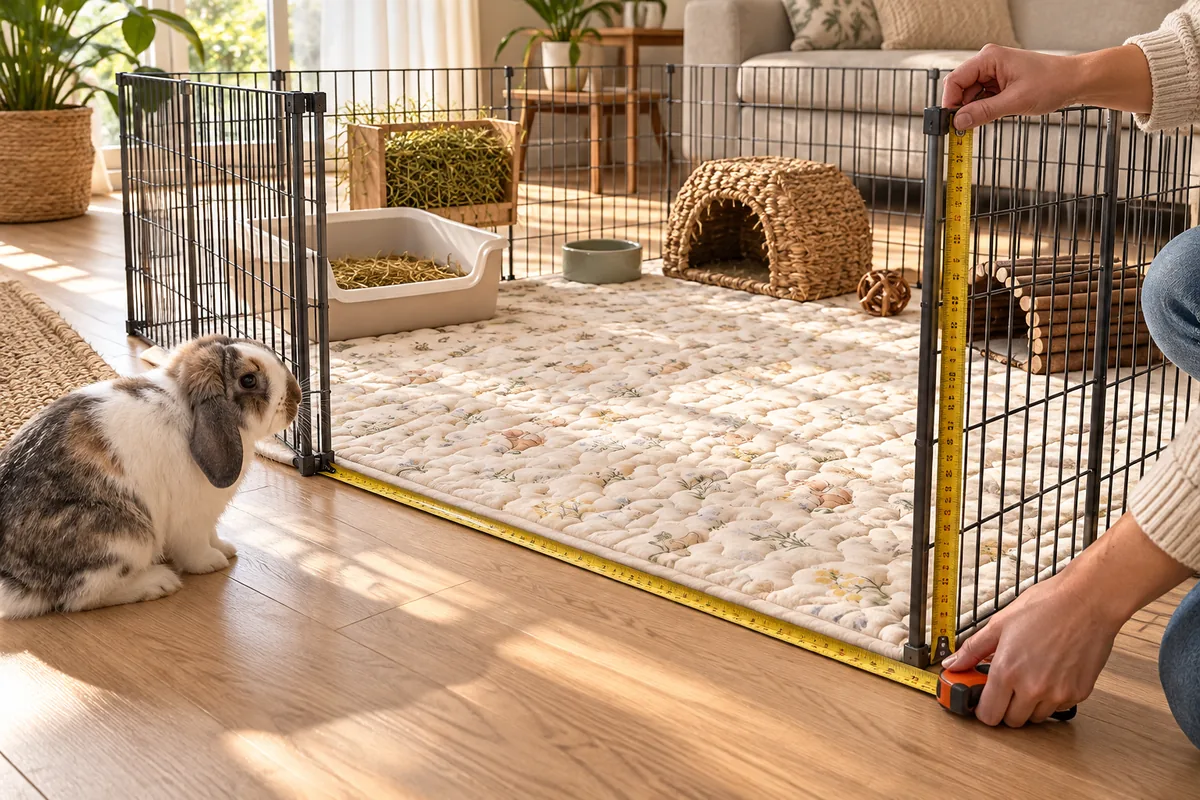
Mark the footprint
Measure the longest and widest uninterrupted floor dimensions. Irregular shapes can work, but narrow corners should not be counted as useful running lanes.
Subtract fixed items
Allow for the full litter tray, hay container, water bowl, hides and any protected cable zones. Leave enough room to clean behind them.
Check every opening
Measure panel gaps, gate gaps and spaces beside furniture. A rabbit’s body may fit where its head first appears not to.
Observe the finished route
Your rabbit should be able to cross the pen, turn comfortably, stretch fully and stand upright without meeting an obstacle or roof.
Escape prevention
How tall should a rabbit playpen be?
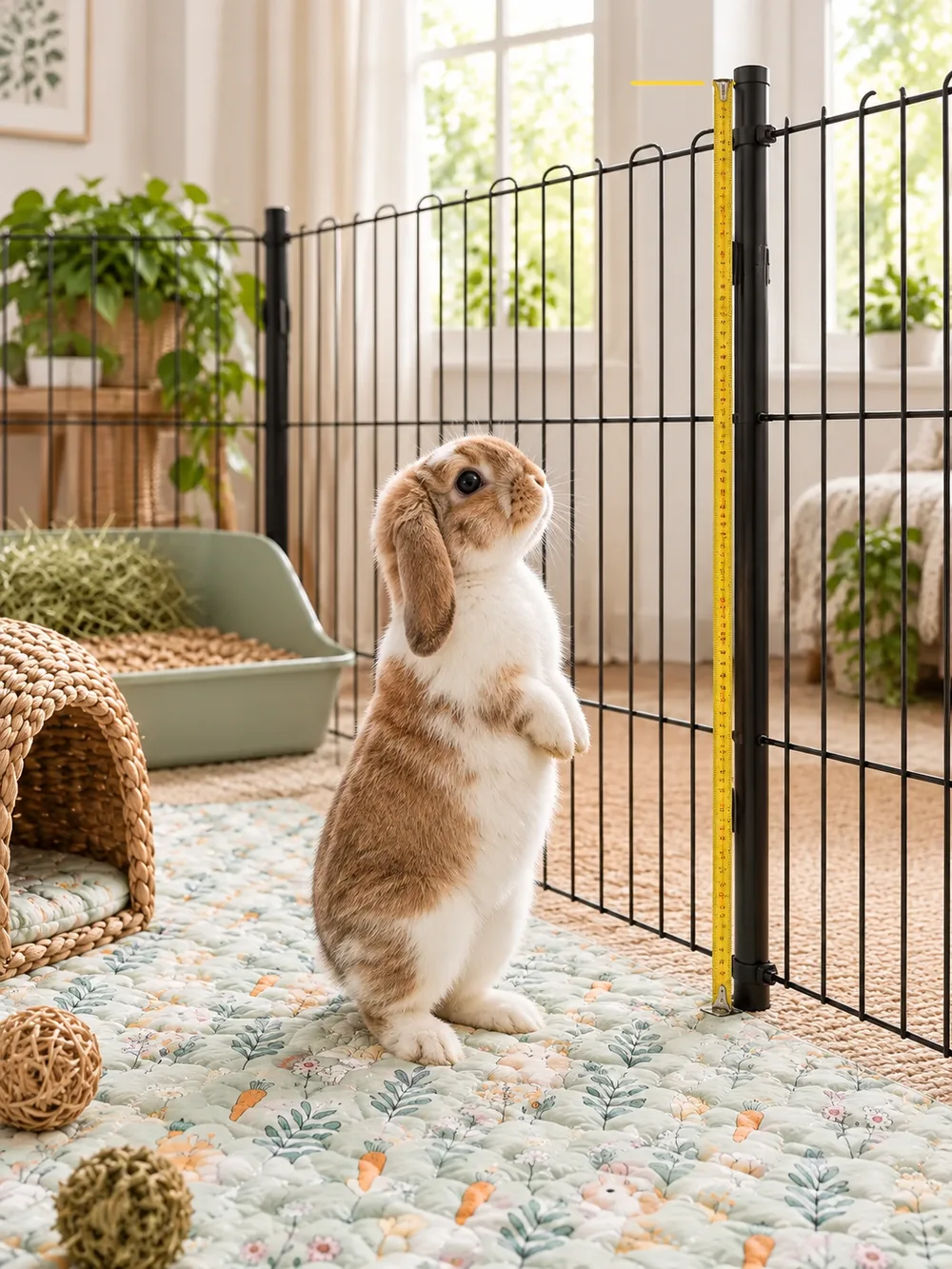
Useful welfare benchmark
The rabbit must also stand fully upright without its ears touching the top.
Repeated climbing or pushing is useful information. Recheck security, available space and enrichment instead of simply adding a low cover.
Make space work harder
A practical rabbit playpen setup
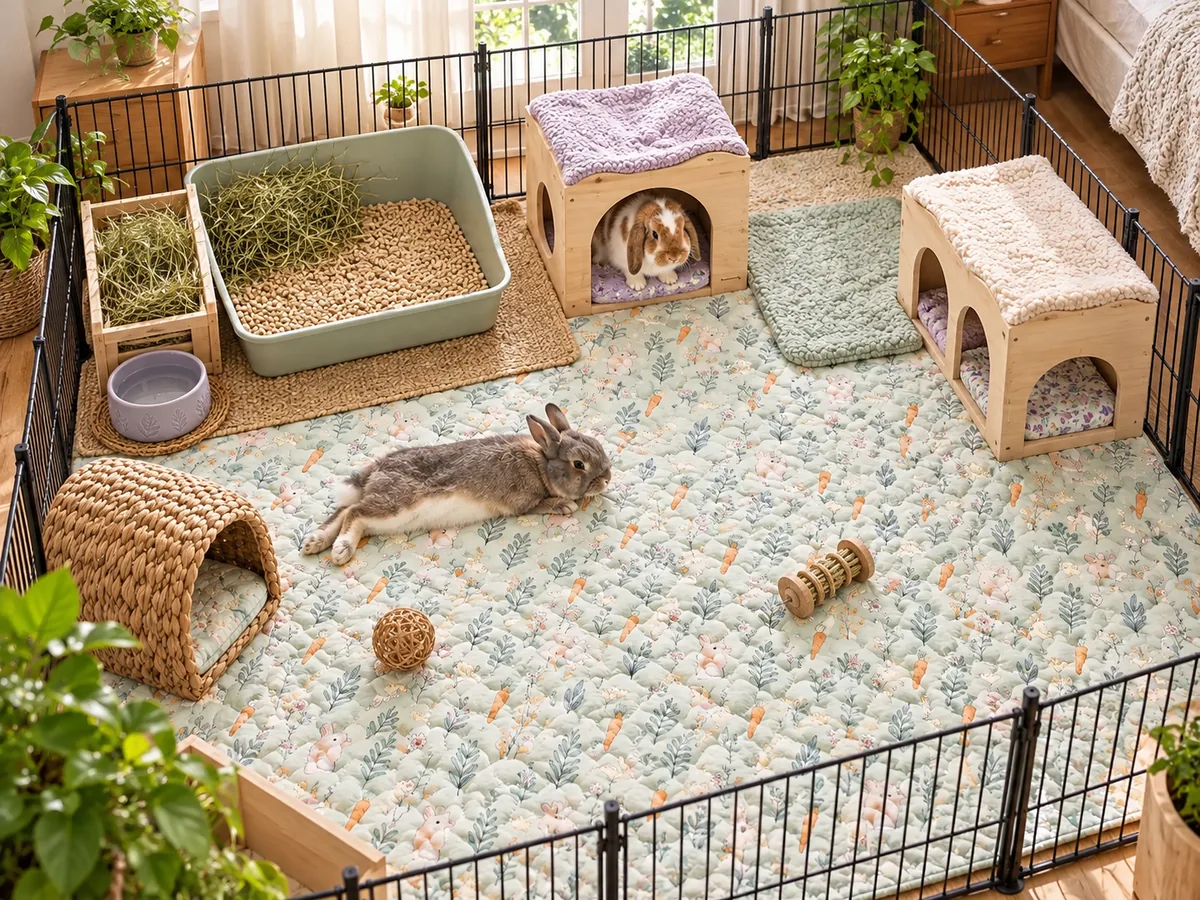
Build the layout around movement and choice. Keep the centre open, place heavier resources around the perimeter and avoid creating dead ends where one rabbit can block another.
1. Hay and toilet
Keep unlimited hay beside a roomy litter tray and away from the sleeping area.
2. Rest and retreat
Provide one hide per rabbit plus an extra where possible, all with two exits.
3. Open activity
Protect a wide route for running, turning and binkies. Keep toys to the edges.
- Fresh water is stable and accessible at all times.
- Cables, houseplants, skirting and reachable furniture are rabbit-proofed.
- The pen is dry, well ventilated and away from radiators, draughts and direct sun.
- Gates can open without trapping paws, moving bowls or creating a narrow chase point.

Comfort underfoot
Choose a stable surface for the playpen
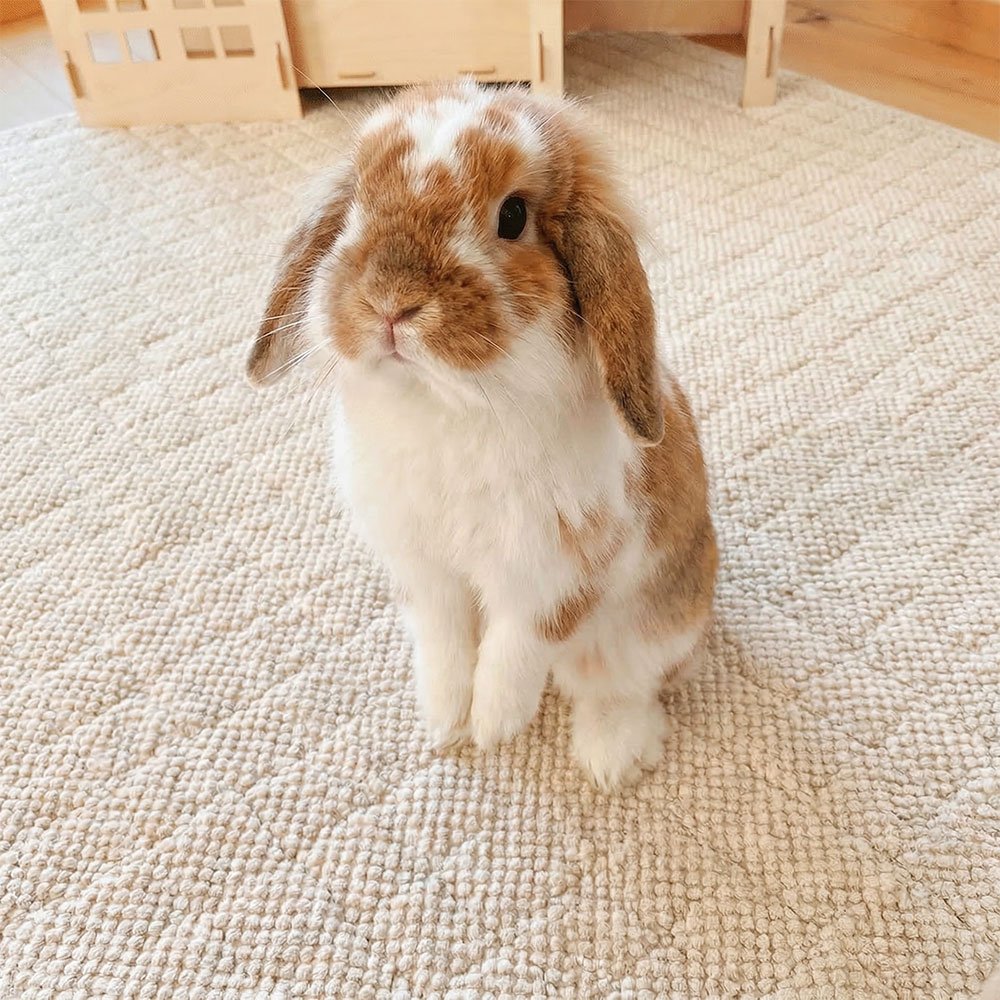
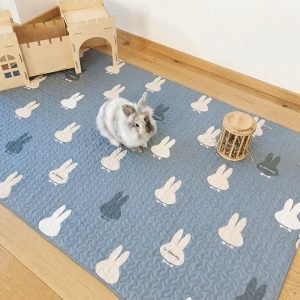
The floor should be solid, dry and non-slip. A washable mat can improve grip and define the living area, but it does not replace the total floor space your rabbits need.
Need help comparing materials, chewing habits and cleaning? Read the separate guide to safe flooring for indoor rabbits.
Rabbit World playpen flooring
Shop mats that help define the setup
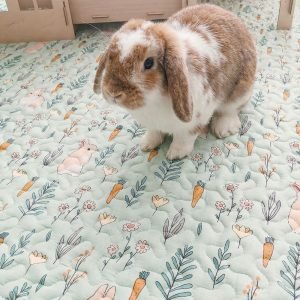
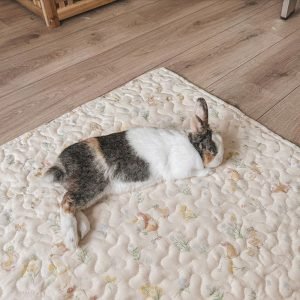
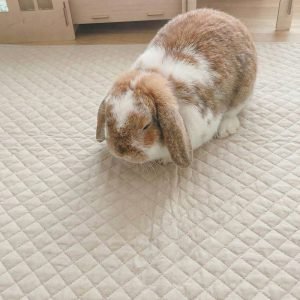
These currently available mats come in sizes that can cover part of a larger playpen or be combined with an appropriately sized floor plan. Check the product page and measure your pen before ordering.
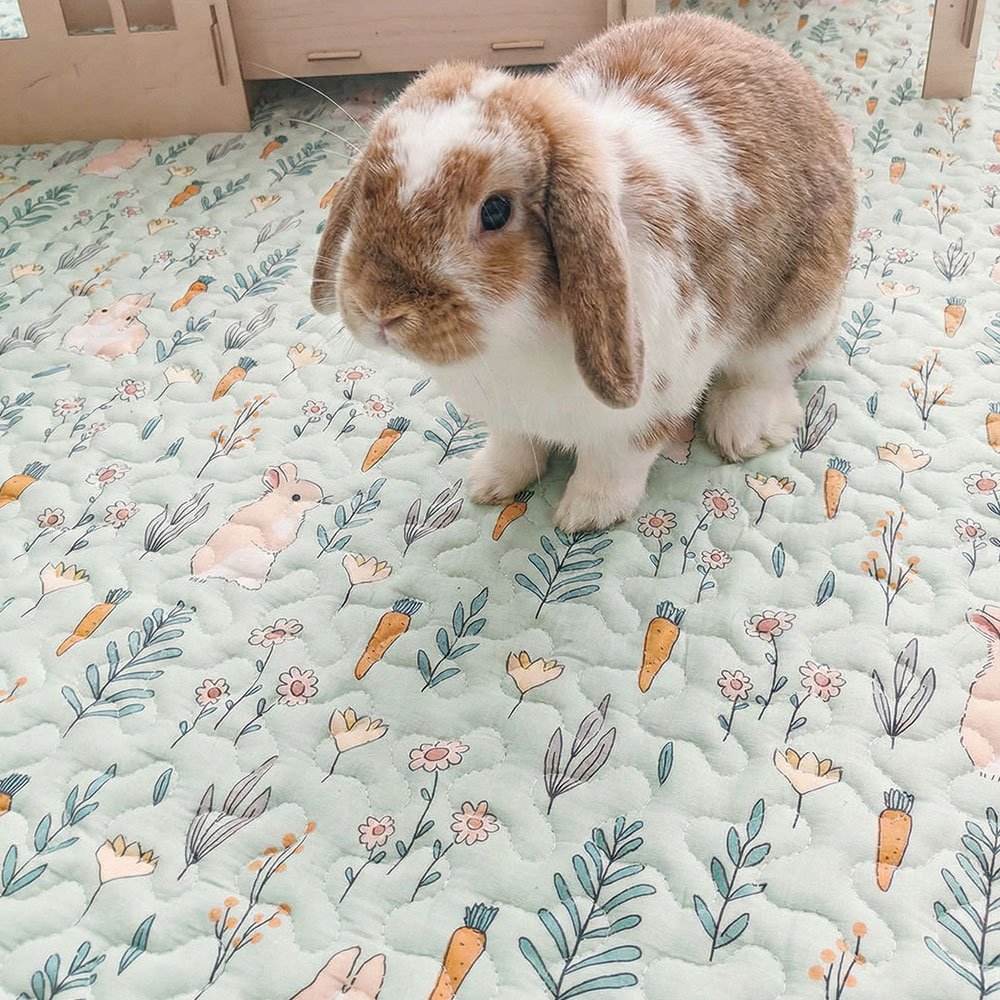
Rabbit Playmat
Soft patterned coverage in 35 × 63, 43 × 71 or 47 × 83 inches.
View the mat →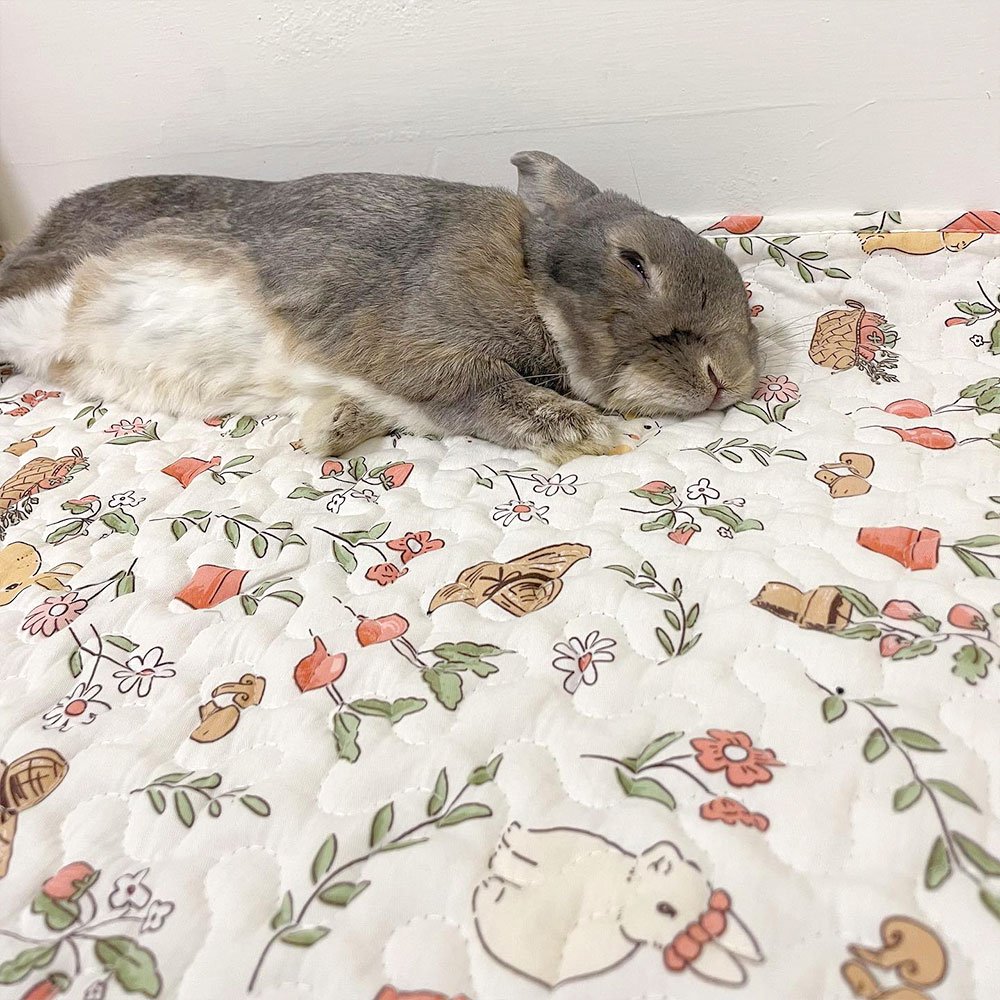
Rabbit Mat for Enclosure
A roomy quilted option offered in 35 × 63 or 47 × 83 inches.
View the mat →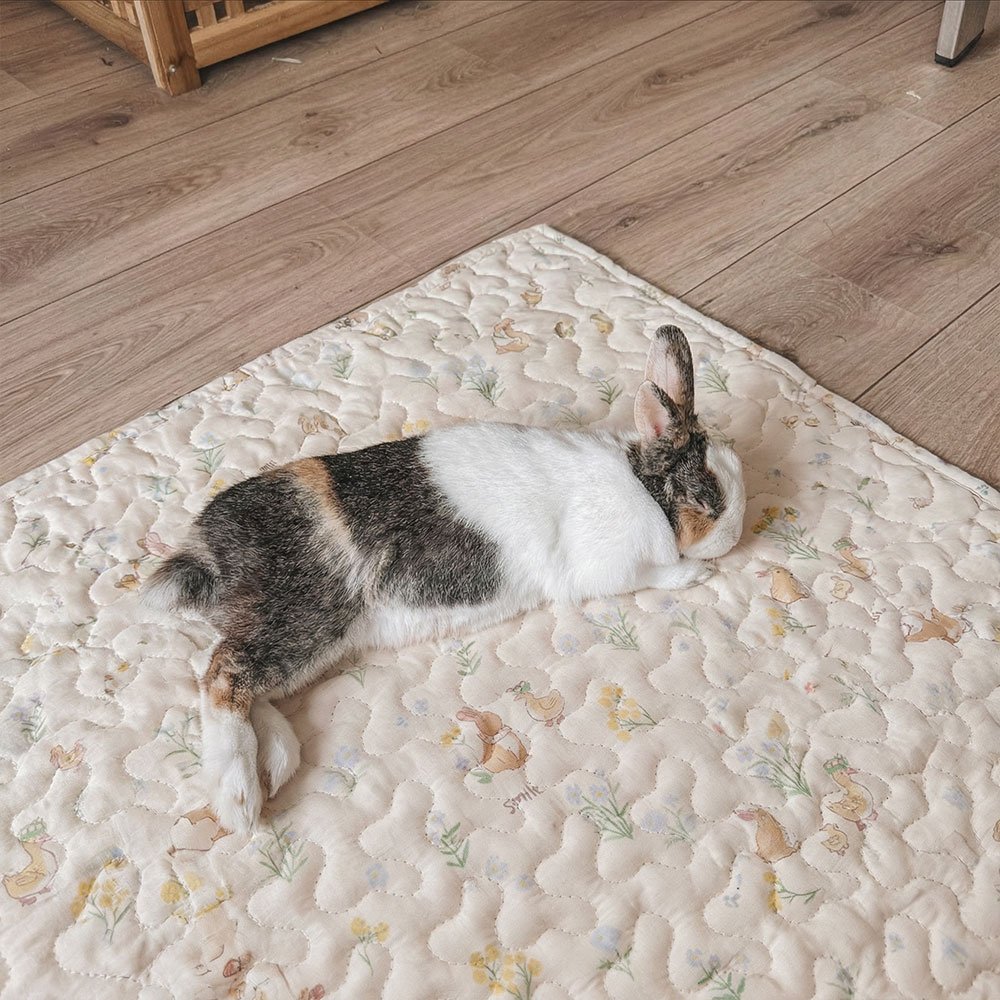
Beige Rabbit Mat
A calm neutral surface in 35 × 63, 43 × 71 or 43 × 83 inches.
View the mat →One rabbit, a bonded pair or a group
Adjust the playpen to the rabbits who use it
A single rabbit still needs room to perform the full range of natural movements and should not be confined to a tiny pen. Rabbits are social animals, and welfare organisations generally recommend compatible companionship. When a bonded pair shares the space, add duplicated or generously sized resources so both can eat, drink, rest and retreat without competition.
For a group or a giant breed, increase both floor area and the number of retreat options. Watch how the rabbits move at their most active times, especially early morning and evening. The layout should support fast movement without collisions and quiet rest without another rabbit being forced to pass close by.
Temporary use is different from permanent housing. A smaller pen may be useful briefly during cleaning, recovery under veterinary advice or supervised introductions. It should not quietly become the rabbit’s everyday living area.

Final safety review
Common rabbit playpen setup mistakes
Buying by panel count
Eight panels can create very different footprints.
Do instead: compare the assembled internal length, width and height.Filling every corner
Too many accessories remove the running route.
Do instead: keep the centre open and rotate a few activities.Using the pen as a cage
A boundary is not automatically a complete home.
Do instead: build the full welfare footprint first.Ignoring the outside
Teeth and paws can reach through the bars.
Do instead: move cables, plants and small objects well away.Frequently asked questions
Rabbit playpen size and setup FAQ
Is an exercise pen large enough for a rabbit to live in?
Only if the assembled setup provides the required continuous floor area, height, shelter, exercise space and permanent access to resources. Many off-the-shelf pens are too small on their own and must be expanded or combined with a rabbit-proofed room.
Is 90 cm high enough for a rabbit playpen?
It may contain some rabbits, but it is below the 1 m height used in the RWAF and RSPCA housing benchmark. Individual rabbits may also jump or climb higher than expected. Assess standing clearance, jumping behaviour and nearby launch points.
Can a rabbit playpen be placed on carpet?
Carpet may provide traction, but chewing, digging, urine and fibres can create problems. Protect the surface where needed, supervise new setups and use a stable washable layer appropriate to your rabbit’s habits.
Should the litter tray go inside the playpen?
Yes. Rabbits need constant access to a suitable toilet area. Place it near hay, keep it separate from the main sleeping area and make sure it does not block the open movement route.
How often should I change the playpen layout?
Keep essential resources predictable, especially for shy, senior or mobility-limited rabbits. Rotate one enrichment item at a time and observe whether the change supports exploration rather than creating stress.

Elodie
Rabbit guardian and care enthusiast with over 10 years of hands-on experience living with house rabbits. Through Rabbit World, Elodie shares practical guidance focused on safe enrichment, thoughtful product choices and the everyday habits that help rabbits thrive.