What Do Rabbit Zoomies and Binkies Mean?
Sudden sprints, sharp turns and airborne twists can look chaotic. In the right context, they are some of the clearest ways a rabbit expresses excitement, energy and a sense of safety.
What do rabbit zoomies and binkies mean?
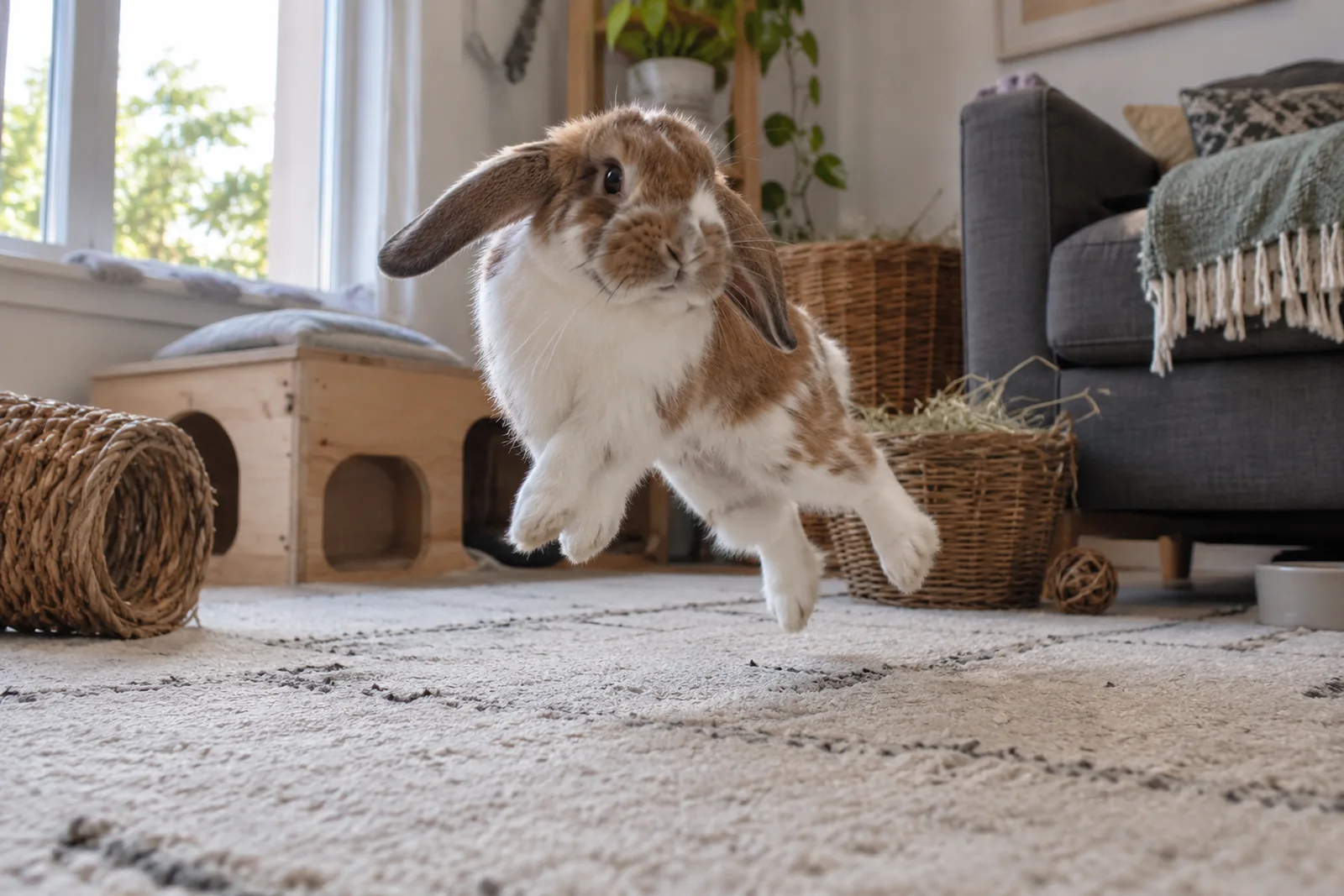
Zoomies and binkies usually mean a rabbit feels excited, playful and safe enough to move freely. A zoomie is a sudden burst of fast running, often with loops and quick changes of direction. A binky is a joyful jump in which the rabbit may twist its body or flick its feet. Read the whole scene: relaxed movement before and afterwards helps distinguish play from a frightened escape.
Binky vs zoomie: what is the difference?
A rabbit binky
The rabbit springs into the air and may twist the body, kick or flick the hind feet before landing. A small head shake with a hop is sometimes called a half-binky.
Rabbit zoomies
The rabbit accelerates into a short sprint, circles the room or runs a repeated route. A zoomie can include one or several binkies along the way.
Neither movement needs to look perfectly graceful. Young rabbits may produce dramatic leaps; older or less mobile rabbits may show smaller hops, head flicks or short bursts. The RSPCA describes the leap-and-twist binky as a sign of a very happy rabbit. Frequency varies with age, personality, fitness, space and the individual rabbit’s style.
How to recognise a happy burst of movement
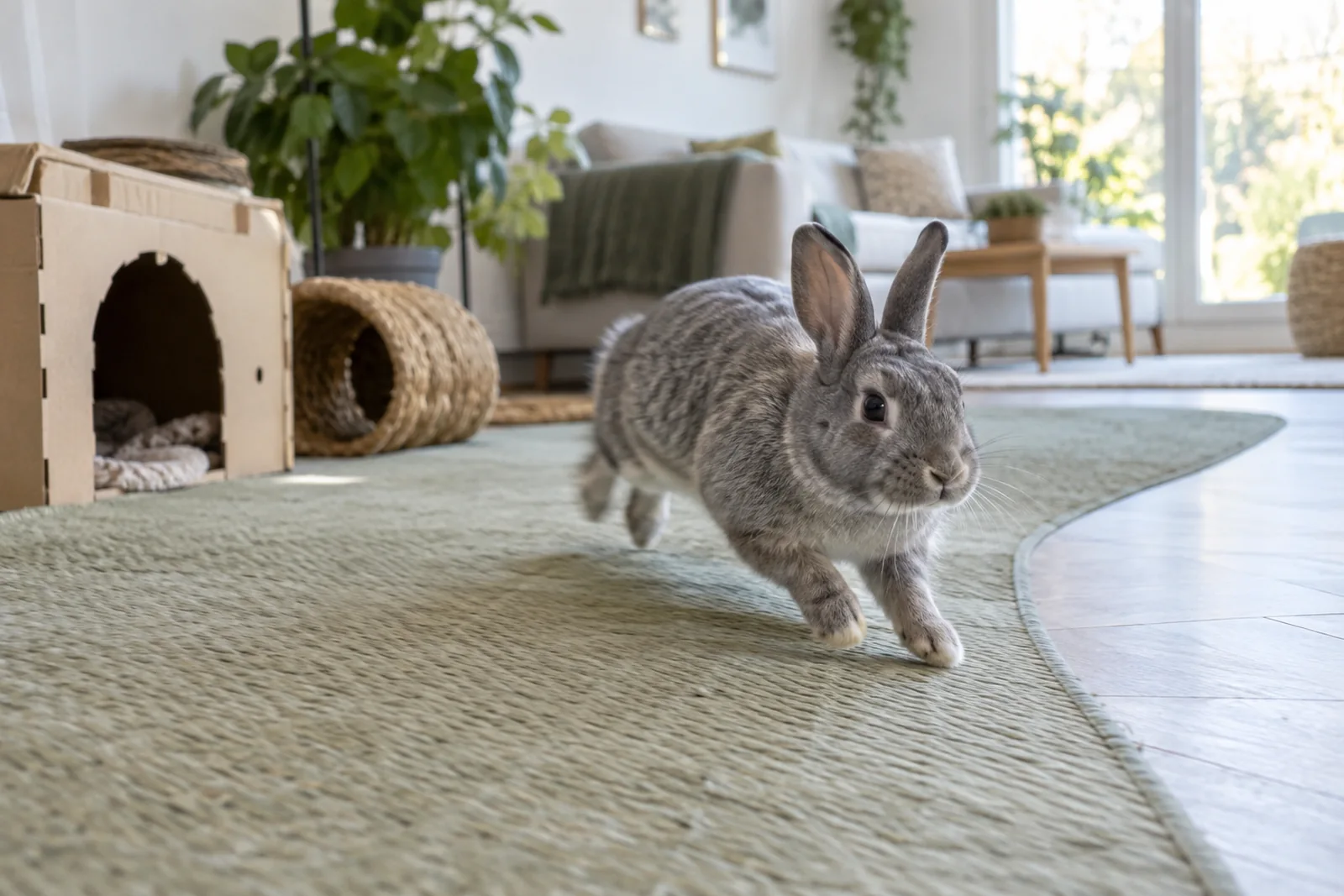
Watch the sequence rather than one frozen moment. Playful movement often begins when the rabbit already looks comfortable and ends with more exploring, grooming, eating or resting. A startled rabbit usually has an obvious trigger and runs directly toward cover.
Curious and comfortable
The rabbit explores, approaches voluntarily or becomes lively at a familiar time of day.
Loose, changing movement
The route includes curves, playful acceleration, hops or twists rather than a single desperate escape.
Normal behaviour returns
The rabbit keeps exploring, eats hay, grooms, rests or interacts normally with a bonded companion.
One binky is good news, but it is not a complete welfare test. Look at appetite, droppings, rest, social behaviour, movement and your rabbit’s normal daily pattern too. Some happy rabbits binky rarely or perform movements so subtle that they are easy to miss.
Why does my rabbit suddenly get the zoomies?
Zoomies often appear when a rabbit has fresh energy and enough room to use it. Many rabbits are naturally most active around dawn and dusk. Opening access to a larger safe area, finishing a rest, seeing a companion become playful or anticipating a familiar positive routine can all produce a burst of running.
A larger space opens
A rabbit released from a restricted area may sprint and binky as soon as a safe exercise route becomes available.
A lively time of day
Early morning and evening activity can bring energetic circuits through familiar rooms and tunnels.
Positive anticipation
A known sound, person or routine can trigger excitement—but food should still come from the normal daily allowance.
Social play
Bonded rabbits may chase and run together. Both should be able to pause, move away and access resources freely.
A rabbit running repeatedly because another rabbit is pursuing them is different from mutual play. Look for tension, fur pulling, circling that escalates, one rabbit hiding or a chase that never changes direction. Our guide to rabbit body language can help you compare posture, eyes and context.
Create a safe runway for zoomies and binkies
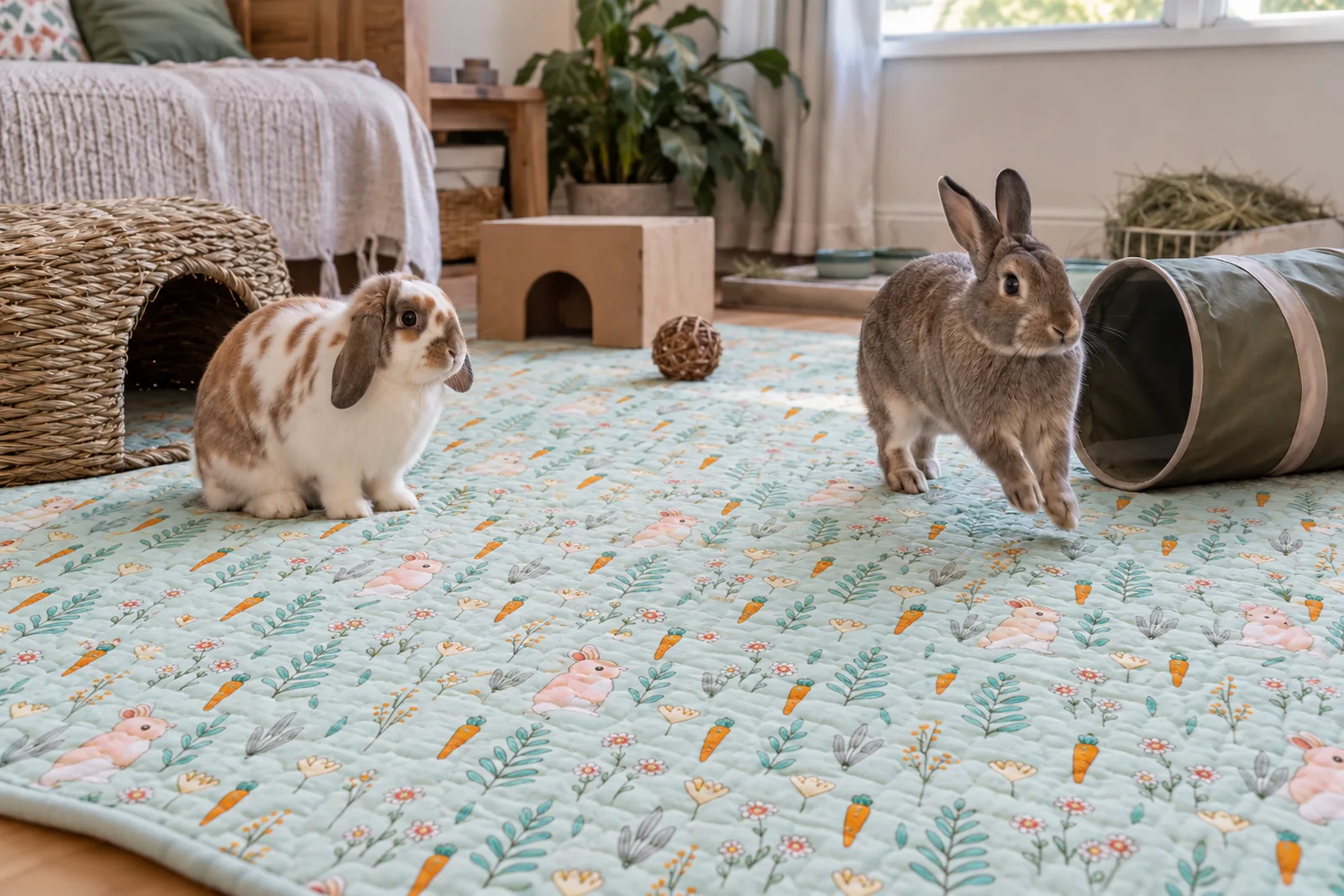
Fast movement needs traction and a clear route. A rabbit may hesitate on laminate or tile even when the room is large. Connect hay, water, litter and hiding areas with stable flooring, then leave enough open space for turning and landing.
- Use a non-slip surface that stays flat during sudden turns.
- Move cables and fragile objects completely outside the running route.
- Keep tunnels and hides open with entrances large enough for easy passage.
- Remove loops and snag points that could catch nails or feet.
- Provide more than one route so bonded rabbits cannot trap one another.
- Let the rabbit choose when to run, rest, hide or stop interacting.

When fast movement may not be a happy zoomie
Context changes the meaning. A rabbit fleeing a loud noise may run low and fast toward a hiding place, then freeze, thump or remain tense. Repeated tight circling, stumbling, falling, loss of balance, head tilt, unusual eye movements or a sudden change in normal activity should not be labelled as play.
Contact a rabbit-savvy veterinarian about sudden or abnormal movement
Seek prompt advice if unusual running appears with reduced appetite, fewer droppings, weakness, pain, breathing changes, disorientation or any loss of coordination. Rabbits can hide illness, so a marked change from your rabbit’s usual behaviour matters even when the signs seem subtle.
Frequently asked questions about rabbit zoomies and binkies
Are rabbit zoomies always a sign of happiness?
They usually reflect excitement or play when the rabbit looks relaxed and returns to normal behaviour afterwards. A direct escape followed by hiding, freezing or thumping is more consistent with fear.
Why does my rabbit binky when I enter the room?
Your arrival may predict a positive social routine, access to space or another enjoyable event. It suggests positive anticipation, but avoid turning every visit into extra treats.
Why does my rabbit do zoomies at night?
Rabbits are often especially active around dawn and dusk, and some remain lively into the evening. Provide a safe exercise area that can be used without slipping or reaching cables.
Do older rabbits still binky?
Some do, but movements may become smaller or less frequent. A head flick, quick hop or short sprint can be an individual rabbit’s quieter version. Sudden stiffness or reduced mobility deserves veterinary advice.
Can I make my rabbit binky?
Do not chase, startle or handle a rabbit to provoke the movement. Provide space, traction, enrichment, suitable companionship and choice; binkies should happen voluntarily.


Elodie
Rabbit guardian and care enthusiast with over 10 years of hands-on experience living with house rabbits. Through Rabbit World, Elodie shares warm, practical guidance focused on comfort, safety and the everyday movements that help us understand our rabbits.