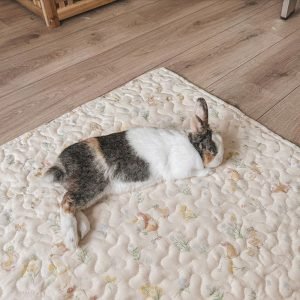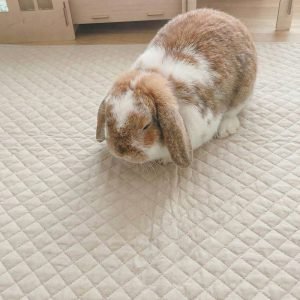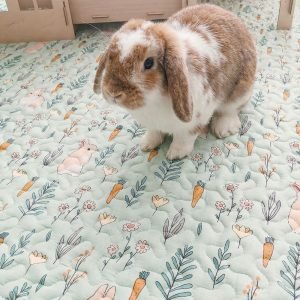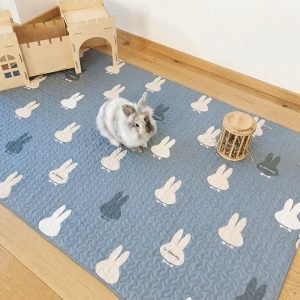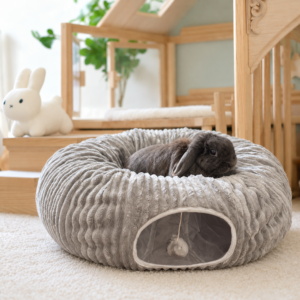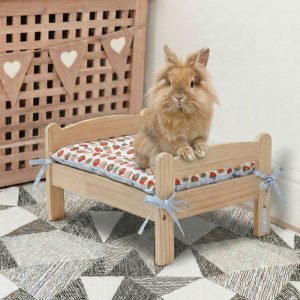
Your rabbit can show you where a mat is needed. Watch where they run, stop or rest. A good mat should make these places safe and easy to use. Start with your rabbit’s daily habits, not only with the colour you like.
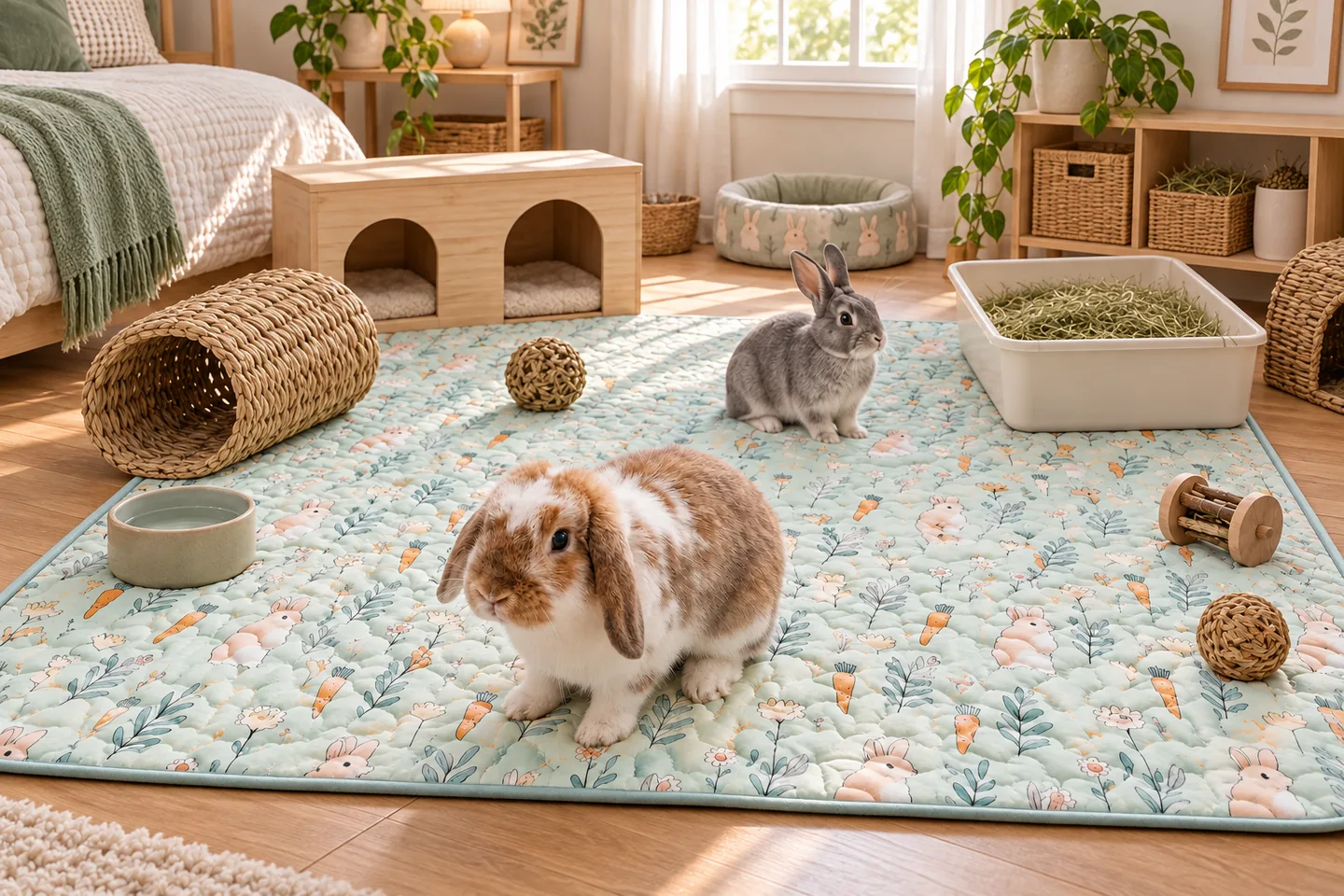
Let your rabbit show you where the mat belongs
Watch your rabbit while they are active. Look at the path between the hide and the hay. Notice where they rest. Also look for places where they stop before walking on a smooth floor.
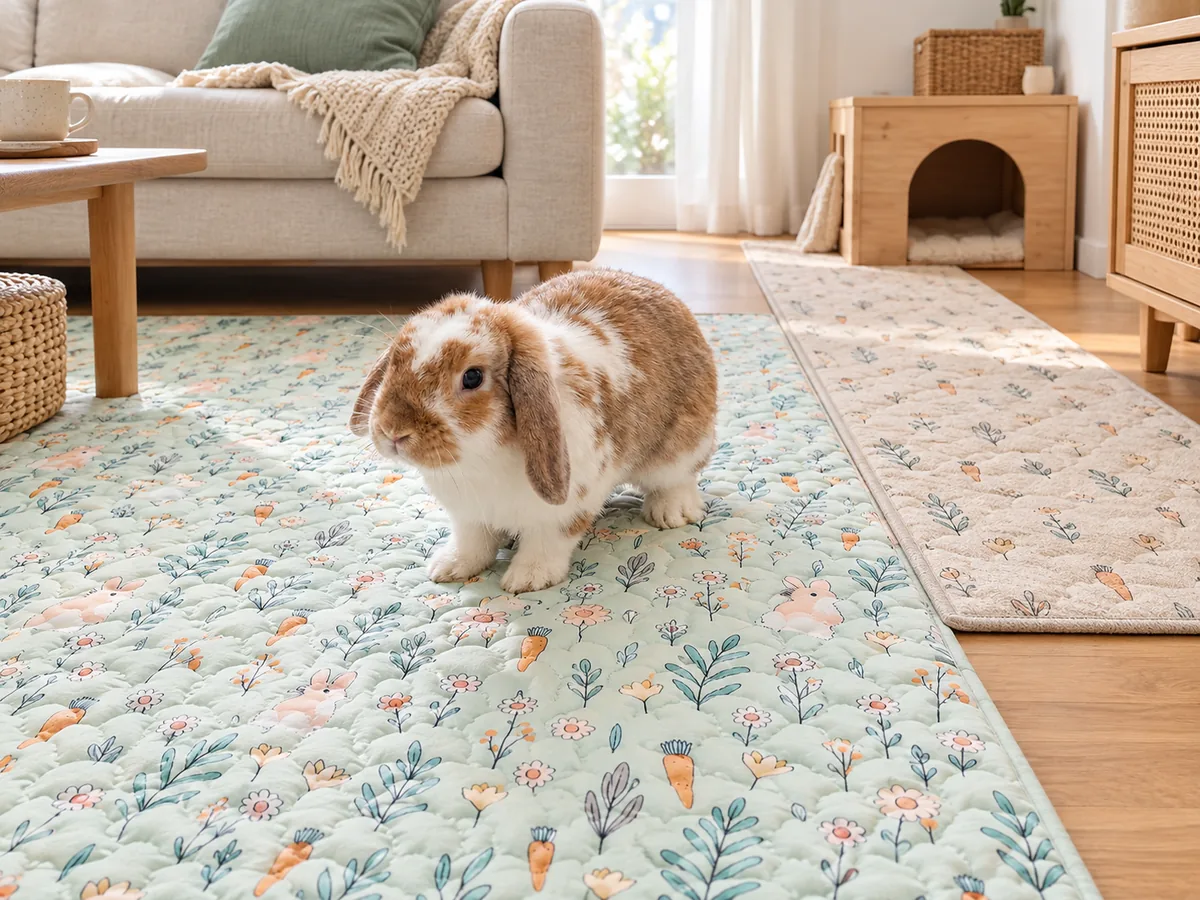
The RSPCA says rabbits need a comfortable, solid floor that is not slippery. This helps protect their feet. The Rabbit Welfare Association & Fund also explains that smooth floors can be hard for rabbits to use. This guide helps you choose the right mat size and position. To compare different floor materials, read our indoor rabbit flooring guide.

Three Rabbit World mats for different indoor spaces
First, measure the area your rabbit uses. Then check the size and washing instructions for each mat. Choose a mat that covers the area without large gaps or folded edges.
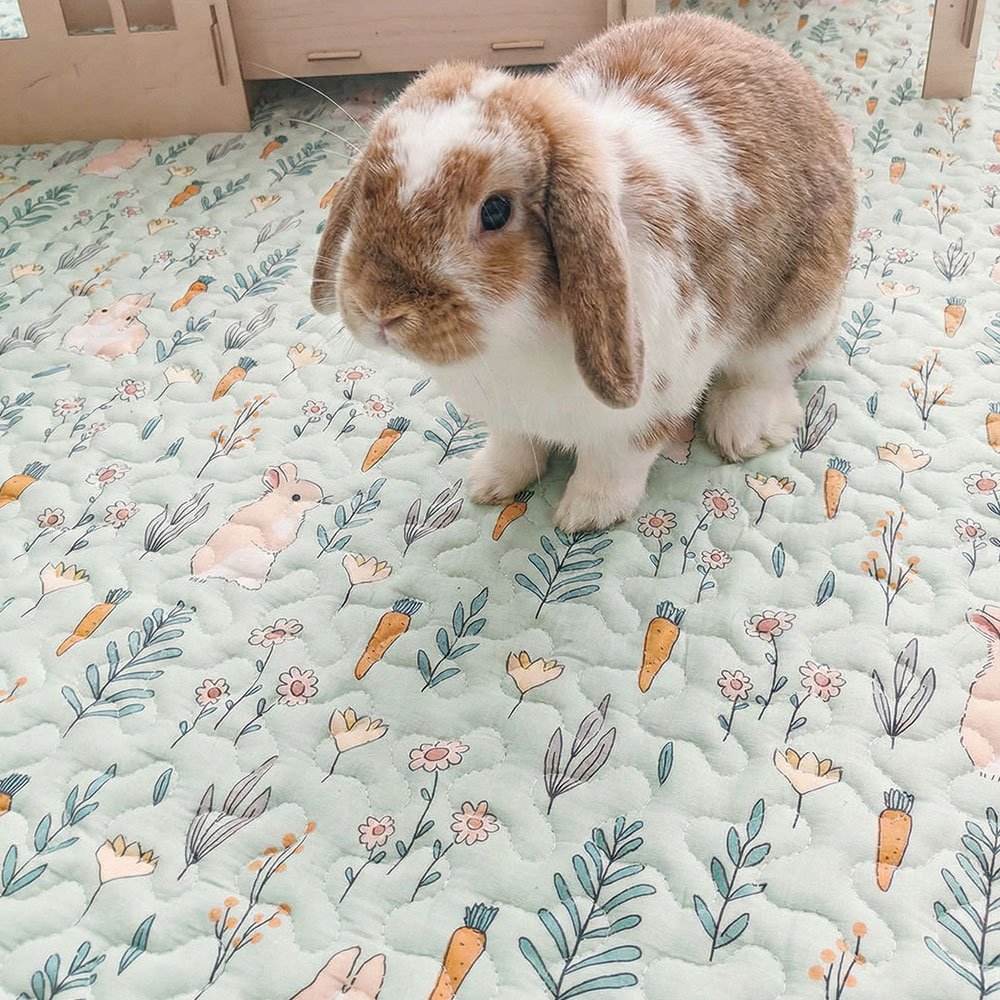
Rabbit Playmat
A washable cotton mat with a non-slip back. It works well in the centre of a rabbit room.
View the Rabbit Playmat →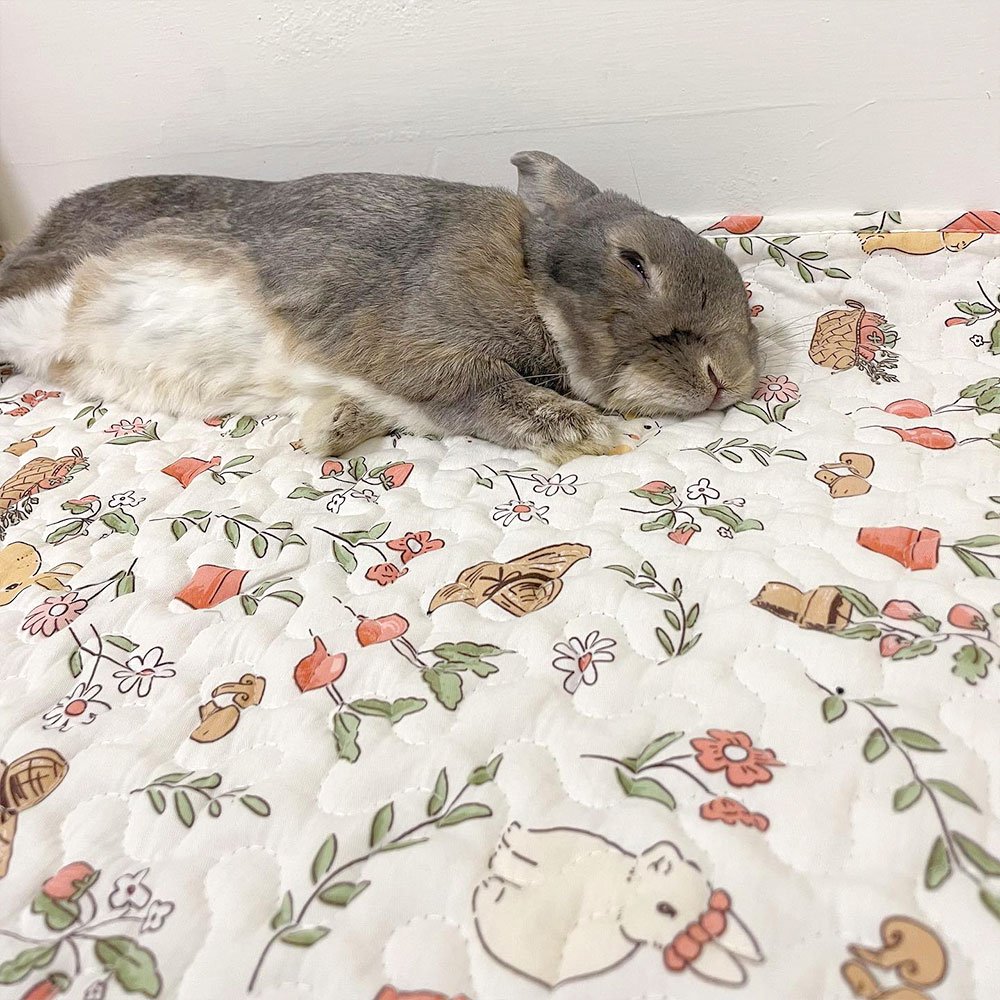
Rabbit Mat for Enclosure
A large quilted mat for an enclosure or an area used for rest and play.
View the enclosure mat →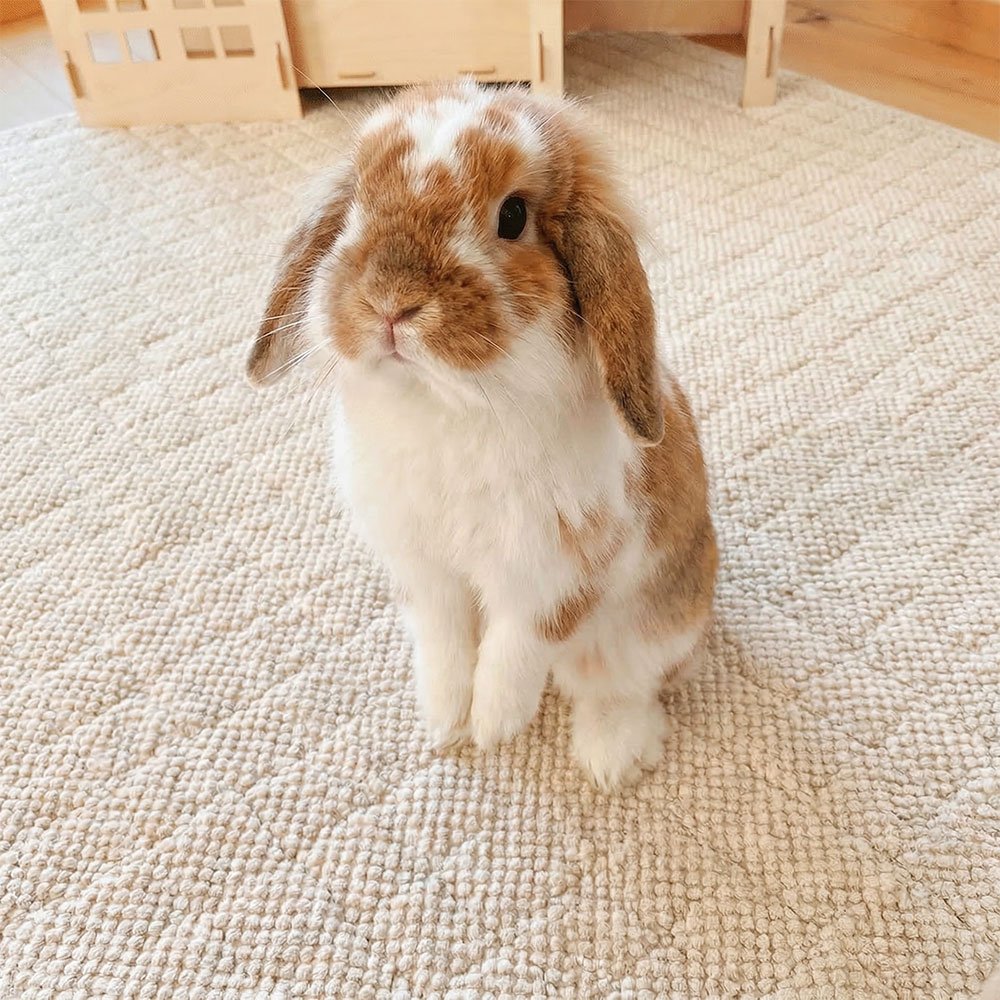
Rabbit Mat Corduroy
A soft, plain mat for a rest area or a room shared with the family.
View the Corduroy mat →What rabbit mat size should you choose?
These sizes are examples. Every home and rabbit is different. Measure the real area first, then check the sizes on the product page.
Small home area
Good for a rest area, a hay area or a small enclosure.
Daily living area
Gives more room to turn, rest and move between nearby items.
Large activity area
Good for a large enclosure or the main play area in a rabbit room.
Before you buy a mat, place pieces of paper or painter’s tape on the floor to show its size. This gives you a simple picture of the space it will cover. Check that doors can still open. Make sure bowls, litter trays and hides will sit flat. Your rabbit should also have enough room to turn around and stretch out.
For two rabbits, make sure both can lie down and stretch out at the same time. They should not block each other’s path. If one mat is not large enough, add a second mat along the route your rabbits use. Do not place it in an empty corner that they never visit.
How should mat coverage change with the living space?
Choose the example that looks most like your rabbit’s home.
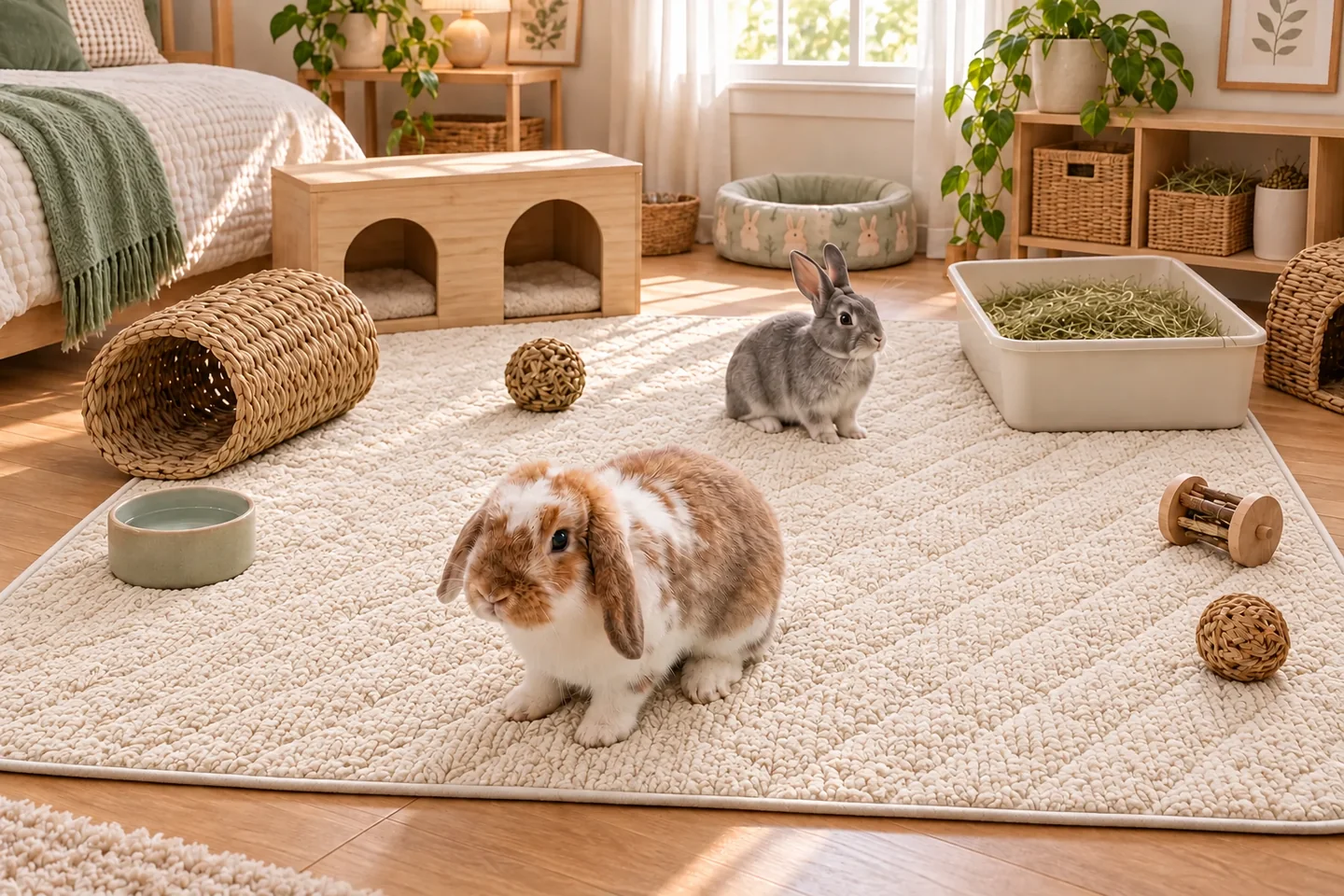
Dedicated rabbit room
Put one large mat in the main activity area. It should reach the hay, litter tray and rest area.
Measure the main path and these key areas
Shared free-roam room
Use one large mat and a smaller mat or runner along your rabbit’s favourite path.
Measure from the home area to the play area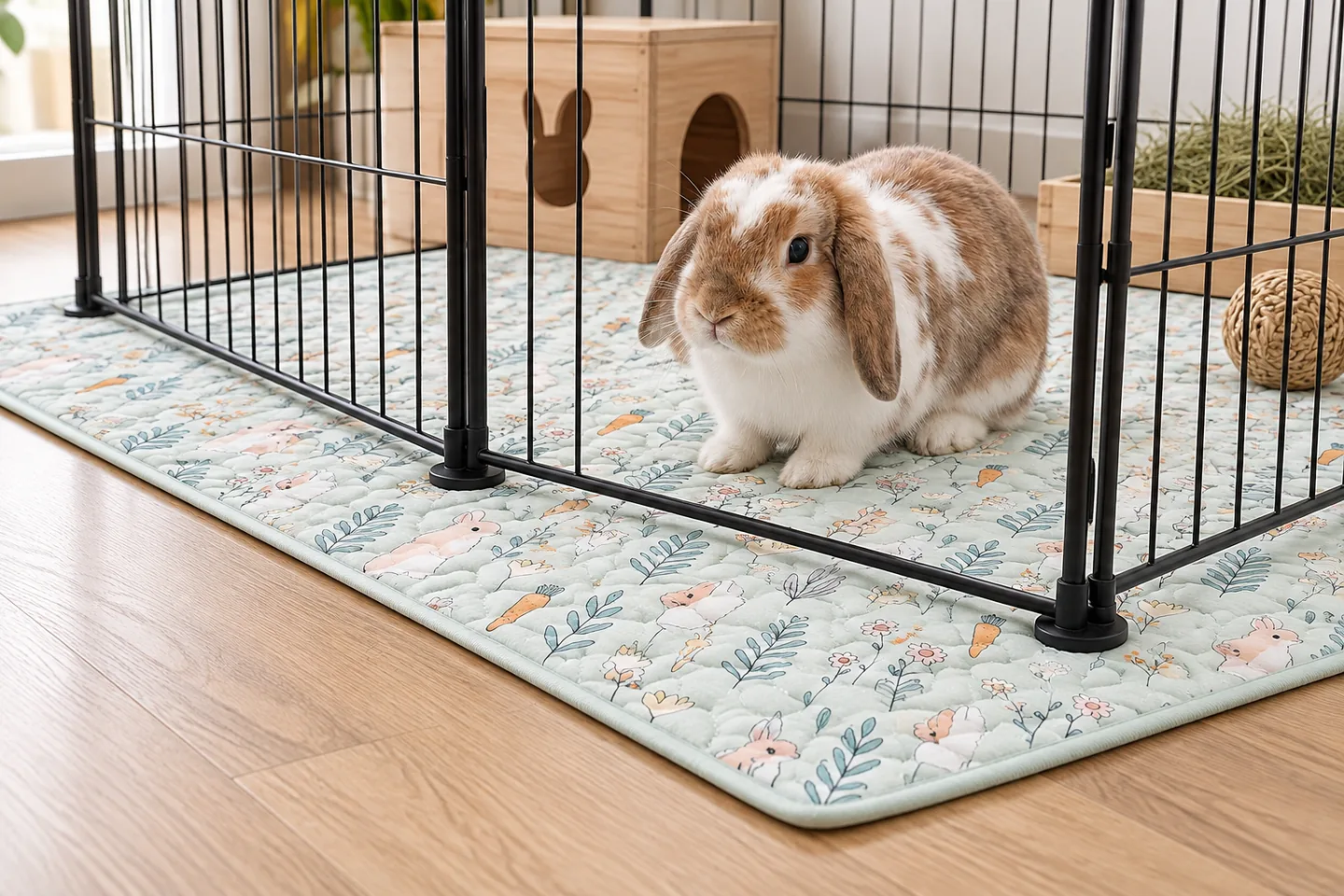
Enclosure or playpen
Cover the whole floor. Make sure every panel foot stands on the same flat surface.
Measure the full outside length and widthJoin the safe areas together. Your rabbit may avoid a mat if they must cross a wide, slippery floor to reach it. Make a clear path from one useful area to the next.
If you are not sure which path matters most, watch your rabbit at breakfast and again during play time. These are often active moments. You can also record a short video from across the room. Look for quick runs, careful steps and sudden stops. These clues show where better grip may help.
How to measure for the right rabbit mat size
A large room does not always need one very large mat. First, find the path your rabbit uses most. Mark and measure that path.
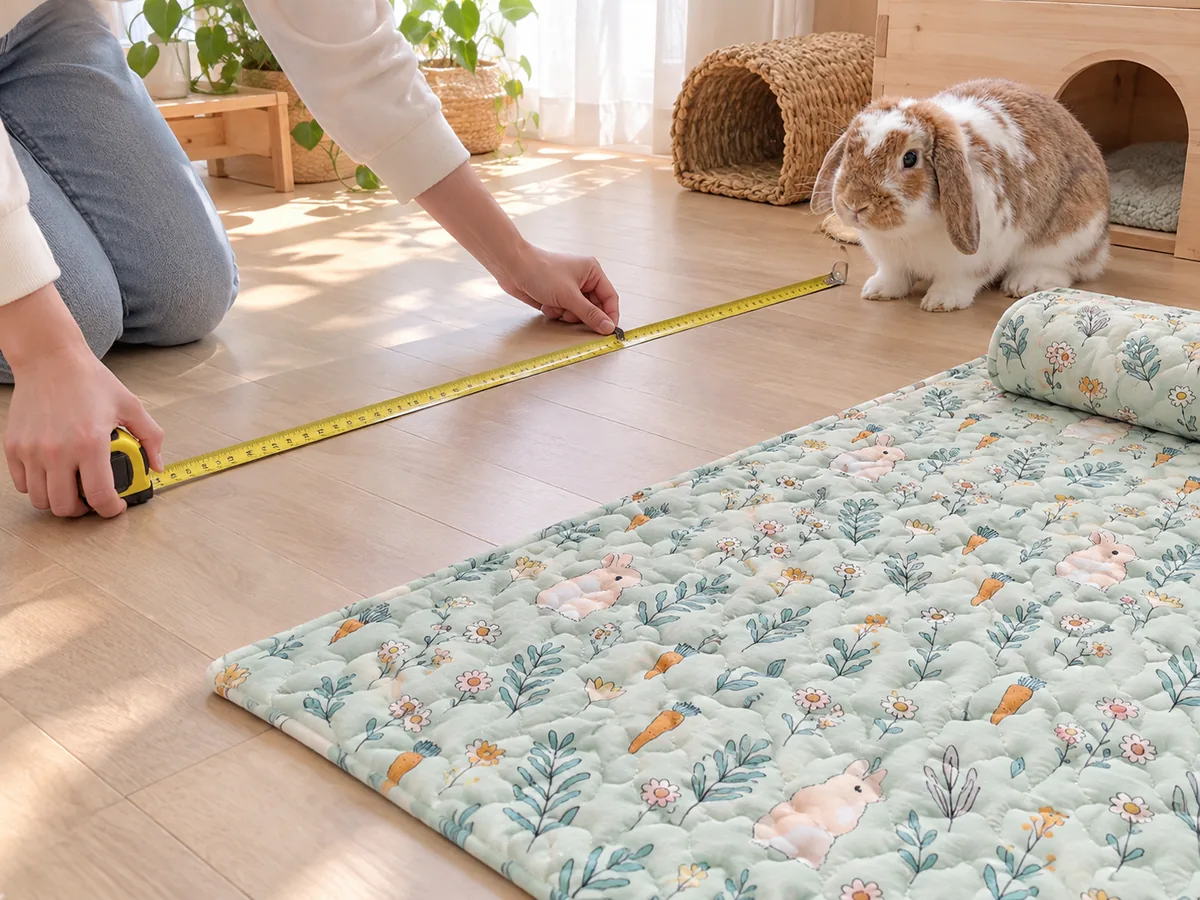
Start at the home base
Include the hide, litter tray, hay and water area.
Follow the longest route
Measure the path your rabbit really uses.
Add space to move
Leave room to turn, stretch, lie down and rest.
For an enclosure, build it first. Then measure its full outside length and width. In a rabbit room, mark the mat area with painter’s tape. In a shared room, measure the main mat area and any narrow path that also needs grip.
Write each measurement down and check it twice. Measure the widest and longest points, including corners that are not perfectly square. Leave space around heaters, doors and furniture. If a mat will sit under an enclosure, include the panel feet in your measurement. This helps the enclosure stay level and stops an edge from curling up.

Change the mat setup for your rabbit’s needs
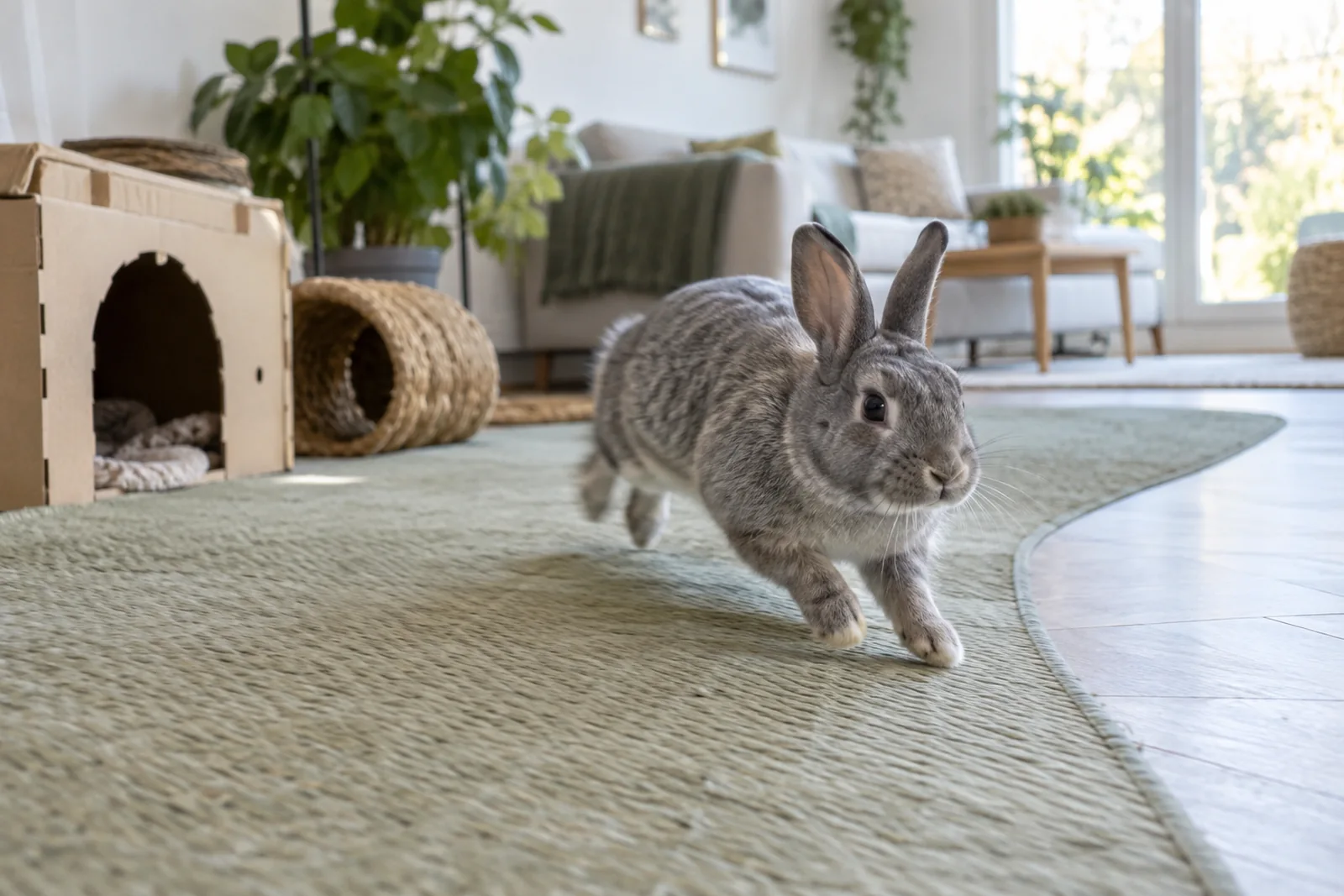
Fast runner
Give your rabbit a wide, clear area for running and turning.
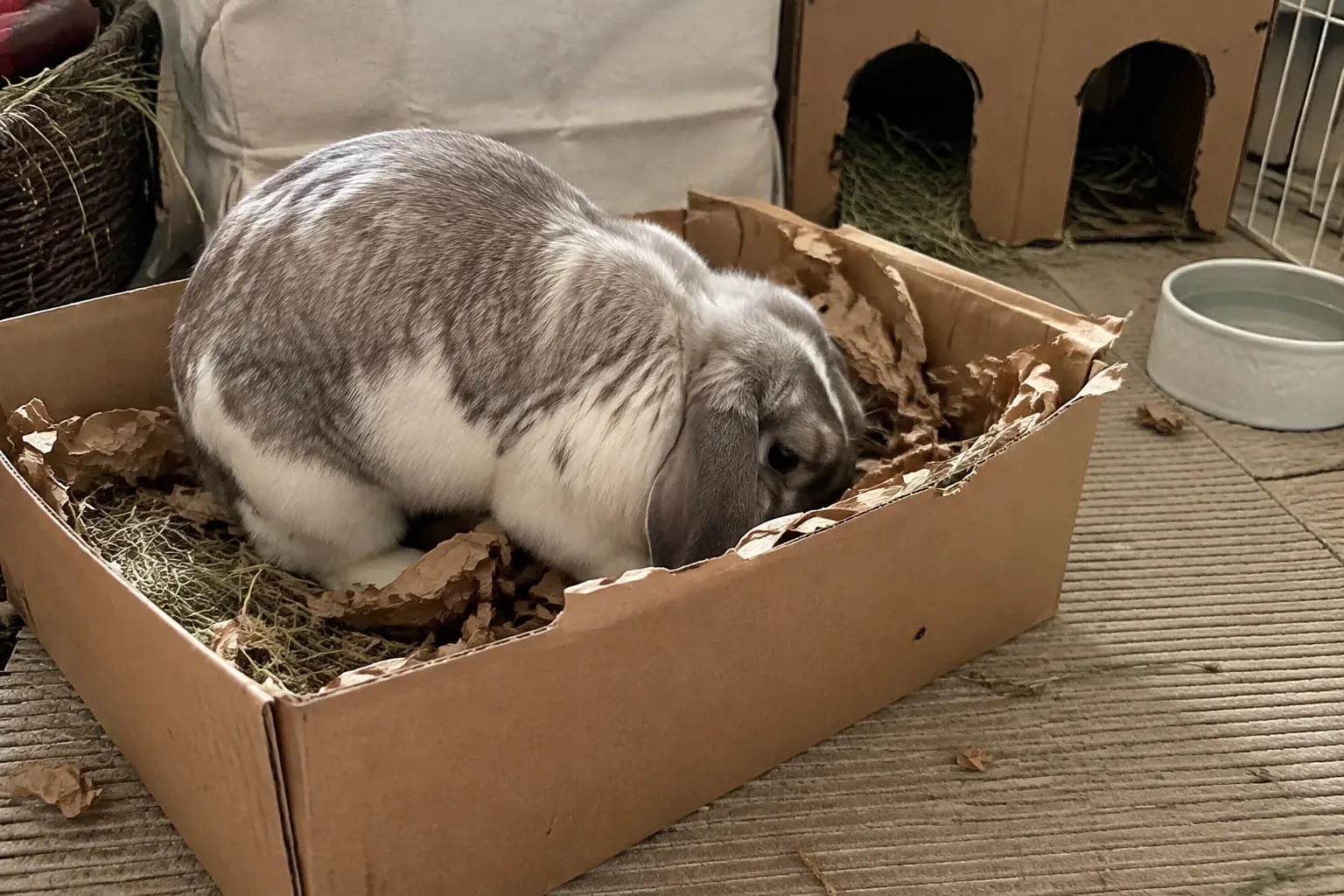
Rabbit that digs
Hide loose mat corners. Add a separate digging box for safe digging.
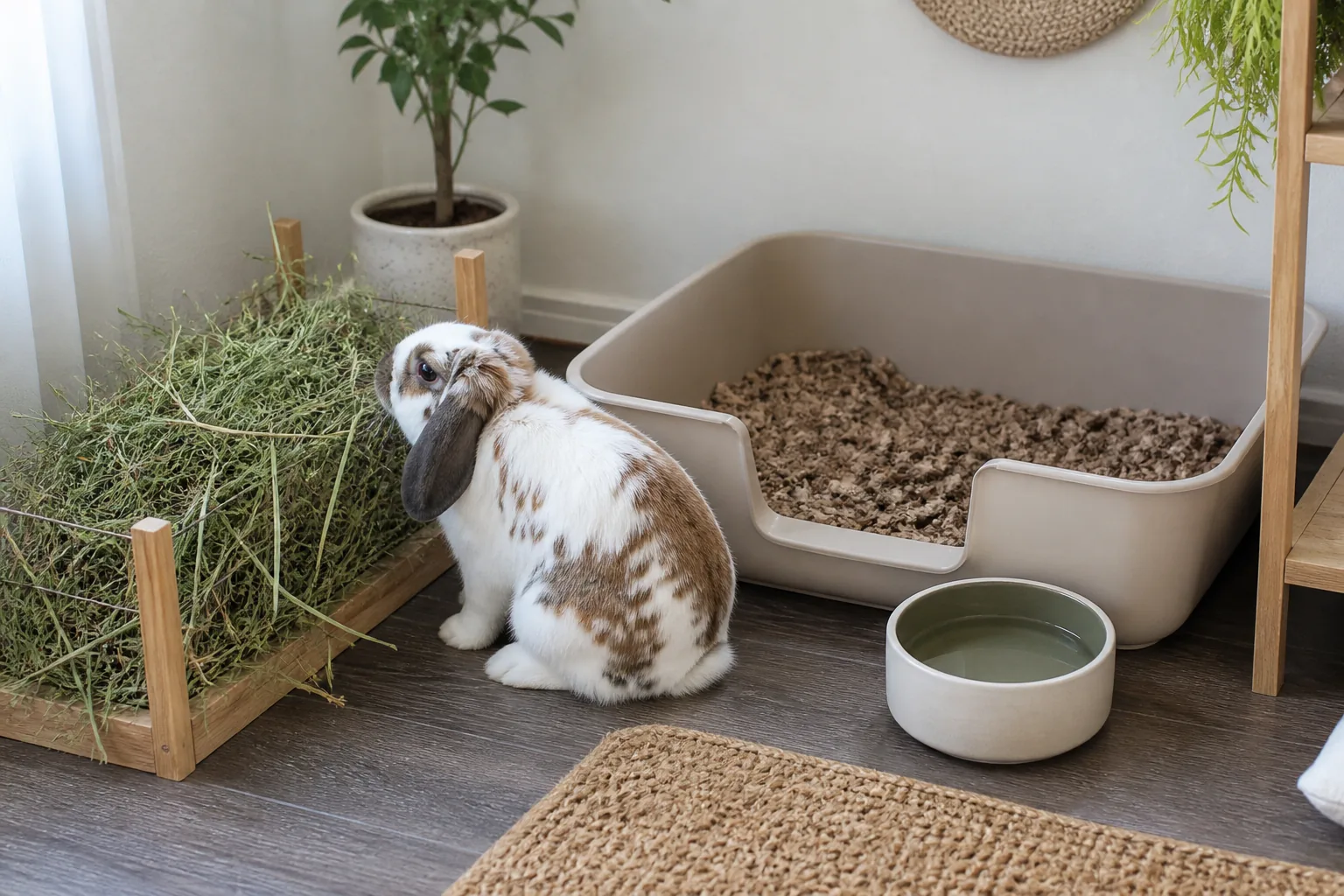
Rabbit that has accidents
Use washable mats in sections. You can then clean one part without removing the whole safe path.
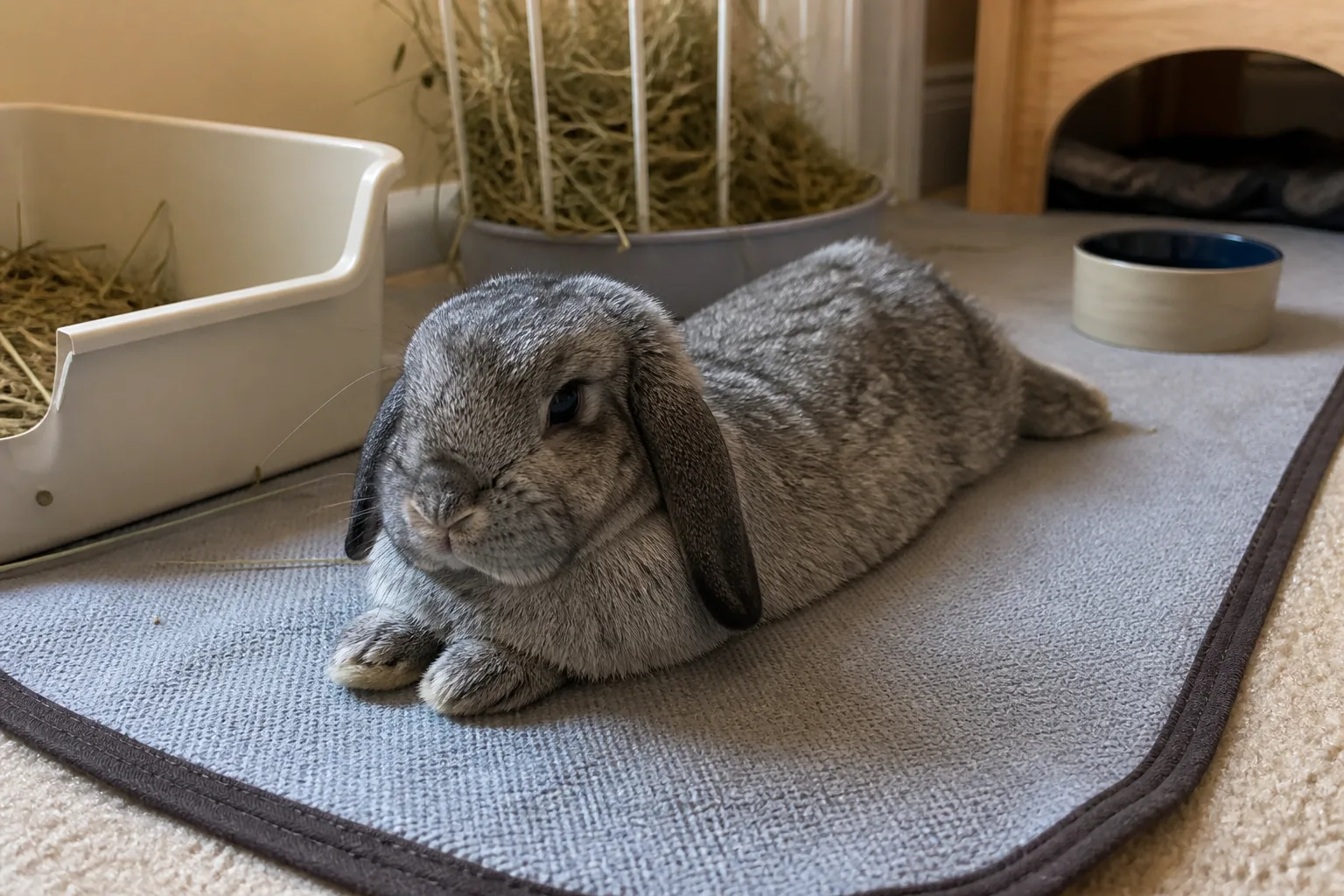
Older rabbit or rabbit that moves slowly
Make one flat, non-slip path between food, water, hay, litter and rest areas.
Should one large mat or several smaller mats cover the space?
One large mat gives your rabbit a simple, safe path. It also has fewer corners to lift or chew. This often works well in an enclosure or rabbit room.
Several small mats can work better in a room with an unusual shape. They are also useful when only one path is slippery or one area needs frequent washing. Keep every mat flat and still. Do not make thick overlaps that may catch a toe. Do not use mats that slide apart when your rabbit runs.
Keep the setup simple. One large mat and one well-placed runner are often easier to clean and check than many small mats.
After you set up the mats, watch your rabbit use the room. Check that the mats stay still during running and digging. Look at every join and corner. If a mat moves, folds or leaves a slippery gap, change its position. Check the setup again after washing because the shape or grip may change.
How to keep rabbit mat zones clean and usable
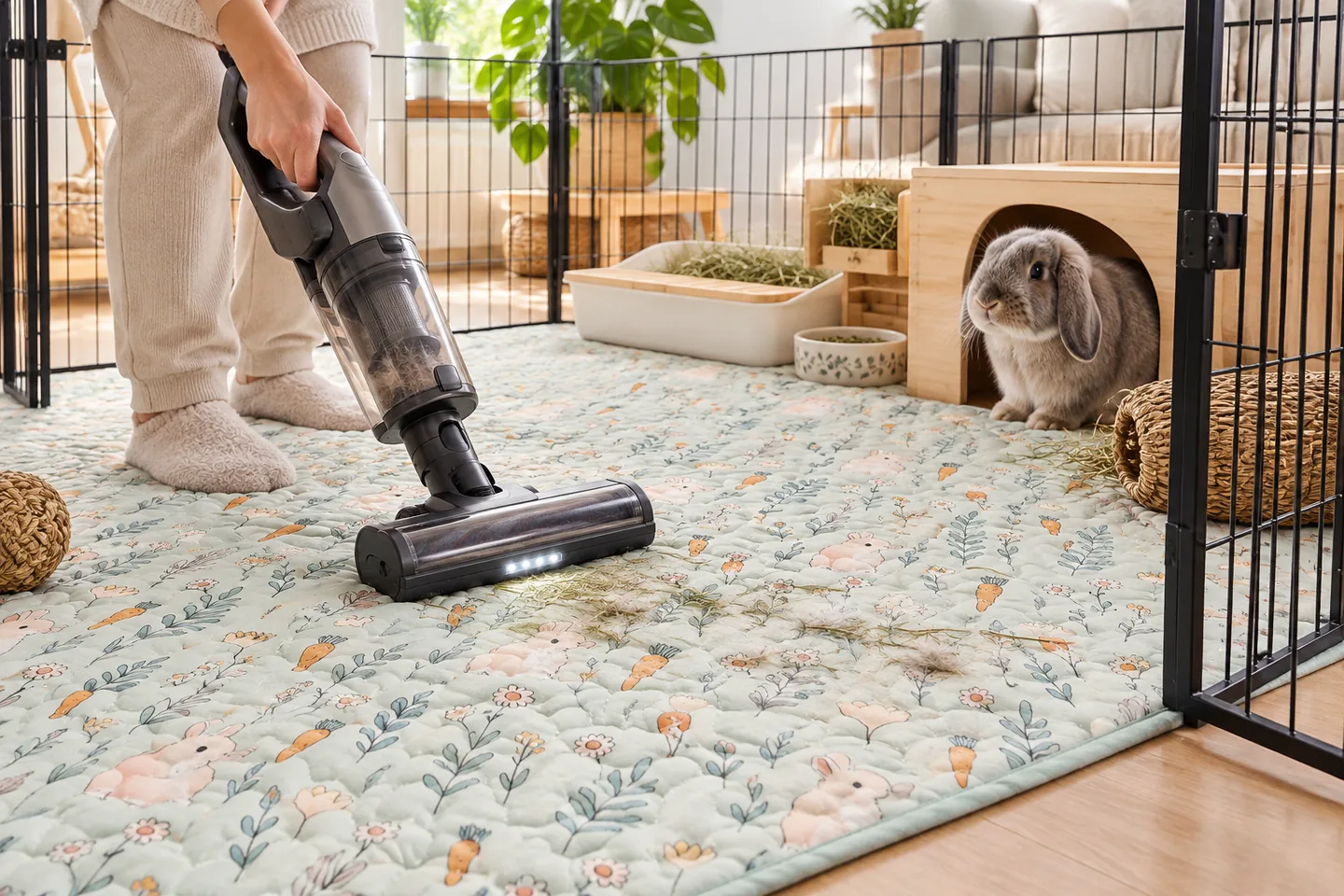
A simple care routine
Clean the mat when it is wet or dirty. Homes with several rabbits may need more cleaning. Always follow the care label.
- Remove wet areas and dirty hay quickly.
- Shake out or vacuum fur and hay often.
- Check the seams, corners and non-slip back.
- Let the mat dry fully before using it again.
- Put hides and enclosures back only when the mat is flat.
You can put a waterproof layer under the mat to protect the floor. Your rabbit must not be able to reach or chew its plastic edges. Always keep the soft, non-slip mat on top.
What should be avoided in a rabbit mat layout?
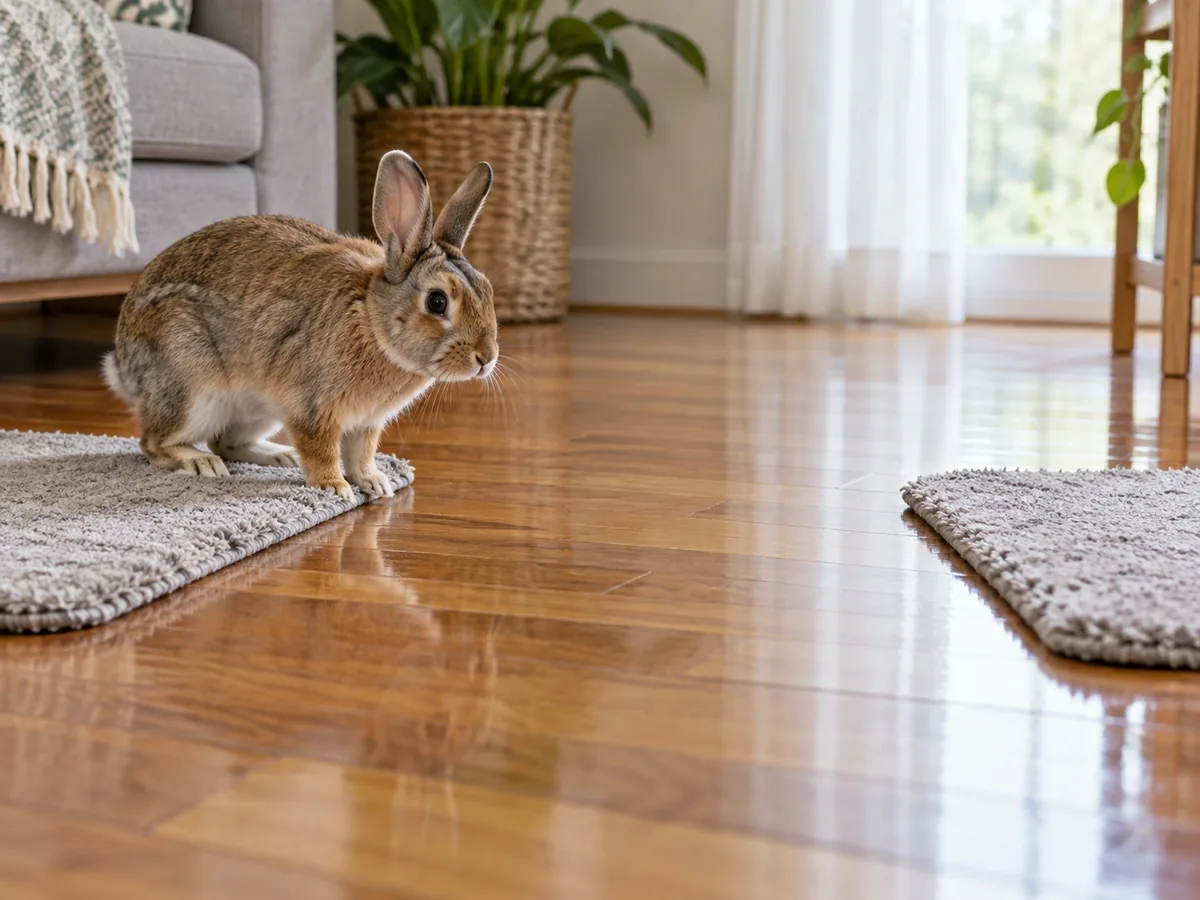
Mats that are too far apart
Your rabbit may refuse to cross a wide area of slippery floor between two mats.
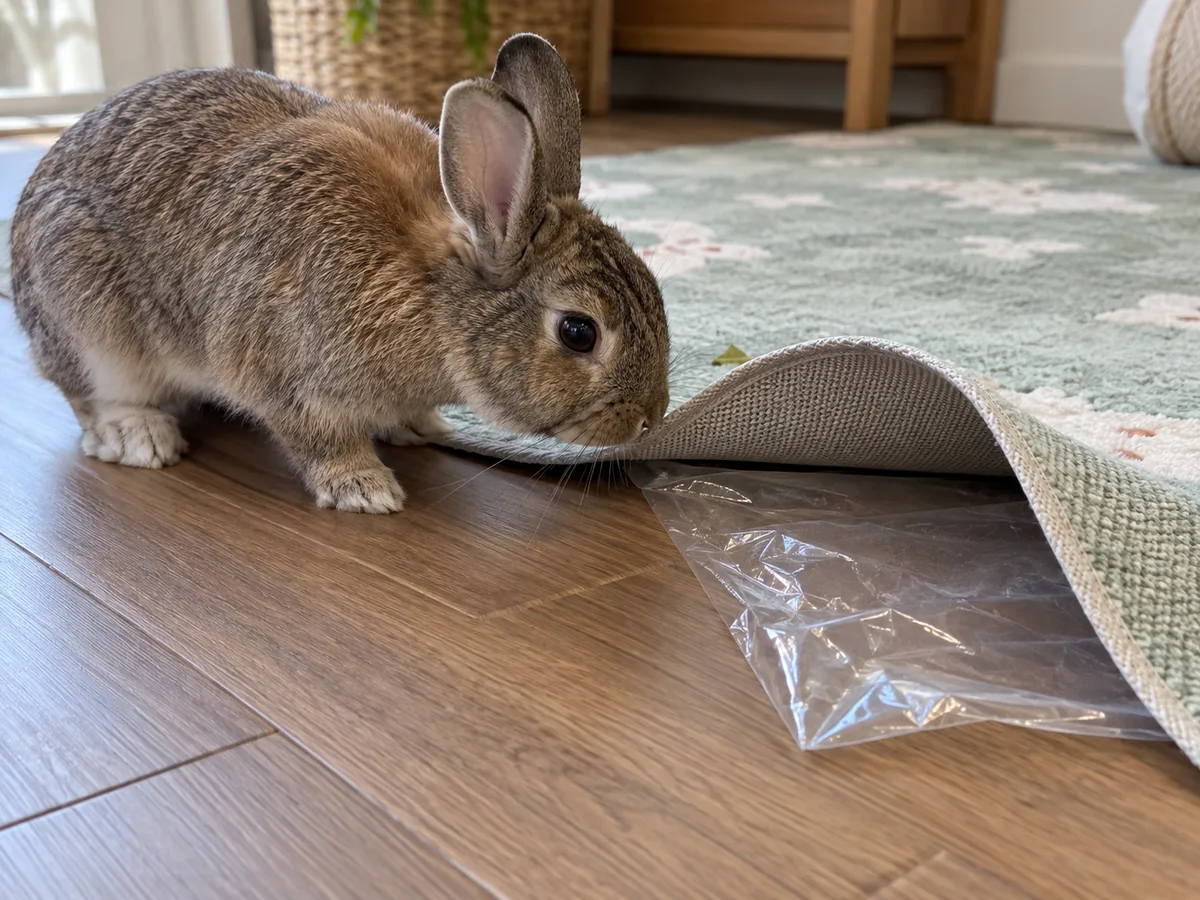
Loose plastic
Your rabbit may chew exposed plastic edges. Smooth plastic is also slippery.
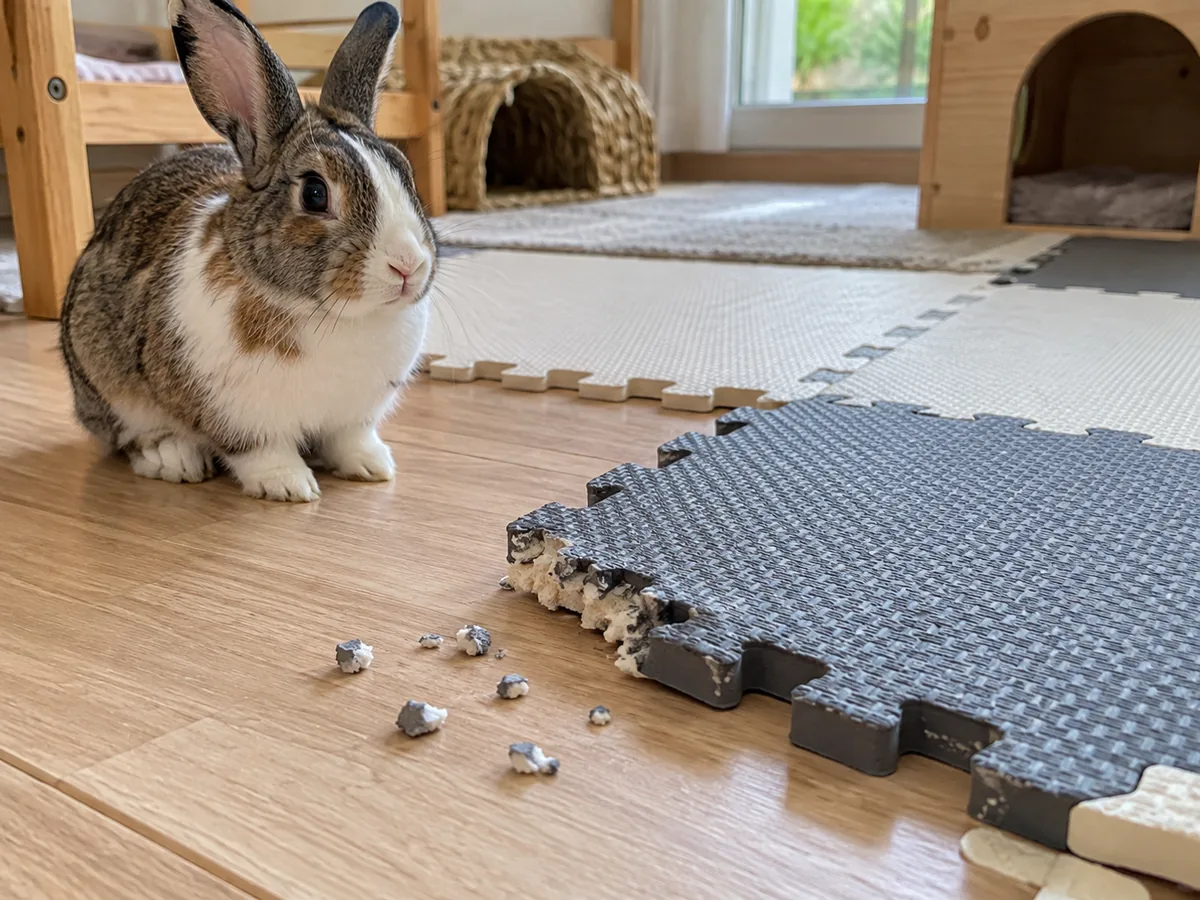
Damaged foam mats
Remove a foam mat if your rabbit bites pieces from it. Swallowing foam can be dangerous.
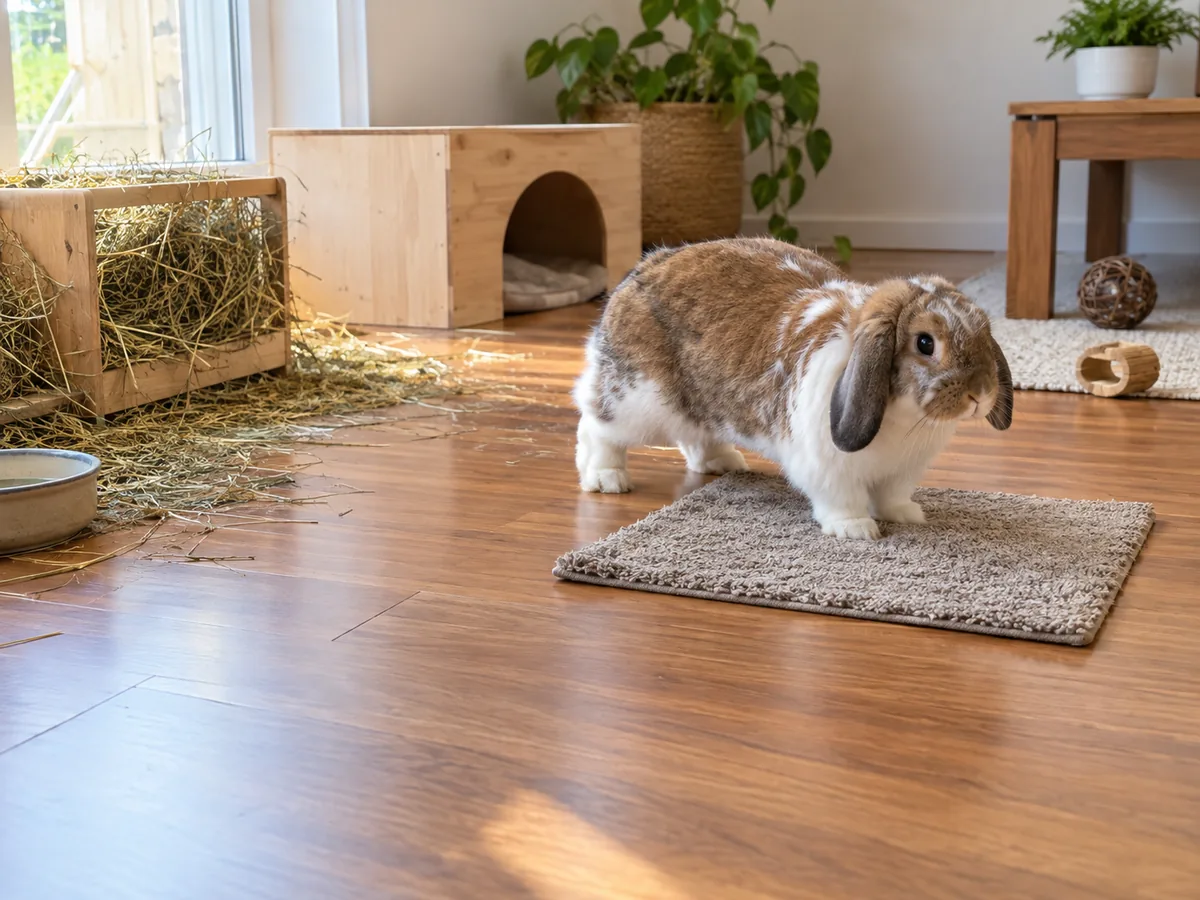
A mat that is too small
The mat must cover the path your rabbit really uses. A small mat in the wrong place will not help.
Rabbit mat size and coverage questions
Does a rabbit room need mats from wall to wall?
Not always. Your rabbit needs a safe, non-slip path between the places they use. Add more mats if the floor is slippery or your rabbit avoids parts of the room.
How many mats do I need for a free-roam rabbit?
It depends on the room and your rabbit’s usual path. One large mat and one smaller runner work well in many shared rooms.
Should a mat be larger than a rabbit enclosure?
The mat should cover the whole usable floor. If possible, let it reach a little past the panel feet. Build the enclosure before you measure it.
Can I put two rabbit mats next to each other?
Yes. Both mats must stay flat and still. They should not bunch up or make a thick ridge. Check the join when your rabbit runs or digs.
How often should rabbit room mats be washed?
There is no fixed schedule. Clean wet or dirty areas quickly and follow the care label. With several mats, you can wash one part at a time.
Does a soft mat prevent sore hocks?
A good surface can help, but sore hocks can have many causes. Keep the area clean and dry. Ask a rabbit vet for help if you see red skin, missing fur, swelling or a wound.

Elodie
Elodie has lived with house rabbits for more than 10 years. On Rabbit World, she shares simple advice about safe play, daily care and useful rabbit products.