A lick is often social grooming. The tiny nibble that follows may be part of the same conversation—but pressure, posture and context tell you whether your rabbit is affectionate, curious or asking for space.
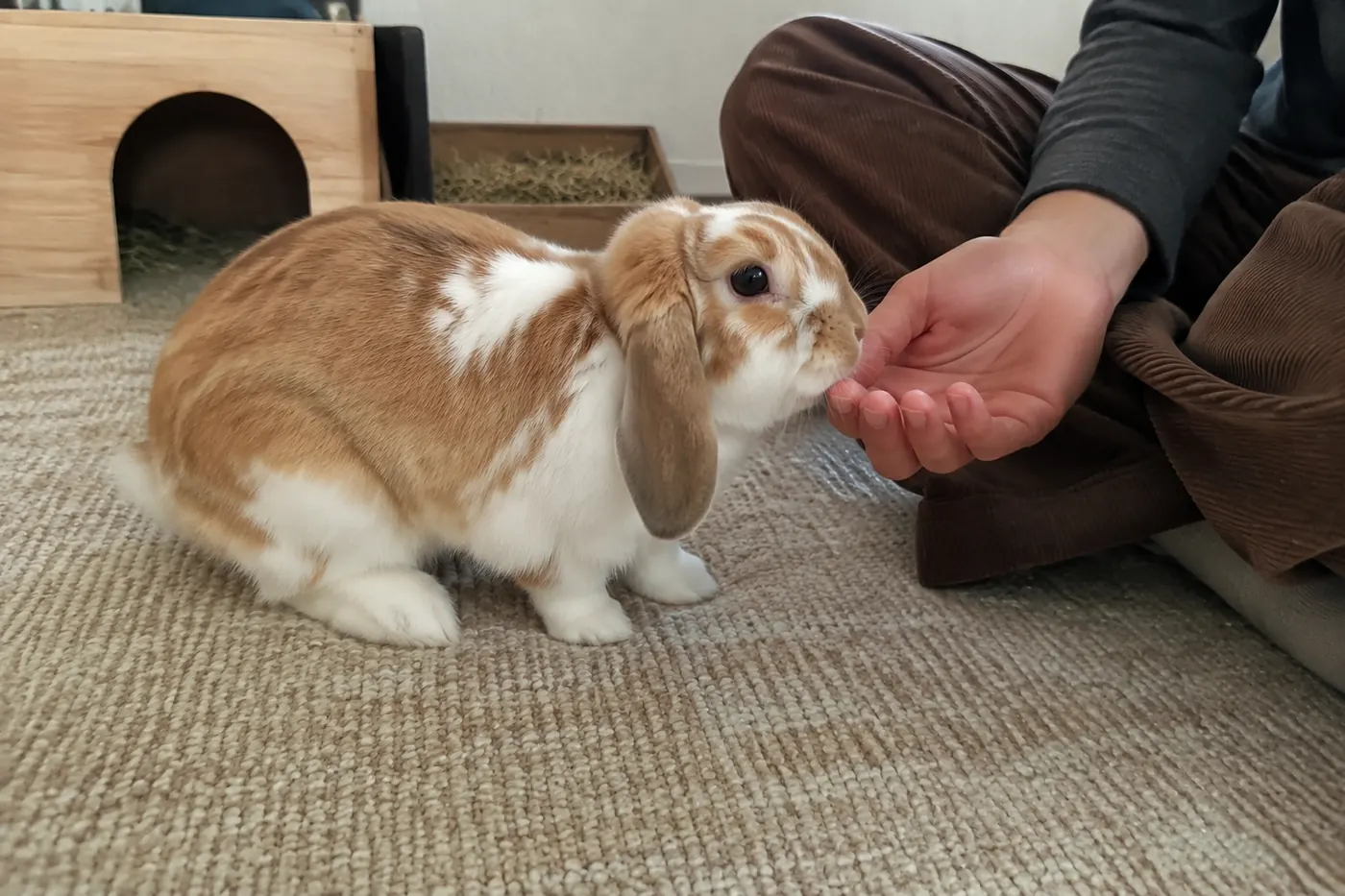
Why does my rabbit lick me?
Your rabbit may lick you as a form of social grooming, trust and friendly attention. Rabbits groom themselves and bonded companions, so licking your skin or clothes can mean you have been included in that social routine. A light nibble may remove an interesting seam, ask you to move or continue the grooming. It is different from a forceful bite, especially when the rabbit’s body remains loose and they could leave freely.
One behaviour never has a single translation. Some rabbits lick hands every evening; others reserve grooming for a rabbit companion and show trust by resting nearby. Look at what happened immediately before the lick, where your rabbit is positioned and what they do next. That whole sequence is more useful than treating every lick as a declaration of love.
What rabbit licking can mean
Social grooming
Your rabbit treats your hand, ankle or clothing like part of a familiar companion.
Returning attention
Licking after forehead strokes can be a relaxed way of participating in the interaction.
Investigating
Food smells, skin products, sweat or an unusual fabric may invite careful tasting.
Making a request
A lick, nudge or nip may ask for more grooming, a clear route or a change in position.
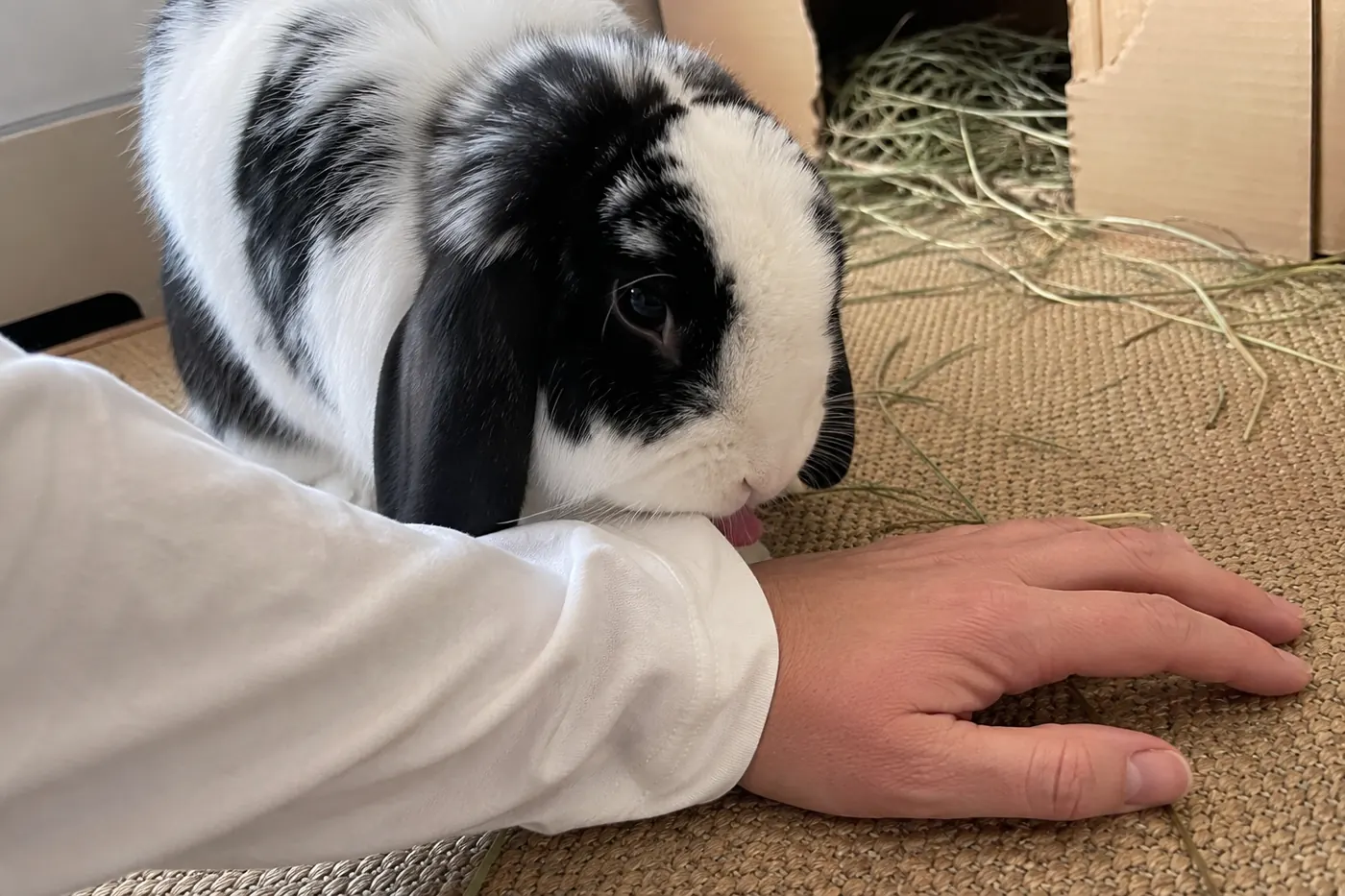
Grooming is a normal part of rabbit social life. The RSPCA lists grooming one another and seeking positive interaction among signs of a comfortable rabbit relationship. When that behaviour is directed at you, it can reflect familiarity and confidence. It does not mean a person replaces the benefits of a suitable rabbit companion, but it is often a lovely sign that your rabbit feels safe enough to interact.
Check what is on your skin first. Do not invite licking when your hands carry cleaning products, medication, essential oils, strongly fragranced cream or food residue. Wash and dry them before floor-level time with your rabbit.
Why does licking sometimes turn into nibbling?
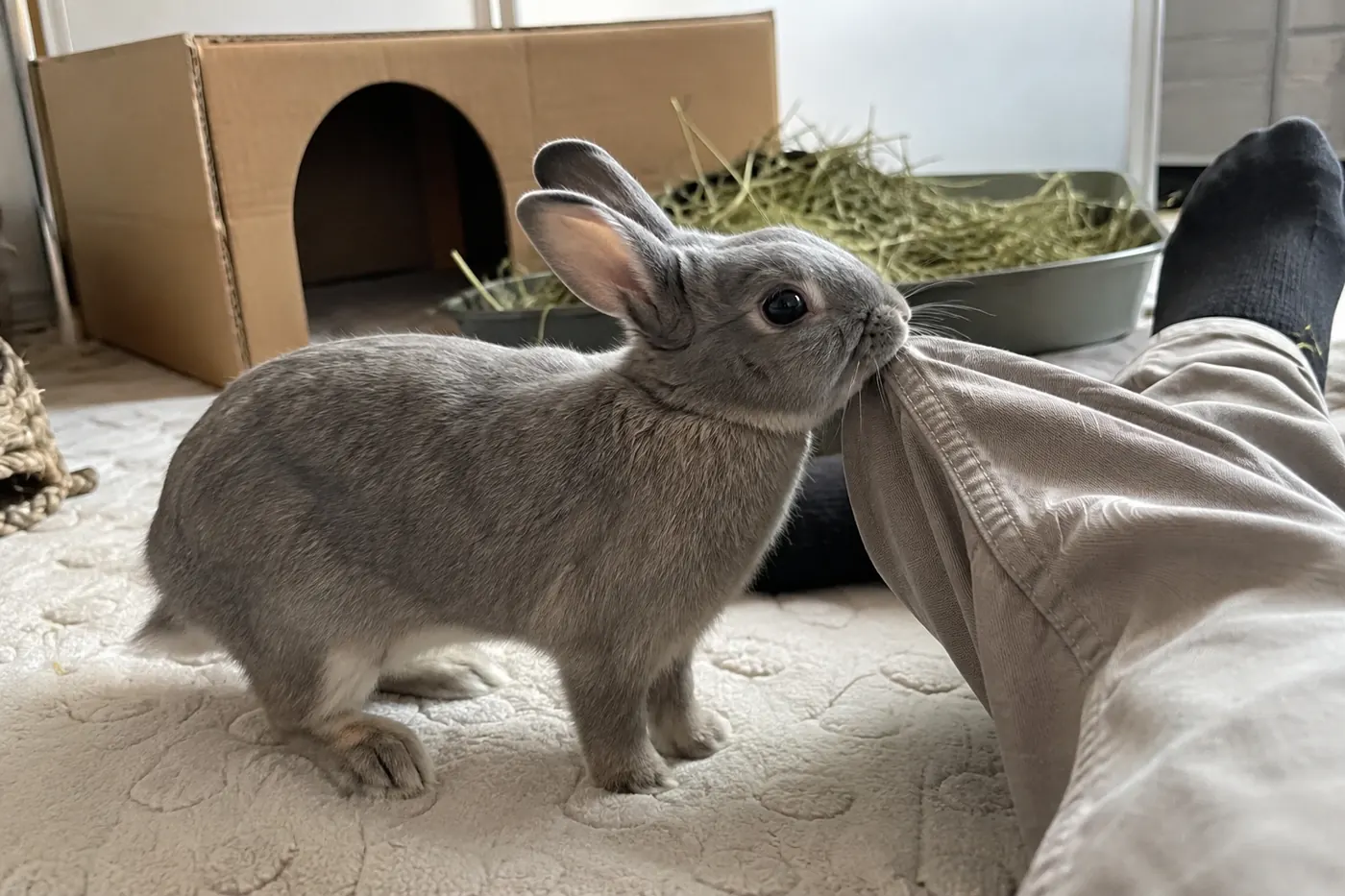
Rabbit grooming includes more than licking. A rabbit may use the front teeth to work at a wrinkle, loose thread or small bit of debris, much as they would tidy fur. Clothing seams are particularly tempting because they feel like something that can be lifted. Your rabbit may also be testing texture, seeking attention or saying, “please move—this is my route.”
Usually a gentle grooming nip
- Brief, light pressure rather than a hard clamp
- Loose posture and normal breathing
- No lunge, growl or frantic retreat
- Often mixed with licking, nudging or calm grooming
Pause and give more space
- Pressure is increasing or breaking skin
- The body is tense, tail raised or ears held back
- The rabbit lunges, boxes, growls or guards an area
- The behaviour appears suddenly or during unwanted handling
Even a friendly nibble can hurt human skin. You do not have to tolerate it to preserve trust. The goal is to answer clearly without frightening the rabbit.
How to respond without damaging trust
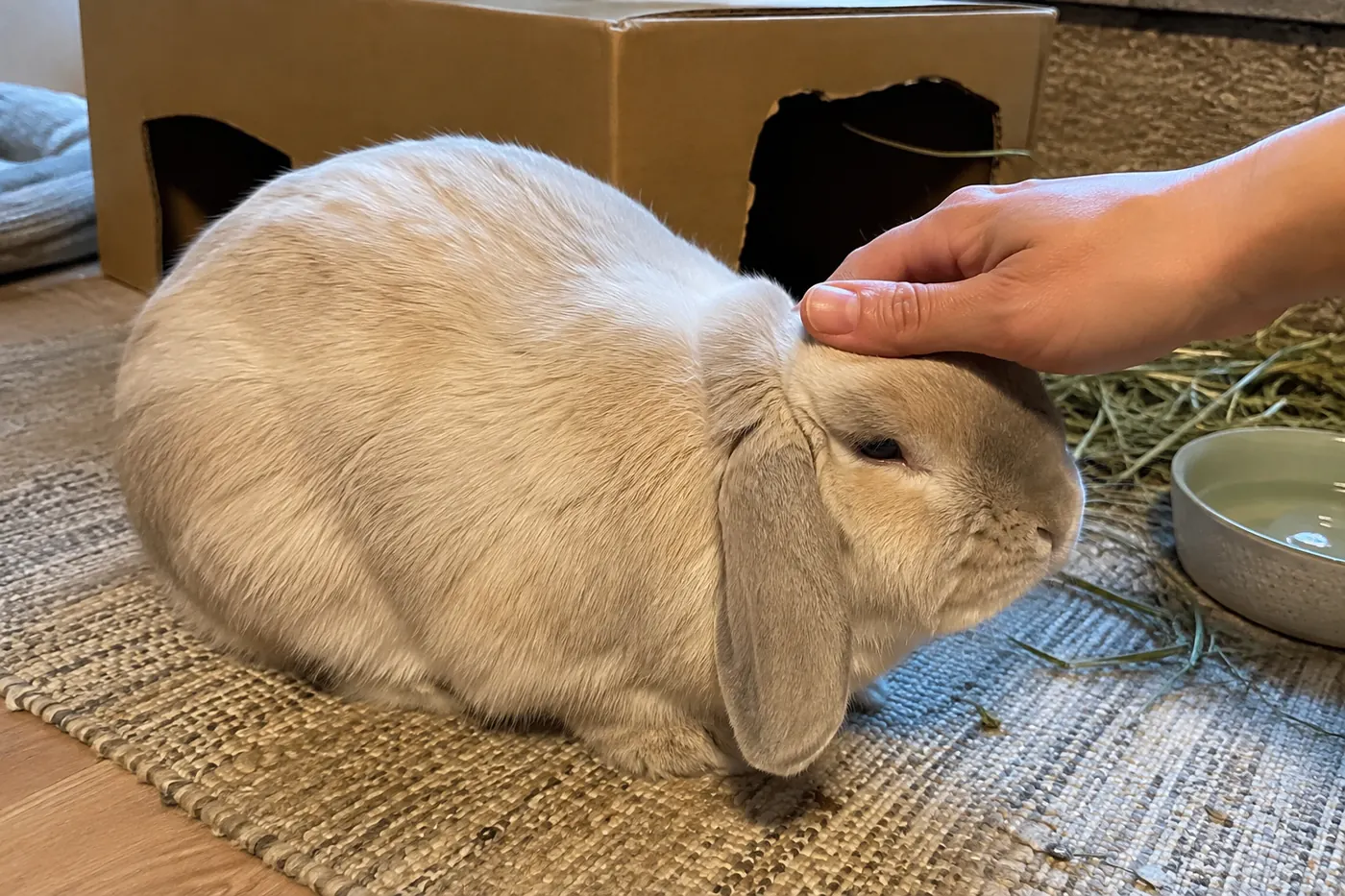
Pause the interaction
Keep your movement small, then calmly lift the hand or fabric away. Do not shout, flick the nose or punish.
Read the request
Check whether you blocked a route, stopped petting, touched a disliked area or approached a valued resource.
Offer a better outlet
Redirect persistent fabric nibbling to safe cardboard, hay, a woven chew or another supervised activity.
Let your rabbit choose
Resume contact only if the rabbit returns or lowers the head for strokes. Allow them to walk away at any time.
Spend time at floor level with your body turned slightly to the side. Let your rabbit approach, sniff and leave without being followed. Short interactions that end well build more confidence than a long cuddle the rabbit cannot escape. Our guide to rabbit body language can help you compare ears, eyes, posture and movement instead of relying on the mouth alone.
When licking or biting needs a closer look
A rabbit who has always groomed gently may begin nipping because handling has become uncomfortable, another rabbit is creating tension, or a health problem is changing tolerance. Hormones and territorial behaviour can also contribute, particularly in rabbits who are not neutered. Behaviour that is repetitive, intense or suddenly different deserves investigation rather than punishment.
Contact a rabbit-savvy veterinarian when behaviour changes suddenly
Arrange advice if biting appears with reduced appetite, fewer droppings, hiding, hunching, tooth grinding, reluctance to move, sensitivity to touch or any other change from normal. Pain and illness can make a rabbit defensive. If skin is broken, wash the wound and seek appropriate human medical advice too.
- Record the trigger: note the location, touch, object or interruption immediately before the nip.
- Protect choice: never corner, chase or lift a rabbit merely to make them accept contact.
- Review the environment: provide open routes, hiding places and enough duplicated resources for bonded rabbits.
- Ask for qualified help: after medical causes are ruled out, a rabbit-experienced behaviour professional can assess persistent biting.
Frequently asked questions about rabbit licking and nibbling
Does my rabbit lick me because they love me?
Licking often reflects social grooming, familiarity and trust, which many people reasonably experience as affection. Read it alongside relaxed posture and voluntary approach rather than using the lick alone as proof of an emotion.
Why does my rabbit lick me but not my partner?
Rabbits build individual routines. Your scent, clothing, position, handling style or history of quiet interactions may make licking more likely. It does not necessarily mean your rabbit dislikes someone else.
Why does my rabbit lick my clothes or bedding?
The texture, seams and familiar scent may invite grooming or exploration. Remove loose threads and stop access if fabric is being chewed off or swallowed.
Why does my rabbit nibble me when I stop petting?
The nibble may be a request to continue or move your hand. Pause calmly, protect your skin and resume only if you choose. Rewarding increasingly hard nips with instant petting can make the pattern stronger.
What is the difference between a rabbit nip and a bite?
A nip is usually brief and lower pressure, while a bite is more forceful and may bruise or break skin. Context matters: tension, lunging, guarding, growling or sudden behavioural change all deserve closer attention.

Elodie
Rabbit guardian and care enthusiast with over 10 years of hands-on experience living with house rabbits. Through Rabbit World, Elodie shares warm, practical guidance focused on comfort, safety and the small everyday signals that help every little bun feel understood.