The best hay setup is the one your bun can reach naturally, safely and at any hour. Compare racks, bags, boxes and a feeder paired with loose hay to find an option that keeps hay inviting without making your rabbit work too hard for dinner.
What is the best hay feeder for rabbits?
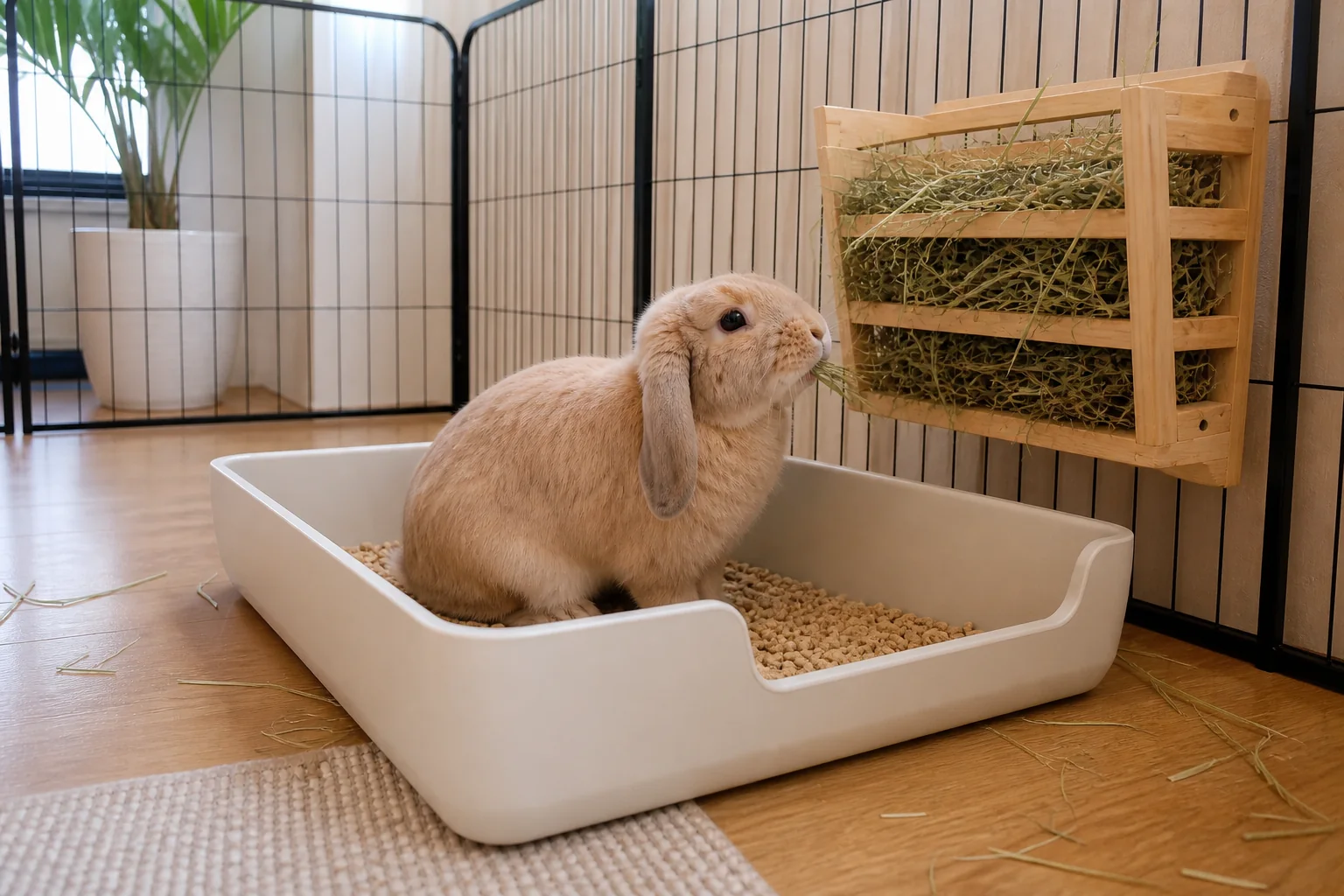
For most house rabbits, the best setup provides two easy ways to eat: a roomy low rack, basket or stable hay box near the litter tray, plus a small easy-to-reach pile of loose hay. The feeder keeps part of the hay clean and contained, while the loose pile allows natural head-down eating and makes sure your bun never has to struggle through a narrow opening.
Rabbits are designed to nibble fibrous food throughout the day and night. A beautiful feeder is not useful if the hay is packed too tightly, mounted above your bun’s comfortable reach or hidden behind openings that catch whiskers, toes or a curious head. The first job of any feeder is simple: make plenty of fresh hay easy to eat.
What every good rabbit hay setup needs
Constant access
Hay should still be available after the exciting top layer has been eaten, including overnight.
Natural posture
Your bun should eat with all four paws supported and the head comfortably forward or down.
Safe openings
No gap should trap the head, neck, feet, nails or tags while your rabbit pulls out hay.
Simple cleaning
The feeder must be easy to inspect, empty and refill before dusty old hay builds up.
Rack, bag, box or feeder plus loose hay: which setup fits your bun?
The material matters less than the full setup. Size, height, attachment, openings and your rabbit’s chewing style decide whether a feeder is genuinely practical.
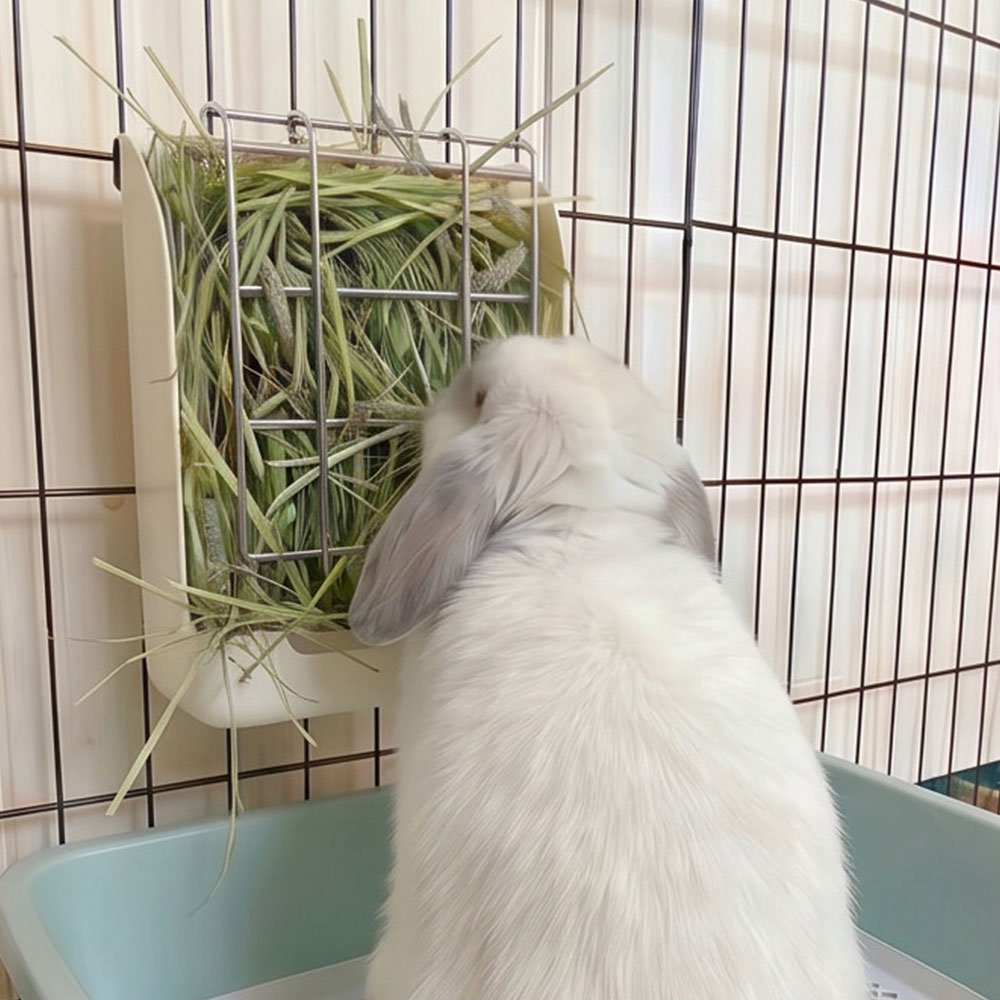
Hay rack or basket
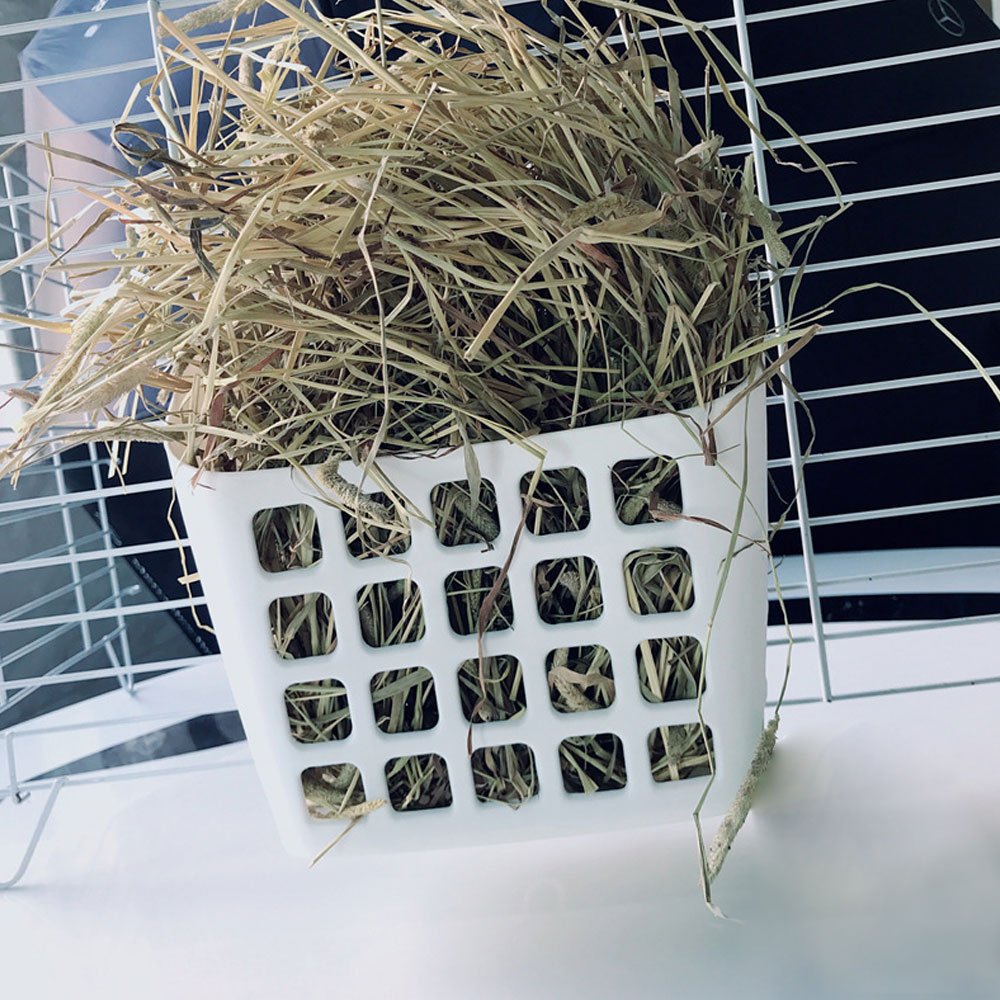
Best for: pens, litter-box areas and buns that like to pull hay strand by strand.
- Keeps a generous portion visible and aired
- Can sit directly above or beside the litter box
- Easy to check before the hay runs low
- Must be secured firmly with safe bar spacing
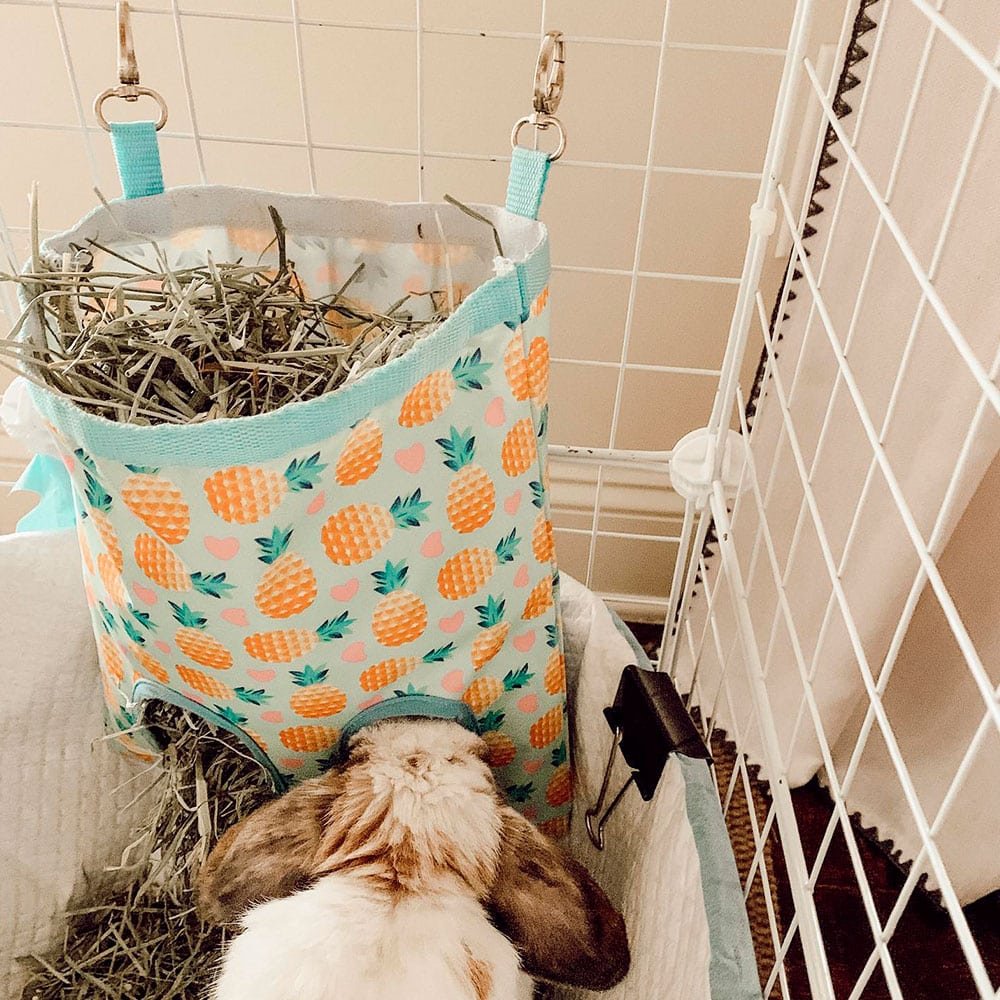
Fabric hay bag
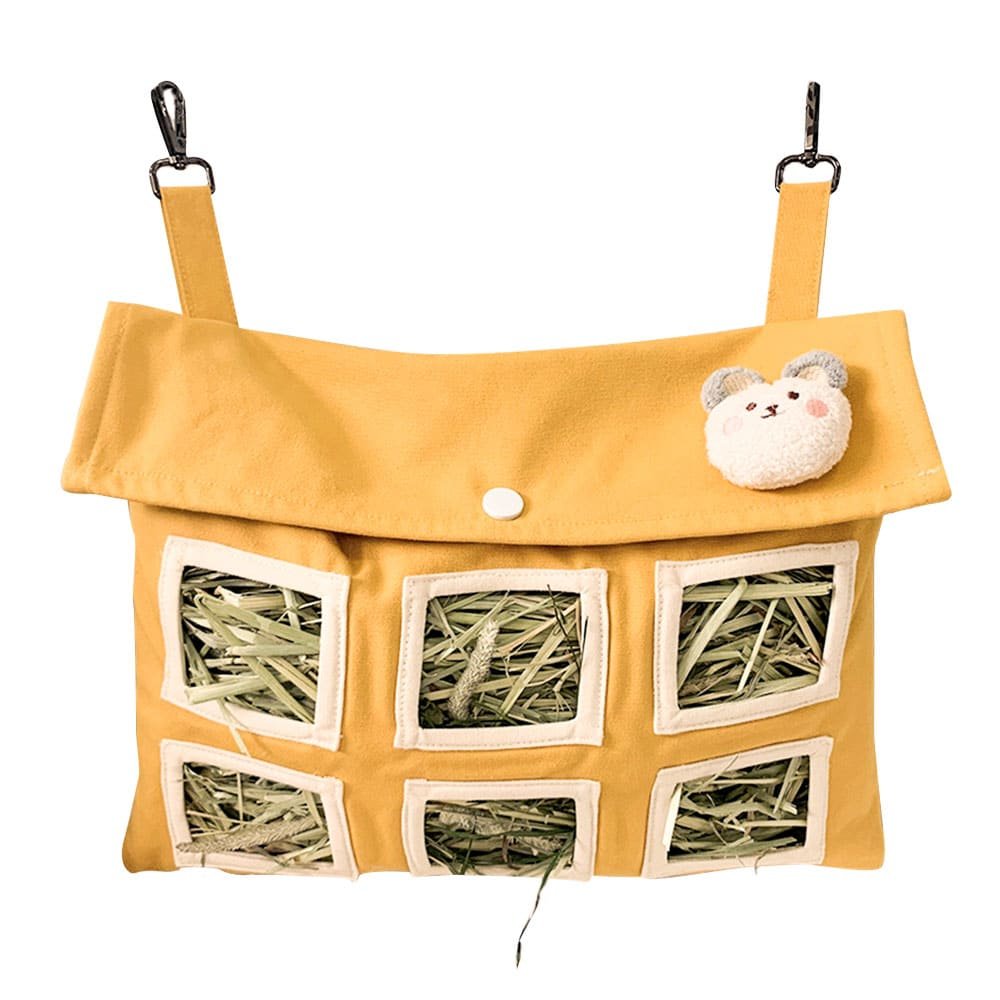
Best for: tidy indoor pens, travel setups and rabbits that do not chew fabric.
- Light, compact and simple to hang
- Helps contain strands around the enclosure
- Openings, seams and straps need daily checks
- Not suitable for a determined fabric chewer
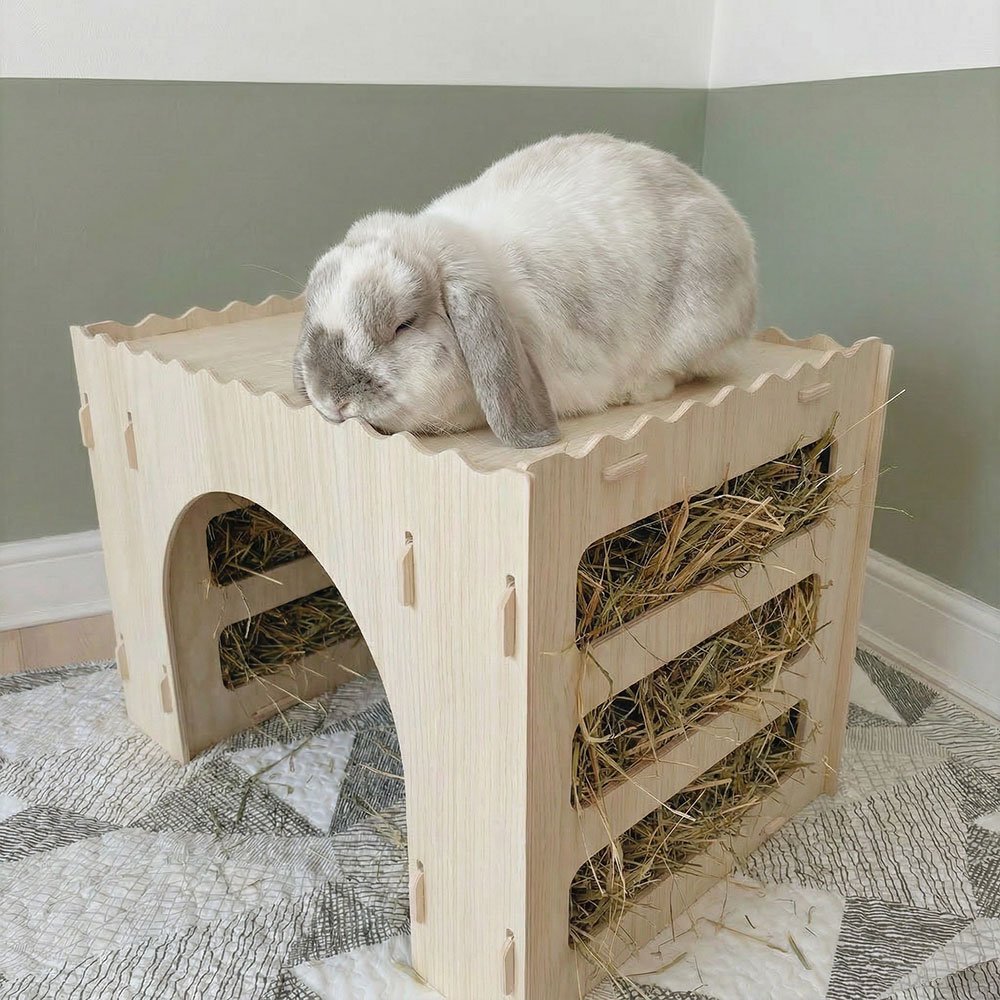
Wooden hay box or tower
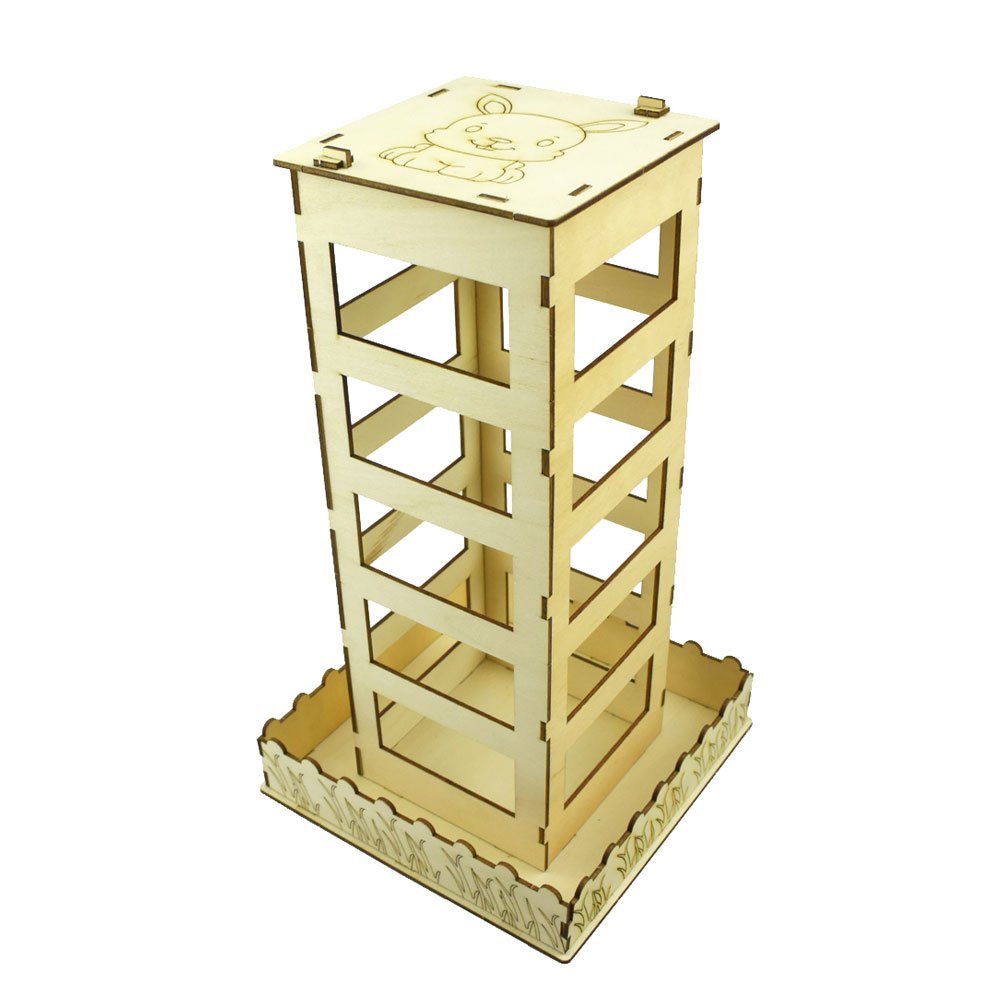
Best for: free-roam rooms, open pens and homes without bars for hanging a feeder.
- Stable and easy to place near a favorite route
- Can hold a generous amount of hay
- Adds a natural-looking feeding station
- Inspect wood edges, slots and the inside regularly
Feeder plus loose hay
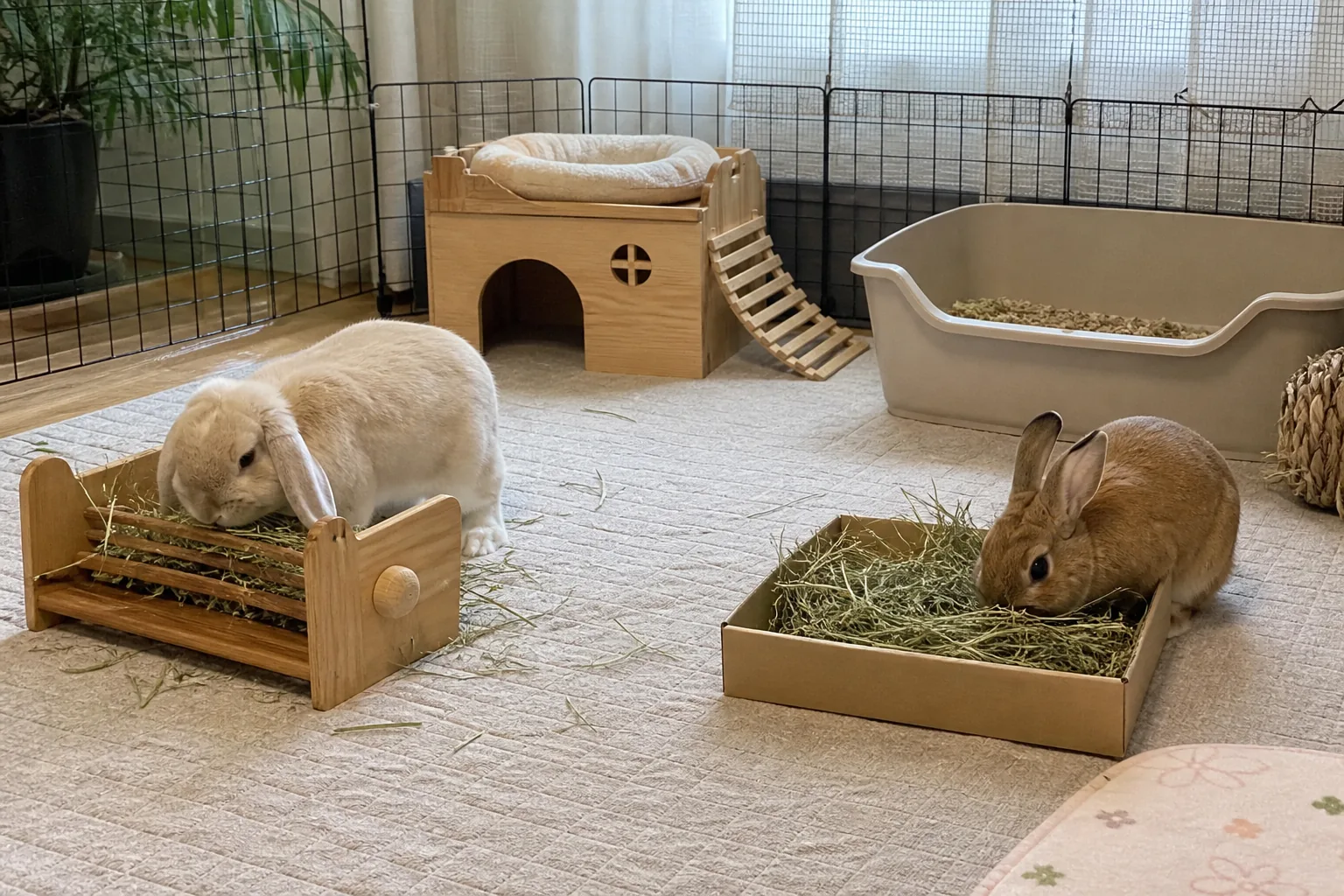
Best for: nearly every house rabbit, especially pairs, seniors and enthusiastic hay diggers.
- Keeps part of the hay tidy while leaving some freely accessible
- Gives rabbits a choice of feeding posture
- Makes it easier for bonded buns to eat together
- Reduces the risk of relying on one empty or blocked feeder
How to position a hay feeder near the litter box
Many rabbits enjoy eating while they use the toilet, so a feeder placed directly above or beside a roomy litter box can encourage hay consumption and help keep the main pile cleaner. The hay must be reachable while all four paws remain supported inside the tray.
Mount the lowest useful opening around your rabbit’s natural nose level when sitting. Your bun may stretch forward slightly, but should not have to stand upright, twist the neck sharply or climb onto the tray edge. Keep a little loose hay at one end of the box so shorter strands remain easy to reach.
The RSPCA recommends hay racks or hanging baskets to keep hay clean and notes that placing them above litter trays can encourage rabbits to eat more hay. It also advises supervision when a new feeder is introduced and enough feeding points for every rabbit.
Check the height, openings and attachments before use
Test the eating posture
Watch a full feeding session. Your bun should pull hay without lifting the chin high, pressing the face into a hole or balancing on the hind legs.
Check every opening
The rabbit’s head should not enter a gap that could tighten around the neck. Also inspect for places where a paw, nail or identification tag could catch.
Pull and shake the feeder
Use your hands to imitate an enthusiastic bun. Hooks, clips, straps and freestanding bases should stay secure without exposing sharp hardware.
Make sure hay releases easily
Do not compress hay into a solid brick. Your rabbit should be able to remove long strands without emptying the whole feeder or giving up.
Good signs
- Your bun approaches voluntarily
- Eating looks calm and effortless
- Long strands come out easily
- The feeder remains stable and quiet
- Hay is still available between refills
Stop and adjust the setup
- Your rabbit puts the whole head into an opening
- Fabric, plastic or wood is being swallowed
- Hay dust falls directly into the eyes
- The feeder swings, tips or pinches
- One rabbit blocks another from eating
Match the feeder to your rabbit’s habits
Use a deep, stable container
A basket or weighted box can contain some of the hay storm. Put a washable mat underneath and accept that a little mess is part of natural foraging.
Skip soft hay bags
Choose metal or solid wood and inspect all exposed surfaces. A product being sold for rabbits does not make swallowed fabric safe.
Keep hay low and close
Use a shallow open box or very low rack beside the favorite resting area. Comfortable access matters more than containing every strand.
Create more than one feeding position
Two rabbits need enough space to eat side by side or at separate stations. A second pile prevents one confident bun from guarding the only opening.
Rabbit World hay feeders for different homes
There is no universal feeder for every little hay critic. Choose according to your enclosure, cleaning routine and your rabbit’s real behavior during the first supervised sessions.
How to reduce hay waste without limiting access
A rabbit pulling hay onto the floor is not being naughty. They are sorting by smell, texture and freshness. Start with fragrant, dry hay your bun genuinely enjoys, then make small adjustments instead of turning the feeder into a puzzle that restricts eating.
Keep the top fresh
Fluff the remaining clean hay and add a fresh handful rather than burying old strands under a huge compressed load.
Use a washable base
Place a tray or mat under the feeder so dry fallen hay can stay available without spreading through the room.
Sort before discarding
Throw away wet, dirty, moldy or stale hay. Clean dry strands can remain part of the foraging area.
Never ration hay to make the enclosure tidier. If your bun suddenly eats less hay, drops food, chews on one side, has a wet chin, loses weight or produces fewer droppings, contact a rabbit-savvy veterinarian promptly. A different feeder cannot solve dental pain or digestive illness.
Frequently asked questions about rabbit hay feeders
Do rabbits need a hay feeder?
No specific feeder is essential, but hay must remain clean, fresh and continuously available. A low rack, basket or sturdy box can make the area easier to manage. Many homes benefit from using one alongside a loose hay pile.
Can rabbits eat hay directly from the floor?
Yes, provided the surface is clean and dry. Floor-level hay supports a natural posture. Use a washable mat, tray, litter-box end or clean cardboard box, and remove anything damp or soiled.
How high should a rabbit hay feeder be?
Mount it low enough that the rabbit can eat with all four paws supported and the neck in a relaxed position. The lowest useful opening should sit around natural nose level while the rabbit is sitting, not above a forced upright stretch.
Are fabric hay bags safe for rabbits?
They can suit rabbits that do not chew fabric, but openings, seams and straps require close inspection. Supervise the first uses, remove the bag if material is being swallowed and provide an additional easy hay source.
Should the hay feeder be above the litter box?
It is often a practical position because rabbits like to eat while toileting. Keep the feeder low, secure and accessible from inside a roomy litter box, and remove damp hay during daily cleaning.
Is one hay feeder enough for two rabbits?
Only if both rabbits can eat comfortably without crowding or guarding. Multiple feeding points are safer for pairs and groups, especially when personalities, body sizes or mobility differ.


Elodie
Rabbit guardian and care enthusiast with over 10 years of hands-on experience living with house rabbits. Through Rabbit World, Elodie shares warm, practical guidance focused on comfort, safety and the everyday details that help every little bun feel at home.