Yes, most house rabbits can learn reliable litter box habits. The secret is to follow the corner your bun has already chosen, make the tray roomy and inviting, and expand freedom only after the new routine is working.
Can rabbits really be litter trained?
Yes. Rabbits naturally prefer to urinate and leave many droppings in one or a few familiar corners. Litter training works by putting a suitable tray in that chosen spot, transferring a little soiled litter into it and making the tray a pleasant place to eat hay. Many buns improve within days, while young, unneutered, newly adopted or stressed rabbits may need several weeks and a few resets.
Think of litter training as a quiet conversation with your bun, not a battle of wills. Rabbits are tidy little creatures, but they also use scent to claim a safe space. If you put a tiny tray where you want it, then give your rabbit the whole house on day one, you have made the lesson unnecessarily difficult. Work with their instincts and the process becomes much kinder for everyone.
What successful litter training looks like
Urine in the tray
This is the most important result. A reliably used toilet area protects floors, bedding and your bun’s fur.
Most poop contained
Expect the majority in or near the tray, but do not chase perfection over a few dry territorial pellets.
Voluntary returns
Your rabbit should hop into the box without being carried, trapped, scolded or repeatedly placed there.
Important: litter training does not mean a rabbit can be confined to a cage. Your bun still needs a spacious living area, daily movement, hiding places, enrichment and social companionship.
Prepare the right rabbit litter box setup
A good setup does much of the training for you. Before you collect treats or plan a schedule, check these four basics.
Choose a roomy rectangle
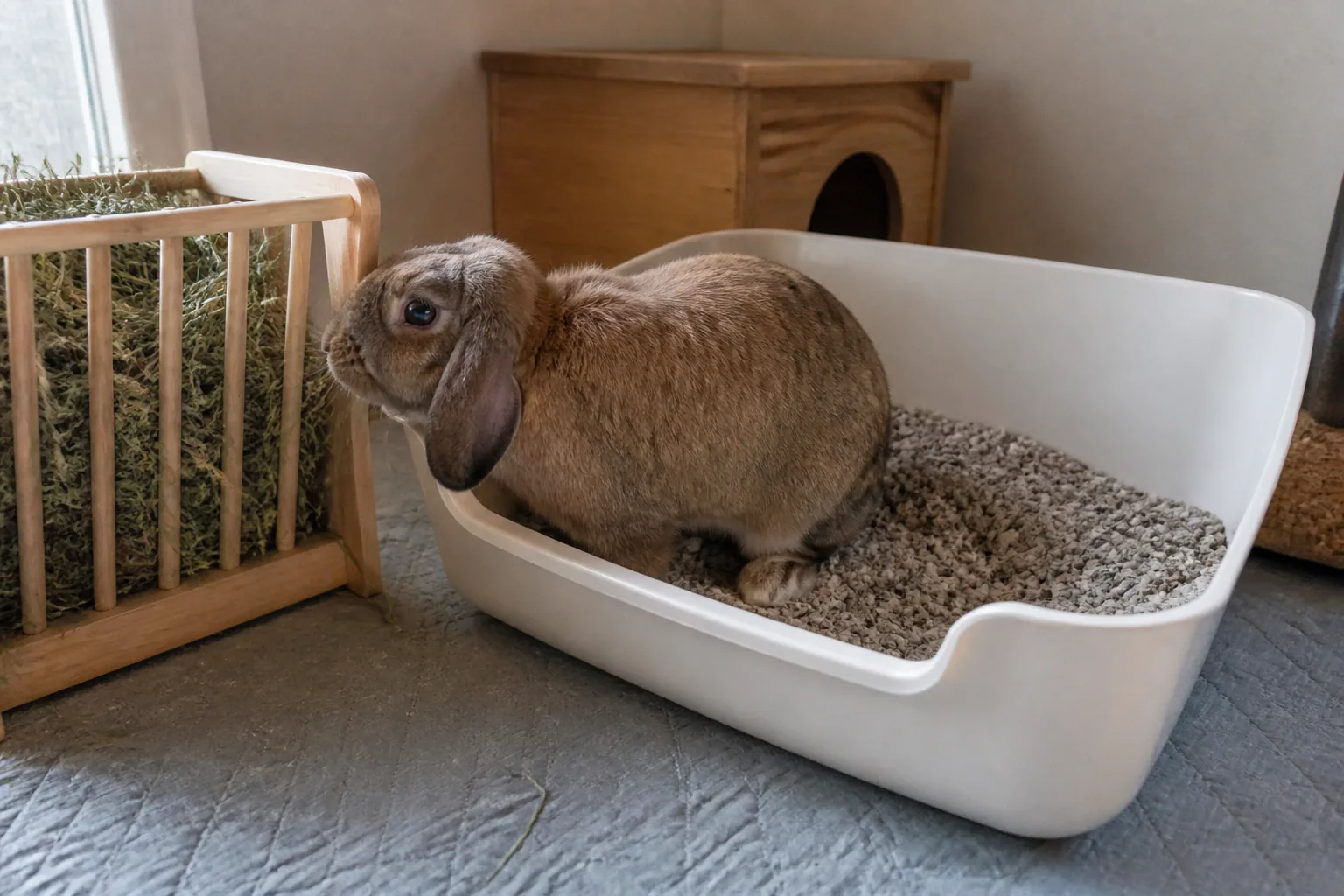
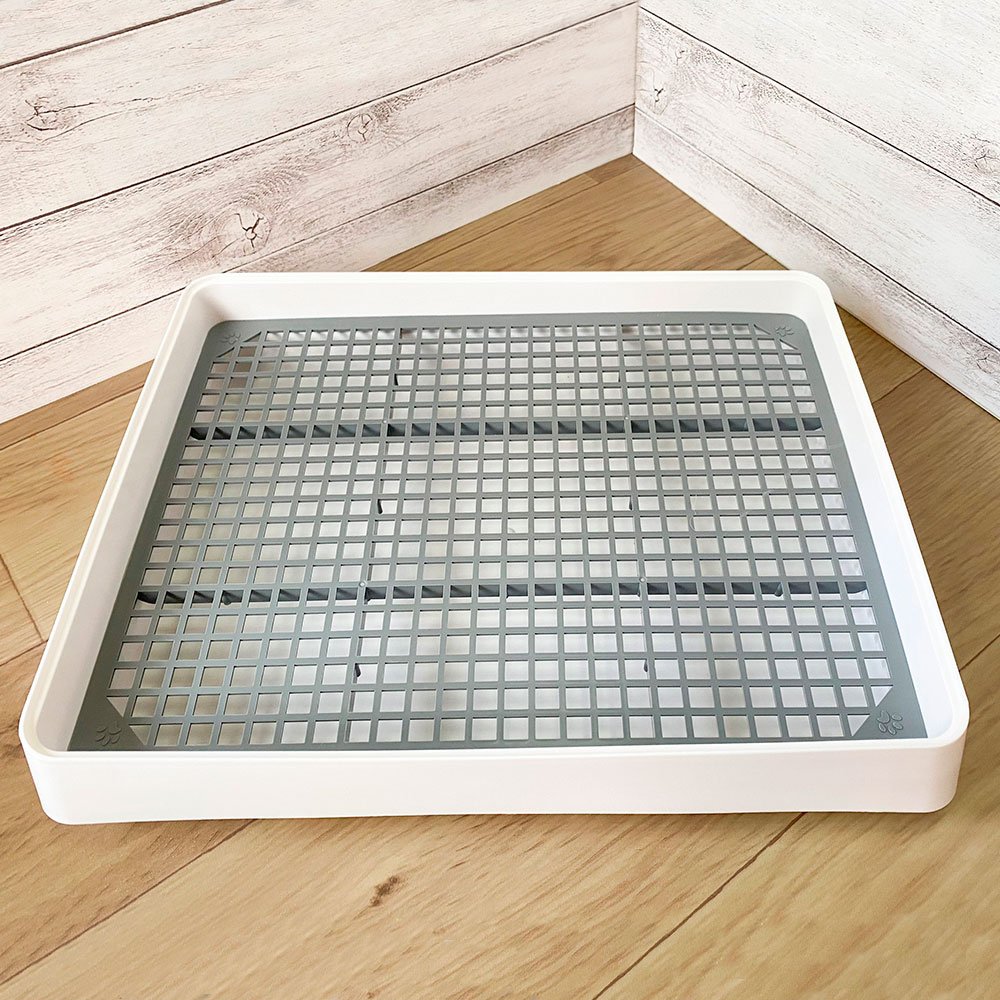
Most triangular corner litter boxes sold for small pets are too cramped for rabbits, even when the label says large. A generously sized rectangular box is the reliable choice: your bun must be able to enter, turn around comfortably and sit beside the hay without hanging over an edge.
Keep the entrance low
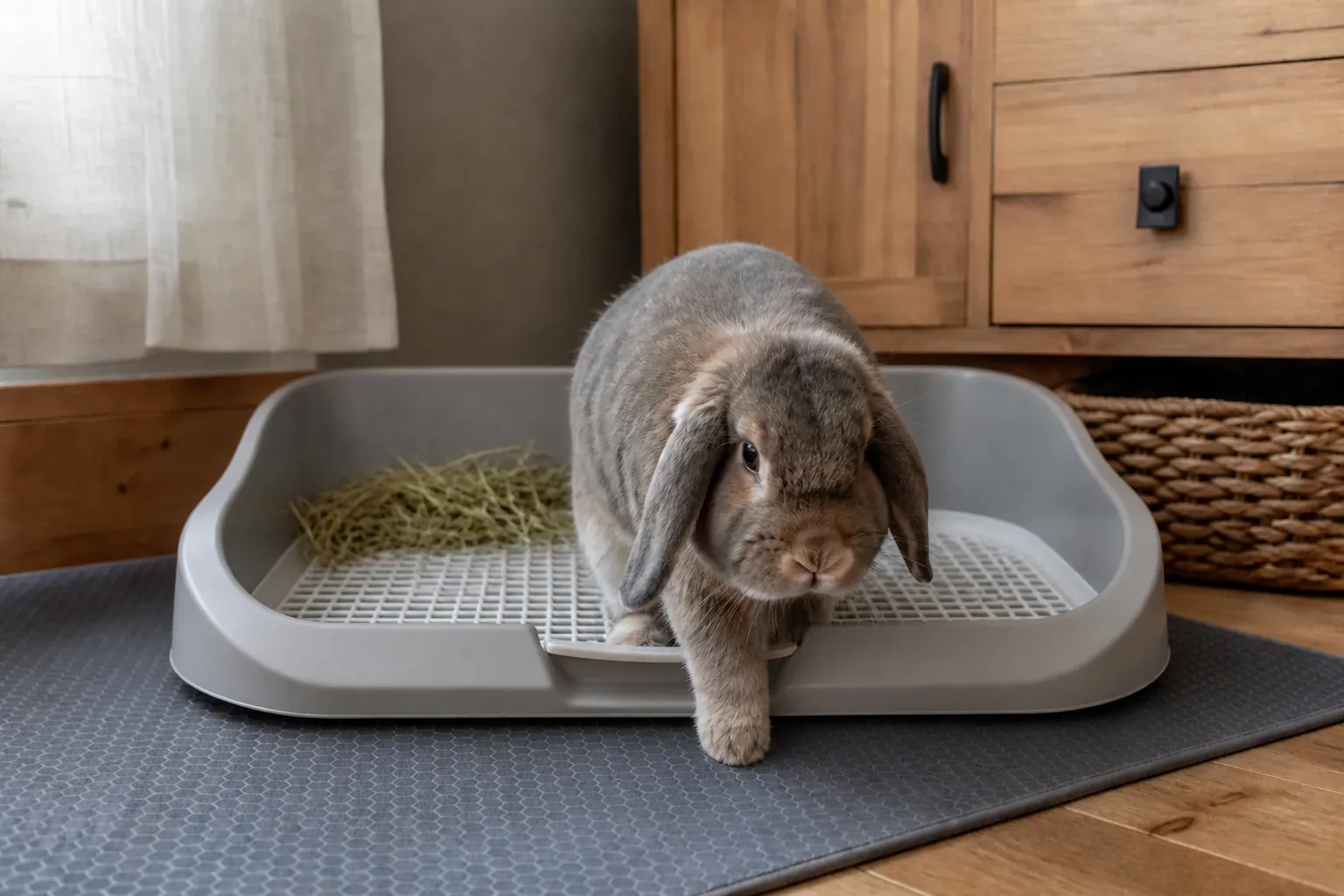
A low front entry is the easiest everyday option for most rabbits, from healthy adults to older buns. Using the toilet should never feel like a difficult jump. Seniors, disabled rabbits and very young buns may need an extra-low, almost flush doorway with smooth edges.
Hay within reach
Rabbits naturally like to munch while toileting. Put fresh hay at one end or in a rack positioned so your bun stays inside the tray to eat.
Choose a safe litter, not just an absorbent one
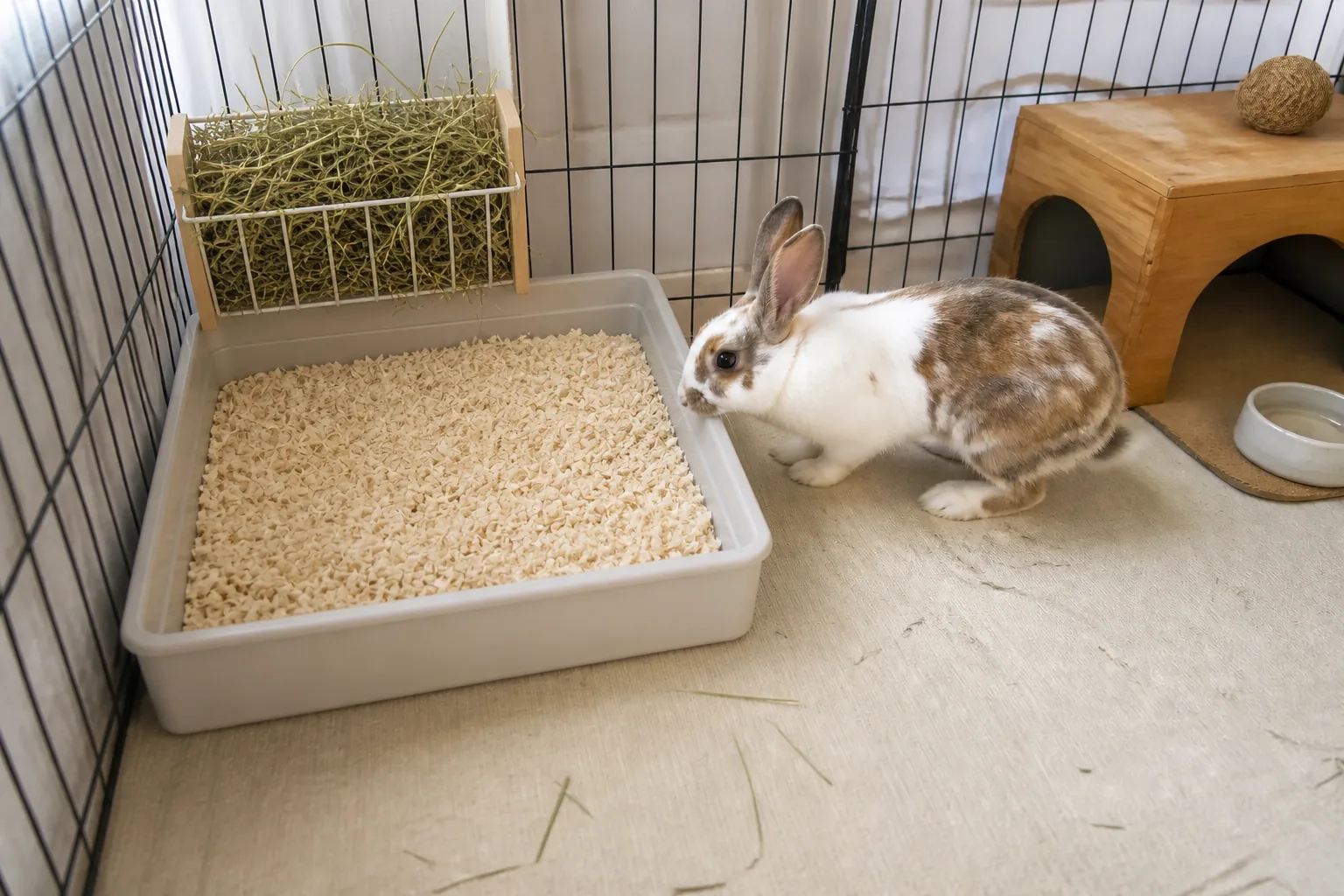
Your rabbit will stand, dig, sniff and sometimes nibble inside the box, so cat litter rules do not automatically apply. Use a thin absorbent layer and replace it often enough that the tray stays dry.
Best everyday choices
- Unscented pellets made from compressed or recycled paper: the simplest widely recommended option in the US
- Additive-free compressed wood or wood-pulp pellets made for animals: never loose pine or cedar shavings
- Grass or wheatgrass-based litter pellets: a gentle plant-based alternative
- Fresh grass hay at one end or directly above the box: for eating, not as the only absorbent layer
Leave these out
- Clumping, expanding or silica crystal cat litter
- Clay litter, corn-cob litter and very dusty products
- Cedar, loose pine or strongly aromatic wood shavings
- Scented litter or loose material your bun repeatedly eats
If you want one simple starting choice, use an unscented paper-based pellet litter. It is one of the most consistently recommended options by US rabbit specialists because it is absorbent, low in dust and easy to replace. Hay that has been urinated on belongs in the bin, not back in the feeder: keep the eating pile fresh and remove damp sections during daily spot cleaning.
How to litter train a rabbit step by step
Start on a calm week when the home and routine are stable. Keep hay, meals and human interaction predictable while your little bun learns the new map of their space.
Watch where your rabbit already goes
Before moving furniture, notice the corner your bun chooses for urine. Put the litter box there, even if it is not your dream location. You can try shifting it gradually later, once the habit is strong.
Follow the bun’s cornerBegin with a manageable area
Use a roomy pen or one bunny-proofed section rather than immediate access to every room. The area must still allow proper movement, stretching, hiding and play; it is a training zone, never a tiny cage.
Less space, clearer choiceMake the correct spot smell familiar
Place a few dry droppings and a small piece of urine-soiled paper or litter inside the fresh tray. This is a scent cue, not a dirty environment. Keep the rest of the box comfortable and clean.
Move the scent, not the rabbitAdd fresh hay to create a useful routine
Put a generous pile at one end of the tray or hang a feeder directly beside it. Your bun can step in, settle and eat. Refresh the hay daily so the bathroom never becomes an excuse to serve stale food.
Hay makes the tray invitingClean misses calmly and completely
Blot urine straight away and clean the area with a rabbit-safe enzymatic cleaner or a suitable diluted white-vinegar solution. Move stray droppings into the box. Never shout, chase, rub a nose in the mess or spray your rabbit with water.
No punishment, everReward the choice without interrupting it
When your bun enters or finishes using the tray, offer gentle praise, a head rub if they enjoy touch, or one tiny rabbit-safe reward. Keep the moment quiet. You do not need to hover every time they pee.
Reward after the behaviorExpand freedom one zone at a time
After several reliable days, open a little more space. If accidents increase, reduce the area temporarily or add a second box at the new favorite corner. Progress is not ruined; the map simply became too large too quickly.
Reliability before freedom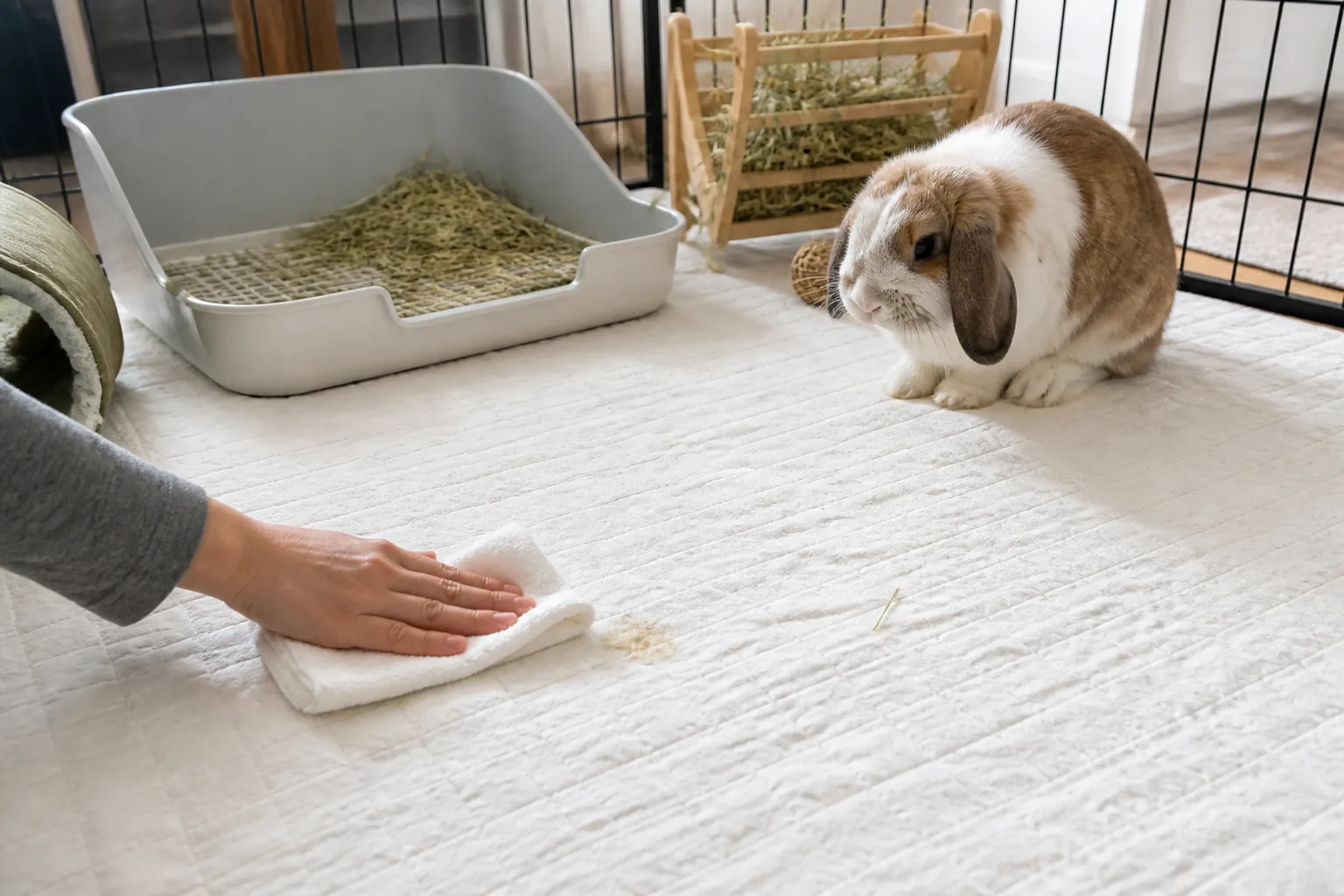
What to do when your bun has an accident
Clean the spot, transfer the scent cue to the tray and look for the reason. The box may be too small, too dirty, difficult to reach or simply in the wrong corner.
Do not lift your rabbit and repeatedly place them in the tray after the fact. They cannot connect your reaction with an earlier pee, and forced handling may make the box feel less safe.
Why litter training sometimes stops working
The tray may be too small
If the front half of your bun is inside but the tail hangs over the edge, the rabbit may believe they used the box correctly. Size up or use higher rear walls with a low entrance.
Your rabbit chose a second toilet
Add another tray there instead of fighting a strong preference. The RSPCA recommends one tray per rabbit plus an extra when possible, especially in larger shared spaces.
It may be territorial marking
Dry pellets around a newly changed room, bonded partner or unfamiliar scent are not the same as uncontrolled diarrhea. Sweep them up and allow the environment to settle.
Hormones can disrupt habits
Adolescent and unneutered rabbits often mark more strongly. Discuss appropriate spaying or neutering with a rabbit-savvy veterinarian; training is commonly easier once hormonal behavior settles.
The litter may be too deep or fun to throw
Use a thinner layer, a larger high-sided box or a suitable tray design. Give your enthusiastic digger a separate cardboard dig box so the toilet is not the only exciting project.
Soft, strongly scented places invite marking
Temporarily block access, protect the surface and add a nearby tray. Reintroduce the area only after habits are reliable; do not rely on scolding or fragrance sprays.
Litter training older, disabled or bonded rabbits
Older rabbits can learn beautifully, and many are steadier than babies. The setup simply has to match the body in front of you. Use a low, wide entrance, a non-slip route and a tray close to hay, water and the favorite resting place.
For bonded buns, start with at least one tray each and ideally one extra. A large shared box can be lovely when both rabbits use it comfortably, but one rabbit should never be able to block the only toilet.
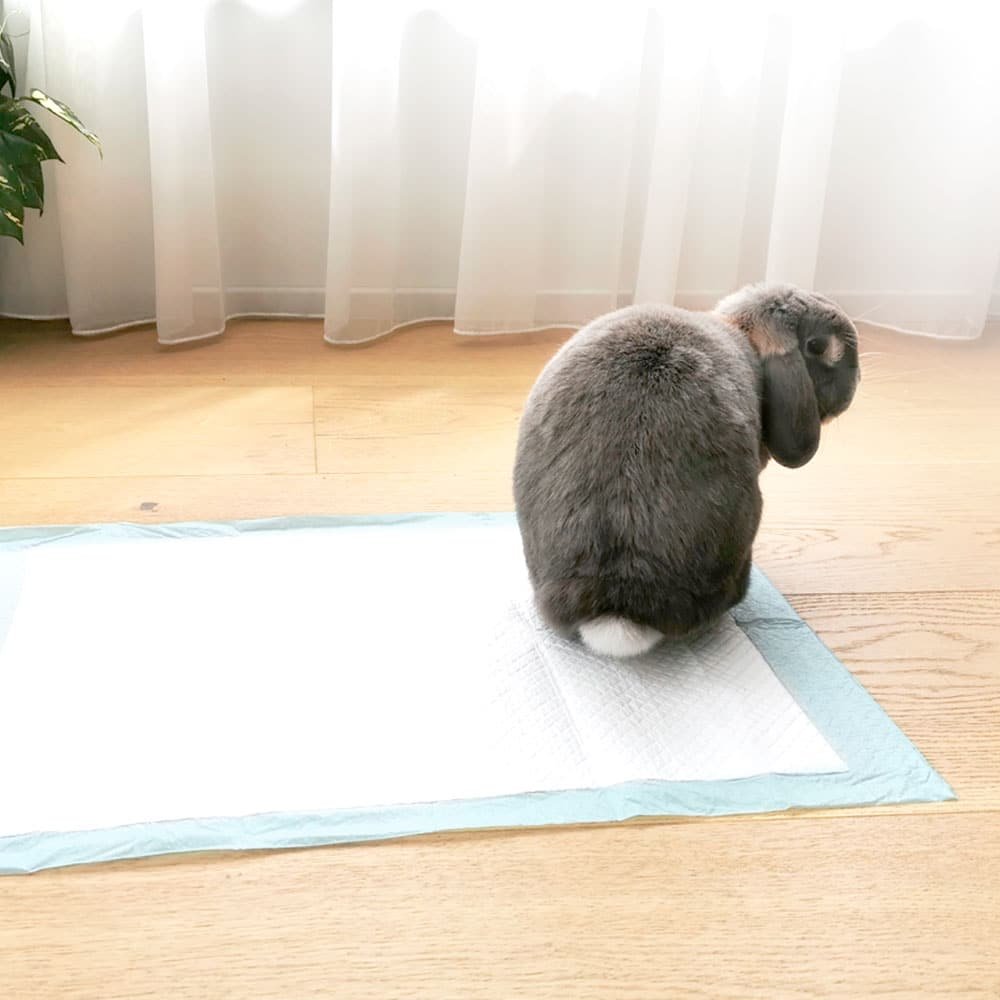
Protective pee pads can help beneath a tray during training or for limited mobility, but keep disposable edges fully covered. Remove any pad your rabbit tries to shred or swallow.
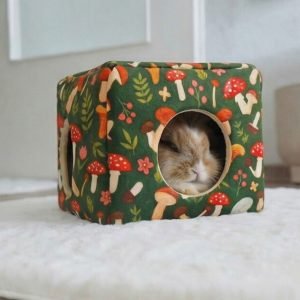
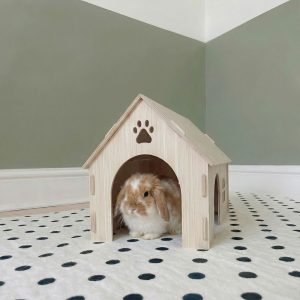
 Available in our shop — click the photo.
A cleaning routine your bun can trust
Rabbits have sensitive noses. The goal is a clean tray that still occupies the familiar location, not a heavily perfumed box that smells like a completely different territory every morning.
Spot clean
Remove wet litter and soiled hay, top up the absorbent layer, refresh the eating hay and wipe obvious splashes.
Wash the tray
Empty and wash it before odor and residue build up. Dry it fully before adding clean litter and hay.
Watch the paws
Check that fur stays clean and dry. Persistent wetness, redness, hair loss or sore skin deserves veterinary attention.
A sudden loss of litter habits can be a health clue
If a previously reliable rabbit suddenly urinates outside the box, strains, dribbles, produces blood-tinged urine, drinks much more, moves stiffly, has a wet bottom or seems painful, contact a rabbit-savvy veterinarian promptly. Urinary problems, arthritis and other illness can look like a training problem. Do not wait for discipline to fix a medical change.
Frequently asked questions about rabbit litter training
How long does it take to litter train a rabbit?
Some rabbits understand the setup within a few days, while others need several weeks. Age, hormones, stress, space, health and the quality of the setup all affect progress. Judge improvement by the trend, not one accident.
Can baby rabbits be litter trained?
Yes, but young rabbits are often less consistent and may regress during adolescence. Build the habit gently, expect misses and discuss the appropriate timing of spaying or neutering with a rabbit-savvy vet.
Should hay go inside the rabbit litter box?
It can sit at one end of a roomy box or in a rack immediately above or beside it. The important point is that your rabbit must stand in the tray to reach the fresh hay, while damp or soiled hay is removed regularly.
Can two rabbits share one litter box?
A bonded pair may choose to share a very large tray, but provide more than one toilet location so neither rabbit can block access. One tray per rabbit plus one extra is a useful starting point.
Why does my rabbit sleep in the litter box?
Many rabbits feel safe there, especially when hay is available. Sleeping in a clean, roomy tray is not automatically a problem. Keep the surface dry and offer other comfortable resting choices.
What should I do with poop outside the box?
Move the dry pellets into the tray and clean the area. A few scattered pellets are common territorial markers. Soft stool, diarrhea, a major change in droppings or reduced appetite needs veterinary advice rather than more training.


Elodie
Rabbit guardian and care enthusiast with over 10 years of hands-on experience living with house rabbits. Through Rabbit World, Elodie shares warm, practical guidance focused on comfort, safety and the everyday details that help every little bun feel at home.