The best rabbit tunnel is wide enough for easy movement, stable during a sprint and simple to leave. Choose the dimensions and layout for your actual rabbit—not for the breed name printed on a listing.
What should you look for in a rabbit tunnel?
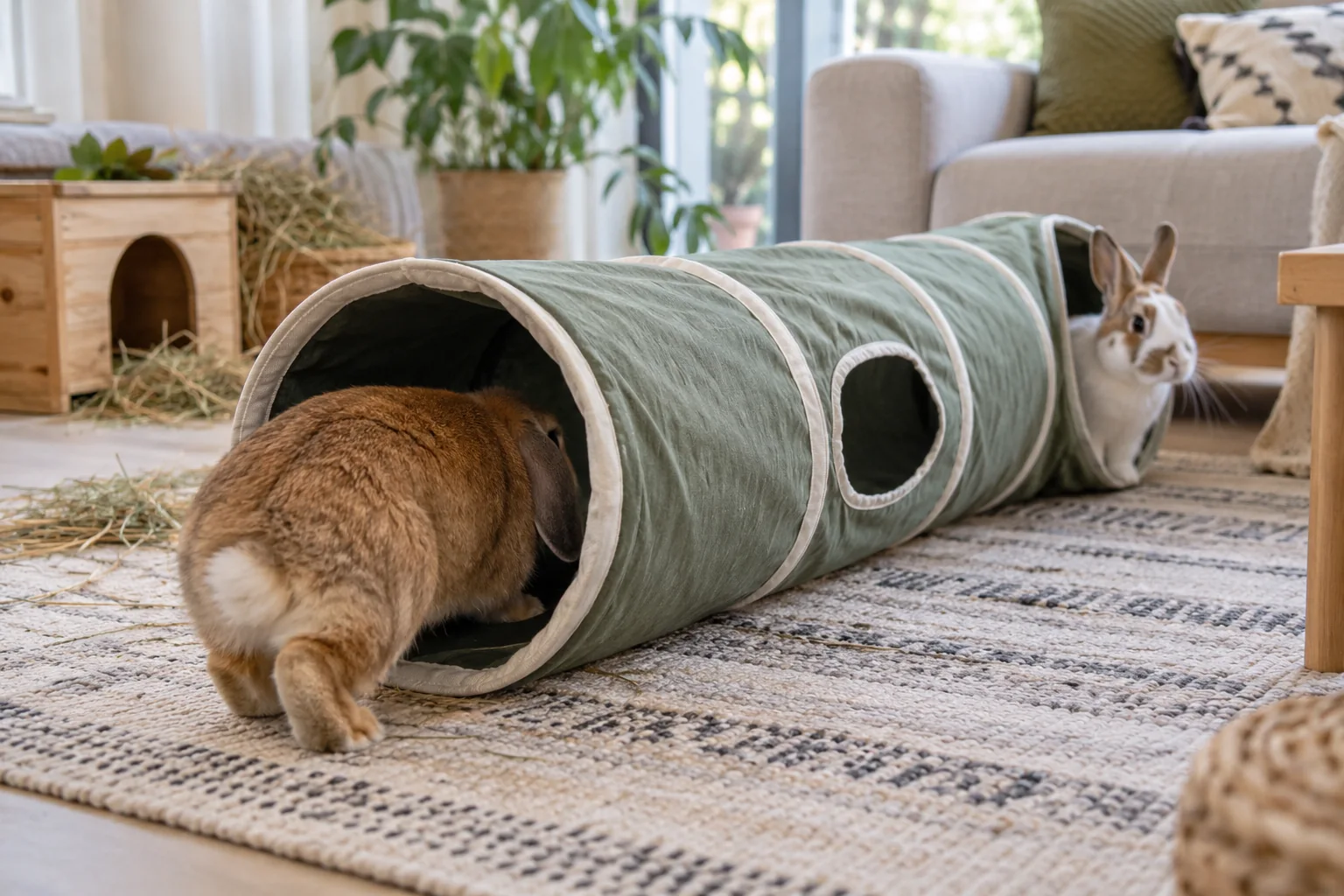
Check the opening size, total length, number of exits, material, stability and cleaning method. Your rabbit should pass through without squeezing, snagging fur or meeting a blocked end. For bonded rabbits, multiple open routes reduce the chance that one rabbit can guard or block the other. Inspect fabric, seams and supports regularly and remove any tunnel that becomes damaged.
Why rabbits use tunnels
Tunnels can support several normal behaviours at once. A rabbit may run through one during an energetic circuit, pause inside to observe the room or use the covered route to move between open areas with more confidence. Different rabbits may treat the same tunnel as a racetrack, hideout or resting place.
The RSPCA’s rabbit enrichment guidance lists tunnels as both play objects and backup burrows. It also stresses that a hiding place should have an entrance and an exit so rabbits do not feel trapped. A tunnel adds choice, but it does not replace a spacious exercise area, companion rabbit, hay, secure shelter or other enrichment.
Room to pass comfortably
The opening must clear the widest part of the body, with no rubbing, squeezing or need to crouch unusually low.
An open route
Every entrance should remain visible and accessible after the tunnel is placed. Avoid pointing an exit into a wall.
Built for your rabbit
A digger, fabric chewer, shy rabbit and fast runner may each need a different material or design.
How to choose the right rabbit tunnel size
Measure before you order
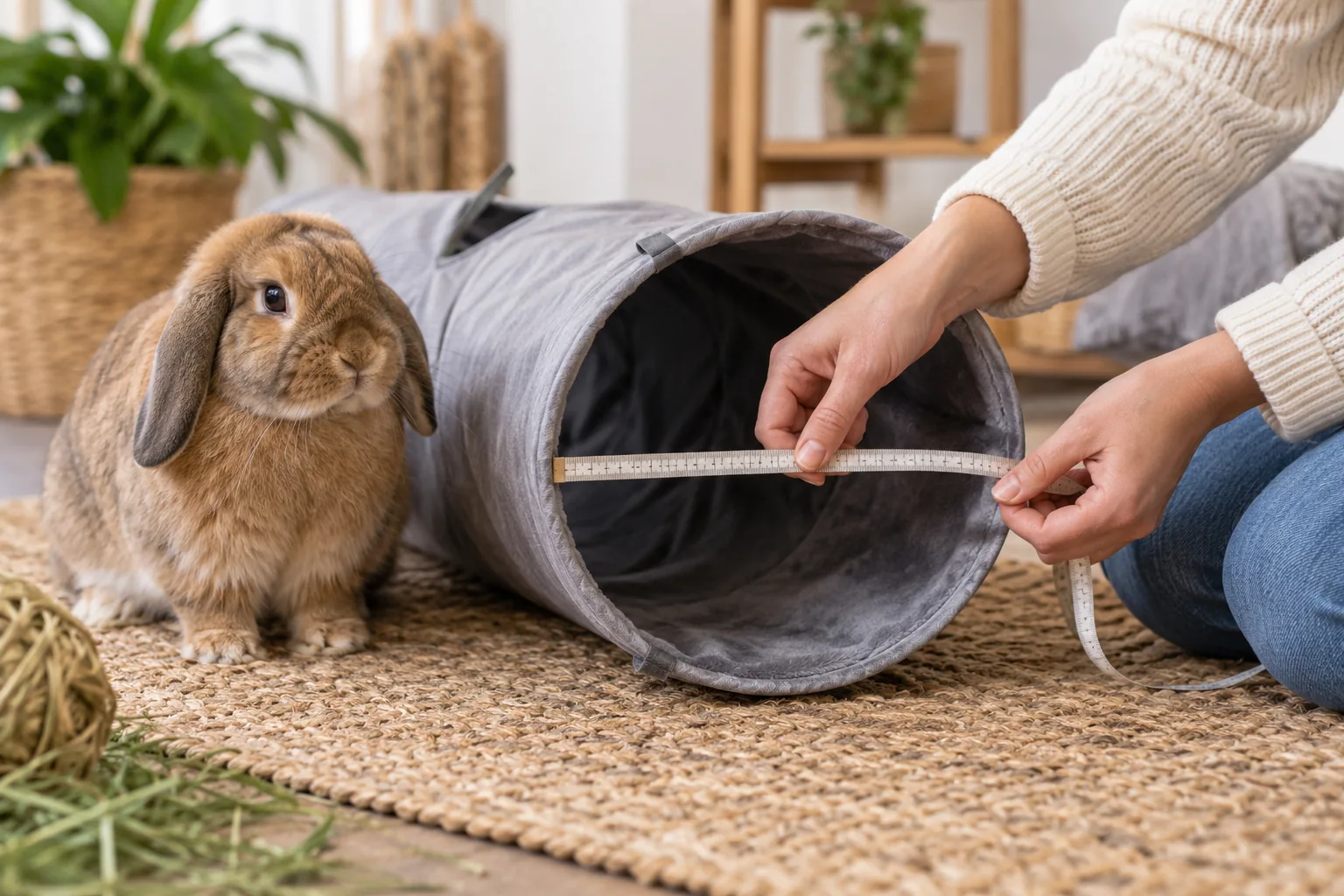
- Measure the widest part of your rabbit’s body while they sit naturally.
- Compare that measurement with the tunnel’s internal opening—not only the outer diameter.
- Check the total length and assembled footprint against the available floor space.
- For a bonded pair, size for the larger rabbit and consider whether they may meet inside.
There is no single diameter that suits every rabbit. Dwarf rabbits, lops and large breeds can differ considerably, and body condition matters as much as breed. Product words such as “small pet tunnel” or “one size” are not enough; look for exact dimensions on the product page.
Length changes the experience too. A compact tunnel can create a covered pause between two zones, while a long tunnel offers a more sustained run. In a small room, a foldable or curved design may use space better—but no tunnel should fill the exercise area or remove the rabbit’s ability to run, turn and stretch elsewhere.
Simple fit check: your rabbit should enter, move through and leave in one fluid motion. If fur brushes tightly against the sides, the support compresses around the body or the rabbit hesitates because the opening is narrow, choose a roomier model.

Which rabbit tunnel material is best?
The best material depends on whether your rabbit runs, rests, digs, chews or urinates in the tunnel. Construction and condition matter more than a fabric name alone.
| Material | Useful for | Main advantage | What to check |
|---|---|---|---|
| Soft fabric | Indoor running, hiding and lounging | Lightweight, foldable and comfortable | Loose fibres, seams, support rings, washing method and chewing |
| Water-resistant fabric | Active play and easier surface cleaning | Wipes clean more readily | Ventilation, heat, exposed supports and damage after folding |
| Cardboard | Low-cost exploration and supervised shredding | Easy to replace and customise with wide exits | Tape, staples, ink, dampness and swallowed pieces |
| Rigid plastic | Stable washable routes | Keeps its opening and cleans easily | Diameter, ventilation, sharp edges, slippery interior and heat |
| Woven or natural fibre | Exploring and appropriate dismantling | Adds natural texture | Safe plant material, splinters, mould, wire and rapid damage |
A persistent fabric chewer may be better with replaceable cardboard or another veterinarian-approved rabbit-safe option. If your rabbit swallows fibres, plastic or support material rather than merely investigating it, remove the tunnel and monitor eating and droppings.
How many exits should a rabbit tunnel have?
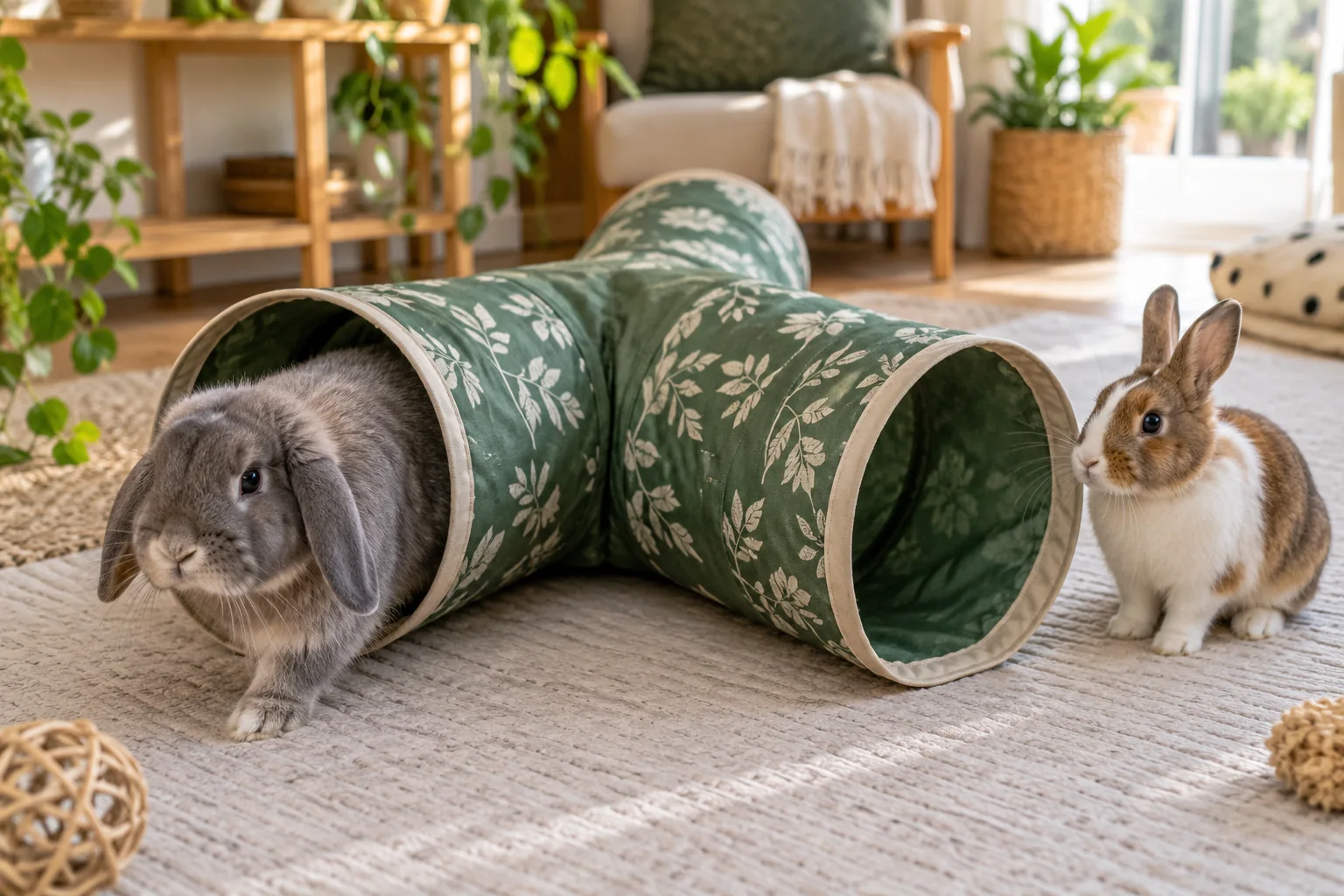
A straight tunnel should have two open ends. A Y-shaped or modular tunnel adds route choices and can be particularly useful in a shared environment. The RSPCA recommends two entrances or exits for rabbit hiding places, helping prevent one rabbit from trapping or guarding another inside.
Straight tunnel
A clear point-to-point route that fits along a wall or connects two activity zones. Both ends must stay open.
Multi-exit tunnel
More directions for active play and more ways to leave. It needs a larger stable footprint.
Modular layout
Sections can change shape, but every connector must stay secure and the completed route must remain easy to escape.
For bonded rabbits, exits are only part of the plan. Provide enough hiding resources for everyone, keep food out of narrow spaces if it causes guarding and observe whether either rabbit blocks, chases or corners the other. One large opening does not make a single-ended fabric tube safe for shared use.
Find a tunnel that fits their play style
Rabbit World currently offers long, multi-exit and rest-zone designs. Always confirm the latest dimensions and care instructions on the individual product page.
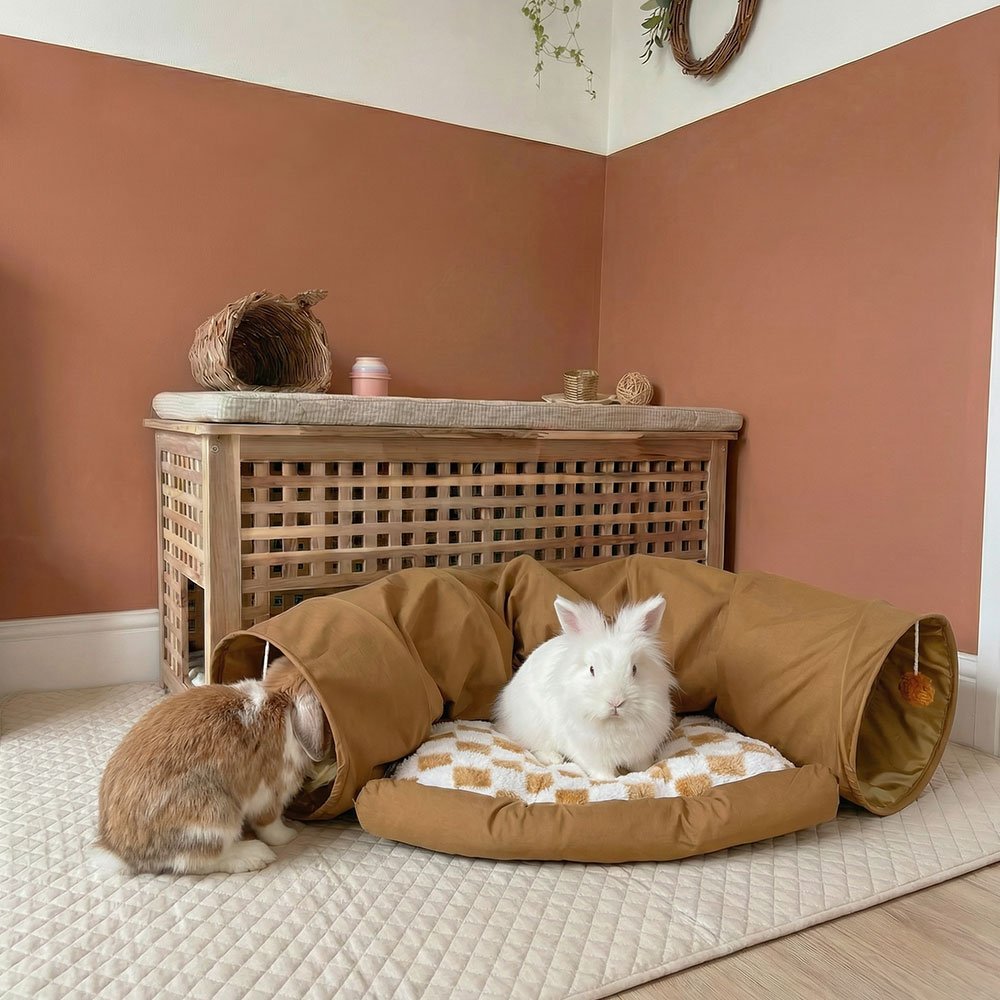 Long route + rest
Brown Cushion Tunnel
A long soft route for rabbits that enjoy running through and settling beside the tunnel.
View the tunnel →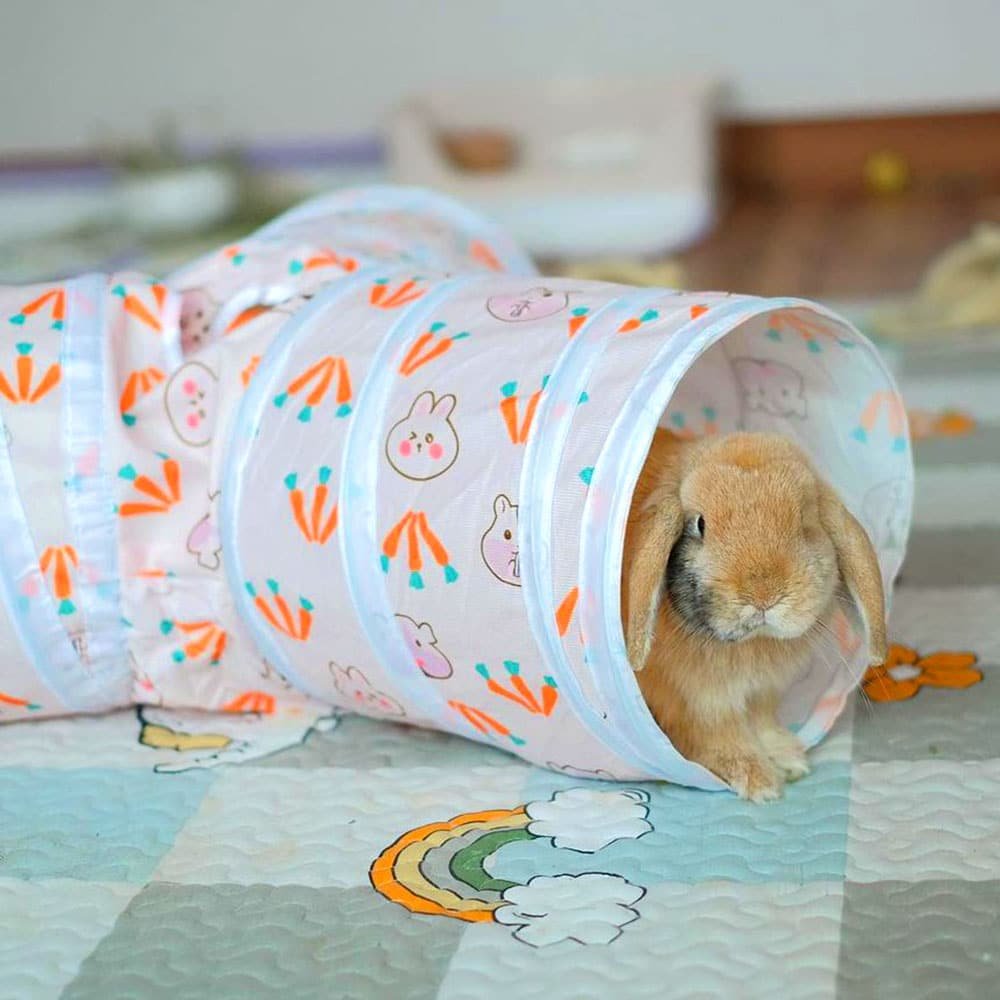 Several route choices
Foldable Rabbit Tunnel
A Y-shaped layout with several openings for rabbits that enjoy changing direction while exploring.
View the tunnel →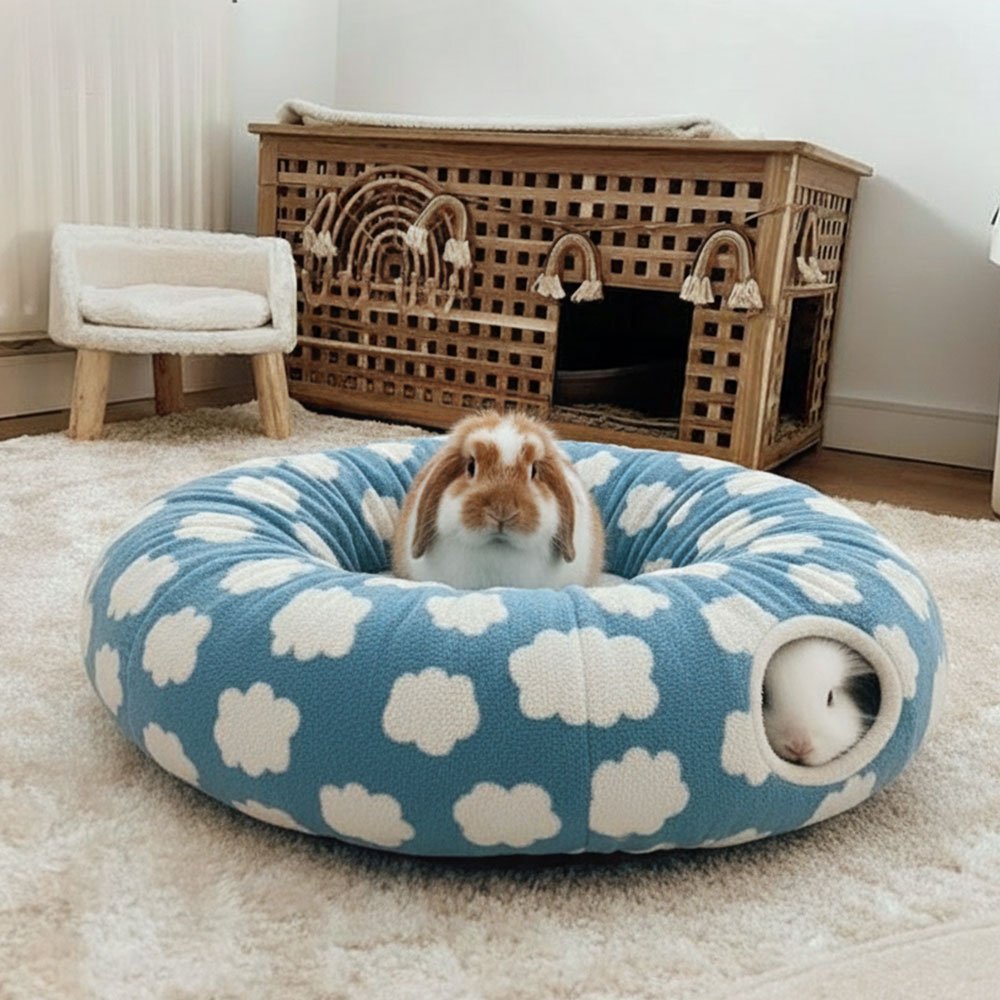 Round hide + lounge
Rabbit Tunnel Cloud
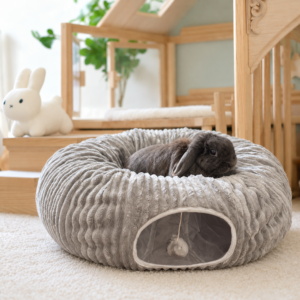
A soft circular tunnel with a central lounging area and several openings for curious rabbits.
View the tunnel →Where should you place a rabbit tunnel?
Place the tunnel on a clean, dry, non-slip surface in an area your rabbit already uses. Aim one exit toward open floor rather than furniture, walls or a busy doorway. Leave enough room for a fast approach and exit, especially if your rabbit uses the tunnel during zoomies.
How to inspect and clean a rabbit tunnel
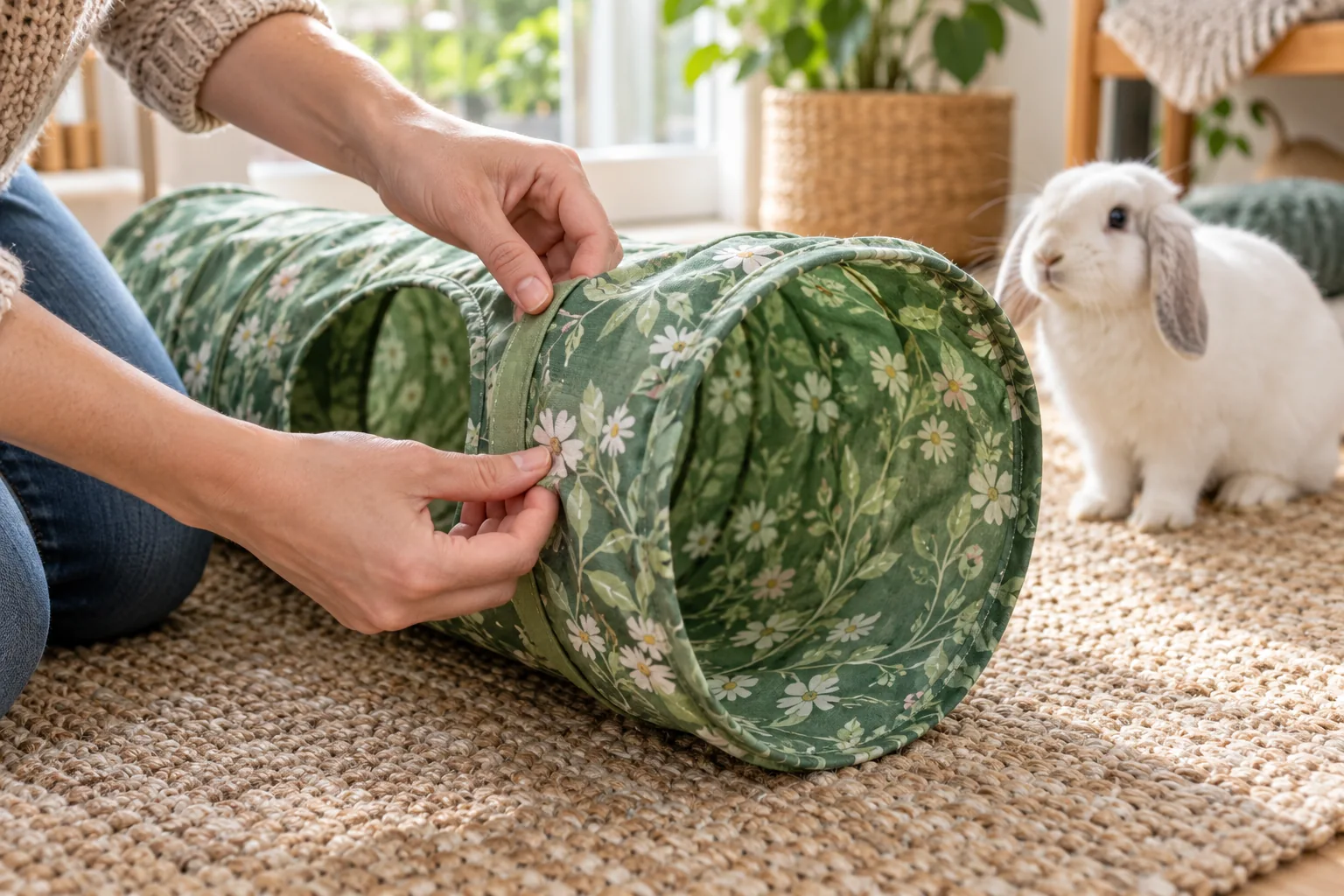
Check the tunnel before first use and during regular cleaning. Run your hands over seams, edging, clips, zips and support rings. Look for loose threads, exposed wire, sharp plastic, holes or sections that collapse around the body. Remove damaged tunnels rather than waiting for the next play session.
Follow the product care label. Shake out hay and fur, spot-clean or wash as directed, rinse away cleaning residue and dry every layer completely before returning it. Damp fabric can smell, hold dirt and become unhygienic. A tunnel used as a litter spot needs more frequent cleaning—or a different placement.
Remove the tunnel if it becomes a swallowing or trapping risk
Stop use if your rabbit chews through fabric, exposes a support, catches a nail, becomes stuck or cannot leave freely. Contact a rabbit-savvy veterinarian promptly if you suspect material was swallowed or notice reduced appetite, fewer droppings, pain or unusual behaviour.
Frequently asked questions about rabbit tunnels
What diameter should a rabbit tunnel be?
There is no universal diameter. Measure the widest part of your rabbit and compare it with the internal opening listed by the seller. Your rabbit should pass through smoothly without compressed fur, squeezing or snagging.
Is a fabric tunnel safe for rabbits?
It can be suitable for a rabbit that runs through or rests without eating the material. Supervise first use and inspect fabric, seams and supports regularly. Remove it if your rabbit persistently chews or swallows fibres.
Do rabbit tunnels need two exits?
Yes, a tunnel or hide should provide an open way in and out. Two or more exits help a rabbit avoid feeling trapped and are especially important when resources are shared by bonded rabbits.
Can two rabbits share one tunnel?
Bonded rabbits may share a roomy tunnel, but size and layout matter. Choose for the larger rabbit, keep several exits accessible and provide additional hiding options so neither rabbit can guard the only route.
How do I encourage a rabbit to use a new tunnel?
Place it in a familiar play area and leave it still. Add a little hay near—not deep inside—the entrance and allow investigation without pressure. Some rabbits enter immediately; others need several days.
Can a rabbit tunnel stay outdoors?
Only if the product is designed for that use and remains dry, shaded, stable and protected. Many fabric tunnels are intended for indoor or supervised covered use. Always follow the maker’s instructions.


Elodie
Rabbit guardian and care enthusiast with over 10 years of hands-on experience living with house rabbits. Through Rabbit World, Elodie shares practical guidance focused on safe enrichment, thoughtful product choices and the everyday habits that help rabbits thrive.