A calm vet trip starts before the car moves. Choose a carrier that supports your bun’s body, allows fresh air to circulate and lets the veterinary team reach them without a wrestling match.
What is the best rabbit carrier for a vet visit?
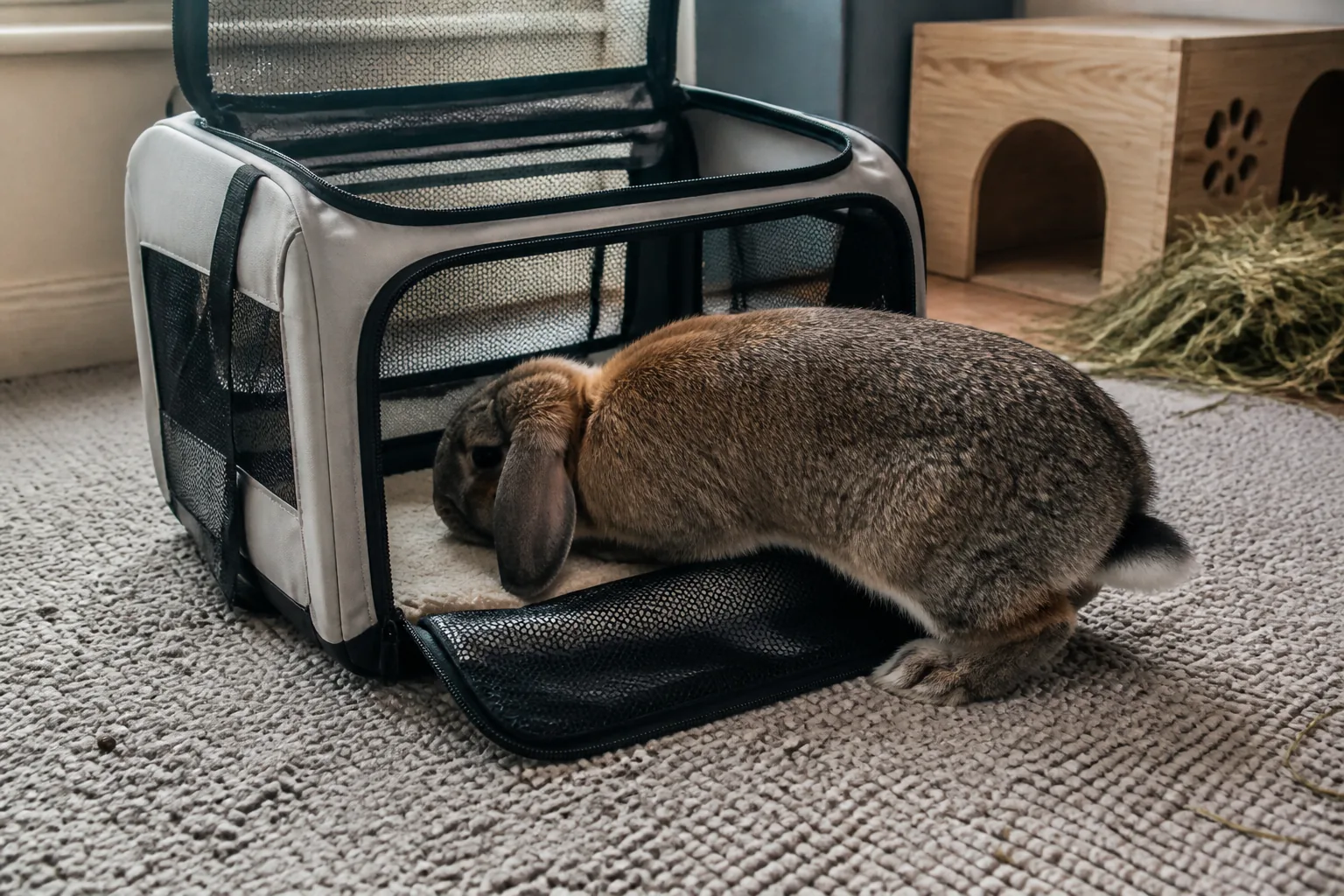
For most house rabbits, the best vet carrier is sturdy, well ventilated and easy to open from both the front and the top. It needs a flat, non-slip floor and secure fastenings. Your rabbit should be able to sit naturally, turn around and lie down, but the carrier should not be so oversized that your bun slides from side to side during travel.
Rabbit carriers are not all equally practical just because a bunny fits through the door. A soft bag may look cozy but collapse around a larger rabbit. A huge crate may give plenty of room at home but become unstable in the car. The right choice balances usable internal space, airflow, support, access and safe handling.
The five things a rabbit carrier needs
Enough space
Room to turn, sit, loaf and lie without being compressed.
Fresh airflow
Several open ventilation areas that remain clear during travel.
Stable footing
A solid base plus a thin non-slip, absorbent liner.
Secure closures
Zips, clips and seams your bun cannot push or chew open.
Easy access
A front door for training and a top opening for gentle handling.
What size carrier does a rabbit need?
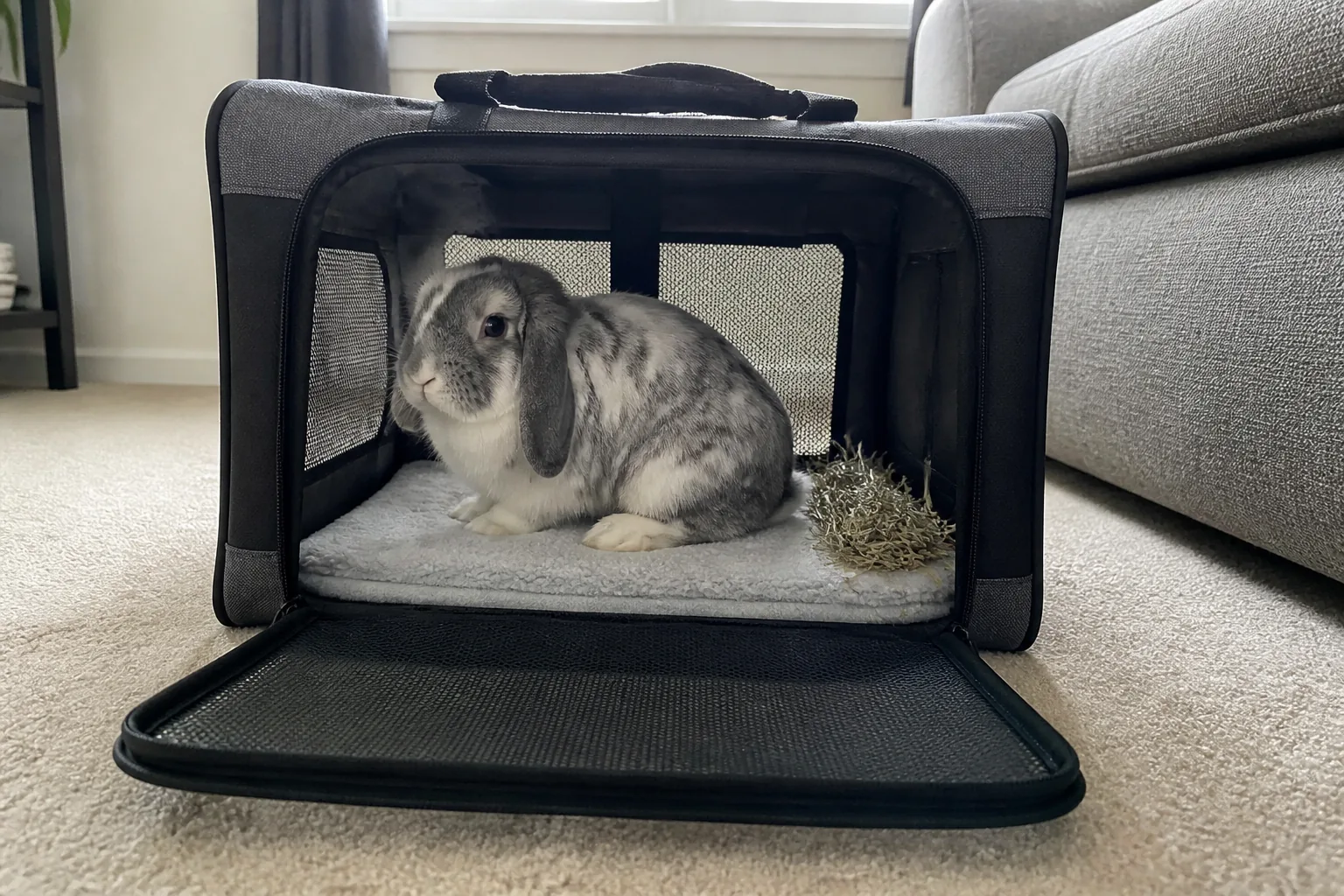
Measure the usable interior, not just the outside of the bag. Your bun needs enough length and width to change position and enough height to sit naturally without being forced into a crouch.
- The turn test: your rabbit can turn around without folding the body sharply.
- The rest test: your bun can loaf or lie down without being pressed against every wall.
- The door test: hips, ears and feet pass through comfortably.
- The lift test: the base stays level when the carrier is picked up.
A carrier can also be too large for a short trip. If your little loaf is tossed around when you brake, add a securely fitted liner or choose a more suitable size. Never fill empty space with loose cushions that can shift, trap heat or obstruct ventilation.


Front opening or top opening?
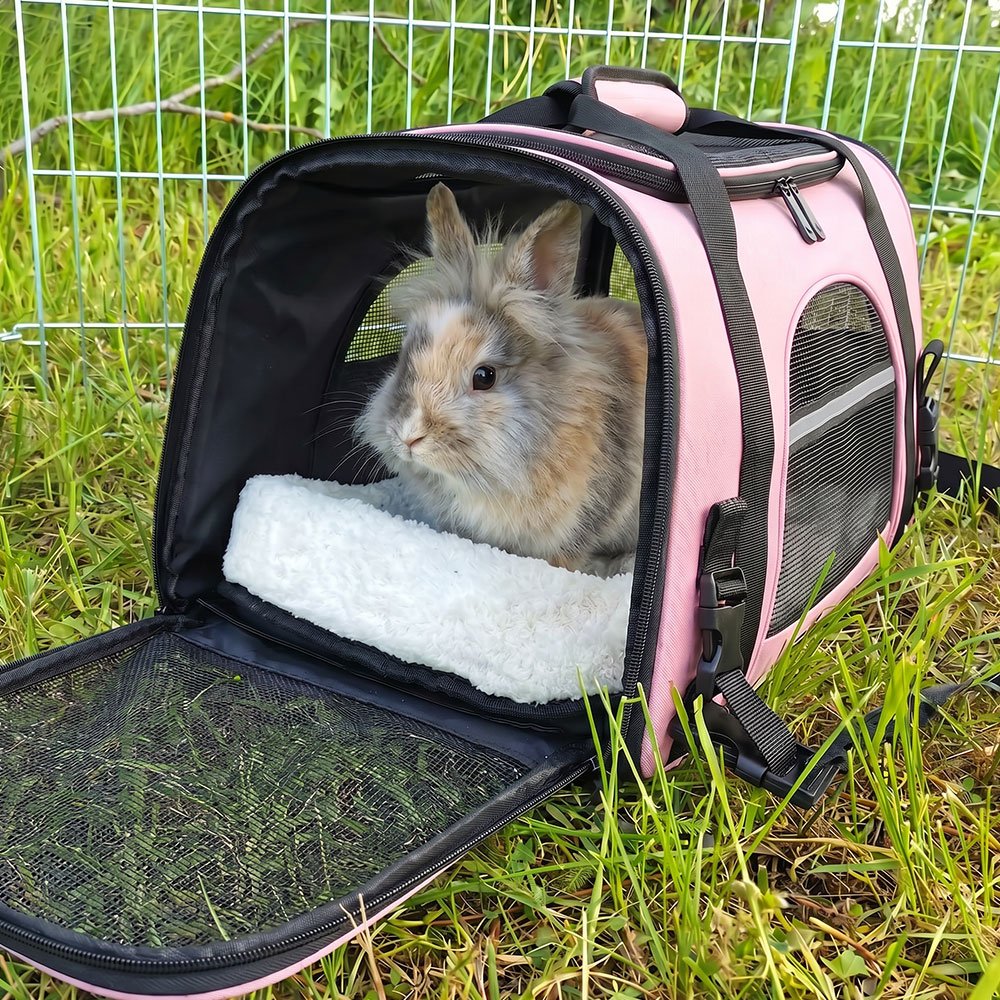
Ideally, choose both. A front opening lets you teach your rabbit to walk in voluntarily at home. A top opening or removable top gives the vet safer access without dragging a frightened rabbit through a narrow door.
The Rabbit Welfare Association’s rabbit welfare guidance highlights this practical pairing: front access helps a rabbit learn to enter, while top access helps at the clinic.
Ventilation must work from every position
Mesh panels and ventilation slots only help when they remain uncovered. Airflow should reach your rabbit whether the carrier is on the floor, in your hands or secured in the car. Avoid placing a bag flat against luggage or wrapping the whole carrier in a blanket.
Several open panels
Ventilation on more than one side keeps air moving if one panel sits near a seat or wall.
Shade only part
A light towel can create privacy, but leave generous ventilation exposed and watch the temperature.
Clear viewing domes
They can hold heat quickly. Large mesh areas and shade matter more than a panoramic view.
Soft carrier, hard carrier or backpack?
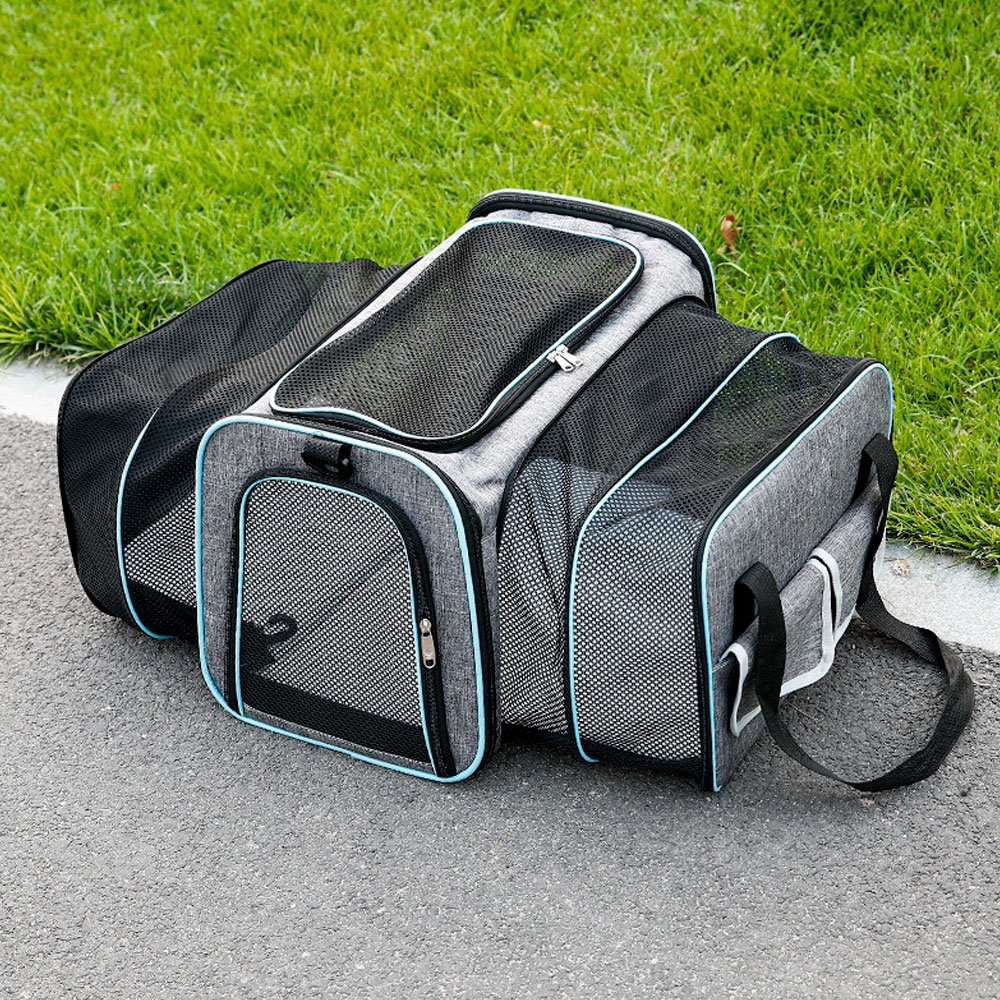
Structured soft carrier
Comfortable to carry and useful for many short vet trips when the base remains flat, the sides hold their shape and every zip is secure.
- Light to handle
- Often offers several openings
- Inspect mesh, seams and base regularly
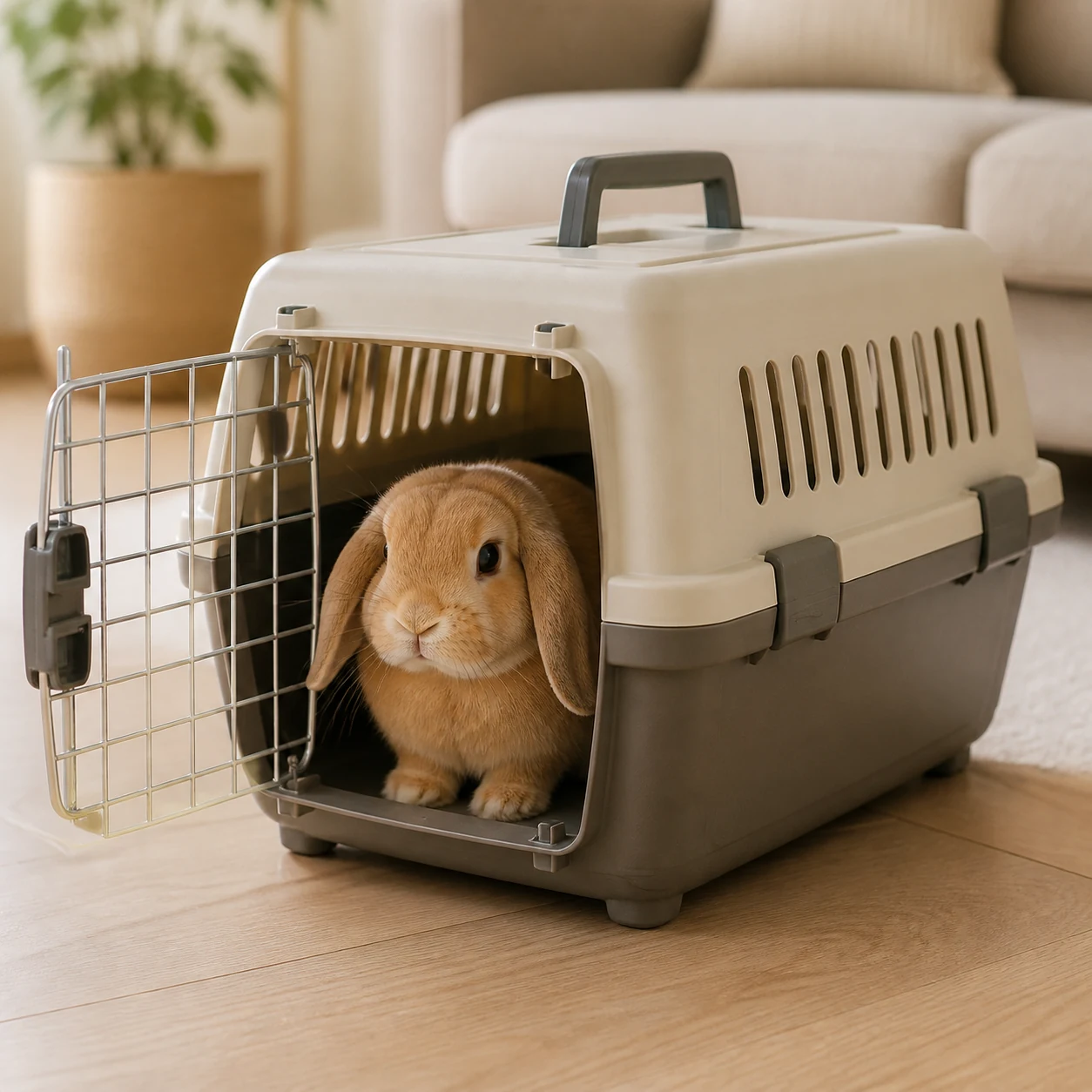
Hard-sided carrier
A strong option for powerful chewers, longer journeys and rabbits who need a rigid shell. Choose generous ventilation and a removable top.
- Stable walls
- Easy to wipe
- May be heavier and noisier
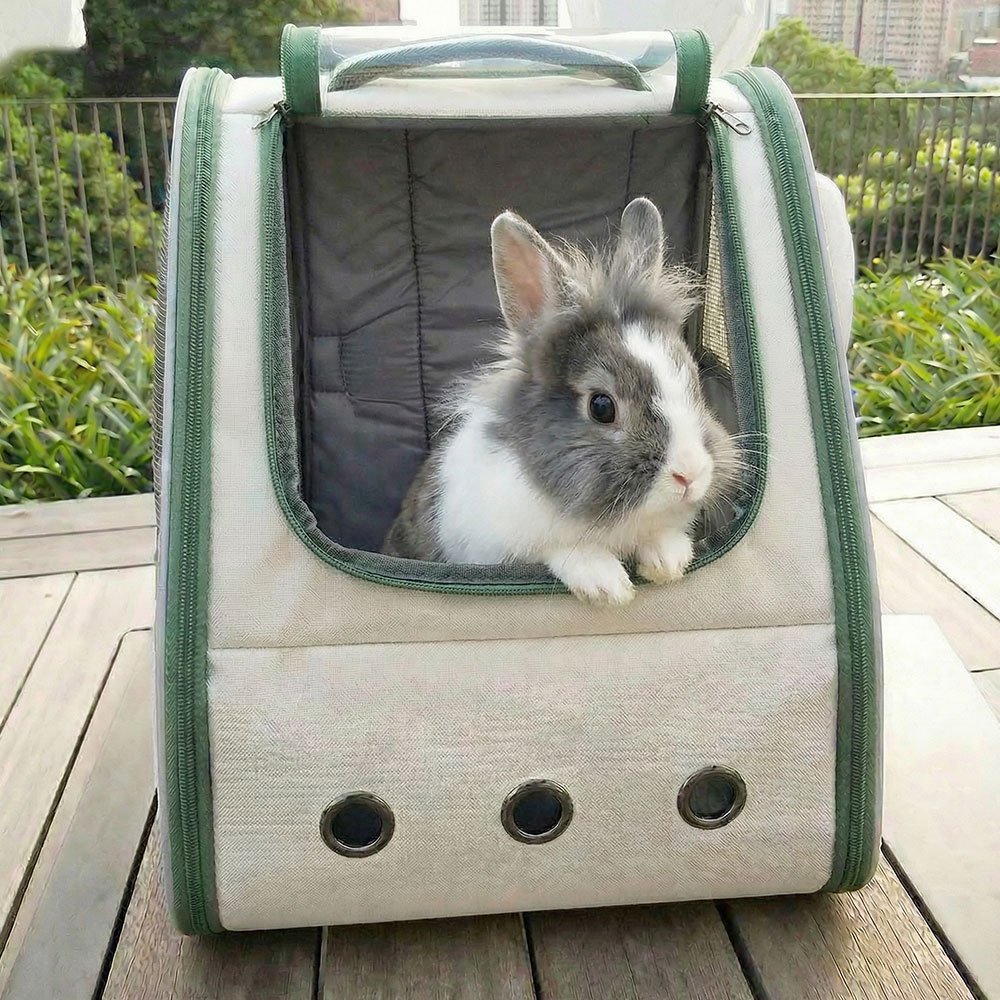
Rabbit backpack
Convenient for short walking routes only when it stays level and ventilated. Avoid steep angles, bouncing, heat-trapping shells and cramped interiors.
- Hands-free carrying
- Fit and airflow vary greatly
- Not the default choice for every bun
Three Rabbit World carriers to compare
Look at your rabbit’s measurements and temperament before choosing. Product names such as “small” or “large” are less useful than the actual internal space, openings and floor support.
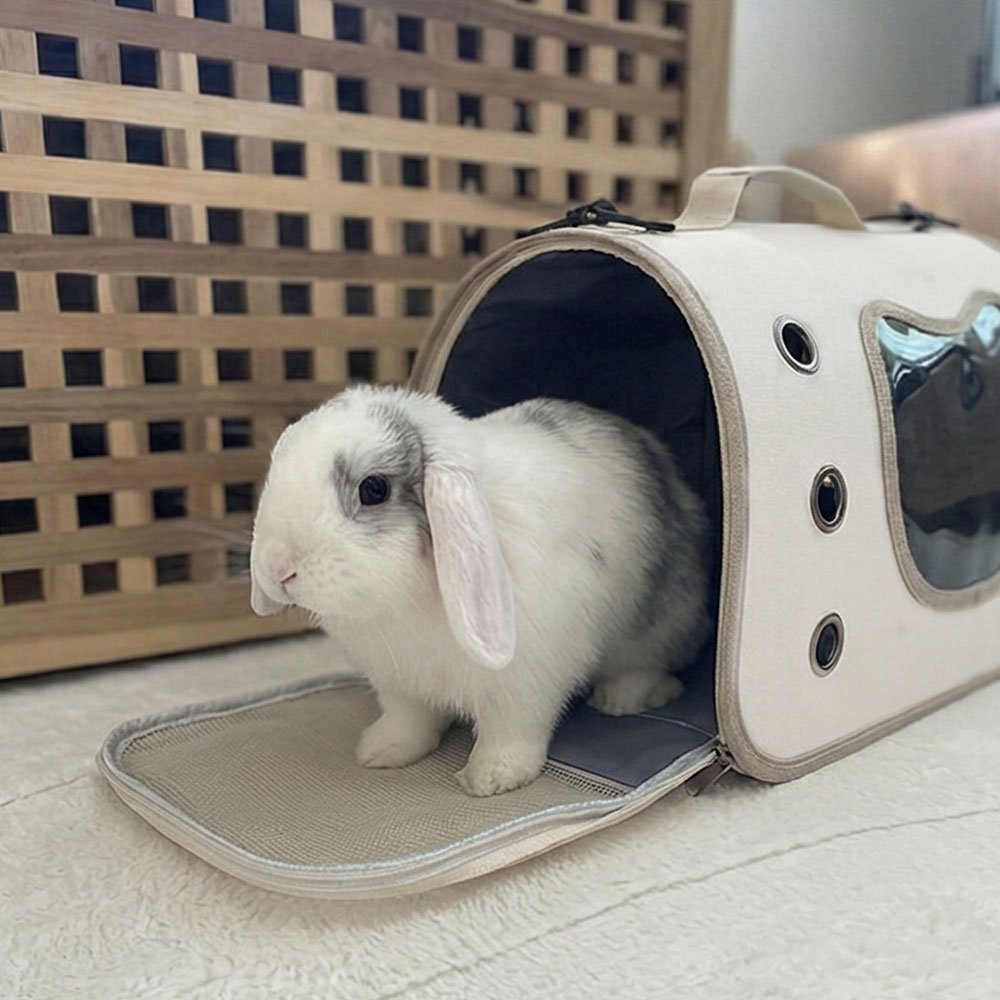
Rabbit carrier for vet trips
A structured everyday bag with multiple access points, mesh ventilation and a washable fleece liner.
See the carrier
Carrier with cushion
A compact carrier for small to medium buns with mesh panels, a washable cushion and shoulder strap.
See the cushioned carrier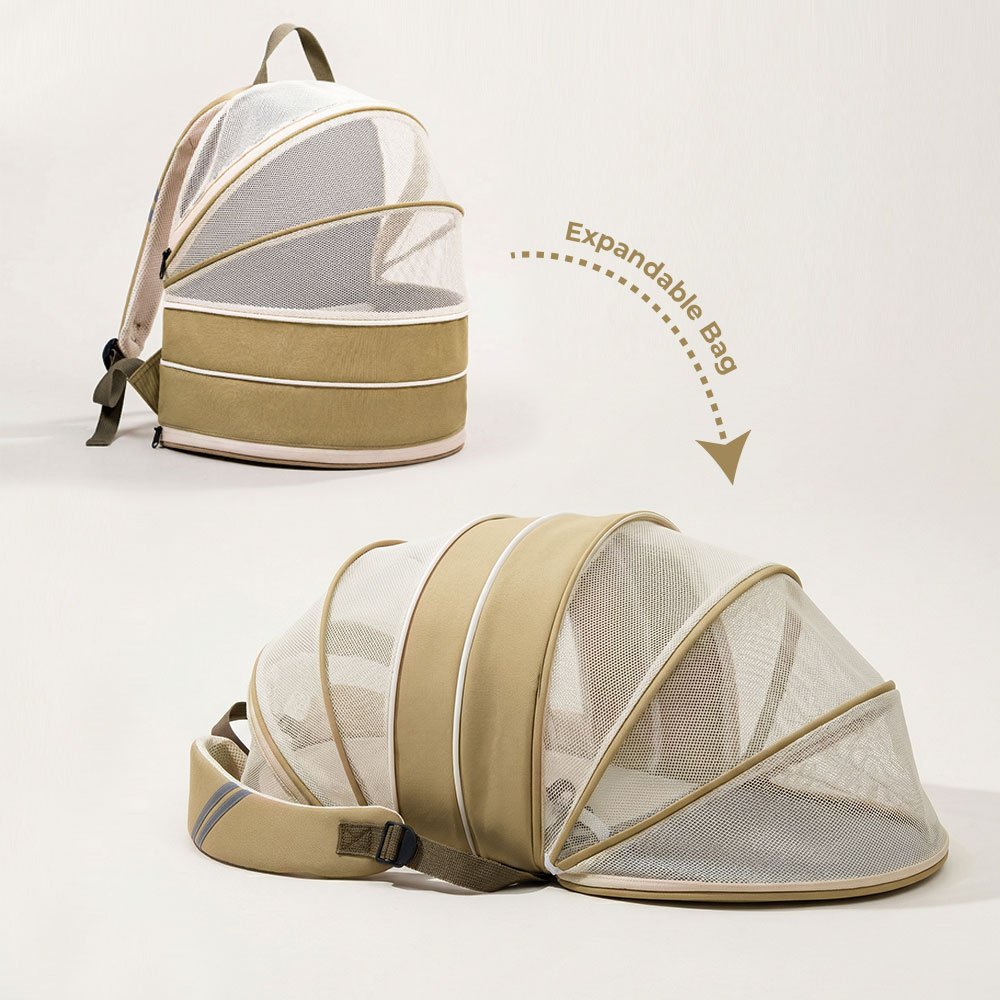
Carrier with expandable sides
Extra resting space for safe stationary breaks, with top and side access. Keep the carrier compact and stable while moving it.
See the expandable carrierCarrier details that are easy to miss
Before buying, open and close every access point as if a nervous rabbit were already inside. The carrier should not fold inward when you lift it, and the handle should feel balanced rather than tipping the floor toward one end. Run your fingers around the interior to find sharp zip ends, rough plastic, exposed wire, loose threads or gaps where a nail could catch.
Check the base. A removable board or rigid insert should cover the whole standing area without bending under your bun.
Test every fastener. Zips should meet securely and clips should not open when the fabric is pulled or pushed.
Look at the mesh. Openings must provide airflow without being large enough for teeth, nails or a determined nose to become trapped.
Also think about the route between your home and the clinic. A carrier that barely fits through the car door or becomes awkward on stairs is more likely to tilt. If you travel by public transport, choose a model you can keep level while standing, turning and waiting. Comfort inside matters, but your ability to carry the carrier steadily matters too.
Set up a non-slip, absorbent floor
A bare plastic base can make every turn and brake feel frightening. Add an absorbent layer, then cover it with a thin, securely fitted non-slip towel or washable liner. The surface should stay flat beneath the feet, with no loops, loose threads or exposed pad edges to chew.
The RSPCA transport guide recommends an absorbent base topped with a towel or veterinary bedding to create secure footing. Pack a spare liner and a bag for anything wet, especially for long appointments.
Make the carrier part of everyday life
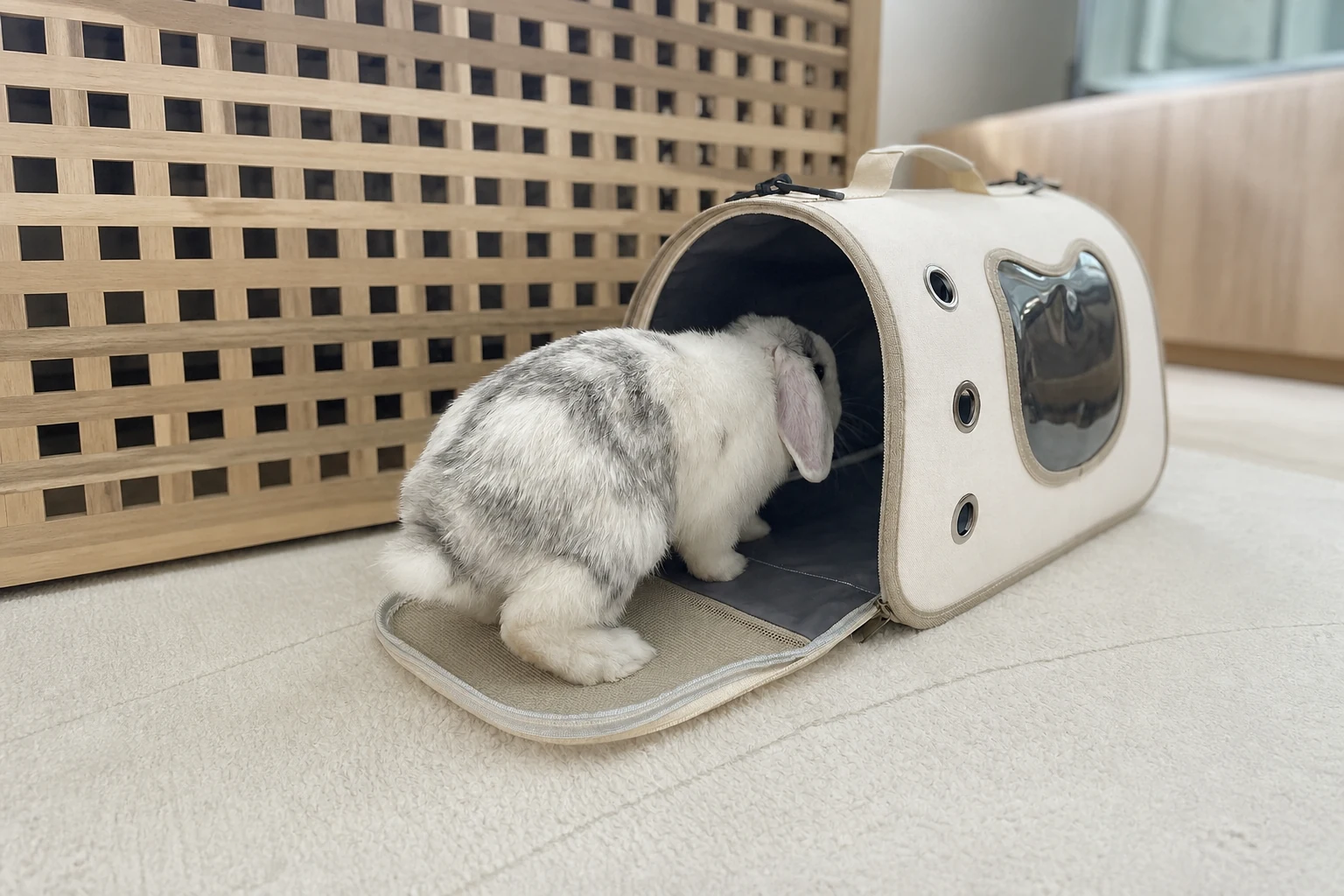
Do not let the carrier appear only five minutes before a vet appointment. Leave it open in your bun’s familiar room, secure the door so it cannot swing and place a little hay inside. Let your rabbit sniff, hop in and leave without being trapped.
- Start with the carrier open and motionless on the floor.
- Reward voluntary approaches with hay or one tiny familiar treat.
- Close the door briefly, reopen it and build duration gradually.
- Practise lifting the carrier only after your bun relaxes inside.
- Never chase a rabbit around the room immediately before departure if you can prepare calmly instead.
A familiar-smelling towel and fresh hay can make the space feel less strange. The RSPCA also advises providing hay and familiar items during transport.
Keep the waiting room calmer
Clinic waiting rooms can be noisy and may include dogs, cats and unfamiliar smells. Keep your rabbit inside the closed carrier and place it on a stable chair or your lap rather than directly beside another animal. Ask reception whether a quieter corner or examination room is available if your bun is very frightened.
Covering one side with a light familiar towel can reduce visual stress, but keep the ventilation panels open. Watch your rabbit’s posture and breathing instead of repeatedly opening the door to reassure them. A frightened bun can escape incredibly quickly in an unfamiliar building.
At the appointment, tell the veterinary team how the carrier opens before anyone reaches inside. When possible, let the vet remove the top or open the largest access panel. After the examination, check that every zip and clip is fully closed before lifting the carrier again.
How to secure a rabbit carrier in the car
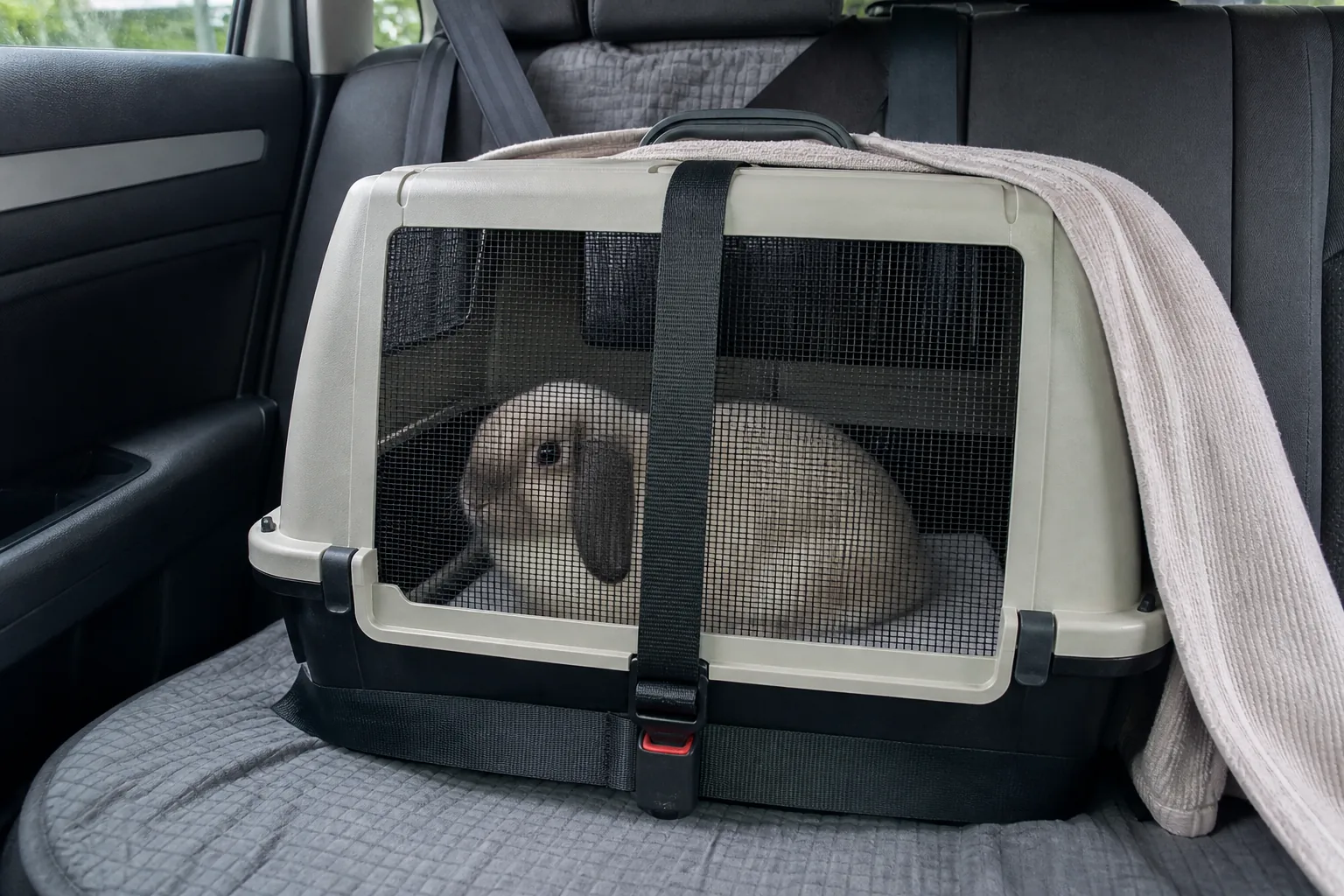
Keep the carrier level, shaded and unable to slide. Follow the carrier maker’s instructions and your vehicle manual when securing it. A seat belt should hold the carrier, not press against the rabbit or deform a soft bag. The RSPCA guide recommends positioning the side of the carrier toward the direction of travel to reduce the force on the rabbit during sudden braking.
- Cool or warm the car to a comfortable temperature before bringing your bun out.
- Keep ventilation panels clear and avoid direct sun.
- Drive smoothly and keep music quiet.
- Never transport a rabbit loose in the car, in the trunk or in a parked vehicle.
- Check your rabbit during longer trips without opening the carrier in an unsecured place.
Should bonded rabbits travel together?
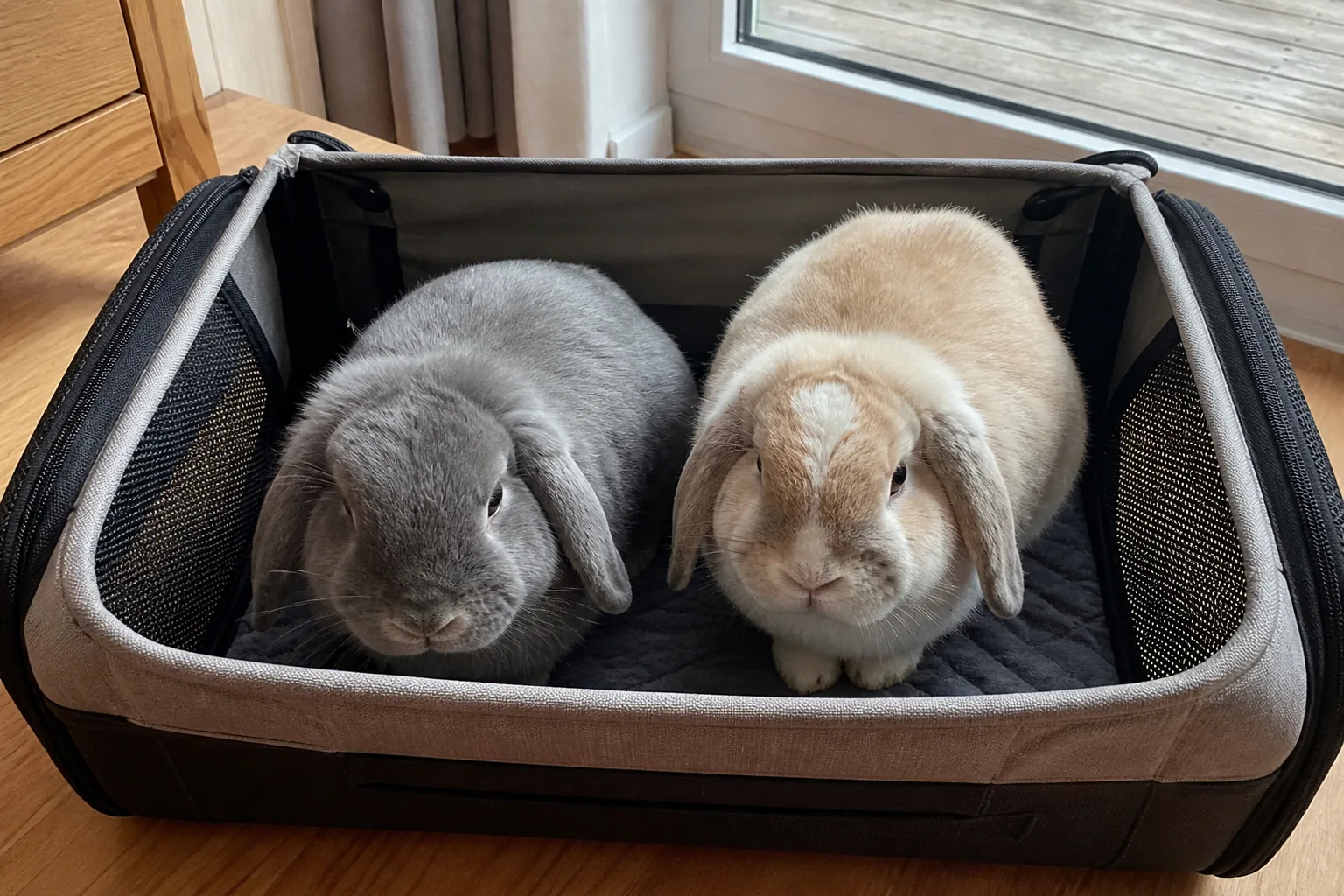
Bonded rabbits often gain reassurance from staying together. If they normally share space peacefully, use a carrier large and strong enough for both to sit, turn and settle without one rabbit pinning the other.
For a routine vet visit, tell the clinic that they are a bonded pair and ask whether both should attend. Take a second secure carrier as backup for medical procedures or any moment when temporary separation becomes necessary.
What to pack for a rabbit vet visit
Plenty of fresh hay for the journey and waiting room.
A spare liner plus a bag for wet bedding.
Usual food or medication if the clinic asks for it.
Recent notes on appetite, droppings, symptoms and timing.
Photos or a sample when your veterinarian requests one.
Emergency contacts and the clinic address before leaving.
When travel becomes urgent
Open-mouth breathing, collapse, severe weakness, uncontrolled bleeding, a swollen painful belly or sudden inability to move normally needs immediate veterinary advice. Call the clinic while preparing the carrier so the team can guide you and be ready. Do not delay urgent care in an attempt to complete carrier training first.
Rabbit carrier questions
Can a rabbit travel in a cardboard box?
A cardboard box is not a reliable routine carrier. Urine can weaken it, ventilation may be poor and a determined rabbit can chew or push through it. Use a secure purpose-built carrier.
Should I cover my rabbit’s carrier?
You may cover part of it with a light towel to reduce visual stress, but never block the ventilation panels. Keep checking temperature and airflow.
Can I put food and water bowls inside?
Always provide hay. For short trips, a loose water bowl may spill and soak the floor, so ask your vet about the journey length and offer water immediately before and after travel. Use a securely attached container when appropriate.
How do I clean a rabbit carrier?
Remove the liner, vacuum hay and fur, then clean according to the manufacturer’s instructions with a rabbit-safe method. Rinse and dry everything fully before replacing the liner.



Elodie
Rabbit guardian and care enthusiast with over 10 years of hands-on experience living with house rabbits. Through Rabbit World, Elodie shares warm, practical guidance focused on comfort, safety and the small everyday details that help every little bun feel at home.