
Rabbit bonding is not about making two buns cuddle on day one. It is a gradual, supervised process that helps two healthy, neutered rabbits feel safe enough to share space, food and everyday life.
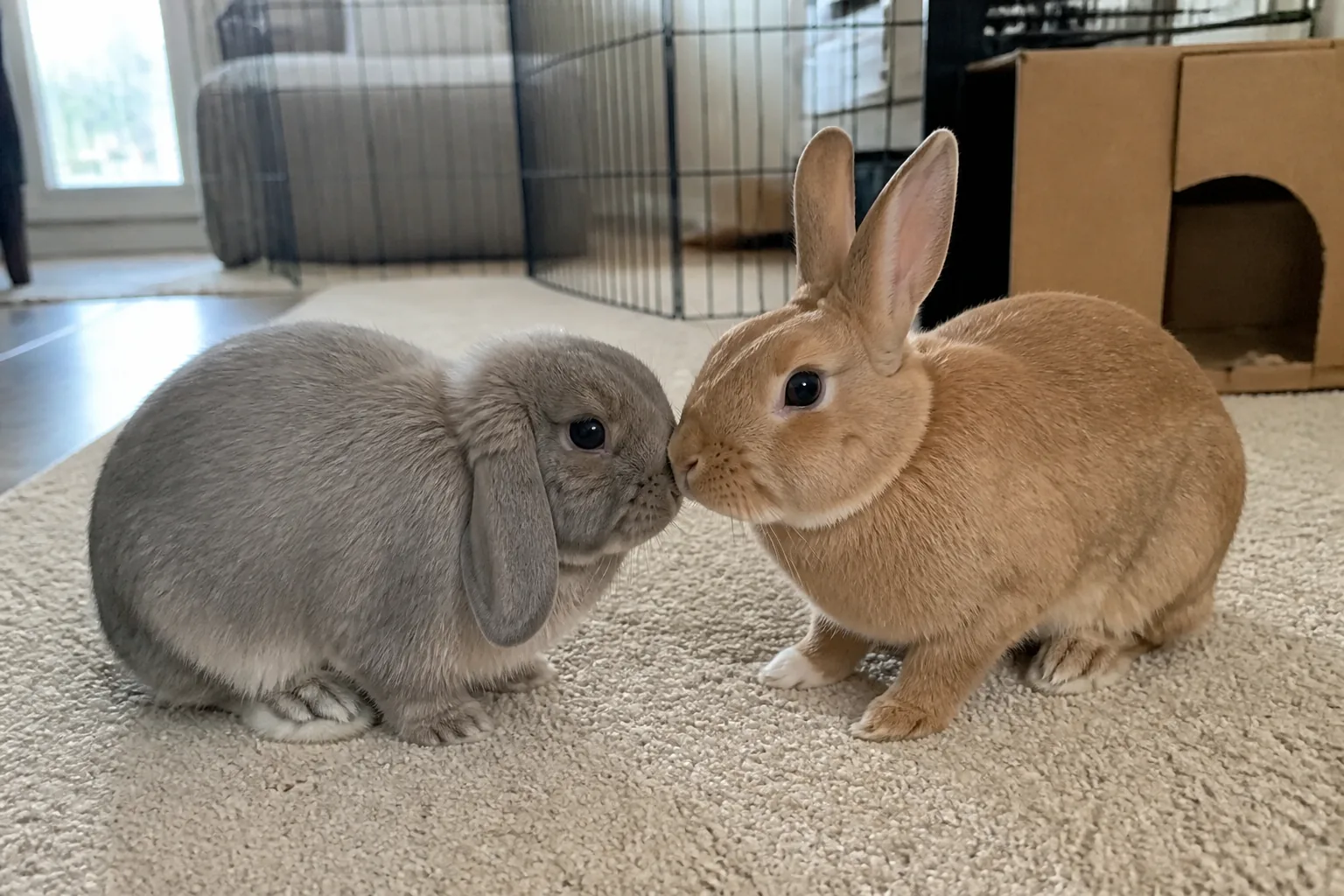
How do you bond two rabbits safely?
Start with two healthy, neutered rabbits living separately but safely near each other. Once they are calm around the divider, introduce them for short, fully supervised sessions in a neutral space that neither rabbit owns. Increase time and space only when both rabbits can eat, rest and move normally together. Slow down if tension is building; separate immediately if a true fight begins.
Some pairs settle quickly; others need many careful sessions. A slower bond is not a failed bond. What matters is preventing frightening fights and helping each rabbit learn that the other bun predicts ordinary, safe things: hay, rest, freedom to move away and calm company.
Before the rabbits meet: four non-negotiables
Both are neutered
Hormones can intensify mounting, marking and territorial conflict. Allow the recovery period recommended by your veterinarian before introductions.
Both are healthy
Pain can change behavior fast. Arrange a rabbit-savvy veterinary check when health, sex or neuter status is uncertain.
Separate safe homes
Each bun needs their own hay, water, litter box, hideout and resting area while the relationship develops.
Neutral territory
Use a place neither rabbit considers home. Simply cleaning one rabbit’s favorite room may not make it emotionally neutral.
Do not place an unfamiliar rabbit directly into your resident rabbit’s enclosure. Even a normally gentle bun may defend a familiar litter box, hideout or room. One bad fight can create fear and make later sessions much harder.
Stage 1: let them live side by side safely
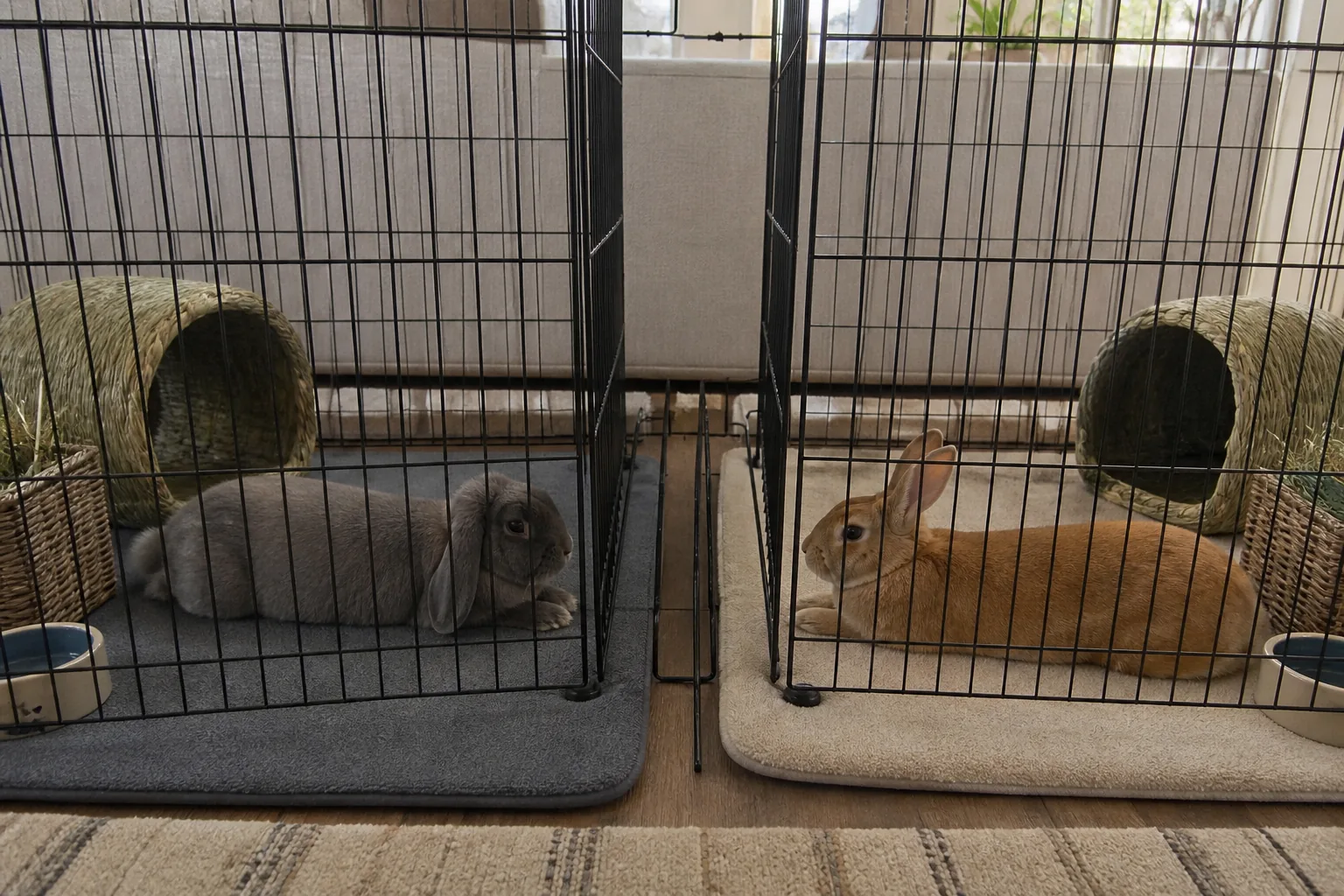
Set up two roomy pens close enough for the rabbits to see, hear and smell one another, but use a secure double barrier or safe gap if they could bite through the bars. Each rabbit must be able to retreat out of sight. Do not force them to sit at the divider.
At first you may see extra marking, staring or a little agitation. Stay at this stage until both buns can eat, groom themselves, rest and use their litter boxes normally while the other rabbit is nearby.
You can swap a clean toy, blanket or litter box between areas if neither rabbit becomes distressed. The goal is not to erase every reaction. It is to make the other rabbit’s scent feel ordinary.

The five stages of rabbit bonding
Think of these as checkpoints, not a rigid calendar. A pair can remain at one stage for days, return to an earlier stage after a tense session or move ahead surprisingly quickly.
Calm neighbors
The rabbits live separately and begin behaving normally near the divider. Neither rabbit can bite the other through the barrier.
Short neutral meetings
Begin fully supervised sessions in a neutral, non-slip area. Keep the setup simple so you can see both rabbits clearly and intervene safely.
Longer calm sessions
Gradually extend successful meetings. Add open-ended tunnels, hay and duplicate resources only when they do not trigger guarding.
Shared routines
Look for eating, resting, exploring and self-grooming in the same space. Affection is lovely, but peaceful independence is also progress.
Move into a prepared shared home
Clean and rearrange the future living area, provide several resources and supervise closely as the pair settles into its permanent space.
How to run the first neutral-space sessions
Choose a manageable neutral area
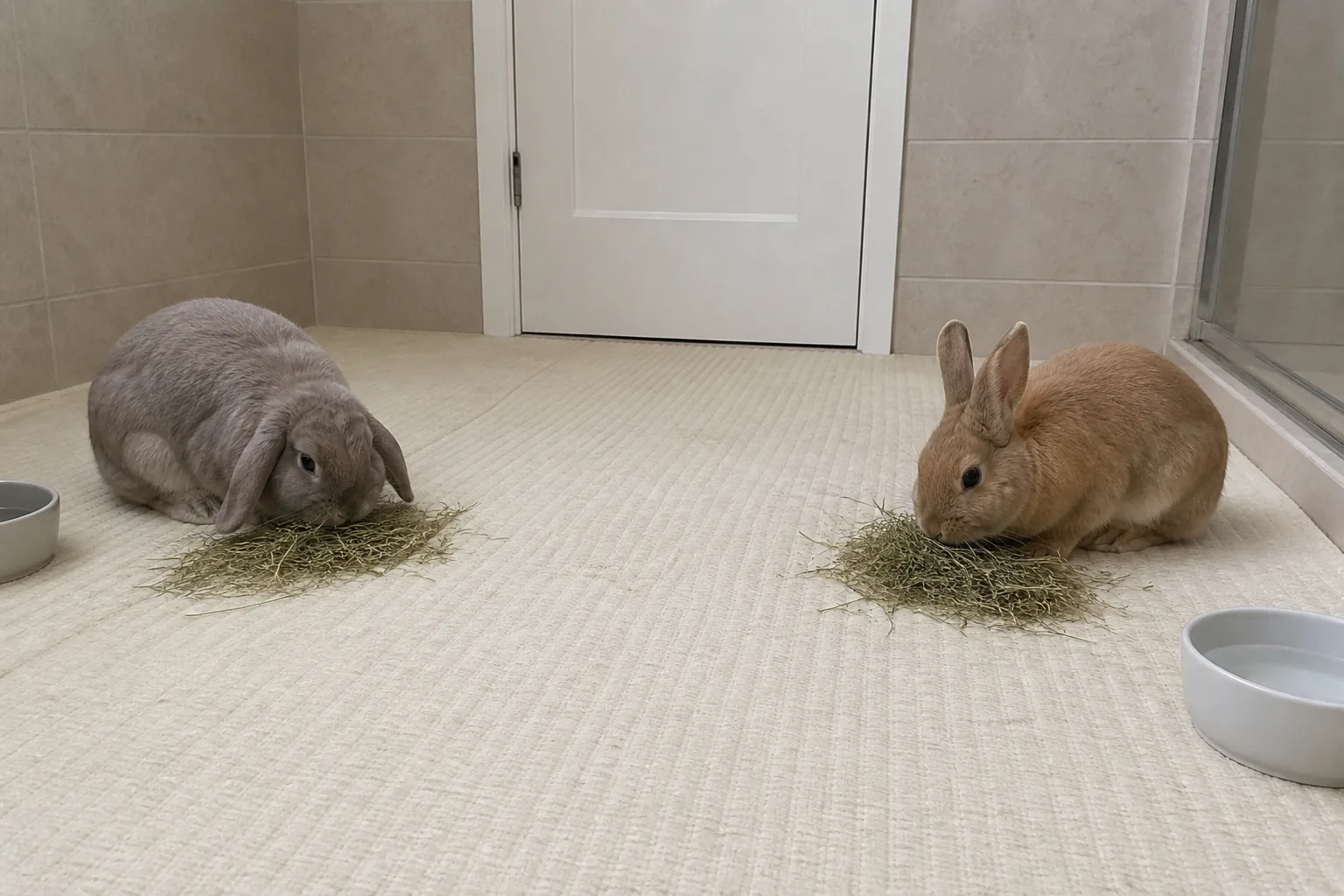
Use a secure, non-slip space where you can reach both rabbits quickly. Avoid a huge room that encourages prolonged chasing and avoid a tiny box that removes the choice to step away.
Prepare before bringing them in
Have a rigid board, laundry basket or thick towel ready to place between rabbits if needed. Wear long sleeves and closed shoes. Never put bare hands into a rabbit fight.
Watch without forcing contact
Let them sniff, ignore one another or explore. Quiet distance is useful information. Pushing their faces together can increase pressure rather than create friendship.
End while both rabbits are settled
Early sessions may be brief. A calm ending gives you a better starting point next time. Return each bun to their separate home afterward.
Rabbit bonding signs: continue, watch or stop?
Do not judge a session from one movement. Look at intensity, repetition and what happens next. A brief chase that ends in both rabbits eating is different from relentless pursuit that leaves one rabbit frozen in a corner.
Calm or positive signs
- Eating, drinking or self-grooming
- Ignoring each other without tension
- Loose bodies and normal exploration
- Resting near one another
- Mirroring behavior
- Grooming or gentle nose contact
Manageable but important
- Brief mounting from behind
- A short chase that stops quickly
- A small nip without pursuit
- Demanding grooming with the head lowered
- Extra droppings or territorial marking
- One rabbit repeatedly moving away
Unsafe escalation
- Tight head-to-tail circling
- Boxing, lunging or repeated hard bites
- Locked-on fighting or rolling together
- Mounting the face or mounting backwards
- Relentless chasing with no escape
- One rabbit panicking, squealing or collapsing
Mounting, chasing and nipping: what is normal?
Mounting
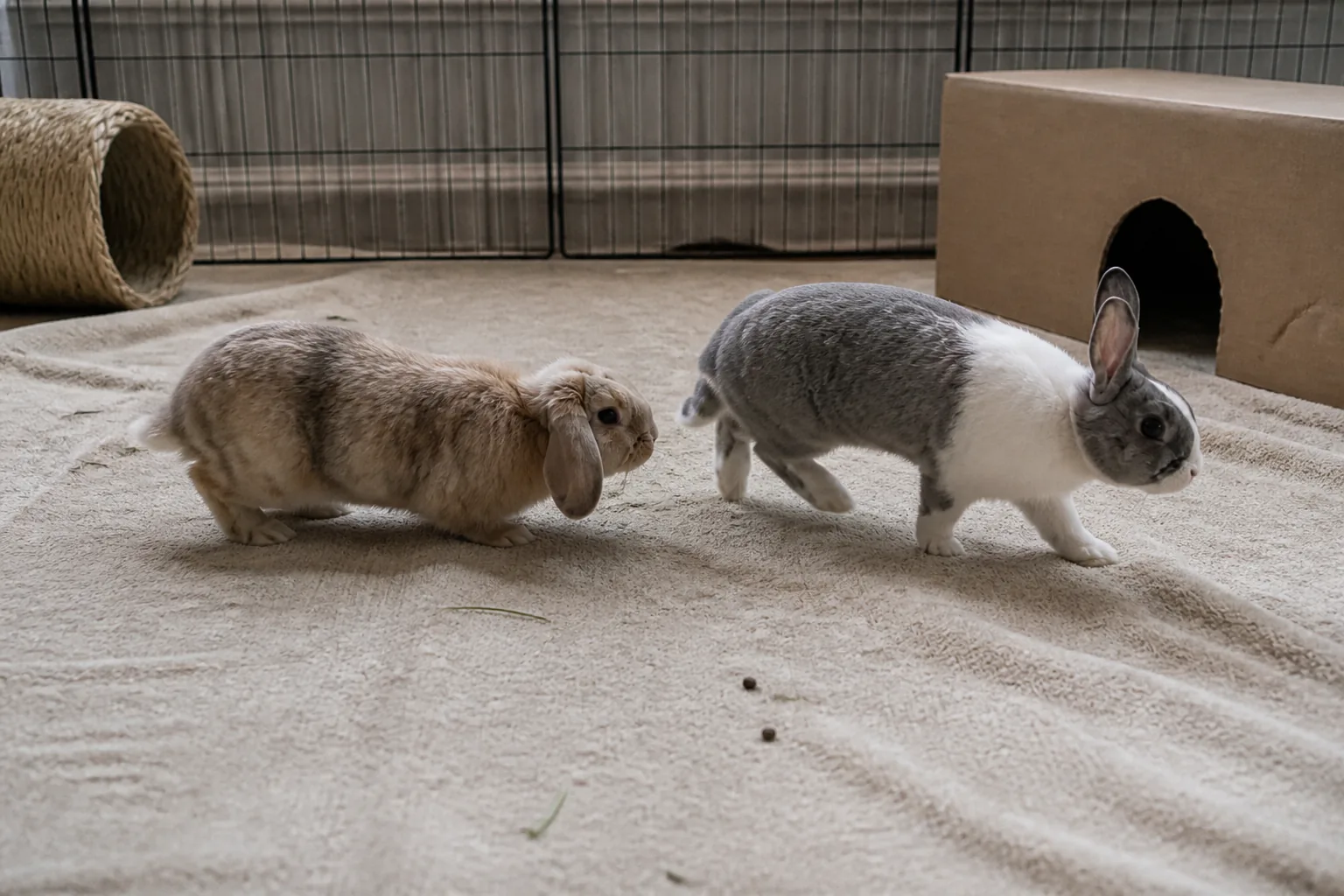
Neutered rabbits may mount briefly while negotiating their relationship. Allow only a short rear mount if the other rabbit remains calm. Interrupt face mounting, backwards mounting or any mounting that triggers panic or retaliation.
Chasing
A few steps of chasing can occur. Interrupt when it becomes fast, repeated or circular, when fur is being pulled, or when the chased bun cannot pause and recover.
Nipping
A quick warning nip is not the same as a bite-and-hold attack. Check the skin after every session. Repeated nipping, lunging or wounds mean the pair needs a slower plan.
Ignoring
Ignoring each other is often excellent early progress. It shows the rabbits can share a space without feeling forced to control, flee from or confront the other bun.
A real rabbit fight must be stopped immediately
Fighting rabbits may lock together, bite repeatedly, kick and roll. Use a solid barrier, basket or thick towel to separate them without placing your hands between their mouths. Move them into secure separate areas and examine both rabbits carefully. Bite wounds can hide beneath fur and may need urgent veterinary treatment.
When should you slow rabbit bonding down?
Go back one stage when sessions are becoming more tense instead of less tense. Useful warning signs include a rabbit spending the whole session hiding, refusing favorite food, staying tightly hunched, breathing rapidly, repeatedly guarding resources or being unable to disengage from chasing.
Also pause and reassess after illness, surgery, pain, a move, a major household change or a serious fight. Sudden aggression in rabbits that were previously comfortable can be a health warning. Do not assume every relationship problem is behavioral.
How long does it take to bond two rabbits?
There is no reliable number of days. Some compatible rabbits relax together very quickly, while cautious, territorial or previously frightened pairs can need weeks or longer. Progress is better measured by what the rabbits can repeatedly do together than by time on a calendar.
Normal life appears
Both rabbits eat, explore, rest and groom themselves. Minor interactions end without your help.
Calm is still fragile
The session is safe, but one rabbit remains watchful or every interaction needs close management.
Stress is accumulating
Chasing, hiding, guarding or appetite changes are increasing from one meeting to the next.
How can you tell when two rabbits are truly bonding?
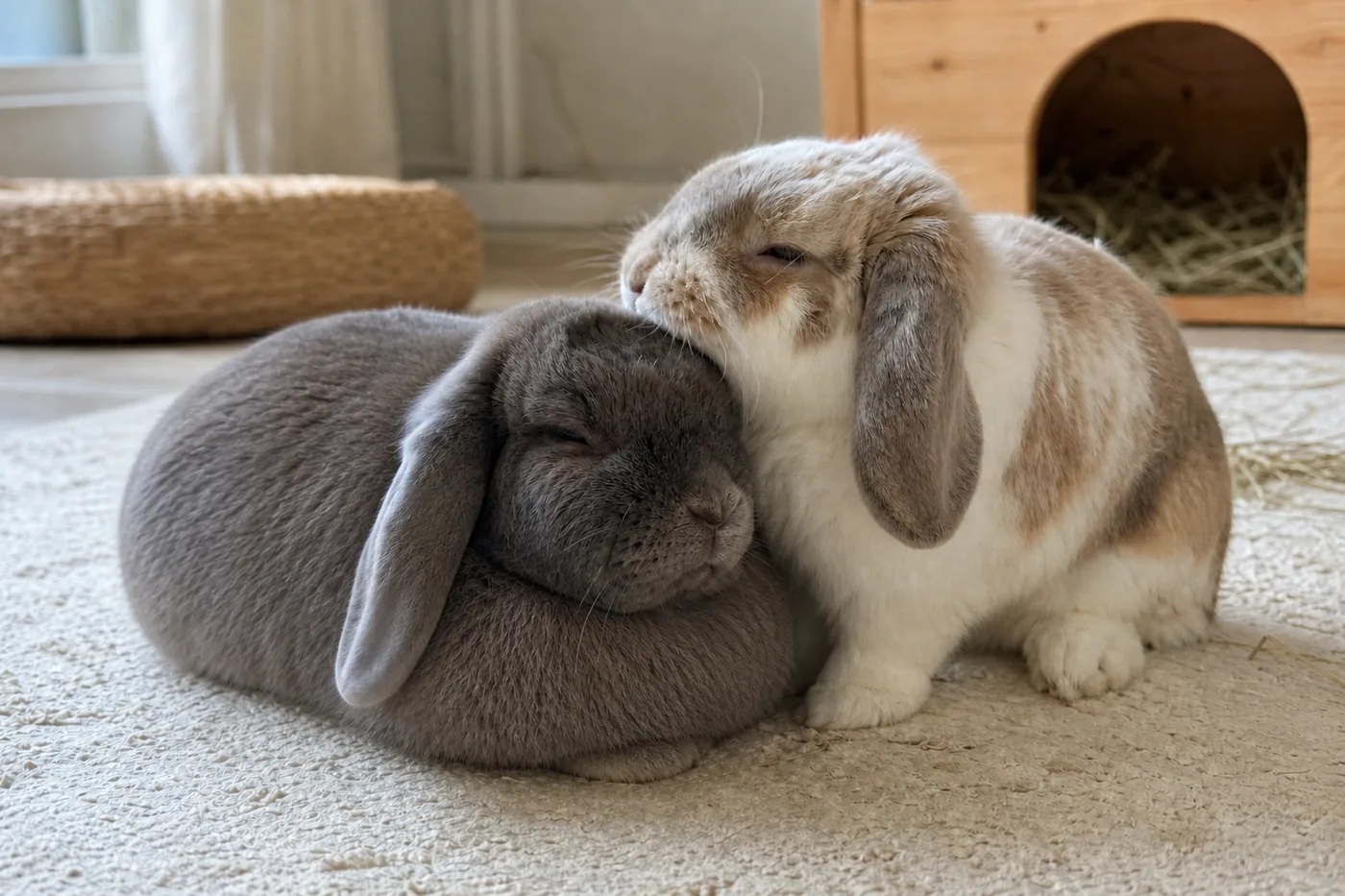

Mutual grooming is a wonderful sign, but it is not the only proof of a bond. A stable pair can also eat side by side, rest with loose bodies, pass one another without reacting, share everyday routines and recover calmly from small disagreements. Some loving pairs groom constantly; others have a quieter friendship.
Moving bonded rabbits into their shared home
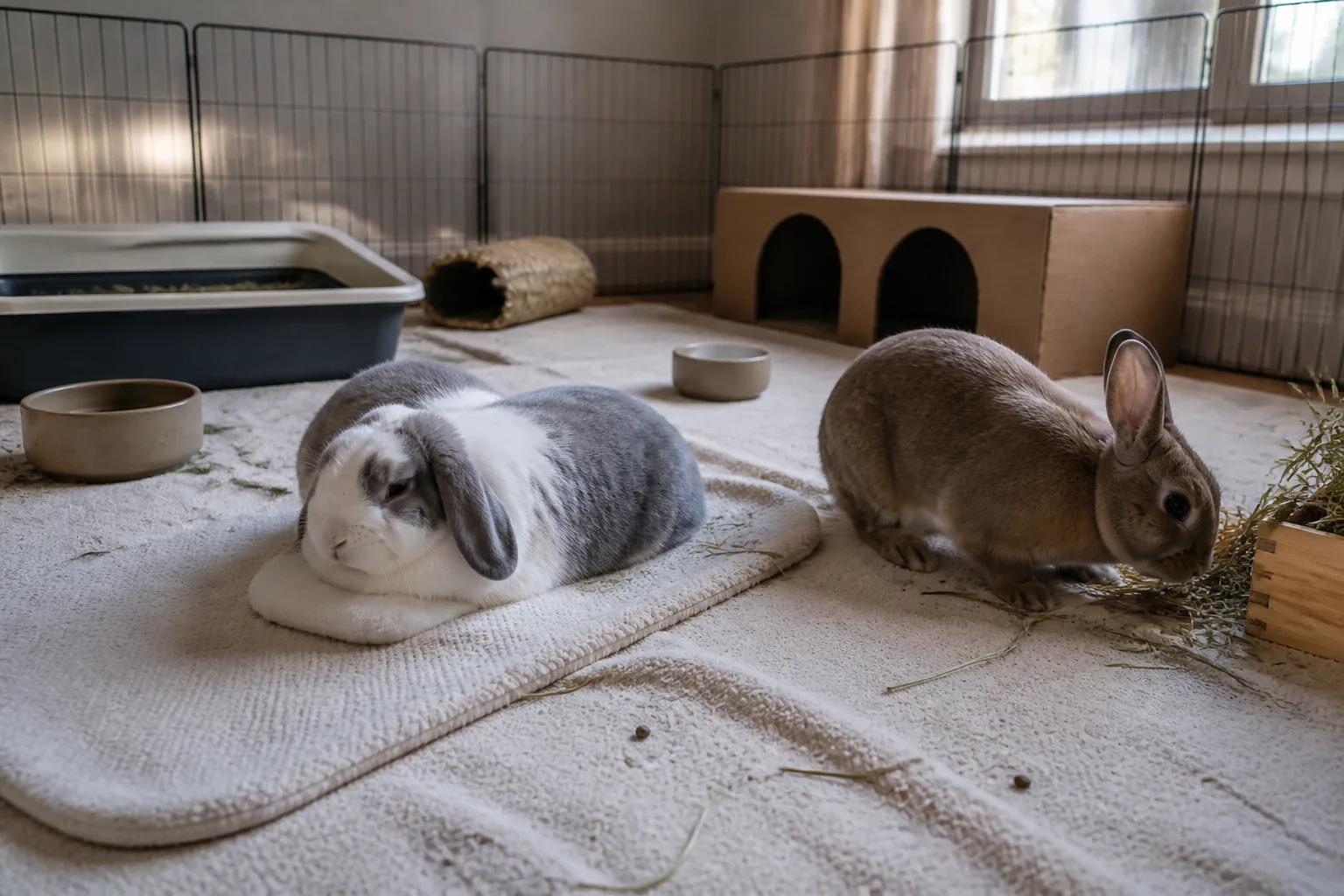
Do not move the pair into a strongly claimed enclosure without preparation. Deep-clean the area with rabbit-safe products, wash fabrics, rearrange furniture and remove heavily guarded objects. The space should feel changed rather than like one rabbit has received an intruder.
For two rabbits, provide several generous hay and water points, roomy litter boxes and hideouts with at least two exits. Duplicate favorite resources at first. Place them far enough apart that one rabbit cannot guard everything from a single position.
Supervise closely during the transition and avoid shrinking the shared space once the pair is settled. Continue checking that both rabbits eat, drink, rest and produce normal droppings. A friendship should improve access to daily needs, not force the quieter bun to wait.
Common rabbit bonding mistakes
Moving too quickly after one peaceful date
A single calm hour is encouraging, but stability means the same relaxed behavior continues across longer sessions and ordinary routines.
Using fear as the main bonding method
Car rides, slippery bathtubs and forced closeness can suppress behavior without creating trust. A calm, neutral, non-slip space gives clearer information about the relationship.
Waiting for grooming before recognizing progress
Eating, resting, ignoring and exploring normally are meaningful signs. Do not manufacture contact when the rabbits are already learning to coexist.
Leaving only one valuable resource
One litter box, hideout or food bowl can create competition. Offer duplicates and open-ended shelters that cannot become traps.
Frequently asked questions about bonding rabbits
What is the easiest rabbit pairing to bond?
A neutered male and neutered female are often considered a promising pairing, but individual temperament and health matter more than a guarantee based on sex. Rescue-led introductions can help a rabbit choose a compatible companion.
Can two female rabbits or two male rabbits bond?
Yes. Same-sex pairs can form strong, lasting bonds when both rabbits are neutered and compatible. Introduce them with the same gradual, neutral-space process and do not assume siblings will remain friendly after puberty without neutering.
Should I let rabbits fight it out?
No. Rabbits can seriously injure one another and can remember frightening encounters. Interrupt escalating behavior before it becomes a fight and separate a true fight immediately using a barrier or thick towel rather than bare hands.
Is chasing normal when bonding rabbits?
A very brief chase can occur while rabbits negotiate space. Stop it when it becomes fast, prolonged, circular or relentless, when fur is pulled, or when the chased rabbit cannot rest, eat or move away safely.
Can bonded rabbits ever be separated?
A stable pair should generally remain together for routine travel, boarding and veterinary visits when practical. Forced separation can be stressful and may disturb the relationship. Follow veterinary advice if medical care requires temporary separation.
What if my rabbits repeatedly fight?
Stop direct sessions and check health, neuter status, territory and setup. Seek hands-on support from a rabbit-experienced rescue, veterinarian or qualified behavior professional. Some rabbits need a different partner rather than repeated risky introductions.


Elodie
Rabbit guardian and care enthusiast with over 10 years of hands-on experience living with house rabbits. Through Rabbit World, Elodie shares warm, practical guidance focused on comfort, safety and the everyday details that help every little bun feel at home.