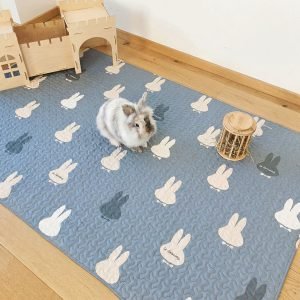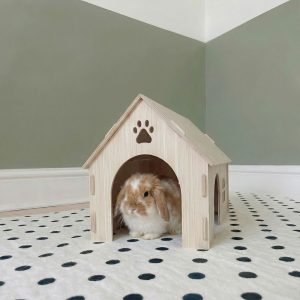
Your bun may be wide awake at sunrise, deeply flopped by lunchtime and ready to rearrange the room at bedtime. Here is how a rabbit’s natural daily rhythm really works.
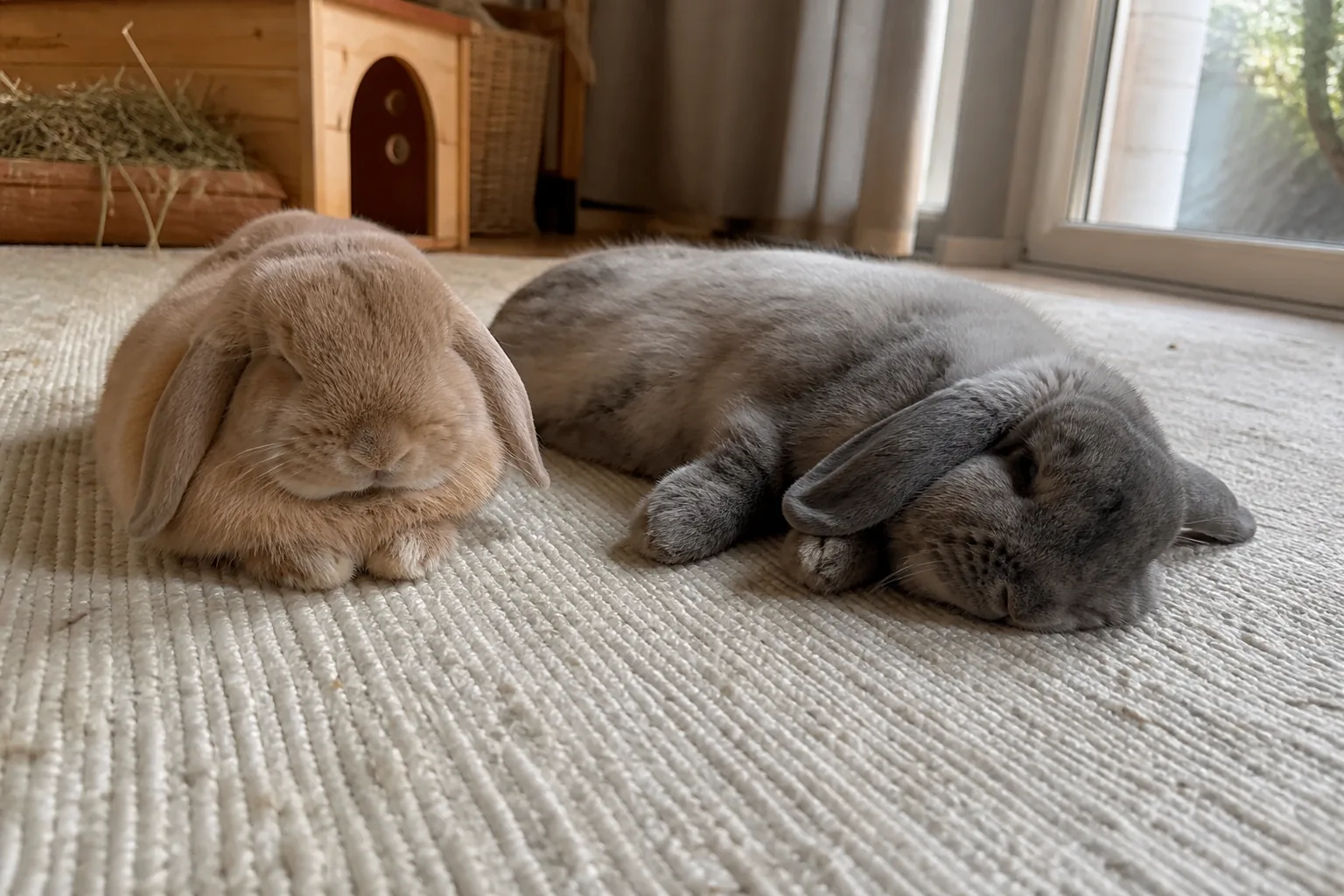
When do rabbits usually sleep?
Rabbits usually have their longest, quietest rest from late morning through the afternoon. They are generally most active around dawn and dusk, then alternate shorter naps with eating, grooming and exploring overnight. This makes rabbits crepuscular, not simply nocturnal. Their exact schedule can shift with age, health, household routines and the season.
A rabbit does not usually sleep in one long block like a human. Little buns are polyphasic sleepers: they collect rest in several periods across the day and night. Some naps are so light that the eyes remain partly open; others end in a wonderfully dramatic side flop.
The RSPCA describes rabbits as especially active in the early morning, late afternoon and overnight. That natural rhythm explains why your bun may rattle the hay rack at 5 a.m. and look personally offended when you vacuum during the afternoon nap.
A rabbit’s typical 24-hour schedule
There is no universal rabbit clock, but this pattern is a useful starting point. Watch your own bun for a week and you will soon spot their favorite times for zoomies, snacks and serious loafing.
High activity
Fresh hay, breakfast greens, litter-box visits, exploration and some impressive early zoomies.
Main rest
Many buns settle into their longest quiet period once the household and morning activity calm down.
High activity
Foraging, play, social time and binkies often return as the light and temperature begin to soften.
Mixed rhythm
Rabbits may eat, groom and move around between shorter naps rather than sleeping continuously.
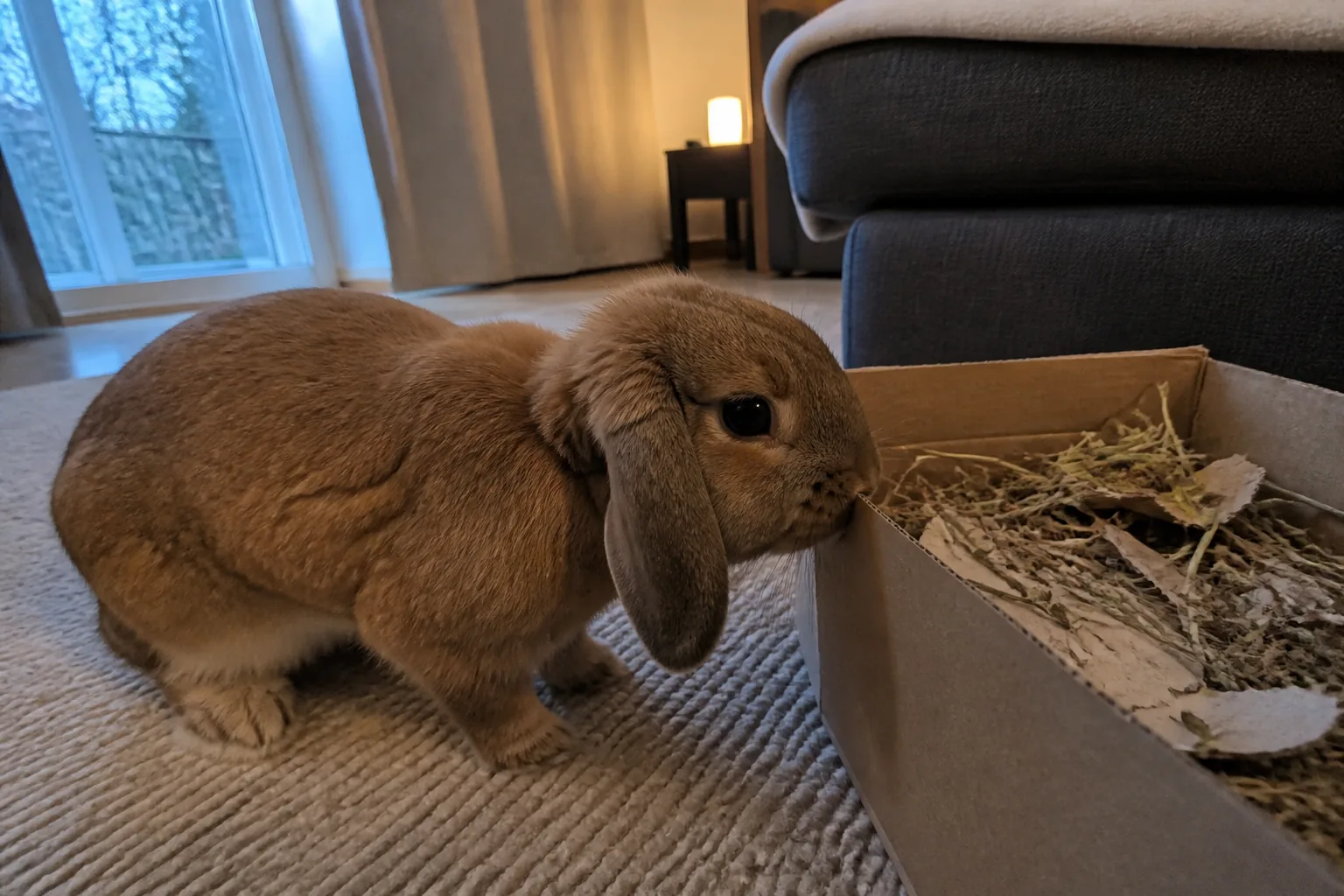
Why is my rabbit awake so early?
Dawn is prime bunny time. Wild rabbits evolved to move and feed when the light is lower and daytime predators are less active. Your indoor bun still carries that rhythm, even if breakfast arrives from a human in pajamas.
Prepare the evening before: top up hay, leave safe foraging activities and make sure water is available. A secure, generously sized living area lets your rabbit move naturally without needing to wake you for access.


How can you tell whether a rabbit is asleep?
Rabbits are prey animals, so light sleep can look surprisingly alert. Read the whole body rather than waiting for closed eyes.
The nose slows
A resting rabbit’s nose may twitch less often. Deep sleep can make the movement almost pause for short periods.
Ears relax
The ears rest in a loose, comfortable position instead of constantly scanning and snapping toward sounds.
The body softens
Muscles look loose rather than braced. Breathing stays quiet and regular, and the face looks gentle.
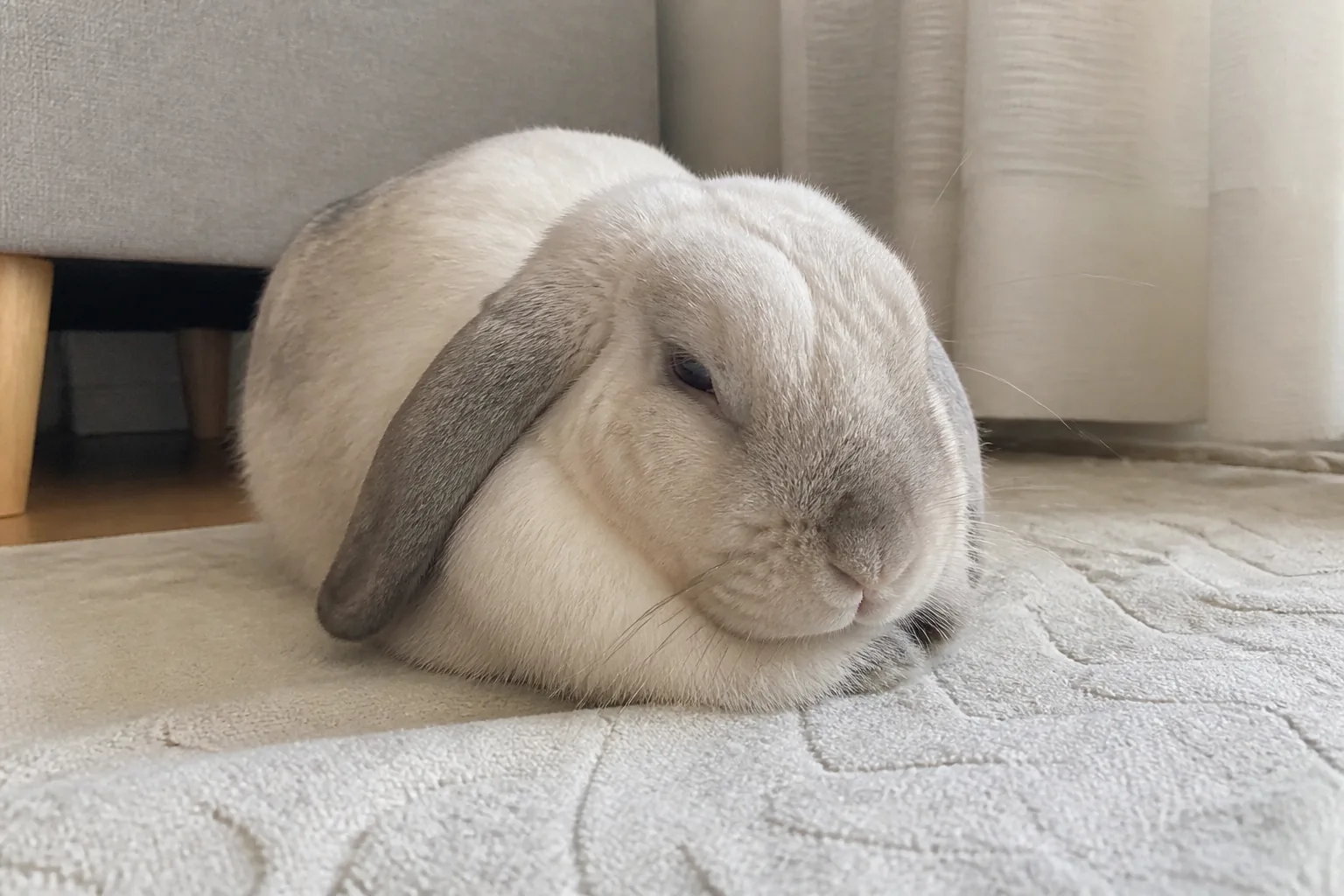
Do rabbits sleep with their eyes open?
Yes, rabbits can sleep with their eyes open or partly open. It helps a prey animal remain aware of movement, and the third eyelid helps protect the eye. As trust grows, many house rabbits also close their eyes fully during deeper rest.
Do not judge sleep from the eyelids alone. Soft facial muscles, a slower nose, relaxed ears and steady breathing tell you far more.
Loaf, sploot or flop: normal rabbit sleep positions
The sleepy loaf
Paws tucked underneath, body rounded and head upright or lowered. A soft loaf can mean light sleep, although a tight hunched body with discomfort is different.
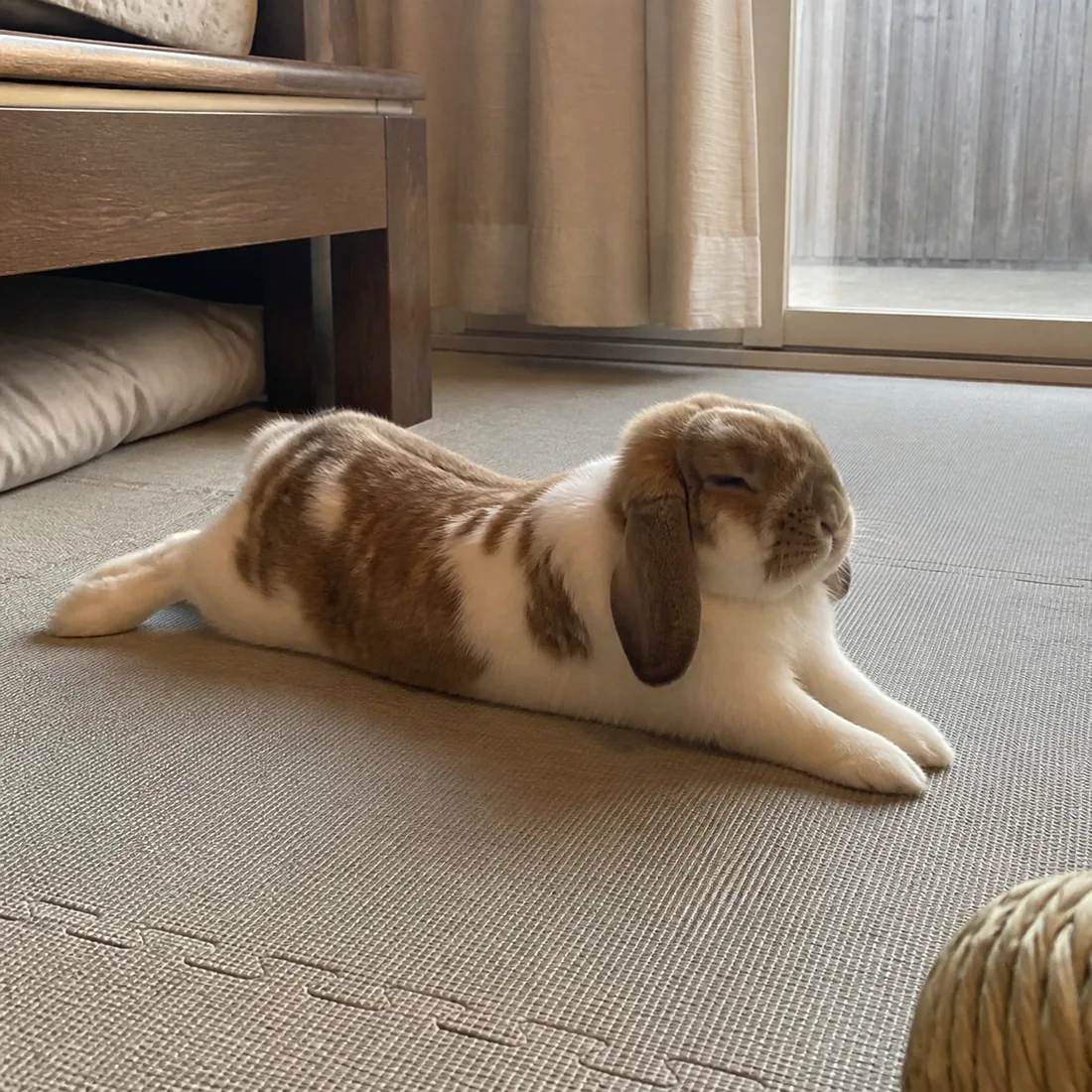
The relaxed stretch
Hind legs rest behind or to one side, sometimes with the chin on the floor. This exposed posture usually appears when a bun feels safe.
The dramatic flop
A rabbit suddenly rolls onto one side and looks almost too relaxed. In a familiar setting with normal breathing, this is usually a beautiful sign of trust.
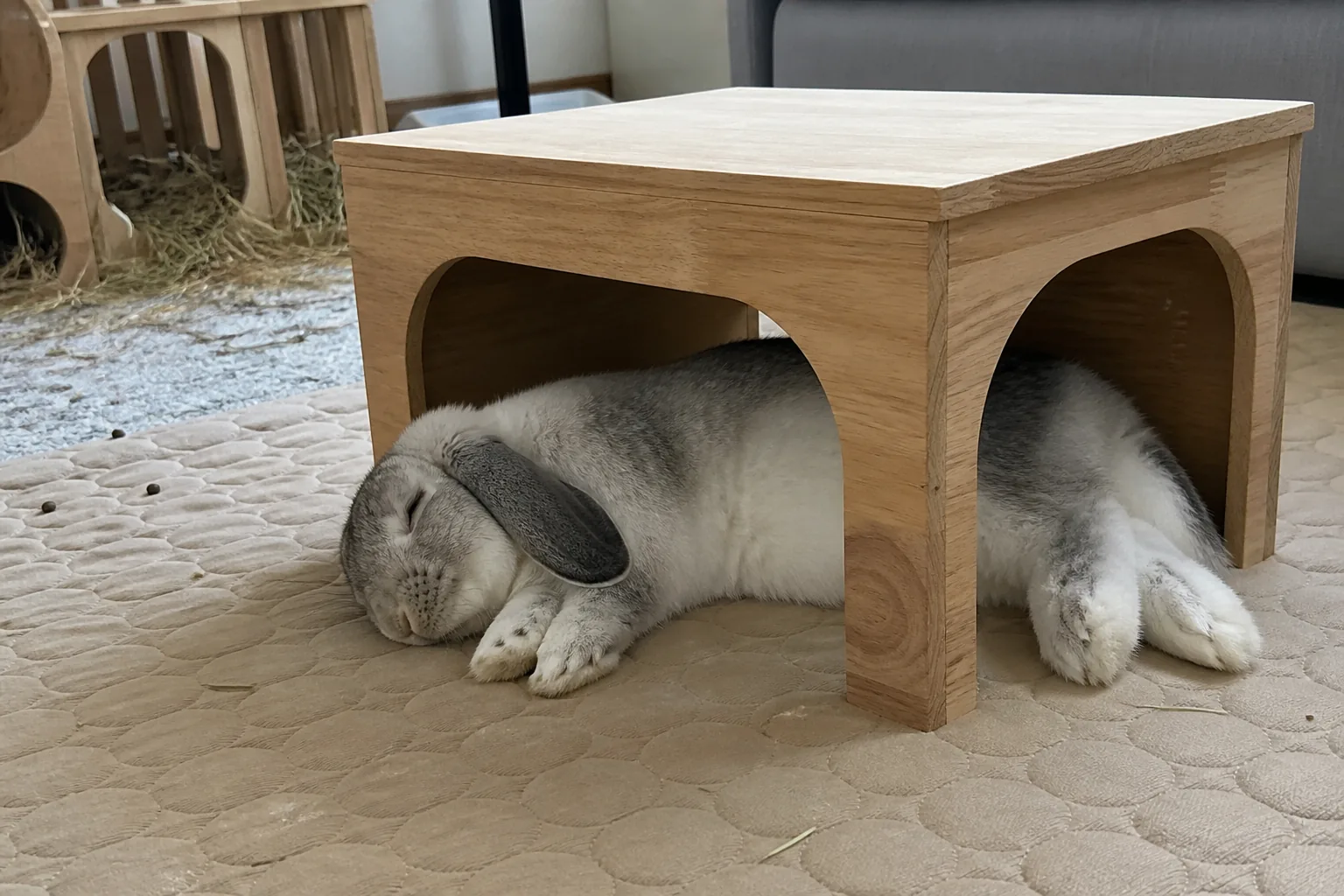
Small movements can happen during sleep: whiskers twitch, paws flex and the mouth may make tiny chewing motions. Some guardians like to imagine their bun dreaming about endless herbs. We cannot ask them, but short movements during relaxed sleep are usually nothing to worry about.
What does a good rabbit sleeping area need?
A rabbit should be able to choose between hiding and resting in the open. The best setup feels safe without trapping the bun or forcing one sleeping position.
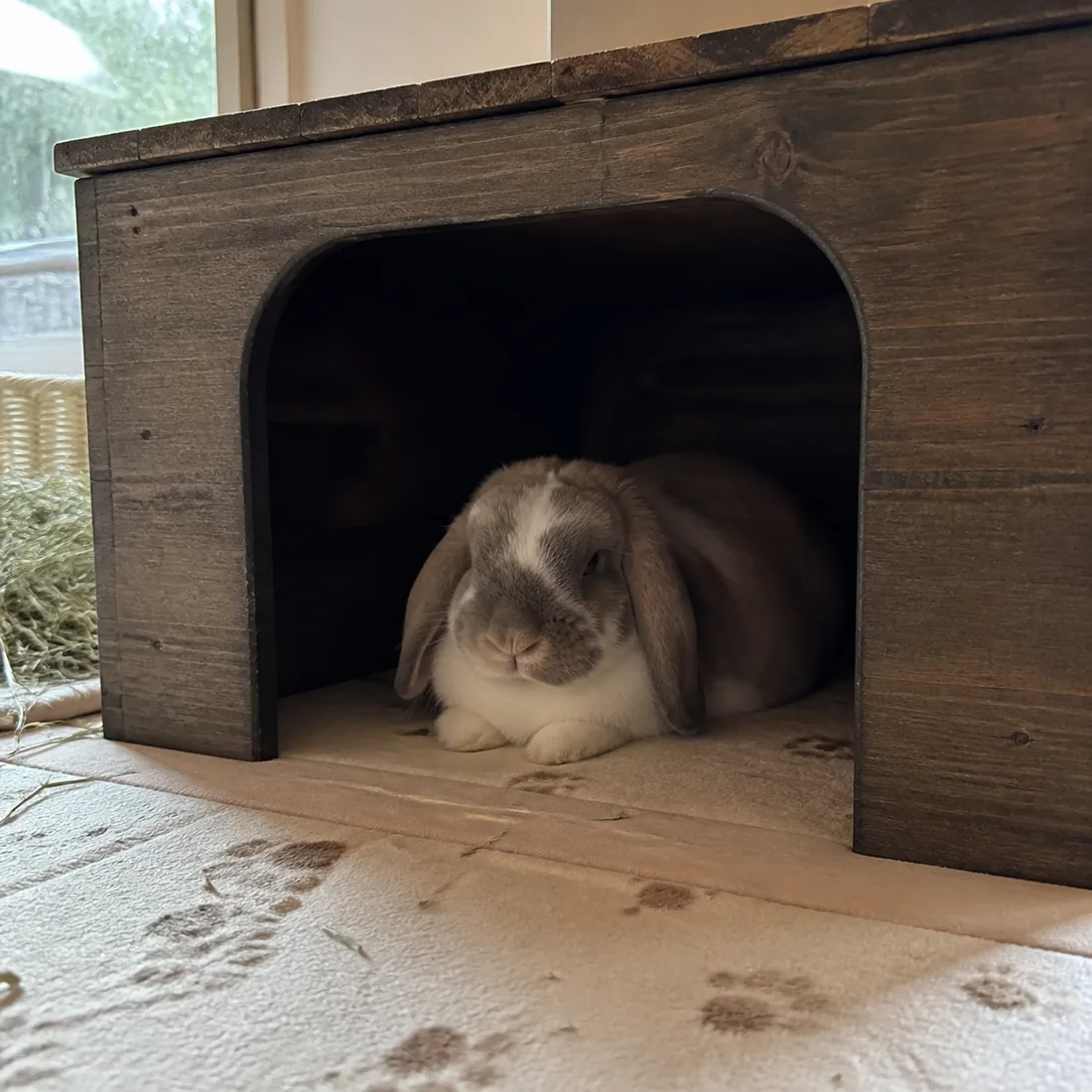
Offer a quiet hideout or sheltered corner whenever your rabbit wants less light and activity.
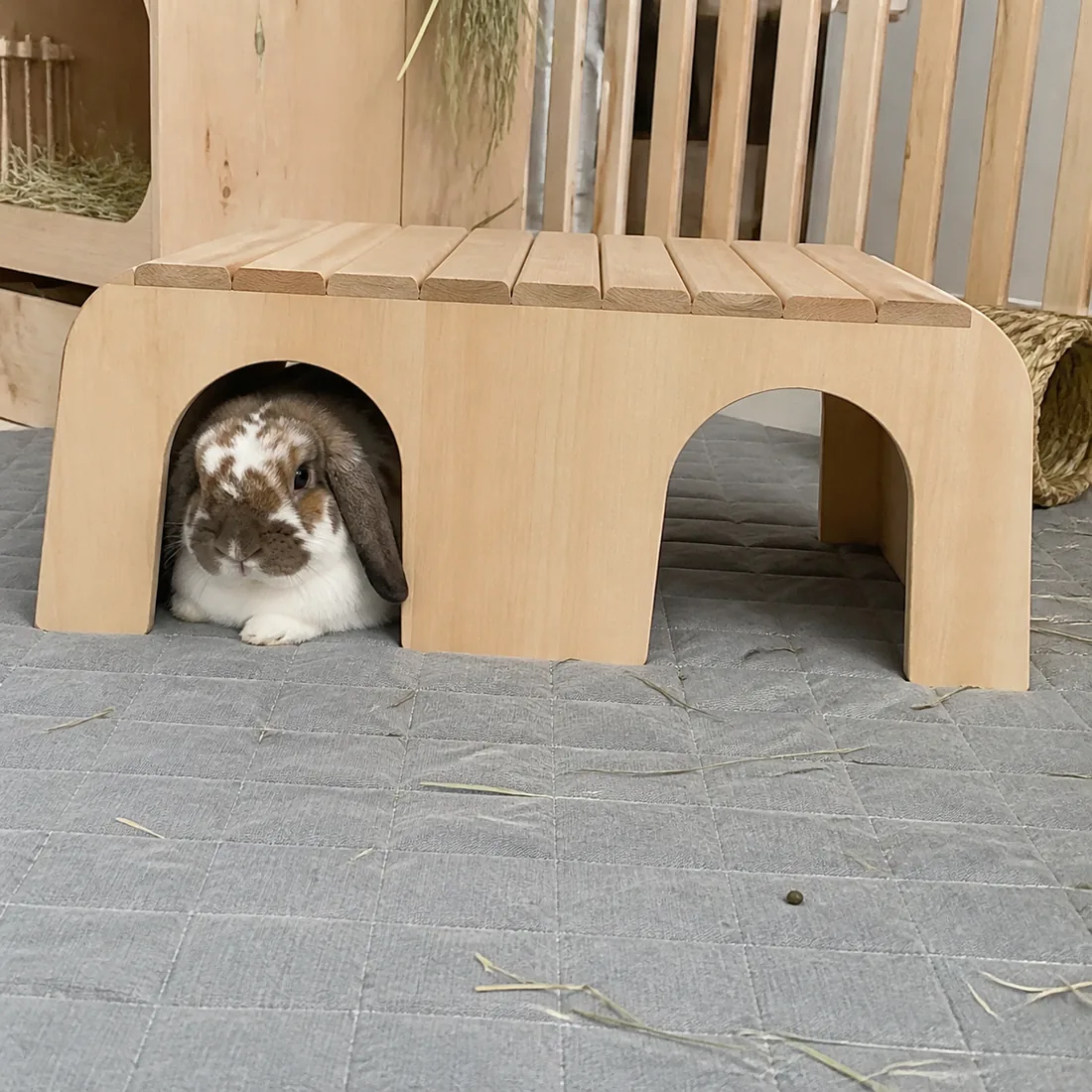
A hideout with two openings helps a prey animal relax because another rabbit cannot block the only doorway.
A flat, non-slip surface supports easy turns, stretches, flops and comfortable rising after a nap.
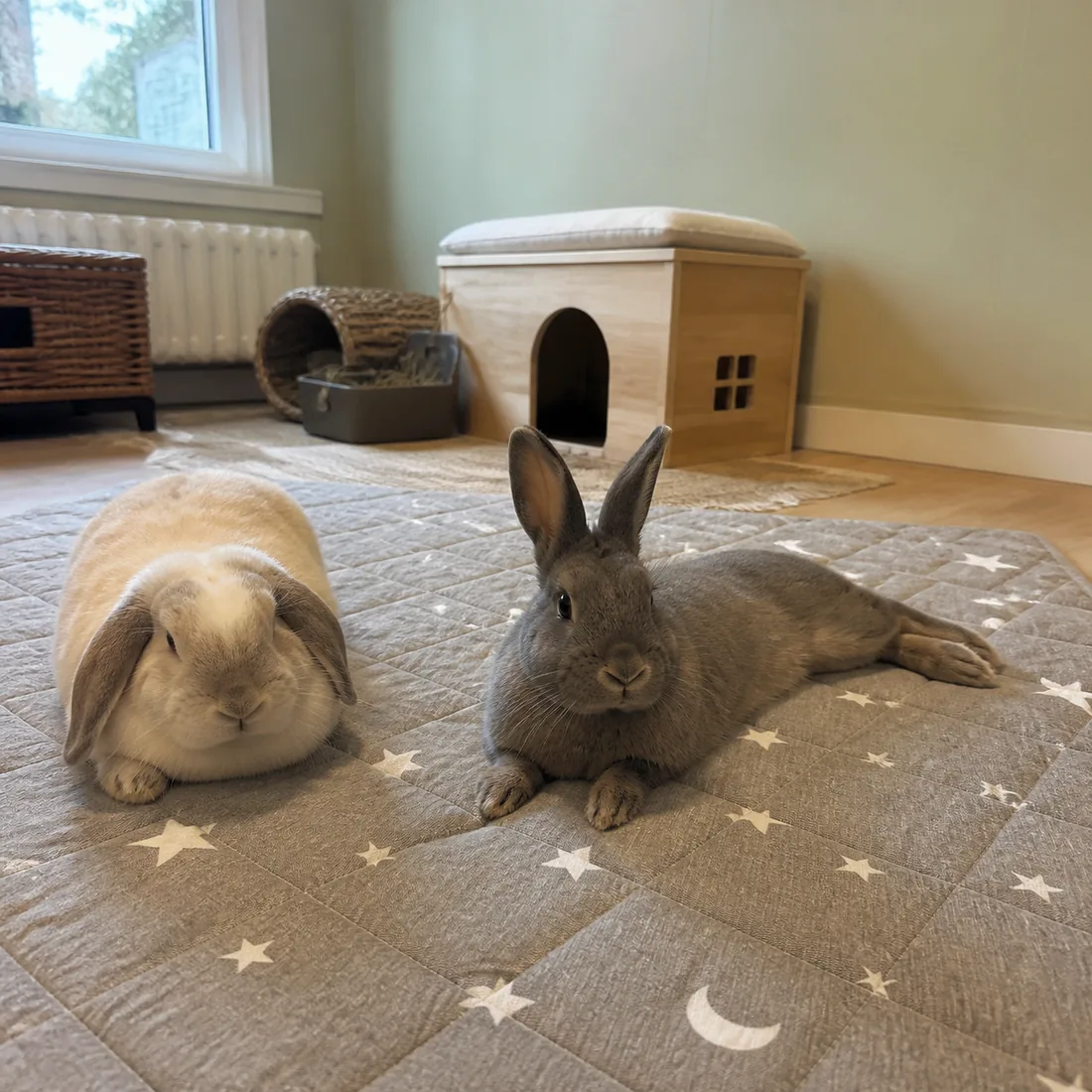
Bonded rabbits should be able to lie beside each other without crowding or competing for the best spot.
Should the room stay silent while a rabbit sleeps?
Normal household sounds are usually fine when they are predictable. Many house rabbits nap through conversation, quiet television or familiar footsteps. Sudden shouting, barking beside the enclosure, loud music or a vacuum pushed into the sleeping corner is different.
Give your bun a reliable quiet period every day, especially during late morning and afternoon. Children should know not to pull a rabbit from a hideout or stroke a flopped bun simply because the pose is adorable. Rest is part of rabbit welfare, not wasted playtime.
Do age and companionship change sleep?
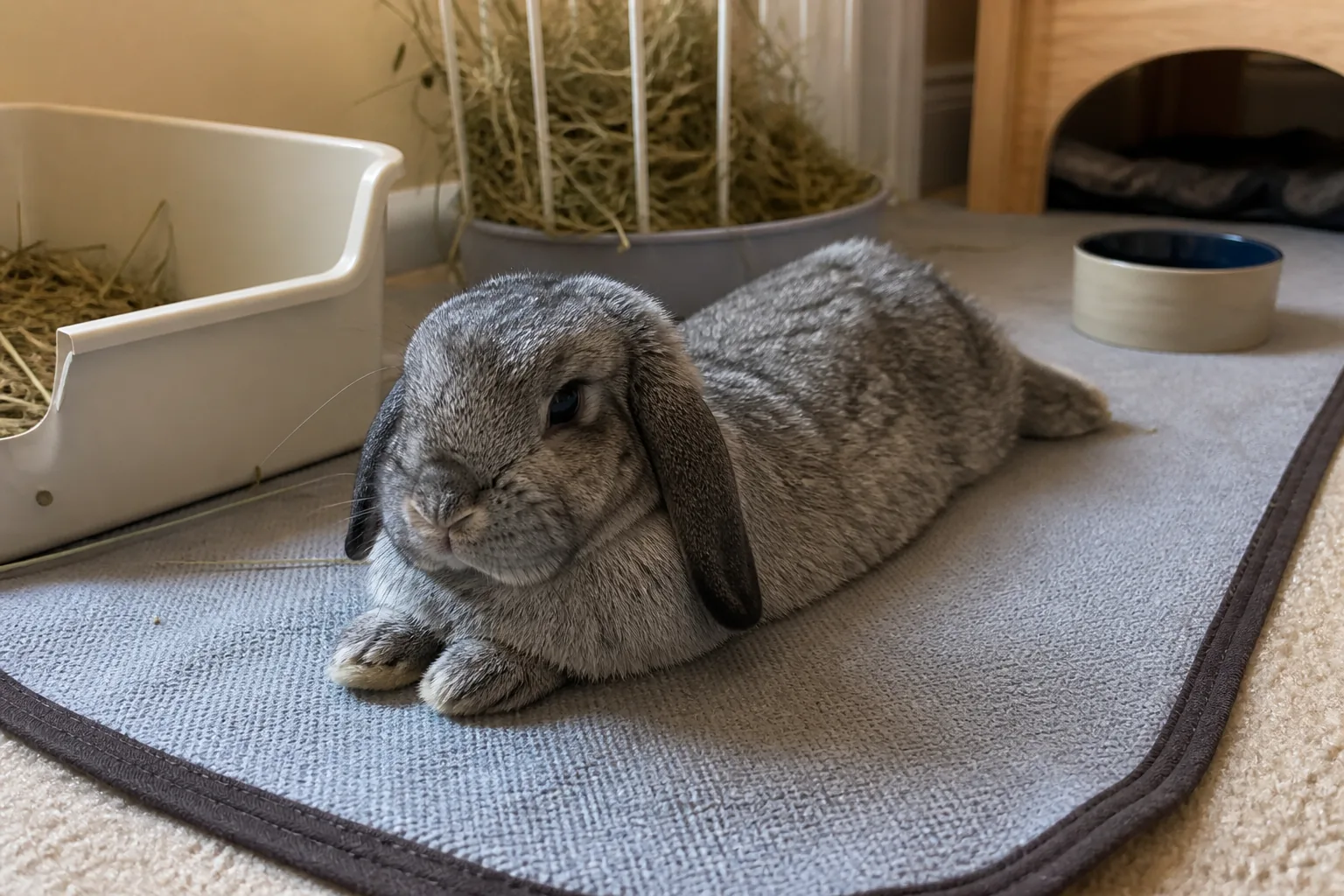
Every bun has their own rhythm
Young rabbits often explode into activity, pause for a nap and start again. Healthy adults usually develop a steadier household routine. Senior buns may rest longer and need hay, water, litter and favorite sleeping places connected by short, non-slip routes.
Bonded rabbits often sleep close together, groom before settling and take turns appearing more alert. Make every resting space large enough for both, while also offering separate choices.
When sleepiness may signal a problem
A deeply sleeping rabbit should wake and behave normally afterward. A sick rabbit may look quiet too, but the posture is often tighter and other everyday habits change.
Contact a rabbit-savvy veterinarian promptly if unusual sleepiness comes with:
reduced appetite, fewer or smaller droppings, a tense hunched posture, tooth grinding, a swollen belly, weakness, trouble moving, abnormal breathing, open-mouth breathing or poor responsiveness.
Do not assume a rabbit is “just tired” when their normal routine changes suddenly. Rabbits can hide illness, so appetite and droppings deserve particular attention.
Frequently asked questions about rabbit sleep
Do rabbits sleep at night?
Yes, but usually in shorter periods rather than one uninterrupted night. Many rabbits alternate naps with hay eating, grooming and quiet exploration.
Are rabbits nocturnal?
No. Rabbits are usually described as crepuscular, meaning their strongest activity commonly occurs around dawn and dusk. They can still be active overnight.
How many hours do rabbits sleep?
There is no single number that fits every rabbit because much of their rest is divided into light naps that are difficult to measure at home. Focus on a consistent rhythm, relaxed sleep and normal behavior when awake rather than counting exact hours.
Why does my rabbit sleep with open eyes?
Open or partly open eyes help a prey animal remain aware of movement. A relaxed rabbit may still be asleep even when the eyelids are not fully closed.
Should I wake my rabbit during the day?
Usually no. Let your rabbit complete their natural rest unless you must check their health or move them for safety. Schedule play and social time around the periods when your bun wakes naturally.
Why does my rabbit suddenly fall onto their side?
This is commonly called a flop. When it happens in a familiar setting and the rabbit has relaxed breathing and normal behavior afterward, it usually signals deep comfort rather than collapse.