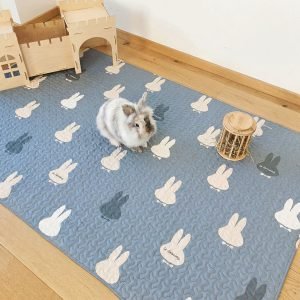
A happy rabbit does not smile like a person or wag a tail like a dog. Happiness appears in the way your bun moves, rests, explores, eats and chooses to share space with you.
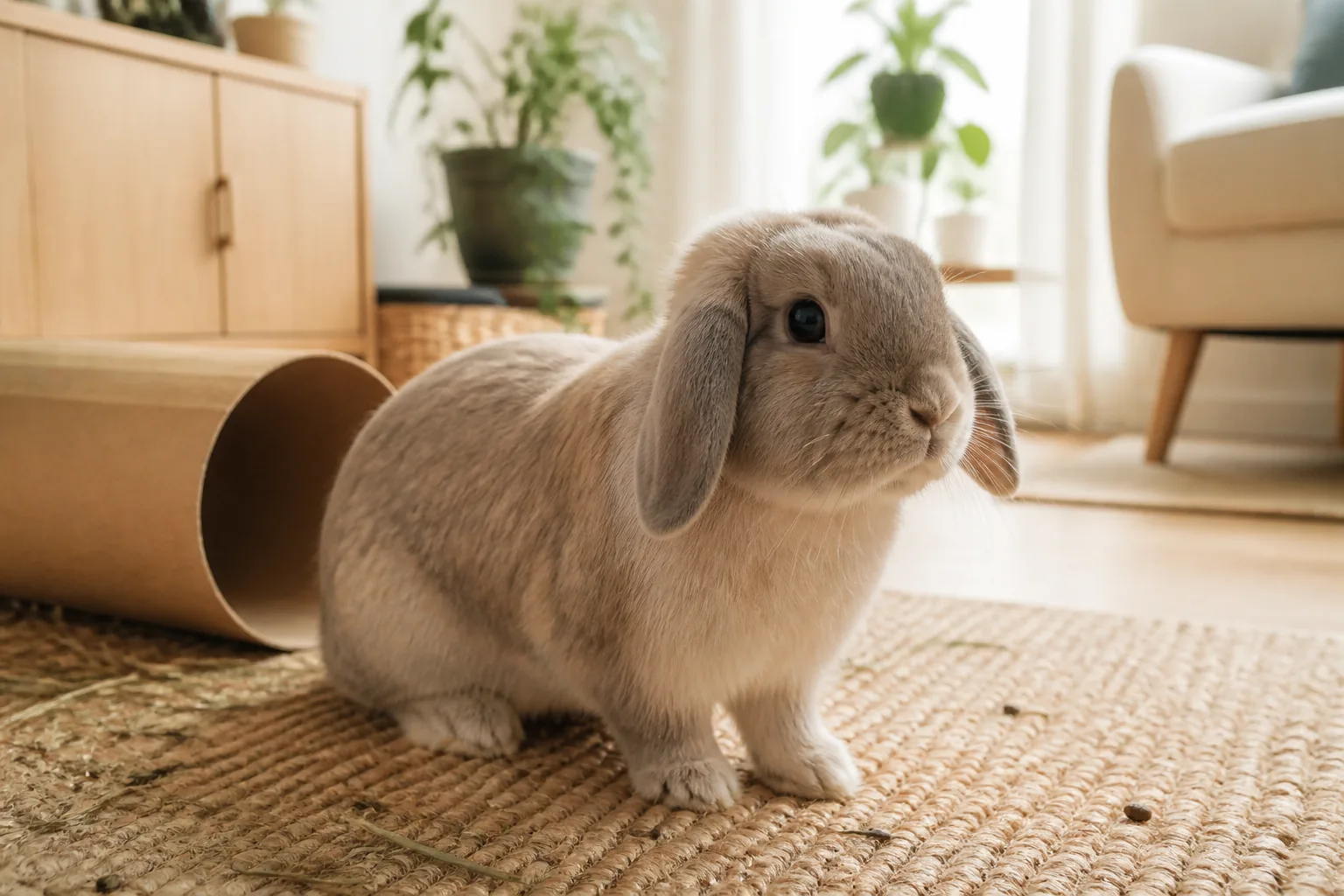
What are the clearest signs of a happy rabbit?
A happy rabbit usually has a loose, comfortable body, a healthy appetite and an interest in their surroundings. You may see binkies, zoomies, relaxed loafing, stretched-out resting, flopping, foraging, grooming and calm social contact. The best evidence is not one dramatic behavior but a consistent pattern of eating, exploring, resting and interacting normally for that individual rabbit.
Rabbits are prey animals, so their feelings can be easy to misread. A bun may freeze instead of protesting, hide discomfort or remain very still when frightened. At the same time, a quiet rabbit is not automatically unhappy. Age, personality, time of day, temperature and previous experience all affect how a rabbit behaves.
The most useful question is therefore not “Does my rabbit perform every happy behavior?” but “What does my rabbit look like when they feel safe, and has that normal pattern changed?” Learning your rabbit’s normal baseline is one of the kindest things you can do for your little loaf.
Eight everyday signs your rabbit feels good
A relaxed body
Muscles look soft rather than braced. The rabbit may loaf, stretch out or let the hind legs rest to one side.
Binkies and zoomies
Leaps, twists and sudden playful runs often appear when a rabbit has space, energy and confidence.
Curious exploring
A secure rabbit sniffs, investigates changes and moves around without staying permanently close to cover.
Enthusiastic eating
Regular hay eating, foraging and normal droppings are important parts of a rabbit’s healthy daily rhythm.
Comfortable grooming
Normal face washing and coat grooming suggest the rabbit feels settled enough to pause and care for themselves.
Peaceful company
Bonded rabbits may rest together, eat side by side, groom one another or simply relax in the same space.
Choice and confidence
Your bun comes out voluntarily, changes resting places and can approach or leave without being chased.
A steady routine
Activity rises around dawn and dusk, with eating, resting and toileting remaining predictable for that rabbit.
Binkies and zoomies are joyful, but not the whole story
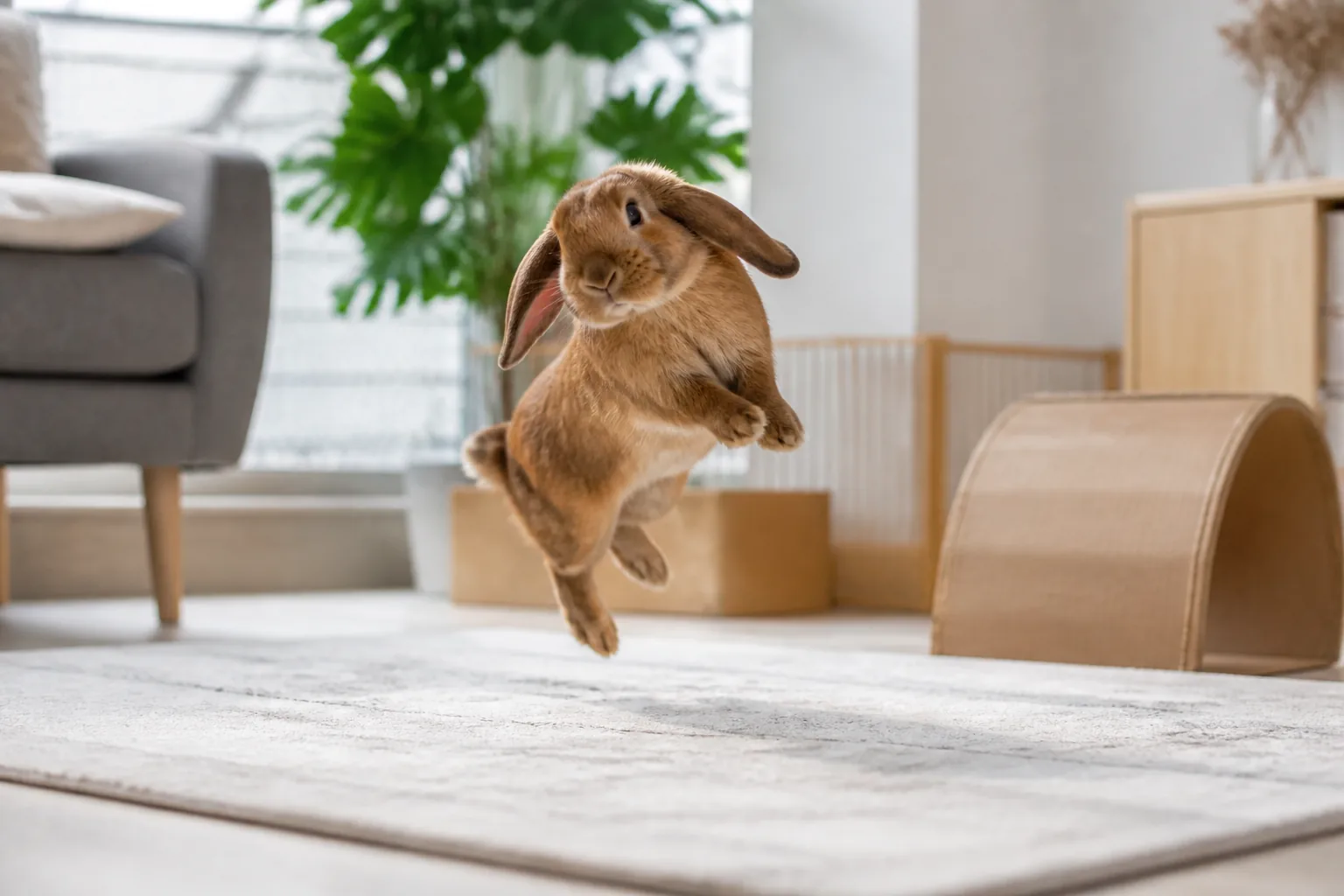
A binky is the famous leap-and-twist that looks as if a rabbit’s body has briefly forgotten the rules of gravity. Zoomies are quick bursts of running, often with sharp turns. Both can be wonderful signs of excitement and positive energy.
Young rabbits may perform them frequently, while an older, heavier or less athletic bun may show happiness more quietly. A tiny head flick, quick hop, playful dash or sudden flop can be that rabbit’s version of a celebration.
Look at the setting
Fast movement is not always play. A relaxed rabbit returns to exploring or resting. A frightened rabbit may run directly to cover, remain tense, thump or keep watching the source of danger.
A flop can mean “I feel safe here”
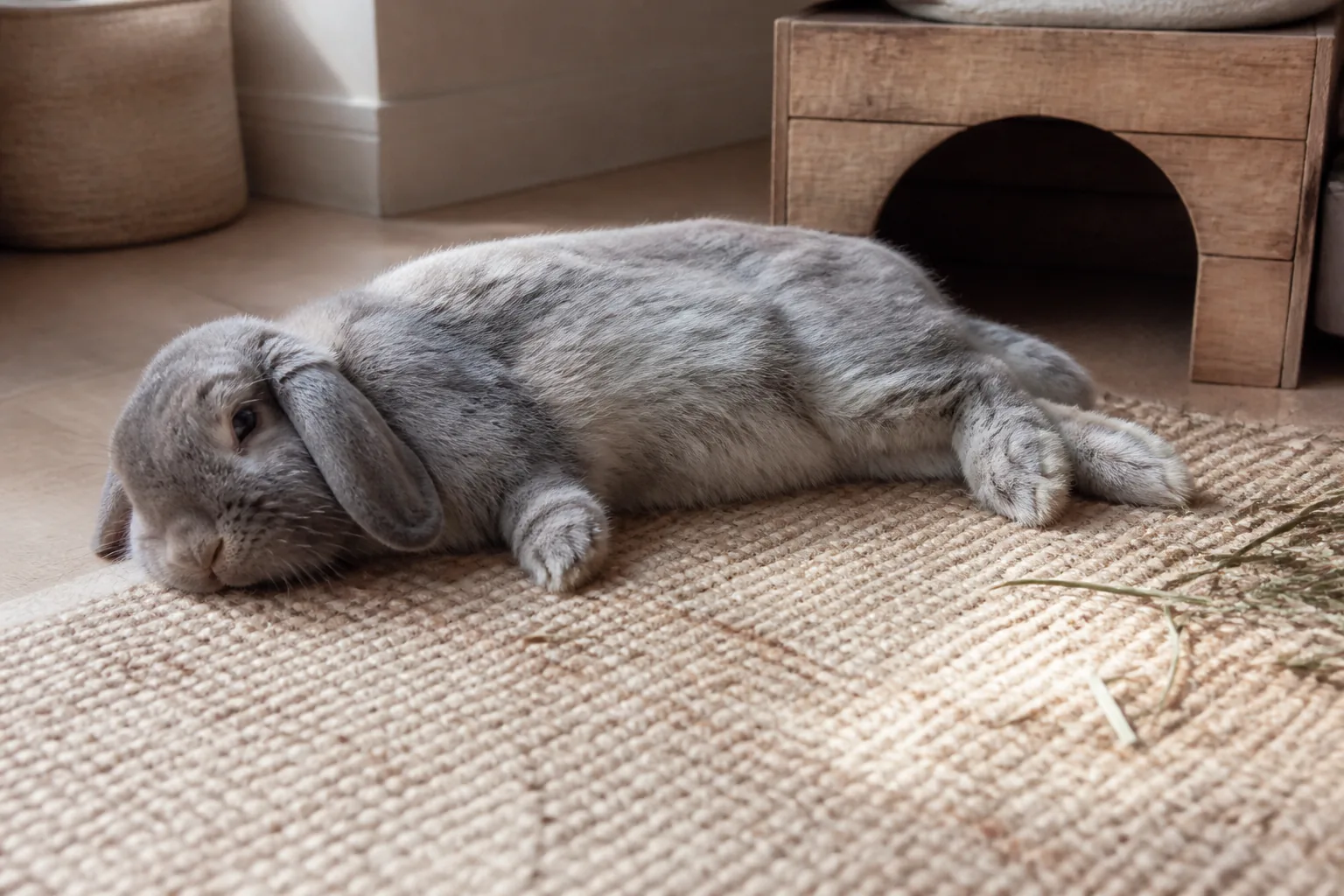
When a rabbit suddenly rolls onto one side, the movement can look alarming the first time you see it. In a familiar setting, a loose body, calm breathing and an ordinary return to activity usually identify a happy rabbit flop.
Other comfortable resting positions include a neat loaf with the feet tucked underneath, a half-flop with one hip rolled to the side and a full stretch with the back legs extended. The RSPCA describes relaxed happy rabbits with soft postures, ears resting naturally and eyes that may be partly closed.
Context still matters. A rabbit who collapses, cannot rise, breathes abnormally or seems weak needs urgent veterinary advice. Relaxed sleep should look like your rabbit’s normal rest, not a sudden loss of strength.


Happy rabbits stay interested in rabbit things
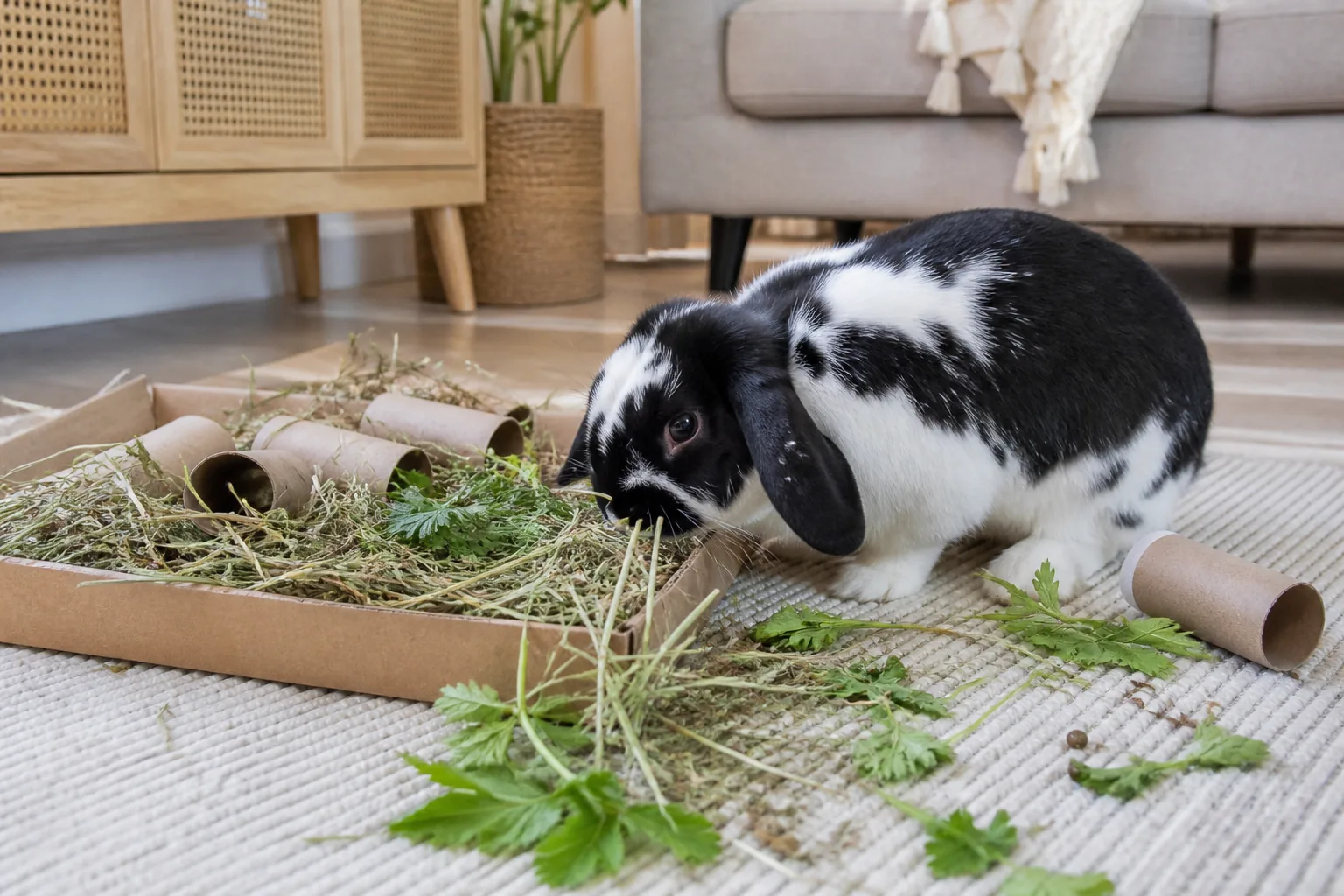
Curiosity is one of the most useful quiet signs of wellbeing. A rabbit who feels secure may inspect a new cardboard box, rearrange a tunnel, dig at an approved surface, search through hay or stand up to examine a sound.
Foraging is especially valuable because it combines food with movement, smell and problem-solving. Scatter part of the daily greens through hay, hide pellets in plain cardboard tubes or change the arrangement of familiar objects. Keep the challenge easy enough to succeed and let your bun choose whether to participate.
Do not mistake constant destruction for proof of happiness. Chewing and digging are normal, but frantic bar biting, repeated circling or over-grooming can indicate frustration, stress or an unsuitable environment.
Social comfort may be active or beautifully boring
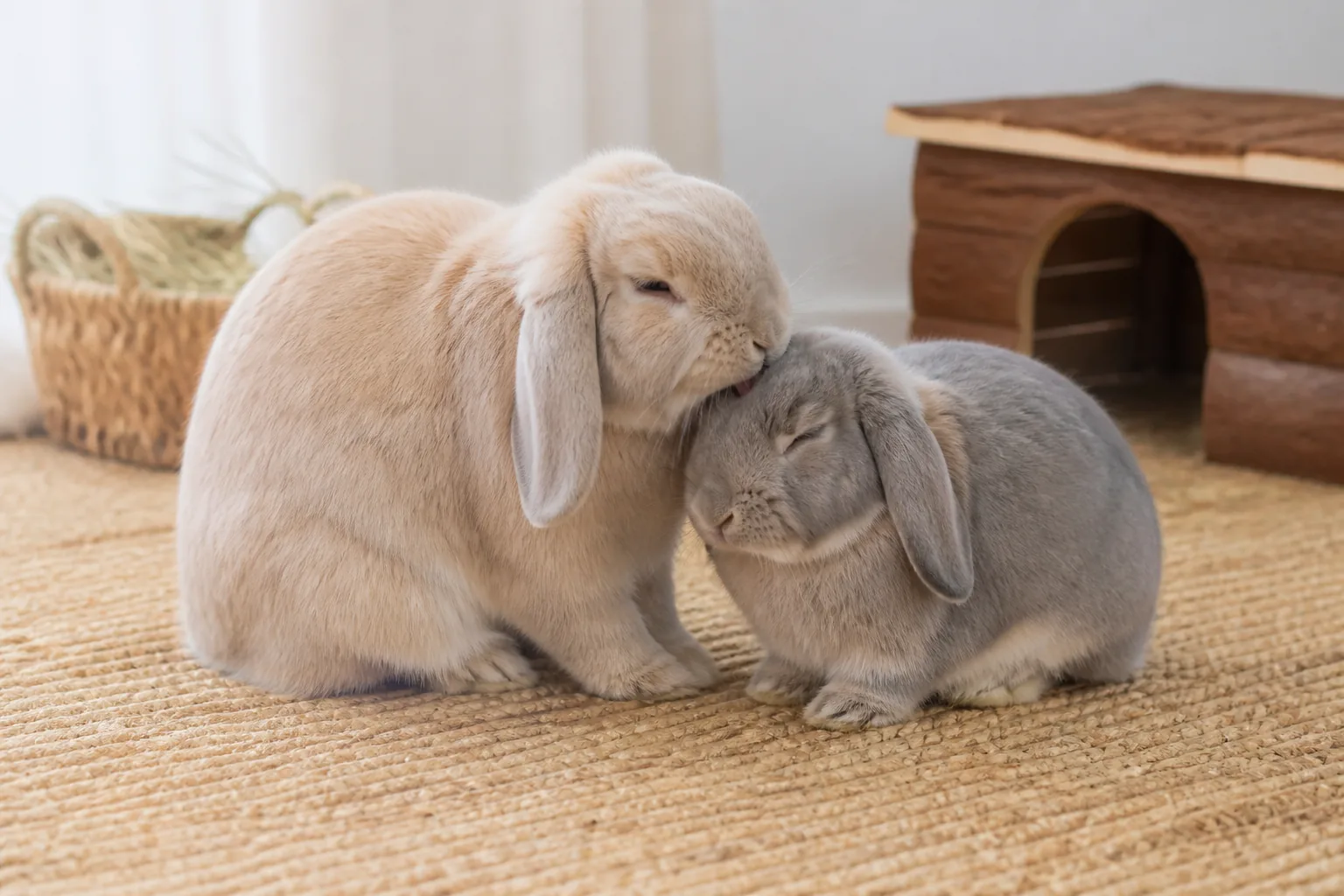
Bonded rabbits often communicate happiness through peaceful proximity. They may groom one another, eat together, touch while resting or choose the same hide. Sometimes the strongest sign of trust is simply that both rabbits can relax and behave normally beside each other.
Not every chase or mounting attempt is playful. Watch the whole interaction. Positive contact is voluntary and allows both rabbits to move away. Persistent chasing, fur pulling or fighting needs careful attention and may require separation for safety and advice from an experienced rabbit professional.
Does my rabbit love me?
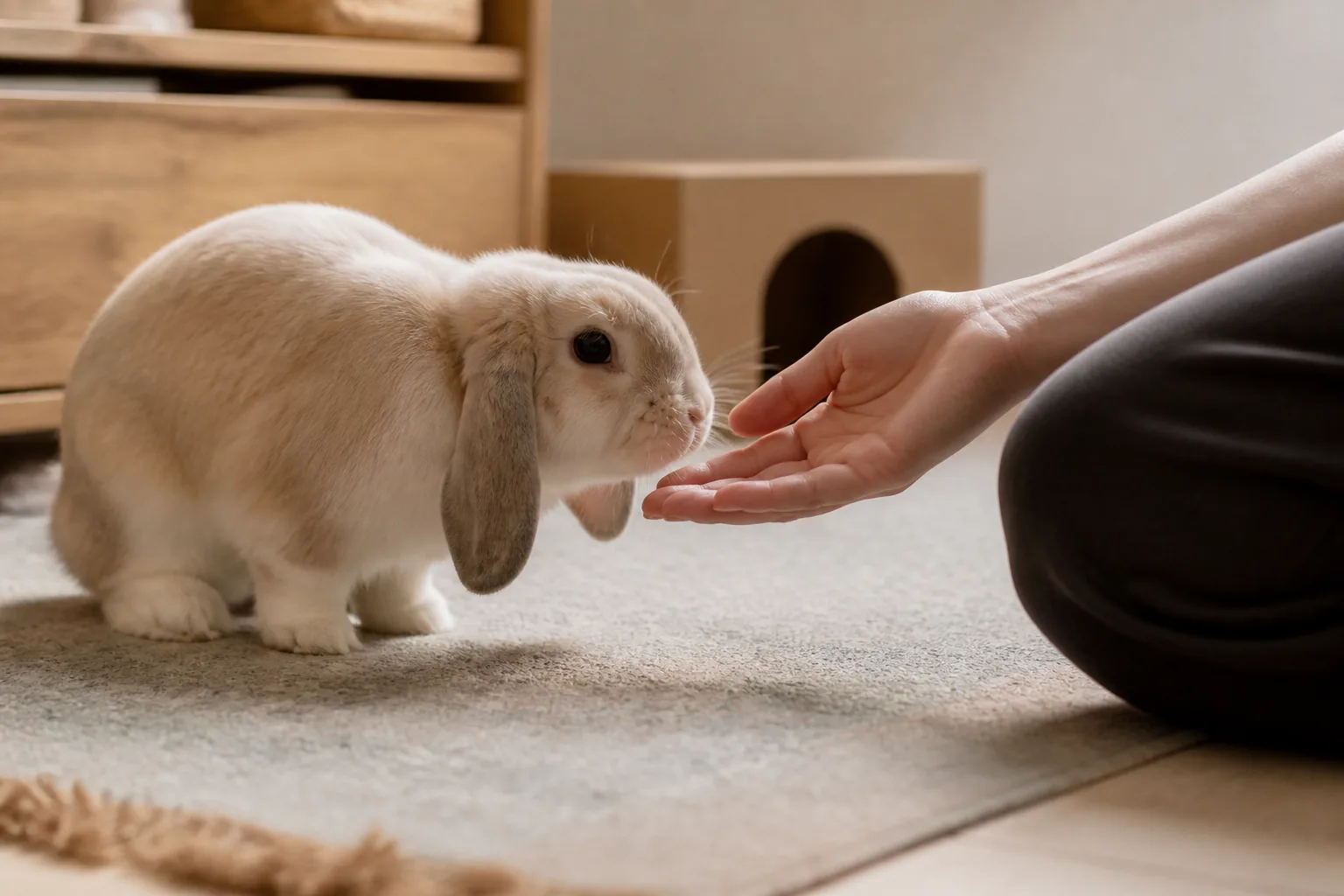
Rabbit affection is often subtle. Your bun may approach when you sit on the floor, nudge your hand, lower the head to request grooming, lick your clothing, rest nearby or follow you to see what you are doing. These choices mean more when the rabbit is free to leave.
Trust does not require enjoying being picked up. Many affectionate rabbits dislike lifting because leaving the ground activates a prey animal’s survival response. Build the relationship at floor level, move slowly and avoid reaching into a hide to pull your rabbit out.
- Let your rabbit initiate some interactions.
- Stroke the forehead and cheeks only when invited.
- Pause regularly and see whether your bun asks for more.
- Respect moving away as a complete answer.
Happy, alert or worried? Read the whole rabbit
More consistent with comfort
- Loose body and natural ear position
- Normal eating, grooming and toileting
- Curiosity followed by calm settling
- Voluntary social contact
- Resting in exposed places as well as hides
More consistent with concern
- Hunched or flattened tense posture
- Persistent hiding or freezing
- Sudden thumping, aggression or withdrawal
- Reduced appetite or fewer droppings
- A clear change from the rabbit’s baseline
Ears alone do not tell the full story, especially in lop-eared breeds. Nose movement also changes during rest. Combine posture, eyes, muscle tension, movement and appetite with the situation before deciding what a signal means.
How to help your rabbit feel happier
Offer space and choice
Provide room to run, stand upright and stretch fully, plus several resting places and hides with more than one exit.
Support natural behavior
Keep hay available, rotate simple foraging activities and offer safe opportunities to chew, dig, explore and rest.
Protect social wellbeing
Most rabbits benefit from a compatible neutered rabbit companion. Introductions should be gradual and properly supervised.
Create predictable routines
Regular meals, calm cleaning and consistent interaction help a rabbit know what happens next without making every day identical.
Make the floor feel safe
Use solid, non-slip surfaces. Slippery flooring can prevent confident running, stretching and exploration.
Watch, then adjust
Offer enrichment in small changes and observe. A choice your rabbit actually uses is more valuable than a fashionable toy.
A sudden behavior change deserves attention
Rabbits often hide illness. Contact a rabbit-savvy veterinarian promptly if your bun eats less, produces fewer droppings, sits hunched, becomes unusually still, avoids normal activities or suddenly changes their social behavior. Complete refusal of food, severe weakness, breathing difficulty or collapse is urgent. Do not wait for a binky to decide whether a rabbit is well.
Questions about happy rabbit behavior
Is a rabbit happy if they lick me?
Licking can be a friendly grooming behavior and may show trust, especially when your rabbit approaches voluntarily and remains relaxed. Some rabbits show affection in quieter ways and rarely lick people.
Why does my rabbit suddenly fall onto their side?
A quick roll onto the side is often a relaxed flop. Check that breathing and body tone look normal and that your rabbit gets up normally. Collapse, weakness or difficulty rising needs veterinary help.
Can a happy rabbit still hide?
Yes. Hiding is a normal choice, and every rabbit needs secure private places. Concern is greater when hiding becomes persistent, replaces normal eating or exploration, or appears suddenly.
Do all happy rabbits binky?
No. Age, mobility, personality and environment affect how often rabbits binky. Quiet curiosity, relaxed resting, healthy eating and calm social behavior can be equally meaningful.
Does tooth purring mean my rabbit is happy?
Very soft tooth grinding during relaxed petting may accompany contentment. Loud or persistent grinding, especially with a hunched posture or reduced appetite, can indicate pain and needs veterinary advice.


Elodie
Rabbit guardian and care enthusiast with over 10 years of hands-on experience living with house rabbits. Through Rabbit World, Elodie shares warm, practical guidance focused on comfort, safety and the small everyday details that help every little bun feel at home.