A good bunny bathroom is roomy, easy to enter and simple to keep dry. Here is how to choose each layer of the setup without turning your rabbit’s litter area into a complicated little construction project.
What is the best litter box setup for a rabbit?
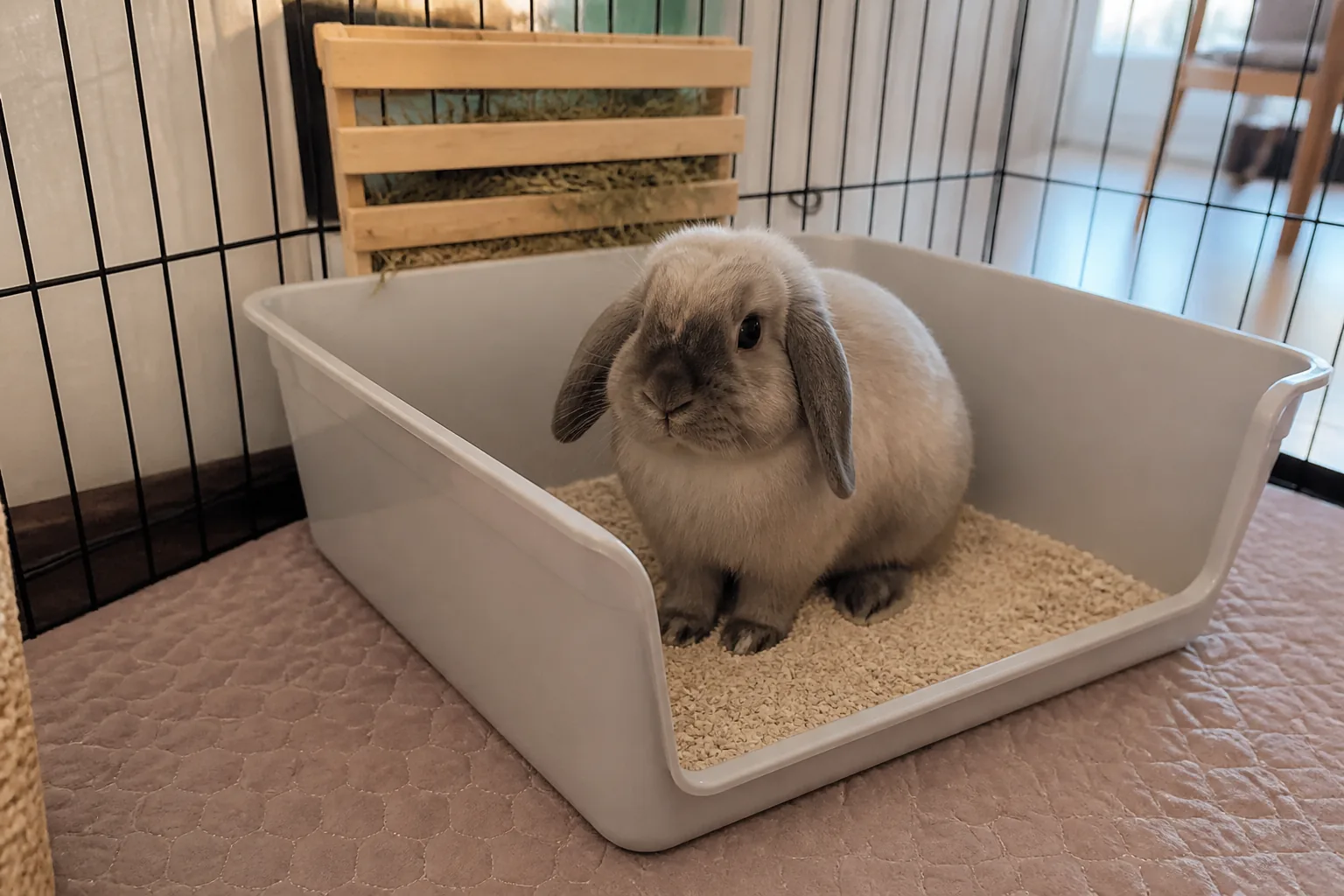
For most house rabbits, start with a large rectangular tray that has a wide, low entrance and enough usable room for the whole bun to enter, turn around and sit comfortably. Use a stable, smooth grate only if its openings cannot catch toes or nails and your rabbit is comfortable on it. Place low-dust, non-clumping rabbit litter in the tray, keep hay at one end or in a feeder beside it, and place an absorbent pee pad flat inside the bottom of the tray only when it can remain completely covered and inaccessible. A broad padded non-slip mat should extend beneath and around the box to provide a stable approach and a comfortable landing.
This guide is about building the litter station itself. If your bun is still learning where to go, use it alongside our step-by-step rabbit litter training guide. A well-designed box will not teach the habit on its own, but it makes the right choice much easier for your little bathroom critic.
The four parts of a practical rabbit litter station
Room to turn
The whole rabbit fits inside without hanging over an edge. Tiny corner trays are usually too cramped, even when sold for rabbits.
Easy entry
A wide, low opening removes an unnecessary jump and works well for young, adult and older buns.
Dry footing
The base absorbs moisture, while an optional comfortable grate can separate paws from wet litter.
Fast cleaning
You can reach every corner, remove the wet layer and dry all parts without dismantling the whole enclosure.
Rabbit litter box size: rectangle beats the tiny corner tray
Pet-store corner toilets often look surprisingly big on a shelf, but their triangular shape removes much of the usable floor. Even many trays labelled “large” are too small for a rabbit to turn naturally. The reliable choice is a rectangular open box with enough internal space for your bun’s shoulders, hips and tail.
Do not choose from the words Small, Medium or Large alone. Measure the usable interior, then compare it with your rabbit while sitting and turning. Bigger breeds and bonded pairs may need a cat-sized open tray or two roomy rabbit trays rather than one crowded box.
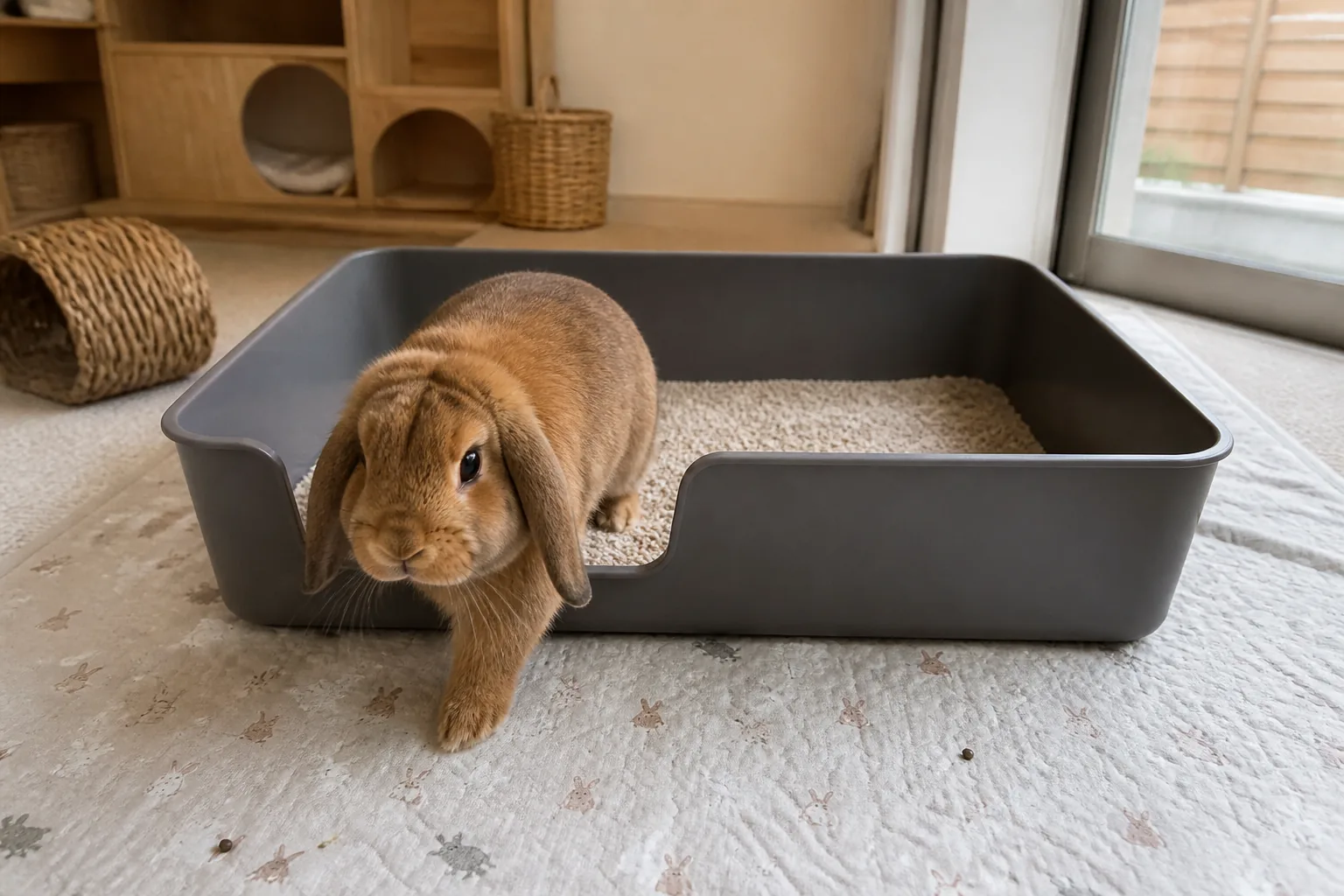
Enter
Your bun can step or hop in without catching a leg, scraping the belly or making an awkward high jump.
Turn
The rabbit can make a full turn inside without the shoulders or bottom being pressed against opposite walls.
Sit
All four paws and the tail remain inside in a normal toileting position, with room for a little hay at one end.
For bonded rabbits: begin with at least one box per rabbit and ideally one extra while you observe their habits. A shared box is fine only when both buns can use it without blocking, guarding or pushing the other away.
Rabbit World litter boxes: compare the real usable space
Our grid litter trays separate the standing surface from the absorbent layer below. Before choosing, compare the exact dimensions, entrance height and usable area with your own rabbit rather than relying on the product name alone. The blue and grey models combine a low front entrance with higher back and side walls. This makes stepping in easier while helping contain urine when a bun backs into a corner to pee.
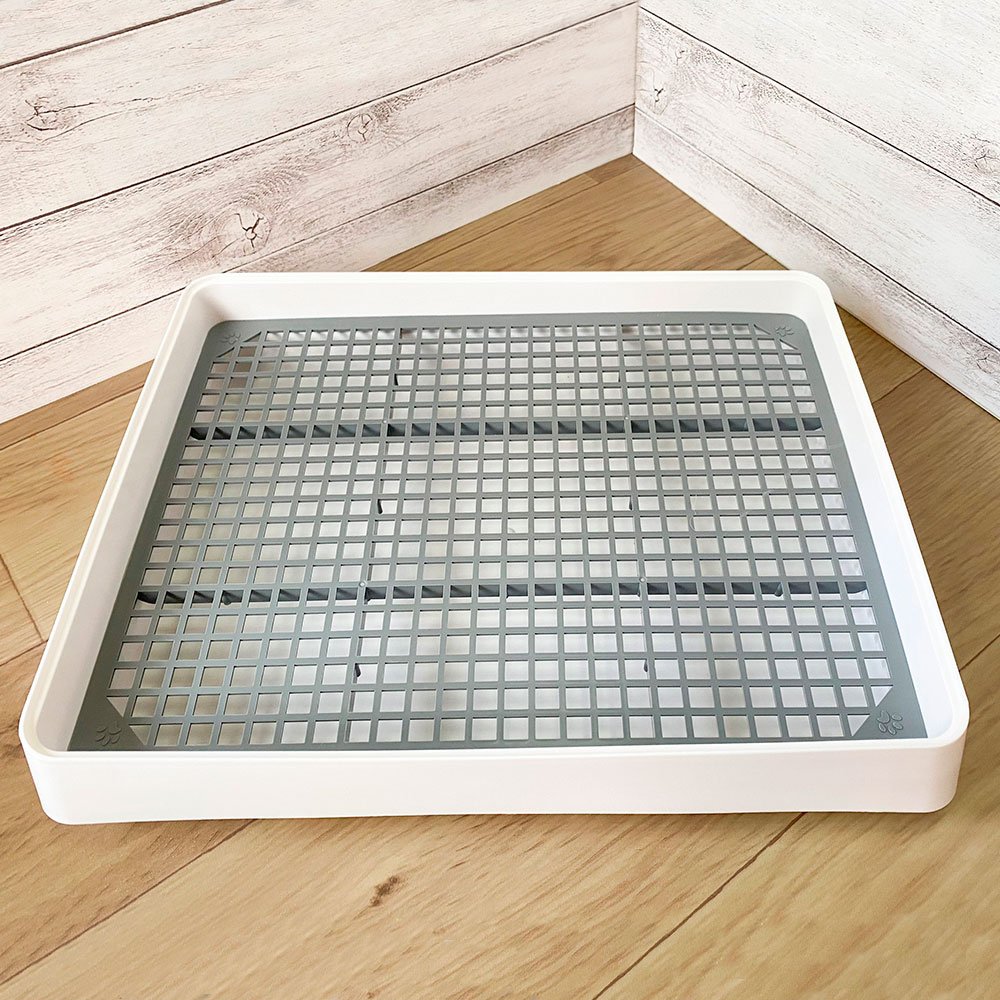
Dry Paws litter box
An open grid tray available in color options for small to medium house rabbits.
See this litter box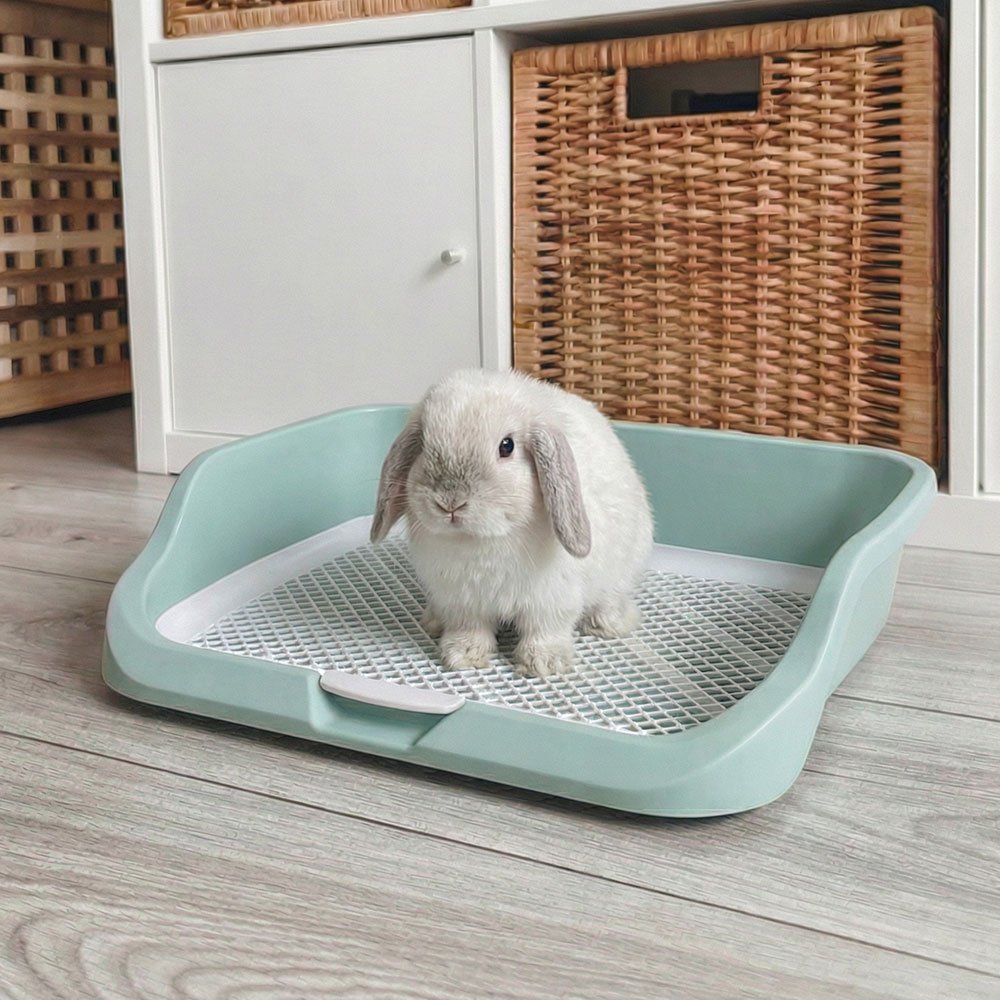
Blue grid litter tray
A broad tray with a low front entry for easy access and higher back and side walls to help prevent pee from going outside the box.
See the blue tray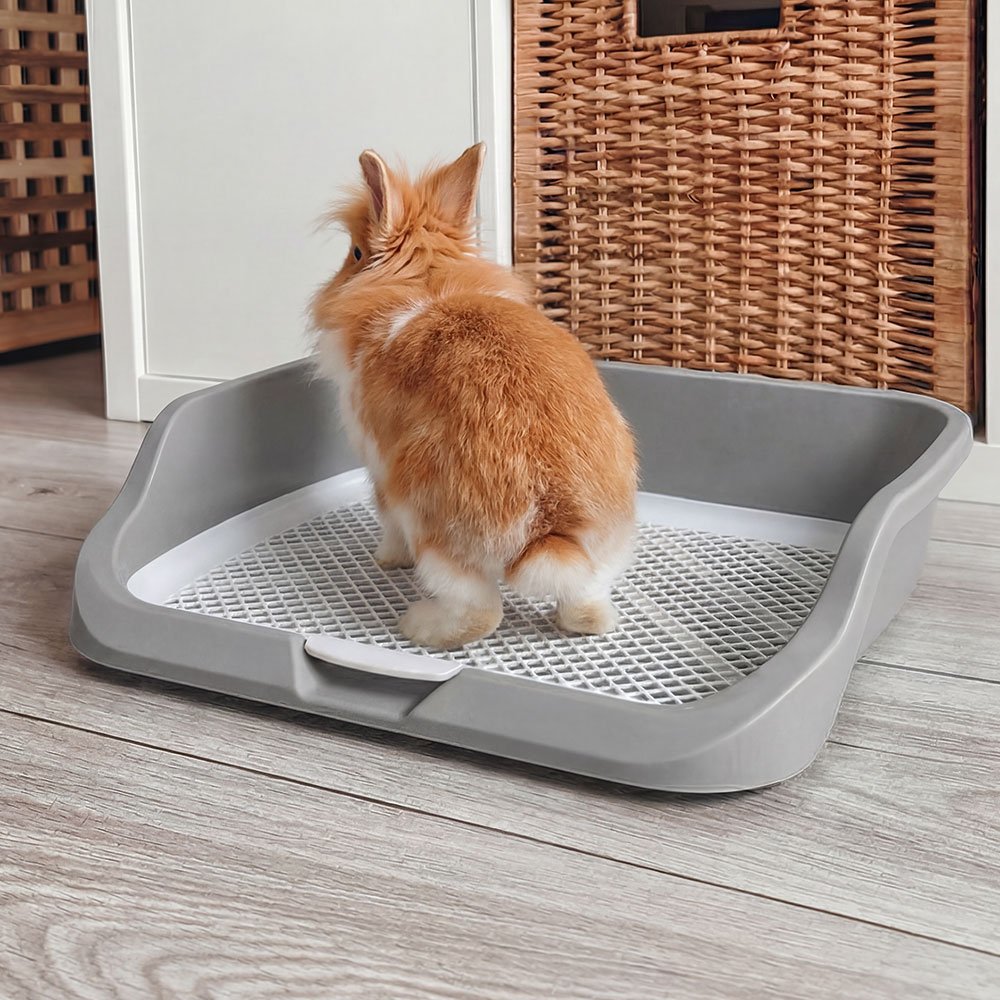
Grey grid litter tray
A roomy tray with a low front entry, higher protective walls and a removable grid that keeps absorbent litter below the paws.
See the grey trayCompare all Rabbit World litter boxes, including the available sizes, colors and entry designs.
Rabbit litter box grate or no grate?
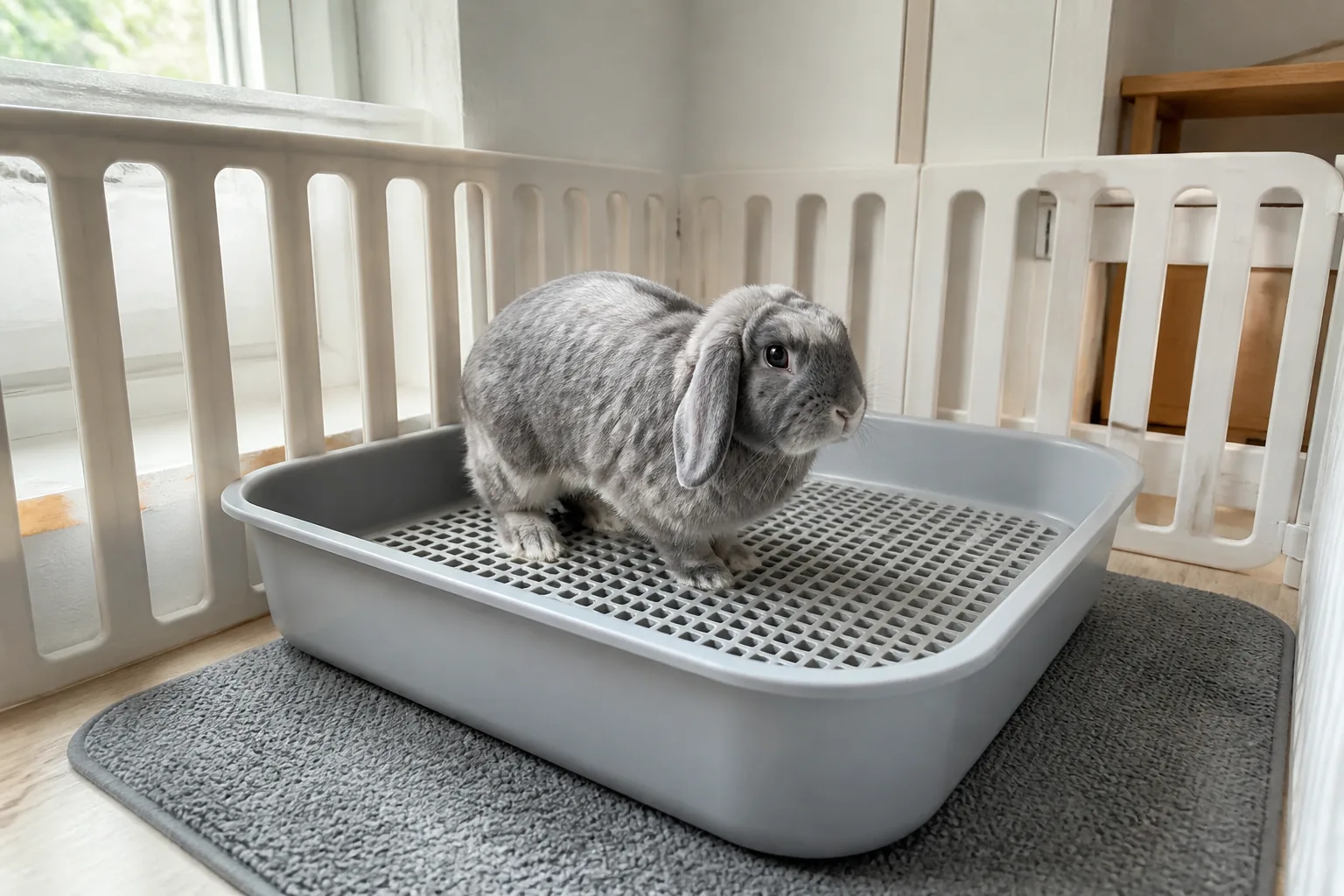
A grate can be useful because urine and damp litter remain below the surface where your bun stands. It also reduces digging in the litter. But a grid is not automatically comfortable simply because it came with the tray. The material, openings, stability and individual rabbit all matter.
It stays flat and feels comfortable
- The surface is smooth with no burrs or sharp joins.
- Openings cannot trap toes, nails or a small foot.
- The grid does not bow, rattle or slide during a hop.
- Your rabbit enters willingly and sits in a relaxed posture.
- You inspect the feet and the grid regularly.
Your rabbit dislikes or cannot use the grid
- Your bun hesitates, perches awkwardly or avoids the box.
- Mobility or foot sensitivity makes the surface unsuitable.
- The openings are too wide for that rabbit’s feet.
- The grate is cracked, rough, unstable or difficult to sanitize.
- A simple absorbent base is easier for your routine.
Check for redness, fur loss, swelling, dampness or a change in how your rabbit stands and moves.
The grid stays inside the toilet. Place the box on a broad padded non-slip mat so your bun can approach, jump out and land without sliding or hurting sensitive paws.
If your bun repeatedly rejects one surface, offer a safe alternative rather than trying to force acceptance.
What litter should go in a rabbit litter box?
Choose a substrate that absorbs moisture without creating dust, fragrance or a swelling clump if accidentally tasted. With a grate tray, the litter sits below the grid. In a solid-base tray, use a modest absorbent layer rather than filling the box like a deep digging pit.
Rabbit-appropriate absorbent litter
- Unscented paper-based pellets
- Hemp bedding made for small animals
- Compressed paper litter
- Clearly labelled, heat-processed wood pellets intended for animal litter
- Shredded plain paper as a temporary option when changed frequently
Dusty, scented or clumping products
- Clumping or expanding cat litter
- Dusty clay litter or silica crystals
- Cedar or strongly aromatic loose wood shavings
- Scented litter and deodorizing crystals
- Any product your rabbit repeatedly eats
Hay that has been urinated on belongs in the bin. Keep the fresh eating pile in a feeder or at the clean end of the tray, and replace any damp portion during daily spot cleaning.
Where should the pee pad and floor mat go?

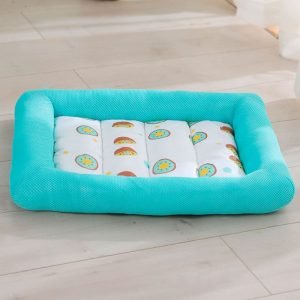
These are two different layers with two different jobs. The blue-and-white absorbent pee pad goes flat inside the plastic litter box, underneath the rabbit-safe litter. Cover it fully so your bun cannot grab, scratch or chew its edges. It provides an extra absorbent layer inside the toilet; it does not replace the litter.
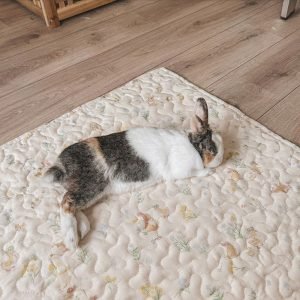
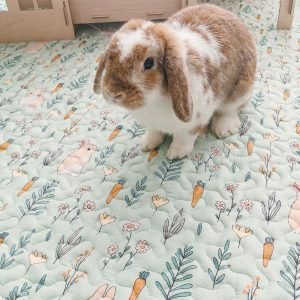
The padded non-slip rabbit mat belongs under the whole litter box and should extend generously in front and around it. This creates a stable, comfortable route into the box and a softer landing area when your bun hops out. It also protects the paws from a slippery or hard household floor.
This comfort can influence litter-box habits. If the approach moves, the floor feels slippery or every exit ends in an awkward landing, a cautious rabbit may avoid the box and toilet somewhere that feels safer. A stable tray and a broad landing mat make the correct place easier to use. Our rabbit pee pads can be placed inside the tray beneath the litter, provided they remain completely covered and are removed if your rabbit tries to dig them out.
Your rabbit: standing comfortably on a smooth stable grid, or directly on a safe absorbent litter layer in a solid tray.
Optional removable grate: only when the feet remain comfortable and the openings are safe for that individual bun.
Absorbent rabbit litter: paper pellets, hemp or another suitable unscented product covering the bottom of the tray.
Optional absorbent pee pad: placed flat on the plastic base beneath the litter, with every edge completely covered and inaccessible.
Large padded non-slip rabbit mat: place it beneath the entire litter box and extend it generously around the whole toilet corner. It creates a stable approach and a soft, secure landing area so your bun can hop out without slipping or hurting sensitive paws.
Do not stack materials just because more looks safer
Too many layers can stop a grate from sitting correctly, raise the rabbit into an awkward position or hide dampness. Follow the tray’s instructions, keep the construction simple and check what is happening underneath during cleaning.

Place the litter box where your rabbit already wants to go
Most buns choose a favorite bathroom corner. Put the tray there first, even if it is not the location you originally planned. Once the habit is reliable, you can try moving it a few inches at a time. Keep the entrance clear and create a solid, non-slip route from the resting area to the box.
Hay within easy reach
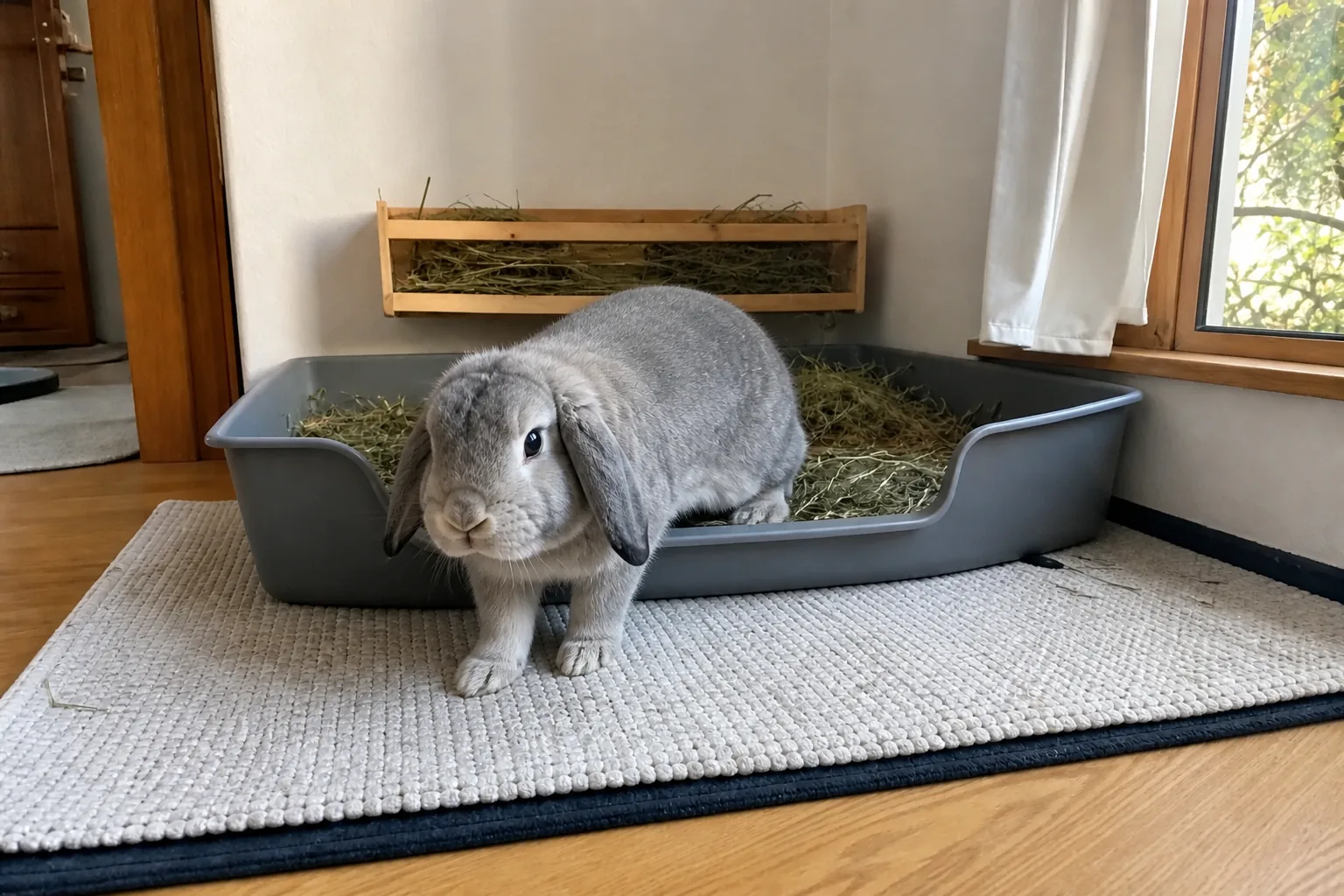
Attach a secure feeder beside or above one end of the tray. Your rabbit should not have to stretch, climb or twist to eat.
Water and rest stay separate
Keep the main water bowl and sleeping spot away from splashes while leaving the toilet continuously accessible.
More than one toilet if needed
Free-roam homes, large rooms and bonded pairs often work better with several well-placed boxes.
Low-entry litter boxes for senior or less mobile rabbits
A low entrance is not only for disabled rabbits. It is the easiest everyday design for almost every standard house rabbit, and it becomes especially useful with age, arthritis, injury or reduced vision. The front should be low and wide without a sharp cut edge.
Keep the route flat, stable and well lit. If urine passes over a very low opening, protect the floor under the tray rather than making your bun climb a high wall. Sudden difficulty entering a familiar box, new accidents or a changed posture deserves a rabbit-savvy veterinary check.
A cleaning routine that keeps the box inviting
Clean often enough that the tray stays dry and pleasant, but avoid strongly scented products that replace your rabbit’s familiar environment with perfume. A simple routine is easier to maintain than an elaborate one.
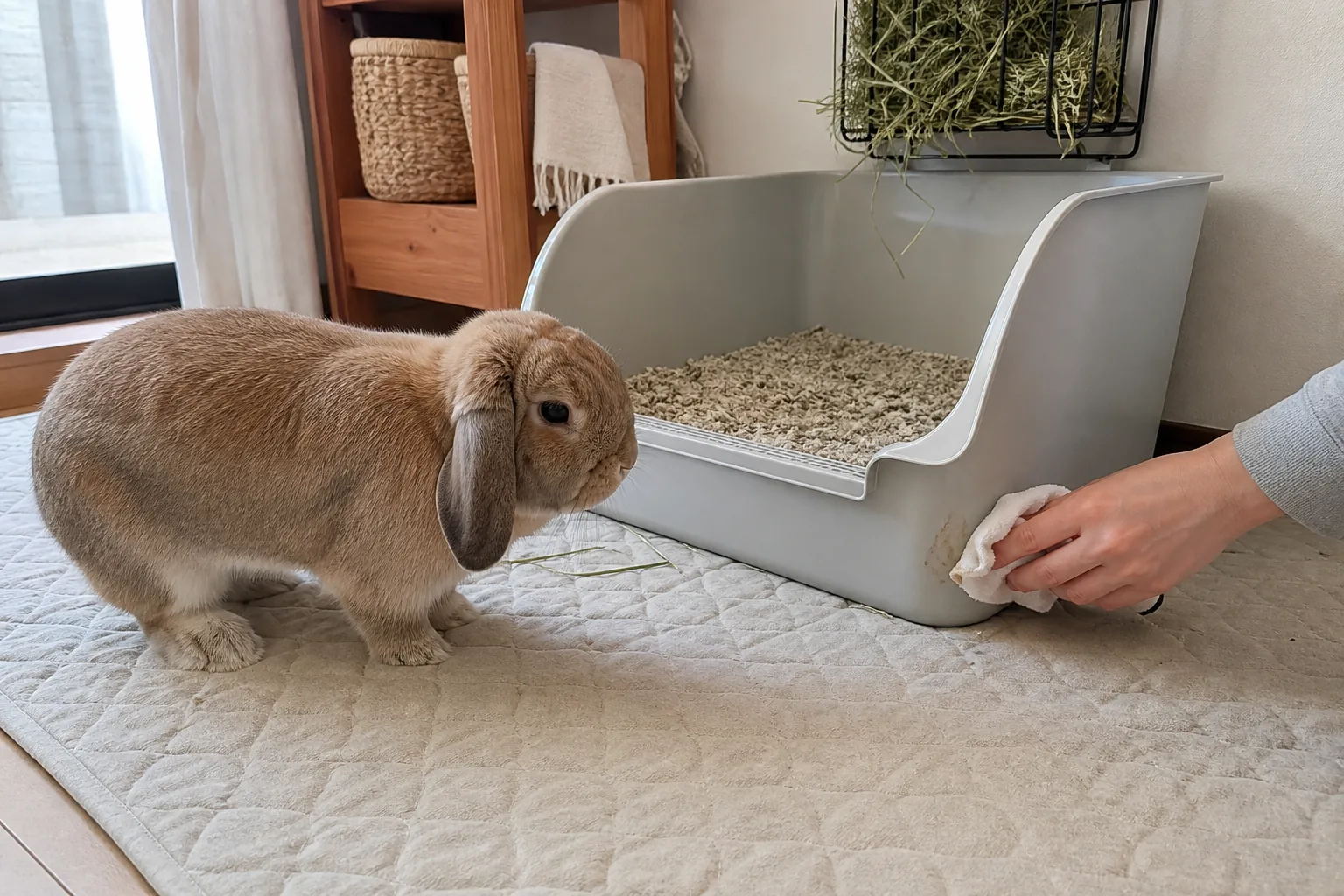
Remove wet litter, damp hay and heavily soiled material. Wipe obvious splashes and check beneath the grate.
Empty the tray and clean urine stains with a 1:1 solution of distilled white vinegar and water. Let it sit briefly on stubborn mineral buildup, then rinse thoroughly and dry the box so no residue or strong vinegar smell remains.
Dry the tray, grate and surrounding floor fully. Confirm that every piece still sits flat and securely.
Inspect corners, entry edges, grid openings and reusable pads for cracks, roughness, loose threads or odor.
Common litter box setup problems and quick fixes
My rabbit pees over the edge
Use higher sides at the back and the preferred corner while preserving a low front entry. A larger tray may let your bun position the whole body inside.
Wet paws or a damp bottom
Clean more frequently, improve absorbency and confirm that the grate drains into the base. Persistent wetness or urine staining needs veterinary attention.
The rabbit avoids the grate
Check for movement, rough plastic and unsafe openings. Offer a roomy solid-base tray with safe litter and compare which surface your bun chooses.
Litter and hay cover the room
Use a tray with raised back edges, put hay in a secure feeder beside the box and place the whole station on an easy-clean non-slip mat.
The pee pad gets uncovered
Remove it immediately if your rabbit digs down to it or tries to chew it. Use the tray with rabbit-safe litter alone until you can keep the absorbent pad fully covered and inaccessible.
One bonded rabbit guards the box
Add another roomy box and duplicate hay access. Spread resources so one bun cannot control every toilet and feeding point.
Rabbit litter box setup FAQ
How big should a rabbit litter box be?
It should be large enough for the entire rabbit to enter, make a full turn and sit with all four paws and the tail inside. For many rabbits, a roomy rectangular cat-style tray works better than a triangular corner toilet. Always compare the internal measurements with your individual bun.
Is a grate litter box safe for rabbits?
It can be safe when the grate is smooth, stable and has openings that cannot trap toes or nails. Your rabbit must use it comfortably and also have broad solid non-slip flooring elsewhere. Stop using a damaged or uncomfortable grate.
Should hay go inside the rabbit litter box?
Rabbits often like to eat while toileting. Offer fresh hay at the clean end of a roomy tray or in a secure feeder beside it. Replace any hay that becomes wet or soiled.
Can I put a pee pad inside a rabbit litter box?
Yes, it can lie flat on the plastic bottom beneath a complete layer of rabbit-safe litter, provided every edge stays hidden and your rabbit does not dig it out. Remove it immediately if any plastic or absorbent filling becomes accessible. The broad padded mat outside the tray has a different purpose: it provides grip and a comfortable landing.
How often should I clean a rabbit litter box?
Remove wet and heavily soiled material every day. Empty and wash the tray as often as needed for it to remain dry and fresh, then rinse and dry every part before reassembly. The exact full-clean frequency depends on tray size, litter type and the number of rabbits.
Does a rabbit need more than one litter box?
Many do. Large rooms, free-roam homes and bonded pairs often benefit from several boxes. During litter training or bonding, providing extra toilets also reduces competition and makes the correct choice easier.


Elodie
Rabbit guardian and care enthusiast with over 10 years of hands-on experience living with house rabbits. Through Rabbit World, Elodie shares warm, practical guidance focused on comfort, safety and the small everyday details that help every little bun feel at home.