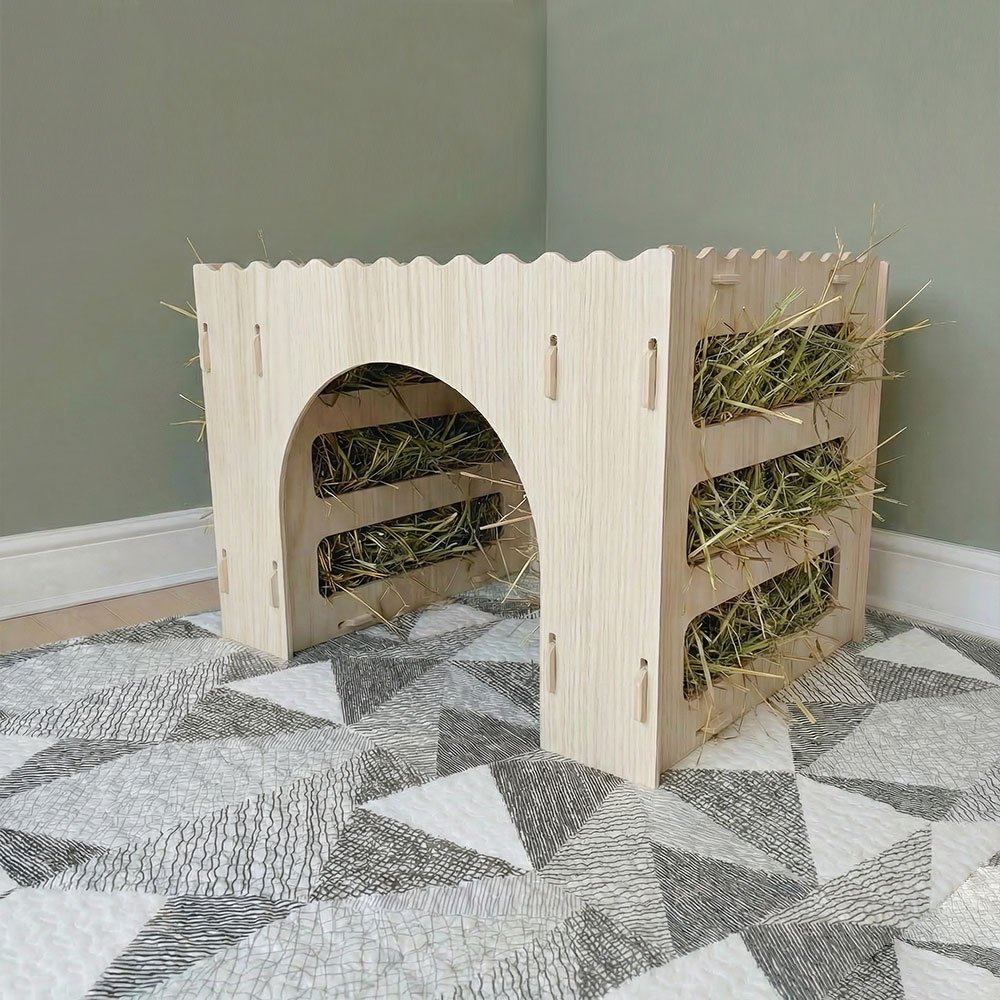
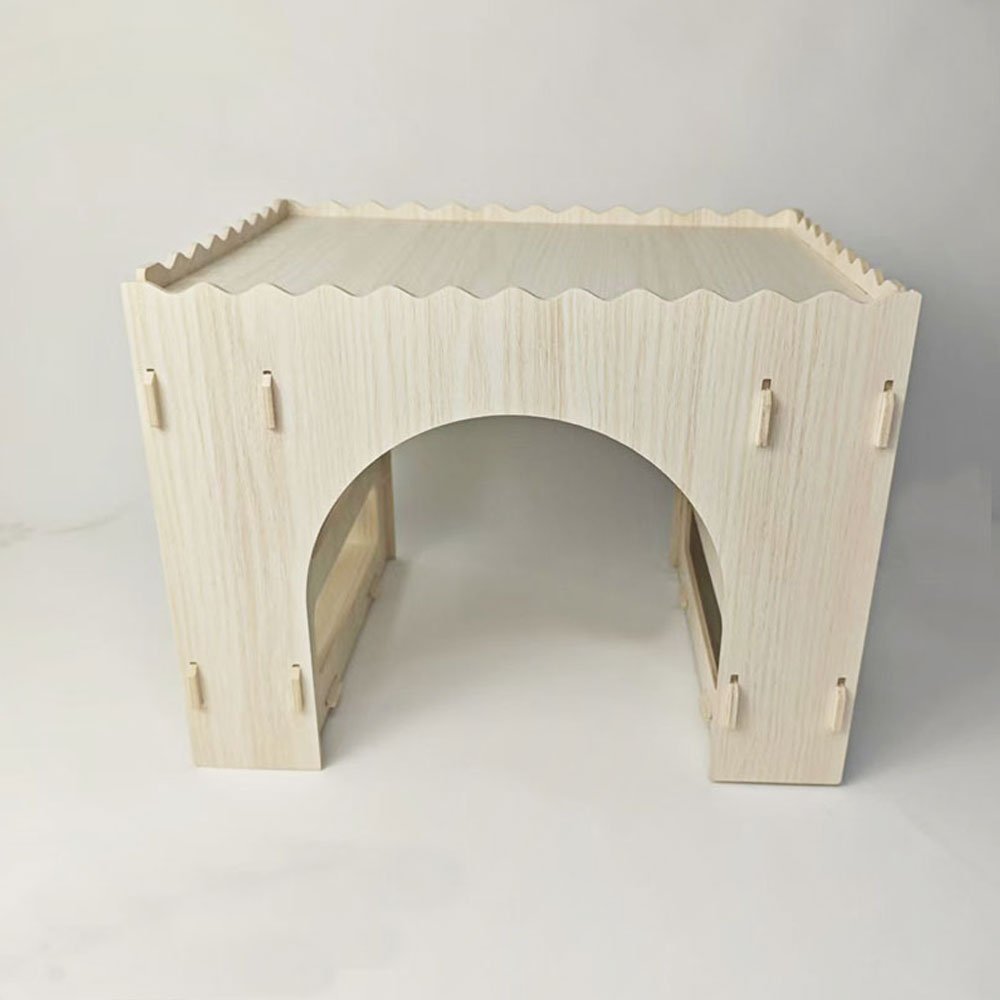
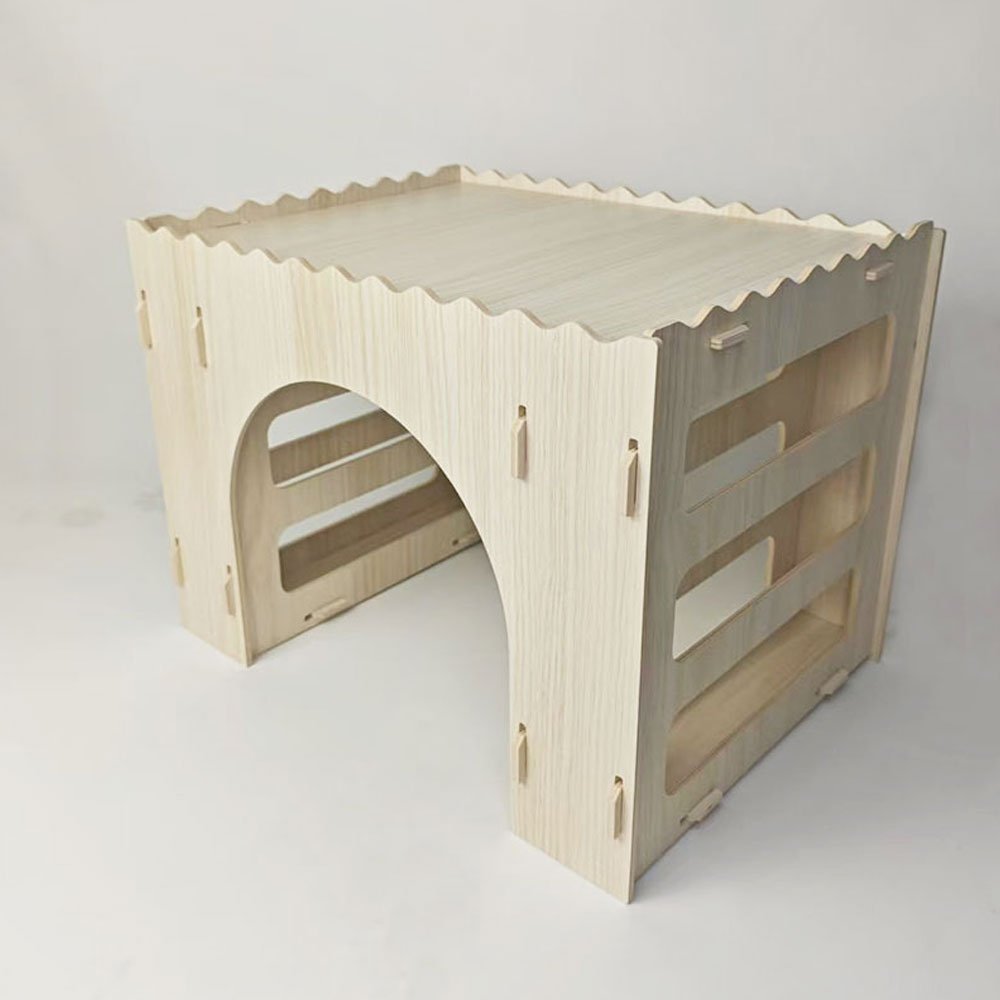
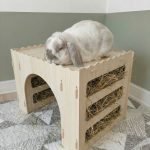
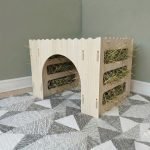
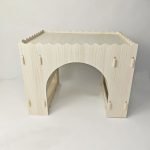
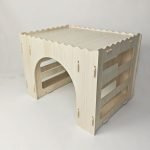




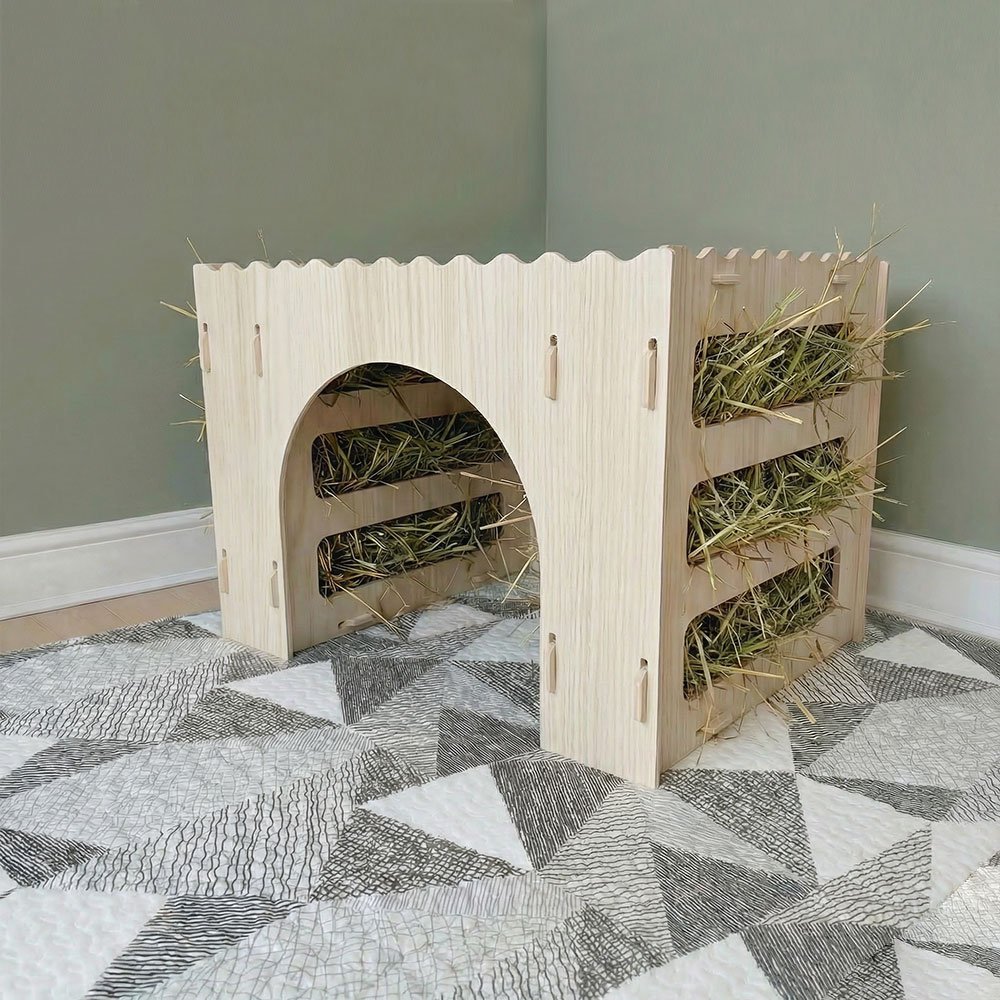
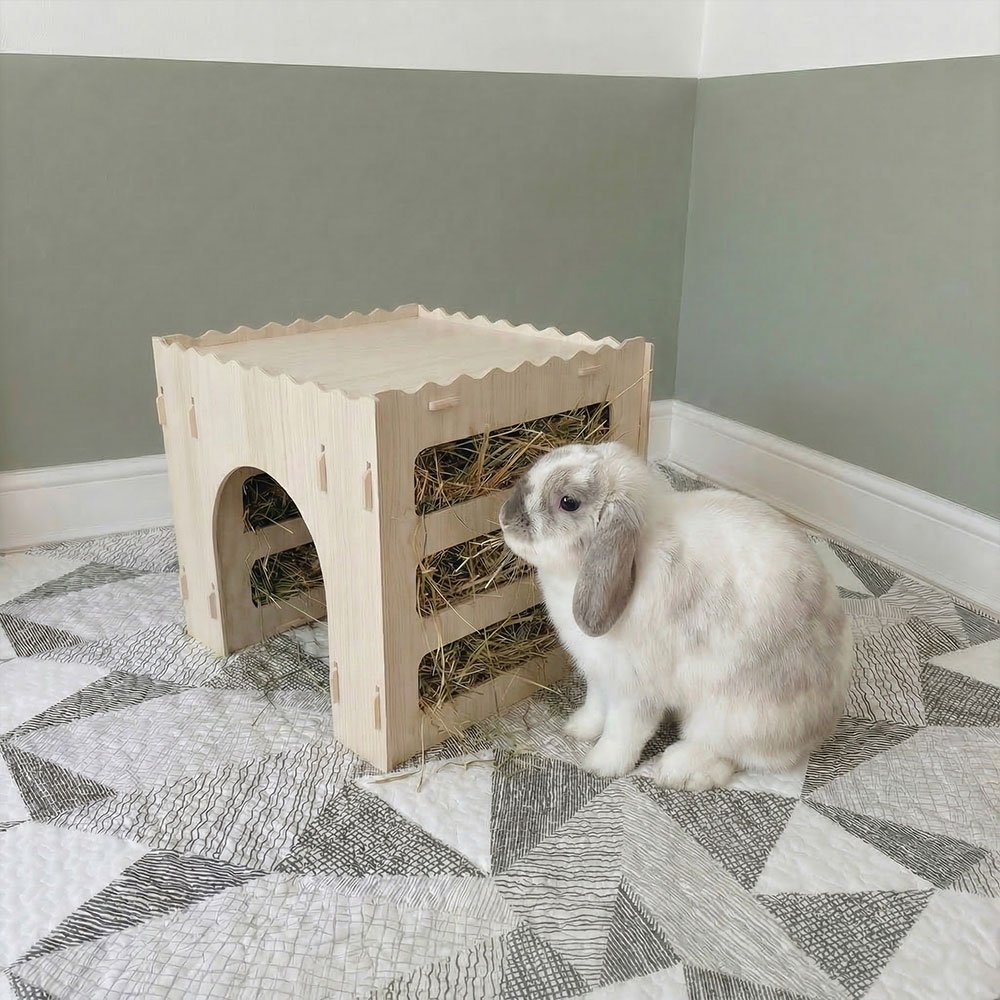
Your bun hears a sound, freezes for half a second, then darts straight into the Rabbit Castle like a fuzzy little knight retreating to the fortress. Nose twitching from the safety of the entrance, they decide the coast is clear and hop on top to survey the kingdom. This wooden castle gives your rabbit exactly what prey instincts demand: a protected hideout below, fresh hay within reach on both sides, and a flat roof throne for the bravest moments.
A rabbit house where hiding, snacking, and napping happen in one spot
Most rabbits develop a routine with their rabbit house pretty quickly. Morning zoomies end with a dramatic flop inside. Midday means lazy hay pulling from the rabbit hay feeder panels on each side, barely lifting their head. By evening, your fluffball claims the roof as a rabbit hideout turned observation deck, chinning every corner to make sure everyone knows who rules. The dual hay feeders keep Timothy or orchard grass tidy and off the floor, so your bun munches clean hay without having to leave their comfort zone. It is a spot that fits naturally into the way rabbits actually spend their day: hide, eat, rest, repeat.
Rabbits who lack a proper shelter can develop chronic stress that shows up as over-grooming, thumping, or refusing to eat. A secure retreat with overhead cover mimics the feeling of a burrow entrance and helps your rabbit regulate their nervous system. Even the most confident free-roam bun still needs a spot that feels “theirs” when the vacuum comes out or guests visit.
Where should you place the castle in your rabbit’s space?
Put it against a wall so one side feels naturally protected. Rabbits prefer hideouts where they cannot be approached from all directions at once. Keep it away from direct sunlight and drafts, and make sure your bun can hop on and off the flat roof without too big of a jump. If you have a bonded pair, placing it near a second shelter gives each rabbit an option so nobody gets territorial about the one cozy spot.
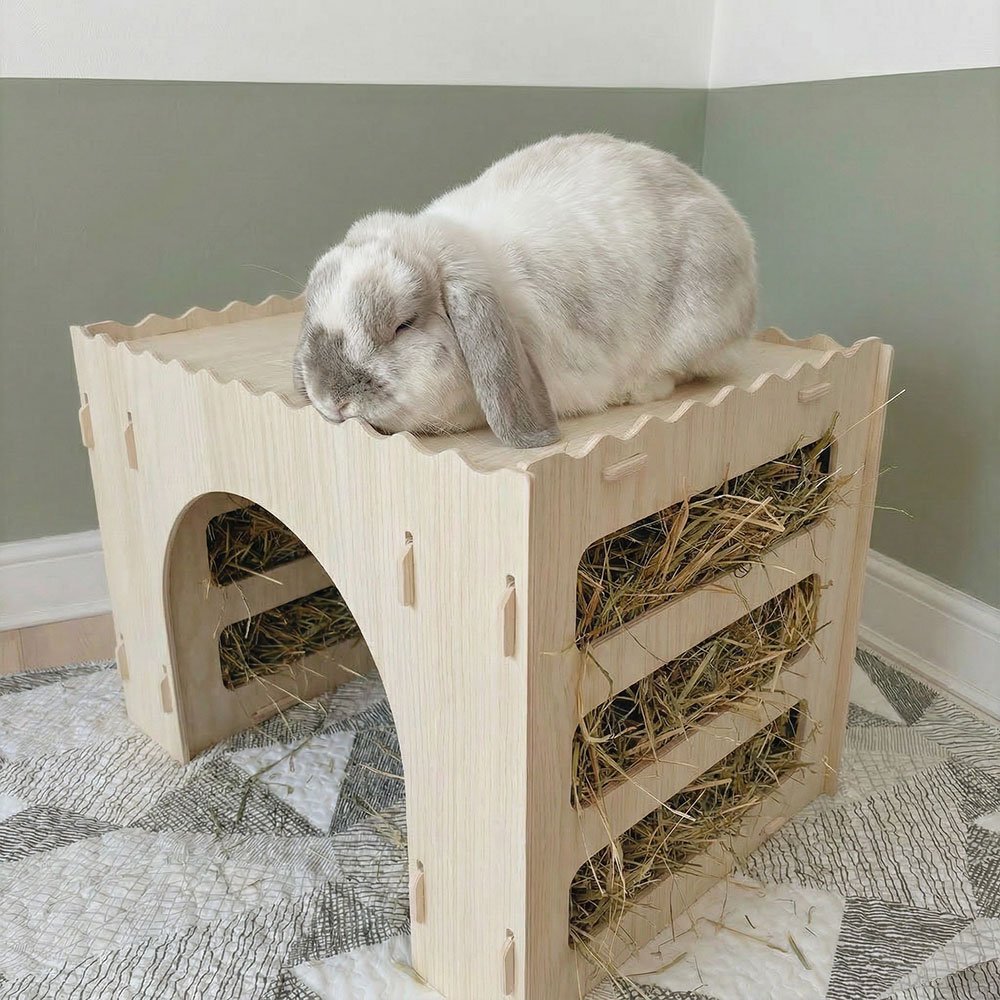
Fair warning: determined chewers will eventually gnaw at the wood edges, especially corners. Inspect the castle regularly for splinters or rough patches, and lightly sand anything sharp. Some rabbits also take a few days to warm up to an enclosed space, so do not worry if your bun ignores it at first. A few treats inside usually speed things up.
Material: Natural wood
Size: 15.5 x 12 x 12 in (40 x 31 x 30 cm)
Features: Two side-mounted hay feeder racks, flat roof platform
Best for: Single rabbits or small bonded pairs, free-roam or large enclosure setups
Care: Wipe with a damp cloth, sand rough spots as needed, replace when heavily chewed
A castle, a hay bar, and a lookout tower all in one little wooden box. Your bun will figure out the rest. 🏰