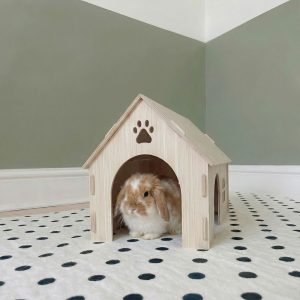
The safest rabbit chew toy is not defined by a cute shape or a “natural” label. Its material, construction, size and condition all matter and every new toy still needs supervision.
What materials are safe for rabbit chew toys?
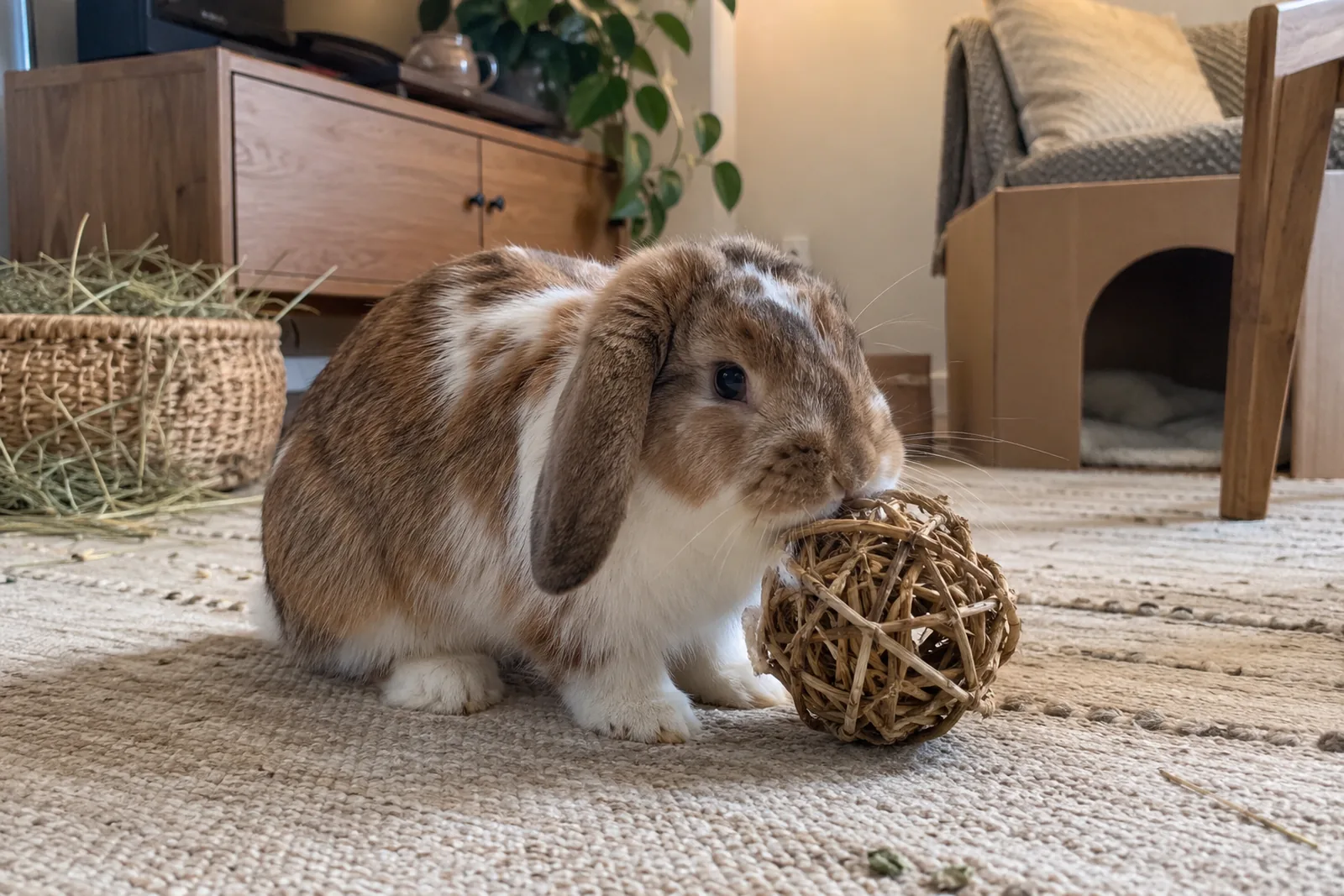
Good starting choices include untreated rabbit-safe wood and branches, plain cardboard, hay, willow, seagrass and untreated straw. The item should be clean, appropriately sized and free from paint, varnish, staples, tape, long strings, toxic glue and loose pieces. Introduce it under supervision and remove it when damage creates a sharp edge or swallowing risk.
Why rabbits need safe things to chew
Chewing, shredding and manipulating objects are normal rabbit behaviours. A rabbit may strip bark, dismantle a woven ball, pull hay from a tube or renovate a cardboard box simply because the activity is satisfying. Providing suitable outlets can make the home more interesting and can redirect some attention away from skirting boards, furniture and cables—but toys do not make rabbit-proofing optional.
Chewing is natural
Rabbits explore texture with their mouth and use their incisors to cut, pull and dismantle.
Hay still comes first
Unlimited suitable hay or grass provides the prolonged chewing pattern that a toy cannot replace.
Preference varies
One rabbit may love firm branches while another chooses cardboard or woven plant fibres.
Chew toys are enrichment, not dental treatment. Rabbit teeth grow continuously, but healthy wear depends heavily on an appropriate high-fibre diet and natural jaw movement. A wooden block cannot compensate for poor hay intake, and a rabbit with drooling, a wet chin, selective eating, weight loss or a change in droppings needs a rabbit-savvy veterinarian rather than a harder toy.
The best materials for rabbit chew toys
No material is automatically safe in every form. “Wood” might mean a clean untreated apple branch, or it might mean a painted plywood shape held together with unknown adhesive. Read the product description, inspect the construction and watch how your own rabbit uses it.
Untreated safe wood
Willow, apple, hazel, aspen, birch and maple are commonly recommended examples when the species is correctly identified and the wood is untreated. Choose clean, dry pieces without pesticide exposure, mould, paint or varnish.
Plain cardboard and paper
Brown cardboard tubes, boxes and plain paper can support chewing, hiding and foraging. Remove tape, staples, labels, handles and heavily printed or glossy sections. Prevent access if your rabbit eats large quantities rather than shredding.
Willow and woven grass
Untreated willow rings, seagrass mats, baskets and balls offer pullable plant fibres. Construction matters: check for wire frames, synthetic cord, glue blobs or sharp ends that appear as the weave is dismantled.
Hay and untreated straw
Hay cubes, balls and stuffed cardboard toys combine eating with manipulation. Keep them dry and discard anything damp, dirty or mouldy. Hay used in toys should come from the normal daily supply, not reduce free access elsewhere.
Wood: verify the species, treatment and source
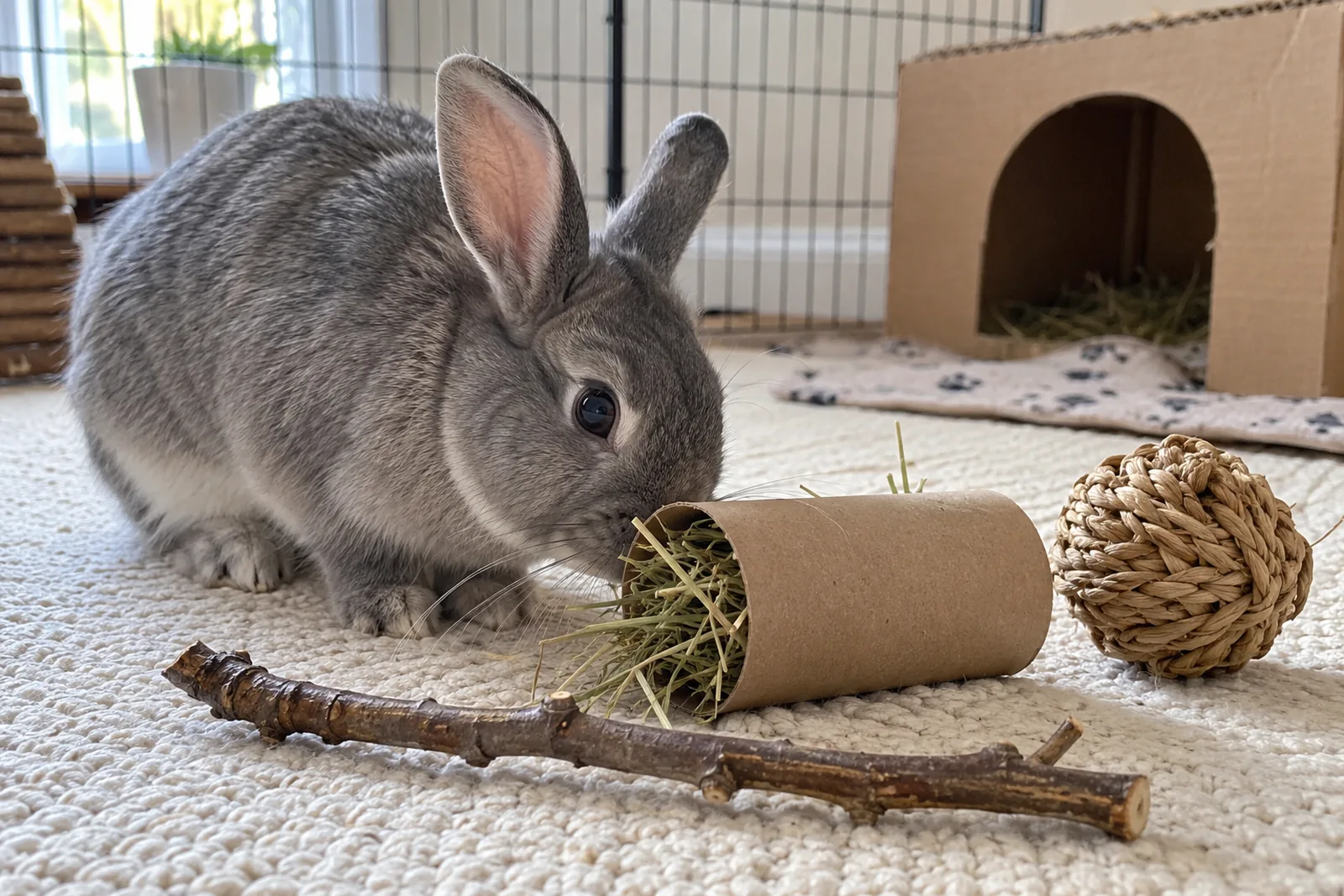
Do not hand over a random branch because it looks clean. Tree identification matters, and garden trees may have been sprayed. Branches collected beside busy roads can carry pollutants. A bought wooden toy should identify the material clearly enough for you to make a decision; “natural wood” alone is not very informative. Avoid painted, stained, pressure-treated, polished or varnished wood, and reject pieces with mould, a chemical smell or sharp splinters.
Surface tooth marks are expected. Long needle-like splinters, cracking hardware or an exposed core are reasons to remove the toy. A branch may be washable only to the extent described by its maker; soaking porous wood can trap moisture and encourage mould, so store plant-based toys somewhere dry.
Cardboard: useful, inexpensive and not risk-free
A plain box with rabbit-sized openings or a hay-filled tube can be excellent enrichment. Use simple, clean cardboard with all packaging remnants removed. The Rabbit Welfare Association & Fund warns specifically against accessible staples, tape, string and other linear fixing materials. If a structure needs glue, use only a minimal amount of non-toxic, water-soluble glue—and keep glued joins inaccessible whenever possible.
Shredding is not the same as eating. Many rabbits tear cardboard and leave the pieces. If yours repeatedly swallows substantial amounts, remove it and offer a verified branch, hay-based toy or another suitable texture. A new tendency to eat non-food material can also justify a health and diet review with your veterinarian.

Rabbit chew toy materials to avoid
A product being sold for small pets is not proof that every component suits every rabbit. Examine the full object rather than the front label. A safe-looking grass shape may conceal wire, a wooden toy may be brightly coated, or a fabric toy may become a source of swallowed fibres.
Painted, varnished or treated wood
Do not assume a coating is edible. Avoid unknown paints, stains, preservatives, pesticides and resin-based adhesives on anything intended for chewing.
Unknown wood or garden cuttings
If you cannot confidently identify the plant and confirm it is rabbit-safe and chemical-free, do not offer it. “Found outside” does not mean harmless.
Foam, soft rubber and brittle plastic
These materials can be torn into swallowable pieces. Solid plastic activity toys may suit some supervised rabbits, but they are not chew toys and must be removed once tooth damage appears.
Long string, ribbon and loose fabric
Linear fibres can be swallowed and fabric can unravel. Use textile items only with close supervision when you already know your rabbit does not eat them.
Small bells, beads and detachable parts
Hardware that becomes exposed can cut, trap or be swallowed. Size the whole toy—and every component that may come loose—for your rabbit.
Heavy dye, glitter or strong chemical odour
Bright colour is not a safety standard. Skip toys with flaking finishes, glitter, sticky residue or an unexplained chemical smell.
| Material | Possible use | Choose only when | Remove when |
|---|---|---|---|
| Safe untreated branch | Firm gnawing and bark stripping | Species and source are verified | Sharp splinters, mould or contamination appears |
| Plain cardboard | Shredding, hiding and hay stuffing | Tape, staples, labels and handles are removed | It becomes wet, dirty or is being eaten in quantity |
| Willow / seagrass | Chewing, tossing and dismantling | The weave hides no wire or synthetic ties | Sharp ends or internal fixings become exposed |
| Hard plastic activity toy | Pushing, tossing or food puzzles | It is sturdy, appropriately sized and supervised | Deep tooth marks, cracks or loose parts appear |
| Fabric | Supervised digging or searching for some rabbits | The rabbit does not pull and swallow fibres | Any seam opens or chewing begins |
The 10-second chew toy safety check
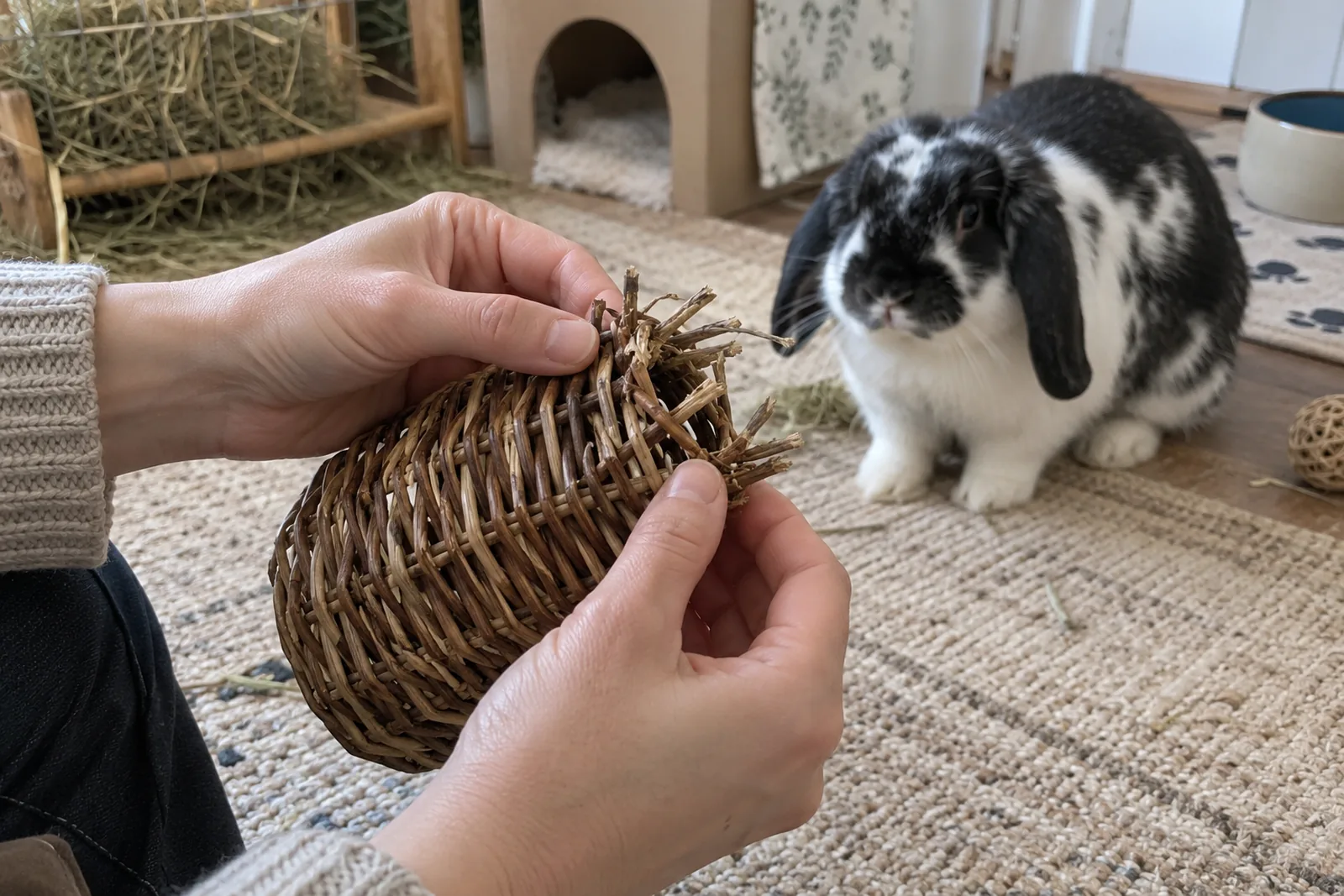
Inspect a new toy before it enters the rabbit area, watch the first play sessions, then check it again during your normal cleaning routine. Enthusiastic rabbits can reveal hidden construction quickly. Run your fingers over the surface and look from every angle—including inside tubes, under woven layers and around any join.
Remove first, investigate second
Take the toy away if your rabbit swallows non-food pieces, exposes metal, pulls out long fibres, cracks plastic, creates sharp wood splinters or becomes trapped. Contact a rabbit-savvy veterinarian promptly if you suspect a foreign object was swallowed, especially if appetite, droppings, posture or activity changes.
Choose the toy for the rabbit in front of you
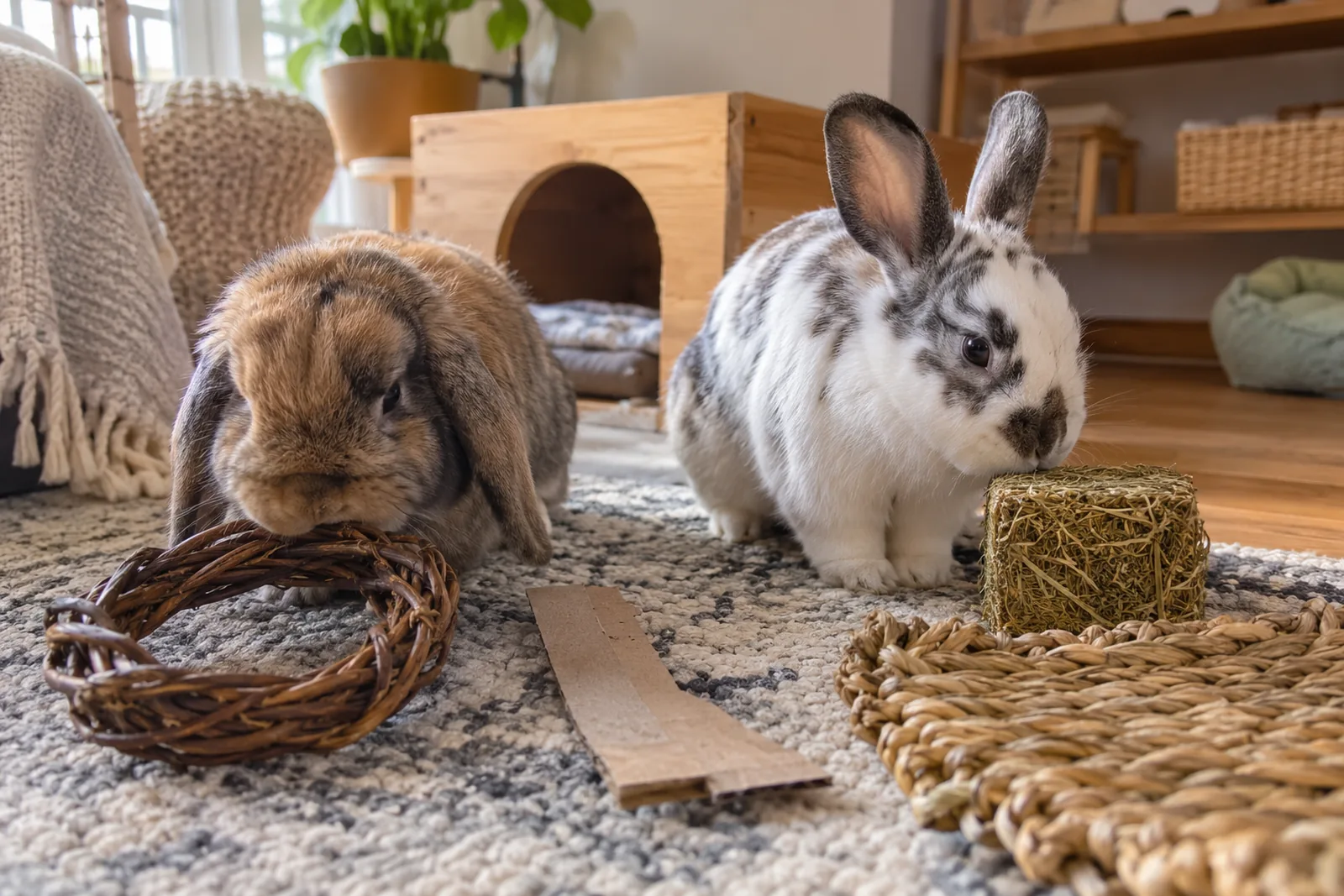
There is no universal best rabbit chew toy. Start with two or three clearly different textures and note what happens. Does your rabbit strip bark, toss a ball, peel cardboard layers or pull at a mat? Repeat the activity they actually choose rather than buying several versions of a toy they ignore.
Firm verified branches
Offer a suitable untreated branch alongside unlimited hay. Protect cables and furniture because a preferred toy does not erase the urge to explore the room.
Cardboard and plant fibre
Try plain boxes, tubes or woven grass. Keep an eye on ingestion, exposed fixings and the amount of debris around the play area.
Light, sturdy objects
Choose a size that cannot be swallowed or trap the jaw. A willow ball or solid rabbit-appropriate toss toy may suit this play style.
Rotate a few toys rather than crowding the floor. Rabbits still need clear, non-slip routes for running and room to stretch, stand and move away. In a bonded pair, provide enough resources to reduce competition and watch whether one rabbit guards the most interesting item. For more ways to match activities to natural behaviour, see our guide to the best rabbit toys for digging, chewing and foraging.
Frequently asked questions about rabbit chew toys
What is the safest chew toy for a rabbit?
A simple toy made from a clearly identified, untreated rabbit-safe material is a good starting point. Willow, apple or hazel branches from a verified chemical-free source, plain cardboard and well-constructed woven grass toys are common options. Safety still depends on size, construction, condition and your rabbit’s behaviour.
Can rabbits chew cardboard every day?
Many rabbits safely enjoy clean plain cardboard as enrichment. Remove tape, staples, labels and plastic, and prevent access if your rabbit swallows substantial amounts instead of shredding it. Replace cardboard when wet or soiled.
Are wooden chew toys safe for rabbits?
They can be, provided the wood species and source are suitable and the item is untreated. Avoid painted, varnished, chemically preserved, mouldy or unidentified wood. Check frequently for dangerous splinters and hidden hardware.
Are colourful chew toys safe?
Colour alone does not determine safety. A manufacturer should identify the materials and any colouring used. Avoid flaking paint, glitter, heavy dye, strong odours and products whose coating cannot be verified.
Can rabbits have rope or fabric toys?
Only with caution and supervision. Some rabbits ignore fabric while others rapidly pull and swallow fibres. Remove textile toys as soon as chewing, fraying or loose threads appear. Natural-looking rope is not automatically safe.
Do chew toys replace hay for rabbit teeth?
No. Suitable hay or grass should remain continuously available and forms the basis of the chewing pattern associated with dental and digestive health. Toys add choice and enrichment; they do not correct a poor diet or treat dental disease.
How often should I replace a rabbit chew toy?
There is no fixed timetable. Inspect it before use and regularly thereafter. Replace it when it develops sharp edges, exposed fixings, loose swallowable pieces, deep cracks, mould, contamination or damage that prevents safe cleaning.

Elodie
Rabbit guardian and care enthusiast with over 10 years of hands-on experience living with house rabbits. Through Rabbit World, Elodie shares warm, practical guidance focused on comfort, safety and enrichment that respects how rabbits actually behave.