A practical guide to choosing a comfy, stable and washable resting setup your bun will actually use.
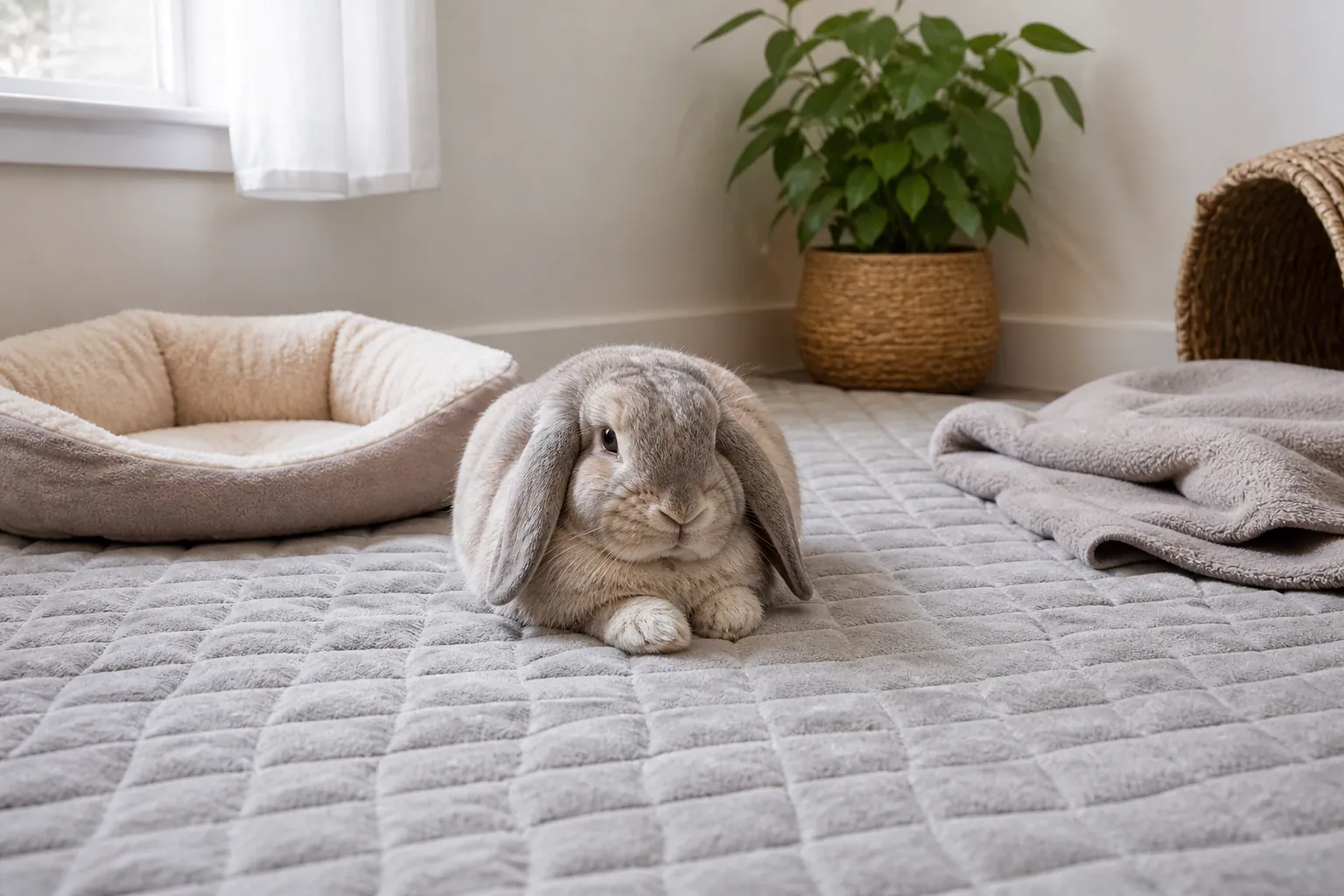
Does a rabbit need a bed, a mat or a blanket?
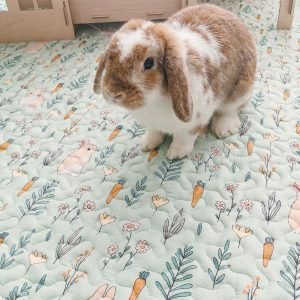
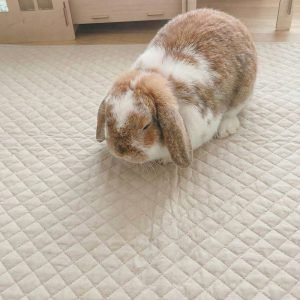
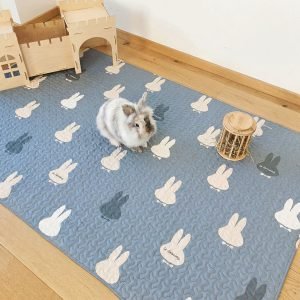
Most indoor rabbits need a large, flat, non-slip mat more than they need a traditional bed or blanket. The mat creates stable footing for hopping, turning, resting and doing joyful zoomies. A rabbit bed can add a defined cozy spot, while a blanket is useful as a portable comfort layer, but both are optional.
Rabbits do not all sleep in the same way. One little loaf may curl into a cushioned bed every afternoon. Another will ignore that beautiful purchase and stretch dramatically across the floor mat instead. A determined digger may turn a neatly folded blanket into a fluffy mountain within five minutes.
The best choice is therefore not the softest item or the cutest photo. It is the surface that gives your rabbit grip, freedom of movement, a comfortable place to rest and a cleaning routine you can realistically maintain.
What every rabbit resting area needs first
Stable footing
The surface should stay flat when your bun hops, turns and lands. Slippery floors can make a rabbit hesitant and uncomfortable.
Easy cleaning
Hay, fur, litter dust and the occasional pee accident are part of bunny life. Washable or wipeable layers make daily care far easier.
Chewing safety
Check seams, loose fibers, foam, stuffing and raised corners. Remove any item your rabbit tears apart and swallows.
The RSPCA recommends a solid, non-slip floor and warns that polished laminate, wood and tile may be slippery and stressful for rabbits. That makes flooring the first decision; the cozy extras come afterwards.
Rabbit mat vs bed vs blanket at a glance
Rabbit mat
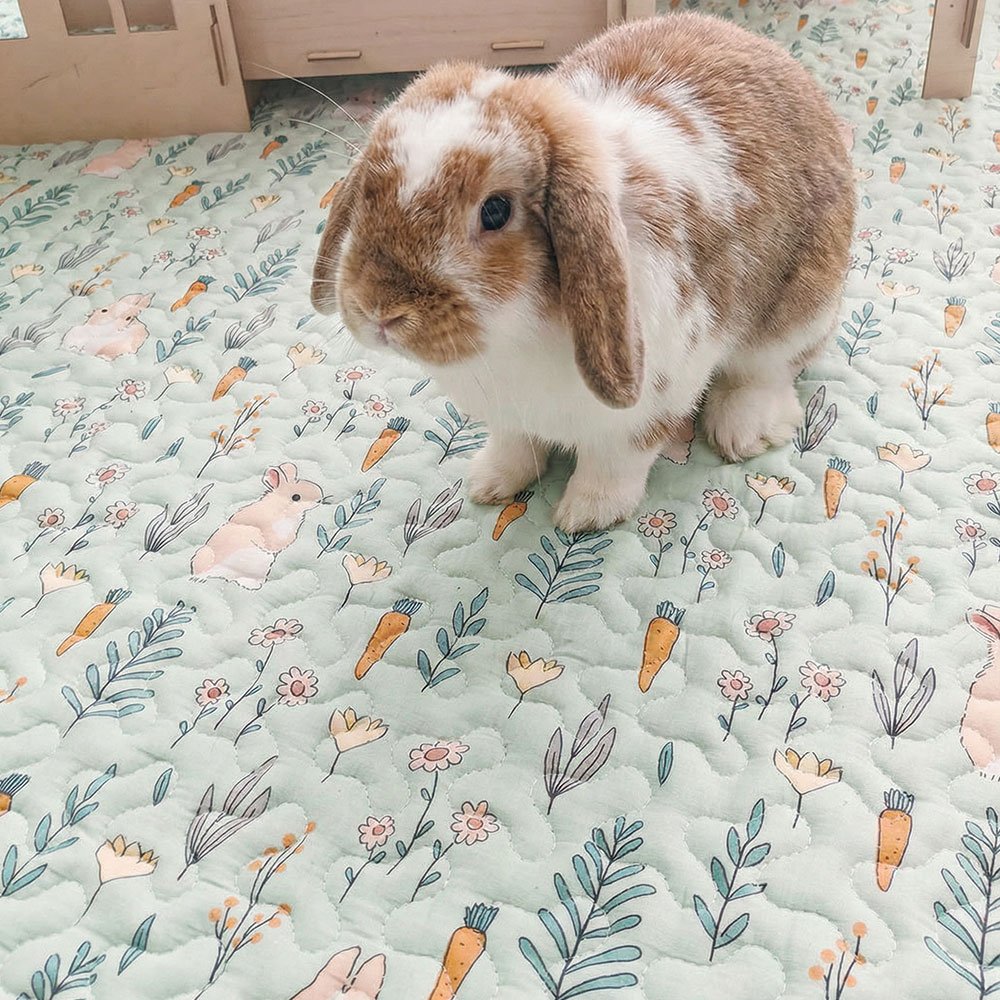
Best for: the main living, exercise and resting area.
- Provides broad, stable grip
- Lets a bun choose any resting position
- Large washable models simplify cleaning
Rabbit bed
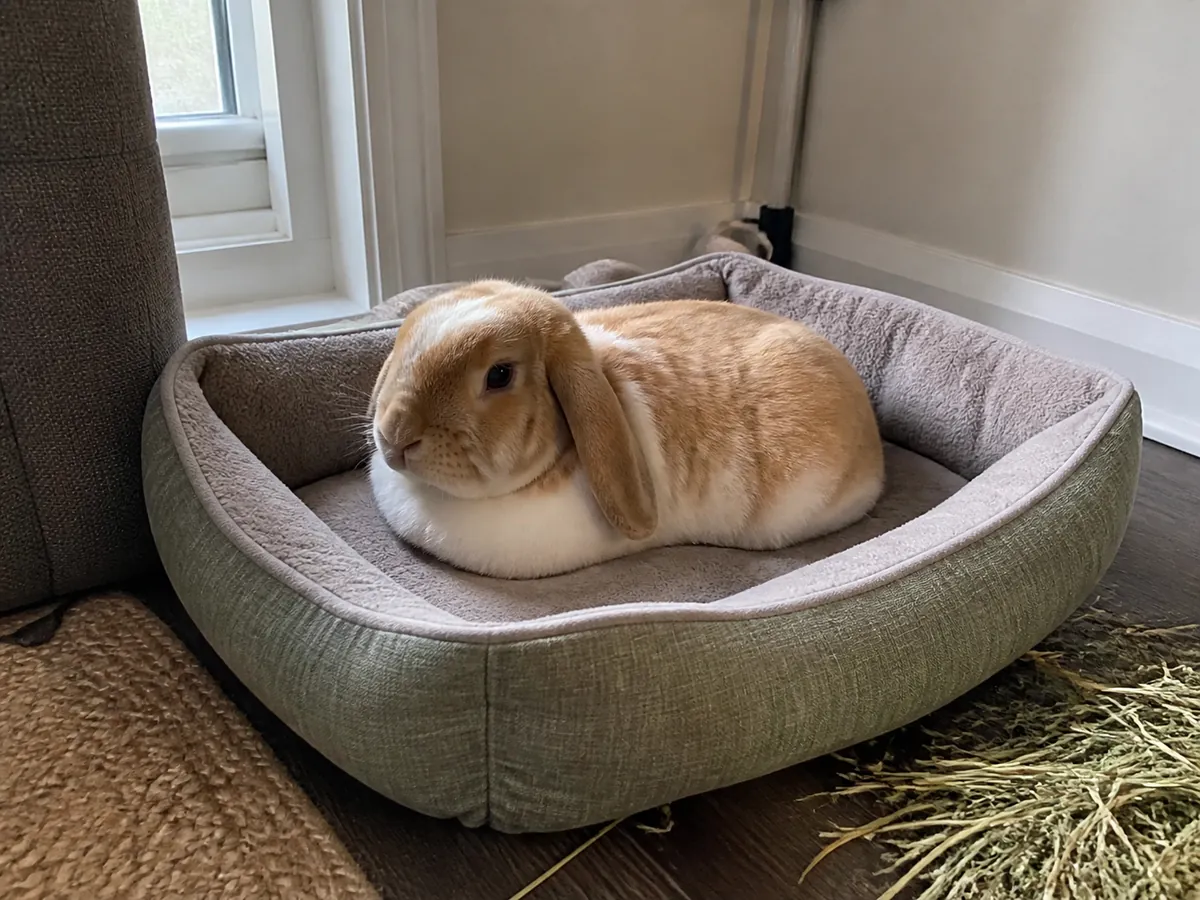
Best for: buns that enjoy a defined, cushioned place to loaf.
- Feels sheltered and cozy
- Useful beside a hideout or quiet wall
- Must be low, stable and easy to wash
Rabbit blanket
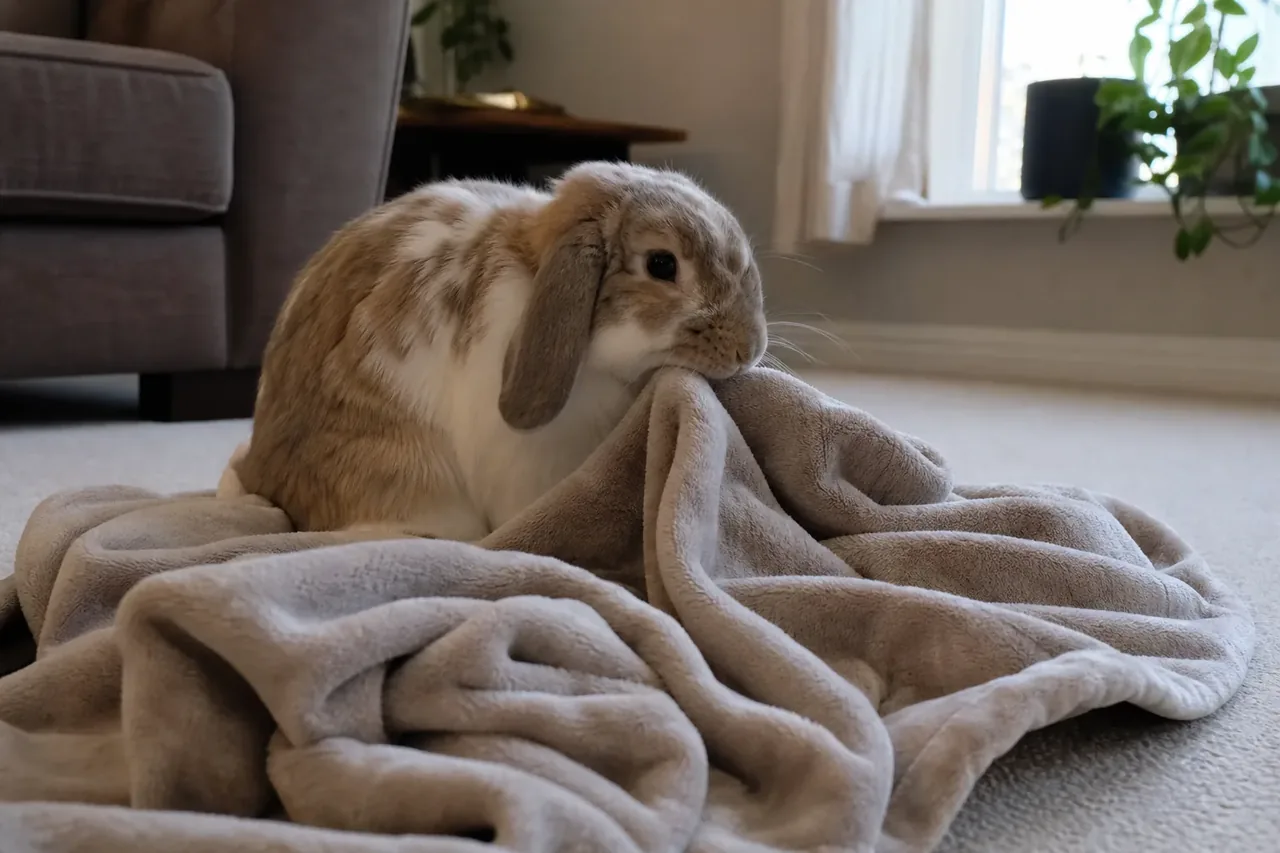
Best for: carriers, sofas and small extra comfort zones.
- Light and easy to move
- Useful for familiar scent
- Often bunches and slides on the floor
Why a washable non-slip mat is the best starting point
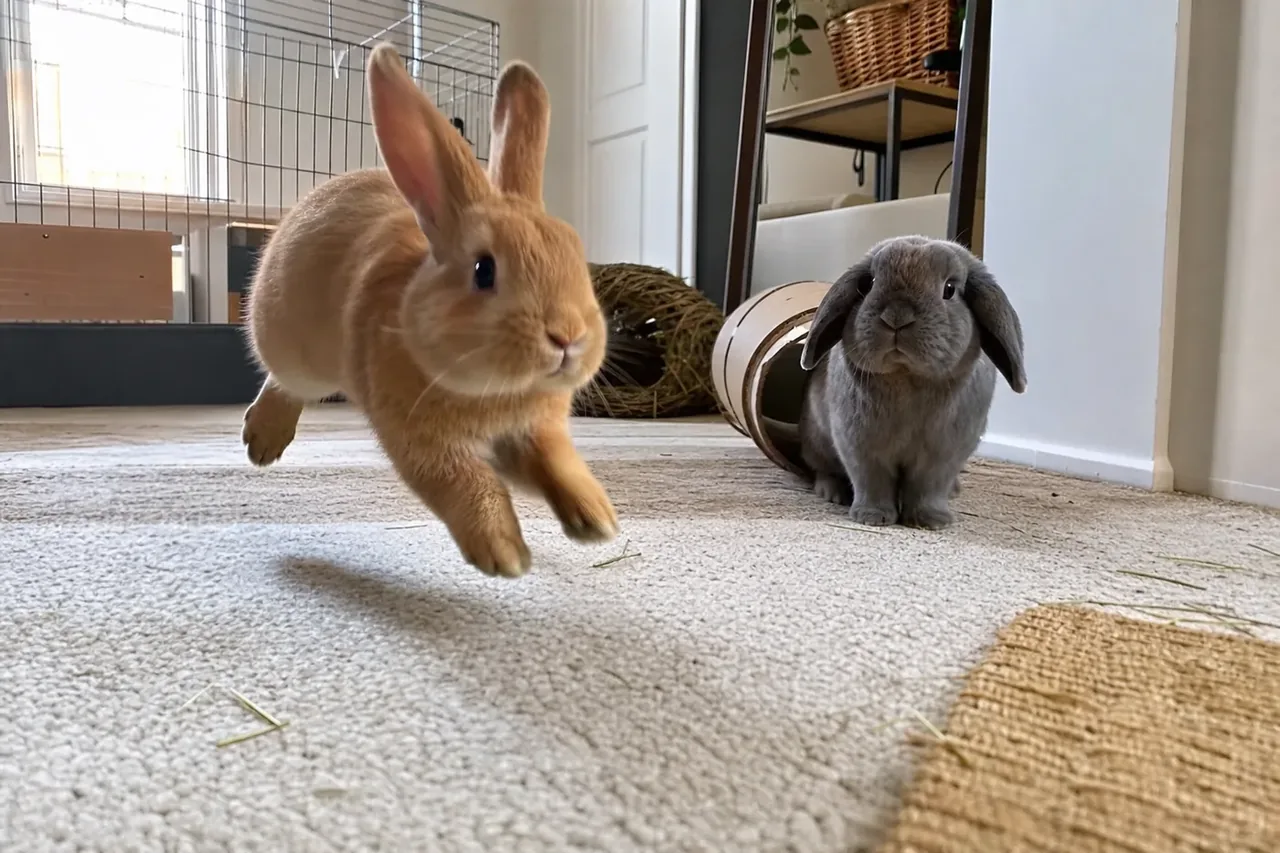
A broad mat supports the whole rhythm of a rabbit’s day: the fast route to the hay, the turn toward the litter box, the sudden binky, the afternoon flop and the quiet grooming session. Unlike a small bed, it does not ask your bun to fit into one predetermined shape.
For wooden, tiled or laminate floors, choose a mat with a backing that stays flat and does not skate across the room. A soft padded top is comfortable, but stability matters more than cloud-like thickness. The mat should also be large enough for several full hops, not just one seated rabbit.
A mat is not the same thing as a pee pad
A washable mat protects comfort and traction, but it does not replace litter training. If accidents are likely, add an absorbent waterproof layer underneath the busiest area and make sure no plastic edge is available for chewing.
When a rabbit bed is worth adding
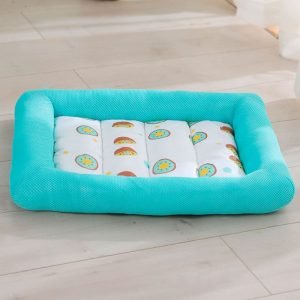
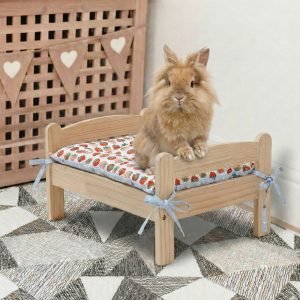
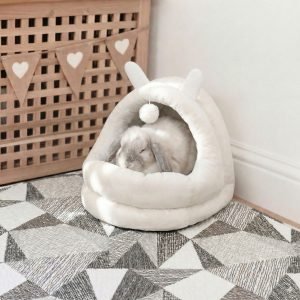
A bed can work beautifully for a rabbit that repeatedly chooses the same calm corner, likes a gentle edge around the body or seeks a little more padding. Low open beds are generally easier to enter, inspect and clean than deep cave-style designs.
Place the bed on top of a stable floor mat, not as a tiny island surrounded by slippery flooring. Your bun should be able to step in and out without jumping over a high rim.
This is especially helpful for older rabbits, smaller buns and anyone with reduced mobility.
It should feel supportive rather than swallowing the rabbit into deep unstable filling.
A fabric chewer needs close supervision. Loose stuffing, threads or foam should never become a snack.
A removable cover or fully washable bed is far more practical than a beautiful bed that traps urine and odor.
When a blanket helps and when it becomes annoying
Blankets are handy because they are light, washable and familiar. A small fleece blanket can make a carrier less slippery, protect a favorite sofa spot or add a warmer corner during cooler weather. Familiar scent can also make a temporary setup feel less strange.
On the floor, however, loose blankets often fold, slide and bunch under energetic paws. Many rabbits then dig, pull and nibble the raised edges simply because the fabric moves. If your bun turns every blanket into a nest, that may be fun enrichment under supervision, but it is not a stable replacement for a full-size floor mat.
Keep a blanket flat more easily
Use a smaller blanket only on top of a grippy mat, tuck it into a bed or reserve it for the carrier. If your bun immediately chews holes or swallows fibers, remove it and offer hay, willow or another rabbit-safe chew instead.
Three Rabbit World options for three different jobs
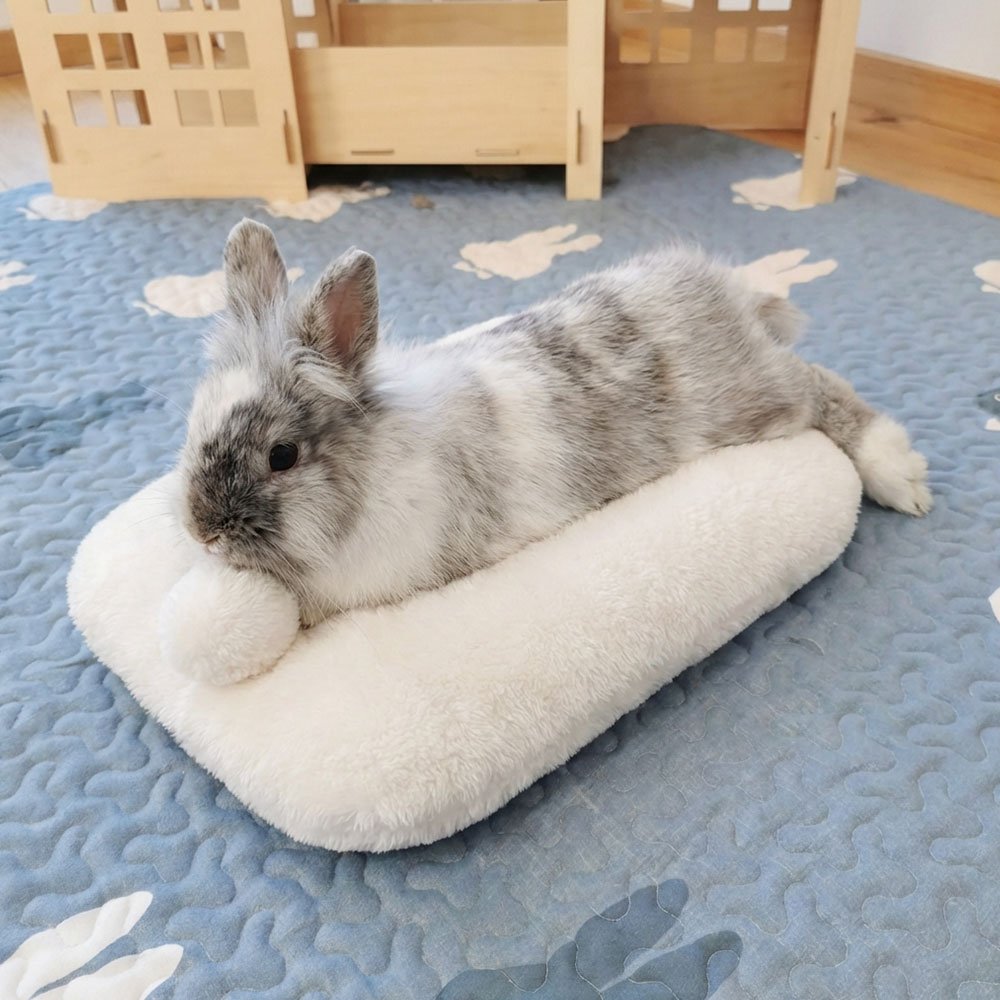
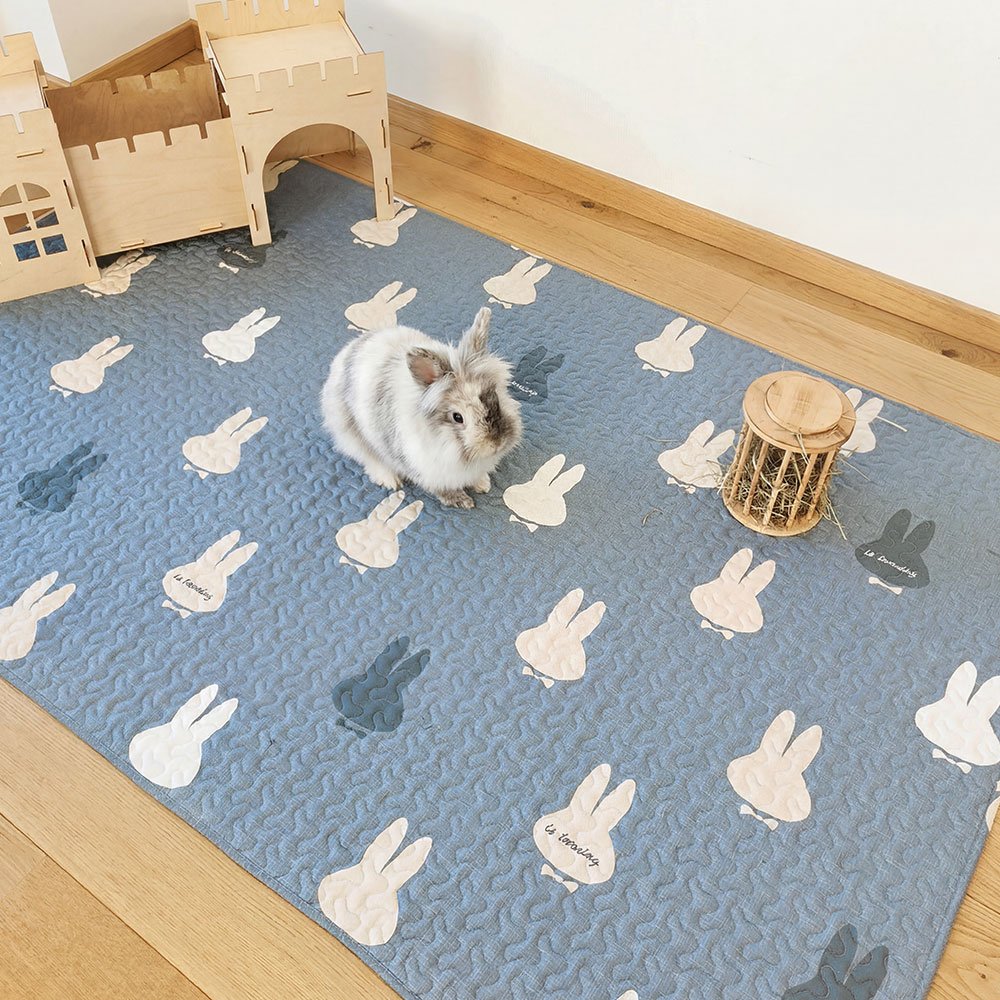
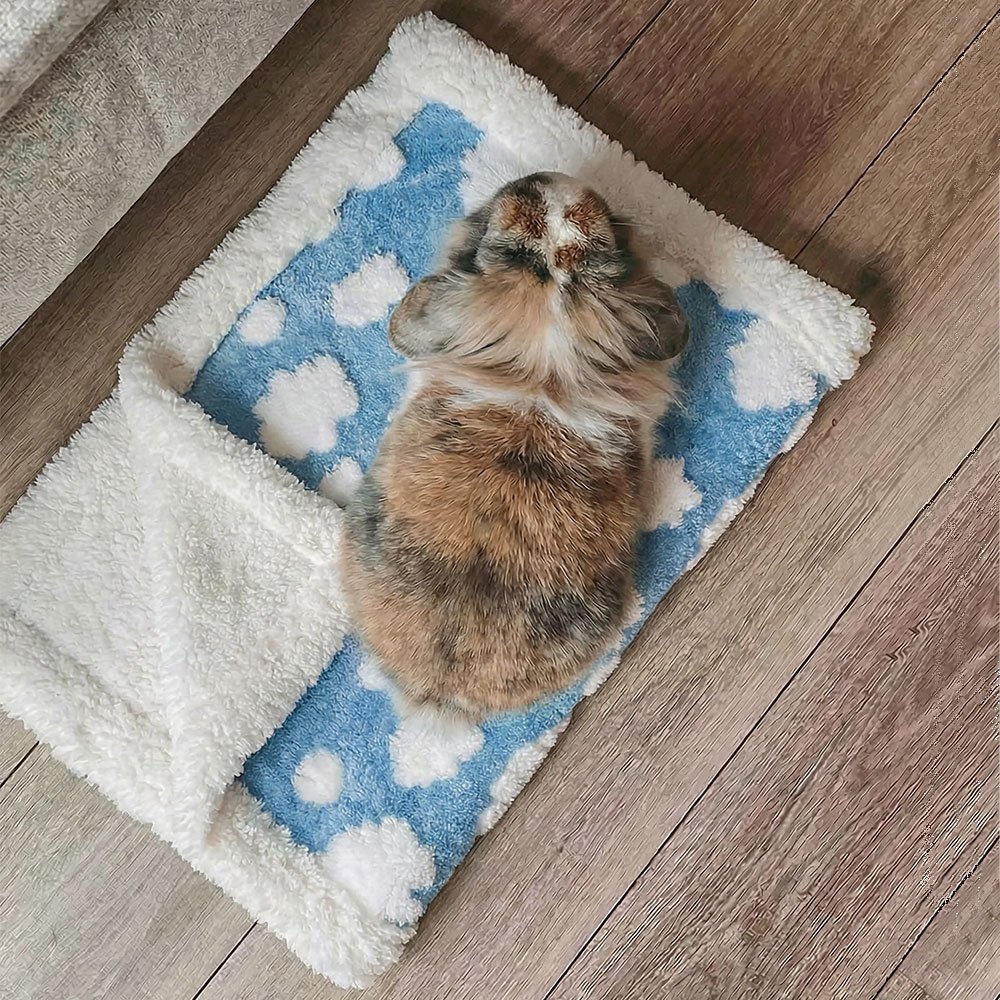

Match the setup to your rabbit’s real habits
The zoomie specialist
Prioritize one large, flat non-slip mat with no gaps between little rugs. A bed may sit at the edge, but the running route should remain open.
The flopper and splooter
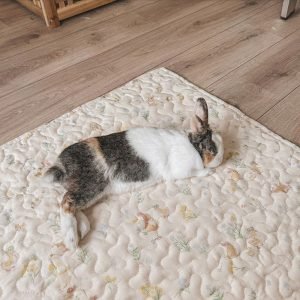
Offer enough flat space for the whole body and hind legs to extend. A tiny round bed may be ignored simply because it cramps the favorite pose.
The determined chewer
Choose tightly finished surfaces, supervise every new textile and remove damaged items. Provide appealing hay and chew toys before the fabric becomes the hobby.
The senior or less mobile bun
Use continuous grip, low transitions and a supportive rest area close to hay, water and the litter box. Avoid deep beds that are difficult to exit.
A bonded pair
Choose a mat broad enough for both rabbits to rest together or apart. Any bed should also be large enough to avoid turning one cozy spot into a resource to guard.
A bun learning litter habits
Start with washable layers and keep a spare ready. A huge non-washable rug or deep plush bed can make early accidents unnecessarily difficult to manage.
The best setup often uses two layers, not three products
You do not need to buy every type of soft furnishing. Build from the floor upward and stop when your rabbit has enough choice.
Cover the main route
Use a broad washable mat wherever your rabbit walks, eats, plays and rests most often.
Add one comfort choice
Try either a low bed or a small blanket in a quiet spot. Let your rabbit show you whether it is useful.
Leave a temperature choice
Do not cover every inch in thick fleece. A bun should be able to move to a cooler resting surface when needed.
How to know whether your rabbit likes the setup
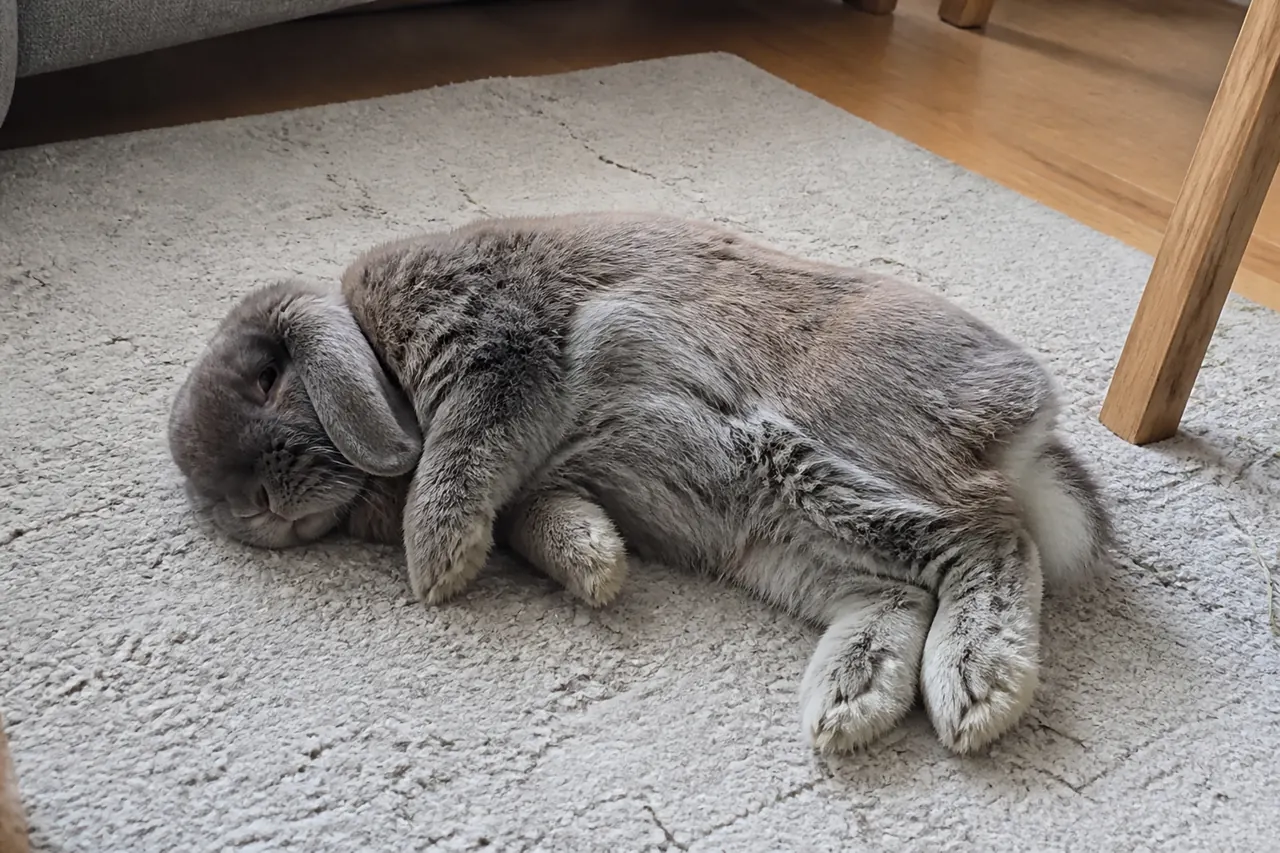
A purchase is successful when it supports normal behavior, not when it looks perfect in the room. Watch what your bun repeatedly chooses over several days.
Relaxed loafs, flops, sploots, grooming, normal hopping and returning voluntarily to the same resting area.
Sniffing once and ignoring it. Move the item to a favorite resting route before deciding it was a bad purchase.
Repeated slipping, avoiding the area, struggling over an edge, nails catching, frantic digging or chewing and swallowing material.
A soft bed does not treat sore hocks
Good flooring can support comfort and prevention, but redness, hair loss, swelling, broken skin, pain or a change in movement needs veterinary attention. Do not hide a paw problem under extra padding and wait for it to improve.
Cleaning without turning bunny care into a full-time laundry job
Shake off hay and fur regularly, spot-clean fresh accidents and follow each item’s wash label. A spare mat, bed cover or blanket keeps your rabbit on a stable surface while the first one dries. Let every layer dry completely before it goes back into the living area.
Lift the main mat weekly to check the backing and household floor. Wash a bed when it smells, feels damp or has visible soiling. Blankets usually need washing more often because they sit in carriers, on sofas or in high-traffic corners. Fragrance-free detergent and a thorough rinse are sensible choices for items your bun lies on closely.
Frequently asked questions
Do rabbits need a bed to sleep in?
No. Rabbits need a quiet, secure resting area on a comfortable, solid, non-slip surface, but a purchased bed is optional. Many house rabbits prefer to rest directly on a broad mat.
Can a rabbit sleep on a blanket?
Yes, if the blanket stays reasonably flat and the rabbit does not tear and swallow it. A blanket is better as a small optional layer than as the only flooring across a slippery room.
What is the best bedding for an indoor rabbit?
For the main living area, a large washable non-slip mat is usually the most practical foundation. Add a low cushioned bed or fleece blanket only if your rabbit enjoys it and the material remains intact.
Why does my rabbit keep moving the blanket?
Digging, pushing and rearranging are normal rabbit behaviors. Loose fabric is easy to bunch, so your bun may treat it as enrichment rather than a bed. Place a smaller blanket on a grippy mat or use a stable washable bed instead.
Are soft beds good for older rabbits?
They can be, provided the entrance is low, the base is stable and the padding is supportive rather than deep. Older rabbits also need continuous non-slip routes to hay, water and the litter box.
How often should rabbit mats and beds be washed?
Spot-clean accidents promptly and wash when soiled, damp or smelly. The exact schedule depends on litter habits, shedding and the product label. Keeping a spare prevents your rabbit from waiting on a slippery bare floor.


Elodie
Rabbit guardian and care enthusiast with over 10 years of hands-on experience living with house rabbits. Through Rabbit World, Elodie shares warm, practical guidance focused on comfort, safety and the everyday details that help every little bun feel at home.